Venture capital firms are companies that invest money in young, high-growth startups in exchange for a share of ownership. Instead of lending money like a bank, they take a bet on an idea and its founders, hoping the company grows big enough to make that bet pay off many times over.
The United States is home to the world’s most powerful venture capital industry. Almost every major tech company you use today, from Google and Apple to Airbnb and Stripe, took its first big check from one of these firms long before it became a household name.
Below is a simple overview of the 10 leading venture capital firms in the United States, ranked according to their scale, date of founding, ownership structure, and the range of companies they back.
Quick Comparison
| Rank | Firm | Founded | Owner / Founders | Headquarters | Core Focus |
| 1 | Sequoia Capital | 1972 | Founded by Don Valentine; partnership, led by Alfred Lin & Pat Grady | Menlo Park, California | Early-Stage & Growth-Stage Tech Investing |
| 2 | Andreessen Horowitz (a16z) | 2009 | Founded by Marc Andreessen & Ben Horowitz | Menlo Park, California | Seed to Growth-Stage Technology Investing |
| 3 | Kleiner Perkins | 1972 | Founded by Eugene Kleiner, Tom Perkins, Frank Caufield & Brook Byers | Menlo Park, California | Early-Stage & Growth-Stage Investing |
| 4 | Accel | 1983 | Founded by Arthur Patterson & Jim Swartz | Palo Alto, California | Early-Stage to Growth-Stage Investing |
| 5 | New Enterprise Associates (NEA) | 1977 | Founded by Chuck Newhall, Frank Bonsal & Dick Kramlich | Menlo Park, California | Broad-Stage Tech & Healthcare Investing |
| 6 | Benchmark | 1995 | Founded by Bruce Dunlevie, Kevin Harvey, Andy Rachleff, Bob Kagle & Val Vaden | San Francisco, California | Early-Stage Investing |
| 7 | Lightspeed Venture Partners | 2000 | Founded by Barry Eggers, Christopher Schaepe, Ravi Mhatre & Peter Nieh | Menlo Park, California | Enterprise, Consumer & Fintech Investing |
| 8 | General Catalyst | 2000 | Founded by Joel Cutler & David Fialkow; led by CEO Hemant Taneja | Cambridge, Massachusetts | Early-Stage to Growth-Stage Investing |
| 9 | Greylock Partners | 1965 | Founded by Bill Elfers & Dan Gregory | Menlo Park, California | Early-Stage Enterprise & Consumer Investing |
| 10 | Bessemer Venture Partners | 1911 | Grew out of the Phipps family steel fortune; partnership-owned | San Francisco, California | Early-Stage to Growth-Stage Investing |
1. Sequoia Capital – Silicon Valley’s Most Legendary Firm

- Founded: 1972
- Owner: Founded by Don Valentine; run as a partnership, currently led by Alfred Lin and Pat Grady
- Headquarters: Menlo Park, California
Don Valentine started Sequoia in 1972 with just $3 million and an early bet on Apple, back when “Silicon Valley” was still a brand-new idea. He named the firm after the giant sequoia tree instead of naming it after himself, a small choice that hinted at the firm’s long-term thinking.
Over more than fifty years, Sequoia has backed some of the biggest tech names in history, including Google, Airbnb, WhatsApp, and Nvidia. The firm passed leadership to a new generation in late 2025, with longtime partners Alfred Lin and Pat Grady now steering the firm forward.
What Sequoia Capital does: Invests in technology startups from their earliest days through to major growth stages.
Services: Seed and early-stage funding, growth-stage investment, and hands-on support for founders as their companies scale.
2. Andreessen Horowitz (a16z) – Built by Two Silicon Valley Insiders

- Founded: 2009
- Owner: Founded by Marc Andreessen and Ben Horowitz; privately held
- Headquarters: Menlo Park, California
Marc Andreessen, who helped create one of the first web browsers, and Ben Horowitz, a former startup CEO, started a16z in 2009 with a simple idea: build a venture firm run by people who had actually built companies themselves, not just financed them.
That founder-friendly approach helped a16z grow quickly into one of the largest venture firms in the country, now managing around $90 billion. The firm is known for its large team of in-house experts who help startups with everything from hiring to marketing, not just writing checks.
What Andreessen Horowitz does: Funds startups from the seed stage all the way to large, established growth companies.
Services: Seed and venture-stage funding, growth investing, and operational support in areas like recruiting, marketing, and policy.
3. Kleiner Perkins – A Founding Father of Venture Capital

- Founded: 1972
- Owner: Founded by Eugene Kleiner, Tom Perkins, Frank Caufield & Brook Byers; partnership-owned
- Headquarters: Menlo Park, California
Kleiner Perkins was started in 1972 by a small group of investors, including Eugene Kleiner, one of the original engineers who helped build the semiconductor industry in what would later become known as Silicon Valley.
Over the decades, the firm backed some of the biggest names in tech and biotech, including Amazon, Netscape, Google, and Genentech. Today it continues to invest in early and growth-stage companies across technology and healthcare.
What Kleiner Perkins does: Invests in early-stage and growth-stage technology and healthcare companies.
Services: Seed and early-stage funding, growth-stage investment, and support for founders building technology and life sciences companies.
4. Accel – A Global Firm With a “Prepared Mind” Philosophy

- Founded: 1983
- Owner: Founded by Arthur Patterson & Jim Swartz; partnership-owned
- Headquarters: Palo Alto, California
Accel was started in 1983 by Arthur Patterson and Jim Swartz, who built the firm around the idea that “chance favors the prepared mind,” meaning careful research and deep focus matter more than luck when picking winning startups.
The firm has grown into a truly global investor, with offices in the US, Europe, and India, and has backed well-known companies like Facebook, Dropbox, Slack, and Atlassian.
What Accel does: Invests in startups from their earliest stage through to later growth rounds, across multiple countries.
Services: Seed funding, early-stage venture investing, and growth-stage capital for technology companies worldwide.
5. New Enterprise Associates (NEA) – One of the Largest and Oldest US VC Firms

- Founded: 1977
- Owner: Founded by Chuck Newhall, Frank Bonsal & Dick Kramlich; partnership-owned
- Headquarters: Menlo Park, California
NEA was founded in 1977 by three investors who wanted to build a firm that could support entrepreneurs across many different industries, not just one narrow niche. Nearly fifty years later, NEA remains one of the largest venture capital firms in the country by total capital raised.
The firm invests broadly across technology and healthcare, and has backed major companies like Cloudflare, Databricks, and Duolingo over the years.
What NEA does: Invests across a wide range of technology and healthcare startups, from early stage to growth stage.
Services: Seed and early-stage funding, growth-stage investment, and support for companies across software, biotech, and healthcare.
6. Benchmark – A Small Firm Known for Big, Focused Bets

- Founded: 1995
- Owner: Founded by Bruce Dunlevie, Kevin Harvey, Andy Rachleff, Bob Kagle & Val Vaden; equal partnership
- Headquarters: San Francisco, California
Benchmark was started in 1995 by five founders who set up something unusual for the industry: every general partner at the firm gets an equal share of the profits, no matter their seniority. This structure was designed to keep partners focused purely on picking the best companies.
The firm intentionally stays small and raises smaller funds than many of its peers, but it has still backed some huge winners over the years, including eBay, Twitter, and Uber.
What Benchmark does: Focuses mainly on early-stage investing in a small number of high-potential startups each year.
Services: Seed and early-stage funding, along with close, hands-on involvement with the founders it backs.
7. Lightspeed Venture Partners – Built by Four Stanford Friends

- Founded: 2000
- Owner: Founded by Barry Eggers, Christopher Schaepe, Ravi Mhatre & Peter Nieh; partnership-owned
- Headquarters: Menlo Park, California
Lightspeed was founded in 2000 by four friends who had worked together and studied together at Stanford University. What started as an enterprise-software-focused firm has since grown into a global investor spanning consumer, fintech, and healthcare as well.
The firm now manages tens of billions of dollars and has backed well-known companies like Snap, Affirm, and Epic Games, with offices spread across the US, Europe, and Asia.
What Lightspeed Venture Partners does: Invests in startups from seed stage through growth stage across several industries.
Services: Seed and early-stage funding, growth-stage investment, and international support for founders expanding globally.
8. General Catalyst – A Fast-Growing Firm Backed by an Operator-CEO
- Founded: 2000
- Owner: Founded by Joel Cutler & David Fialkow; led by CEO Hemant Taneja
- Headquarters: Cambridge, Massachusetts
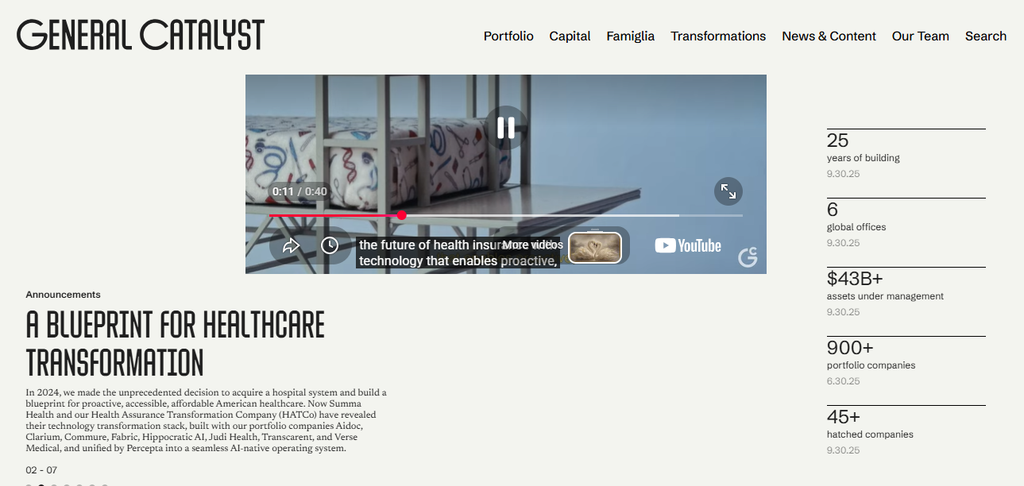
General Catalyst was founded in 2000 and has grown rapidly under the leadership of Hemant Taneja, who took over as CEO and pushed the firm to expand well beyond a typical venture fund, including moves into healthcare and even owning a hospital system.
The firm invests at every stage, from very early startups to large, established companies, and has backed notable names like Stripe, Airbnb, and Samsara.
What General Catalyst does: Invests across all stages of a company’s growth, from first-time founders to established businesses.
Services: Seed and early-stage funding, growth-stage investment, and specialized support for healthcare and technology companies.
9. Greylock Partners – One of America’s Oldest Venture Firms

- Founded: 1965
- Owner: Founded by Bill Elfers & Dan Gregory; partnership-owned
- Headquarters: Menlo Park, California
Greylock was founded all the way back in 1965 in Boston, making it one of the very first venture capital firms in the country. It later moved its main base to Silicon Valley to be closer to the technology companies it invests in.
The firm focuses mainly on being the very first investor in a startup, and has backed some of the internet’s biggest names, including Facebook, LinkedIn, Airbnb, and Palo Alto Networks.
What Greylock Partners does: Focuses on being the first institutional investor in promising consumer and enterprise software startups.
Services: Seed and Series A funding, along with hands-on company-building support for early-stage founders.
10. Bessemer Venture Partners – The Oldest VC Firm in America
- Founded: 1911
- Owner: Grew out of the Phipps family steel fortune; owned and run by its partners
- Headquarters: San Francisco, California
Bessemer’s roots stretch back to 1911, growing out of money made in the steel industry by the Phipps family, which makes it the oldest venture capital firm operating in the United States today.
Over more than a century, Bessemer has evolved many times to keep up with new industries, and now backs technology companies across software, fintech, and healthcare, having supported well-known names like Shopify, Pinterest, and LinkedIn.
What Bessemer Venture Partners does: Invests in technology companies from their early days through to later growth stages.
Services: Seed and early-stage funding, growth-stage investment, and long-term partnership support for founders.
Frequently Asked Questions (FAQs)
1. Which is the oldest venture capital firm on this list?
Bessemer Venture Partners is the oldest firm here, with roots going all the way back to 1911.
2. Which venture capital firm currently manages the most money?
Andreessen Horowitz (a16z) currently manages around $90 billion, making it one of the largest venture firms by assets under management.
3. What is the difference between a venture capital firm and a bank?
A bank lends money and expects it back with interest, while a venture capital firm invests money in exchange for part-ownership of the company, hoping the company grows large enough to make that investment valuable.
4. Which firm is known for its unique equal-partnership structure?
Benchmark is known for giving all its general partners an equal share of profits, regardless of seniority, which is unusual in the venture industry.
5. Which firms on this list are based outside of California?
General Catalyst is headquartered in Cambridge, Massachusetts, while the rest of the firms on this list are based in California.
6. Do venture capital firms only invest in tech startups?
Most firms on this list focus mainly on technology, but several, including NEA, Kleiner Perkins, and General Catalyst, also invest heavily in healthcare and life sciences companies.
7. What does “seed stage” and “growth stage” mean in venture capital?
Seed stage refers to a company’s very first funding round, often before it has much revenue, while growth stage refers to later funding rounds for companies that are already growing quickly and need more capital to expand.
8. Which firm recently changed its top leadership?
Sequoia Capital saw a major leadership change in late 2025, with Alfred Lin and Pat Grady taking over as the firm’s new stewards.
9. Are venture capital investments risky?
Yes, venture capital is considered a high-risk investment because most startups fail, but firms aim to make up for those losses through a small number of very large successes.
10. Why do these firms matter beyond just the startups they fund?
The companies backed by these firms go on to create jobs, new technologies, and entire industries, meaning the decisions these ten firms make have a ripple effect across the whole US economy.
Conclusion
America’s venture capital industry is built on a foundation of contrasts and contradictions. Long-established firms such as Bessemer, Greylock, and Sequoia have been buying the first round of financing for the most successful entrepreneurs for years, while the newer funds such as Andreessen Horowitz and General Catalyst have invested billions of dollars in the most promising up-and-coming venture capitalists in the industry.
The ten firms on this list have been at the forefront of the industry, nurturing and feeding the most successful companies in the world. As artificial intelligence and other disruptive technologies disrupt entire industries, these venture firms will be at the forefront, researching and analyzing which technology and concept will dominate the next decade.