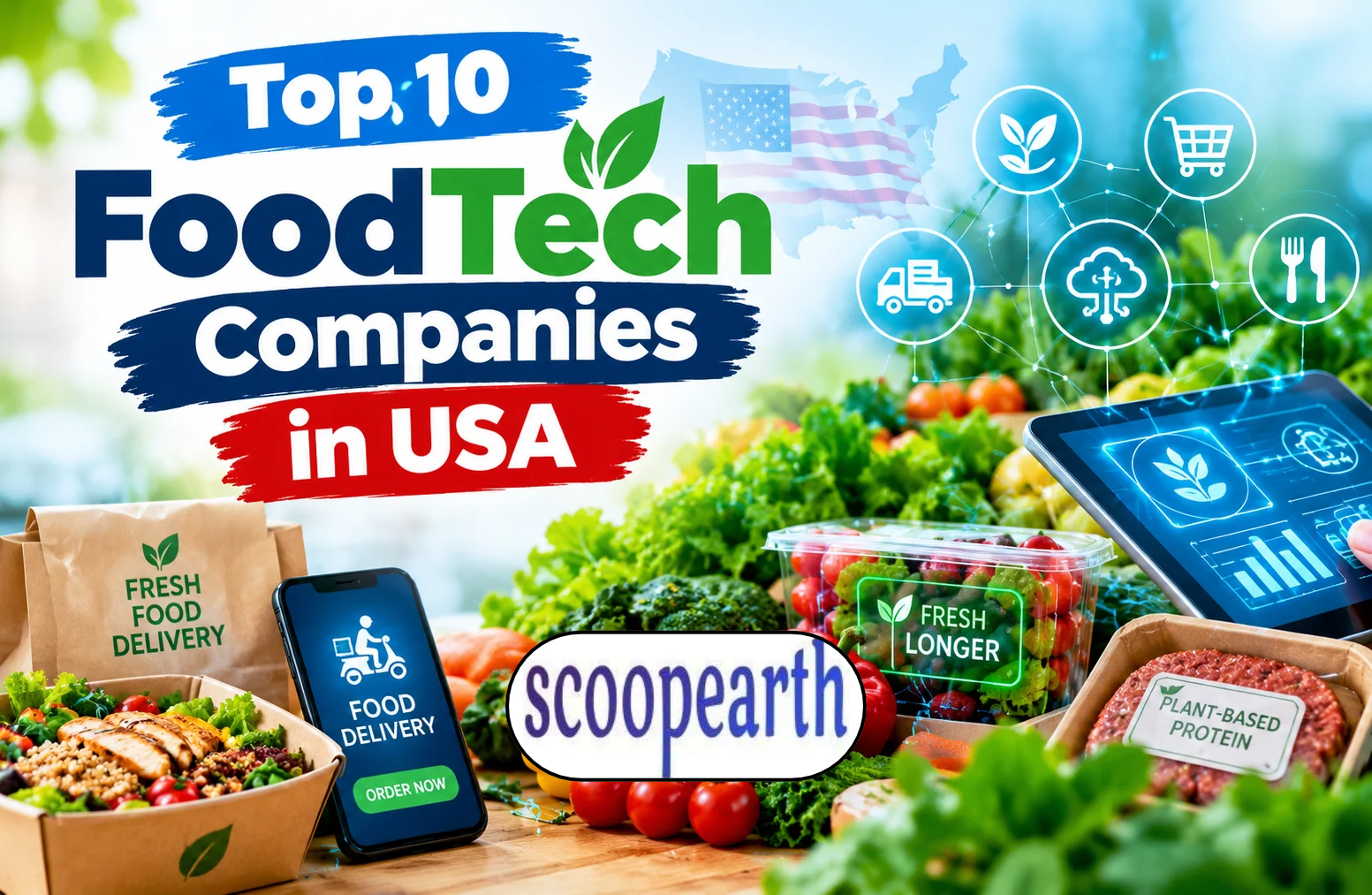
Food is no longer about what people buy, cook or eat. Technology now affects how groceries arrive at homes, how restaurants process orders and how fresh produce remains fresh. How companies create alternatives to traditional meat. This growing field is called FoodTech. In FoodTech food businesses use platforms, scientific research and new technology to solve problems across the food industry.
The Top 10 FoodTech Companies in the United States are businesses that work in different areas. Some connect customers with restaurants. Others supply software for restaurant owners to simplify grocery shopping. Develop new ways to preserve food. Their business models differ. Each shows how technology can change part of the food supply chain.
This list looks at business size relevance to the United States market, technology use, range of services and available company information. It is not an industry ranking. The order does not mean that one company is the best, for every customer or business.
Financial figures come from the recent available reports where possible. Public companies report revenue and net income. Several FoodTech businesses do not publish these figures. In those cases the article clearly states that the information is not publicly disclosed.
1. DoorDash
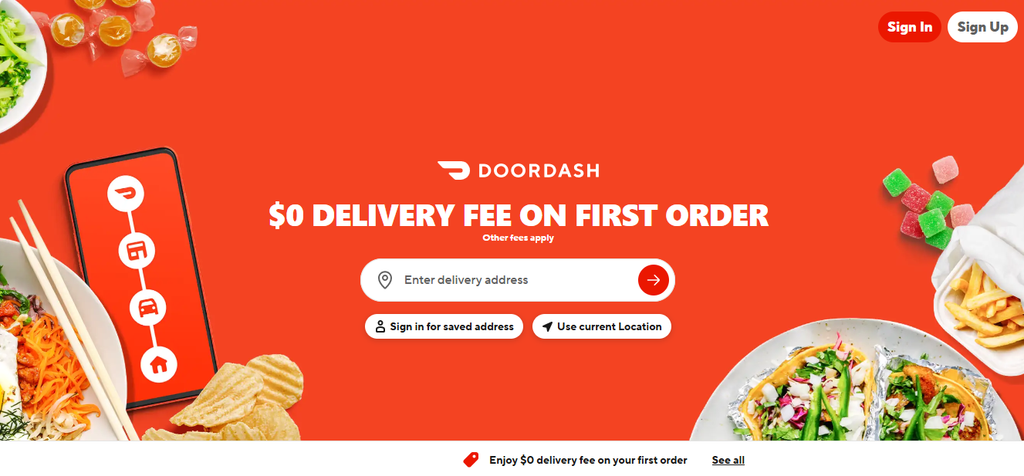
DoorDash is a name that many Americans know when they want restaurant meals delivered right to their homes. The company started in 2013 by linking customers with restaurants and delivery workers. It has grown over the years to include groceries, convenience products and other local shopping options.
| Founded: 2013 |
| Headquarters: San Francisco, California |
| Latest Revenue: FY2025 revenue approximately US$13.7 billion |
| Latest Net Income: FY2025 net income approximately US$935 million |
| Main Products/Services: Restaurant delivery, grocery delivery, local commerce and merchant technology |
The technology used by the platform takes care of parts of an order like finding a restaurant, making payments, tracking delivery and communicating between customers, businesses and delivery workers. Companies can also use the tools from DoorDash to help with orders and reach more customers.
Its size makes it a major player in the US FoodTech industry. DoorDash had US$75 billion in sales for local merchants in more than 40 countries in 2025. This number shows the sales made by the merchants, not the company’s income. The 2025 annual report from DoorDash is the place to find the company’s financial details.
2. Uber Technologies
Uber is known for ride-hailing. Food delivery is another big part of its business. With Uber Eats people can order meals from restaurants. In some areas groceries and everyday items.
| Founded: 2009 |
| Headquarters: San Francisco, California |
| Latest Revenue: FY2025 total company revenue US$52.0 billion |
| Latest Net Income: FY2025 net income attributable to common stockholders approximately US$10.1 billion |
The app lets users look at menus and compare choices pay track deliveries. Restaurants can use the platform to reach customers who may not have come to their place. Delivery workers also use the technology to get and finish orders.
Uber reported US$17.2 billion in revenue from its Delivery segment in FY2025, compared with US$52.0 billion in total company revenue. These numbers cover the business segments that Uber reports. Should not be considered as Uber Eats revenue unless the company says so.
Uber’s role in FoodTech comes from combining a digital marketplace with delivery services and payment technology. Source:
3. Instacart
Instacart focuses on a part of the food business: groceries. Then mainly focusing on restaurant meals it helps customers buy food and household items from participating stores.
| Founded: 2012 |
| Headquarters: San Francisco, California |
| Latest Revenue: FY2025 US$3.74 billion |
| Latest Net Income: FY2025 US$447 million |
| Main Products/Services: Online grocery shopping, grocery delivery, retailer technology and advertising |
The platform brings together shoppers, grocery stores and customers. Depending on the store and the location users can pick items online. Arrange to have them delivered or picked up. The business also gives technology to help grocery stores improve their shopping experience.
Advertising is another part of Instacarts business. Food brands can show their products to customers while stores can use the tools to reach more people. The technology offered by it goes beyond the consumer app offering ways for grocery businesses to run online sales.
Instacarts FY2025 revenue came from transaction services and advertising. The company reported US$3.74 billion in total revenue and US$447 million in net income. This mix of grocery access, retail software and ads shows how FoodTech can work outside of food delivery.
4. Toast
Not all FoodTech companies deliver food to peoples homes. Toast works behind the scenes offering digital tools to help restaurants run their daily business.
| Founded: 2011 |
| Headquarters: Boston, Massachusetts |
| Latest Revenue: FY2025 US$6.15 billion |
| Latest Net Income: FY2025 US$342 million |
| Main Products/Services: Restaurant point-of-sale systems, digital payments, online ordering and restaurant management software |
Its system combines hardware and software for point-of-sale payment processing, online ordering and other restaurant services. Staff can use the system to take orders and process payments while restaurant owners can use the tools to manage sales and business activities.
A restaurant may need to handle dine-in, takeout, delivery and digital payments at the same time. Technology that brings all these together can help reduce work and make service easier to manage.
Toast is important for restaurants that want connected systems instead of using separate tools for each job. Its FY2025 annual report shows US6.15billioninrevenueandUS342 million in income. This number includes all the company’s activities so it should not be seen as software subscription revenue.
5. Olo
Olo focuses on the digital systems that restaurants use. Its software helps restaurants manage orders, payments and customer interactions across different platforms.
| Founded: 2005 |
| Headquarters: New York, New York |
| Latest Revenue: Not publicly disclosed in a current standalone public filing |
| Latest Net Income: Not publicly disclosed in a current standalone public filing |
| Main Products/Services: Digital ordering, restaurant commerce software, payment tools and guest engagement technology |
For example, a restaurant chain might get orders through its website, app and other digital places. Without systems workers might have to use several tools separately. Olo’s technology is made to bring these tasks and make it easier for restaurant brands to handle digital operations.
The company started in 2005 with the idea of letting customers order food using technology. Its services now support restaurant businesses in formats from fast food places to casual dining chains.
Olo said its platform supports more than 800 brands and around 90,000 locations according to its company information. These numbers show how many brands and locations are on the platform, not how restaurants the company owns. Its place on this list is because of its focus on the technology that helps with restaurant orders not running a consumer delivery service.
6. Wonder
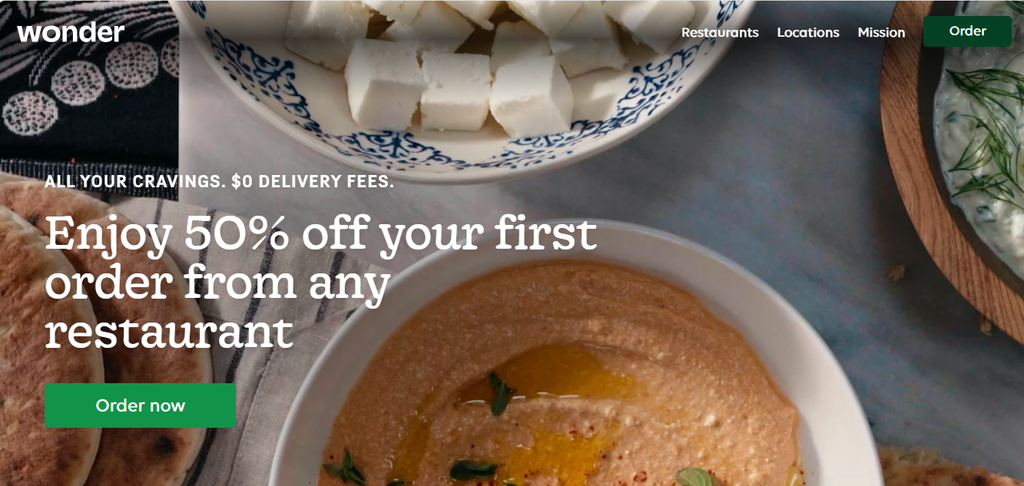
Wonder has a way of doing things by mixing food preparation and delivery services. Of just being a marketplace the business brings together different ways for customers to get meals.
| Founded: 2018 |
| Headquarters: New York, New York |
| Latest Revenue: Not publicly disclosed |
| Latest Net Income: Not publicly disclosed |
| Main Products/Services: Prepared meals, food delivery, meal kits and restaurant ordering |
The business has grown by buying companies. Wonder bought the meal-kit company Blue Apron. Finished buying Grubhub in January 2025. Grubhub lets customers order food from restaurants online and get it delivered. It also has its ways to offer prepared meals and other food choices.
In 2025, Wonder said it is working on a mealtime platform that brings together restaurant orders, meal kits and prepared food. This gives customers choices for meals within a bigger service.
Wonder is included because it shows how FoodTech companies are trying models that mix food preparation, technology and delivery. However it is not a company and there is no reliable current number for its revenue or net income. Grubhub should not be counted as a company in this list because it is now part of Wonder.
7. ChowNow
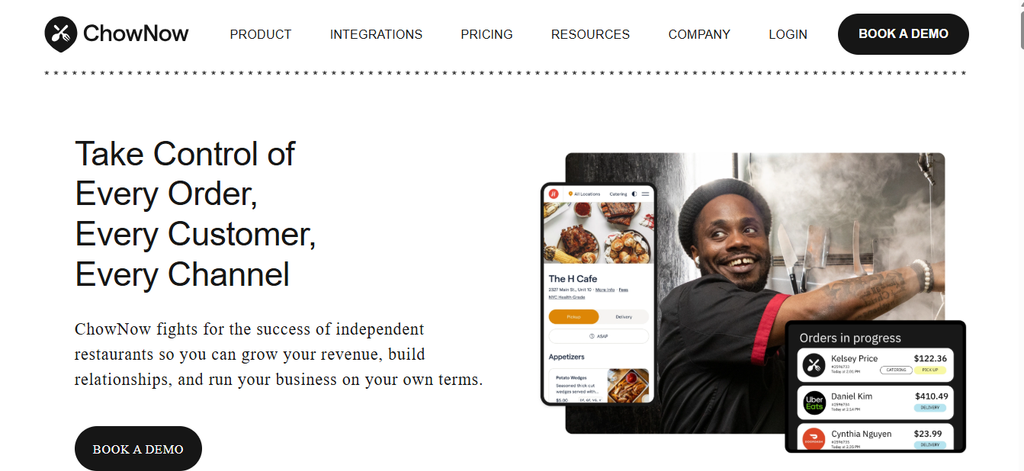
ChowNow helps small restaurants take online orders through their own digital tools. Its business is different from delivery marketplaces because it helps restaurants build direct relationships with customers.
| Founded: 2011 |
| Headquarters: Culver City, California |
| Latest Revenue: Not publicly disclosed |
| Latest Net Income: Not publicly disclosed |
| Main Products/Services: Restaurant websites and apps, direct online ordering, pickup and delivery tools |
A local restaurant can use its ordering tools on its website or other supported channels. Customers can order for pickup or delivery and restaurant owners can manage orders without depending on a third-party marketplace.
ChowNow also offers a way to order without paying commissions. This can be good for restaurants that want to keep more control over their customers and avoid some of the costs of marketplaces. Businesses should still check the details and fees of the services they use.
The company says it works with more than 20,000 independent restaurants. This number comes from the company’s information and should be taken as a company-provided count. Its focus on food businesses makes it unique in the US FoodTech industry.
8. Apeel Sciences
Apeel Sciences works on a problem that starts before food gets to the store: spoilage. Fruits and vegetables can lose water. Get worse during storage and transport causing waste in the supply chain.
| Founded: 2012 |
| Headquarters: Goleta, California |
| Latest Revenue: Not publicly disclosed |
| Latest Net Income: Not publicly disclosed |
| Main Products/Services: Plant-based produce coatings and technology designed to extend freshness |
The company makes plant-based coatings that help certain fresh produce stay longer. The idea comes from the layers that protect fruits and vegetables. Its technology is meant to stop moisture loss and slow the processes that make produce go bad.
This is a kind of FoodTech rather than a delivery app. By focusing on how customers order food Apeel works on keeping food fresh after it is picked. Longer freshness helps farmers, stores and others. The results depend on the type of produce and how it is stored.
Apeels work is important because food waste happens in places between farms and people. The company is privately owned. Its latest revenue and net income are not shared with the public.
9. Impossible Foods
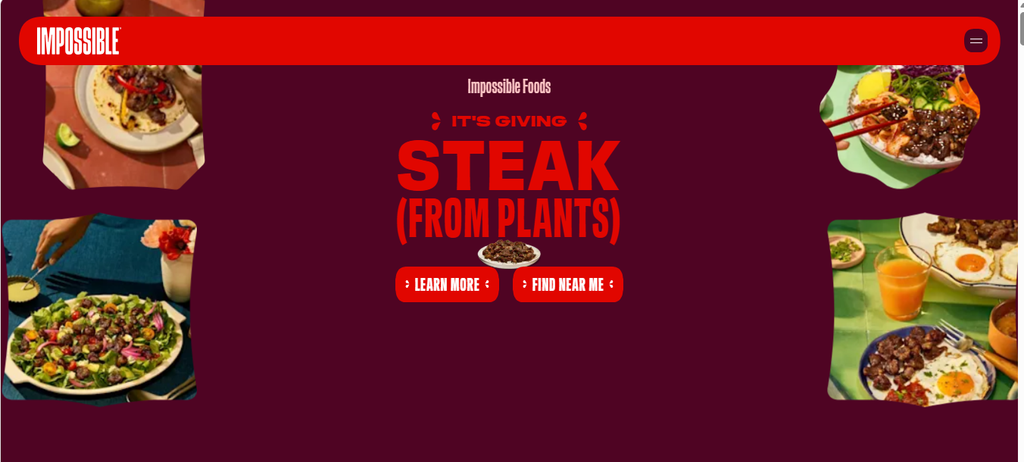
Impossible Foods uses science to make plant-based versions of meat. Its goal is to copy the taste, feel and cooking behavior that people like about meat.
| Founded: 2011 |
| Headquarters: Redwood City, California |
| Latest Revenue: Not publicly disclosed |
| Latest Net Income: Not publicly disclosed |
| Main Products/Services: Plant-based meat alternatives, including burger patties and other meat-style products |
The company started in 2011. Its first product, the Impossible Burger came out in 2016. Since then it has added plant-based options. The products are sold in restaurants and stores depending on the area.
Food technology is central to this business. By just making a vegetable dish the company studies food ingredients and creates mixtures that act more like meat when cooked and eaten.
The company wants to give people meat- meals made from plants. Whether these products are right for someone depends on taste, cost, ingredients and diet. Impossible Foods is not a company so its revenue and net income are not shared the same way as public companies.
10. Farmers Fridge
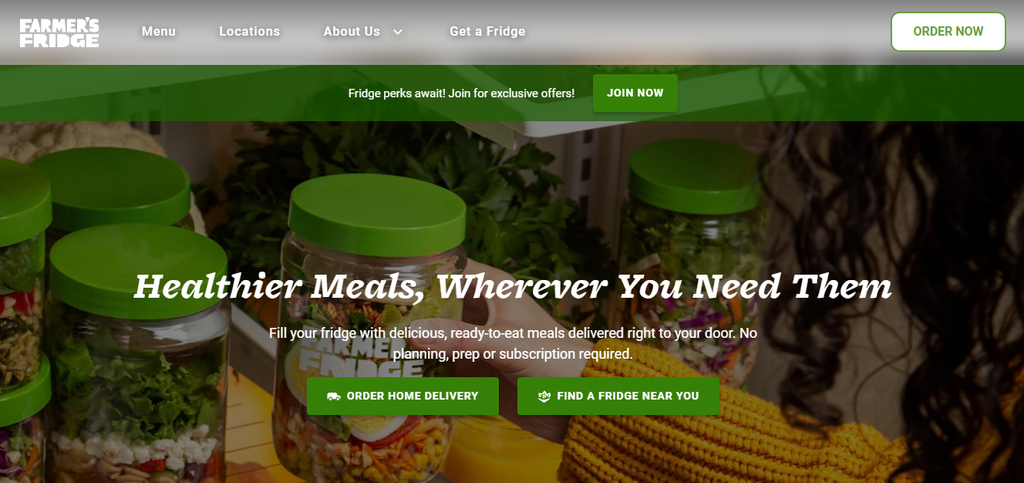
Farmers Fridge mixes prepared food with sales. The company is known for refrigerated vending machines that let customers buy to-eat meals and snacks from places like offices, hospitals and busy areas.
| Founded: 2011 |
| Headquarters: Redwood City, California |
| Latest Revenue: Not publicly disclosed |
| Latest Net Income: Not publicly disclosed |
| Main Products/Services: Plant-based meat alternatives, including burger patties and other meat-style products |
Its idea solves a problem: people want fresh food but may not have time to go to a restaurant or store. The machines make it easy to buy food while the company handles preparing, filling and running the products in places.
Technology helps the business with sales and managing food stock. Fresh meals also need care, cold storage and restocking so the system is more than the vending machine.
Farmers Fridge shows how food preparation, retail and automation can come together. It proves that FoodTech is not about apps or lab-made ingredients. Sometimes the change is in how and where people get a meal. The company is privately owned. Its revenue and net income are not public.
Top 10 FoodTech Companies in USA: Comparison
| Rank | Company | Founded | Latest Revenue | Main Products/Services |
| 1 | Olo | 2005 | Not publicly disclosed in a current standalone public filing | Restaurant ordering technology |
| 2 | Uber Technologies | 2009 | US$52.0 billion (FY2025, total company) | Uber Eats, mobility and delivery |
| 3 | Toast | 2011 | US$6.15 billion (FY2025) | Restaurant software and payments |
| 4 | ChowNow | 2011 | Not publicly disclosed | Direct restaurant ordering |
| 5 | Impossible Foods | 2011 | Not publicly disclosed | Plant-based meat alternatives |
| 6 | Instacart | 2012 | US$3.74 billion (FY2025) | Online groceries and retailer technology |
| 7 | Apeel Sciences | 2012 | Not publicly disclosed | Produce preservation technology |
| 8 | DoorDash | 2013 | Approx. US$13.7 billion (FY2025) | Food and grocery delivery |
| 9 | Farmer’s Fridge | 2013 | Not publicly disclosed | Fresh meals and automated food retail |
| 10 | Wonder | 2018 | Not publicly disclosed | Prepared meals and food delivery |
What Should You Consider When Comparing FoodTech Companies?
The right company to consider depends on which part of the food industry interests you. Customers looking for restaurant meals or groceries may focus on delivery coverage, available restaurants, delivery fees and product prices. Restaurant owners may be more interested in order management, payment processing, software costs and how control they retain over customer information.
Food producers and retailers have priorities. For them, product preservation, storage, supply-chain efficiency and food safety may matter more than app design. Businesses developing plant-based products must also consider taste, ingredients, price and whether customers can easily find their products.
Financial size is another factor. It should be compared carefully. A delivery platform’s revenue cannot be compared directly with a food science company’s undisclosed sales. Before making a business decision check the company’s official information, service terms, geographical availability and the specific problem its technology is designed to solve.
Conclusion
FoodTech in the USA covers more than food delivery. Digital marketplaces connect customers with restaurants, software companies help food businesses manage orders and food science firms work on freshness and alternative ingredients. These companies operate in areas so their services and financial results are not directly comparable.
For readers, restaurant owners and aspiring entrepreneurs the useful lesson is to look beyond the app or product itself. Understanding the problem a company solves, how its technology works and whether its service fits a need offers a clearer picture of its value in the food industry.
FAQs
1. What are the top FoodTech companies in the USA?
Some notable US FoodTech companies include DoorDash, Uber Technologies, Instacart, Toast, Olo, Wonder, ChowNow, Apeel Sciences, Impossible Foods, and Farmer’s Fridge. They operate across food delivery, grocery shopping, restaurant software, food preservation, plant-based products, and automated food retail.
2. What does FoodTech mean?
FoodTech refers to the use of technology in food production, processing, distribution, ordering, retail, and consumption. It includes grocery delivery apps, restaurant management software, automated food vending, plant-based food development, and technologies that help keep food fresh for longer.
3. Which FoodTech companies focus on food delivery?
DoorDash and Uber Eats are well-known food delivery platforms. Instacart focuses primarily on grocery shopping and delivery. Wonder combines meal ordering with food services, while ChowNow helps restaurants accept direct online orders.
4. Which companies provide technology for restaurants?
Toast provides point-of-sale systems, payment services, and restaurant management tools. Olo focuses on digital ordering and restaurant commerce technology, while ChowNow supports direct online ordering for independent restaurants. These services help food businesses manage operations and customer orders.
5. Which FoodTech companies help with grocery shopping?
Instacart connects customers with participating grocery retailers for shopping and delivery. DoorDash also offers grocery and convenience delivery in supported areas. Store availability, product selection, delivery fees, and service options depend on the customer’s location.
6. Which FoodTech companies work on reducing food waste?
Apeel Sciences develops plant-based coatings designed to help certain fruits and vegetables stay fresh for longer. Food waste can occur during storage, transportation, and retail, so preservation technology may help address part of the problem. Results depend on the product and handling conditions.
7. Are all FoodTech companies publicly listed?
No. DoorDash, Uber Technologies, and Toast are publicly traded companies, while several businesses in this list are privately held. Instacart is also publicly traded through its parent company, Maplebear Inc. Public companies generally publish financial reports, whereas private companies may not disclose detailed revenue or profit figures.
8. Why do some FoodTech companies not disclose revenue?
Privately held companies generally are not required to publish the same detailed financial statements as publicly listed businesses. They may release selected business updates, but these announcements do not always include audited revenue or net income figures. It is better to state that financial figures are not publicly disclosed than to provide unsupported estimates.
9. Is FoodTech limited to apps and online delivery?
No. FoodTech also includes restaurant software, automated retail, food preservation, and the development of innovative food products. Companies such as Toast, Apeel Sciences, Impossible Foods, and Farmer’s Fridge demonstrate how technology can influence different stages of the food industry.