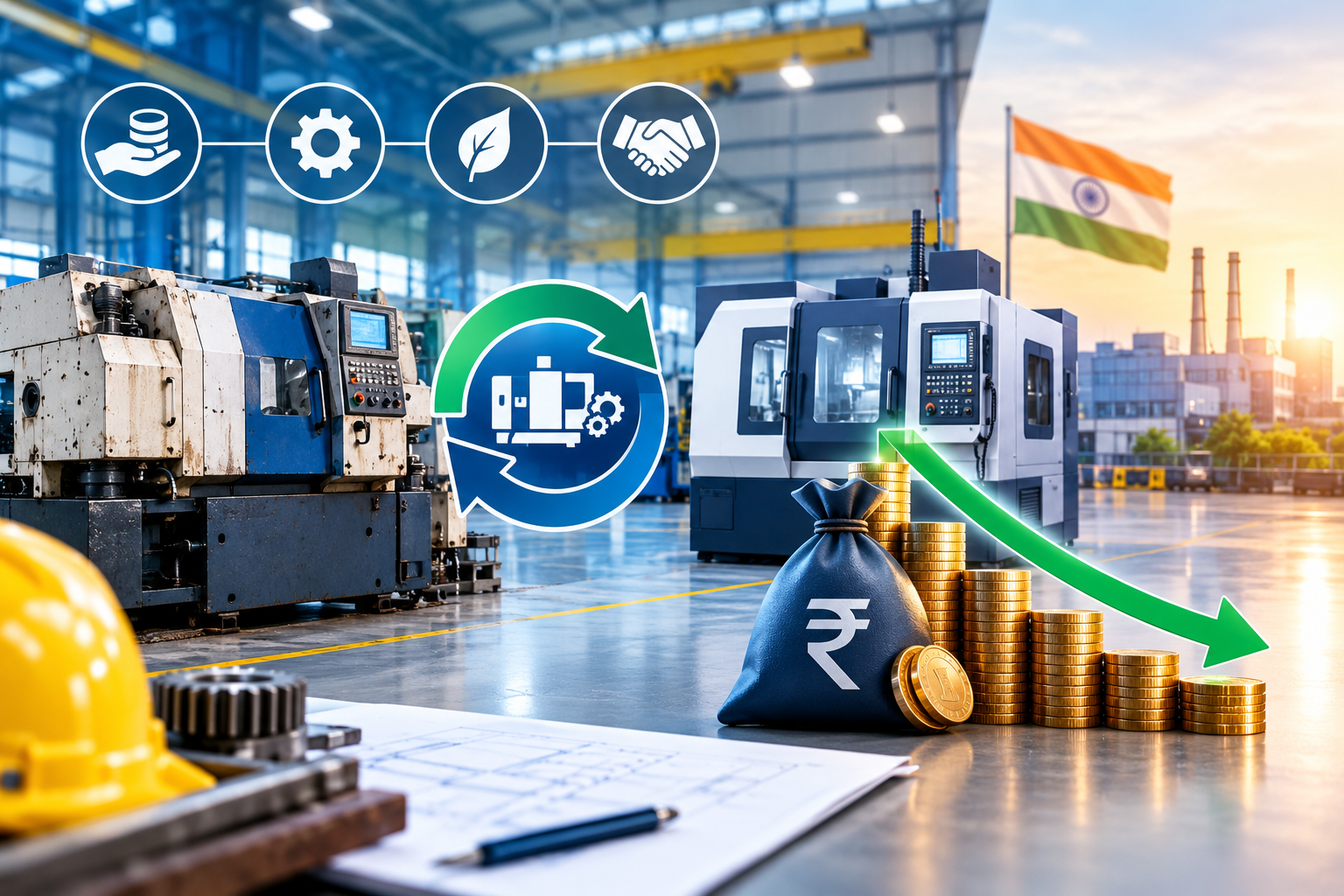
Indian chemical and pharmaceutical manufacturers face a persistent challenge: balancing the need for modern, reliable process equipment with tight capital budgets. While greenfield projects and multinational subsidiaries often purchase new reactors and vessels directly from OEMs, a growing segment of the industry has turned to the secondary equipment market to access high-quality process systems at a fraction of new equipment costs. This shift is particularly relevant for mid-sized manufacturers, contract manufacturing organizations, and companies expanding into specialized product lines where lead times and upfront investment can make or break project feasibility.
The secondary market for industrial process equipment has matured significantly over the past two decades. What was once viewed as a last resort for outdated or compromised equipment has evolved into a structured channel where decommissioned reactors, heat exchangers, and separation systems from developed markets enter India’s manufacturing ecosystem. These units often come from facilities that have undergone capacity rationalization, product line changes, or regulatory-driven upgrades, meaning the equipment itself may have years of operational life remaining.
The Economics of Used Process Equipment
New stainless steel reactors with agitation systems, jacketing, and instrumentation can require lead times of 40 to 52 weeks from order to installation. For a 5,000-liter reactor with standard features, capital expenditure typically ranges from ₹80 lakh to ₹1.5 crore depending on specifications, materials of construction, and accessory requirements. Glass-lined reactors, essential for corrosive chemistry in pharmaceutical intermediates and specialty chemicals, carry even higher price tags due to the specialized enameling process and quality control requirements.
Used equipment shifts this equation substantially. The same reactor sourced from the secondary market may cost 40 to 60 percent less than new, with delivery possible within 8 to 12 weeks once inspection and reconditioning are complete. For manufacturers working on pilot-scale commercialization or producing products with uncertain long-term demand, this cost structure transforms project economics. The savings extend beyond the reactor itself—shorter lead times mean earlier revenue generation, reduced financing costs, and faster response to market opportunities.
Material Selection and Equipment Longevity
Not all process equipment ages equally. Stainless steel reactors in 316L alloy, when properly maintained and operated within design parameters, can deliver decades of service. Glass-lined vessels require more careful assessment—the integrity of the glass lining determines usability, and even minor chips or cracks can lead to base metal exposure and contamination. Specialized alloys like Hastelloy, titanium, and zirconium are used in highly corrosive applications, and their excellent corrosion resistance means used units often retain performance characteristics close to new equipment.
Buyers in the secondary market must conduct thorough inspections. For glass-lined equipment, high-voltage holiday testing identifies defects in the enamel layer. Pressure vessels require documentation of original code compliance—ASME Section VIII in North America, PED in Europe—and may need recertification under Indian regulations. Mechanical components such as agitators, seals, and drives should be evaluated separately, as these may require refurbishment or replacement even when the vessel shell remains sound.
Reactor Types and Application Fit
Batch reactors dominate pharmaceutical and specialty chemical production due to their flexibility. A single reactor can handle multiple products with cleaning and changeover between batches. Agitated batch reactors with standard features—jacket heating and cooling, top-mounted agitator, bottom outlet valve, and sight glass—suit the widest range of applications. Fixed bed reactors serve continuous catalytic processes, while hydrogenation reactors incorporate specialized pressure ratings and hydrogen handling features for reduction chemistry.
The choice between stainless steel and glass-lined construction depends on process chemistry. Glass linings provide exceptional corrosion resistance for acidic and alkaline processes but cannot tolerate thermal shock or mechanical impact. Stainless steel accepts wider temperature swings and rough handling but may corrode in halogenated solvents or strong acids. Understanding these trade-offs helps manufacturers match available used equipment to actual process requirements rather than over-specifying based on new equipment defaults.
Sourcing Used Reactors for Indian Manufacturing
Several manufacturing companies in India have integrated used equipment procurement into their standard capital planning process. The secondary market provides options beyond reactors—distillation columns, heat exchangers, storage tanks, and mixing vessels all circulate through resale channels. The key lies in working with suppliers who understand both the technical requirements of process equipment and the regulatory landscape of chemical manufacturing.
International Process Plants exemplifies the specialized firms operating in this space. The company sources and supplies used batch-type agitated reactors and other process equipment specifically for chemical, pharmaceutical, biotech, and specialty manufacturing applications. For manufacturers seeking a glass lined batch reactor or stainless steel alternatives, suppliers like IPP provide access to decommissioned units from North American and European facilities, often with complete documentation and the option for third-party inspection before purchase. Their inventory spans various materials of construction including Hastelloy and titanium for specialized corrosion requirements, offering manufacturers choices that would be prohibitively expensive if purchased new.
Installation and Integration Considerations
Acquiring used equipment is only the first step. Installation requires careful planning to ensure the reactor integrates with existing utilities, control systems, and safety infrastructure. Dimensional verification matters—a reactor that fits the available floor space in theory may have nozzle orientations or support leg configurations that conflict with piping layouts or structural constraints in practice. Smart buyers request detailed dimensional drawings and photographs before committing to purchase.
Instrumentation and control integration often requires updating. A reactor decommissioned in 2015 may have pneumatic controls or older digital systems incompatible with modern DCS or PLC platforms. Budgeting for instrument upgrades, new temperature sensors, and pressure transmitters ensures the used reactor performs reliably within the facility’s control architecture. Mechanical seals, gaskets, and packing should be replaced as standard practice during installation, treating these as consumables regardless of the equipment’s appearance.
Regulatory and Documentation Requirements
Indian regulatory authorities require pressure vessels to meet specific design and testing standards. The Chief Controller of Explosives oversees compliance for vessels in hazardous chemical service, while state pollution control boards evaluate emission control and safety features. Used equipment imported into India must clear customs with proper classification and may require inspection by Indian Boiler Regulations authorities depending on operating conditions.
Original equipment documentation becomes crucial here. The manufacturer’s data report, original design calculations, and pressure test certificates establish the vessel’s pedigree. For reactors built to ASME code, Section VIII documentation provides the foundation for recertification under Indian standards. Equipment without proper documentation faces significant barriers to regulatory approval, making document completeness a key factor in equipment evaluation. Academic resources such as the chemical and biological reaction engineering course materials from MIT provide foundational knowledge for engineers assessing whether specific reactor designs suit their process requirements.
Risk Management in Secondary Equipment Procurement
The used equipment market carries inherent risks that careful procurement practices can mitigate. Hidden damage, incomplete accessories, and misrepresented specifications represent the primary concerns. Third-party inspection before purchase provides the most reliable risk reduction—qualified inspectors can perform non-destructive testing, verify materials of construction, and assess mechanical condition independent of seller claims.
Payment structures should reflect inspection results. Deposits secure equipment availability, but full payment contingent on inspection approval protects buyers from acquiring equipment that fails to meet specifications. Transportation damage during international shipping requires clear responsibility assignment in purchase agreements. Insurance coverage for the equipment value during transit is standard practice for imports.
The Strategic Role of Secondary Markets
The secondary equipment market serves a specific strategic function in Indian manufacturing. For established production, where process validation and product registration tie manufacturers to specific equipment configurations, new OEM equipment makes sense. For new products, pilot commercialization, or capacity expansions with uncertain ROI, used equipment provides a lower-risk entry point. The cost savings translate directly to improved project returns, shorter payback periods, and reduced financial exposure if market conditions shift.
As India’s pharmaceutical and specialty chemical sectors continue growing—driven by API manufacturing, contract development, and agrochemical intermediates—the demand for flexible, cost-effective process equipment will expand. Manufacturers who develop expertise in evaluating and integrating secondary market equipment gain a competitive advantage through faster project execution and optimized capital deployment. The key lies in treating used equipment procurement not as a compromise but as a deliberate strategy that requires technical rigor equal to new equipment specification.
Conclusion
Secondary process equipment markets are becoming a practical capital-saving strategy for Indian chemical and pharmaceutical manufacturers seeking to balance operational efficiency with financial discipline. By purchasing quality used reactors, heat exchangers, and other process systems, manufacturers can reduce equipment costs, shorten procurement timelines, and accelerate project execution without automatically compromising performance. However, these benefits depend on thorough technical inspections, material compatibility assessments, complete documentation, regulatory compliance, and proper integration with existing plant infrastructure. While new equipment remains preferable for certain validated or highly specialized processes, the secondary market offers a compelling alternative for pilot production, capacity expansion, and projects with uncertain returns. As India’s specialty chemical and pharmaceutical industries continue to grow, manufacturers that combine rigorous equipment evaluation with strategic procurement can optimize capital investment, improve project profitability, and build greater flexibility into their production operations.