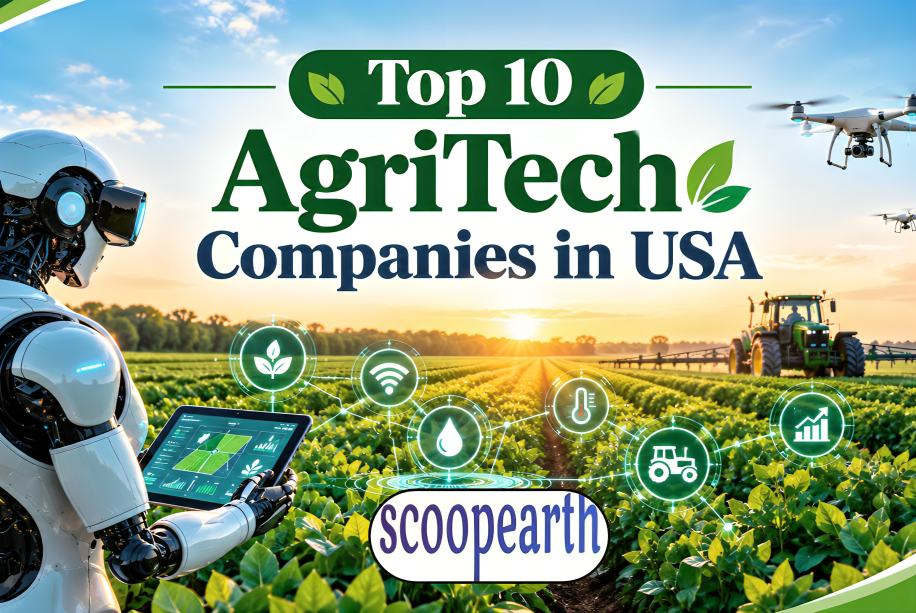
Farming is not about planting seeds and waiting for crops to grow. It’s a lot more than that. Farmers have to deal with things like weather, soil quality, expensive equipment, pests, water use and prices that change often. Agricultural technology or AgriTech helps farmers make choices and handle these problems better.
In the United States AgriTech includes different tools and systems. Think GPS-guided tractors, digital platforms to manage farm operations, products to protect crops, natural fertilizers made from living organisms, machines that work automatically and systems that use data from fields to decide when and how to plant and harvest. Some companies build tech for farms while others focus on solving one specific issue like cutting down on chemicals or boosting crop nutrition.
This article lists the 10 AgriTech companies in the USA. They come from parts of the industry. Some are well-known agricultural companies that have added digital technology to their work. Others are specialized firms working on new farming ideas.
The ranking is not based on how money each company makes. Instead it’s a choice based on how useful their technology is, how many farming services they offer, how strong they are in the market and what information is publicly available about them. The financial numbers mentioned come from the recent reports each company has shared. Keep in mind private companies usually don’t share financial details.
1. John Deere
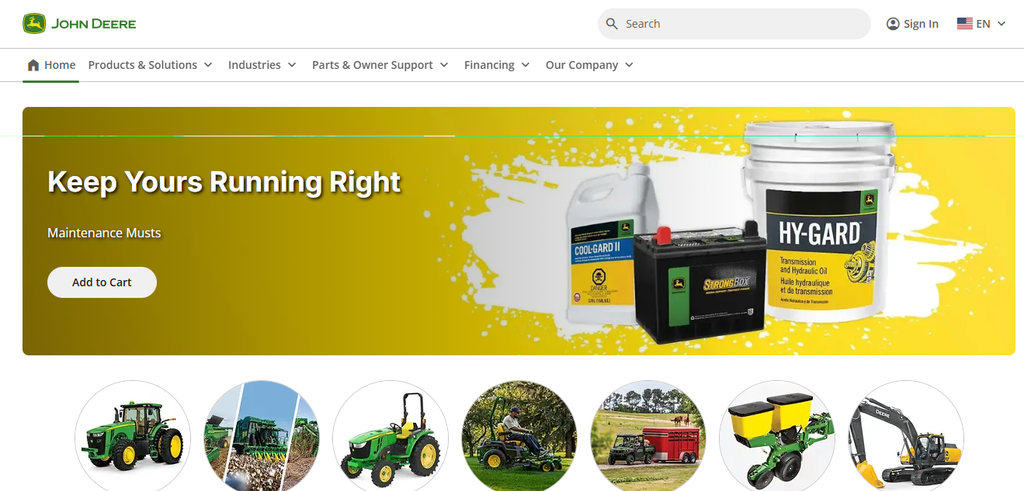
John Deere is widely recognised for its green-and-yellow tractors and harvesting equipment but its business also includes digital tools designed to help farmers manage field operations. Its technology connects machinery, field data and farm planning in one system.
| Founded: 1837 |
| Headquarters: Moline, Illinois, USA |
| Latest Revenue: FY2025 figures should be checked against the company’s latest annual report before publication |
| Latest Net Income: See the latest annual report |
| Main Products/Services: Agricultural machinery, precision farming systems, farm data software and automation technology |
The John Deere Operations Center allows users to organise farm information, review field performance and share data with operators or advisers. Farmers can use it to plan work, monitor operations and study results from seasons. The company also develops precision agriculture technology for activities such as planting, spraying and harvesting.
John Deere earns its place on this list through the combination of machinery and connected technology. Then treating software as a separate activity it links digital tools with equipment used throughout the farming cycle. This can be especially relevant for farms managing areas or several machines.
2. Corteva Agriscience
Corteva Agriscience focuses on helping farmers protect crops and improve production. Its business includes seeds, crop protection products and research into solutions. The company became a publicly traded business in 2019 following the separation of DowDuPont’s agriculture division.
| Founded: 2019 as an independent company |
| Headquarters: Indianapolis, Indiana, USA |
| Latest Revenue: FY2025 net sales of approximately US$17.4 billion |
| Latest Net Income: Refer to the FY2025 annual report for the reported figure |
| Main Products/Services: Seeds, crop protection products and agricultural research |
Its work combines agricultural science with data and research intended to help farmers make decisions about crop varieties and crop protection. Its seed and crop protection businesses serve needs during the growing season from selecting what to plant to managing weeds, insects and disease.
Corteva reported US$17.4 billion in net sales for 2025 according to its investor information. This is the company’s reported sales, not revenue from digital AgriTech products alone.
Corteva is included because agricultural technology is not limited to machines and mobile apps. Crop science, seed development and improved crop protection also influence how farms operate.
3. AGCO Corporation
AGCO supplies agricultural machinery and technology through brands including Fendt, Massey Ferguson, Valtra and PTx. Its approach combines equipment with tools that help farmers improve the accuracy of field operations.
| Founded: 1990 |
| Headquarters: Duluth, Georgia, USA |
| Latest Revenue: FY2025 net sales of approximately US$10.1 billion |
| Latest Net Income: US$726.5 million attributable to AGCO Corporation in FY2025 |
| Main Products/Services: Farm machinery, precision agriculture systems, planting technology and equipment management tools |
One area of interest is PTx, AGCO’s precision agriculture portfolio. Its products include retrofit technology that can be fitted to equipment allowing farmers to upgrade parts of their existing machinery rather than replace an entire fleet. This matters to farms that use equipment from manufacturers.
The company reported about US$10.1 billion in net sales in 2025 and net income attributable to the company of US$726.5 million. Its annual report also describes work on mixed-fleet technology and farm data management.
AGCO stands out for connecting machinery with tools. Farmers can consider its solutions when they want to improve planting accuracy, monitor equipment or introduce precision technology gradually.
4. CNH Industrial
CNH Industrial is an international equipment company with a substantial agricultural business. Its agricultural brands include Case IH and New Holland Agriculture, which provide tractors, combines, planting equipment and other farm machinery.
| Founded: 2013 in its current corporate form |
| Headquarters: Basildon, England, with major US operations |
| Latest Revenue: FY2025 total revenue of US$18.1 billion |
| Latest Net Income: US$510 million attributable to CNH Industrial N.V. in FY2025 |
| Main Products/Services: Agricultural machinery, precision farming technology, equipment automation and farm management systems |
The company’s technology work covers precision farming, connected equipment and automation. These tools can help operators plan fieldwork, monitor machinery and carry out tasks accurately. Its equipment is used across types of farming operations from planting to harvesting.
CNH Industrial reported US$18.095 billion in total revenue for 2025, including net sales and finance, interest and other income. Net income attributable to the company was US$510 million for the same year. These are group-wide figures, not revenue from agricultural technology alone.
CNH is included because its machinery and precision systems connect technology with day-to-day farm work. Its solutions may be relevant to farmers who need equipment, service support and technology from one established supplier.
5. Bayer Crop Science
Bayer is a global life sciences company and its Crop Science division serves farmers through seeds, crop protection products and agricultural research. Although Bayer is not a company it has a substantial presence in the US agricultural market making its crop science business relevant to this list.
| Founded: Bayer was established in 1863; Crop Science is one of its business divisions |
| Headquarters: Bayer AG is headquartered in Leverkusen, Germany |
| Latest Revenue: Crop Science sales of €21.6 billion in FY2025 |
| Latest Net Income: Division-level net income is not separately listed in the cited figures |
| Main Products/Services: Seeds, crop protection, agricultural research and digital farming solutions |
Its work includes developing seed varieties and products designed to help manage weeds, insects and crop diseases. The company also has a role in data and digital tools that support crop management decisions.
Bayer reported Crop Science sales of €21.622 billion for 2025. This is division-level sales for the Crop Science business not sales, from the United States alone. Bayer’s total company financial results also include its pharmaceutical and consumer health divisions.
Bayer is included because modern farming relies on a combination of research, seeds, crop protection and data. Its US operations connect these areas with the needs of farmers.
6. Trimble
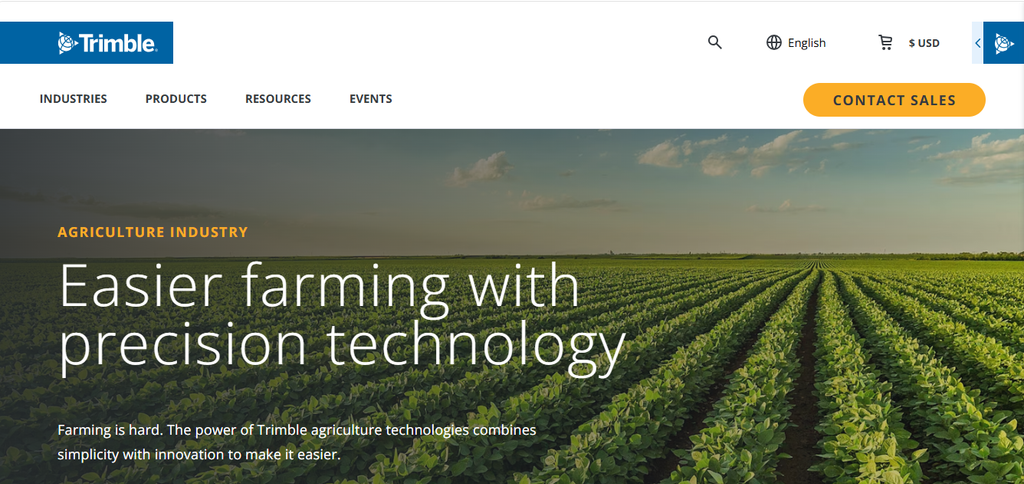
Trimble develops positioning and measurement technology used across industries, including agriculture. In farming, accurate positioning can help equipment follow planned paths, reduce overlap between field passes and improve the precision of tasks such as planting and applying inputs.
| Founded: 1978 |
| Headquarters: Westminster, Colorado, USA |
| Latest Revenue: Company-wide revenue should be verified against Trimble’s latest annual filing |
| Latest Net Income: Refer to the latest annual filing |
| Main Products/Services: Positioning technology, guidance systems, field mapping and precision agriculture tools |
Its agricultural technology has also been connected with AGCO’s precision farming business through the PTx joint venture. This relationship is important when comparing companies: PTx Trimble is a venture, not simply another independent brand that should be counted separately from its parent partners.
Its agricultural tools can be relevant to farmers who want to upgrade existing machinery or bring accurate guidance and field data into their operations. The technology can also support fleets, where a farm uses equipment from more than one manufacturer.
Trimble belongs on this list because positioning systems and machine guidance are parts of precision agriculture. Its company-wide financial results should not be presented as revenue from farming technology
7. Indigo Ag
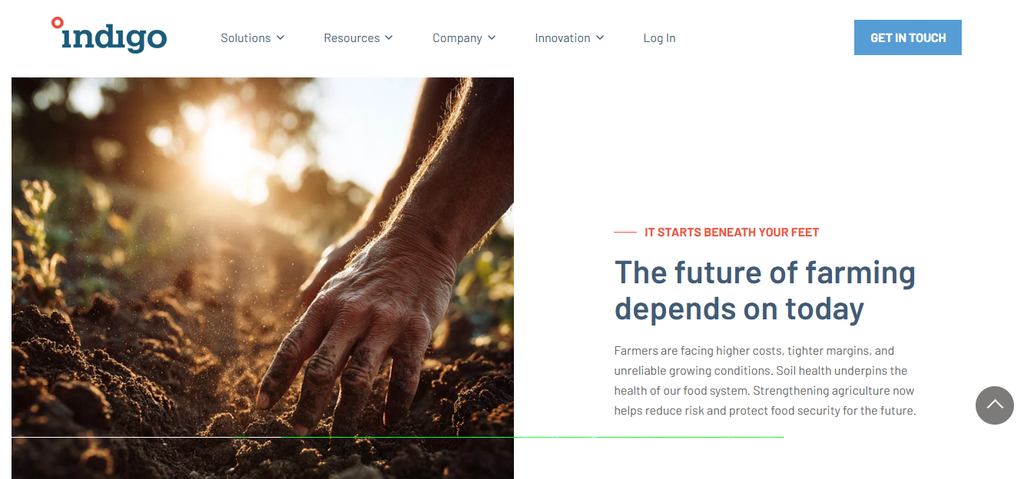
Indigo Ag approaches farming from the perspective of plant science, soil health and sustainability. The company was built around research into how microbes interact with plants and whether those relationships can help crops manage stress and grow effectively.
| Founded: 2013 |
| Headquarters: Boston, Massachusetts, USA |
| Latest Revenue: Not publicly disclosed in the cited company information |
| Latest Net Income: Not publicly disclosed |
| Main Products/Services: Agricultural biologicals, soil health research, sustainability programmes and carbon-related services |
Its work has included solutions and programmes designed to encourage farming practices that can improve soil health and environmental outcomes. Indigo also works on supply chains and carbon-related initiatives connecting farm practices with the wider demand for more sustainable production.
The company describes its mission as using science and technology to support farmers’ profitability while improving the sustainability of agriculture. It was founded in 2013. Established its headquarters in Boston.
Unlike machinery manufacturers Indigo focuses more on environmental approaches. It is included because AgriTech also covers the science behind crops and soil, not hardware, GPS systems or automated vehicles.
8. Pivot Bio
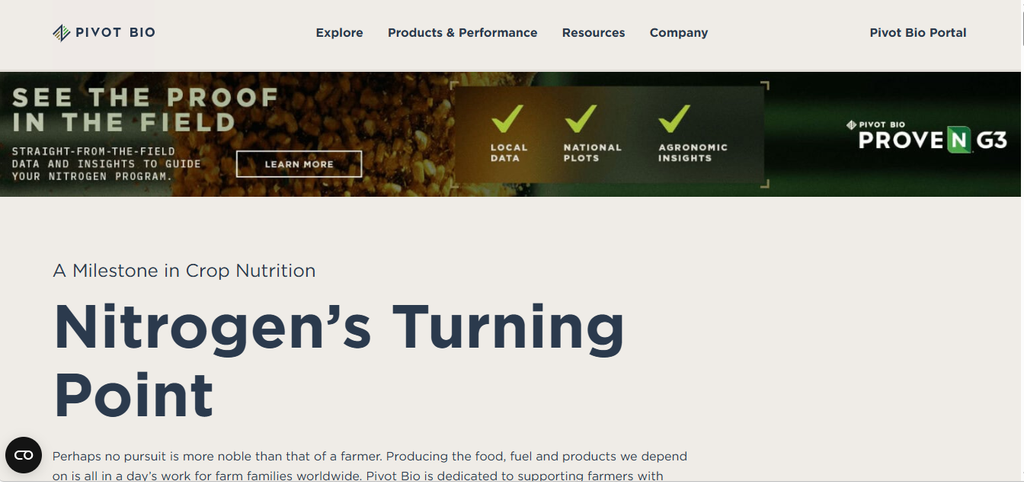
Fertiliser is a farm input and nitrogen is an important nutrient for crops such as corn. Pivot Bio works on technology designed to help supply nitrogen to plants. Its products use selected microbes intended to provide nitrogen to crops offering farmers another option within crop nutrition programmes.
| Founded: 2011 |
| Headquarters: Minneapolis, Minnesota, USA |
| Latest Revenue: Not publicly disclosed |
| Latest Net Income: Not publicly disclosed |
| Main Products/Services: Microbial nitrogen products and crop nutrition technology |
The company’s PROVEN product line includes nitrogen-focused solutions for growers. In March 2025 Pivot Bio announced PROVEN G3, a product planned for availability in 2026 subject to state registrations. The company said the product builds on its nitrogen-fixing technology.
The company announced in March 2026 that it had moved its headquarters from Berkeley, California to Minneapolis, Minnesota. The move reflects its focus on working closely with the US agricultural sector.
Pivot Bio is an example of a specialist AgriTech company. Than manufacturing tractors or farm management software it focuses on crop nutrition and the role that biology may play in farming.
9. Farmers Business Network (FBN)
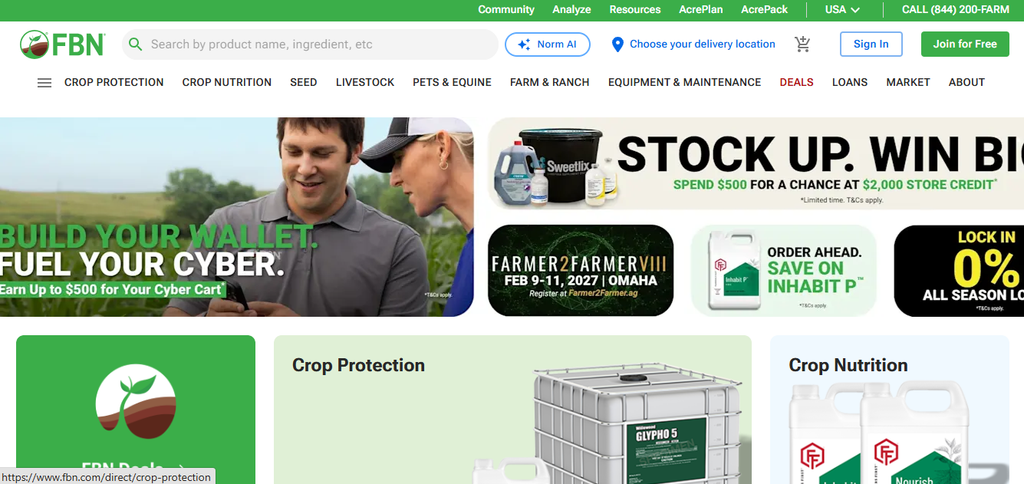
Farmers Business Network commonly known as FBN combines services with products and services intended to help farmers manage their businesses. Its offerings have included access to inputs, farm-related financial services and data tools that help growers compare options.
| Founded: 2014 |
| Headquarters: Sioux Falls, South Dakota, USA |
| Latest Revenue: Not publicly disclosed |
| Latest Net Income: Not publicly disclosed |
| Main Products/Services: Digital farm services, agricultural inputs, financial services and farmer-focused data tools |
The company’s approach is different from that of a tractor manufacturer. Of focusing mainly on machines it aims to support the business decisions behind farming including purchasing inputs and managing costs.
FBN is private. The financial information cited here does not provide a verified current revenue or net income figure. Those numbers should not be guessed from funding announcements or estimates published on third-party websites.
Its place on this list comes from its focus on farmers’ operational needs. Farming decisions are not limited to the field; purchasing, financing and planning can also affect whether a farm operates efficiently.
10. Monarch Tractor
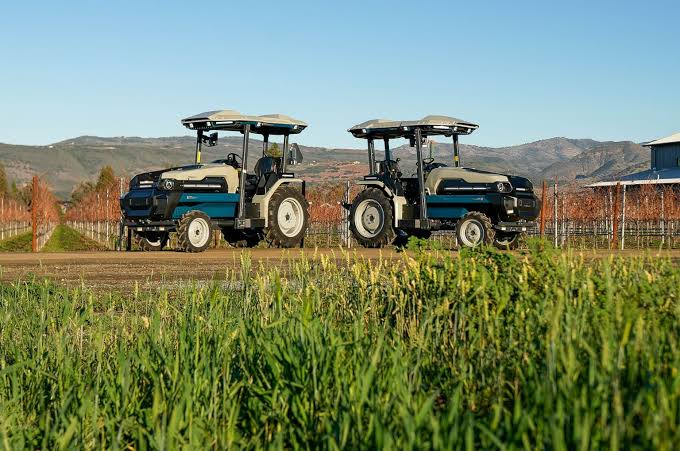
Monarch Tractor works on electric and autonomous tractor technology. Its approach brings together power, sensors, software and automation in machinery designed for agricultural work. The company has also promoted the use of data to help farm operators understand equipment activity and field operations.
| Founded: 2018 |
| Headquarters: Livermore, California, USA |
| Latest Revenue: Not publicly disclosed |
| Latest Net Income: Not publicly disclosed |
| Main Products/Services: Electric tractors, autonomous farming technology and farm data systems |
Electric and automated tractors are of interest in farming because some agricultural tasks are repetitive and can require labour. The practical value of these machines depends on the type of crop, terrain, working hours, charging arrangements, price and available service support.
Monarch is a company rather than a large diversified farm equipment group. Its financial figures are not publicly disclosed in the information cited for this article so no revenue estimate is included.
The company is included because it represents a direction for AgriTech: changing how farm vehicles are powered and operated. Its technology may be relevant to farms exploring automation or equipment although suitability depends on the work that needs to be done.
Top 10 AgriTech Companies in USA: Comparison
| Rank | Company | Founded | Latest Revenue | Main Products/Services |
| 1 | John Deere | 1837 | Check latest annual report | Farm machinery, precision agriculture and farm data software |
| 2 | Bayer Crop Science | 1863* | €21.6 billion, FY2025 division sales | Seeds, crop protection and agricultural research |
| 3 | Trimble | 1978 | Verify latest annual filing | Positioning, guidance and precision agriculture |
| 4 | AGCO Corporation | 1990 | US$10.1 billion, FY2025 net sales | Machinery and precision farming systems |
| 5 | Pivot Bio | 2011 | Not publicly disclosed | Microbial nitrogen and crop nutrition |
| 6 | CNH Industrial | 2013 | US$18.1 billion, FY2025 total revenue | Agricultural machinery and precision technology |
| 7 | Indigo Ag | 2013 | Not publicly disclosed | Biologicals, soil health and sustainability services |
| 8 | Farmers Business Network (FBN) | 2014 | Not publicly disclosed | Farm data, inputs and business services |
| 9 | Monarch Tractor | 2018 | Not publicly disclosed | Electric tractors and autonomous technology |
| 10 | Corteva Agriscience | 2019 | US$17.4 billion, FY2025 net sales | Seeds, crop protection and agricultural research |
Which AgriTech Company Should a Farmer Consider?
The right company depends on the problem the farmer wants to solve. A farm looking for tractors, harvest equipment and connected machinery may start by comparing John Deere, AGCO and CNH Industrial.
A grower focused on seeds and crop protection may look at Corteva or Bayer Crop Science. For farms interested in soil health and biological crop inputs Indigo Ag and Pivot Bio offer an approach. Farmers who want help with purchasing decisions and business planning may find FBN more relevant while Monarch Tractor is worth examining for automated equipment.
Before choosing a product, farmers should check the total cost, compatibility with existing machinery, local dealer support, training requirements, maintenance and expected benefits. It is also useful to ask for a demonstration on a farm with crops and working conditions. A technology that works well for one operation may not suit every farm.
Conclusion
AgriTech in the United States covers a range of solutions from large farm machines and digital management platforms to biological crop inputs and electric tractors.
AgriTech companies approach farming from angles and AgriTech companies size or financial performance does not automatically determine which one will be most useful for a particular farm.
Farmers should start with farmer needs, compare products and check the support offered in the farmer area.
The suitable technology is the one that fits farmer crops, budget and working conditions.
FAQs
1. What are the top AgriTech companies in the USA?
Some notable names are John Deere, Corteva Agriscience, AGCO, CNH Industrial, Bayer Crop Science, Trimble, Indigo Ag, Pivot Bio, Farmers Business Network, and Monarch Tractor. AgriTech companies work in areas such as precision farming, crop science, biological inputs, farm data, and automation.
2. What does AgriTech mean?
AgriTech refers to the use of technology and science to improve agriculture. It includes GPS-guided equipment, farm management software, automated machinery, soil monitoring, improved seeds, and biological crop products. These technologies aim to improve decision-making, manage resources efficiently, reduce waste, and address agricultural production challenges.
3. Which company is known for precision agriculture machinery?
John Deere, AGCO, and CNH Industrial are established agricultural machinery manufacturers with precision agriculture solutions. Their technologies connect equipment with farm data to support activities such as planting, spraying, and harvesting. The most suitable option depends on the machinery a farm already uses and its specific operational needs.
4. Which AgriTech companies focus on seeds and crop protection?
Corteva Agriscience and Bayer Crop Science are prominent companies in the seeds and crop protection sectors. Their products support various stages of crop production, including seed selection and the management of weeds, insects, and plant diseases. Farmers should follow applicable regulations and product instructions when selecting agricultural inputs.
5. Are there AgriTech companies that work on soil health?
Yes. Indigo Ag develops sustainability-related solutions, including initiatives connected with soil health. Other AgriTech businesses address soil conditions through data analysis, monitoring technologies, and crop management systems. Farmers should evaluate product evidence and suitability for their particular soil types, crops, and growing conditions.
6. Which companies are developing fertiliser technologies?
Pivot Bio is known for microbial nitrogen technology designed to support crop nutrition. Its approach differs from conventional fertiliser products, and its suitability depends on crop type, growing conditions, and the farm’s existing nutrient management plan. Farmers should consult qualified agricultural advisers before changing fertiliser practices.
7. Do all AgriTech companies publish their revenue?
No. Publicly traded companies generally publish financial reports, while many privately held AgriTech businesses do not disclose complete revenue or profit figures. Funding announcements should not be confused with revenue. For accurate comparisons, use the latest official financial reports and clearly identify the financial year covered.
8. What should farmers check before buying AgriTech products?
Farmers should consider purchase and operating costs, compatibility with existing equipment, local service support, training, connectivity, and maintenance requirements. They should also identify the specific problem the product is expected to solve. A demonstration or trial can help determine whether the technology suits their crops, land, and working conditions.
9. Are electric and autonomous tractors part of AgriTech?
Yes. Electric and autonomous tractors are part of the AgriTech sector because they combine engineering, sensors, and software to improve agricultural operations. Monarch Tractor is one company working in this area. The practical benefits depend on farm size, intended tasks, operating conditions, charging access, and service availability.