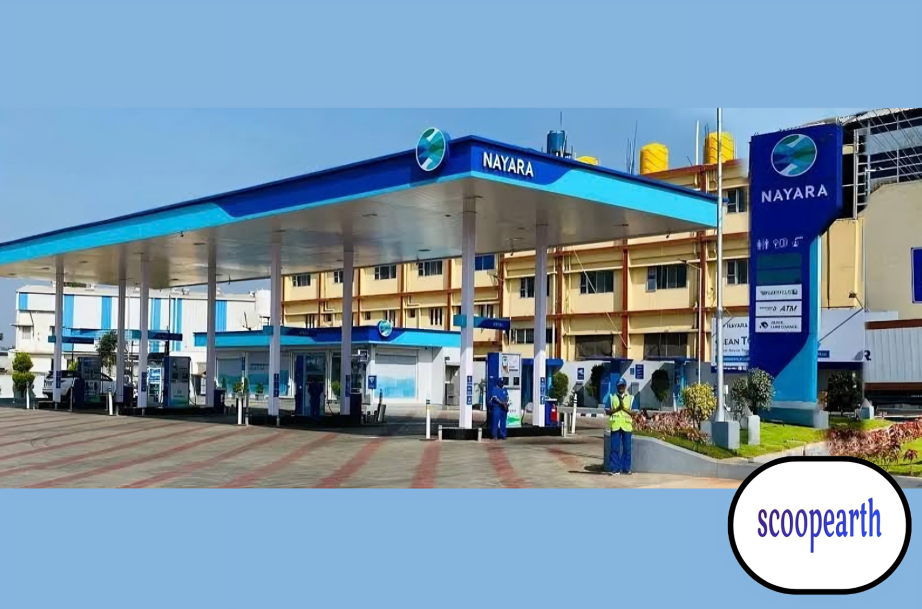
Nayara Energy is known as the top private fuel retailer in India. Nayara Energy has officially implemented a price rise in the retail segment of its fuel products. The private company has decided to raise the price of petrol by ₹5 per litre and diesel by ₹3 per litre. According to those who know about the development, such a firm step was taken to bridge the ever-widening gap between the domestic retail rates and the rising global prices of crude oil and refined products. The increased rates have been applicable from the early morning hours as part of another calculated price change by the private entity.
Impact on domestic fuel retailing
In the current scenario, in which energy costs have risen globally, Nayara Energy has recently revised oil prices, adding to the pressure on oil retailers. Refiners in those countries and other regions still face direct challenges from geopolitical events in international crude oil and product markets.
Nayara Energy has always been one of the first fuel retailers to impose the direct monetary burden of rising global oil prices on end consumers. Another similar recalibration occurred earlier when Middle Eastern conflict events were related to disruptions in global energy supplies, which resulted in an immediate ad hoc price movement in the retail market.
From previous price adjustments, petrol and diesel prices at outlets owned by Nayara Energy have been as high as ₹100.71 and ₹91.31 per litre, respectively, proving how dynamic their pricing strategy is in accordance with changes in the global market.
Operational strategy and market comparison
Nayara Energy runs an extensive distribution network throughout the nation by managing 7,108 petrol stations across India. This vast network positions Nayara Energy as an extensive force in India’s downstream petroleum industry. The pricing policy implemented by private refiners such as Nayara Energy is different from that used by state-owned fuel retail outlets.
The PSEs, accounting for about 90% of the Indian overall fuel retail market, have generally opted to maintain the retail pump Price at the freeze despite global crude price volatility. Retail price control exercised by other such private PPPs, including Jio-BP with more than 2,000 retail outlets, has largely remained unchanged. They have not passed on input cost hikes immediately, even though the retail sale of petrol-diesel has seen losses.
Private companies voluntarily adjusting prices is an intelligent way of protecting some margins while trying to ensure economy throughout trading cycles. Input cost pressures are transposed upon wider corporate balance sheets or governmental policy frameworks by the state-backed retailers, but cost pass-through mechanisms are largely market-aligned by private retailers.
Nayara Energy has announced a petrol and margarine price hike of ₹5 per litre and ₹3 per litre, respectively, for diesel to control supply chain economics and cut down on margin erosion on international crude benchmarks. The shift signals the growing differences between the pricing policy of the private sector and the price stabilization measures leveraged by the government-backed oil marketing companies in India.
Conclusion
Nayara Energy has hiked petrol prices by ₹5 per litre and diesel prices by ₹3 per litre to react to the continuing financial strain caused by energy market fluctuations in the global market. The company is the largest private fuel retailer with 7,108 petrol pump outlets across the country and will continue to match the country’s product pricing with new international increases to preserve operating margins. In India, the fuel retail sector is different, with state-owned companies driving prices, while Nayara Energy shows the significance of the cost pass-through approach. The global market will continue to monitor to understand the impact of price moves on private pricing models in the domestic market.