

A good business idea can catch people’s eye. Turning it into a growing company usually needs more than just a great product. Startups need money to hire staff, build technology, reach customers and enter markets. That is where venture capital firms come in. Venture capital firms put money into companies that can grow in return for an ownership share hoping to earn profit when those companies become more valuable.
The United Kingdom has a market for startup investment with London acting as a key hub for technology and financial innovation. Venture capital firms help businesses in fields such as technology, healthcare, artificial intelligence, software, climate technology and consumer services. Some specialize in funding companies at the idea stage while others invest in companies that’re ready to grow overseas.
This list of the Top 10 Venture Capital Firms in the UK looks at investment activity, presence in the startup scene, portfolio experience and investment focus. It is a choice, not an official ranking by assets under management. The firms also vary in size and strategy. The best investor for a startup depends on its stage, sector and funding needs.
The firms also vary in size and strategy so the best investor for a startup depends on its stage, sector and funding needs.
1. BGF
BGF has become a source of funding for growing businesses across the UK and Ireland. It was established to address the funding gap faced by medium-sized companies that need capital to expand but may not want to sell control of their business.
| Founded: 2011 |
| Headquarters: London, UK |
| Latest Revenue: Not publicly disclosed as a comparable venture capital firm revenue figure |
| Latest Net Income: Not publicly disclosed |
| Main Services: Minority equity investment and growth capital for businesses |
Unlike an early-stage venture capital firm, BGF supports companies at different stages of development. It invests across sectors and regions providing minority capital and business support. Its approach can suit companies that already have product customers or an established operation and want to grow further.
BGF’s scale is reflected in its reported investment activity. The firm says it has deployed more than £5 billion backed over 650 businesses and completed more than 280 exits. These figures help explain its place in the UK investment market although BGF is accurately described as a growth-capital investor rather than a pure startup VC firm. Its broad reach makes it relevant to businesses seeking long-term investment without giving up control.
2. Index Ventures

Index Ventures invests in companies from their funding rounds through to later stages of growth. The firm began in Geneva. Opened its London office in 2002 later establishing a presence in San Francisco and New York. Its international structure allows it to support companies seeking opportunities beyond their home markets.
| Founded: 1996 |
| Headquarters: London and San Francisco, with a global investment presence |
| Latest Revenue: Not publicly disclosed |
| Latest Net Income: Not publicly disclosed |
| Main Services: Seed, early-stage and growth investment in technology businesses |
The firm invests across sectors, including technology, enterprise software, consumer businesses and healthcare. Its portfolio has included companies such as Revolut, Wise and Deliveroo illustrating its involvement in businesses that have expanded beyond their markets.
For founders an investor with experience can offer more than capital. It may also provide connections, advice and experience in building teams entering markets and preparing for later fundraising rounds. Index Ventures is included because of its history, broad investment approach and role in the UK and European startup ecosystem. It is not exclusively UK-focused so its inclusion reflects its London presence and activity in companies rather than a UK-only investment mandate.
3. Balderton Capital

Balderton Capital focuses on European-founded technology companies investing in businesses that aim to build markets and reach international customers. Its portfolio covers areas such as technology, consumer services, enterprise software, cybersecurity and digital health.
| Founded: 2000 |
| Headquarters: London, UK |
| Latest Revenue: Not publicly disclosed |
| Latest Net Income: Not publicly disclosed |
| Main Services: Venture capital for European technology startups and scale-ups |
The firm has backed companies at stages of development. Revolut for example received seed investment from Balderton in 2015 while the firm also invested in driving company Wayve during its Series A round in 2019. These examples show how venture capital can support businesses as they move from a product to a more ambitious growth plan.
Balderton’s relevance comes from its established presence in London and its focus on technology entrepreneurs. It is not limited to businesses but UK startups are an important part of its investment landscape. Founders considering the firm should look at its investment stage and sector interests as well as whether its partners have experience relevant to their business model.
4. Molten Ventures

Molten Ventures is a listed investment company that backs technology businesses across Europe. It invests in companies working in areas such as technology, software, digital infrastructure and other technology markets. Its investment approach includes supporting businesses through growth stages with the aim of generating returns as portfolio companies develop.
| Founded: 2006, originally as Draper Esprit |
| Headquarters: London, UK |
| Latest Revenue: Not presented here as a directly comparable VC-firm revenue figure |
| Latest Net Income: Not presented here as a directly comparable VC-firm figure |
| Main Services: Investment in high-growth private technology companies |
Because Molten is listed on the London Stock Exchange it publishes reports. However figures such as portfolio valuations, investment gains and net assets are not the same as the operating revenue reported by a service business.
For the year ended 31 March 2026 Molten reported a gross portfolio value of £1.525 billion and net assets of £1.324 billion. These figures describe the value of its investment portfolio and balance sheet, not revenue earned from selling products. Molten belongs in this list because it offers a visible example of a venture investor supporting technology businesses at scale.
5. AlbionVC

AlbionVC invests in founders developing technology-based businesses with interest in areas where specialist knowledge and research can help build a competitive product. Its investment strategies cover early-stage software and artificial intelligence, deep technology, life sciences and selected growth-stage opportunities.
| Founded: 1996 |
| Headquarters: London, UK |
| Latest Revenue: Not publicly disclosed |
| Latest Net Income: Not publicly disclosed |
| Main Services: Early-stage technology, deep tech, healthcare, life sciences and financial technology investment |
The firm’s portfolio includes businesses in healthcare technology, financial services software, data and cybersecurity. This range allows it to work with founders addressing challenges from improving digital services to commercialising complex technology.
AlbionVC reports £1.2 billion in assets under management and says it has completed over 100 exits. Assets under management describe the value of investments managed, not revenue. The distinction matters because venture capital firms may manage funds on behalf of investors rather than earn income from selling products.
AlbionVC is included for its history in UK technology investment and its mix of early-stage and specialist strategies. It may be particularly relevant to founders whose businesses need an investor with experience in research-driven markets.
6. LocalGlobe
LocalGlobe focuses on companies at the stages of development. At this point founders may have an idea, a team or an initial product but they often need investment to test demand, build their offering and find their first customers.
| Founded: 2015 |
| Headquarters: London, UK |
| Latest Revenue: Not publicly disclosed |
| Latest Net Income: Not publicly disclosed |
| Main Services: Pre-seed and seed investment in startups |
The firm invests across sectors rather than limiting itself to a single industry. Its investment history includes technology businesses such as Wise and other companies working in software, financial services and digital products. Its early-stage approach makes it relevant to founders who are still proving that their business can grow.
LocalGlobe is part of the Phoenix Court investment group, which also includes the growth-focused Latitude platform. These names are related so they should not be treated as unrelated businesses when comparing investment activity.
LocalGlobes place in the UK venture capital market comes from its focus on companies and its activity in the London startup ecosystem. Entrepreneurs should check the funds stage and sector preferences before approaching it because early-stage investors often have specific criteria for the businesses they support.
7. Northzone

Northzone is a venture capital firm that invests in technology businesses from early stages through later growth. Its portfolio spans software, consumer technology, financial services and other sectors where digital products can serve markets.
| Founded: 1996 |
| Headquarters: London and other European locations |
| Latest Revenue: Not publicly disclosed |
| Latest Net Income: Not publicly disclosed |
| Main Services: Venture capital for technology startups and growth-stage companies |
The firm has a -border approach working with entrepreneurs in several European countries rather than focusing only on the UK. That can be useful for startups with plans to expand into markets or build products for international customers.
Northzone’s long operating history is one reason it remains relevant to founders researching venture capital options. Its broad sector exposure also means that founders should review the firm’s investment interests instead of assuming that every technology company fits its strategy.
For UK startups the value of an investor is not simply the size of the cheque. Experience with businesses, introductions to later-stage investors and knowledge of international expansion can also matter. Northzone is included for its established presence and involvement in the UK funding market.
8. Amadeus Capital Partners

Amadeus Capital Partners has a connection with technology and research-led businesses. Founded by Anne Glover and Hermann Hauser the firm invests in companies developing products and services based on technology, scientific research and specialised knowledge.
| Founded: 1997 |
| Headquarters: Cambridge, UK |
| Latest Revenue: Not publicly disclosed |
| Latest Net Income: Not publicly disclosed |
| Main Services: Venture investment in deep tech, artificial intelligence, cybersecurity, digital health and other technology sectors |
Its areas of interest include intelligence, cybersecurity, digital health, semiconductors and technologies addressing environmental challenges. These businesses can require investment because developing a product, testing it and finding customers may take longer than it does for a typical software startup.
The firms Cambridge base places it close to an UK centre for scientific research and technology entrepreneurship. Its approach is relevant to founders whose businesses depend on expertise, intellectual property or research that must be turned into a commercial product.
Amadeus Capital Partners is included because it represents the side of the venture capital market. Then looking only at consumer-facing startups it backs companies whose technology may serve businesses, public services or other complex markets.
9. MMC Ventures
MMC Ventures invests in technology companies and businesses developing software and data-based products. Its focus includes areas such as enterprise technology, artificial intelligence, financial technology and digital services.
| Founded: 2000 |
| Headquarters: London, UK |
| Latest Revenue: Not publicly disclosed |
| Latest Net Income: Not publicly disclosed |
| Main Services: Investment in early-stage technology and software businesses |
For early-stage companies access to capital can help turn a product into a business with paying customers. An investor with experience in technology markets may also help founders understand customer needs, develop a sales strategy and prepare for fundraising.
MMC Ventures has participated in a range of UK startup fundraisings. Its relevance is not based on a disclosed annual revenue figure but on its investment activity and role in supporting technology businesses. As with private venture capital firms its own revenue and profit are not generally reported in a form that makes direct comparison with listed companies straightforward.
Founders considering MMC should review its portfolio and investment focus. A strong match between the firm’s sector interests and the startup’s plans is often more useful than approaching an investor simply because it appears on a list of known UK firms.
10. Octopus Ventures
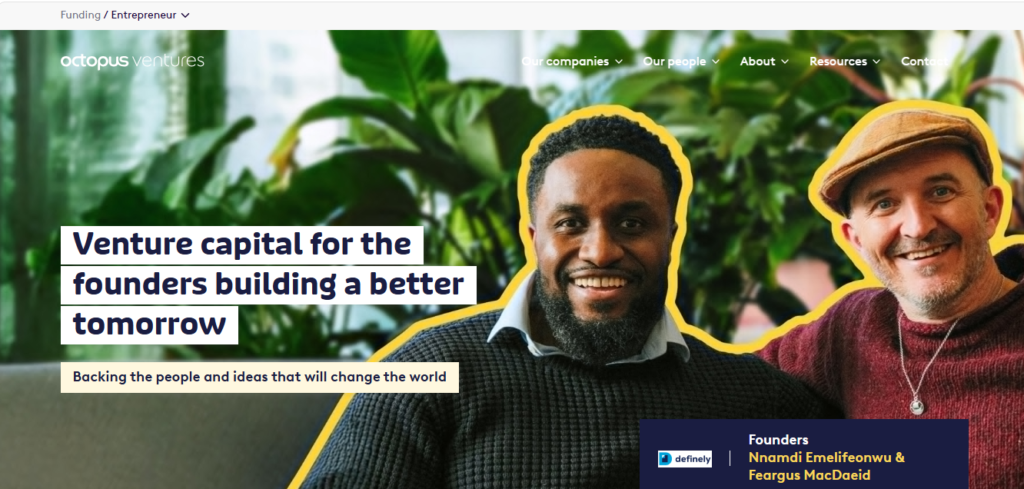
Octopus Ventures is the venture capital arm of the Octopus group. It backs entrepreneurs building businesses in areas such as healthcare, financial technology, deep technology and climate-related solutions. Its approach includes investing and where appropriate continuing to support companies as they grow.
| Founded: 2008 |
| Headquarters: London, UK |
| Latest Revenue: Not publicly disclosed |
| Latest Net Income: Not publicly disclosed |
| Main Services: Venture capital for startups in health, fintech, deep tech, climate technology and consumer businesses |
Its portfolio includes businesses developing health products, financial services and technology for industrial or consumer use. This range reflects the fact that venture capital is not limited to software companies. Investors may also support businesses developing medical approaches, energy solutions or other products that require technical development before they can reach a larger market.
Octopus Ventures has a standing presence in London and a broader network intended to help portfolio companies develop. The firm’s sector coverage makes it worth considering for founders whose businesses fit its investment themes.
As with venture investors the availability of funding depends on the company’s stage, the funds current strategy and the proposed investment. A startup should review those details before making an approach.
Top 10 Venture Capital Firms in UK: Comparison
| Rank | Firm | Founded | Latest Revenue | Main Investment Focus |
| 1 | BGF | 2011 | Not publicly disclosed on a comparable basis | Growth capital and minority investments |
| 2 | Index Ventures | 1996 | Not publicly disclosed | Technology, fintech and consumer businesses |
| 3 | Balderton Capital | 2000 | Not publicly disclosed | European technology startups |
| 4 | Molten Ventures | 2006 | Not directly comparable as a VC-firm revenue figure | High-growth technology companies |
| 5 | AlbionVC | 1996 | Not publicly disclosed | Deep tech, software, health and fintech |
| 6 | LocalGlobe | 2015 | Not publicly disclosed | Pre-seed and seed-stage startups |
| 7 | Northzone | 1996 | Not publicly disclosed | European technology businesses |
| 8 | Amadeus Capital Partners | 1997 | Not publicly disclosed | Deep tech and research-led companies |
| 9 | MMC Ventures | 2000 | Not publicly disclosed | Early-stage technology and software |
| 10 | Octopus Ventures | 2008 | Not publicly disclosed | Health, fintech, deep tech and climate technology |
How Should a Startup Choose a Venture Capital Firm?
Start by figuring out how money the business needs and what that money will be used for. A founder who is still building a prototype might need a seed investor. A company that already has customers may be looking for a round of funding to grow.
Another important thing to consider is the sector experience of the investor. An investor who has worked in healthcare, financial technology or deep tech might understand the market better than a fund. Founders should also think about whether the investor can help with fundraising, hiring talent or making valuable business connections.
It is just as important to understand the terms of the investment. Giving up some ownership is usually part of the deal. How much ownership is given up depends on the company’s valuation and the investment agreement. Comparing how well the investor fits the startup, their experience, the stage of investment they focus on and the terms offered can help the startup make a choice rather than picking a firm just because it has a good reputation.
Conclusion
The UK venture capital market has investors with different styles. Some focus on early-stage startups while others provide growth capital for companies that are already established. Some firms invest in technology in general while others specialise in research-based businesses, healthcare, software or climate solutions.
There is no one venture capital firm that works for every startup. The right fit depends on the company’s stage, its industry, growth plans and funding needs. Founders should look at each firm’s investment strategy and what kind of businesses they are currently investing in. Understanding these differences can make the process of raising money more focused. Help startups find investors who can offer more than just money.
FAQs
1. What are the top venture capital firms in the UK?
The UK has several well-known venture capital firms, including Index Ventures, Balderton Capital, LocalGlobe, AlbionVC, Amadeus Capital Partners, and Octopus Ventures. The best choice depends on a startup’s stage, sector, and funding requirements, as not all firms invest in every type of business.
2. What does a venture capital firm do?
A venture capital firm invests money in companies with strong growth potential, usually in exchange for an ownership stake. Beyond funding, some firms also provide strategic advice, networking opportunities, recruitment support, business guidance, and assistance with future fundraising rounds.
3. Do venture capital firms invest in early-stage startups?
Yes, many venture capital firms invest in early-stage startups, including pre-seed and seed-stage businesses that are developing products or testing their markets. Other firms prefer companies that already have customers, generate revenue, or are preparing to expand into international markets.
4. How do venture capital firms make money?
Venture capital firms aim to generate returns when their portfolio companies increase in value. They may earn profits when a company is acquired, goes public through an initial public offering (IPO), or when another investor purchases their ownership stake. However, investment outcomes are uncertain, and not every investment generates a profit.
5. Is venture capital the same as a business loan?
No, venture capital differs from a business loan. A loan generally must be repaid with interest according to agreed terms, whereas venture capital usually involves exchanging funding for an ownership stake in the business. Although founders typically do not make regular loan repayments on equity funding, they give up part of their ownership and may share some decision-making control.
6. Do UK venture capital firms only invest in companies in the UK?
No, many UK-based venture capital firms invest in businesses across Europe and other international markets. A firm’s London office does not necessarily mean it focuses exclusively on UK companies. Founders should review each firm’s geographic investment strategy, sector preferences, and current funding priorities before approaching it.
7. Why is a venture capital firm’s revenue difficult to compare?
Comparing venture capital firms by revenue can be difficult because many operate by managing investment funds and do not publicly disclose their financial information in the same way as listed companies. Investment commitments, assets under management, portfolio valuations, and annual revenue are different measures and should not be treated as interchangeable when evaluating firms.
8. What should founders prepare before contacting a VC firm?
Founders should prepare a clear explanation of the problem their business solves, their target customers, their product or service, the market opportunity, and the amount of funding required. Financial forecasts, evidence of customer demand, a credible business plan, and a clear explanation of how the investment will be used can also help make discussions with venture capital firms more productive.