Walk into any American supermarket, and you are likely to see thousands of products on the shelves. From breakfast cereals and potato chips to cookies, frozen meals, sauces, chocolates and snacks, packaged food companies have become a staple of everyday American life.
The U.S. packaged food market is huge and extremely competitive. Companies need to navigate shifting consumer preferences, rising costs of ingredients, health trends, convenience, sustainability and the need for continuous innovation. At the same time, mainstream brands continue to dominate the market, as millions of American consumers still buy what they are familiar with.
Some companies have concentrated on snacks, while others have carved out their space with breakfast products, frozen foods, sauces, meats, or confectionery. Several of the most successful companies have built their brand around dozens of different products, catering to various consumer segments.
In this article, we take a look at 10 biggest packaged food companies in the U.S. market.
1. PepsiCo
| Detail | Information |
|---|---|
| Company Name | PepsiCo, Inc. |
| Parent Company | PepsiCo, Inc. |
| Founded | 1965, formed through the merger of Pepsi-Cola and Frito-Lay |
| Headquarters | Purchase, New York, USA |
| Business | Global food and beverage company producing and marketing convenient foods, snacks and beverages |
| Main Products/Services | Pepsi, Lay’s, Doritos, Cheetos, Fritos, Tostitos, Quaker, Tostitos, Ruffles, Aquafina, Bubly and other food and beverage products |
| Main Focus | Convenient foods and beverages, brand development, product innovation, global distribution and consumer-focused products |
| Key Figure | Ramon Laguarta – Chairman and Chief Executive Officer |
| Ownership | Publicly owned by shareholders |
| Public Listing | Nasdaq Stock Market – PEP |
| Global Presence | Products sold in more than 200 countries and territories |
| Employees | Approximately 300,000 employees worldwide |
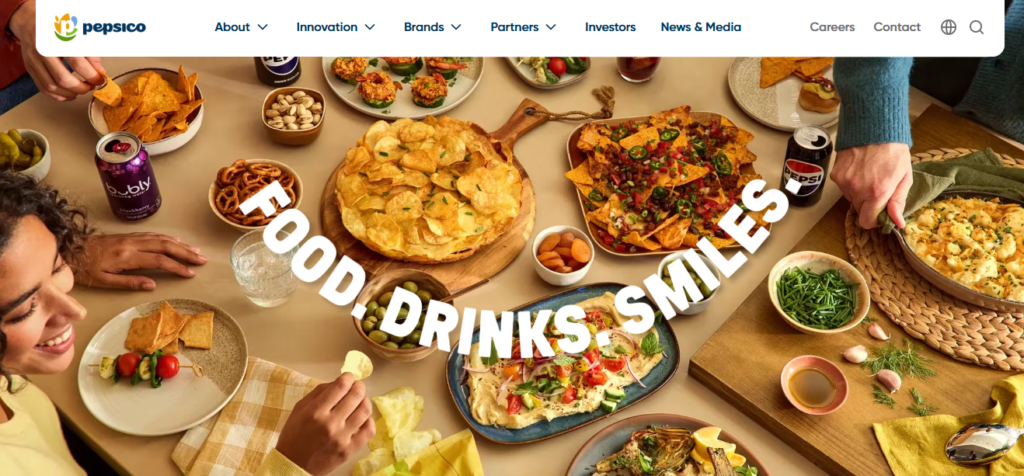
While most people are familiar with this large American conglomerate for its namesake carbonated beverage, PepsiCo has a very significant presence in the food market. This snack giant produces and sells Lay’s, Doritos, Cheetos, Fritos, Ruffles, Tostitos, Quaker and other well-known brands.
The company’s PepsiCo Foods North America division has an expansive product portfolio ranging from chips and dips to cereals, oatmeal, granola bars, pasta, rice and other convenience foods.
One of the main advantages of PepsiCo’s food division is its ability to combine foods and beverages together, thus appealing to a larger consumer base. In essence, the company’s products are consumed at different stages of the day.
For fiscal 2025, the company’s overall revenues hit roughly $93.9 billion, but this number combines the food and beverage segments. In addition to that, the company’s products have extensive distribution networks, meaning that they are available across all major retail outlets.
2. Mars, Incorporated
| Detail | Information |
|---|---|
| Company | Mars, Incorporated |
| Ownership | Privately owned by the Mars family |
| Established | 1911 |
| Founder | Frank C. Mars |
| Headquarters | McLean, Virginia, USA |
| Industry | Confectionery, packaged food, pet care and animal health |
| Key Brands/Products | M&M’s, Snickers, Twix, Skittles, Extra, Dove, Pedigree, Whiskas, Royal Canin, Pringles, Cheez-It, Pop-Tarts and other products |
| Main Focus | Confectionery, snacking, packaged foods, pet nutrition, pet care and product innovation |
| Key Figure | Poul Weihrauch – President and Chief Executive Officer |
| Public Listing | Not publicly traded |
| Global Operations | Products and services available in more than 180 countries |
| Employees | Approximately 150,000 associates worldwide |
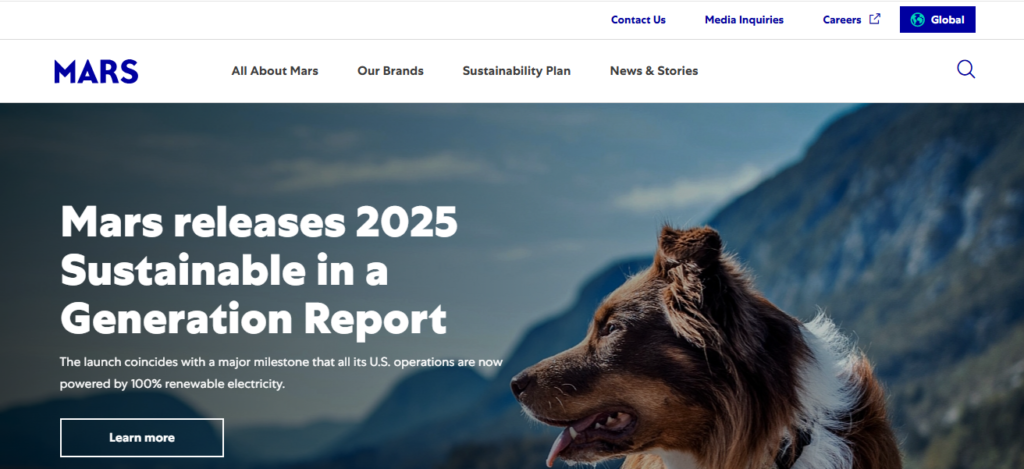
This multinational company is well-known for its popular brands like M&M’s, Snickers, Twix, Skittles and Extra. Recently, Mars has acquired several prominent snack brands from Kellanova, including Pringles, Cheez-It, Pop-Tarts, Rice Krispies Treats and other similar products.
As a result of these acquisitions, Mars has expanded its footprint in the snack market, not only as a manufacturer of chocolate and candy products but also of salty snacks, crackers, cereal-based products and other popular convenience foods.
Because Mars is a privately-held company, its revenues are not made public. However, the company continues to be one of the most influential players in the industry due to its expansive product offerings.
3. Mondelēz International
| Detail | Information |
|---|---|
| Company Name | Mondelēz International, Inc. |
| Corporate Background | Formed when Kraft Foods Inc. separated its global snacking business |
| Founded | 2012 |
| Headquarters | Chicago, Illinois, USA |
| Business | Global snacking and packaged-food company |
| Major Products | Oreo, Ritz, belVita, LU, CLIF, Cadbury Dairy Milk, Milka, Toblerone, Philadelphia and other biscuits, chocolate and confectionery products |
| Core Focus | Snacking, biscuits, chocolate, product innovation and global brand development |
| Key Executive | Dirk Van de Put – Chair and Chief Executive Officer |
| Ownership | Publicly owned by shareholders |
| Stock Listing | Nasdaq Stock Market – MDLZ |
| Global Reach | Products and brands available in more than 150 countries |
| Workforce | Approximately 90,000 employees worldwide |

This large multinational company makes some of the most popular snack and confectionery products known to humanity. Among the most recognizable brands of this company are Oreo, Ritz, Chips Ahoy!, belVita, Triscuit, Cadbury and Toblerone.
Mondelēz dominates the world’s snack market largely due to its ability to brand its products. The company produces cookies, crackers, biscuits, chocolate products and other similar ingredients.
Based on the 2025 Interbrand Top Companies report, Mondelēz’s revenues come to roughly 38.6 billion U.S. dollars on an estimated basis.
One of the key advantages of Mondelēz is its ability to combine different products from its wide range of brands in a way that appeals to multiple consumer segments.
A consumer can purchase an Oreo cookie for their child, a Ritz cracker for their grandmother and a Cadbury egg for themselves, without any of these being considered a ‘waste.’
4. The Kraft Heinz Company
| Detail | Information |
|---|---|
| Company | The Kraft Heinz Company |
| Formation | Created through the merger of Kraft Foods Group and H.J. Heinz Company |
| Founded | 2015 |
| Headquarters | Corporate co-headquarters in Pittsburgh, Pennsylvania and Chicago, Illinois, USA |
| Business | Global food and beverage company |
| Major Brands | Heinz, Kraft, Oscar Mayer, Philadelphia, Lunchables, Velveeta, Ore-Ida, Jell-O, Kool-Aid, Maxwell House, Capri Sun and other products |
| Main Focus | Packaged foods and beverages, iconic brands, convenient meals and snacking solutions |
| Key Executive | Steve Cahillane – Chief Executive Officer |
| Ownership | Publicly owned by shareholders |
| Stock Listing | Nasdaq Stock Market – KHC |
| Global Reach | Operations and brands across multiple regions worldwide |
| Employees | Approximately 35,000 employees globally |
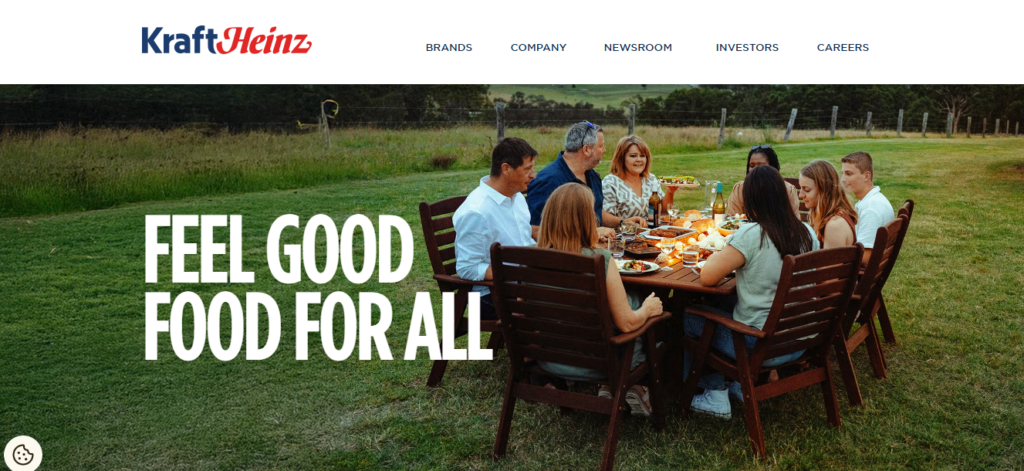
As suggested by its name, this multinational conglomerate owns dozens of prestigious brands across multiple food categories. Some of its most recognizable names include Heinz, Kraft, Philadelphia, Oscar Mayer, Velveeta and Lunchables.
Unlike some of its competitors, Kraft Heinz focuses on more traditional fare, including ketchup, macaroni and cheese, cheese products and other similar goods.
For fiscal 2025, the company’s overall revenues total roughly $25.2 billion, based on approximate calculations from a number of industry reports. One of its major advantages is its brand image, which continues to generate revenues through recognizable trademark names.
5. General Mills
| Detail | Information |
|---|---|
| Company Name | General Mills, Inc. |
| Founded | 1866, initially as a flour milling company |
| Headquarters | Minneapolis, Minnesota, USA |
| Industry | Global food company producing and marketing branded consumer foods and pet food products |
| Popular Products | Cheerios, Lucky Charms, Cinnamon Toast Crunch, Betty Crocker, Pillsbury, Nature Valley, Häagen-Dazs, Yoplait, Old El Paso and Blue Buffalo |
| Business Focus | Branded food products, innovation, nutrition, convenience, sustainability and global distribution |
| Key Executive | Jeffrey L. Harmening – Chairman and Chief Executive Officer |
| Ownership | Publicly owned by shareholders |
| Stock Exchange | New York Stock Exchange – GIS |
| Global Presence | Products sold in more than 100 countries |
| Employees | Approximately 33,000 employees worldwide |
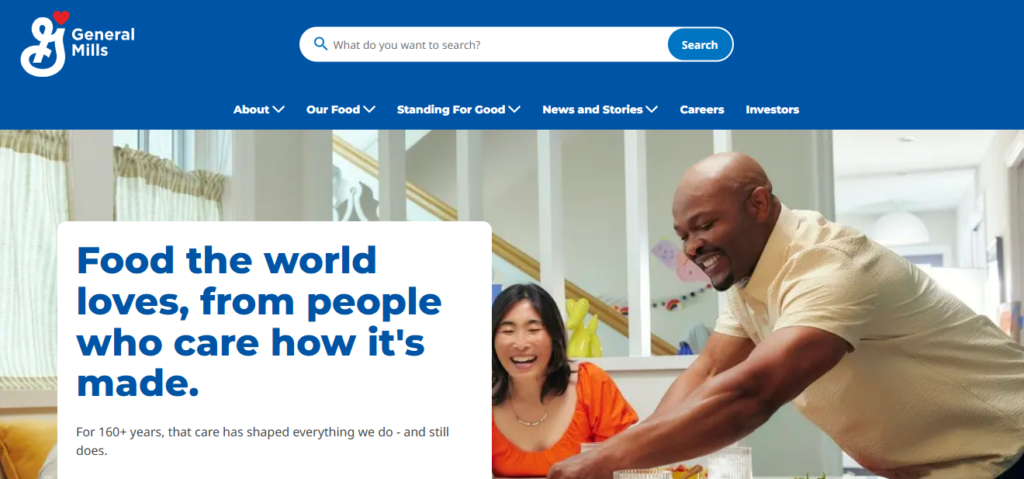
Most Americans recognize this company for its popular breakfast cereals like Cheerios, but in reality General Mills has an expansive product portfolio. In addition to breakfast products, the company also produces snacks, baking ingredients and mixes like Betty Crocker and Pillsbury, and other products like Nature Valley, Yoplait and Old El Paso.
This company appears to be successful across the board, as it appeals to slightly different consumer bases for its various product segments. Based on the 2025 Top 100 Report, General Mills’ revenues come to roughly $19 billion in estimated sales for that fiscal year.
One of the interesting aspects of General Mills is that it has an expansive pet food segment. Through its leading brand Blue Buffalo, the company makes pet food products that have gained popularity among American pet owners.
6. Tyson Foods
| Detail | Information |
|---|---|
| Company | Tyson Foods, Inc. |
| Founder | John W. Tyson |
| Founded | 1935 |
| Headquarters | Springdale, Arkansas, USA |
| Business Area | Global food company primarily engaged in the production, processing and marketing of protein-based foods |
| Main Products | Chicken, beef, pork and prepared foods under brands such as Tyson, Jimmy Dean, Hillshire Farm, Ball Park, Aidells and Wright Brand |
| Main Focus | Protein-based foods, prepared foods, food innovation, sustainability and global distribution |
| Key Executive | Donnie D. King – President and Chief Executive Officer |
| Ownership | Publicly owned by shareholders |
| Public Listing | New York Stock Exchange – TSN |
| Global Presence | Products sold in more than 100 countries |
| Employees | Approximately 141,000 team members worldwide |
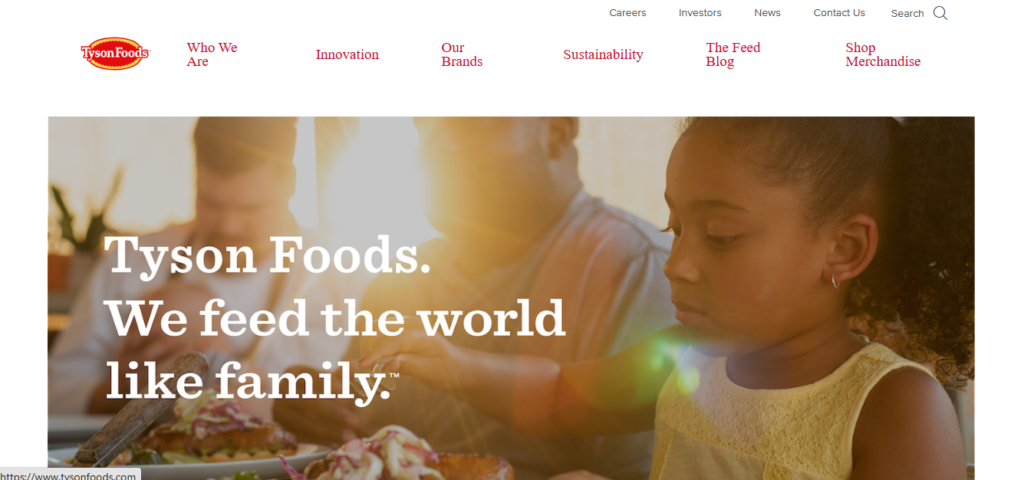
Compared to other companies on this list, Tyson’s products are more focused on packaged proteins. In addition to chicken, the company’s products also include beef, pork and related products. Tyson’s brands include Tyson, Jimmy Dean, Hillshire Farm, Ball Park and Aidells.
Tyson’s products are available not only in fresh or frozen forms but also in fully cooked and ready-to-eat products. In fiscal 2025, the company’s revenues total roughly $54.4 billion, according to a collection of publicly available reports. Similar to other food manufacturers, Tyson also makes an expansive product range, from meats to prepared foods.
7. Conagra Brands
| Detail | Information |
|---|---|
| Company Name | Conagra Brands, Inc. |
| Corporate History | Originally Nebraska Consolidated Mills; later became Conagra, Inc. and was rebranded as Conagra Brands in 2016 |
| Founded | 1919 |
| Headquarters | Chicago, Illinois, USA |
| Business | Packaged food company producing and marketing a wide range of consumer food products |
| Key Products | Healthy Choice, Marie Callender’s, Banquet, Hungry-Man, Slim Jim, Reddi-wip, Hunt’s, Chef Boyardee, Birds Eye, Vlasic and other packaged foods |
| Main Focus | Convenient and frozen foods, snacks, sauces and ingredients, product innovation and brand development |
| Key Executive | Sean M. Connolly – President and Chief Executive Officer |
| Ownership | Publicly owned by shareholders |
| Public Listing | New York Stock Exchange – CAG |
| Global Presence | Products available across the United States, Canada and international markets |
| Employees | Approximately 17,000 employees |
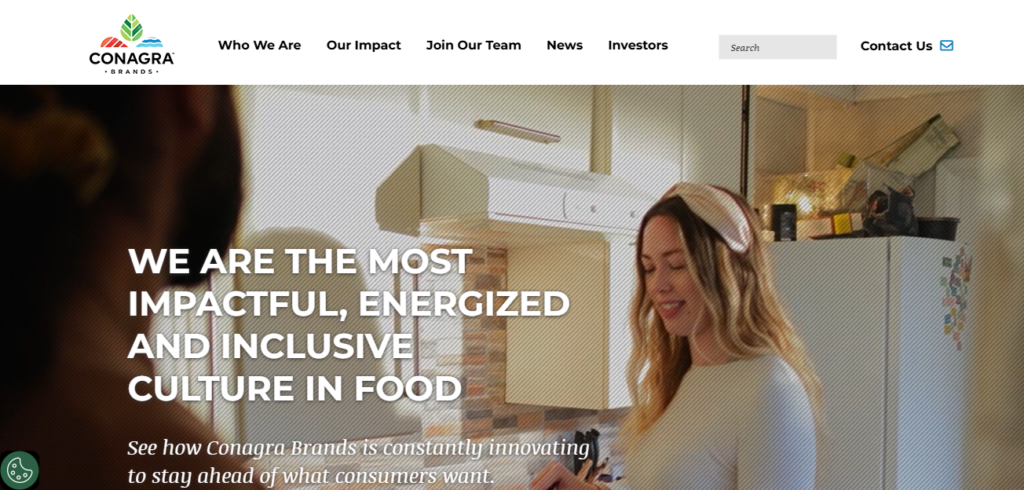
This company is best known for its wide range of frozen foods and other convenient meals. In addition to its flagship healthy choice line, the company also owns brands like Marie Callender’s, Banquet, Slim Jim, Reddi-wip and Hunt’s.
Overall, Conagra Brands has built its position around frozen and ready-to-eat meals, as well as other convenience-oriented foods. For fiscal 2025, the company’s total revenues come to around 11.3 billion U.S. dollars.
8. The Campbell’s Company
| Detail | Information |
|---|---|
| Company Name | The Campbell’s Company |
| Founders | Joseph A. Campbell and Abraham Anderson |
| Founded | 1869 |
| Headquarters | Camden, New Jersey, USA |
| Industry | Global food and beverage company |
| Key Products | Campbell’s soups, Prego pasta sauces, Pepperidge Farm baked goods, Goldfish crackers, V8 beverages, Swanson broth, Pace, Chunky and other food products |
| Main Focus | Nourishing people with convenient and affordable food, brand development, product innovation and global distribution |
| Key Executive | Mark Clouse – President and Chief Executive Officer |
| Ownership | Publicly owned by shareholders |
| Public Listing | Nasdaq Stock Market – CPB |
| Global Reach | Products available across North America and in more than 100 international markets |
| Employees | Approximately 18,000 employees |

Campbell’s Company has been around for over a century and is most well-known for its soups. However, the company also has numerous other product lines, including frozen meals and other convenience foods. In addition to its flagship Campbell’s brand, the company also owns brands like Pepperidge Farm, Goldfish, Rao’s and others.
Campbell’s increased its focus on ready-to-eat meals and other convenience-oriented foods, rather than traditional canned and other preserved foods.
The company’s total revenues for fiscal 2025 come to around $10.3 billion, according to a combination of public reports.
9. The Hershey Company
| Detail | Information |
|---|---|
| Company | The Hershey Company |
| Founder | Milton S. Hershey |
| Founded | 1894 |
| Headquarters | Hershey, Pennsylvania, USA |
| Business | Global confectionery, snack and food company |
| Main Brands/Products | Hershey’s, Reese’s, Kisses, Kit Kat, Jolly Rancher, Twizzlers, Brookside, SkinnyPop and other confectionery and snack products |
| Main Focus | Confectionery, snacking, brand development and global distribution |
| Key Executive | Michele Buck – Chairwoman, President and Chief Executive Officer |
| Ownership | Publicly owned by shareholders |
| Stock Listing | New York Stock Exchange – HSY |
| Global Presence | Products available in more than 90 countries |
| Employees | Approximately 20,000 employees |
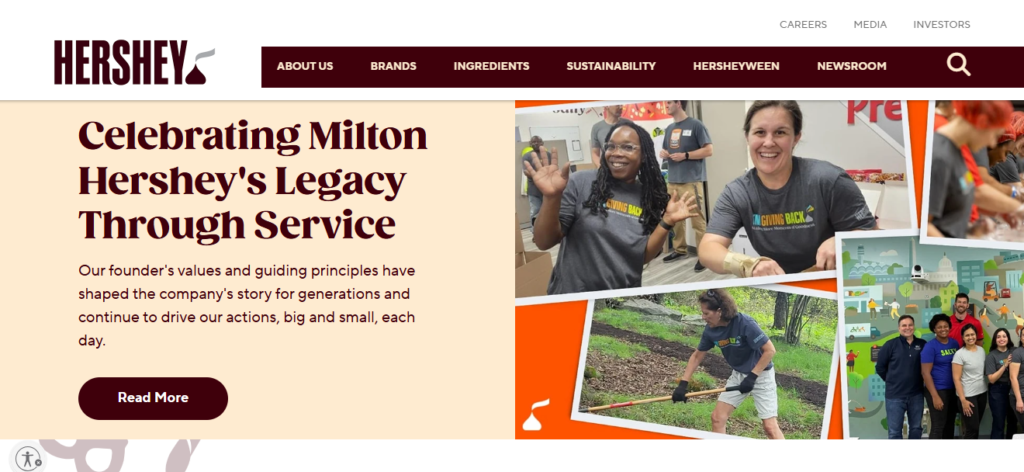
As far as the U.S. is concerned, Hershey is one of the most prominent names in packaged confections and candies. Its popular brands include Hershey’s, which is one of the most popular chocolate brands in U.S. history, as well as Kit Kat (in the U.S.), Reese’s, Jolly Rancher and Ice Breakers.
Hershey’s products can be found in a variety of retail outlets, from local convenience stores to large supermarkets. The company’s products can also be found in vending machines.
For fiscal 2025, the company’s revenues come to around $11.7 billion. The company is known for its ability to incorporate different brand names, with some of its brands becoming significantly more popular than others. While Hershey’s is an extremely well-known brand name, Reese’s appears to be the company’s most successful creation.
10. The J.M. Smucker Company
| Detail | Information |
|---|---|
| Company Name | The J.M. Smucker Company |
| Founder | Jerome Monroe Smucker |
| Founded | 1897 |
| Headquarters | Orrville, Ohio, USA |
| Business | Global food company primarily engaged in the manufacture and marketing of branded food and beverage products |
| Main Products | Jif peanut butter, Smucker’s fruit spreads, Folgers coffee, Dunkin’ coffee, Café Bustelo, Milk-Bone, Meow Mix, Kibbles ’n Bits and other food and pet-care products |
| Main Focus | Spreads, coffee, pet food, snacks and other consumer packaged food products |
| Key Executive | Mark T. Smucker – President and Chief Executive Officer |
| Ownership | Publicly owned by shareholders |
| Stock Listing | New York Stock Exchange – SJM |
| Global Presence | Products available across the United States, Canada and select international markets |
| Employees | Approximately 7,000 employees worldwide |
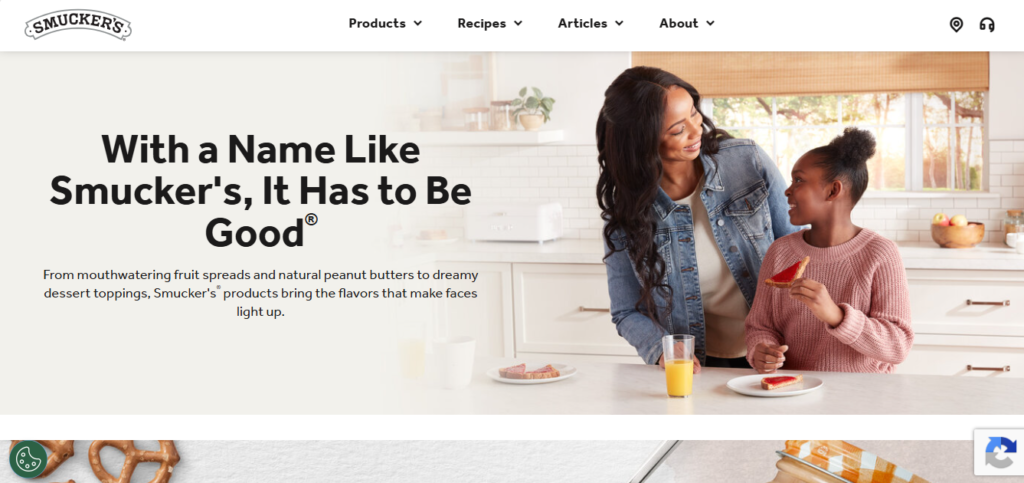
Smucker’s products range from coffee and pet food to spreads and other products. Its brands also include Folgers and Jif. In addition to its prominent food products, the company has a significant pet food segment as well.
Smucker’s products tend to be staple merchandise in most U.S. households. Around $9.1 billion worth of Smucker products are sold each year, according to a combination of public reports.
The Changing U.S. Packaged Food Market
The U.S. packaged food market is changing rapidly, as consumers are now more interested in healthy eating, convenience and snacks than ever before. Inflation reduced the purchasing power of the average consumer, and this has led to an increase in price-conscious shoppers. Consumers may stick to the same brands, but they may also end up buying larger packs in order to reduce the overall cost per unit, or simply buy cheaper alternatives if the price difference is significant.
At the same time, food companies are investing in continuous product innovation, with some of the most interesting developments in the high-protein foods and plant-based proteins space. Other companies produce convenient meals, small portions of snacks or similar products tailored toward specific consumer segments.
According to Food Processing magazine’s 2026 industry review, the 101 companies reviewed for the story generated a combined $653.88 billion in 2025 sales, compared to 653.88 billion in 2024, representing a 2.4% year-over-year increase. Food processors’ 2025 prices for food-at-home increased 2.4%, roughly in line with the index of U.S. manufacturers’ shipments of food products.
This suggests that while these large companies are still growing, this growth is very much in-line with broader industry trends, and companies continue to innovate in order to obtain a larger share of the market.
Why These Companies Remain Important
In many ways, the U.S. packaged food companies are similar to the U.S. automobile industry. At the moment, there are several very large companies that continue to innovate and thrive, but there are also a number of small companies that have trouble competing against the larger firms.
For the most part, this is the result of much larger scale operations among major manufacturers, which allows them to penetrate deeper into the market. Larger companies also have larger advertising budgets, and have spent decades educating the public regarding the quality of their products.
Consumer-packaged-goods companies sell everyday products in huge quantities. As such, large-scale food processing companies tend to dominate the market.
Consumers tend to stick to certain brands, and even if they do not buy the same products they purchased ten years ago, they are likely to purchase products from the same company. This is the result of brand recognition and brand equity.
Larger companies are also able to invest more heavily in advertising and other marketing activities, which allows them to educate consumers regarding the advantages of their products. They also tend to spend more on research and development in order to satisfy evolving consumer preferences.
However, it is clear that these companies are in a constant race against time, trying to stay ahead of their competition. Consumer preferences can be fickle, and a sudden downturn in the popularity of a certain brand can hurt large companies just as much as small companies.
These large companies continue to innovate, but in doing so, risk damaging the brand image they spent decades building. This delicate balance is likely to define the U.S. packaged food industry for years to come.
Conclusion
As you can see, the U.S. packaged food industry is much more diverse than most people would assume. Large companies dominate the market, as smaller companies tend to be acquired by larger competitors. At the same time, large companies must continue to innovate in order to stay ahead of the competition.
Frequently Asked Questions
1. What is the packaged food industry?
The packaged food industry involves various different types of food products that are processed and sold in packages. These can range from snacks to breakfast cereals, frozen meals, sauces, canned foods, confectionery, packaged meats and much more.
2. Which is one of the largest packaged food companies in the USA?
One of the largest packaged food companies in the USA is PepsiCo. PepsiCo manufactures and distributes various types of packaged foods such as Lay’s, Doritos, Cheetos, Fritos, Tostitos, Quaker and other brands.
3. Is Mars a packaged food company?
Yes, Mars is a packaged food company that is well-known for some of its popular candy and chocolate brands, such as M&M’s, Snickers, Twix, Skittles and Extra, among others.
4. What products does Mondelēz International make?
Mondelēz International makes various types of snack products, including cookies, crackers and biscuits, and chocolate products. It owns popular brands, such as Oreo, Ritz, Chips Ahoy!, belVita, Cadbury and Toblerone.
5. Is Tyson Foods a packaged food company?
Tyson Foods can be considered a packaged food company, as it manufactures and sells various types of packaged and processed meat products, such as chicken, beef, pork and other meats.
6. What is General Mills known for?
General Mills is known for products, such as Cheerios, Betty Crocker, Pillsbury, Nature Valley, Yoplait and Old El Paso. The company is also known to have a large presence in the pet food market.
7. What are some popular brands owned by Kraft Heinz?
Kraft Heinz owns many popular brands, including Heinz, Kraft, Philadelphia, Oscar Mayer, Velveeta and Lunchables.
8. Why is convenience important in packaged food?
Convenience is important in packaged food because it allows consumers to have various meal options without having to spend much time preparing meals. Packaged and frozen foods allow consumers to quickly prepare meals and snacks in most cases.
9. Is the U.S. packaged food industry growing?
The U.S. packaged food industry is still growing, although larger manufacturers continue to face challenges as consumer preferences tend to shift rapidly. According to a collection of publicly available information, most U.S. food processors continue to see an increase in sales, although this increase tends to be in line with general inflation rates.
10. What is the future of packaged food in the USA?
In the future, the USA’s packaged food industry will continue to evolve, as both smaller and larger manufacturers continue to experiment with new and innovative products. In most cases, products are being introduced with greater convenience in mind, combined with a growing interest in health. Large manufacturers have the advantage of resources, which allows them to acquire and finance smaller manufacturers, while also investing heavily in research and development to bring new and innovative products to the market.