Introduction
Smart TVs have become an important part of modern Indian homes. A television is no longer used only to watch cable channels. Today’s smart TVs can connect to the internet, run streaming applications, support voice commands, connect with smartphones and gaming consoles, and provide access to thousands of movies, shows and videos.
The growing popularity of Netflix, YouTube, Amazon Prime Video, JioHotstar and other streaming platforms has changed the way Indians consume entertainment. At the same time, falling prices of large-screen televisions have made 43-inch, 50-inch, 55-inch and even larger TVs more accessible to consumers.
According to IDC, India shipped around 12.1 million televisions in 2024, with overall TV shipments increasing 8.6% from the previous year. The growth was supported particularly by demand for larger screens. Shipments of 55-inch and larger televisions increased significantly during the year.
More recent Omdia data showed that Samsung accounted for 23.8% of India’s TV market by shipment volume during January-June 2025, followed by LG at 16.5% and Xiaomi at 7.9%.
Based on market presence, product availability, brand recognition, technology, screen portfolio and financial scale, here are 10 important smart TV companies and brands available in India.
Samsung
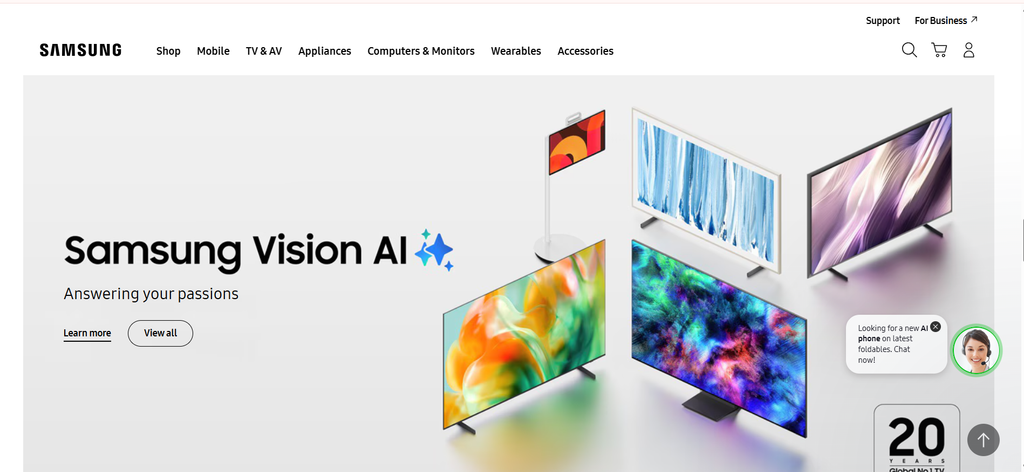
Image Courtesy: Samsung (Official Website)
| Company | Samsung India Electronics |
| Parent Company | Samsung Electronics |
| Business | Consumer electronics, smartphones and home appliances |
| FY2024-25 Revenue from Operations | ₹1,11,183 crore |
| H1 2025 TV Market Share | 23.8% by shipments |
| Main TV Products | Crystal 4K, QLED, Neo QLED and OLED TVs |
Samsung is one of the biggest television brands in India and has maintained a strong position in the country’s TV market for several years.
Omdia data reported that Samsung accounted for 23.8% of India’s TV shipments during the first half of 2025. Samsung has also held the top position in India’s TV market since 2017, according to the same Omdia data.
Samsung’s smart TV portfolio covers a wide range of products. Its entry and mid-range models include Crystal UHD televisions, while higher-end models include QLED, Neo QLED and OLED televisions.
The company has also been focusing heavily on artificial intelligence and connected-home features. Depending on the model, Samsung TVs can offer AI-powered picture and sound processing, smart home controls, gaming features, voice controls and access to Samsung’s Tizen smart TV platform.
Samsung India Electronics reported ₹1,11,183 crore in revenue from operations for FY2024-25, according to its financial filings. This figure covers Samsung’s complete Indian business, including smartphones, televisions, appliances and other electronics, so it should not be treated as television-specific revenue.
LG

Image Courtesy: LG (Official Website)
| Company | LG Electronics India Limited |
| Parent Company | LG Electronics |
| Business | Consumer electronics and home appliances |
| FY2025-26 Revenue from Operations | ₹24,605 crore |
| H1 2025 TV Market Share | 16.5% by shipments |
| Main TV Products | OLED, QNED, NanoCell and UHD Smart TVs |
LG is another major name in India’s television market. It competes across affordable, mid-range and premium segments, with OLED and QNED televisions positioned toward consumers looking for advanced picture quality.
Omdia data placed LG second in India’s TV market during the first half of 2025, with a 16.5% share by shipment volume.
LG’s smart TV portfolio includes several technologies. Its OLED TVs are designed for consumers who want deep blacks and high contrast, while QNED and other LED-based models provide alternatives at different price levels.
LG uses its webOS smart TV platform across many of its television models. The platform provides access to streaming applications and other connected-TV services.
LG Electronics India reported ₹246.05 billion, or approximately ₹24,605 crore, in revenue from operations for FY2025-26, representing 1% year-on-year growth. The company also reported a home-entertainment division that includes televisions, signage, projectors, audio-visual products, monitors and personal computers.
The ₹24,605 crore figure therefore represents LG’s overall Indian operations and not only its TV business.
Xiaomi
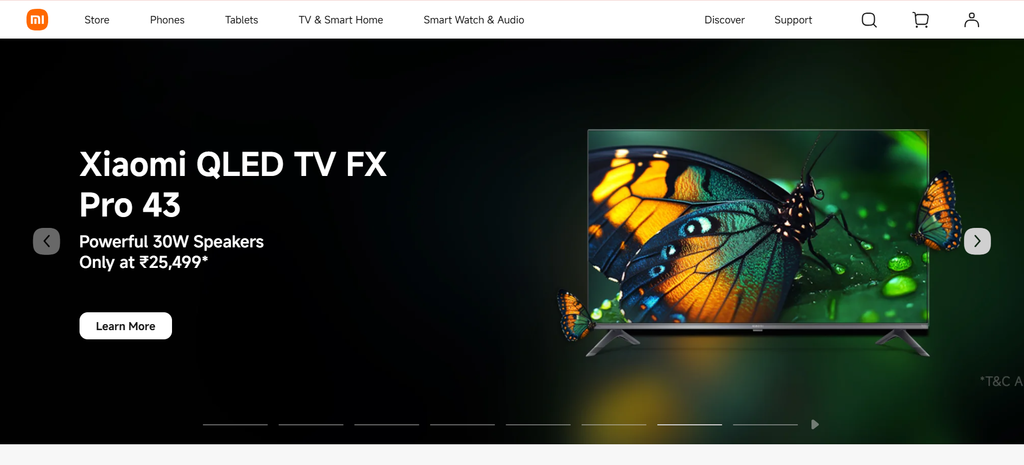
Image Courtesy: Xiaomi (Official Website)
| Company | Xiaomi Technology India |
| Parent Company | Xiaomi Corporation |
| Business | Smartphones, consumer electronics and smart-home products |
| FY2024-25 Total Revenue | ₹24,144.5 crore |
| H1 2025 TV Market Share | 7.9% by shipments |
| Main TV Products | 4K Smart TVs, QLED and Google TV models |
Xiaomi changed the Indian smart TV market by combining large screens and smart features with relatively accessible pricing. The company entered the television category after building a large consumer base through smartphones and other connected devices.
According to Omdia data reported in August 2025, Xiaomi held 7.9% of India’s TV market by shipments during the first half of 2025.
Earlier IDC data showed Xiaomi at 11.7% of India’s smart TV shipments in 2024, although its shipments declined 10.1% year over year during that period. This illustrates how quickly market positions can change in India’s competitive TV industry.
Xiaomi’s television portfolio includes 4K models, Google TV products and higher-end QLED televisions. The company focuses heavily on connected features, streaming applications and integration with other smart devices.
Xiaomi Technology India recorded approximately ₹24,144.5 crore in total revenue for the financial year ended March 2025, according to company financial data. The figure covers the company’s broader Indian business, including smartphones, smart TVs, IoT products and other technology services.
TCL
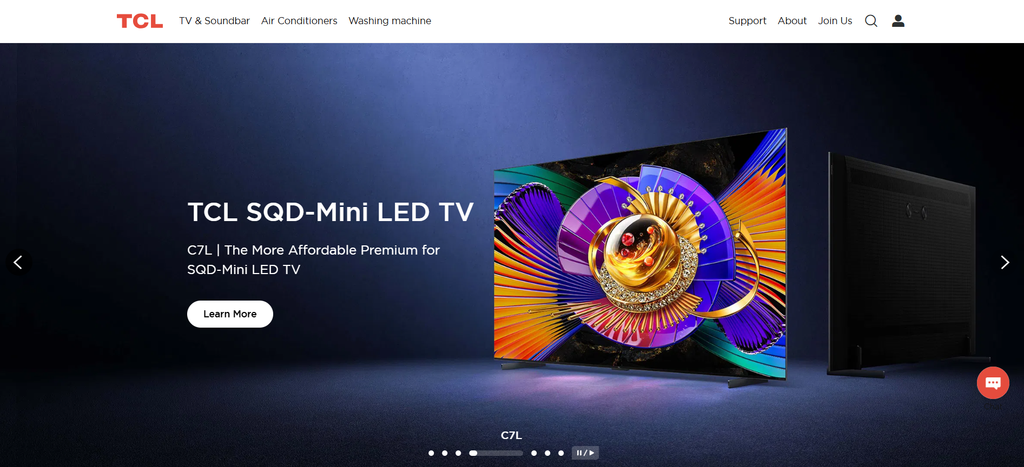
Image Courtesy: TCL (Official Website)
| Company | TCL |
| Parent Company | TCL Electronics / TCL Technology |
| Business | Consumer electronics and televisions |
| India Revenue | TV-specific India revenue not separately disclosed |
| 2024 TV Shipment Share | 8.40% |
| Main TV Products | QLED, Mini LED, 4K Google TV and large-screen TVs |
TCL has become an important television brand in India, particularly in the large-screen and value-oriented segments.
IDC estimated that TCL accounted for 8.4% of India’s TV shipments in 2024, placing it among the five largest brands in that year’s market.
TCL has built its television portfolio around technologies such as QLED and Mini LED. These technologies are designed to improve brightness, contrast and colour reproduction compared with conventional LED televisions.
TCL’s financial results are generally reported at the global or group level, while India-specific television revenue is not consistently disclosed separately. Therefore, it is more useful to look at its Indian market share and product presence rather than assigning a company-wide global revenue figure to its Indian TV business.
Sony

Image Courtesy: Sony (Official Website)
| Company | Sony India |
| Parent Company | Sony Corporation |
| Business | Consumer electronics, gaming, cameras and entertainment |
| FY2024-25 Revenue from Operations | ₹7,851.08 crore |
| 2024 TV Shipment Share | 8.20% |
| Main TV Products | BRAVIA, OLED, Mini LED and 4K Google TVs |
Sony has a strong position in India’s premium television market. The company is particularly known for its BRAVIA television range, picture processing technology and focus on home entertainment.
IDC estimated Sony’s share of India’s TV shipments at 8.2% in 2024, placing it fifth among the leading brands in that year’s market.
Sony offers LED, OLED and Mini LED televisions across different premium segments. Many of its newer models use Google TV, providing access to streaming applications and voice-controlled features.
Sony India reported ₹7,851.08 crore in revenue from operations during FY2024-25, up 2.44% from the previous year. Its total income was approximately ₹7,917.54 crore.
The company’s Consumer Audio and Visuals segment generated ₹6,528.99 crore during FY2024-25. This segment includes televisions and other audio-visual products, so it should not be treated as TV-only revenue.
Hisense
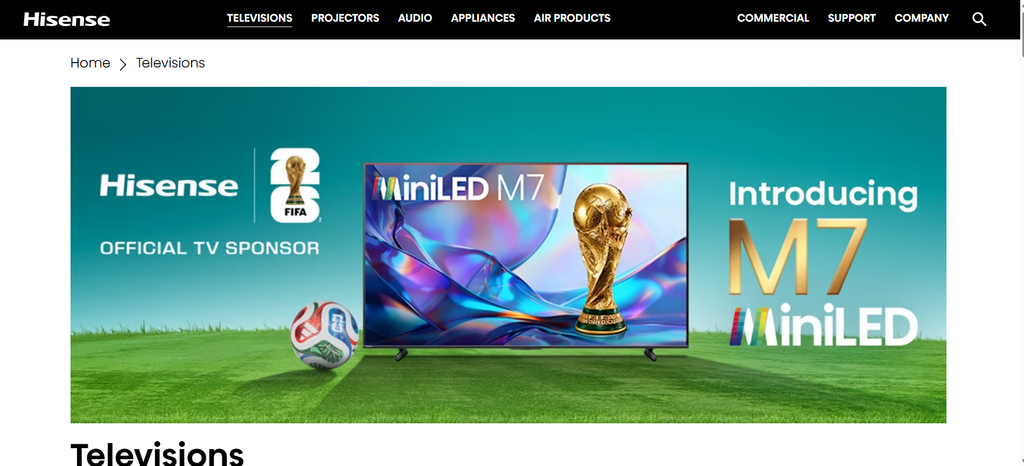
Image Courtesy: Hisense (Official Website)
| Company | Hisense India |
| Parent Company | Hisense Group |
| Business | Consumer electronics and home appliances |
| 2025 India Revenue | Around US$100 million |
| Main TV Products | Mini LED, QLED, 4K and Google TVs |
Hisense has been expanding its presence in India’s television and consumer-electronics market. The company is particularly visible in large-screen televisions and newer display technologies.
Its portfolio includes 4K televisions, QLED models and Mini LED products. Hisense has also been increasing its focus on local manufacturing and distribution in India.
According to a 2026 report, Hisense India closed calendar year 2025 with revenue of approximately US$100 million. The company was targeting around US$150 million in revenue for the following year, according to comments reported at the time.
The company has also been working to expand its offline distribution. Its products are available through large electronics retailers in India, alongside online channels.
Hisense is increasingly using Mini LED and other premium display technologies to compete in the growing large-screen television segment.
Haier
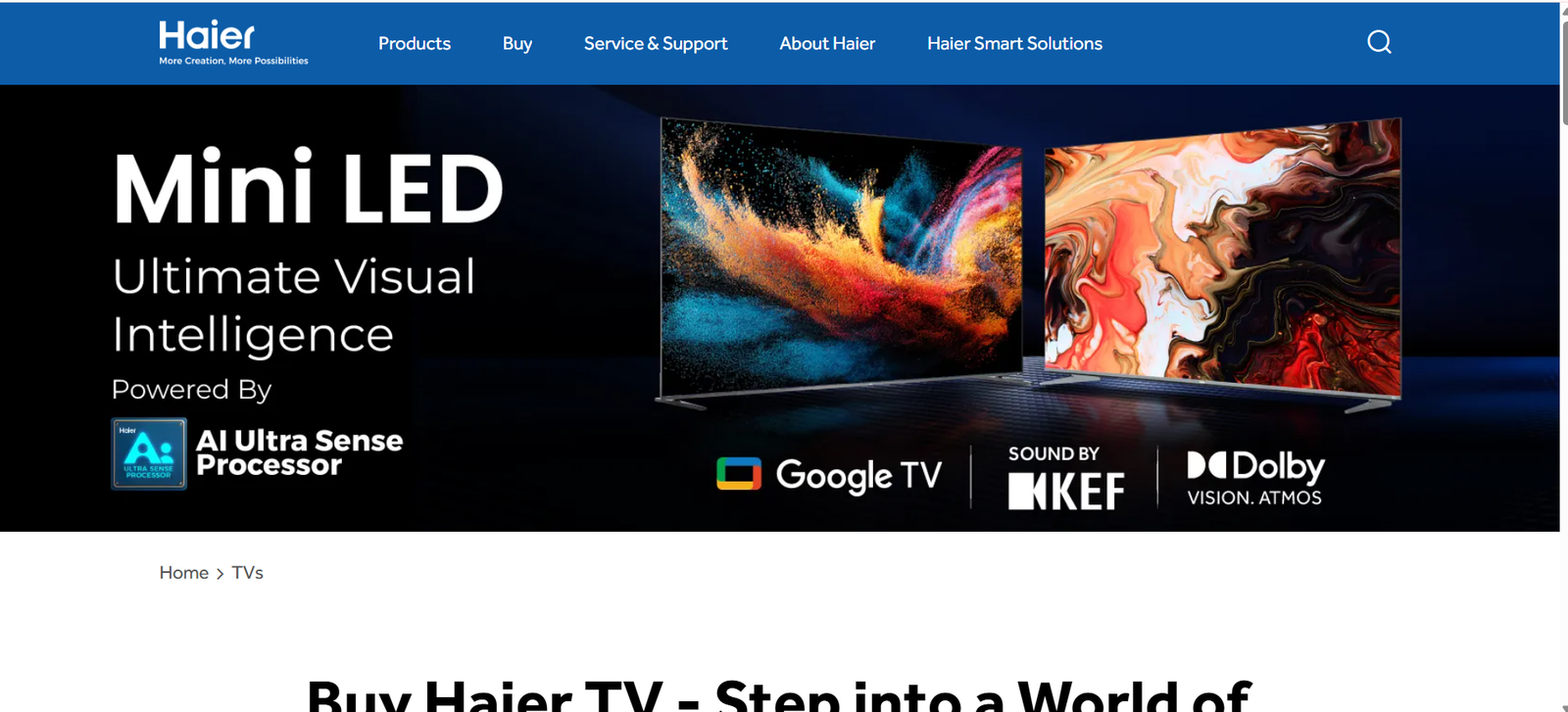
Image Courtesy: Haier (Official Website)
| Company | Haier Appliances India |
| Parent Company | Haier Group |
| Business | Consumer appliances and electronics |
| FY2025 Revenue | ₹9,974 crore |
| FY2025 Net Profit | ₹517 crore |
| Main TV Products | Google TV, OLED, QLED and Mini LED TVs |
Haier is widely known in India for refrigerators, washing machines and air conditioners, but the company has also expanded its television portfolio.
The company offers smart TVs across different price segments, including Google TV models and premium OLED and QD Mini LED televisions.
Haier Appliances India reported ₹9,974 crore in sales for the fiscal year ended December 2025, an increase of 21% from the previous year. Net profit increased 8% to approximately ₹517 crore.
These numbers cover Haier India’s overall business rather than television sales alone.
OnePlus
Image Courtesy: OnePlus (Official Website)
| Company | OnePlus Technology India |
| Parent Company | OnePlus / Oplus ecosystem |
| Business | Smartphones, televisions and consumer electronics |
| FY2024-25 Revenue | ₹13,018 crore |
| Main TV Products | 4K LED, QLED and Google TV models |
OnePlus entered India’s smart TV market after building a strong presence in smartphones. The brand has focused on combining modern design, smart features and competitive pricing.
OnePlus televisions have included 4K LED and QLED models, with Google TV used across newer products. Depending on the model, features can include Dolby Vision, Dolby Atmos, high refresh rates and gaming-focused specifications.
OnePlus Technology India reported ₹13,018 crore in revenue for FY2024-25, according to company financial data. Revenue declined around 13% from the previous year.
The financial figure covers the company’s wider Indian business and cannot be considered television-only revenue. Nevertheless, the scale of OnePlus’s Indian electronics business makes it an important smart-TV brand in the market.
Vu

Image Courtesy: Vu (Official Website)
| Company | Vu Technologies |
| Headquarters | Mumbai, India |
| Business | Consumer electronics and televisions |
| FY2024-25 Revenue | ₹344.85 crore |
| Main TV Products | 4K LED, QLED, Mini LED and premium smart TVs |
Vu is an Indian television brand that has built its business primarily around televisions and consumer electronics.
Unlike diversified companies such as Samsung or LG, Vu has a much stronger focus on the television category. Its product portfolio includes affordable 4K models as well as premium televisions designed for larger-screen viewing and gaming.
The company has also introduced televisions with technologies such as QLED and Mini LED, showing how Indian brands are moving into more advanced display categories.
Vu Technologies reported approximately ₹344.85 crore in revenue during FY2024-25, according to available company financial data. Vu’s television-focused approach gives it a distinct place in India’s smart TV market.
Panasonic
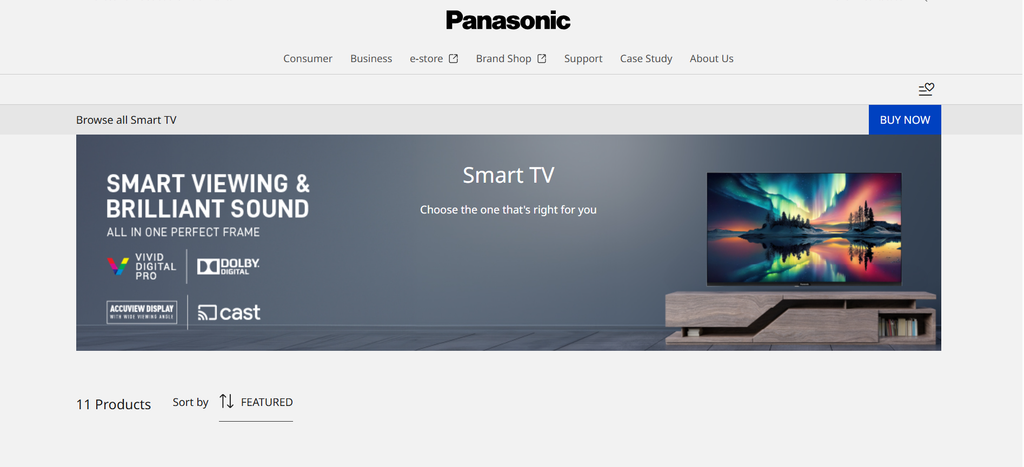
Image Courtesy: Panasonic (Official Website)
| Company | Panasonic Life Solutions India |
| Parent Company | Panasonic Holdings |
| Business | Electrical products and consumer appliances |
| Latest Available Revenue Information | More than ₹500 crore operating-revenue range in FY2024-25 |
| Main TV Products | Smart LED and 4K televisions |
Panasonic is another established Japanese brand with a long history in India’s electronics and electrical-products market.
The company has offered televisions in India across different periods and continues to have a presence in the smart-TV and consumer-electronics category. Its television portfolio has included LED and 4K smart TVs designed for everyday entertainment.
Available company financial information places Panasonic Life Solutions India’s operating revenue in the above ₹500 crore range for FY2024-25, with EBITDA increasing by 28.34% year over year.
For consumers, Panasonic remains a familiar electronics brand, particularly among households looking for a long-established Japanese company with products across multiple electrical and consumer categories.
Financial and Business Comparison
| Brand | Latest Available India Financial Figure | TV Market Information |
| Samsung | ₹1,11,183 crore FY2024-25 revenue from operations | 23.8% H1 2025 TV shipment share |
| LG | ₹24,605 crore FY2025-26 revenue from operations | 16.5% H1 2025 TV shipment share |
| Xiaomi | ₹24,144.5 crore FY2024-25 total revenue | 7.9% H1 2025 TV shipment share |
| TCL | India TV-specific revenue not separately disclosed | 8.4% 2024 TV shipment share |
| Sony | ₹7,851.08 crore FY2024-25 revenue from operations | 8.2% 2024 TV shipment share |
| Hisense | Around US$100 million CY2025 India revenue | Expanding large-screen and Mini LED portfolio |
| Haier | ₹9,974 crore CY2025 sales | Expanding OLED, QLED and Mini LED portfolio |
| OnePlus | ₹13,018 crore FY2024-25 revenue | Smart TV and 4K/QLED portfolio |
| Vu | ₹344.85 crore FY2024-25 revenue | TV-focused Indian brand |
| Panasonic | Operating revenue above ₹500 crore in FY2024-25 | Smart TV and consumer-electronics portfolio |

Note: The financial figures above generally cover each company’s entire India business, not smart-TV sales alone. Market-share figures also come from different research periods and methodologies and therefore should not be directly combined into a single ranking.
Smart TV Market Trends in India
The Indian smart TV market is changing quickly. One of the most visible trends is the movement toward larger screens.
IDC reported that India’s TV shipments reached approximately 12.1 million units in 2024, with total shipments increasing 8.6% year over year. The 55-inch and larger segment was particularly strong, while 55-inch shipments increased by 43% and 65-inch shipments increased by 75% during the year.
This shows that consumers are increasingly interested in bigger screens for movies, sports, gaming and streaming.
Another major trend is the growth of advanced display technologies. Traditional LED televisions continue to dominate mainstream demand, but QLED, OLED and Mini LED televisions are becoming more common.
The price gap between premium and mainstream televisions is also changing. Advanced technologies that were once limited to expensive models are gradually moving into lower price segments.
Online shopping continues to be important, but offline electronics stores remain valuable because consumers often want to see a television’s picture quality and size before buying it.
What to Check Before Buying a Smart TV
Choosing a smart TV should not depend only on the brand name. Consumers should look at several practical factors before making a purchase.
Screen size: A 43-inch TV may work well in a smaller room, while 55-inch or larger models can be more suitable for larger viewing distances.
Display technology: LED, QLED, Mini LED and OLED televisions have different strengths and price points.
Resolution: 4K has become common in the mid-range and premium segments and can provide sharper images than Full HD.
Operating system: Google TV, Tizen and webOS provide different interfaces and features. Consumers should check whether the applications they use regularly are available.
Refresh rate: Higher refresh rates can be useful for gaming and sports, although the real benefit depends on the content and hardware.
Sound: Thin televisions often have limited internal speaker space. Buyers who want a cinema-like experience may also consider a soundbar.
Connectivity: HDMI ports, eARC, USB, Bluetooth and Wi-Fi support can be important when connecting gaming consoles, soundbars and other devices.
After-sales service: Warranty coverage, service centres and availability of replacement parts are important considerations, particularly for large-screen televisions.
Conclusion
India’s smart TV market has grown from a small technology-focused category into a major part of the consumer-electronics industry. Consumers today have access to everything from affordable 4K smart TVs to premium OLED and Mini LED televisions with AI-powered features.
Samsung and LG remain major names in the market. Omdia’s first-half 2025 data put Samsung at 23.8% and LG at 16.5% of TV shipments in India, while Xiaomi accounted for 7.9%. Earlier IDC data for 2024 placed Samsung, LG, Xiaomi, TCL and Sony among the five largest brands by TV shipments.
The financial scale of these companies is also significant. Samsung India reported ₹1,11,183 crore in FY2024-25 revenue from operations, LG Electronics India reported ₹24,605 crore in FY2025-26 revenue, Xiaomi Technology India reported approximately ₹24,144.5 crore in FY2024-25 total revenue, and Sony India reported ₹7,851.08 crore in FY2024-25 revenue from operations.
For buyers, the right television depends on factors such as room size, viewing distance, budget, display technology, operating system, sound quality, gaming requirements, warranty and after-sales service.
As Indian consumers continue to spend more time watching streaming content, sports and digital entertainment on larger screens, smart televisions are likely to remain an important part of the country’s consumer-electronics market.
FAQs :
Which is the most popular Smart TV brand in India?
Samsung is one of the leading Smart TV brands in India by market share.
Which Smart TV brands are popular in India?
Samsung, LG, Xiaomi, Sony, TCL, Hisense, Haier, OnePlus, Vu and Panasonic are popular brands.
Which Smart TV brand has the largest market share in India?
Samsung held the highest TV shipment share in India during the first half of 2025.
Is LG a good Smart TV brand in India?
LG offers a wide range of Smart TVs, including LED, QNED and OLED models.
Which Smart TV brand is known for OLED TVs?
LG and Sony are well known for their OLED television ranges.
Which Smart TV brand is good for budget buyers?
Xiaomi, TCL, Hisense and Vu offer several Smart TVs across affordable price segments.
Which Smart TV brands offer 4K TVs?
Most major brands, including Samsung, LG, Sony, Xiaomi and TCL, offer 4K Smart TVs.
Which Smart TV is suitable for gaming?
Models with high refresh rates, low input lag, HDMI 2.1 and gaming features are generally suitable for gaming.
What is the difference between LED and OLED TVs?
OLED TVs use self-lit pixels, while LED TVs use an LED backlight behind the display panel.
What is QLED technology in a Smart TV?
QLED TVs use quantum-dot technology to improve brightness and colour reproduction.
Are 55-inch Smart TVs popular in India?
Yes, 55-inch TVs are increasingly popular among Indian consumers looking for larger screens.
Which Smart TV operating systems are common in India?
Google TV, Android TV, Samsung Tizen and LG webOS are commonly found in India.
Is Sony a good Smart TV brand?
Sony is a well-known premium television brand with a strong focus on picture and sound quality.
Which Indian brand is known mainly for televisions?
Vu is an Indian consumer-electronics brand that has a strong focus on televisions.
What should I check before buying a Smart TV?
Check the screen size, display technology, resolution, operating system, sound, connectivity, warranty and price.