
Fans still make sense in American homes for a simple reason: they move air without asking a household to run the air conditioner harder all day. Some people want a basic table fan beside the bed, while others need a ceiling fan for a living room, a tower fan for a small apartment or a much larger unit for a warehouse.
That also explains why the US fan market has so many different names. Hunter built its business around ceiling fans, Lasko and Vornado became familiar through portable fans, Hampton Bay sells heavily through Home Depot, and Big Ass Fans works at the much larger end of the market as well.
The top 10 fan brands in USA below cover that mix. The list looks at how easy the products are to find, the types of fans each brand makes, how long the company has worked in the category and how useful its current range is for American homes or businesses.
Top 10 Fan Brands in USA at a Glance
| Rank | Brand | Best Known For |
| 1 | Hunter | Ceiling fans for homes and commercial spaces |
| 2 | Lasko | Tower, floor and portable fans |
| 3 | Vornado | Whole-room air circulators |
| 4 | Honeywell | Tower, table and floor fans |
| 5 | Hampton Bay | Affordable ceiling fans through Home Depot |
| 6 | Minka-Aire | Decorative and premium ceiling fans |
| 7 | Big Ass Fans | Large commercial fans and premium home models |
| 8 | Fanimation | Design-focused ceiling fans |
| 9 | Westinghouse | Ceiling fans and lighting |
| 10 | Dyson | Premium fan and air-purifier combinations |
1. Hunter
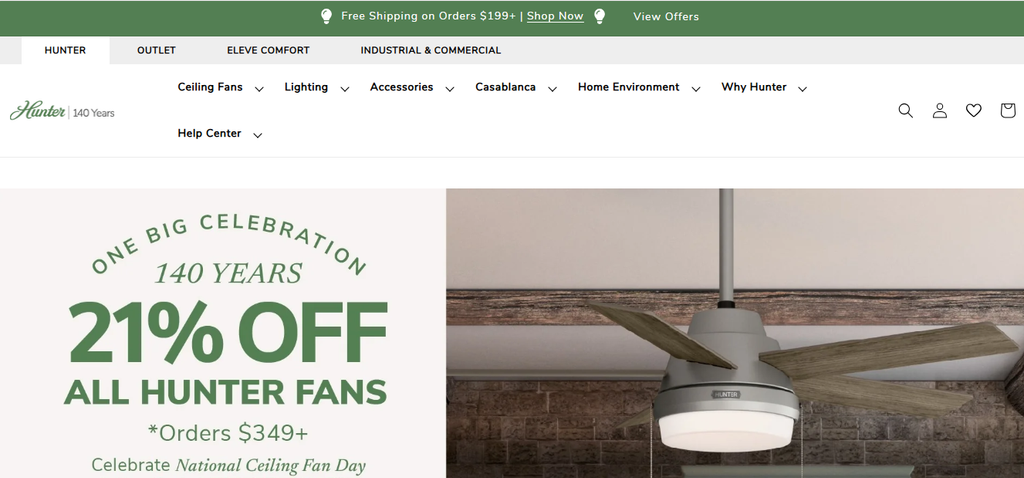
Hunter has spent more time in the ceiling fan business than most names shoppers see today. John Hunter and his son James began developing ceiling fans in 1886, and the company marks 140 years of fan-making in 2026. The Hunter Original arrived in 1906 and still forms part of the brand’s current collection.
Hunter mainly focuses on ceiling fans, so buyers can choose from standard indoor models, low-profile designs, outdoor fans, models with lights and smart fans. The company also moved into large commercial fans, which gives it work outside bedrooms and living rooms.
One thing that makes Hunter practical for US buyers is the range of styles. A simple white fan for a bedroom and a large wood-finish fan for an open living room can both come from the same brand. Hunter also developed SIMPLEconnect smart fans and introduced weather-resistant outdoor models for spaces that deal with moisture and coastal air.
For someone specifically shopping for a ceiling fan rather than a portable unit, Hunter usually deserves an early look because the company has spent most of its history working on that one category.
2. Lasko
Lasko started in Philadelphia in 1906, when Henry Lasko opened a metalworking business. The company later moved into household fans and heaters as demand for home-comfort products grew in the United States.
Today, Lasko sells the kinds of fans many people buy when they do not want to install anything permanently. Its range includes tower fans, pedestal fans, box fans, floor fans and smaller personal models, so a shopper can use the same brand in a bedroom, office, kitchen or garage.
Lasko also owns Air King, which works more heavily with commercial ventilation, and the company says many of its products still receive design, engineering or manufacturing work in the United States. It employs close to 1,000 people in the country.
The brand makes sense for buyers who want a straightforward portable fan without moving into expensive smart-home products. Lasko has spent decades making exactly that type of appliance.
3. Vornado
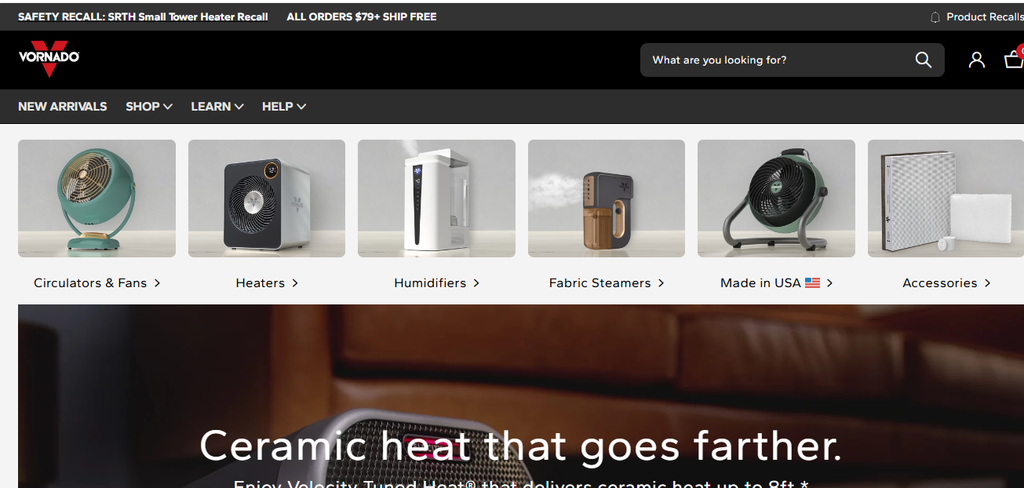
Vornado approaches a room fan differently from brands that mainly rely on side-to-side oscillation.
The company’s history goes back to work by Ralph K. Odor on aerodynamics in the 1920s and 1930s. Odor later worked with O.A. Sutton, and the pair developed the first Vornadofan in 1945. The Vornado name itself came from a combination of “vortex” and “tornado.”
That early interest in airflow still shapes the products. Vornado generally calls its main units air circulators because they push air around a room instead of simply creating a breeze directly in front of the fan.
The company now sells compact desk models, larger room circulators and other air-comfort products. Many buyers choose Vornado for bedrooms or home offices where they want continuous air movement without placing a large tower fan in the middle of the room.
Vornado does not try to look like every other fan brand, and that has helped the name keep a clear identity after decades in the market.
4. Honeywell
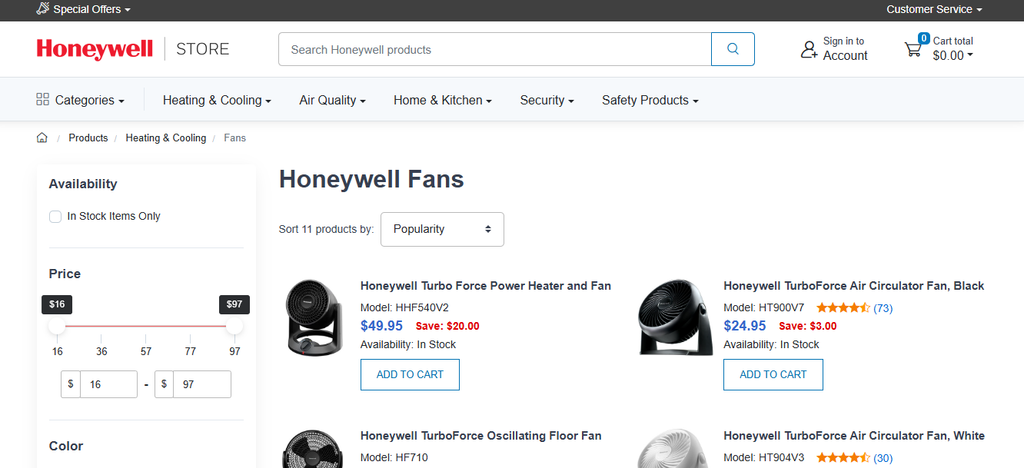
Honeywell fans appear in plenty of American stores, although Honeywell itself does not manufacture the portable fan line directly. Honeywell licenses the name for portable fans, heaters and humidifiers to Helen of Troy, which handles the products and customer support.
The range covers several everyday fan types. Honeywell currently sells floor fans, table fans, tabletop models and tower fans, including the familiar QuietSet and TurboForce lines.
QuietSet models put more attention on sound control and nighttime use, while TurboForce products concentrate more heavily on stronger airflow. That gives buyers an easy way to choose depending on whether they care more about quiet operation or moving more air through a room.
Honeywell also sells models with timers, remote controls, oscillation and several speed settings, so the range works well for bedrooms and living spaces where people want more control than a basic three-speed fan provides.
5. Hampton Bay
Hampton Bay takes a very different route into American homes because Home Depot sells the ceiling-fan line exclusively.
That retail connection gives the brand one obvious advantage: shoppers who already visit Home Depot for lights, tools or renovation supplies can choose a fan during the same trip.
The current range includes fans with lights, outdoor fans, smart models, flush-mount designs and traditional downrod fans. Home Depot also lists both AC and DC motor options under the Hampton Bay name.
The Armitage range has become one of the most visible examples, while models such as Northbrook and Fairbanks cover outdoor and LED options. Lowe’s has its own strong ceiling-fan brands, but Hampton Bay has become closely tied to Home Depot shoppers.
For many homeowners, the appeal comes down to price, choice and easy access to replacement parts or installation information through a large retailer.
6. Minka-Aire
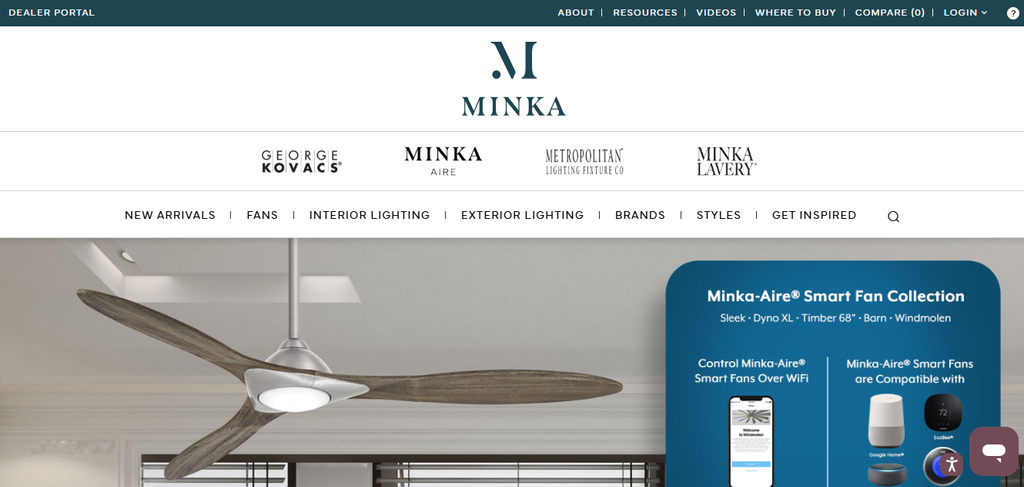
Minka-Aire focuses much more heavily on how a ceiling fan looks inside a room.
The company sells contemporary, transitional and traditional designs, along with fans for outdoor spaces. It also makes larger models for great rooms, where a small standard fan would look out of proportion and move too little air.
Its current range includes compact hugger fans, large indoor-outdoor models and smart designs. Some 2026 models sit well above basic hardware-store pricing, which places Minka-Aire closer to the decorative and premium end of the market.
That price difference usually shows up in the design choices. Minka-Aire puts more attention into finishes, blade shape, integrated lighting and the way the fan fits with furniture and other fixtures in the room.
A buyer who sees a ceiling fan as part of the room’s design, rather than simply a machine that moves air, will probably understand why Minka-Aire has built a loyal customer base.
7. Big Ass Fans
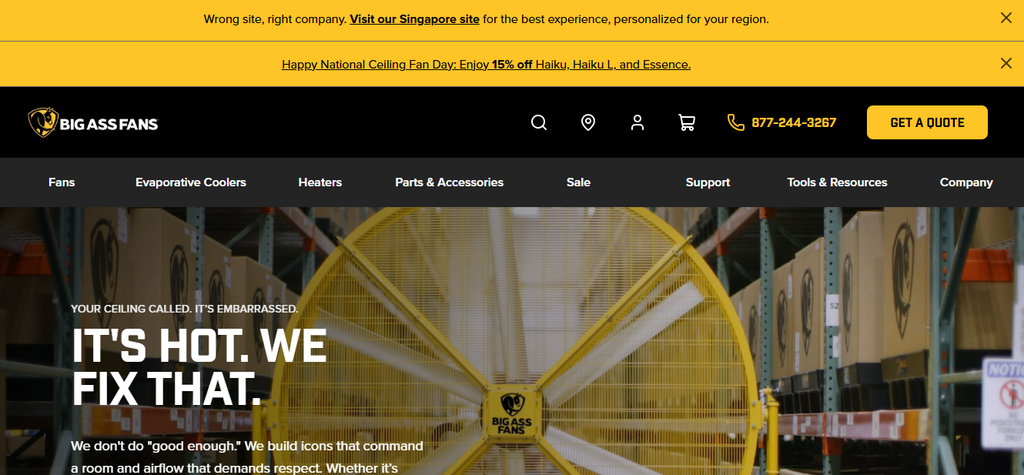
Big Ass Fans started with commercial spaces rather than bedrooms.
The company originally operated as the HVLS Fan Company, a reference to high-volume, low-speed fans. Its founder saw large overhead fans cooling dairy facilities and began working on a version that could improve comfort in large workplaces. Customers eventually gave the company its much more memorable current name.
Those large fans still form an important part of the business. Warehouses, gyms, factories and other big spaces use them because a normal ceiling fan cannot move enough air over that kind of area.
The company also sells residential fans. Its Haiku line takes a premium approach, with sizes from 52 to 84 inches, smart-home controls, motion and temperature sensing, and materials such as aluminum or bamboo. Current Haiku pricing starts around $1,550 and can go much higher depending on size and finish.
Big Ass Fans therefore covers two very different buyers: businesses that need enormous airflow and homeowners willing to spend much more on a high-end ceiling fan.
8. Fanimation
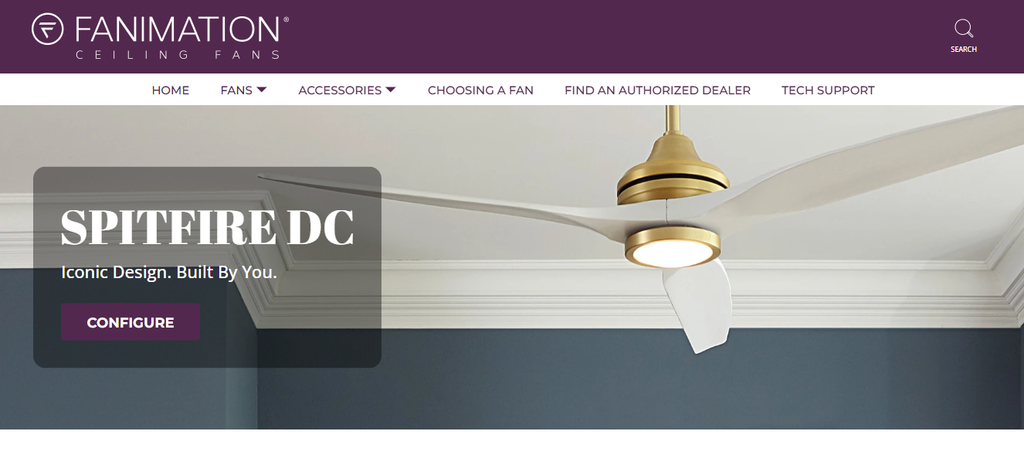
Tom Frampton started Fanimation in 1984 in a garage in Pasadena, California, after working for Casablanca Fan Company. He began with three fan designs and later moved the business to Indiana, where the company now keeps its headquarters in Zionsville.
Fanimation has always put design near the centre of the business. Some of its older fans used tropical blades and unusual shapes, while today’s range includes indoor, outdoor, flush-mount and smart ceiling fans.
The company now sells models such as Spitfire, Kute, Wrap and Edgewood, with different sizes and airflow ratings for small rooms, outdoor areas and larger spaces.
Fanimation also developed its fanSync controls for smart operation and says customers can find its products in more than 1,500 showrooms.
The brand suits buyers who want something less ordinary than a standard five-blade ceiling fan but still want a company with decades of experience behind the product.
9. Westinghouse
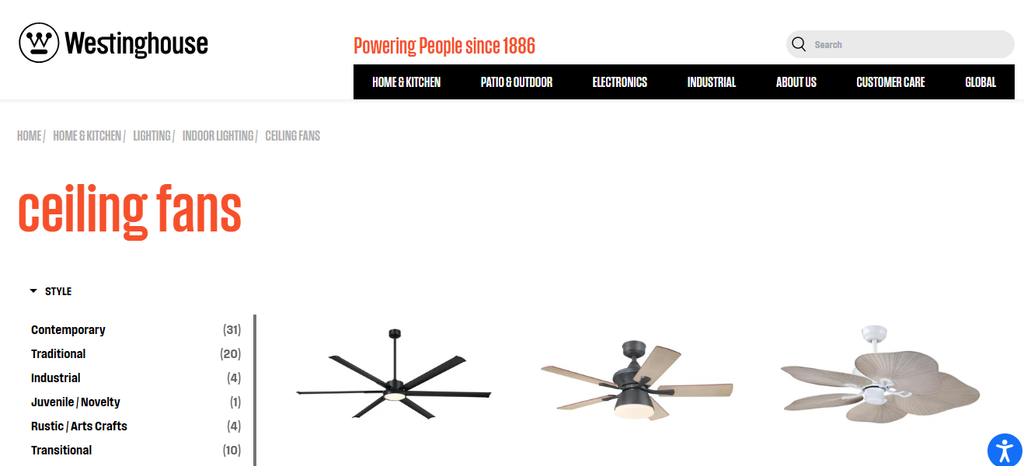
Westinghouse Lighting grew from a small South Philadelphia business that two brothers started in 1946. The company now sells lighting fixtures, bulbs, accessories and a large ceiling-fan range from its headquarters in Philadelphia.
Westinghouse makes fans for residential and commercial spaces, so the collection includes smaller indoor models, larger fans and options with integrated lighting.
The company also sells DC-motor fans. Those motors can use less electricity than traditional AC designs while giving manufacturers more control over speed and noise. Westinghouse has used DC motors and LED lighting heavily in parts of its ceiling-fan range.
People who already know Westinghouse through lighting may find the fan range especially convenient because the company can cover both fixtures in the same room.
10. Dyson
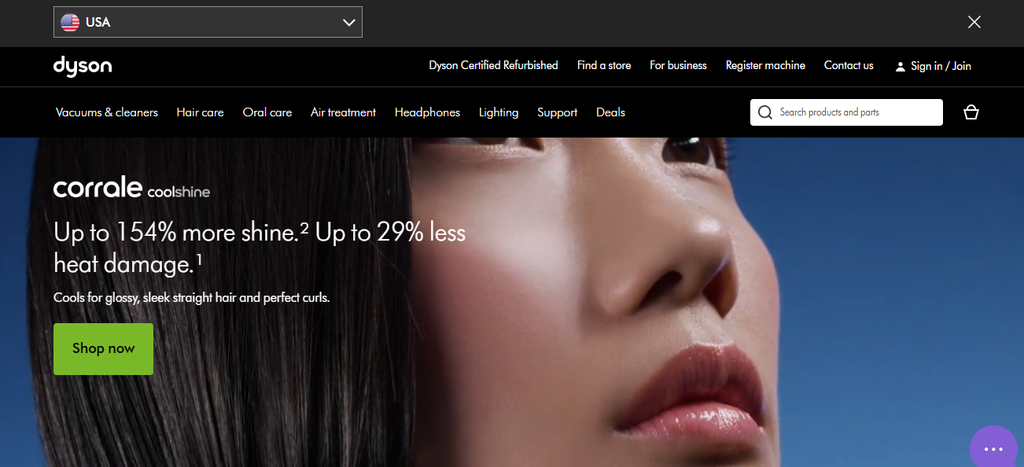
Dyson does not sell the same type of fan as Hunter or Hampton Bay.
Instead of ceiling fans, Dyson concentrates on premium floor and tower machines that combine airflow with other functions. Its current US range includes Purifier Cool, Purifier Hot+Cool and Big+Quiet models.
These products use Dyson’s Air Multiplier technology and combine fan-style airflow with air filtration. Some models also add heating, which means one machine can stay useful outside summer.
The price reflects that extra equipment. Dyson’s larger purifier-fan products can cost several hundred dollars, with premium models reaching close to or above $1,000 depending on the version and current pricing.
A person who only needs a basic breeze can spend far less with Lasko or Honeywell. Dyson makes more sense for someone who already wants air filtration and prefers to combine several functions in one appliance.
Which Fan Brands Work Well for Bedrooms?
Bedrooms usually need a fan that moves enough air without making too much noise.
For portable fans, Honeywell, Lasko and Vornado give buyers plenty of choices. Honeywell’s QuietSet range specifically focuses on lower-noise operation, while Vornado air circulators can move air through a room without taking up much floor space.
For ceiling fans, Hunter, Hampton Bay and Fanimation all make smaller or flush-mount models that fit bedrooms with standard ceiling heights.
The best choice depends on whether someone wants permanent installation. A portable fan can move between rooms, while a ceiling fan frees up floor space and can run without putting another appliance beside the bed.
Which Brands Make Fans for Large Rooms?
Large rooms need more than a bigger-looking fan. Blade span and airflow matter because a small unit may run at full speed and still fail to move enough air around the space.
Hunter, Minka-Aire and Fanimation all sell large ceiling fans for open living areas and great rooms. Big Ass Fans goes much further, with products for very large homes as well as warehouses, gyms and commercial buildings.
The Haiku line, for example, reaches 84 inches, while commercial Big Ass Fans models can handle spaces far beyond a normal living room.
Ceiling Fan or Portable Fan: Which One Makes More Sense?
A ceiling fan works well when one room needs regular airflow and the homeowner does not mind installing a permanent fixture. It also keeps the floor clear, which helps in bedrooms and smaller living rooms.
Portable fans make more sense when flexibility matters. A Lasko tower fan can move from the bedroom to the living room, and a small Vornado can sit on a desk during work hours before moving elsewhere later.
Renters may also prefer portable models because they can take the fan with them when they move.
Cost varies a lot in both categories. A simple portable fan can cost relatively little, while decorative ceiling fans and premium models from Minka-Aire, Fanimation or Big Ass Fans can cost hundreds or even thousands of dollars.
What Should You Check Before Buying a Fan?
Start with the room size because that determines how much airflow you actually need. For a ceiling fan, check the blade span and CFM rating, then look at the ceiling height so you know whether a flush mount or downrod makes more sense.
For a portable fan, think about where it will sit and how often you will move it. A tower fan saves floor space, while a floor circulator can push air harder through a larger room.
Noise matters in bedrooms and offices, while remote controls and timers matter more when you do not want to get up every time you change the speed.
Outdoor buyers should also check the location rating. A fan on a covered porch may need a damp rating, while a fan exposed directly to rain needs a wet rating.
Conclusion
The top 10 fan brands in USA cover very different parts of the market, so the right name depends heavily on where the fan will go.
Hunter has one of the longest ceiling-fan histories in the country and continues to focus heavily on home and commercial ceiling models. Lasko and Vornado make more sense for buyers who want portable airflow, while Honeywell gives shoppers tower, table and floor options under one familiar name.
Hampton Bay gives Home Depot customers an affordable ceiling-fan range, while Minka-Aire and Fanimation put more attention on decorative designs. Big Ass Fans handles the largest spaces and also sells expensive residential models. Westinghouse combines fans with its lighting business, and Dyson takes the category in another direction by adding air purification to its fan products.
A good fan does not need to come from the most expensive brand. The room size, noise level, airflow, mounting style and way you plan to use it matter much more than the logo.
Frequently Asked Questions
Which fan brand has been around the longest in the USA?
Hunter traces its ceiling-fan history to 1886, when John Hunter and his son James began working on early ceiling fans. The company celebrates 140 years in the category in 2026.
Which fan brand is good for a bedroom?
Honeywell’s QuietSet models make sense for people who care about lower noise, while Vornado works well for room circulation. If you want a ceiling fan instead, Hunter and Hampton Bay both sell compact and flush-mount options.
Is Lasko an American company?
Henry Lasko started the company in Philadelphia in 1906. Lasko still designs and engineers products in the United States, and the company says it also manufactures a number of products domestically.
Who makes Honeywell fans?
Honeywell licenses its portable fan business to Helen of Troy, which manufactures and supports the fans sold under the Honeywell name.
Where can you buy Hampton Bay fans?
Home Depot sells Hampton Bay ceiling fans exclusively. The range includes indoor, outdoor, smart, flush-mount and light-equipped models.
Are Vornado fans different from regular oscillating fans?
Vornado designs many of its products as air circulators, so they push air through a room rather than simply sweeping a breeze from side to side. The company has used that circulation idea since its earliest fan designs.
Does Big Ass Fans make fans for homes?
It does. The company sells large commercial fans, but it also makes residential models such as Haiku, which comes in several sizes and includes smart controls and automatic sensing features.
Is Fanimation an American fan company?
Tom Frampton started Fanimation in California in 1984. The company later moved to Indiana and now keeps its headquarters in Zionsville.
Does Dyson make normal fans?
Dyson mainly sells premium air-treatment products that provide fan-style airflow while also filtering the air. Some versions add heating as well.
Which brands make decorative ceiling fans?
Minka-Aire, Fanimation and Hunter all carry decorative ceiling fans in several finishes and styles. Minka-Aire and Fanimation put particularly heavy attention on design, larger blade sizes and statement models for living rooms and open spaces.