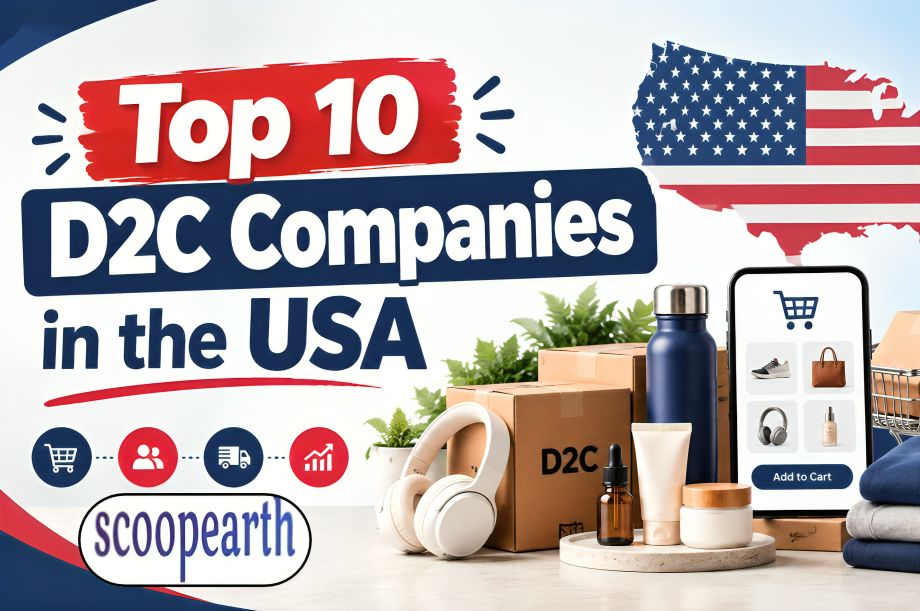
Direct-to-consumer, or D2C, has changed the way Americans discover, buy, and interact with brands. Instead of depending entirely on department stores, wholesalers, or traditional retail chains, D2C companies build a direct relationship with customers. They usually sell through their own websites and apps, while using social media, email, online communities, and increasingly physical stores to stay connected with shoppers.
The idea sounds simple, but building a successful D2C company is anything but easy. Brands have to attract customers, earn their trust, deliver a good product, handle logistics, and encourage people to come back. The companies that have lasted have generally moved beyond the early “online-only” formula and developed broader retail and omnichannel strategies.
Today, the American D2C landscape includes everything from eyewear and beauty to footwear, fitness, personal care, and fashion. Some of the best-known names helped define the original D2C boom, while others represent the newer generation of digitally native brands.
Here are 10 D2C companies that have made a significant mark on the U.S. consumer market.
1. Warby Parker Inc.
| Details | Information |
|---|---|
| Company Name | Warby Parker Inc. |
| Founded | 2010 |
| Global Headquarters | 233 Spring Street, 6th Floor East, New York, NY 10013, USA |
| Business | Direct-to-consumer eyewear and eye care |
| Main Products/Services | Prescription glasses, sunglasses, contact lenses, eye exams, vision tests, and online eyewear |
| Main Brand/Banners | Warby Parker |
| Main Focus | Affordable eyewear, direct-to-consumer shopping, eye care, and customer experience |
| Key Figure | Neil Blumenthal & Dave Gilboa – Co-Founders and Co-CEOs |
| Public Listing | NYSE: WRBY |
| Funding/Valuation | Publicly traded; market value varies with share price |
| 2025 Net Revenue | Approximately $877.9 million |
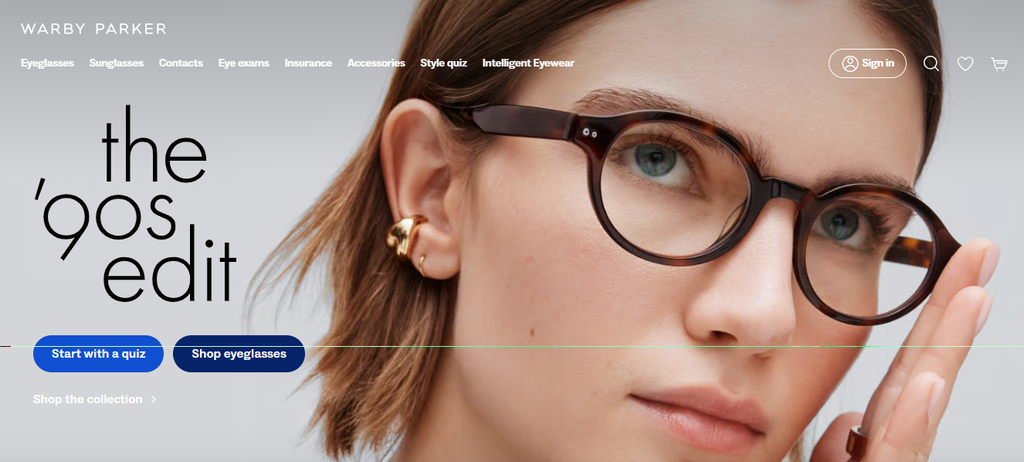
One of its early ideas was particularly effective: letting customers try frames at home before making a purchase. That approach removed one of the biggest problems with buying glasses online—customers could not physically see how a frame looked on their face.
The company has since grown beyond its original online model. Warby Parker now operates more than 300 stores across the U.S. and Canada, alongside its digital business. Its offerings include prescription glasses, sunglasses, contact lenses, eye exams, and vision tests.
Warby Parker is also known for its social mission. Through its Buy a Pair, Give a Pair program, the company says it has worked with nonprofit partners to distribute more than 20 million glasses to people in need.
Its journey is a good example of how modern D2C has evolved. Being direct to the consumer does not necessarily mean staying online forever. For Warby Parker, websites, stores, technology, and customer service now work together.
2. Glossier, Inc.
| Details | Information |
|---|---|
| Company Name | Glossier, Inc. |
| Founded | 2014 |
| Global Headquarters | 233 Spring Street, 10th Floor, New York, NY 10013, USA |
| Business | Direct-to-consumer beauty and cosmetics |
| Main Products/Services | Skincare, makeup, body care, fragrance, and beauty products |
| Main Brand/Banners | Glossier |
| Main Focus | Accessible and uncomplicated beauty with a strong community-led and digitally focused experience |
| Key Figure | Kyle Leahy – CEO; Emily Weiss – Founder and Executive Chairwoman |
| Public Listing | Private company |
| Funding/Valuation | Privately funded; last reported valuation was $1.6 billion in 2021, while 2025 reports discussed a possible fundraising valuation below $1 billion |
| 2025 Net Revenue | Not publicly disclosed |
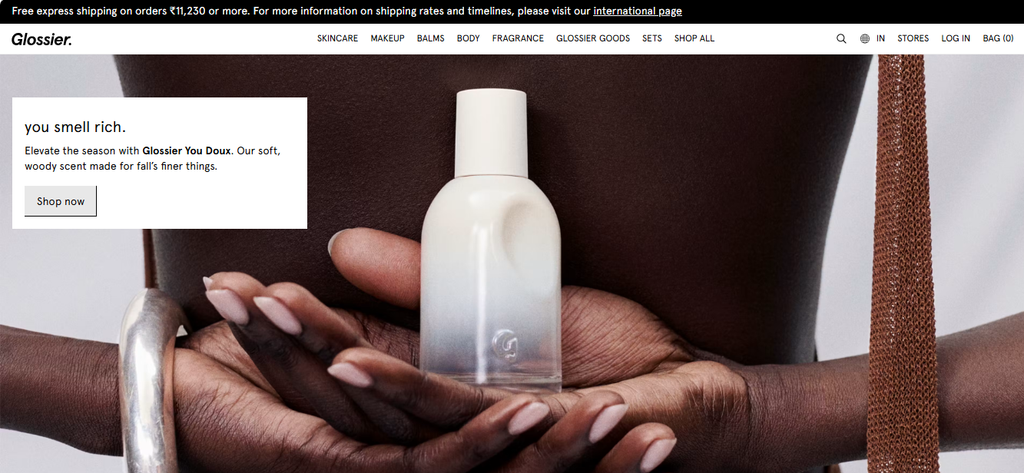
Glossier, Inc. Founded in 2014 by Emily Weiss, Glossier grew out of Into The Gloss, a beauty website that focused on how real people used beauty products. That connection with consumers became an important part of Glossier’s identity.
Products such as Boy Brow and Cloud Paint helped establish the brand’s recognizable, minimalist approach to beauty. Instead of presenting makeup as something that needed to dramatically change a person’s appearance, Glossier positioned many of its products around enhancing an everyday look.
The company has also expanded beyond its own website. Glossier has developed an omnichannel presence, including its partnership with Sephora. This reflects a wider shift among established D2C brands toward combining direct online sales with physical retail and wholesale partnerships.
What makes Glossier interesting is that its biggest asset has never been just a particular product. Its community, visual identity, and relationship with beauty consumers have been central to the brand.
3. Allbirds, Inc.
| Details | Information |
|---|---|
| Company Name | Allbirds, Inc. |
| Founded | 2015 |
| Global Headquarters | 530 7th Street, San Francisco, CA 94103, USA |
| Business | Direct-to-consumer lifestyle footwear and apparel |
| Main Products/Services | Footwear and apparel, including products using Merino wool, tree fiber, and sugarcane-derived materials |
| Main Brand/Banners | Allbirds |
| Main Focus | Comfort, style, quality, and sustainability |
| Key Figure | Joey Zwillinger – Chief Executive Officer during 2025 |
| Public Listing | Nasdaq: BIRD |
| Funding/Valuation | Publicly traded; market value varies with share price |
| 2025 Net Revenue | Approximately $152.5 million |
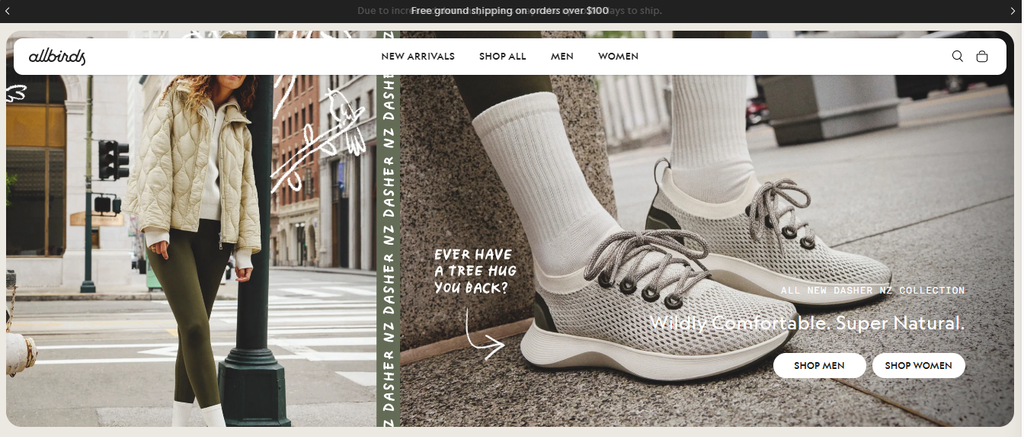
The brand’s simple designs were another important part of its appeal. Rather than competing through complicated styles, Allbirds focused heavily on comfort, simplicity, and a more environmentally conscious approach to footwear.
Its early growth was closely connected to the D2C model. Customers could discover the brand online, learn about the materials, and purchase directly without relying on traditional footwear retailers.
However, like several early D2C companies, Allbirds has had to adapt as the market changed. The company has increasingly combined its own stores with a smaller wholesale network rather than depending exclusively on online sales.
Allbirds remains an interesting example of how a brand can use a clear product philosophy and recognizable identity to stand out in a crowded consumer category.
4. Hims & Hers Health, Inc.
| Details | Information |
|---|---|
| Company Name | Hims & Hers Health, Inc. |
| Founded | 2017 |
| Global Headquarters | 285 Embarcadero Street, San Francisco, CA 94105, USA |
| Business | Direct-to-consumer digital health and wellness platform |
| Main Products/Services | Telehealth and digital healthcare, prescription treatments, personalized wellness programs, and healthcare services |
| Main Brand/Banners | Hims and Hers |
| Main Focus | Convenient, personalized access to health and wellness care through a digital platform |
| Key Figure | Andrew Dudum – Chief Executive Officer |
| Public Listing | NYSE: HIMS |
| Funding/Valuation | Publicly traded; market value varies with share price |
| 2025 Net Revenue | Approximately $2.35 billion |
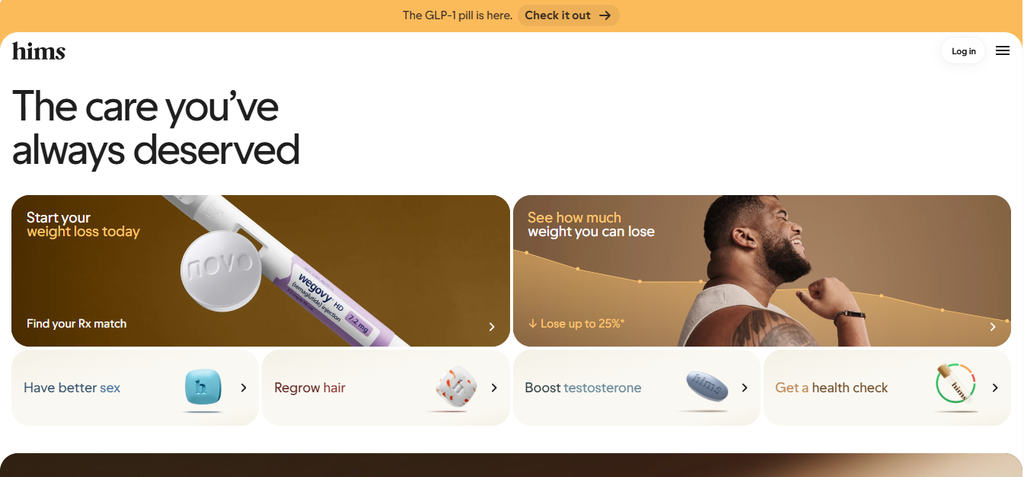
The brand operates through two consumer identities: Hims, which traditionally focused on men’s health, and Hers, which focuses on women’s health.
Its business has expanded considerably beyond the products that originally made the brand recognizable. The company now operates as a broader health and wellness platform, with offerings spanning areas such as skincare, sexual health, mental health, and weight management.
Hims & Hers is also notable because subscriptions are an important part of its business model. Instead of treating a customer relationship as a one-time purchase, the company can maintain an ongoing connection with customers.
5. Bombas
| Details | Information |
|---|---|
| Company Name | Bombas Inc. |
| Founded | 2013 |
| Global Headquarters | 50 Varick Street, Suite 915, New York, NY 10013, USA |
| Business | Apparel and consumer goods |
| Main Products/Services | Socks, underwear, T-shirts, activewear, and other apparel for men, women, and kids |
| Main Brand/Banners | Bombas |
| Main Focus | Comfort, quality, and social impact through a buy-one, donate-one model |
| Key Figure | Randy Goldberg – Co-Founder and Co-CEO |
| Public Listing | Private company |
| Funding/Valuation | Privately funded; last reported valuation around $1 billion in 2021 funding round, with current valuation potentially higher |
| 2025 Net Revenue | Not publicly disclosed |
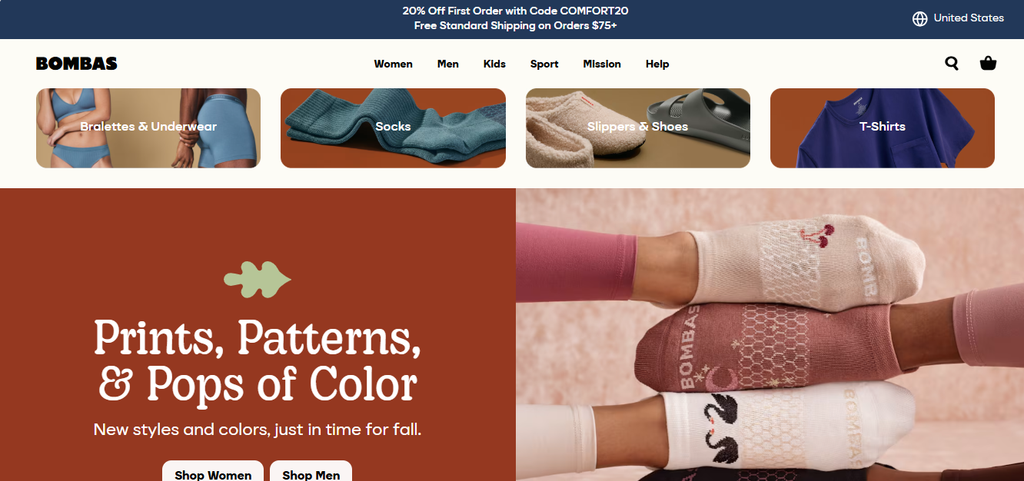
Founded in 2013, Bombas became known for combining comfort-focused products with a social mission. Its marketing has consistently emphasized the idea that buying something for yourself can also contribute to helping someone else.
The company’s product range has expanded beyond socks to include underwear and other basics, but its original sock business remains central to its identity.
Bombas is an excellent example of how D2C brands can turn an ordinary product into something consumers feel emotionally connected to. The company did not invent socks. Instead, it focused on product details, branding, storytelling, and customer experience.
That distinction matters in D2C. A company does not always need to create an entirely new category. Sometimes, it can take a familiar product and give customers a reason to look at it differently.
6. Casper Sleep Inc.
| Details | Information |
|---|---|
| Company Name | Casper Sleep Inc. |
| Founded | 2014 |
| Global Headquarters | New York, New York, USA |
| Business | Sleep and home goods |
| Main Products/Services | Mattresses, pillows, bedding, bed frames, and other sleep products |
| Main Brand/Banners | Casper |
| Main Focus | Better sleep for a better tomorrow through innovative and high-quality sleep products |
| Key Figure | Philip Krim – Co-Founder and CEO |
| Public Listing | NYSE: CSPR (publicly listed in 2020) |
| Funding/Valuation | Publicly traded; market value varies with share price |
| 2024 Net Revenue | Approximately $497 million |
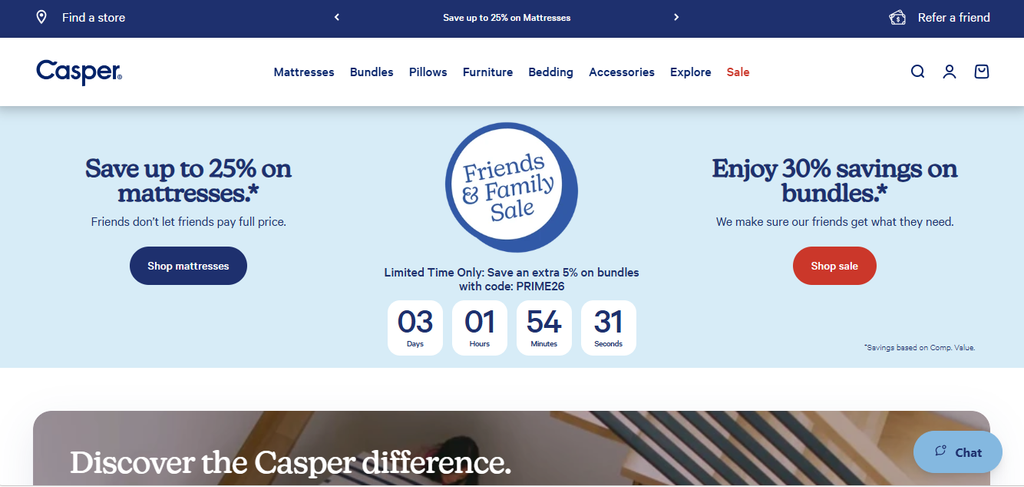
Before companies like Casper became popular, purchasing a mattress usually meant visiting a showroom, lying on different mattresses, speaking with salespeople, and arranging delivery. Casper moved much of that experience online.
Founded in 2014, the company became known for shipping mattresses directly to customers in compact boxes. The concept made the purchasing process considerably different from the traditional mattress-store experience.
Casper became one of the most recognizable names in the early D2C movement. Its success also encouraged other companies to experiment with shipping large products directly to consumers.
Over time, Casper’s business evolved beyond its original online-first approach. Like many D2C pioneers, it has had to navigate the realities of customer acquisition, retail, product expansion, and profitability.
7. Everlane
| Details | Information |
|---|---|
| Company Name | Everlane, Inc. |
| Founded | 2010 |
| Global Headquarters | San Francisco, California, USA |
| Business | Direct-to-consumer fashion and lifestyle brand |
| Main Products/Services | Clothing, footwear, accessories, and basics for men and women with a focus on transparency and ethical manufacturing |
| Main Brand/Banners | Everlane |
| Main Focus | Modern essentials, sustainability, ethical sourcing, and transparent pricing |
| Key Figure | Michael Preysman – Founder and CEO |
| Public Listing | Private company |
| Funding/Valuation | Privately funded; last reported valuation around $1.1 billion in 2021 funding round |
| 2024 Net Revenue | Not publicly disclosed |
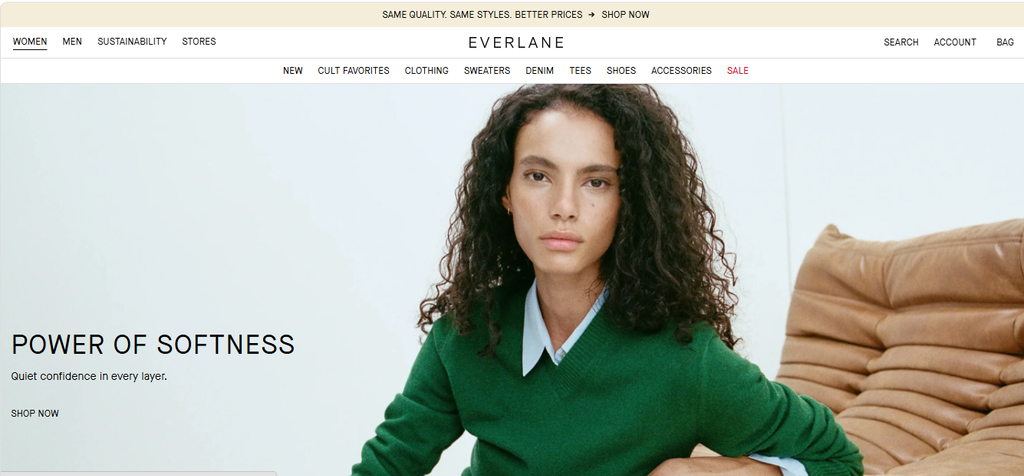
Founded in 2010, the fashion company became known for explaining where its products were made and breaking down the costs behind its pricing. This approach was particularly attractive to shoppers who wanted more information about the products they were buying.
Its minimalist aesthetic also helped establish a recognizable identity. Everlane focused on wardrobe staples rather than constantly chasing short-lived trends.
Although the company started as a digital-first brand, it has expanded into physical retail as well. This reflects an important development in the D2C industry: successful brands increasingly use multiple channels rather than treating online and offline shopping as completely separate worlds.
Everlane’s story shows how transparency can become part of a company’s branding rather than simply a feature of its website.
8. Peloton Interactive, Inc.
| Details | Information |
|---|---|
| Company Name | Peloton Interactive, Inc. |
| Founded | 2012 |
| Global Headquarters | 125 West 25th Street, New York, NY 10001, USA |
| Business | Connected fitness and digital health |
| Main Products/Services | Connected fitness equipment, exercise classes, subscriptions, training, and digital fitness content |
| Main Brand/Banners | Peloton |
| Main Focus | At-home and on-demand fitness, community-driven workouts, and digital wellness |
| Key Figure | Peter Stern – Chief Executive Officer |
| Public Listing | Nasdaq: PTON |
| Funding/Valuation | Publicly traded; market value varies with share price |
| 2024 Net Revenue | Approximately $2.8 billion |
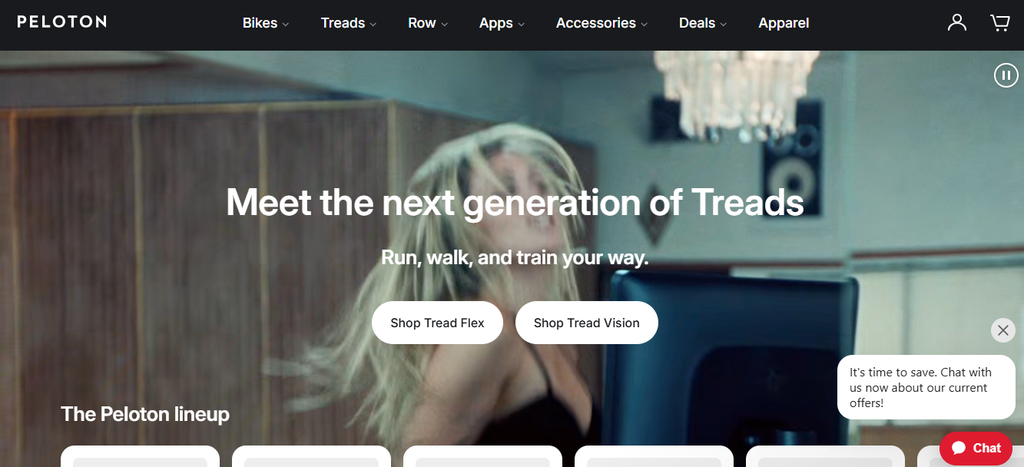
The company’s bikes and treadmills became particularly recognizable because they were not marketed simply as exercise equipment. Peloton built an entire experience around them, including live and recorded classes, instructors, music, rankings, and an online fitness community.
That combination helped create a different relationship between a consumer and a fitness product. Customers were not simply purchasing a bike; they were entering a connected fitness ecosystem.
Peloton’s rise also demonstrated both the opportunities and challenges of D2C. The company benefited enormously from increased demand for at-home fitness during the pandemic, but later had to adjust to changing consumer behavior.
Its business illustrates an important lesson about D2C: selling directly is only one part of the model. Long-term success also depends on retaining customers and creating reasons for them to continue using the product or service.
9. Chewy, Inc.
| Details | Information |
|---|---|
| Company Name | Chewy, Inc. |
| Founded | 2011 |
| Global Headquarters | 7700 West Sunrise Boulevard, Plantation, Florida 33322, USA |
| Business | Direct-to-consumer online pet retailer |
| Main Products/Services | Pet food, treats, toys, supplies, prescription and over-the-counter medications, pharmacy, and veterinary-related services |
| Main Brand/Banners | Chewy |
| Main Focus | Convenient pet shopping, autoship and recurring orders, pet health, and customer service |
| Key Figure | Sumit Singh – Chief Executive Officer |
| Public Listing | NYSE: CHWY |
| Funding/Valuation | Publicly traded; market value varies with share price |
| 2025 Net Sales | Approximately $12.6 billion |
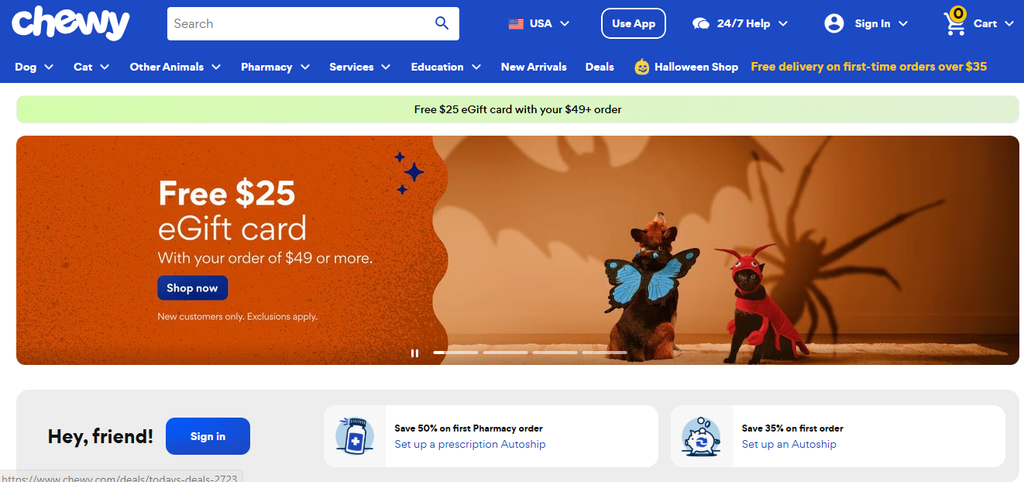
Founded in 2011, the company built its business around making pet shopping convenient. Customers can order food, treats, toys, medications, and other supplies without needing to make repeated trips to a physical store.
One of Chewy’s strongest features is its recurring-purchase model. Pet food and other supplies are products that customers need regularly, making them particularly suitable for subscription and auto-ship services.
The company has also expanded beyond basic e-commerce. Its broader ecosystem includes veterinary services and other pet-related offerings.
10. Away
| Details | Information |
|---|---|
| Company Name | Away (JRSK, Inc.) |
| Founded | 2015 |
| Global Headquarters | New York City, New York, USA |
| Business | Direct-to-consumer travel and lifestyle brand |
| Main Products/Services | Luggage, suitcases, carry-ons, travel bags, accessories, and travel essentials |
| Main Brand/Banners | Away |
| Main Focus | Functional, design-focused travel products and a customer-centric travel experience |
| Key Figure | Jen Rubio – Co-Founder and former CEO; current leadership has changed |
| Public Listing | Private company |
| Funding/Valuation | Privately funded; latest widely reported valuation was $1.4 billion after its 2019 Series D; current valuation is not publicly disclosed |
| Revenue | Not publicly disclosed |
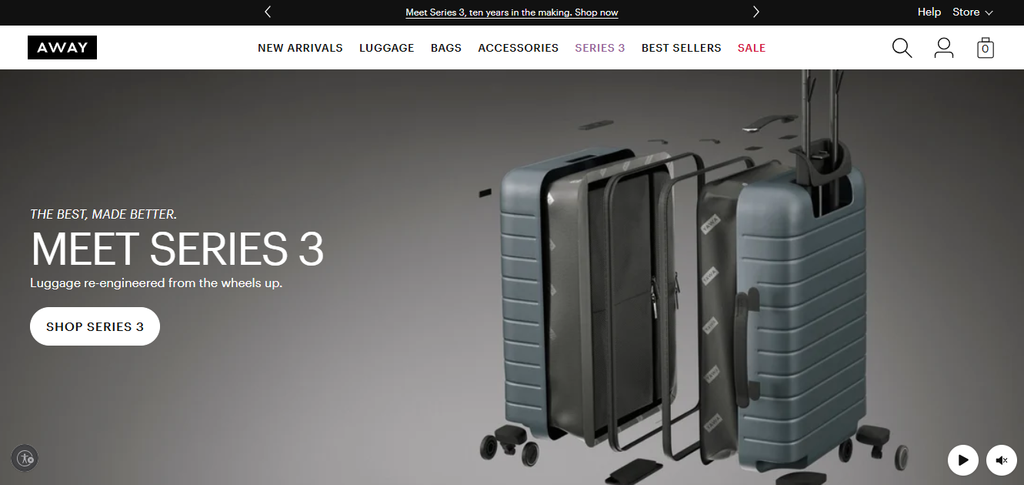
Founded in 2015, the company initially focused heavily on a hero product—the suitcase. Its branding and marketing turned luggage from a fairly functional purchase into something associated with travel lifestyle and personal identity.
The company’s online-first strategy helped it build a recognizable brand without initially relying on the traditional department-store model.
Away’s story also reflects the changing nature of D2C. The strongest digitally native companies increasingly have to think about physical stores, product ranges, customer experience, and multiple distribution channels.
Rather than simply being an online luggage seller, Away developed a broader lifestyle identity around travel. That brand-building approach is one reason it continues to appear in discussions about influential D2C companies.
What Makes D2C Companies Successful?
There is no single formula that guarantees success in direct-to-consumer business. However, several patterns appear repeatedly.
- First, customer relationships matter. D2C companies have more direct access to customer interactions and first-party information than brands that rely entirely on traditional wholesale distribution.
- Second, branding is extremely important. Products such as socks, mattresses, luggage, glasses, and beauty products already existed before these companies arrived. Their differentiation often came from how they presented those products.
- Third, convenience plays a major role. Whether it is ordering pet food through Chewy, buying glasses from Warby Parker, or getting a mattress delivered by Casper, D2C companies often remove friction from the shopping process.
- Fourth, the model is changing. The early D2C idea was often associated with online-only businesses. Today, many successful brands combine websites, mobile experiences, stores, marketplaces, and wholesale partnerships.
This shift is important because acquiring customers online has become more challenging and expensive than it was during the early D2C boom. Brands therefore have to think beyond social media advertising and build stronger long-term customer relationships.
Conclusion
The D2C movement has permanently changed American retail. Companies such as Warby Parker, Glossier, Allbirds, Hims & Hers, Bombas, Casper, Everlane, Peloton, Chewy, and Away showed that consumers were willing to buy products and services directly from brands rather than depending entirely on traditional retailers.
But the modern D2C industry looks different from the one that emerged more than a decade ago. Many of today’s successful brands are no longer purely online. They are opening stores, working with selected retail partners, developing subscription services, and finding new ways to maintain direct relationships with customers.
That may actually be the biggest lesson from the D2C story. Direct-to-consumer is not simply about selling through a website. It is about understanding the customer, controlling the brand experience, and building a relationship that can continue across different channels.
As American consumers continue to move between social media, websites, apps, stores, and marketplaces, D2C companies will likely continue adapting along with them.
Frequently Asked Questions
1. What does D2C mean?
D2C stands for direct-to-consumer. It refers to a business model in which a brand sells directly to consumers rather than depending entirely on wholesalers, distributors, or traditional retailers.
2. Which are some major D2C companies in the USA?
Some well-known U.S. D2C companies include Warby Parker, Glossier, Allbirds, Hims & Hers, Bombas, Casper, Everlane, Peloton, Chewy, and Away.
3. How do D2C companies sell their products?
Most D2C companies use their own websites or apps. Many also use social media, email marketing, physical stores, subscriptions, and selected retail partnerships.
4. Is D2C the same as e-commerce?
Not exactly. E-commerce simply means buying and selling through electronic channels. D2C specifically describes a brand selling directly to the end consumer. A D2C company can use both online and offline channels.
5. Why did D2C companies become popular?
D2C brands became popular because they offered convenient online shopping, distinctive branding, personalized experiences, and direct communication between brands and consumers.
6. Are D2C companies still online-only?
Many are not. A number of established D2C brands have opened physical stores or developed partnerships with retailers. Warby Parker, for example, now operates more than 300 stores across the U.S. and Canada.
7. What industries use the D2C model?
D2C companies operate across many industries, including fashion, beauty, eyewear, food, fitness, healthcare, pet care, home goods, luggage, and personal care.
8. What are the advantages of the D2C model?
D2C companies can maintain closer relationships with customers, control their brand presentation, collect first-party customer information, and have greater control over the overall shopping experience.
9. What challenges do D2C companies face?
Customer acquisition costs, advertising expenses, logistics, inventory management, competition, and customer retention can all be significant challenges. Rising digital advertising costs have made the original online-only growth strategy more difficult for many brands.
10. Is the D2C business model still relevant?
Yes. However, the model has evolved. Rather than relying exclusively on their own websites, many modern D2C companies combine direct online sales with stores, subscriptions, marketplaces, and retail partnerships.