

Every time you check GPS on your phone, look at a weather forecast, or stream a video over satellite internet, you are using technology that began its journey on a launch pad. The US is home to the companies that build the rockets, capsules, and landers making this possible, and some of them are now landing spacecraft on the Moon.
The space industry here has two very different sides. Old aerospace giants built their space business over decades of NASA and defense contracts, while newer companies, many started by tech billionaires and engineers, are using reusable rockets and lower costs to change how space is reached.
In this article, we’ll discuss the top 10 space companies in the United States, based on their history, ownership, and the kind of technology they are known for.
Quick Comparison
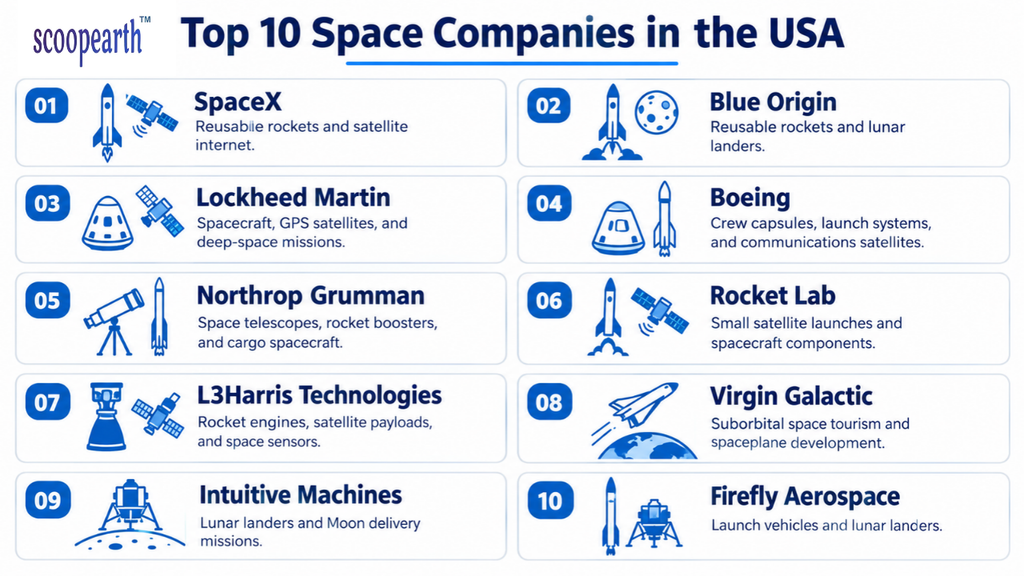
| Rank | Company | Founded | Owner / Founders | US Headquarters | Core Focus |
| 1 | SpaceX | 2002 | Founded by Elon Musk; privately held, led by CEO Elon Musk | Starbase, Texas | Reusable Rockets & Satellite Internet |
| 2 | Blue Origin | 2000 | Founded by Jeff Bezos; privately held, led by CEO Dave Limp | Kent, Washington | Rockets & Lunar Landers |
| 3 | Lockheed Martin | 1995 (roots 1912) | Formed by merger; publicly listed, led by CEO Jim Taiclet | Bethesda, Maryland | Spacecraft & Satellites |
| 4 | Boeing | 1916 | Founded by William Boeing; publicly listed, led by CEO Kelly Ortberg | Arlington, Virginia | Crew Capsules & Launch Systems |
| 5 | Northrop Grumman | 1994 | Formed by merger; publicly listed, led by CEO Kathy Warden | Falls Church, Virginia | Space Telescopes & Rocket Boosters |
| 6 | Rocket Lab | 2006 | Founded by Peter Beck; publicly listed, led by CEO Peter Beck | Long Beach, California | Small Satellite Launches |
| 7 | L3Harris Technologies | 2019 | Formed by merger; publicly listed, led by CEO Christopher Kubasik | Melbourne, Florida | Rocket Engines & Satellite Systems |
| 8 | Virgin Galactic | 2004 | Founded by Richard Branson; publicly listed, led by CEO Michael Colglazier | Las Cruces, New Mexico | Space Tourism |
| 9 | Intuitive Machines | 2013 | Founded by Steve Altemus, Kam Ghaffarian & Tim Crain; publicly listed, led by CEO Steve Altemus | Houston, Texas | Lunar Landers |
| 10 | Firefly Aerospace | 2014 | Founded by Tom Markusic; publicly listed, led by CEO Jason Kim | Cedar Park, Texas | Launch Vehicles & Moon Landers |
SpaceX – The Company That Made Rockets Reusable
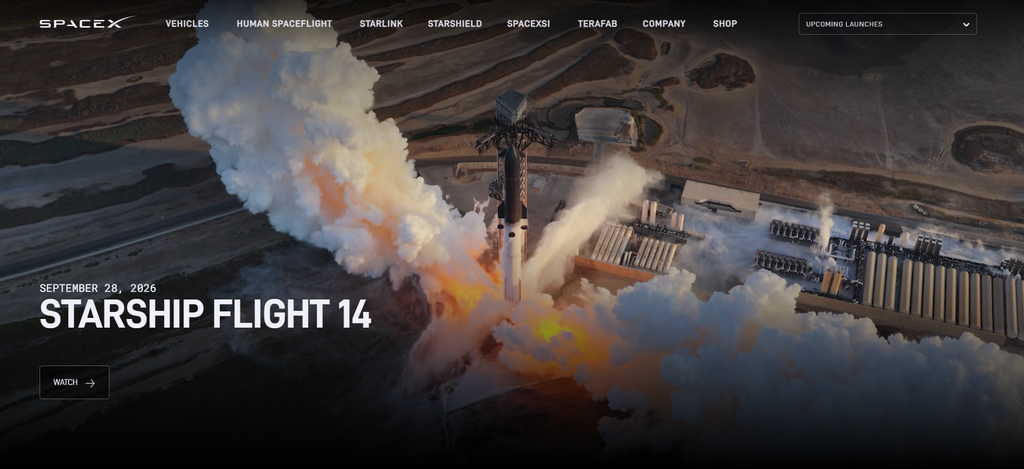
Image Courtesy: SpaceX (Official Website)
- Founded: 2002
- Owner: Founded by Elon Musk; privately held, led by CEO Elon Musk
- Headquarters: Starbase, Texas
SpaceX was started in 2002 by Elon Musk to lower the cost of space travel. Its early rockets failed several times, and the company nearly ran out of money before the Falcon 1 reached orbit in 2008. That success saved the company and won it major NASA contracts.
SpaceX changed the industry by landing and reusing the first stage of its Falcon 9 rocket, which cut launch costs sharply. In 2020, its Crew Dragon capsule became the first private spacecraft to carry NASA astronauts to the International Space Station. The company also runs Starlink, a huge satellite network that provides internet around the world.
What SpaceX does: Builds reusable rockets and spacecraft and operates a satellite internet network.
Services: Satellite launches, Crew Dragon missions, Starlink internet, and the Starship rocket program.
Blue Origin – Jeff Bezos’s Long-Term Space Bet
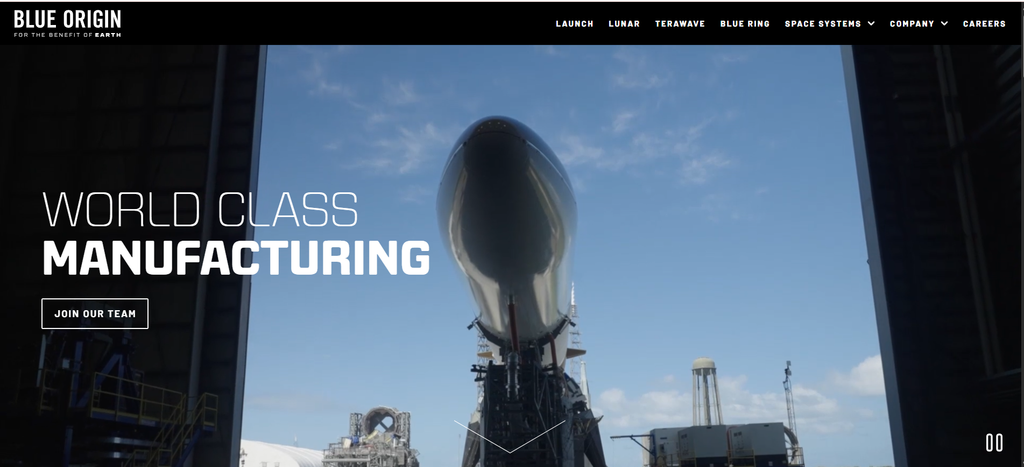
Image Courtesy: Blue Origin (Official Website)
- Founded: 2000
- Owner: Founded by Jeff Bezos; privately held, led by CEO Dave Limp
- Headquarters: Kent, Washington
Blue Origin was started in 2000 by Jeff Bezos, years before most private space companies existed. The company works at a deliberate pace, and its motto means “step by step, ferociously.” Its first big success was New Shepard, a reusable suborbital rocket that takes passengers just past the edge of space.
Blue Origin then built New Glenn, a much larger orbital rocket that made its first launch in January 2025. The company is also developing Blue Moon, a lunar lander tied to NASA’s Artemis program. Dave Limp, a former Amazon executive, has led the company since 2023.
What Blue Origin does: Builds reusable rockets and lunar landing systems.
Services: Suborbital tourist flights, orbital launches, rocket engines, and lunar lander development.
Lockheed Martin – The Builder of Orion and Deep-Space Probes
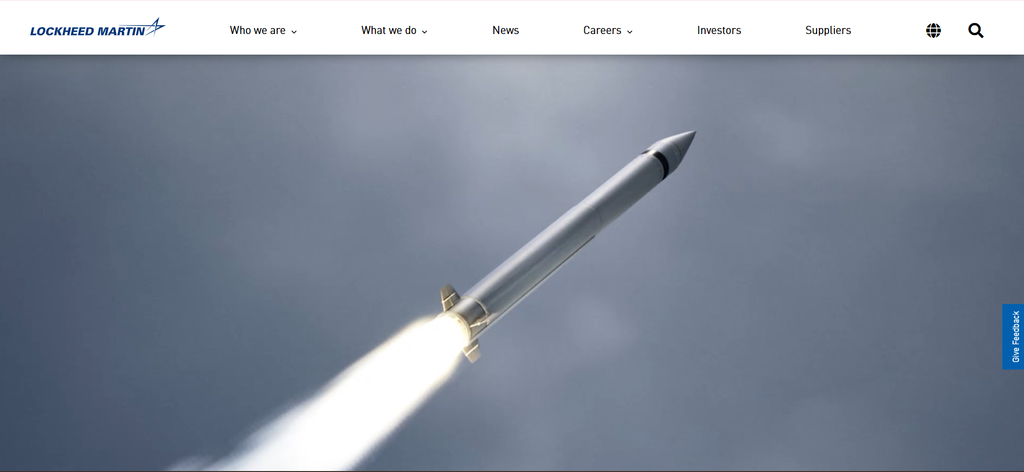
Image Courtesy: Lockheed Martin (Official Website)
- Founded: 1995 (roots 1912)
- Owner: Formed by merger; publicly listed, led by CEO Jim Taiclet
- Headquarters: Bethesda, Maryland
Lockheed Martin was formed in 1995 when Lockheed Corporation merged with Martin Marietta. Its roots go back to 1912, when Allan Lockheed started building aircraft in California. The Martin side of the business built rockets and spacecraft, including probes that landed on Mars.
Today, Lockheed Martin builds Orion, the capsule designed to carry astronauts around the Moon under NASA’s Artemis program. It also makes GPS satellites, missile warning satellites, and planetary spacecraft. It is one of the largest defense and aerospace contractors in the world.
What Lockheed Martin does: Builds spacecraft, satellites, and defense systems.
Services: Orion capsules, GPS satellites, planetary probes, and space-based defense systems.
Boeing – An Aircraft Giant With Deep Space Roots
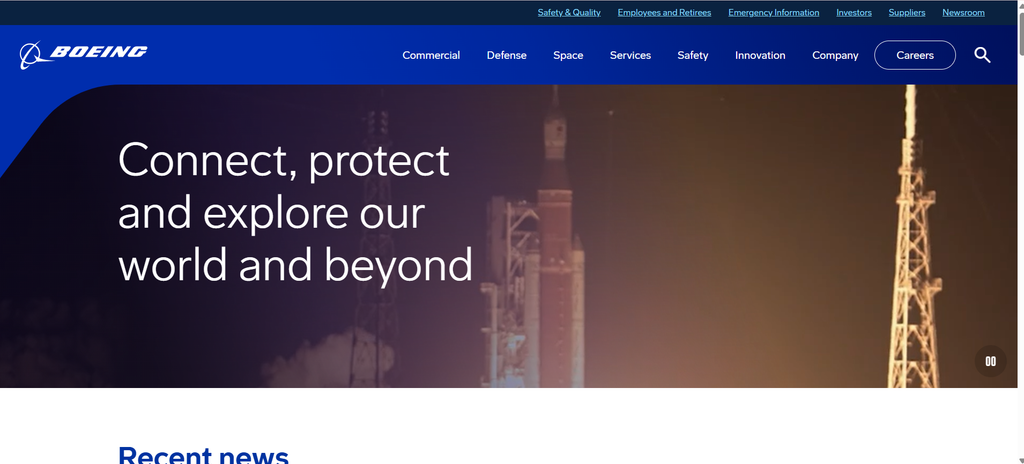
Image Courtesy: Boeing (Official Website)
- Founded: 1916
- Owner: Founded by William Boeing; publicly listed, led by CEO Kelly Ortberg
- Headquarters: Arlington, Virginia
Boeing was started in 1916 by William Boeing in Seattle, first as an aircraft maker. It later became deeply involved in the space program, helping build parts of the Apollo missions’ rockets and the International Space Station.
Today, Boeing builds the core stage of NASA’s Space Launch System, the rocket meant to send astronauts to the Moon. It also developed the Starliner capsule for carrying crews to the space station, though the program has faced delays and technical problems. Boeing is also a major builder of communications satellites.
What Boeing does: Builds crew capsules, rocket stages, and satellites alongside aircraft.
Services: SLS core stages, Starliner spacecraft, satellites, and space station support.
Northrop Grumman – The Maker of the James Webb Space Telescope
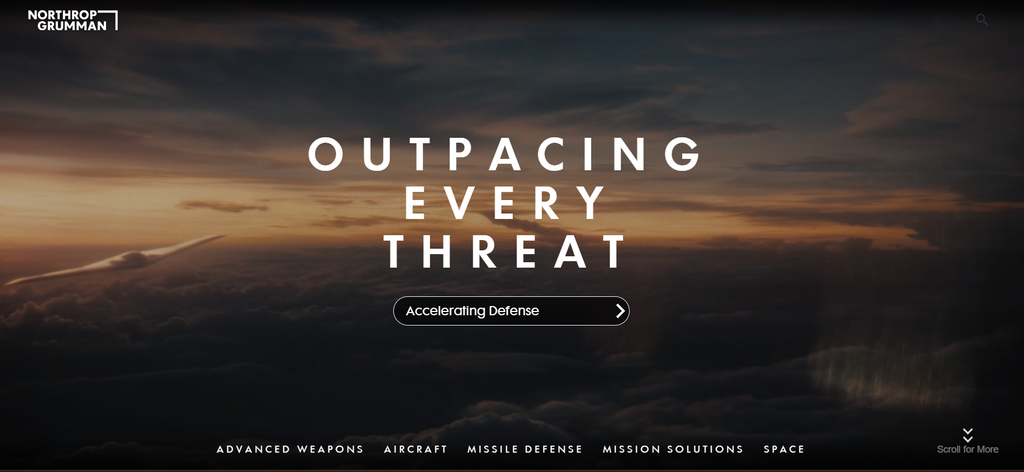
Image Courtesy: Northrop Grumman (Official Website)
- Founded: 1994
- Owner: Formed by merger; publicly listed, led by CEO Kathy Warden
- Headquarters: Falls Church, Virginia
Northrop Grumman was formed in 1994 when Northrop Corporation bought Grumman, two famous aircraft makers. Grumman had built the lunar module that landed astronauts on the Moon during the Apollo program. The company grew its space business further in 2018 by buying Orbital ATK.
Northrop Grumman led the building of the James Webb Space Telescope, which has captured some of the deepest images of the universe ever taken. It also makes the solid rocket boosters for NASA’s SLS rocket and the Cygnus cargo spacecraft that resupplies the space station.
What Northrop Grumman does: Builds space telescopes, rocket boosters, and cargo spacecraft.
Services: Space telescopes, solid rocket motors, Cygnus cargo missions, and satellites.
Rocket Lab – The Small Rocket Specialist
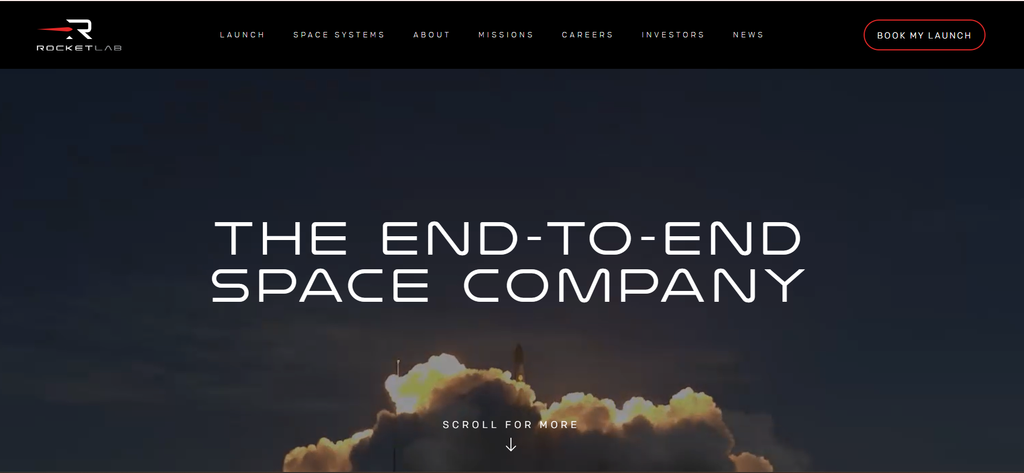
Image Courtesy: Rocket Lab (Official Website)
- Founded: 2006
- Owner: Founded by Peter Beck; publicly listed, led by CEO Peter Beck
- Headquarters: Long Beach, California
Rocket Lab was founded in 2006 by Peter Beck, a New Zealand engineer. The company started in New Zealand but later moved its headquarters to California and became a US company. Its small Electron rocket was designed to launch small satellites, which larger rockets often ignore.
Electron has flown many times and has become one of the most frequently launched rockets in the world. Rocket Lab is now building a larger rocket called Neutron and also makes spacecraft and satellite parts, so it can offer a complete package to customers.
What Rocket Lab does: Launches small satellites and builds spacecraft components.
Services: Electron launches, Neutron rocket development, satellite buses, and space systems.
L3Harris Technologies – The Engine and Sensor Expert

Image Courtesy: L3Harris Technologies (Official Website)
- Founded: 2019
- Owner: Formed by merger; publicly listed, led by CEO Christopher Kubasik
- Headquarters: Melbourne, Florida
L3Harris was formed in 2019 when L3 Technologies merged with Harris Corporation, both long-time defense and communications companies. Its space business grew much larger in 2023 when it acquired Aerojet Rocketdyne, one of America’s most important rocket engine makers.
That deal brought in the RS-25 engines that power NASA’s SLS rocket, along with many other propulsion systems. L3Harris also builds satellite sensors, communication payloads, and missile-tracking satellites.
What L3Harris does: Makes rocket engines, satellite payloads, and space sensors.
Services: Rocket propulsion, satellite sensors, communication payloads, and missile-tracking systems.
Virgin Galactic – Bringing Tourists to the Edge of Space

Image Courtesy: Virgin Galactic (Official Website)
- Founded: 2004
- Owner: Founded by Richard Branson; publicly listed, led by CEO Michael Colglazier
- Headquarters: Las Cruces, New Mexico
Virgin Galactic was founded in 2004 by British billionaire Richard Branson with the aim of offering tourist trips to space. Its spaceplane is carried to high altitude under a larger aircraft, released, and then fired upward by its own rocket motor.
The company flew its first fully commercial passenger flight in 2023. Its first-generation spaceship, VSS Unity, was retired in 2024 so the company could build a new generation of faster-flying spaceships. Virgin Galactic remains one of the best-known names in space tourism.
What Virgin Galactic does: Builds spaceplanes for suborbital tourist flights.
Services: Suborbital passenger flights and spaceplane development.
Intuitive Machines – The Company That Returned America to the Moon
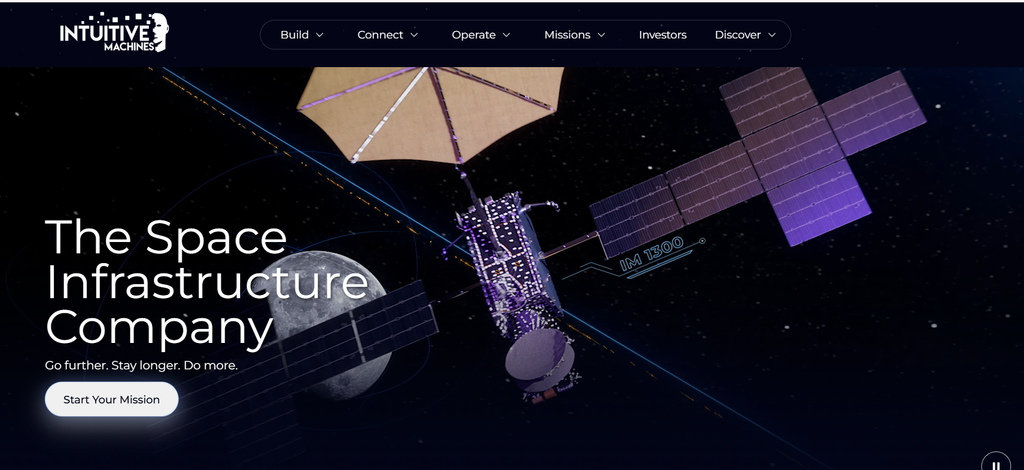
Image Courtesy: Intuitive Machines (Official Website)
- Founded: 2013
- Owner: Founded by Steve Altemus, Kam Ghaffarian & Tim Crain; publicly listed, led by CEO Steve Altemus
- Headquarters: Houston, Texas
Intuitive Machines was started in 2013 by Steve Altemus, Kam Ghaffarian, and Tim Crain, space industry veterans with deep ties to NASA’s Johnson Space Center in Houston. The company went public in 2023.
In February 2024, its Odysseus lander touched down near the Moon’s south pole. It was the first US landing on the Moon since Apollo 17 in 1972, and the first by a private company, though the lander tipped over on landing. NASA continues to use the company for lunar delivery missions.
What Intuitive Machines does: Builds lunar landers and delivers cargo to the Moon.
Services: Lunar landers, lunar delivery missions, and space infrastructure.
Firefly Aerospace – A Fast-Rising Rocket and Lander Company
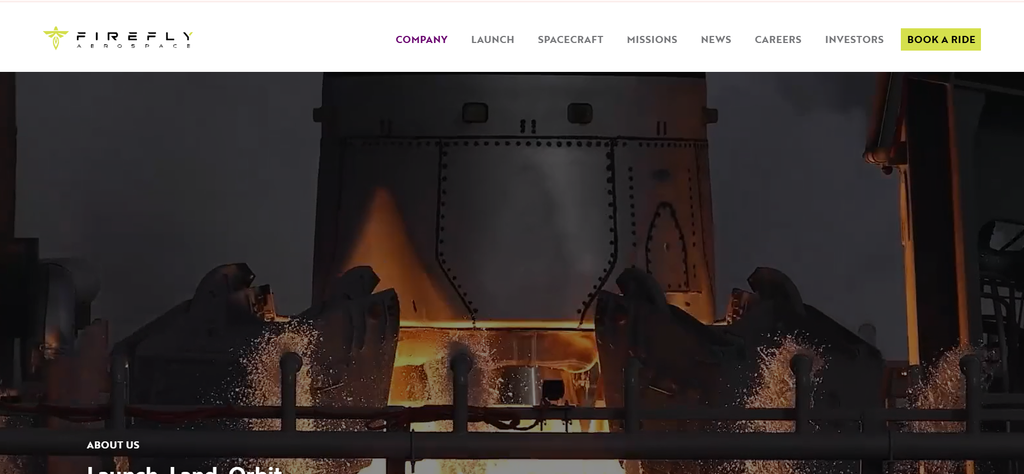
Image Courtesy: Firefly Aerospace (Official Website)
- Founded: 2014
- Owner: Founded by Tom Markusic; publicly listed, led by CEO Jason Kim
- Headquarters: Cedar Park, Texas
Firefly Aerospace was founded in 2014 by Tom Markusic, a rocket engineer who had worked at NASA and other space firms. The company builds launch vehicles, such as its Alpha rocket for small satellites, and also develops spacecraft for lunar missions.
In March 2025, Firefly’s Blue Ghost lander made a successful soft landing on the Moon, a major milestone for the company. Firefly became a publicly listed company later that year and is working on more lunar missions for NASA.
What Firefly Aerospace does: Builds small launch rockets and lunar landers.
Services: Alpha rocket launches, Blue Ghost lunar landers, and spacecraft engines.
Frequently Asked Questions (FAQs)
Which is the most valuable space company in the USA?
SpaceX is widely regarded as the most valuable private space company in the country, thanks to its launch business and Starlink network.
Which company first carried NASA astronauts on a private spacecraft?
SpaceX did this in 2020 with its Crew Dragon capsule.
Which company builds the Orion spacecraft?
Lockheed Martin builds Orion, the capsule designed for NASA’s Artemis Moon missions.
Which company built the James Webb Space Telescope?
Northrop Grumman led the building of the James Webb Space Telescope for NASA.
Which company is known for space tourism?
Virgin Galactic and Blue Origin both offer or are developing tourist flights to the edge of space.
Which private company landed on the Moon first?
Intuitive Machines’ Odysseus lander made the first US commercial Moon landing in February 2024, and Firefly’s Blue Ghost followed in March 2025.
Are space companies in the USA regulated?
Yes, they must follow rules set by agencies like the FAA, which licenses launches, and the FCC, which regulates satellite communications.
Which company builds the RS-25 engines for NASA’s SLS rocket?
L3Harris builds the RS-25 engines through its Aerojet Rocketdyne business.
Which company is known for small satellite launches?
Rocket Lab’s Electron rocket is one of the world’s most frequently launched small-satellite rockets.
Why do these ten companies matter to everyday people?
These companies build the satellites, rockets, and spacecraft behind GPS navigation, weather forecasts, satellite internet, and future Moon missions.
Conclusion
America’s space sector has developed over decades of government programs and, more recently, has begun to enjoy increased private investment. Giants like Lockheed Martin, Boeing, and Northrop Grumman lead the charge, with new up-and-coming companies like SpaceX, Blue Origin, Rocket Lab, Firefly Aerospace, and many others joining the fray. Together, these ten companies constitute the backbone of the American space program.
They are the producers of all the rockets, satellites, spacecraft, and more that we rely on to facilitate life on Earth and beyond, at least for now. With NASA’s return to the Moon and a burgeoning satellite industry, these companies are sure to continue their growth in the coming years.