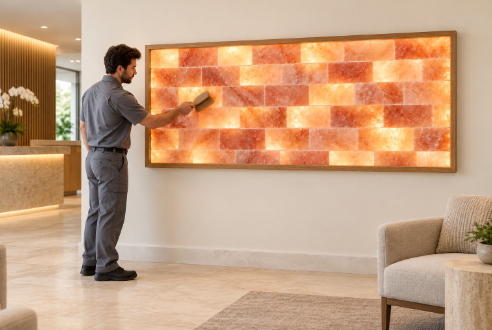
Himalayan salt walls do not come with one reliable lifespan that applies to every installation. You need to consider the room environment, supporting structure, fixing method, and lighting alongside the salt itself. A decorative surface in a dry reception area faces different conditions from a feature near a sauna. To understand long-term value, look beyond the purchase price and assess how you will inspect, maintain, and eventually repair each part of your wall.
Quick Guide to Salt Wall Longevity
Your Himalayan salt wall lifespan depends on the complete installation and its exposure to moisture or damage. Protect pink salt bricks from water, follow the specified cleaning instructions, and keep lighting accessible. Budget for occasional inspections and component replacement. Before accepting a lifespan claim, ask for supporting product information and check exactly what the warranty covers.
What Determines How Long Your Salt Wall Lasts?
Room Conditions and Water Exposure
Start by assessing the proposed location. Natural salt dissolves in water, so direct splashes, leaks, and recurring condensation can compromise the surface. Do not assume that framing or adhesive makes exposed salt waterproof.
Review nearby showers, plumbing, windows, and cleaning activities. For a spa or hotel, include the conditions outside normal operating hours. A room that appears dry during a viewing may experience different conditions during cleaning or overnight.
Resolve existing dampness before installing a decorative feature. If moisture appears later, investigate the source instead of repeatedly wiping the surface.
Support and Installation Quality
Ask your installer to explain how the assembly carries its weight and how you can access serviceable parts. Keep the approved layout, product specifications, and fixing details with your purchase records.
Avoid treating the wall as one material with one replacement date. The salt face, joints, support, and electrical equipment perform different functions. Assess each component according to its condition and the relevant instructions.
Build a Care Routine Around Your Space
Clean Gently and Keep Liquids Away
Use a soft dry cloth or brush, following the instructions for your specific product. Avoid spraying water or cleaning products onto the salt surface. Take care when cleaning nearby glass, furniture, and flooring so overspray does not reach the wall.
Choose a cleaning frequency that reflects your room’s actual use. A quiet home lounge and a busy reception area may need different schedules. Check the surface regularly and remove dust before it becomes difficult to reach.
Keep a Simple Condition Record
For Himalayan salt walls, dated photographs provide a useful reference when you notice changes. Take clear pictures after installation, including joints, edges, and the illuminated surface.
Record the location of any new damp patch, crack, or lighting change. In a commercial space, assign responsibility for these checks so concerns do not disappear between staff shifts. Keep observations specific without guessing the cause.
When Should You Arrange a Professional Assessment?
Separate Appearance Changes from Attachment Problems
A small surface mark and a moving brick require different responses. Contact your installer if you notice loose pieces, shifting joints, damaged framing, or recurring moisture. Avoid pushing, tapping, or removing components to test the installation yourself.
Keep people away from an affected area if material appears unstable. Describe what changed, share photographs, and let the appropriate professional assess the support and fixing method before planning repairs.
Review Lighting Faults Separately
A dark patch does not automatically mean the salt needs replacement. Your lighting system may need attention.
If you notice flickering, an unusual smell, or moisture near electrical equipment, stop using the affected lighting and arrange an electrical assessment. Preserve access to the driver, controls, and service points. Do not cover access panels with furniture or permanent trim.
Plan Repairs Around the Existing Assembly
Repairing Himalayan salt walls starts with identifying the original materials and understanding the cause of the problem. Replacing a damaged piece without addressing recurring moisture or inadequate support can leave the underlying issue unresolved.
When selecting salt brick adhesive, confirm compatibility with the salt, backing surface, and operating conditions. Obtain the application and curing instructions for the exact product. A clear-drying description does not guarantee invisible joints, so evaluate a cured sample under the intended lighting.
Match replacement himalayan salt tiles or bricks by dimensions and thickness as well as appearance. Retain identifiable spare pieces from the original order when practical. Ask your installer to determine the repair method and any temporary support requirements.
Understand the Costs Beyond Installation
Routine Care and Electricity
Allow for cleaning time and any inspections specified for your installation. In a commercial setting, include these tasks in your maintenance budget.
Estimate lighting electricity costs using the complete system’s power consumption, operating hours, and your tariff. For illustration, a system drawing 60 watts for eight hours daily uses 14.4 kilowatt-hours over 30 days. Multiply that figure by your electricity rate; it is an example, not a typical consumption claim.
Replacement Parts and Labor
Future expenses may include replacement pieces, lighting components, adhesive, delivery, and professional labor. Request itemized estimates so you can distinguish material costs from access and repair work.
A small replacement can involve more labor if the design restricts access. During planning, ask how an installer would reach a failed light or remove a damaged piece. In hotels and spas, also consider scheduling and temporary disruption.
Ask Better Questions Before Buying
Request product dimensions, installation requirements, care instructions, and written warranty terms. Confirm which components the warranty covers and any exclusions that apply.
Ask about replacement availability and keep the supplier’s product references. Compare complete quotations rather than the price of bricks alone.
Protect Your Investment Through Practical Planning
Himalayan salt walls need realistic expectations and a maintenance plan suited to their surroundings. Choose an appropriate location, document the installation, and respond promptly to changes. By planning for cleaning, access, and future repairs at the start, you can make a more informed purchase and manage ownership costs with fewer surprises.