

The United Kingdom has one of the world’s most established banking industries, supporting individuals, families, businesses, and international organisations. Banks play an important role in the economy by providing current accounts, savings accounts, mortgages, personal loans, credit cards, business financing, and international payment services. They also help customers manage their money, save for future needs, and access financial services through branches, websites, and mobile applications.
The UK banking market includes traditional high-street banks, international banking groups, building societies, and digital banks. HSBC and Barclays have substantial international operations, while Lloyds Banking Group and NatWest Group have major positions in UK retail and business banking. Nationwide operates as a member-owned building society, and banks such as Monzo and Starling have developed app-based services for customers who prefer managing their finances digitally.
The following list highlights ten prominent banking providers serving the UK market. It is an informative selection rather than a strict ranking, because banks can be compared by different measures, including total assets, customer numbers, international presence, product range, and customer experience. Each institution has different strengths, eligibility requirements, fees, and account conditions, so customers should evaluate their own needs before choosing a bank.
1. HSBC
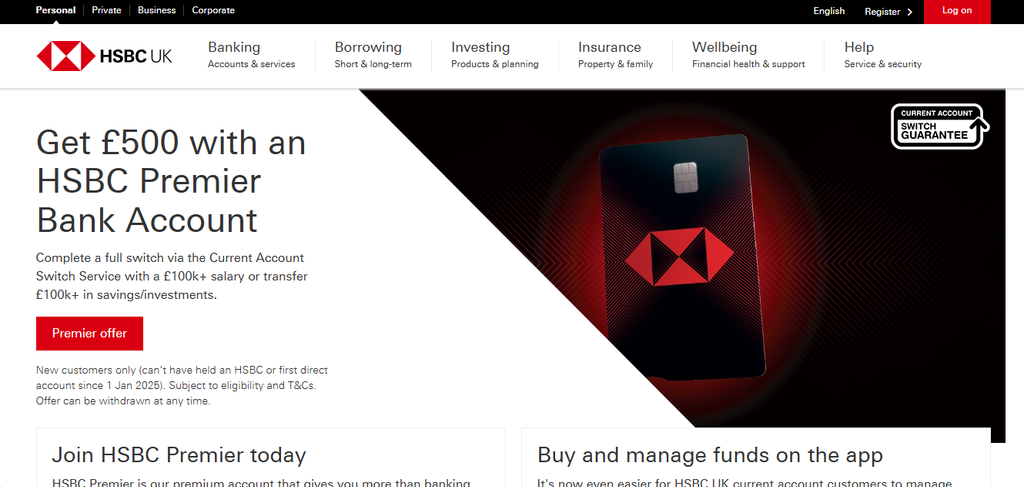
HSBC is one of the UK’s most prominent banking groups and an international financial institution with operations across multiple regions. Founded in 1865, it developed strong connections with international trade and cross-border finance. Its presence in the UK allows it to serve personal customers, small businesses, large companies, and international clients. The bank is particularly relevant to customers who need access to banking services in more than one country.
HSBC offers current accounts, savings accounts, credit cards, personal loans, mortgages, and international money transfer services. Eligible customers can also access investment, wealth management, and financial planning services. Its business banking division supports companies with everyday banking, cash management, lending, and international payment requirements. Product availability and eligibility can vary depending on the customer’s circumstances and the type of account.
One of HSBC’s distinguishing features is its international reach, which can be useful for customers who travel, work overseas, or manage financial commitments across different countries. Customers can manage many services through digital banking, while additional support is available through the bank’s service channels. Before opening an account, customers should compare monthly fees, international transaction charges, overdraft conditions, savings interest rates, and eligibility requirements.
| Company | HSBC Holdings plc |
| Brand | HSBC |
| Business | A major international banking and financial services group headquartered in London, United Kingdom. Founded in 1865, HSBC provides personal banking, business banking, commercial lending, international payments, wealth management, and investment banking services across multiple global markets. |
| FY2025 Revenue | US$68.274 billion in reported revenue for the financial year ended 31 December 2025. |
| Major Products | Current accounts, savings accounts, credit cards, personal loans, mortgages, international money transfers, business banking, trade finance, wealth management, investment banking, and corporate lending. |
2. Barclays
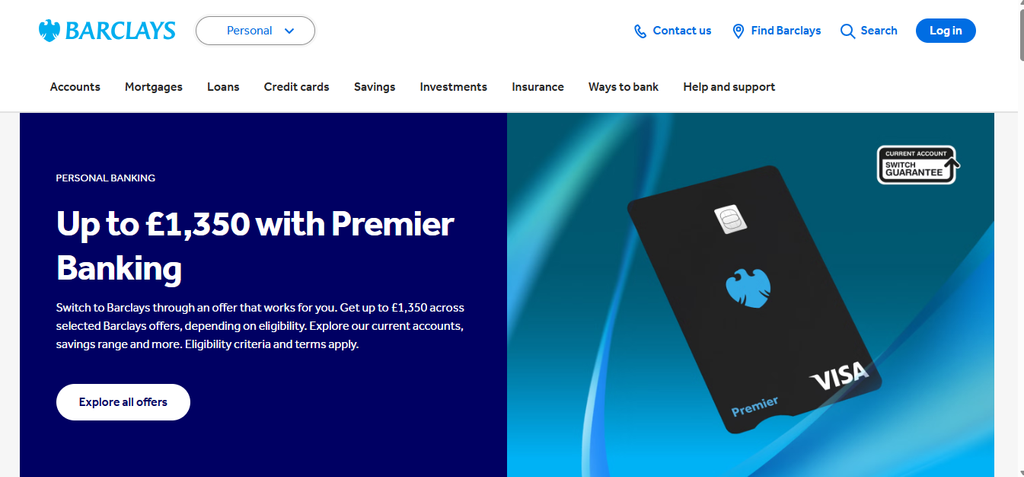
Barclays is a major British banking group with a long history dating back to the seventeenth century. It provides banking and financial services to individuals, small businesses, large corporations, and institutional clients. The bank has a substantial UK presence and international operations, making it an important participant in personal banking, business finance, and global financial markets.
For personal customers, Barclays offers current accounts, savings accounts, mortgages, personal loans, credit cards, and other borrowing products. Customers can use its mobile banking services to check balances, review transactions, make payments, and manage eligible accounts. The bank also provides products for customers seeking to save money, purchase property, or manage household expenses. The interest rates and terms offered depend on the individual product and the customer’s eligibility.
Barclays also operates in corporate banking and investment banking, supporting businesses with financing, payment services, risk management, and access to financial markets. Its business services can help companies manage cash flow, make international payments, and finance growth. Because Barclays serves a wide variety of customers, its products differ considerably in their eligibility criteria, charges, and complexity. Customers should select products that match their actual needs and review the terms carefully before borrowing or investing.
| Company | Barclays PLC |
| Brand | Barclays |
| Business | A major British universal banking and financial services group headquartered in London. Barclays serves personal customers, businesses, corporations, and institutional clients through retail banking, corporate banking, wealth management, and investment banking. |
| FY2025 Revenue | £29.14 billion in total income for the financial year ended 31 December 2025, an increase from £26.79 billion in 2024. Banks typically report total income rather than conventional sales revenue. |
| Major Products | Current accounts, savings accounts, mortgages, personal loans, credit cards, business banking, corporate lending, international payments, wealth management, investment banking, and trade finance. |
3. Lloyds Bank
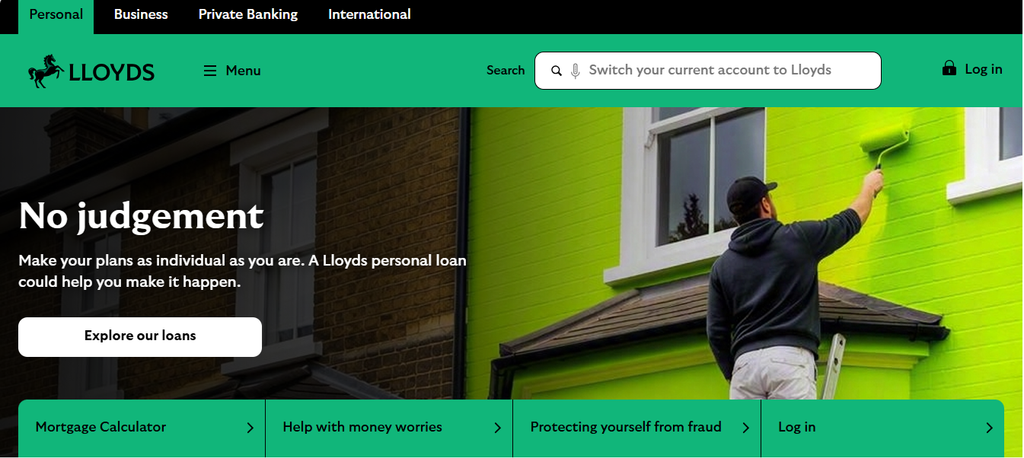
Lloyds Bank is one of the UK’s established retail banking brands and forms part of Lloyds Banking Group. The wider group serves millions of customers through several brands, including Lloyds Bank, Halifax, and Bank of Scotland. Lloyds has a substantial presence in everyday personal banking and also provides financial services to businesses and commercial customers.
Lloyds Bank offers current accounts, savings accounts, mortgages, personal loans, credit cards, and other financial products. Its services help customers manage their daily income and expenses, build savings, borrow money, and finance property purchases. Customers can access many banking functions through mobile and online services, while support is available through other service channels. The available features depend on the account type and any eligibility conditions.
The bank also supports businesses through business current accounts, lending, payment services, and other financial solutions. These services can help companies receive customer payments, manage operating expenses, and fund eligible business activities. Lloyds Banking Group has invested in digital banking and technology to improve how customers access services and manage their accounts. Anyone considering Lloyds should compare account fees, overdraft charges, borrowing costs, savings rates, and customer support options before choosing a product.
| Company | Lloyds Bank plc |
| Brand | Lloyds Bank |
| Business | A major UK retail and commercial bank and part of Lloyds Banking Group. It provides banking and financial services to individuals, households, small businesses, and commercial customers, primarily in the UK. |
| FY2025 Revenue | £18.429 billion in total income for Lloyds Bank plc and its subsidiary group for the financial year ended 31 December 2025. This is the bank group’s reported total income, not the income of the entire Lloyds Banking Group. |
| Major Products | Current accounts, savings accounts, mortgages, credit cards, personal loans, business banking, commercial lending, payment services, working capital management, and risk-management services. |
4. NatWest
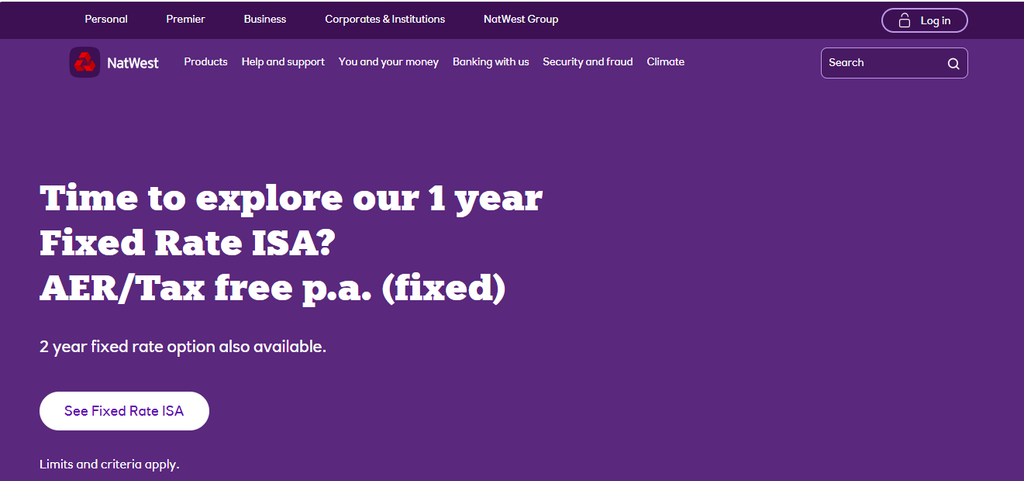
NatWest is a major UK banking brand within NatWest Group, which also includes Royal Bank of Scotland and Ulster Bank. The group provides banking services to individuals, small businesses, larger companies, and commercial organisations. NatWest has a strong position in UK retail banking and business finance, helping customers manage everyday money, save for future goals, and obtain funding for eligible needs.
Its personal banking services include current accounts, savings accounts, mortgages, personal loans, and credit cards. Customers can use digital banking to review account balances, make payments, monitor transactions, and manage many routine banking tasks. NatWest also offers products designed for customers who want to save regularly or finance a property purchase. Interest rates, fees, and account features vary by product and can change over time.
NatWest has a significant business banking operation, providing current accounts, lending, payment facilities, and financial support to small and medium-sized enterprises. Larger businesses may also access specialist services for cash management, financing, and international transactions. The bank’s digital tools can help business owners monitor their finances and carry out routine transactions. Customers should compare borrowing costs, repayment periods, account charges, and eligibility criteria before selecting a NatWest product.
| Company | NatWest Group plc |
| Brand | NatWest |
| Business | A major UK banking and financial services group providing personal banking, business banking, commercial lending, private banking, and wealth management services. NatWest serves individuals, families, small businesses, and large organisations across the UK. |
| FY2025 Revenue | £16.641 billion in total income for the financial year ended 31 December 2025. Banks generally report total income rather than conventional sales revenue. |
| Major Products | Current accounts, savings accounts, mortgages, personal loans, credit cards, business banking, commercial lending, international payments, cash management, and private banking services. |
5. Santander UK
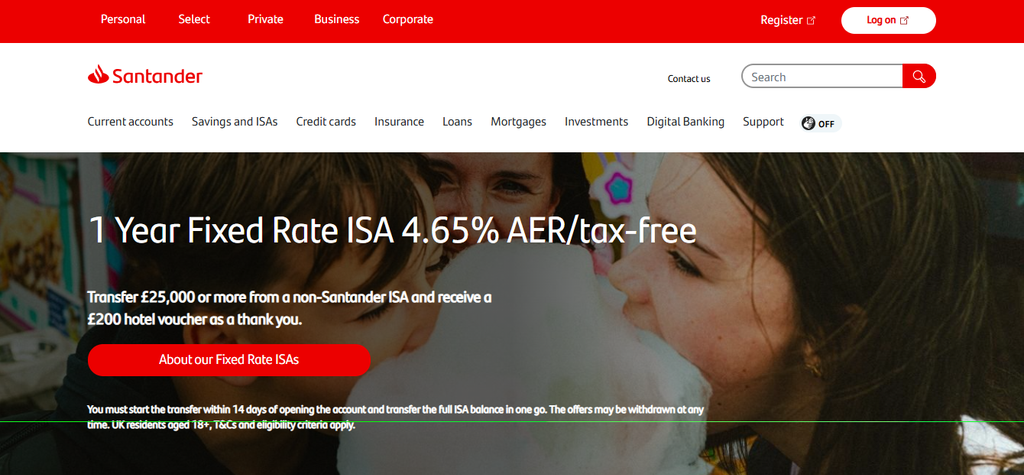
Santander UK is a major retail and commercial bank that forms part of the wider Santander Group, an international financial services organisation headquartered in Spain. It serves personal customers, homeowners, small businesses, and larger commercial clients in the UK. The bank provides a range of everyday financial services and has a significant presence in residential mortgages and personal banking.
Santander UK’s personal banking products include current accounts, savings accounts, mortgages, credit cards, personal loans, and other borrowing options. Customers can use its online and mobile banking services to manage their accounts, make payments, review transactions, and access eligible products. Its savings accounts cater to different saving preferences, while its mortgage products support eligible customers purchasing property or refinancing existing borrowing.
The bank also provides services for businesses, including business current accounts, lending, payment facilities, and financial support for eligible companies. As part of an international banking group, Santander also has experience in cross-border financial services, although the availability and cost of international transactions depend on the particular product. Customers should review account charges, savings rates, mortgage terms, and borrowing costs before making a decision.
| Company | Santander UK plc |
| Brand | Santander UK |
| Business | A major UK retail and commercial bank and part of the international Santander Group, headquartered in Spain. It provides personal banking, savings, mortgages, lending, business banking, and financial services to individuals, households, and companies across the UK. |
| FY2025 Revenue | £4.729 billion in total operating income for the financial year ended 31 December 2025, compared with £4.657 billion in 2024. This is the reported operating income for Santander UK plc and its subsidiary group. |
| Major Products | Current accounts, savings accounts, cash ISAs, mortgages, credit cards, personal loans, business banking, commercial lending, international payments, and financial services for businesses. |
6. Nationwide Building Society
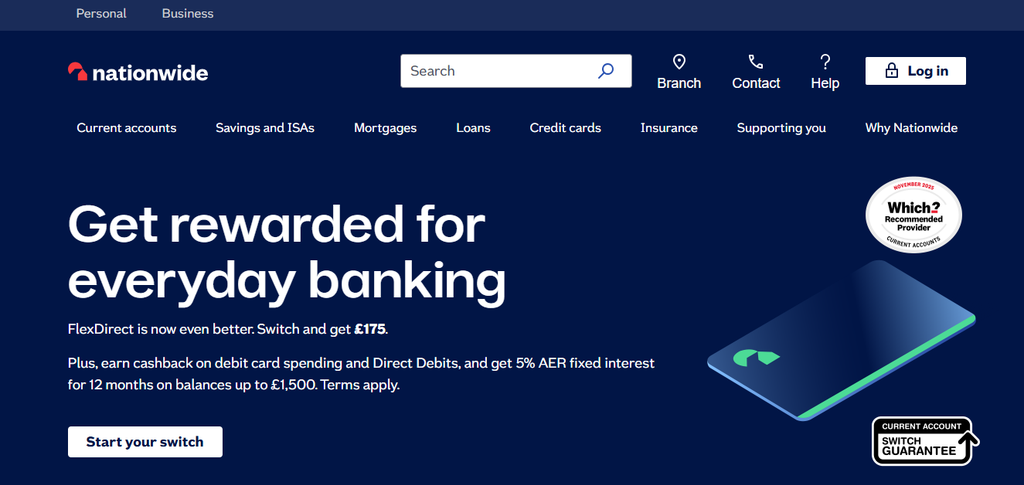
Nationwide Building Society is one of the UK’s largest building societies. Unlike a conventional bank owned by shareholders, Nationwide operates as a mutual organisation owned by its members. Its main focus is on retail financial services, including savings, mortgages, current accounts, and other products that support household financial needs. It has a substantial presence in the UK housing finance market.
Nationwide offers current accounts, savings accounts, fixed-term savings products, cash ISAs, mortgages, and other personal financial services. Its mortgage products support eligible customers purchasing homes, remortgaging, or managing their housing finance. Savings accounts allow customers to set money aside for emergencies, planned purchases, or longer-term goals. The interest rates and access conditions depend on the specific product, including whether the account permits withdrawals during a fixed term.
Nationwide also provides digital banking services and maintains a branch network for customers who prefer face-to-face assistance. Its mutual structure means that eligible customers become members under the society’s rules, rather than simply customers of a shareholder-owned bank. The organisation has also offered member-focused benefits under particular conditions. Customers should compare savings rates, mortgage fees, eligibility requirements, and membership terms before choosing Nationwide for their banking needs.
| Company | Nationwide Building Society |
| Brand | Nationwide |
| Business | The UK’s largest building society, operating as a mutual organisation owned by its members rather than external shareholders. It provides retail banking, savings, mortgages, current accounts, and other financial services to individuals and households across the UK. It expanded its banking operations through the acquisition of Virgin Money in October 2024. |
| FY2025 Revenue | £5.211 billion in underlying total income for the financial year ended 31 March 2025. Statutory total income was £7.484 billion, including a £2.3 billion gain related to the Virgin Money acquisition. |
| Major Products | Current accounts, savings accounts, cash ISAs, fixed-term savings, residential mortgages, remortgages, credit cards, personal loans, and business banking services through its expanded group. |
7. Standard Chartered
Standard Chartered is an international banking group with a strong focus on corporate banking, international trade, transaction banking, and wealth management. Although headquartered in London, its business has significant connections with markets across Asia, Africa, and the Middle East. The bank serves multinational companies, financial institutions, commercial clients, and individuals who qualify for its personal or wealth-related services.
The bank’s services include corporate lending, trade finance, cash management, international payments, foreign exchange, and wealth management. Trade finance can help businesses manage payment and financing risks when importing or exporting goods, while transaction banking supports organisations that need to move money between countries. Standard Chartered also provides financial market services and risk-management solutions to eligible institutional clients.
Standard Chartered differs from many traditional UK high-street banks because its business is particularly internationally oriented. It can be relevant to companies operating across borders and customers with qualifying international financial needs. However, not every service is available to every personal customer, and eligibility requirements can be more specialised than those for a standard current account. Customers should assess account access, service charges, minimum balance requirements where applicable, and the suitability of the bank’s international services.
| Company | Standard Chartered PLC |
| Brand | Standard Chartered |
| Business | A British multinational banking and financial services group headquartered in London, with a strong international presence across Asia, Africa, and the Middle East. It provides corporate banking, international trade finance, wealth management, commercial banking, and financial market services to individuals, businesses, and institutional clients. |
| FY2025 Revenue | US$20.942 billion in reported operating income for the financial year ended 31 December 2025. This is the bank’s reported operating income, rather than conventional sales revenue. |
| Major Products | Current accounts, savings accounts, international payments, foreign exchange, corporate lending, trade finance, cash management, wealth management, investment services, and commercial banking solutions. |
8. Halifax
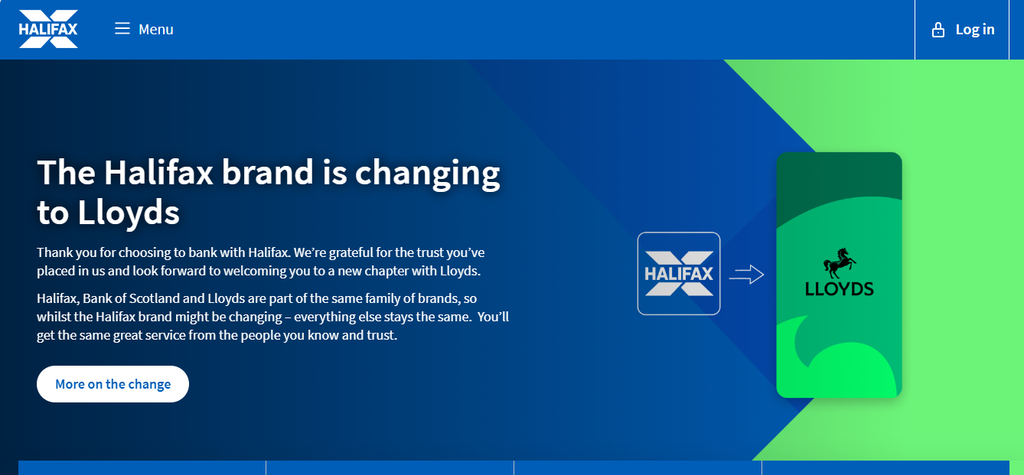
Halifax is a well-known UK banking brand that operates as part of Lloyds Banking Group. It has a long history in British retail finance and is particularly recognised for its mortgage and savings products. Halifax serves individuals and households looking for everyday banking services, home finance, and ways to manage their savings. Although it is a separate customer-facing brand, it belongs to the same wider group as Lloyds Bank and Bank of Scotland.
Halifax provides current accounts, savings accounts, cash ISAs, mortgages, credit cards, personal loans, and other financial products. Its mortgage services are relevant to eligible first-time buyers, homeowners moving property, and customers looking to remortgage. Savings products vary in how customers can deposit and withdraw money, with different interest rates and conditions. Customers should check whether an account requires a minimum deposit or restricts access to funds.
Halifax offers mobile and online banking facilities for managing accounts and making payments, alongside other customer service options. Its products can be useful for customers who want everyday banking and property-related finance under one recognised brand. However, the right account depends on the customer’s circumstances and the specific terms offered. Comparing mortgage rates, arrangement fees, savings returns, overdraft costs, and credit card charges can help customers make a more informed choice.
| Company | Halifax, a trading brand of Bank of Scotland plc and part of Lloyds Banking Group. |
| Brand | Halifax |
| Business | A major UK retail banking brand providing personal banking, savings, mortgages, and borrowing products. It serves individuals and households, with a particular presence in residential mortgages and everyday banking. |
| FY2025 Revenue | Halifax does not publish a separate standalone revenue figure because it operates within Lloyds Banking Group. The group’s 2025 financial results are reported at group and relevant legal-entity levels. |
| Major Products | Current accounts, savings accounts, cash ISAs, fixed-term savings, residential mortgages, remortgages, credit cards, personal loans, and online banking services. |
9. Monzo
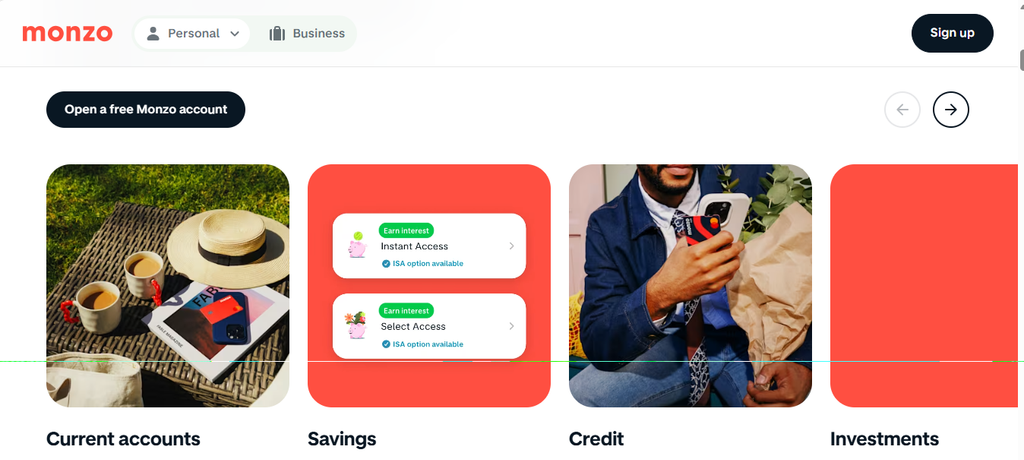
Monzo is a UK digital bank that operates primarily through its mobile application. It was established in 2015 and became popular among customers looking for convenient ways to manage everyday finances without relying on traditional branch banking. Monzo’s services are designed around digital account management, spending visibility, budgeting tools, and accessible payment features. It appeals particularly to customers who prefer handling their banking through a smartphone.
Monzo offers current accounts, savings products through eligible arrangements, debit card payments, budgeting tools, and certain borrowing products for customers who meet its eligibility criteria. Its app includes features that help customers categorise spending, set savings goals, and monitor their financial activity. Depending on the account and product, customers may also be able to access overdrafts, loans, or additional paid account features. The availability of these services depends on eligibility and the applicable terms.
One of Monzo’s main differences from traditional high-street banks is its app-focused approach. Customers can generally open and manage eligible accounts digitally, receive transaction notifications, and organise their money using in-app tools. However, customers who regularly need face-to-face support may prefer a bank with a substantial branch network. Before choosing Monzo, customers should review account fees, cash deposit arrangements, international usage charges, savings conditions, and the features included in free and paid accounts.
| Company | Monzo Bank Limited |
| Brand | Monzo |
| Business | A UK-based digital bank founded in 2015 that provides app-based banking services to individuals and businesses. It focuses on convenient account management, budgeting tools, savings, payments, and digital financial services. |
| FY2025 Revenue | Approximately £1.2 billion for the financial year ended 31 March 2025, representing 48% growth compared with FY2024. Monzo also reported £113.9 million in adjusted profit before tax. |
| Major Products | Personal current accounts, business accounts, savings accounts, cash ISAs, debit cards, budgeting tools, personal loans, overdrafts for eligible customers, paid account plans, and investment and pension-related services. |
10. Starling Bank
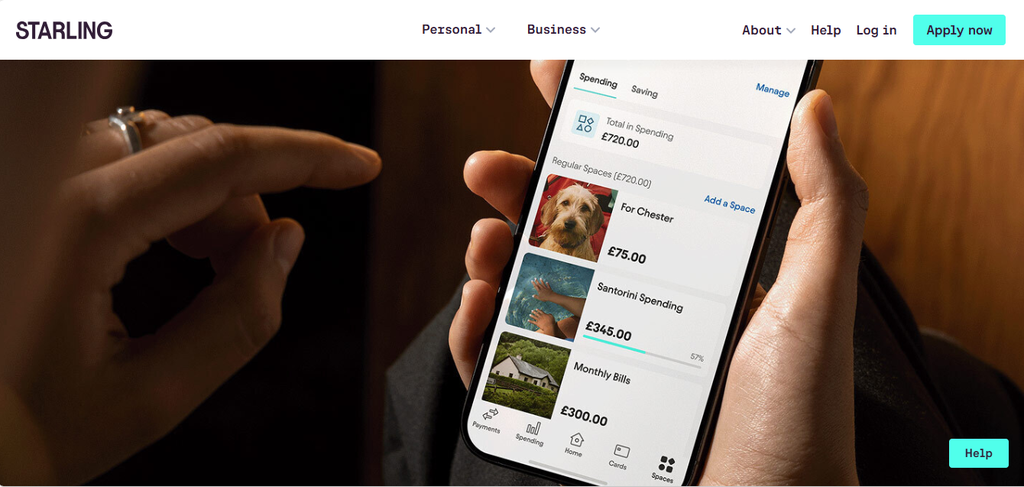
Starling Bank is a UK digital bank that provides personal, joint, sole trader, and business banking services through digital channels. It was founded in 2014 and has developed a reputation for app-based account management and business banking tools. Like Monzo, Starling operates without a traditional high-street branch network, focusing instead on mobile and online services. Its products are designed to help customers manage their money and carry out everyday banking tasks conveniently.
Starling’s personal banking services include current accounts, debit card payments, spending notifications, savings features, and tools for managing everyday finances. Eligible customers can use its app to review transactions, make payments, and monitor their spending. The bank also provides joint account options for people managing shared household expenses. The availability of savings and other financial products depends on the terms of the relevant offering.
Starling is also known for its business banking services, which can help sole traders and companies manage payments, track transactions, and organise their finances. Certain business account features and integrations can help owners manage business spending and accounting processes. Customers should check eligibility requirements, account conditions, cash handling arrangements, international transaction charges, and any fees attached to additional services. As with any bank, customers should ensure the account meets their personal or business requirements before switching.
| Company | Starling Bank Limited |
| Brand | Starling Bank |
| Business | A UK-based digital bank founded in 2014 that provides app-based banking services to individuals, joint account holders, sole traders, and businesses. It focuses on convenient digital account management, payments, savings, and business banking without a traditional high-street branch network. |
| FY2025 Revenue | £713.9 million in revenue for the financial year ended 31 March 2025, compared with £682.2 million in FY2024. The wider Starling Group reported £714 million in revenue. |
| Major Products | Personal current accounts, joint accounts, business banking accounts, savings accounts, Easy Saver, debit cards, digital payments, budgeting tools, and banking technology through its Engine platform. |
Conclusion
The UK banking industry includes a broad selection of financial institutions, each serving different customer needs. HSBC and Standard Chartered have strong international banking operations, making them relevant to customers and businesses with cross-border financial requirements. Barclays provides personal, business, and corporate banking services, while Lloyds Bank and NatWest have substantial roles in everyday banking and business finance. Santander UK offers retail banking and mortgage services, and Nationwide provides savings and home finance through its mutual building society structure.
Halifax is particularly associated with retail banking, savings, and mortgages, while Monzo and Starling represent the growth of app-based banking in the UK. These digital banks offer convenient account management and budgeting features, although their service models differ from those of banks with extensive branch networks. The choice between a traditional bank, a building society, and a digital bank depends on how a customer prefers to access services and manage their money.
Choosing a bank requires more than considering its reputation or size. Customers should compare account fees, savings interest rates, overdraft charges, mortgage rates, customer support, cash deposit facilities, international payment costs, and mobile banking features. People who regularly visit branches may prefer a bank with convenient local access, while those who primarily use their phones may find a digital bank more suitable. Businesses should also consider payment processing, borrowing facilities, accounting integrations, and the quality of business support.
It is equally important to review account eligibility and protection arrangements before opening an account. Customers should confirm that the institution is appropriately authorised and understand how eligible deposits are protected under the UK’s deposit protection rules. They should also read the terms for any savings account, loan, credit card, or mortgage separately because fees and conditions vary between products.
Ultimately, the right bank is one that matches a customer’s financial needs, offers clear terms, and provides convenient and reliable access to essential services. Comparing several institutions and their specific products can help individuals, families, and businesses make informed decisions, manage their money effectively, and choose banking services that support their financial goals.
Frequently Asked Questions
1. What are the top banks in the UK?
Some of the UK’s prominent banking providers include HSBC, Barclays, Lloyds Bank, NatWest, Santander UK, Nationwide Building Society, Standard Chartered, Halifax, Monzo, and Starling Bank. They differ in size, ownership, services, and customer focus.
2. Which is the largest bank in the UK?
The answer depends on the measurement used, such as total assets, market value, deposits, or customer numbers. HSBC and Barclays are among the largest banking groups associated with the UK, while Lloyds Banking Group, NatWest Group, and other major institutions have substantial domestic operations.
3. Which UK banks offer current accounts?
Many UK banking providers offer current accounts, including HSBC, Barclays, Lloyds Bank, NatWest, Santander UK, Halifax, Monzo, and Starling Bank. Eligibility, account features, fees, and overdraft availability vary by provider.
4. Which banks are best for savings accounts in the UK?
Several banks and building societies offer savings accounts, including Nationwide, HSBC, Barclays, Santander UK, Lloyds Bank, and digital providers. Customers should compare interest rates, withdrawal restrictions, minimum deposits, account fees, and whether the rate is fixed or variable.
5. Which UK banks offer mortgages?
Major mortgage providers include Nationwide, Halifax, Lloyds Bank, Santander UK, Barclays, HSBC, and NatWest. Approval and interest rates depend on factors such as income, credit history, deposit size, affordability, and the selected mortgage product.
6. Are digital banks such as Monzo and Starling safe to use?
Monzo and Starling are UK-authorised banks. Customers should still check the current regulatory status of any institution and understand the applicable deposit protection rules. They should also use secure passwords, protect their devices, and enable available security features.
7. What is the difference between a bank and a building society?
A bank is generally a commercial financial institution, often owned by shareholders. A building society is a member-owned mutual organisation that traditionally focuses on savings and mortgage lending. Nationwide is a prominent example of a UK building society.
8. Can international customers open a UK bank account?
Some UK banks accept applications from international customers, but eligibility depends on residency, identity verification, immigration status where relevant, address requirements, and the particular account. Applicants may need to provide identification and proof of address.
9. What should I compare before choosing a UK bank?
Customers should compare account fees, savings rates, overdraft costs, borrowing rates, customer service, branch access, mobile banking features, international payment charges, and eligibility conditions. Businesses should also review payment facilities, lending options, and accounting integrations.
10. Are deposits in UK banks protected?
Eligible deposits held with authorised institutions may be protected under the UK’s Financial Services Compensation Scheme (FSCS), subject to its rules and limits. Customers should check the current protection limit, confirm that the institution is covered, and understand how the rules apply when several brands belong to the same banking group.