
Choosing a marketing tool depends a lot on what a business is trying to achieve. An SEO team may need keyword and website data while an online store may care more about email automation and customer behaviour. A social media team meanwhile needs tools for scheduling, engagement and performance tracking.
That is why there is no type of software that covers every marketing task equally well. The U.S. Market has a range of digital marketing platforms from long-running email services to newer customer data and creator-marketing tools.
This list looks at 10 marketing tools used by businesses and marketers in the USA with a focus on different parts of the marketing process. The ranking considers product coverage, relevance to marketing, documented customer reach, industry presence and the specific marketing problems each platform helps solve. It is not a ranking of which tool’s universally the best.
Some companies in the list are publicly listed. Report financial results while several private companies do not publish revenue or net income. Where financial information is unavailable it is marked as Not publicly disclosed.
1. Moz
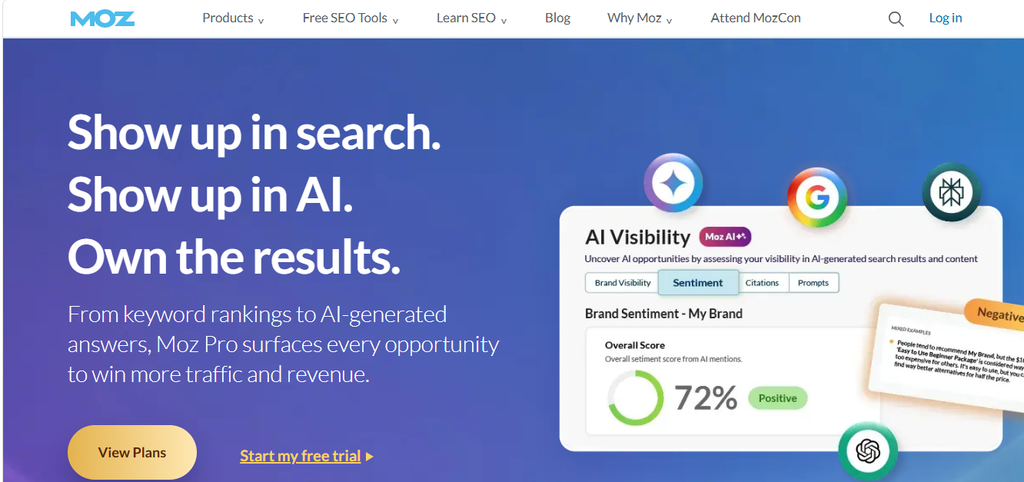
For marketers who work with search engines Moz is a known name in SEO. The company began in 2004. Has built its business around SEO tools, data and helpful learning materials. Moz is based in Vancouver, Canada. Its services are widely used by marketers in the U.S. And other countries.
| Founded: 2004 |
| Headquarters: Vancouver, British Columbia, Canada |
| Latest Revenue: Not publicly disclosed |
| Latest Net Income/PAT: Not publicly disclosed |
| Main Products/Services: Moz Pro, SEO tools, keyword research, rank tracking, link research and SEO education |
Moz Pro helps with common SEO tasks like keyword research tracking search rankings auditing websites and analyzing links. This makes it useful for businesses that rely on search traffic instead of paid ads alone.
One thing that sets Moz apart is its focus on education. Alongside software the company has created years of guides and learning content about SEO. For people to SEO this mix of tools and knowledge can be very helpful because understanding why a website ranks is just as important as being able to measure it.
2. Klaviyo
Klaviyo takes a path. Of focusing on search or social media it centers on customer relationships, marketing automation and data for consumer brands. The company started in 2012. Is headquartered in Boston, Massachusetts. Klaviyo calls itself a B2C CRM that combines marketing automation, analytics and customer service.
| Founded: 2012 |
| Headquarters: Boston, Massachusetts, USA |
| Latest Revenue: $1.234 billion, FY2025 |
| Latest Net Income/PAT: Net loss of $31.8 million, FY2025 |
| Main Products/Services: B2C CRM, email marketing, SMS, marketing automation, analytics and customer data |
Klaviyo made $1.234 billion in revenue for 2025 while reporting a GAAP net loss of about $31.8 million.
For retailers and consumer brands the platform connects customer data with marketing campaigns. Marketers can use it to send emails and text messages segment audiences, automate workflows and create messages. Its main value comes from helping businesses respond to customer behavior rather than sending the same message to everyone.
3. Sprout Social
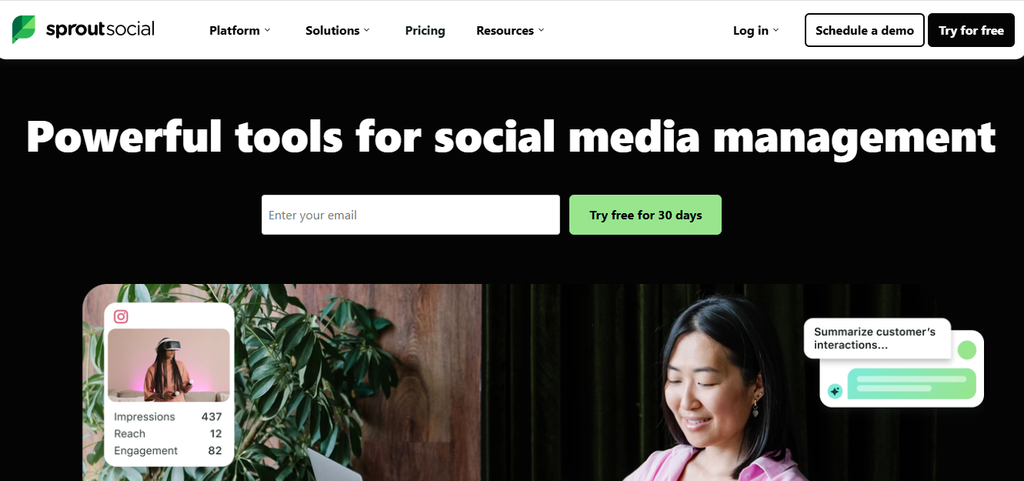
Managing multiple social media platforms at once can get complicated. Sprout Social was built to solve that challenge. Founded in 2010 and based in Chicago the company offers media management and social intelligence tools for organizations and agencies.
| Founded: 2010 |
| Headquarters: Chicago, Illinois, USA |
| Latest Revenue: $457.5 million, FY2025 |
| Latest Net Income/PAT: Net loss of $43.3 million, FY2025 |
| Main Products/Services: Social media management, analytics, listening, engagement and social intelligence |
Sprout Social reported FY2025 revenue of $457.547 million and a GAAP net loss of $43.327 million.
The platform brings together publishing, engagement, analytics and social listening into one system. For marketing teams this means less time switching between apps to see what happened after a post went live.
Sprout Social also helps businesses watch conversations about their brand. Social data can reveal what customers are asking, how they feel and what trends are forming. That makes it more than a scheduling tool. It’s a way to understand customer sentiment.
4. ActiveCampaign
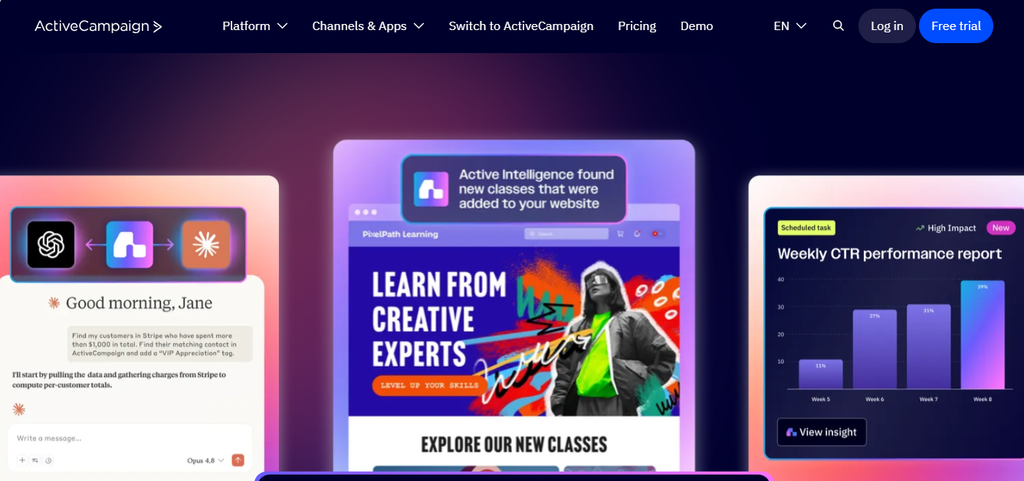
Email marketing works better when it connects to customer actions. ActiveCampaign has designed its platform around marketing automation, email, customer relationships and automated interactions.
| Founded: 2003 |
| Headquarters: Chicago, Illinois, USA |
| Latest Revenue: Not publicly disclosed |
| Latest Net Income/PAT: Not publicly disclosed |
| Main Products/Services: Email marketing, marketing automation, CRM, SMS and customer engagement |
ActiveCampaign was founded by Jason VandeBoom in 2003 and stays privately owned. It is based in Chicago. Says it supports customers in over 170 countries.
The platform lets marketers build automated customer journeys across channels like email and SMS. A business can send messages depending on what a customer does.
This makes ActiveCampaign especially useful for companies that want to go beyond newsletters. By treating every subscriber the same marketers can design workflows based on interests, purchases, website visits or other customer actions.
5. Constant Contact
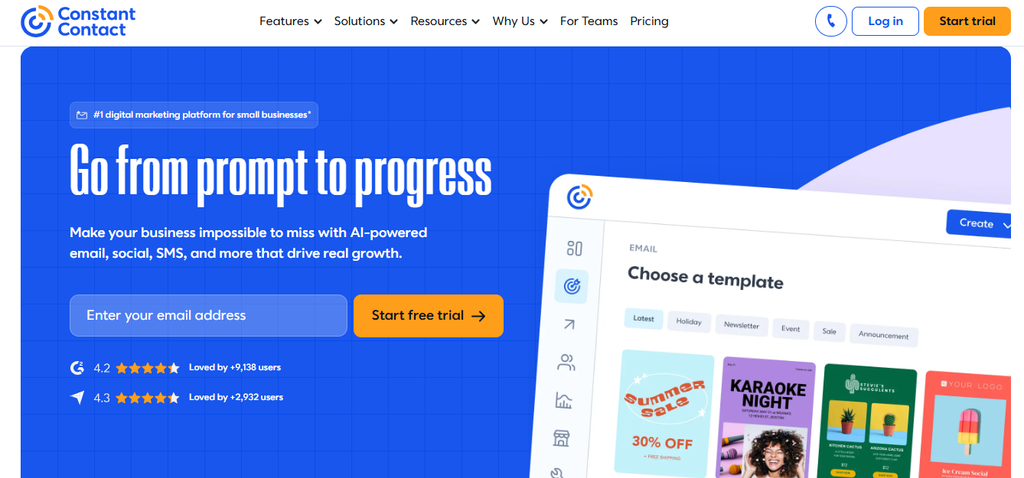
Constant Contact has been helping businesses with digital marketing since 1995. It started with email marketing. Has grown into a broader set of digital tools. The company is based in Waltham, Massachusetts.
| Founded: 1995 |
| Headquarters: Waltham, Massachusetts, USA |
| Latest Revenue: Not publicly disclosed |
| Latest Net Income/PAT: Not publicly disclosed |
| Main Products/Services: Email marketing, SMS, social media, ecommerce, surveys, events and automation |
Constant Contact began as an email marketing tool and later expanded into areas like list growth, social media, ecommerce, automation, events and surveys.
In 2025 the company said it served half a million small businesses and nonprofit groups. It also became a company after separating from Endurance International Group.
For teams the big advantage is having many basic marketing features in one place. They don’t need to manage separate tools. That simplicity makes Constant Contact appealing for those who want an all- in-one solution.
6. GetResponse
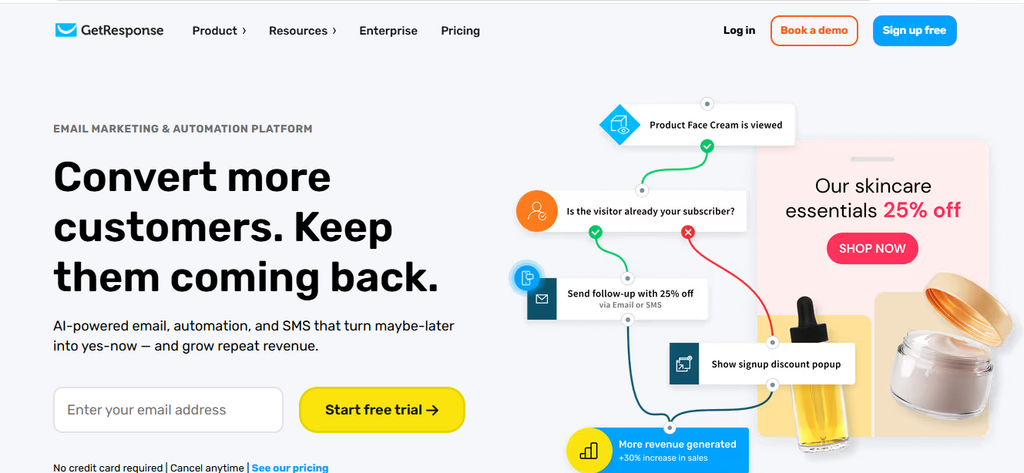
GetResponse adds another email‑focused option to the list. It has grown beyond simple newsletters. The company was founded in Poland in 1998. Now works worldwide including a U.S. Branch in Wilmington, Delaware.
| Founded: 1998 |
| Headquarters: Gdańsk, Poland |
| Latest Revenue: Not publicly disclosed |
| Latest Net Income/PAT: Not publicly disclosed |
| Main Products/Services: Email marketing, automation, SMS, web push, lead generation, ecommerce tools and revenue tracking |
GetResponse began with autoresponder technology. Slowly grew into a wider lifecycle automation system. It now offers email, SMS, web push lead capture and ecommerce‑related functions.
For marketers the key difference is the customer journey, by using email only to send promotional messages businesses can link campaigns with lead collection, automation and customer activity.
GetResponse’s long operating history also gives it a profile more than newer marketing software companies that entered the market during the rise of SaaS platforms.
7. Later
Social media marketing has shifted toward creators, influencers and shopping. Later blends these areas with media management making it especially useful for brands that rely heavily on visual content.
| Founded: 2014 company history began with Splashscore; Later was acquired in 2022 |
| Headquarters: Not publicly disclosed |
| Latest Revenue: Not publicly disclosed |
| Latest Net Income/PAT: Not publicly disclosed |
| Main Products/Services: Social media management, influencer marketing, creator marketing, social listening, Link in Bio and creator commerce |
Later’s current business grew from companies and acquisitions. Mavrck acquired Later in 2022; the businesses merged under the brand in 2024. Then acquired Mavely in 2025 to add affiliate marketing capabilities.
Its social management tools let marketers plan, schedule and analyze content across platforms. The company has also expanded into influencer campaigns and creator commerce.
That combination gives Later a view of digital marketing: content is not only something to publish but also something that can connect brands with creators, traffic and purchases.
8. Hotjar
Hotjar Sometimes marketers need not to know how many people visited a website but also what the visitors actually did. That is where Hotjar fits into the marketing process.
| Founded: 2014 |
| Headquarters: St Julian’s, Malta |
| Latest Revenue: Not publicly disclosed |
| Latest Net Income/PAT: Not publicly disclosed |
| Main Products/Services: Heatmaps, session replay, funnels, surveys, feedback and user testing |
Hotjar was founded in 2014. Is now part of Contentsquare. Its tools focus on understanding user behavior through heatmaps, session replays, funnels and surveys.
A heatmap can show where visitors click, move or scroll on a page. Session replay gives marketers a view of individual user journeys while surveys can provide direct feedback.
This makes Hotjar useful after traffic has already reached a website. By asking only whether a campaign brought visitors, marketers can investigate what happened once those visitors arrived.
9. Matomo
Privacy has become a consideration in website analytics and Matomo offers an alternative approach. The project began as Piwik in 2007. Later became Matomo. Matomo is. Offered by InnoCraft and is available as both cloud‑hosted and self‑hosted analytics software.
| Founded: 2007 |
| Headquarters: Wellington, New Zealand |
| Latest Revenue: Not publicly disclosed |
| Latest Net Income/PAT: Not publicly disclosed |
| Main Products/Services: Web analytics, conversion analytics, SEO analytics, tag management and privacy-focused measurement |
Matomo says its platform is used on more than 1.4 million websites across more than 190 countries. Its approach gives organisations the option to keep analytics data under their control through self‑hosting.
For businesses operating in markets where privacy and data ownership’re important this can be a major consideration. Matomo also provides tools for measuring website traffic, conversions and marketing performance.
Its presence in this list shows that digital marketing analytics is not about collecting more data. How that data is stored and controlled can also influence the choice of software.
10. Unbounce
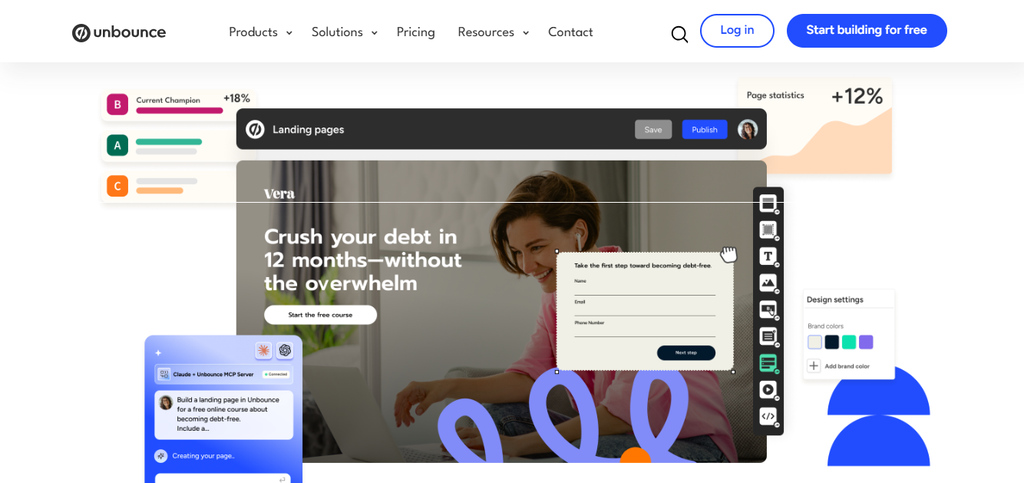
Getting people to click an advertisement is part of a digital marketing campaign. The next challenge is what happens after the click. Unbounce focuses heavily on that stage through landing pages and conversion optimisation.
| Founded: 2009 |
| Headquarters: Vancouver, British Columbia, Canada |
| Latest Revenue: Not publicly disclosed |
| Latest Net Income/PAT: Not publicly disclosed |
| Main Products/Services: Landing page builder, conversion optimisation, A/B testing, AI-powered optimisation and CRM solutions |
Unbounce was started in 2009. Earned a good name by making landing pages that marketers can build and test without needing full help from developers. The platform now offers tools for landing pages, testing and features that focus on turning visitors into customers.
A landing page is often the place where visitors arrive from paid search, social media or email campaigns. Unbounce concentrates on improving this part of the customer journey.
This method is different from an SEO platform or a social scheduler. The main question is not how to bring visitors but how to convert more of those visitors into leads, registrations or customers.
Top 10 Digital Marketing Tools in USA: Comparison
| Rank | Company/Brand | Founded | Latest Revenue | Main Products/Services |
| 1 | Moz | 2004 | Not publicly disclosed | SEO, keyword research, rank tracking, link research |
| 2 | Klaviyo | 2012 | $1.234B, FY2025 | B2C CRM, email, SMS, automation, analytics |
| 3 | Sprout Social | 2010 | $457.5M, FY2025 | Social media management, analytics, listening |
| 4 | ActiveCampaign | 2003 | Not publicly disclosed | Email, automation, CRM, SMS |
| 5 | Constant Contact | 1995 | Not publicly disclosed | Email, SMS, social media, ecommerce |
| 6 | GetResponse | 1998 | Not publicly disclosed | Email, automation, SMS, lead generation |
| 7 | Later | 2014* | Not publicly disclosed | Social media, influencer marketing, creator commerce |
| 8 | Hotjar | 2014 | Not publicly disclosed | Heatmaps, session replay, funnels, surveys |
| 9 | Matomo | 2007 | Not publicly disclosed | Web analytics, SEO analytics, tag management |
| 10 | Unbounce | 2009 | Not publicly disclosed | Landing pages, A/B testing, conversion optimisation |
What Should You Check Before Choosing a Digital Marketing Tool?
The first step is to find the marketing task that you truly need to solve. An SEO team may get value from a search‑focused platform such as Moz while an ecommerce brand may need customer automation through a platform such as Klaviyo or ActiveCampaign.
Budget is another factor. Some tools offer entry‑level options while advanced analytics, automation and enterprise features can raise the price. Teams should also check how well the tool integrates with their website, CRM, advertising platforms and social networks.
Ease of use matters too. A tool with features may not be useful if the team cannot use those features properly. Finally check reporting, data ownership, customer support, scalability and the specific channels your business uses before committing to the tool.
Conclusion
Digital marketing covers more than posting on social media or buying online advertisements. SEO, email automation, social listening, customer analytics, website behaviour and conversion optimisation all require types of software.
The tools in this list reflect those needs. Some focus on an area while others combine several marketing functions. For businesses in the USA the right choice will depend on the size of the team, marketing goals, budget, existing technology and the type of customers they want to reach.
FAQs
1. What are the top digital marketing tools in the USA?
Popular digital marketing tools cover several areas, including SEO, email marketing, social media management, analytics, and conversion optimization. This list includes Moz, Klaviyo, Sprout Social, ActiveCampaign, Constant Contact, GetResponse, Later, Hotjar, Matomo, and Unbounce, as each addresses a different part of the digital marketing process.
2. Which digital marketing tool is useful for SEO?
Moz is designed around SEO and provides tools for keyword research, rank tracking, link research, and website analysis. Other platforms can also support SEO-related work, but Moz focuses more on search engine optimization than on email marketing, social media management, or customer relationship management.
3. Which tool is useful for email marketing?
Klaviyo, ActiveCampaign, Constant Contact, and GetResponse all provide email marketing features. Klaviyo focuses strongly on business-to-consumer customer relationships, while ActiveCampaign emphasizes automation and CRM features. Constant Contact has a long history of serving small businesses and nonprofits, and GetResponse offers email campaigns and marketing automation features.
4. Which tools can help manage social media?
Sprout Social and Later are two tools on this list with strong social media management capabilities. Sprout Social focuses on publishing, engagement, analytics, and social intelligence, while Later combines social media management with influencer marketing, creator campaigns, and commerce features.
5. What is Hotjar used for in marketing?
Hotjar helps marketers understand how visitors behave on websites. Its features include heatmaps, session recordings, funnels, and surveys. These tools help teams identify where visitors click, how far they scroll, where they leave a page, and where they encounter problems during their website journey.
6. Is Matomo an alternative to Google Analytics?
Matomo is a web analytics platform that can serve as an alternative to Google Analytics. One of its distinguishing features is its focus on privacy and data ownership. It also offers self-hosting options, allowing organizations to maintain greater control over where their analytics data is stored.
7. What does Unbounce help marketers do?
Unbounce helps marketers create, test, and optimize landing pages. These pages are commonly used after visitors click advertisements, email links, or other campaign links. The platform focuses on improving conversion rates by encouraging visitors to complete actions such as submitting a form, signing up for a service, or making a purchase.
8. Are all these marketing companies based in the USA?
No. This list focuses on tools available to marketers and businesses in the United States rather than exclusively featuring American-owned companies. For example, Moz and Unbounce are headquartered in Canada, GetResponse is headquartered in Poland, and Matomo’s operating company is based in New Zealand.
9. Do digital marketing tools replace marketing teams?
Digital marketing tools generally support rather than replace marketing teams. These platforms automate tasks, organize information, and provide useful data, but people still need to define business goals, plan campaigns, interpret results, and make strategic decisions. A tool’s value often depends on how effectively the marketing team understands and uses its features.
10. How should a small business choose a digital marketing tool?
A small business should begin by identifying its main marketing needs rather than choosing a platform simply because it offers many features. Determine whether the priority is SEO, email marketing, social media management, data analysis, or conversion optimization. Before making a decision, compare pricing, ease of use, integrations, reporting capabilities, and the business’s future requirements.