A textile company can do more than just make clothes. The industry includes companies that produce yarn, make fabrics, build carpets, supply technical textiles and create materials used in homes, offices, factories and transportation.
Because of this the Top 10 Textile Companies in the USA are not ranked by how popular their fashion brands are. Instead the list looks at manufacturing strength. It focuses on U.S. Manufacturing presence, how big the company’s range of products they offer, their role in the textile supply chain and how important they are for textiles or products made from textiles. Some companies are private. They don’t share full financial details so their revenue is noted as such.
The list also includes businesses that work in areas with a lot of textiles—like carpet, flooring and bedding. This helps give a picture of how textiles are used in the American economy. It’s not about clothing brands.
Here are 10 companies worth knowing—from a carpet maker that started in the 1800s to today’s leaders, in fibers and high-tech industrial fabrics.
1. Mohawk Industries
Mohawk Industries is one of the names on this list although many consumers know Mohawk more for flooring than for traditional clothing textiles.
| Founded: 1878 (company roots) |
| Headquarters: Calhoun, Georgia |
| Latest Revenue: $10.785 billion (2025) |
| Latest Net Income: $369.9 million (2025) |
| Main Products/Services: Carpet, rugs, carpet tile, laminate, luxury vinyl tile, wood, ceramic tile and other flooring |
The company traces its roots to a carpet operation that was founded in Amsterdam, New York in 1878. Over time Mohawk expanded beyond traditional carpets. Today Mohawk makes major flooring categories and runs manufacturing facilities in 19 countries.
Mohawk’s textile connection is especially strong in carpets, rugs and other soft-surface flooring. Mohawk reported $10.785 billion in 2025 sales and $369.9 million in net earnings attributable to Mohawk.
That combination of manufacturing scale, U.S. Operations and a broad material portfolio places Mohawk at the top of this manufacturing-focused ranking.
2. Somnigroup International
Somnigroup may not be the company that comes to mind when discussing textiles but bedding is a major textile-product category. Somnigroup’s business connects manufacturing, bedding materials and retail.
| Founded: 2025 as Somnigroup International |
| Headquarters: Dallas, Texas |
| Latest Revenue: $7.477 billion (2025) |
| Latest Net Income: $384.1 million (2025) |
| Main Products/Services: Mattresses, bedding products and sleep-related products |
The current Somnigroup was formed in 2025 after Tempur Sealy International acquired Mattress Firm and changed its name to Somnigroup International. Somnigroup’s history however goes further back through businesses such as Sealy and Tempur-Pedic.
Somnigroup reported $7.4765 billion in 2025 sales and $384.1 million in net income. Somnigroup’s businesses include Tempur Sealy, Mattress Firm and Dreams with brands such as Tempur-Pedic and Sealy.
Somnigroup earns a place because textile-based bedding products represent an important part of the wider U.S. Textile and home‑furnishing manufacturing chain.
3. Shaw Industries
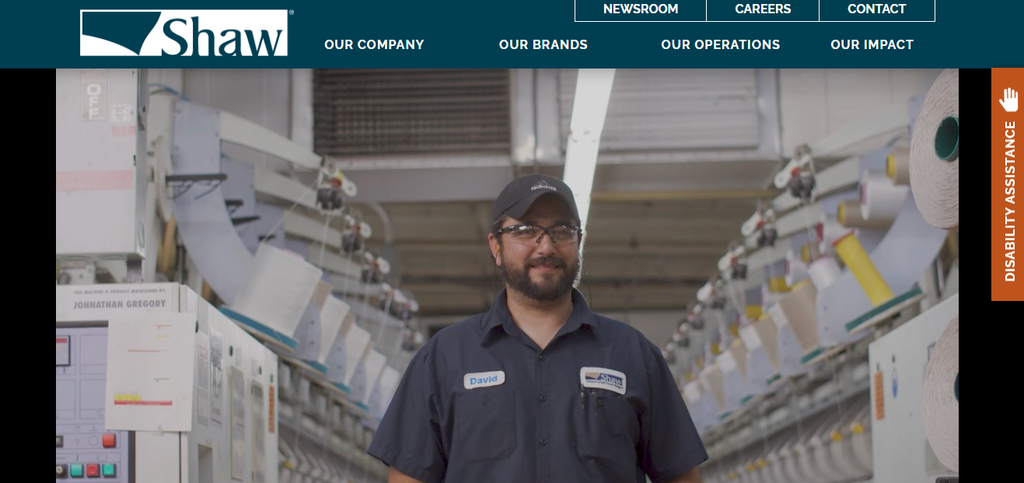
Shaw Industries is another company that shows why the American textile industry extends beyond shirts and other clothing.
| Founded: 1946 (company roots) |
| Headquarters: Dalton, Georgia |
| Latest Revenue: More than $5 billion in annual sales |
| Latest Net Income: Not publicly disclosed |
| Main Products/Services: Carpet, rugs, hardwood, laminate, resilient flooring, tile, stone and synthetic turf |
Shaw began in 1946 as Star Dye Company, a business that dyed tufted scatter rugs. The business later moved into carpet manufacturing. Expanded into a much wider flooring operation.
Today Shaw is an owned subsidiary of Berkshire Hathaway and has approximately 18,000 associates worldwide. Shaw says it has more than $5 billion in annual sales.
Shaw’s products include carpet and carpet tile. Shaw also makes hard‑surface flooring and synthetic turf. Shaw’s large U.S. Manufacturing presence and long history in textile‑based flooring make Shaw an important name in this sector.
4. Gildan Activewear
Gildan is closer to what most people imagine when they hear the word textile company. Gildan’s business covers yarn, fabric, activewear, underwear, socks and other basic apparel.
| Founded: 1984 |
| Headquarters: Montreal, Canada |
| Latest Revenue: $3.619 billion (2025) |
| Latest Net Income: $393.9 million from continuing operations (2025) |
| Main Products/Services: Activewear, underwear, socks, hosiery and intimates |
Gildan has a presence in the U.S. Market even though its headquarters are in Canada. Gildan operates across the United States, Central America, the Caribbean and Bangladesh.
Gildan’s 2025 sales reached $3.619 billion with the United States accounting for 90% of total sales. Gildan also completed its acquisition of HanesBrands in December 2025 bringing brands such as Hanes, Champion and other apparel names into Gildan’s portfolio.
Gildan’s integrated manufacturing model is another reason Gildan stands out. Focusing only on finished clothing Gildan’s operations cover different stages of textile and apparel production.
5. Milliken & Company
Milliken & Company brings one of the histories in the American textile industry. What began as a store in the 19th century eventually developed into a diversified manufacturing business.
| Founded: 1865 |
| Headquarters: Spartanburg, South Carolina |
| Latest Revenue: Not publicly disclosed |
| Latest Net Income: Not publicly disclosed |
| Main Products/Services: Technical textiles, fabrics, floor coverings, chemicals and healthcare products |
The company was founded in 1865. Later moved into textile manufacturing. Milliken’s history includes work with synthetic fibres and textile manufacturing technology.
Today textiles remain one of Milliken’s business areas, alongside chemicals, floor covering and healthcare. Milliken says it has more than 40 manufacturing locations across 15 countries and more than 11,000 products across its businesses.
Because Milliken is privately held, current revenue and net income figures are not publicly disclosed. Still Milliken’s long U.S. Manufacturing history and broad textile portfolio make it difficult to leave out of a list, like this.
6. Elevate Textiles
Elevate Textiles focuses on textile products that’re not usually visible to consumers. These products are hidden behind the goods people buy in stores.
| Founded: 2019 as Elevate Textiles |
| Headquarters: Charlotte, North Carolina |
| Latest Revenue: Not publicly disclosed |
| Latest Net Income: Not publicly disclosed |
| Main Products/Services: Sewing thread, denim, performance fabrics, technical textiles and specialty fabrics |
The company started in 2019 after the merger of American & Efird and International Textile Group. Its portfolio includes A&E, Burlington, Cone Denim, Gütermann and Safety Components.
These products go into apparel, automotive, military, medical, footwear and industrial markets. This gives Elevate Textiles a position compared to companies that only focus on consumer clothing.
A&E is one of the companies in the Elevate Textiles portfolio. It has a history in U.S. Textile manufacturing and produces sewing thread and specialty yarns. The combination of fabrics, threads and technical materials gives Elevate Textiles a role in the textile supply chain.
7. Glen Raven
Glen Raven has been part of the textile story for over a hundred years. The business has changed a lot since it began as a cotton mill.
| Founded: 1880 |
| Headquarters: Burlington, North Carolina |
| Latest Revenue: Not publicly disclosed |
| Latest Net Income: Not publicly disclosed |
| Main Products/Services: Performance fabrics, outdoor fabrics, Sunbrella fabrics and textile-based products |
Glen Raven was founded in North Carolina in 1880. It started by making cotton products. Then it moved into fabrics. Grew businesses that served apparel and other markets.
One of its well-known names today is Sunbrella. Sunbrella is used in furniture, marine applications and other performance-fabric products. The company says its products are sold in more than 120 countries.
Glen Raven shows how traditional textile companies have shifted toward fabrics. They no longer rely on basic cotton products.
8. Interface
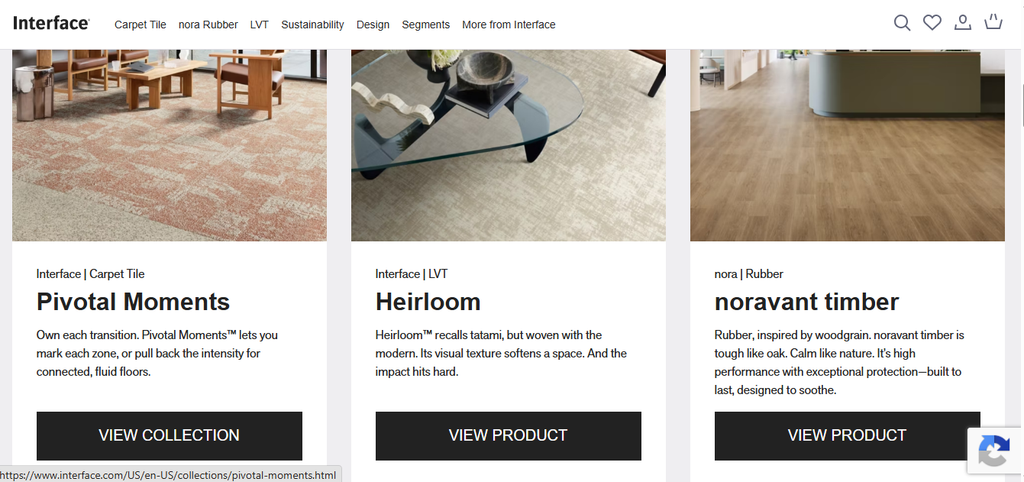
Interface is best known for flooring, especially carpet tile. This places it in the textile industry because it uses fibers and textile-based flooring materials.
| Founded: 1973 |
| Headquarters: Atlanta, Georgia |
| Latest Revenue: $1.387 billion (FY2025) |
| Latest Net Income: $116.1 million (FY2025) |
| Main Products/Services: Carpet tile, luxury vinyl tile, rubber flooring and area rugs |
Ray Anderson founded Interface in 1973 in LaGrange, Georgia. The company helped create the carpet tile market. It later expanded into flooring and other products.
Its recent financial results show why it remains important. Interface reported $1.3869 billion in sales for 2025 and $116.1 million in net income.
The company also puts a focus on material use and recycling. Its products are sold in both residential markets. This gives Interface a role in the larger textile manufacturing world.
9. Albany International
Albany International works in a specialized part of the textile industry. It does not make consumer clothing. Instead it develops textile materials used in industrial processes.
| Founded: 1895 |
| Headquarters: Portsmouth, New Hampshire |
| Latest Revenue: $1.183 billion (2025) |
| Latest Net Income: Approximately $57.3 million loss (2025) |
| Main Products/Services: Machine clothing, engineered textile components and advanced composites |
The company’s history began with the Albany Felt Company in 1895. Albany International was formed later through the merger of Albany Felt and Appleton Wire.
Today one of its businesses is machine clothing. These specialized textile belts are used in paper, paperboard, tissue, towel, pulp and non-woven production. It also runs an engineered composites business that serves aerospace customers.
Albany International reported $1.183 billion in revenue for 2025. Its latest investor data shows a loss of about $57.3 million for the year.
10. Unifi
Unifi completes the list with a different approach to textiles. It turns materials like recycled plastic bottles into fibers and yarn.
| Founded: 1971 |
| Headquarters: Greensboro, North Carolina |
| Latest Revenue: $571.3 million (FY2025) |
| Latest Net Income: $20.3 million net loss (FY2025) |
| Main Products/Services: Polyester yarn, nylon yarn, recycled fibres and REPREVE products |
Unifi started making polyester yarn in North Carolina in 1971. Over time it expanded into nylon. Recycled textile materials.
Its REPREVE brand is one of the company’s well-known products. The REPREVE platform uses recycled materials, including -consumer plastic bottles to create fibers. These fibers are used in apparel, home furnishings and other products.
Unifi reported $571.3 million in sales, for fiscal 2025 and a net loss of $20.3 million.
The company shows how recycling and synthetic fibers have become parts of modern textile manufacturing.
Top 10 Textile Companies in USA: Comparison
| Rank | Company/Brand | Founded | Latest Revenue | Main Products/Services |
| 1 | Mohawk Industries | 1878* | $10.785B (2025) | Carpet, rugs, laminate, vinyl and flooring |
| 2 | Somnigroup International | 2025 | $7.477B (2025) | Mattresses and bedding products |
| 3 | Shaw Industries | 1946* | More than $5B annually | Carpet, rugs, flooring and synthetic turf |
| 4 | Gildan Activewear | 1984 | $3.619B (2025) | Activewear, underwear, socks and apparel |
| 5 | Milliken & Company | 1865 | Not publicly disclosed | Technical textiles, fabrics and floor coverings |
| 6 | Elevate Textiles | 2019 | Not publicly disclosed | Threads, denim and technical fabrics |
| 7 | Glen Raven | 1880 | Not publicly disclosed | Performance fabrics and Sunbrella products |
| 8 | Interface | 1973 | $1.387B (FY2025) | Carpet tile, LVT and rubber flooring |
| 9 | Albany International | 1895 | $1.183B (2025) | Industrial textiles and advanced composites |
| 10 | Unifi | 1971 | $571.3M (FY2025) | Polyester, nylon and recycled fibres |
What Should You Look For in a Textile Company?
For businesses, factors such as production capacity, material quality, delivery networks and the ability to develop fabrics can matter more than consumer brand recognition. Sustainability is also becoming more relevant particularly when companies use fibres or develop products designed to last longer.
For consumers the finished product matters more. A carpet, outdoor fabric, mattress or piece of clothing can come from different parts of the textile supply chain. Looking at the manufacturer can help explain where the material comes from and what kind of technology is being used.
Conclusion
The U.S. Textile industry is much broader than clothing. It includes yarn, fabrics, carpet, bedding, performance materials, recycled fibres and specialised industrial textiles. Some companies on this list are household names while others work behind the scenes.
The ranking takes a manufacturing-focused view rather than simply counting fashion brands. That is why companies such as Mohawk, Milliken, Albany International and Unifi appear alongside apparel manufacturer Gildan. Together they show how many different industries depend on textiles.
FAQs
1. What are the top textile companies in the USA?
Some of the major textile and textile-product companies operating in the U.S. include Mohawk Industries, Shaw Industries, Gildan, Milliken, Elevate Textiles, Glen Raven, Interface, Albany International, and Unifi. Their businesses cover products ranging from yarn and fabrics to carpets and technical materials.
2. Which textile company is the largest in this list?
Mohawk Industries ranks first in this list based on its sales scale, U.S. manufacturing presence, and broad range of textile-based flooring products. The company reported $10.785 billion in sales in 2025 and operates manufacturing facilities across several countries.
3. Is Gildan a U.S. textile company?
Gildan is headquartered in Montreal, Canada, but it has substantial operations and sales connected to the United States. Its products include activewear, underwear, socks, and other apparel. The United States accounted for 90% of its 2025 sales.
4. What does Unifi manufacture?
Unifi produces polyester and nylon yarns, including recycled fibres sold under the REPREVE brand. The company uses recycled materials, including post-consumer plastic bottles, in some of its products. These fibres are used in apparel, home furnishings, and other textile applications.
5. Is Milliken still a textile company?
Yes, Milliken remains involved in textiles, although it is now a diversified manufacturing company. Its businesses include textile products, chemicals, flooring, and healthcare. Founded in 1865, the company has developed products for various industrial and consumer markets.
6. What does Elevate Textiles make?
Elevate Textiles produces a range of textile materials through brands such as American & Efird, Burlington, Cone Denim, Gütermann, and Safety Components. Its products include sewing threads, denim, performance fabrics, and technical textiles used in apparel and industrial applications.
7. Which companies make technical textiles?
Albany International, Elevate Textiles, Milliken, Glen Raven, and Unifi are among the companies involved in technical textile products. Their materials serve industries such as aerospace, industrial manufacturing, outdoor products, automotive applications, apparel, and other specialized markets.
8. Are all textile companies involved in clothing?
No, textile manufacturing covers much more than clothing. Companies produce carpets, upholstery fabrics, yarn, industrial belts, bedding materials, outdoor fabrics, and recycled fibres. For example, Mohawk Industries and Shaw Industries focus heavily on flooring, while Albany International specializes in engineered industrial materials.
9. Which textile companies focus on recycled materials?
Unifi is particularly known for its REPREVE recycled fibre platform, which uses recycled materials to produce polyester and other fibres. Other textile companies also work on recycling, material efficiency, and product durability. Their approaches and product categories vary.
10. Why are textile companies important in the USA?
Textile companies support industries beyond apparel manufacturing. Fibres and fabrics are used in homes, vehicles, flooring, furniture, healthcare, industrial equipment, and many other products. American textile companies also contribute to manufacturing, research, employment, and specialized material development across the economy.