
Project management tools help teams organize tasks, track deadlines, and collaborate on work without losing track of who’s doing what. A small group of software companies make most of the project management platforms used by American businesses today.
Some of these companies started as internal tools at Facebook and Google before becoming their own products. Others came from Australia and Israel before growing into tools used by businesses across the United States.
In this article, we’ll discuss the top 10 project management tools used in the United States, based on their history, ownership, and the kind of teams they are known for serving.
Quick Comparison
| Rank | Company | Founded | Owner / Founders | US Headquarters | Core Focus |
| 1 | Asana | 2008 | Founded by Dustin Moskovitz & Justin Rosenstein; publicly listed, led by CEO Dan Rogers | San Francisco, California | Task & Work Management |
| 2 | Atlassian (Jira & Trello) | 2002 | Founded by Mike Cannon-Brookes & Scott Farquhar; publicly listed, led by CEO Mike Cannon-Brookes | San Francisco, California | Software & Visual Project Tracking |
| 3 | monday.com | 2012 (as dapulse) | Founded by Roy Mann & Eran Zinman; publicly listed, led by Co-CEOs Roy Mann & Eran Zinman | New York, New York | Visual Work Management |
| 4 | Smartsheet | 2005 | Founded by Brent Frei & co-founders; owned by Vista Equity Partners & Blackstone, led by CEO Rajeev Singh | Bellevue, Washington | Spreadsheet-Style Project Management |
| 5 | ClickUp | 2016 | Founded by Zeb Evans; privately held, led by CEO Zeb Evans | San Diego, California | All-in-One Productivity Platform |
| 6 | Wrike | 2006 | Founded by Andrew Filev; part of Cloud Software Group | San Diego, California | Enterprise Work Management |
| 7 | Basecamp | 1999 (as 37signals) | Founded by Jason Fried & David Heinemeier Hansson; privately held, led by CEO Jason Fried | Chicago, Illinois | Simple Small Team Project Management |
| 8 | Notion | 2013 | Founded by Ivan Zhao & Simon Last; privately held, led by CEO Ivan Zhao | San Francisco, California | Notes & Project Workspace |
| 9 | Airtable | 2012 | Founded by Howie Liu, Andrew Ofstad & Emmett Nicholas; privately held, led by CEO Howie Liu | San Francisco, California | Database-Style Project Tracking |
| 10 | Microsoft Project | 1975 (Microsoft) | Founded by Bill Gates & Paul Allen; publicly listed, led by CEO Satya Nadella | Redmond, Washington | Enterprise Project Scheduling |
1. Asana – A Facebook Side Project That Became a Public Company
- Founded: 2008
- Owner: Founded by Dustin Moskovitz & Justin Rosenstein; publicly listed, led by CEO Dan Rogers
- Headquarters: San Francisco, California
Asana was started in 2008 by Dustin Moskovitz, a co-founder of Facebook, and Justin Rosenstein, an engineer who had worked at both Google and Facebook. While still at Facebook, the two had built an internal tool called “Tasks” to help teams manage their work more smoothly. That internal project became the early blueprint for what eventually became Asana.
The company took its name from a Sanskrit yoga term, reflecting the founders’ goal of bringing balance and focus to how teams work together. Asana went public through a direct listing in 2020. Moskovitz stepped down as CEO in 2025, and Dan Rogers took over the role that July, with Moskovitz remaining as board chair.
What Asana does: Helps teams organize projects into tasks, assign work, and track progress.
Services: Task management, project timelines, team collaboration tools, and workflow automation.
2. Atlassian (Jira & Trello) – An Australian Startup Funded by Credit Card Debt
- Founded: 2002
- Owner: Founded by Mike Cannon-Brookes & Scott Farquhar; publicly listed, led by CEO Mike Cannon-Brookes
- Headquarters: San Francisco, California
Atlassian was started in 2002 by Mike Cannon-Brookes and Scott Farquhar, two university friends in Sydney, Australia, who took out $10,000 in credit card debt to launch their business. Their first product, Jira, helped software teams track bugs and development tasks in one organized place. The company grew for years entirely on its own revenue, without taking venture capital funding.
Atlassian later bought Trello, a popular visual task board tool, for $425 million in 2017. The company moved its official headquarters to the United States in 2022, even though it remains closely tied to its Australian roots. Scott Farquhar stepped down as co-CEO in 2024, leaving Mike Cannon-Brookes as the company’s sole CEO.
What Atlassian does: Provides software development tracking and visual project management tools.
Services: Issue tracking, visual task boards, team documentation, and software development workflows.
3. monday.com – A Wix Spin-Off That Became a Work Management Giant
- Founded: 2012 (as dapulse)
- Owner: Founded by Roy Mann & Eran Zinman; publicly listed, led by Co-CEOs Roy Mann & Eran Zinman
- Headquarters: New York, New York
monday.com began in 2012 under the name dapulse, started by Roy Mann and Eran Zinman as a spin-off from the website-building company Wix, which became its very first customer. The founders built a colorful, flexible tool for teams to organize projects and tasks together, using a visual grid layout instead of plain lists. In 2017, the company renamed itself monday.com to better reflect its broader ambitions.
The platform grew quickly by letting teams customize their own workflows without needing technical skills. monday.com went public on the Nasdaq exchange, growing into a major player in work management software. Roy Mann and Eran Zinman continue to lead the company together today as co-CEOs.
What monday.com does: Lets teams build customized, visual workflows for managing projects and tasks.
Services: Project tracking, visual work boards, automation tools, and team collaboration features.
4. Smartsheet – A Spreadsheet-Style Tool Built From an Executive’s Side Idea
- Founded: 2005
- Owner: Founded by Brent Frei & co-founders; owned by Vista Equity Partners & Blackstone, led by CEO Rajeev Singh
- Headquarters: Bellevue, Washington
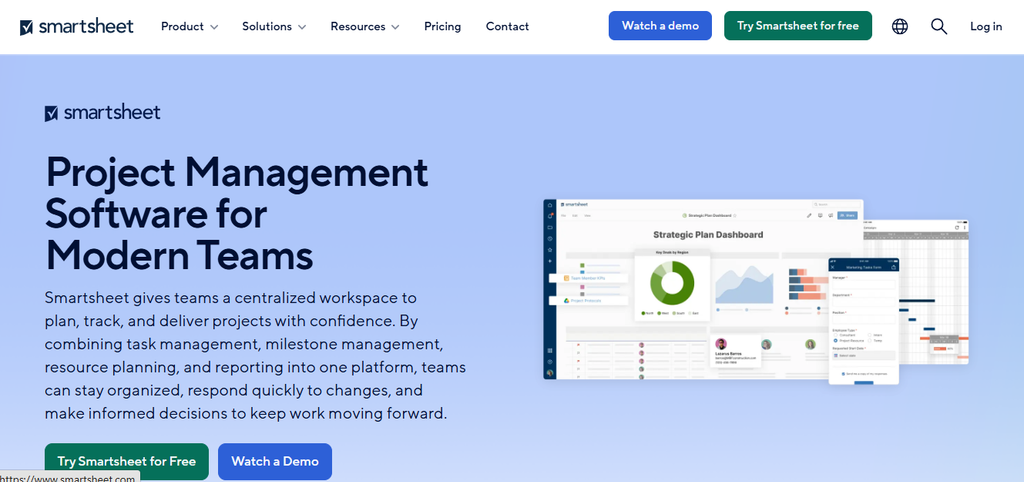
Smartsheet was started in the summer of 2005, shortly after co-founder Brent Frei sold his previous company, Onyx Software. Frei, along with Maria Colacurcio and Eric Browne, built a work management tool that looked and felt like a familiar spreadsheet, making it easy for everyday office workers to adopt. Mark Mader joined the following year and eventually led the company as CEO for nearly two decades.
Smartsheet went public on the New York Stock Exchange in 2018, growing into a major enterprise work management platform. In 2025, investment firms Vista Equity Partners and Blackstone bought the company in a deal worth about $8.4 billion, taking it private again. Rajeev Singh became Smartsheet’s new CEO that same year, following Mark Mader’s retirement.
What Smartsheet does: Provides spreadsheet-style tools for managing projects and workflows.
Services: Project tracking, automated workflows, resource management, and reporting dashboards.
5. ClickUp – A Fast-Growing All-in-One Productivity App
- Founded: 2016
- Owner: Founded by Zeb Evans; privately held, led by CEO Zeb Evans
- Headquarters: San Diego, California
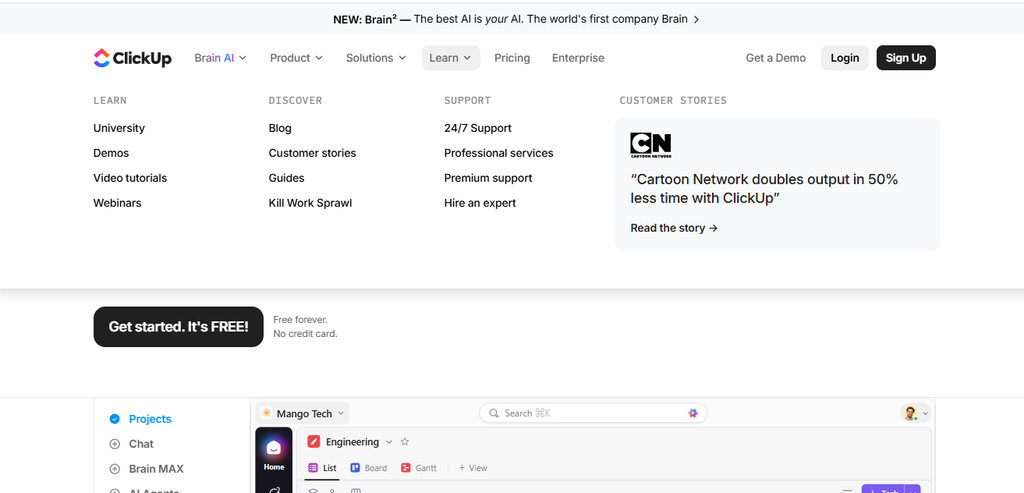
ClickUp was started in 2016 by Zeb Evans, who built the platform around a simple but ambitious idea: replace the need for multiple separate work apps with one single tool. Instead of switching between task managers, note-taking apps, and chat tools, ClickUp tried to combine all of these features together. This all-in-one approach helped the company grow quickly among smaller teams and startups.
The platform offers highly customizable views, letting teams see their work as lists, boards, calendars, or timelines depending on their preference. ClickUp has stayed privately held while raising funding to support its rapid growth. Zeb Evans continues to lead the company today as founder and CEO.
What ClickUp does: Combines task management, docs, and chat into one customizable productivity platform.
Services: Task management, team documents, time tracking, and customizable project views.
6. Wrike – An Enterprise Work Tool Now Part of a Larger Software Group
- Founded: 2006
- Owner: Founded by Andrew Filev; part of Cloud Software Group
- Headquarters: San Diego, California
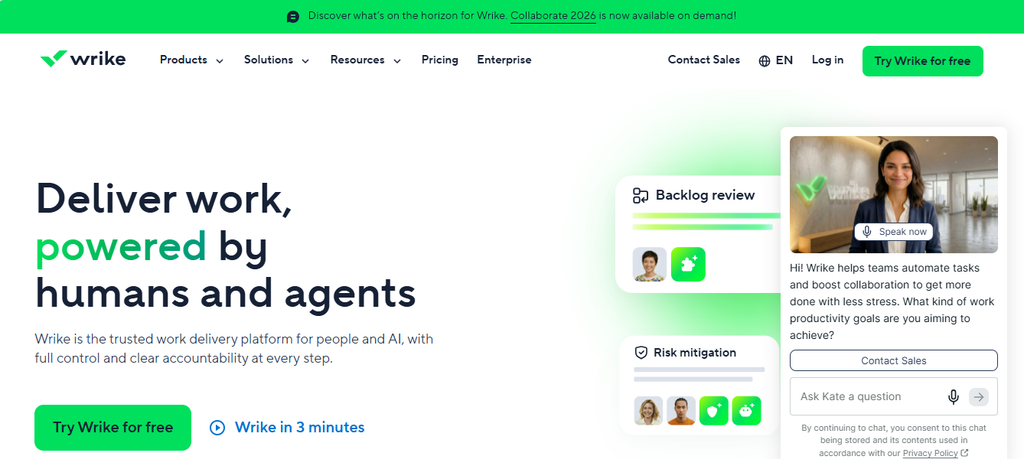
Wrike was started in 2006 by Andrew Filev, who built the platform specifically with larger businesses and complex projects in mind. Unlike some simpler competitors, Wrike focused on handling detailed workflows across many departments within the same large organization. This enterprise-first approach helped Wrike build a strong customer base among bigger companies over the years.
Citrix bought Wrike in 2021, adding it to its own portfolio of workplace software products. Citrix later merged with other companies to form Cloud Software Group, which now owns Wrike alongside several other business tools. The platform remains focused mainly on larger teams needing detailed project oversight.
What Wrike does: Provides detailed work management tools built for large, complex organizations.
Services: Project planning, resource management, custom workflows, and enterprise reporting tools.
7. Basecamp – A Simple Tool Built by Developers Tired of Complexity
- Founded: 1999 (as 37signals)
- Owner: Founded by Jason Fried & David Heinemeier Hansson; privately held, led by CEO Jason Fried
- Headquarters: Chicago, Illinois
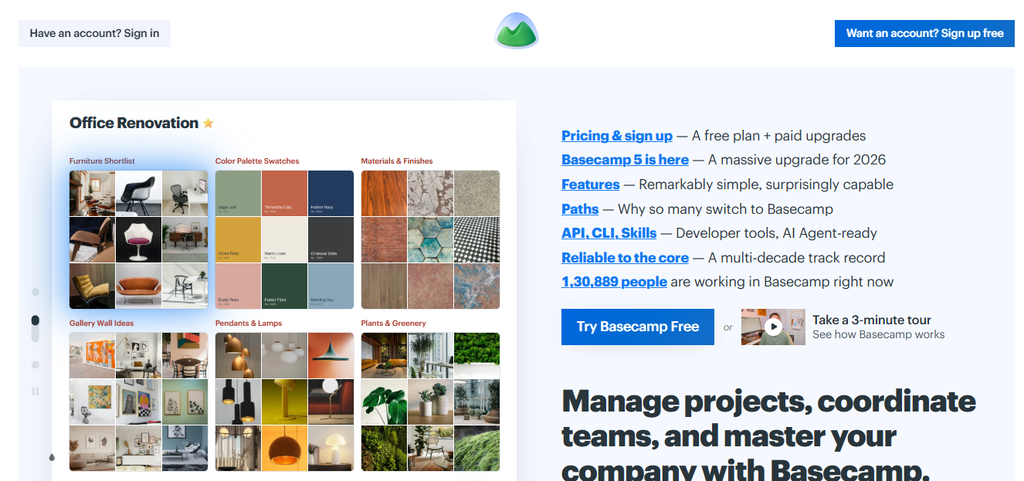
Basecamp grew out of a web design company called 37signals, started in 1999 by Jason Fried. The team built an internal tool to communicate with clients about ongoing projects, which eventually became popular enough to turn into its own standalone product called Basecamp. David Heinemeier Hansson, who wrote the code behind the tool, later became a well-known voice in the tech industry for his views on simple, focused software.
Fried and Heinemeier Hansson deliberately kept Basecamp simple, avoiding the feature bloat found in many competing project tools. The company eventually renamed itself Basecamp, matching its flagship product. Jason Fried continues to lead the company today as CEO, keeping it privately held and free of outside investor pressure.
What Basecamp does: Provides a simple, straightforward tool for small teams to manage projects together.
Services: Task lists, team messaging, file sharing, and project schedules.
8. Notion – A Flexible Workspace That Became a Project Management Favorite
- Founded: 2013
- Owner: Founded by Ivan Zhao & Simon Last; privately held, led by CEO Ivan Zhao
- Headquarters: San Francisco, California
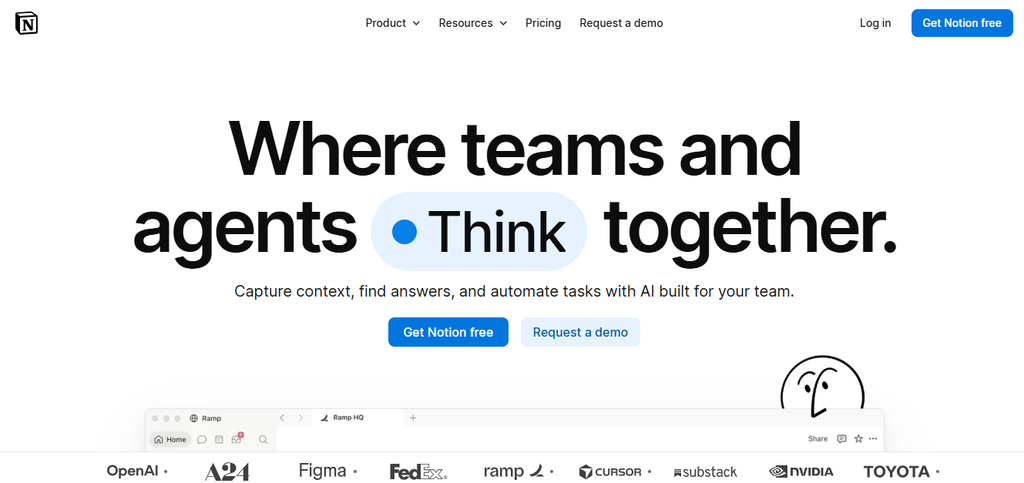
Notion was started in 2013 by Ivan Zhao and Simon Last, who wanted to build a flexible tool that could combine notes, documents, and databases in one place. The company struggled significantly in its early years, even nearly running out of money before finding its footing. Notion’s flexible, building-block style eventually attracted both individual users and entire teams managing complex projects.
While not originally built specifically as a project management tool, many teams adopted Notion for exactly that purpose, using its flexible database features to track tasks and deadlines. The company has grown into a major productivity platform used by millions of people worldwide. Ivan Zhao continues to lead Notion today as CEO.
What Notion does: Provides a flexible workspace combining notes, documents, and project tracking.
Services: Note-taking, project databases, team wikis, and customizable task boards.
9. Airtable – A Spreadsheet That Became a Database-Style Project Tool
- Founded: 2012
- Owner: Founded by Howie Liu, Andrew Ofstad & Emmett Nicholas; privately held, led by CEO Howie Liu
- Headquarters: San Francisco, California
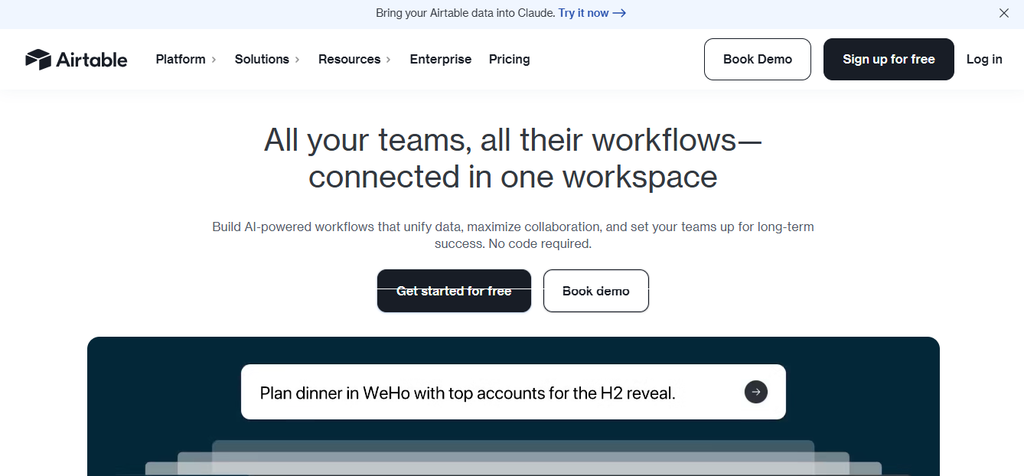
Airtable was started in 2012 by Howie Liu, Andrew Ofstad, and Emmett Nicholas, who wanted to combine the simplicity of a spreadsheet with the power of a database. The founders noticed that most people were comfortable using spreadsheets, but struggled when they needed more advanced organization and relationships between data. This combination helped Airtable find a unique spot between simple task lists and complex database software.
Teams began using Airtable to manage projects, track inventory, and organize content calendars, among many other uses. The platform’s flexibility made it popular across a wide range of industries and team sizes. Howie Liu continues to lead Airtable today as CEO.
What Airtable does: Combines spreadsheet simplicity with database power for tracking projects and data.
Services: Project tracking, custom databases, workflow automation, and team collaboration tools.
10. Microsoft Project – A Software Giant’s Original Project Scheduling Tool
- Founded: 1975 (Microsoft)
- Owner: Founded by Bill Gates & Paul Allen; publicly listed, led by CEO Satya Nadella
- Headquarters: Redmond, Washington
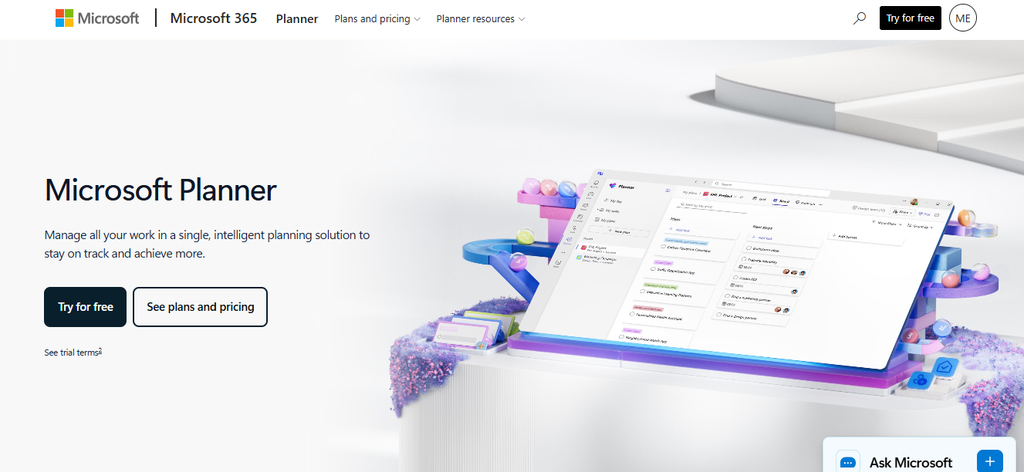
Microsoft was started in 1975 by childhood friends Bill Gates and Paul Allen, who wanted to write software for the earliest personal computers. The company later built Microsoft Project, first released in 1984, as one of the earliest dedicated project scheduling tools for businesses. It became especially popular with construction, engineering, and large corporate teams needing detailed scheduling and resource planning.
Microsoft Project has stayed focused on detailed timelines, task dependencies, and resource allocation, differing from the simpler, visual tools favored by smaller teams. The product now works closely with other Microsoft tools like Teams and Office. Satya Nadella has led Microsoft as CEO since 2014, continuing to invest in the company’s broader productivity software lineup.
What Microsoft Project does: Provides detailed project scheduling and resource planning tools for larger organizations.
Services: Project scheduling, task dependencies, resource allocation, and timeline reporting.
Frequently Asked Questions (FAQs)
1. Which is the most widely used project management tool in the USA?
Asana and Atlassian’s Jira are both among the most widely used project management tools, with Asana being popular with marketing teams and Jira widely used by software development teams.
2. Which companies are originally American businesses?
Asana, Smartsheet, ClickUp, Wrike, Basecamp, Notion, Airtable, and Microsoft all started in the United States, while Atlassian and monday.com were founded in Australia and Israel, respectively.
3. Which tool was built specifically for software development teams?
Jira, made by Atlassian, was built specifically for software development teams to track bugs, coding tasks, projects, and development workflows.
4. Which tool recently changed ownership in a multi-billion-dollar deal?
Smartsheet was acquired by Vista Equity Partners and Blackstone in 2025 for approximately $8.4 billion, taking the company private again.
5. Which tool is known for its simple, no-frills approach?
Basecamp is known for its deliberately simple approach, avoiding many of the extra features and complexity found in competing project management tools.
6. Which tool combines spreadsheet features with database power?
Airtable combines the familiar functionality of a spreadsheet with the organizational and data-management capabilities of a database.
7. Are project management tools in the USA regulated?
Most project management tools are subject to general data privacy and security requirements rather than regulations specifically designed for project management software. The rules can vary depending on the type of data handled and the industry.
8. Which tool was originally built as an internal Facebook project?
Asana grew out of an internal task management tool called “Tasks,” which was developed by its founders while they were working at Facebook.
9. Which tool is owned by a large private software holding company?
Wrike is part of Cloud Software Group. The company became part of the group following its acquisition by Citrix in 2021.
10. Why do these ten tools matter to everyday businesses?
These project management tools help businesses organize projects, track deadlines, assign tasks, and collaborate more effectively, making it easier for teams to manage their daily work.
Conclusion
America’s project management industry involves numerous software companies, which offer a wide range of solutions to help teams achieve their goals. The industry integrates Silicon Valley’s rising stars, enterprise software giants, and international platforms. In particular, Asana, Smartsheet, ClickUp, Wrike, Basecamp, Notion, Airtable, and Microsoft have risen to the top in the US market to satisfy the demands of millions of American businesses and their daily tasks.
Meanwhile, Australian-based Atlassian and Israeli-founded monday.com have also entered the fray, bringing their expertise in project management software to the US market.
In tandem, these ten companies help thousands of American businesses reach their goals every day.
Furthermore, as the global workplace evolves towards greater remote work and digital collaboration, these companies will play a vital role in how American business manages its projects in the future.