Supermarkets are where millions of American families do their weekly grocery shopping, buying everything from fresh produce to household essentials. A handful of major chains operate most grocery stores across the country today.
Some of these chains started as one small family shop over a century ago. Others grew out of a single warehouse or a college student’s frustration with limited grocery options.
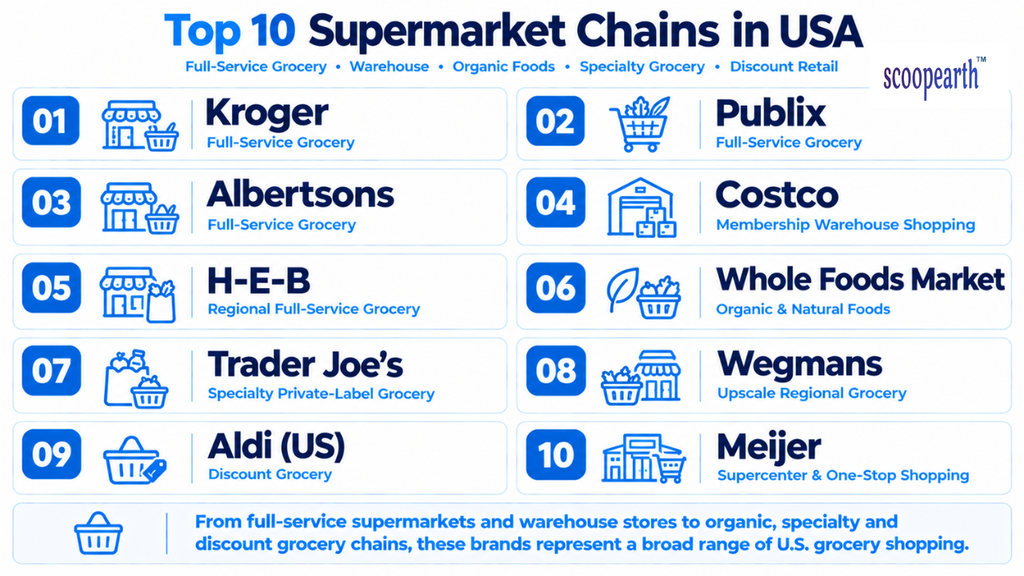
In this article, we’ll discuss the top 10 supermarket chains in the United States, based on their history, ownership, and the kind of shopping experience they are known for.
Quick Comparison
| Rank | Chain | Founded | Owner / Founders | US Headquarters | Core Focus |
| 1 | Kroger | 1883 | Founded by Bernard “Barney” Kroger; publicly listed, led by CEO Greg Foran | Cincinnati, Ohio | Full-Service Grocery |
| 2 | Publix | 1930 | Founded by George W. Jenkins; employee-owned, led by CEO Kevin Murphy | Lakeland, Florida | Full-Service Grocery |
| 3 | Albertsons | 1939 | Founded by Joe Albertson; publicly listed, led by CEO Susan Morris | Boise, Idaho | Full-Service Grocery |
| 4 | Costco | 1983 | Founded by Jim Sinegal & Jeffrey Brotman; publicly listed, led by CEO Ron Vachris | Issaquah, Washington | Membership Warehouse Shopping |
| 5 | H-E-B | 1905 | Founded by Florence Butt; privately held, family-owned, led by CEO Howard Butt III | San Antonio, Texas | Regional Full-Service Grocery |
| 6 | Whole Foods Market | 1980 | Founded by John Mackey & co-founders; owned by Amazon, led by CEO Jason Buechel | Austin, Texas | Organic & Natural Foods |
| 7 | Trader Joe’s | 1967 | Founded by Joe Coulombe; owned by Aldi Nord, led by CEO Bryan Palbaum | Monrovia, California | Specialty Private-Label Grocery |
| 8 | Wegmans | 1916 | Founded by John & Walter Wegman; privately held, family-owned, led by CEO Colleen Wegman | Rochester, New York | Upscale Regional Grocery |
| 9 | Aldi (US) | 1976 (US entry) | Part of Aldi Süd, Germany; led by US CEO Jason Hart | Batavia, Illinois | Discount Grocery |
| 10 | Meijer | 1934 | Founded by Hendrik Meijer; privately held, family-owned, led by CEO Rick Keyes | Walker, Michigan | Supercenter & One-Stop Shopping |
1. Kroger – America’s Oldest Major Supermarket Chain
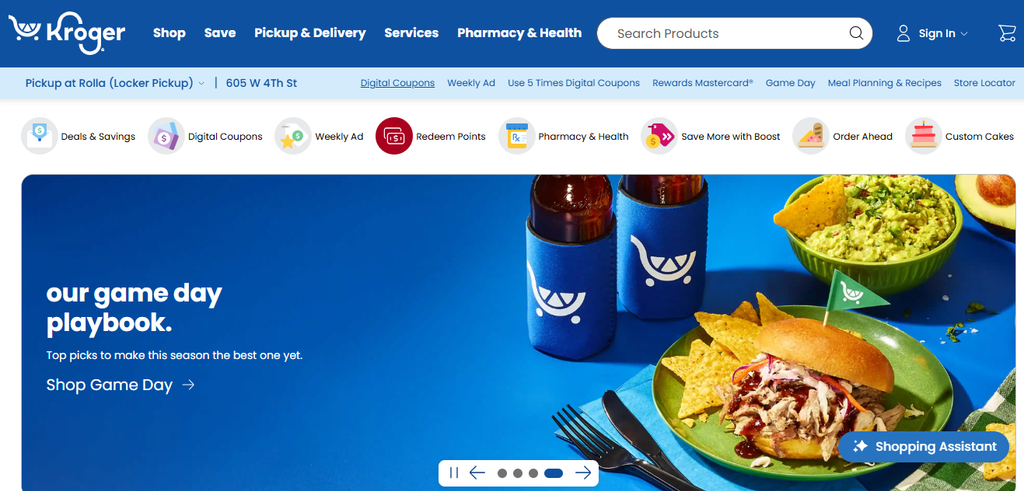
- Founded: 1883
- Owner: Founded by Bernard “Barney” Kroger; publicly listed, led by CEO Greg Foran
- Headquarters: Cincinnati, Ohio
Kroger began in 1883 when Barney Kroger, the son of German immigrants, opened a small grocery store in Cincinnati with just $372 of his own savings. He built his early reputation on a simple rule: never sell anything he wouldn’t want to eat himself. Kroger later became one of the first grocers to combine a bakery, butcher shop, and produce all under one roof.
The company grew into one of the largest supermarket chains in the country, now operating under dozens of different names like Ralphs, Fred Meyer, and Harris Teeter. A planned $20 billion merger with rival Albertsons was blocked by federal courts in 2024, ending years of legal battles. Greg Foran took over as CEO in 2026, following a leadership change at the top of the company.
What Kroger does: Operates full-service supermarkets selling groceries, pharmacy items, and fuel.
Services: Grocery shopping, in-store pharmacies, fuel centers, and online grocery delivery.
2. Publix – A Beloved Employee-Owned Southern Grocer
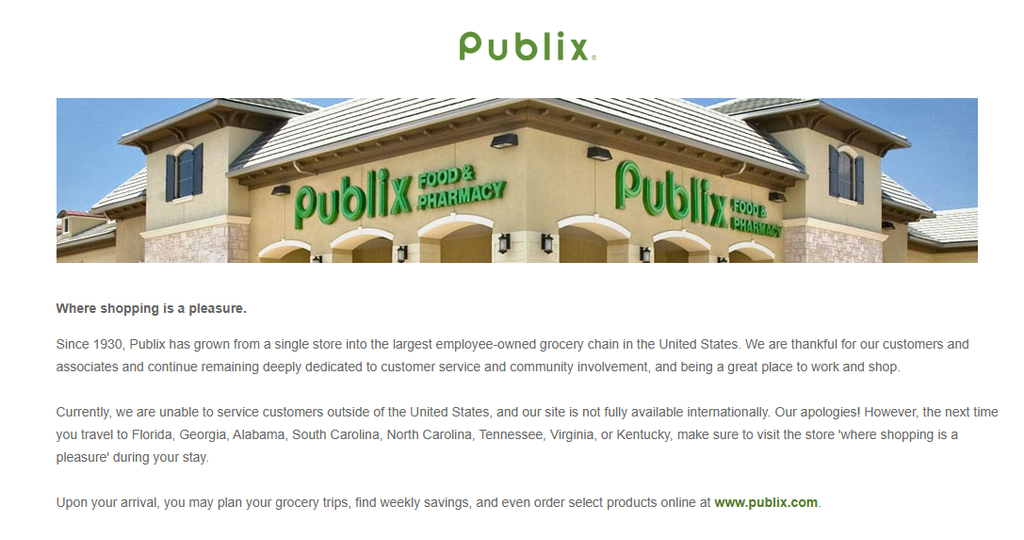
- Founded: 1930
- Owner: Founded by George W. Jenkins; employee-owned, led by CEO Kevin Murphy
- Headquarters: Lakeland, Florida
Publix was started in 1930 by George Jenkins, who left his job at Piggly Wiggly to build a cleaner, friendlier grocery store of his own in Winter Haven, Florida. Jenkins wanted his stores to feel more organized and pleasant to shop in than typical grocery stores of the time. That focus on customer experience became the foundation of the entire company culture.
Publix has remained privately owned by its current and former employees along with the Jenkins family, rather than being publicly traded. This employee-ownership structure has made Publix one of the largest employee-owned companies in the country. Kevin Murphy now leads the company as CEO, overseeing more than 1,400 stores across the Southeast.
What Publix does: Operates full-service supermarkets known for customer service and fresh food.
Services: Grocery shopping, in-store bakeries and delis, pharmacy services, and online delivery through Instacart.
3. Albertsons – A Boise Grocer Built on Customer-First Innovation
- Founded: 1939
- Owner: Founded by Joe Albertson; publicly listed, led by CEO Susan Morris
- Headquarters: Boise, Idaho
Albertsons was started in 1939 when Joe Albertson left his job at Safeway to open his own grocery store in Boise, Idaho. His first store was unusually large for the era, featuring an in-store bakery and even an ice cream shop. Albertson also offered free parking and a money-back guarantee, both new ideas in grocery retail at the time.
The company grew steadily through decades of expansion and acquisitions, eventually operating well-known store brands like Safeway, Vons, and Jewel-Osco. A major planned merger with Kroger was blocked by federal and state judges in 2024, ending the deal after years of legal fighting. Susan Morris currently leads the company as president and CEO.
What Albertsons does: Operates full-service supermarkets under several regional store brands.
Services: Grocery shopping, in-store pharmacies, fuel centers, and online grocery delivery.
4. Costco – A Membership Warehouse Built for Bulk Buying
- Founded: 1983
- Owner: Founded by Jim Sinegal & Jeffrey Brotman; publicly listed, led by CEO Ron Vachris
- Headquarters: Issaquah, Washington
Costco opened its first warehouse in Seattle in 1983, founded by retail veteran Jim Sinegal and lawyer Jeffrey Brotman. The two built their business model around selling products in bulk at low prices, available only to paying members. That membership warehouse concept helped Costco grow into the first company to reach $3 billion in sales within just six years.
Costco later merged with a similar warehouse chain called Price Club, further expanding its reach across the country. Ron Vachris, who began his Costco career as a teenage forklift driver, became the company’s third CEO in 2024. Costco is now considered one of the largest retailers in the world by revenue.
What Costco does: Operates membership-only warehouse stores selling bulk groceries and general merchandise.
Services: Bulk grocery shopping, membership programs, pharmacy services, and gas stations.
5. H-E-B – A Texas Family Business Started With a $60 Loan
- Founded: 1905
- Owner: Founded by Florence Butt; privately held, family-owned, led by CEO Howard Butt III
- Headquarters: San Antonio, Texas
H-E-B began in 1905 when Florence Butt used a $60 loan to open a small grocery store on the ground floor of her family’s home in Kerrville, Texas. Her husband had fallen ill, leaving Florence to support the family through the new business. Her son, Howard Edward Butt, later took over and expanded the store across Texas, eventually naming the company after his own initials.
The Butt family has controlled H-E-B for five generations now, making it one of the largest family-owned grocery chains in the country. The company also created an employee stock ownership program in 2015, giving workers a stake in the business. Howard Butt III, the founder’s great-great-grandson, now serves as CEO.
What H-E-B does: Operates full-service supermarkets primarily across Texas and northern Mexico.
Services: Grocery shopping, in-store bakeries and delis, pharmacy services, and food delivery through Favor.
6. Whole Foods Market – An Organic Grocery Pioneer Now Owned by Amazon
- Founded: 1980
- Owner: Founded by John Mackey & co-founders; owned by Amazon, led by CEO Jason Buechel
- Headquarters: Austin, Texas
Whole Foods Market started in 1980 in Austin, Texas, when John Mackey and his co-founders opened a small natural foods store called SaferWay. The founders were so committed to the concept that they lived inside the store itself, bathing using a hose connected to the dishwasher. That humble beginning grew into one of the most recognized names in organic and natural grocery shopping.
The company expanded steadily across the country, becoming known for its focus on organic produce and high food quality standards. In 2017, Amazon bought Whole Foods Market entirely for $13.7 billion, adding a physical grocery chain to its online business. Jason Buechel now leads Whole Foods as CEO under Amazon’s ownership.
What Whole Foods Market does: Operates supermarkets focused on organic and natural food products.
Services: Organic grocery shopping, prepared foods, pharmacy services, and Amazon Prime delivery integration.
7. Trader Joe’s – A Beloved Chain With a South Seas Theme
- Founded: 1967
- Owner: Founded by Joe Coulombe; owned by Aldi Nord, led by CEO Bryan Palbaum
- Headquarters: Monrovia, California
Trader Joe’s grew out of a small convenience store chain called Pronto Markets, which founder Joe Coulombe transformed into something entirely different in 1967. He designed the stores with a nautical, South Seas theme, complete with employees wearing colorful Hawaiian shirts. Coulombe built the store around unique, well-educated shoppers who wanted interesting food at fair prices, rather than typical supermarket brands.
German billionaire Theo Albrecht, co-founder of Aldi, bought Trader Joe’s in 1979 and it remains under his family’s ownership today. The company focuses heavily on its own private-label products rather than name brands found in typical grocery stores. Bryan Palbaum currently serves as the company’s chairman and CEO.
What Trader Joe’s does: Operates specialty grocery stores selling mostly private-label food products.
Services: Specialty grocery shopping, private-label packaged foods, and curated wine and snack selections.
8. Wegmans – A Family-Run Chain Known for Customer Loyalty
- Founded: 1916
- Owner: Founded by John & Walter Wegman; privately held, family-owned, led by CEO Colleen Wegman
- Headquarters: Rochester, New York
Wegmans was started in 1916 by brothers John and Walter Wegman, who opened a small produce stand in Rochester, New York. The business grew steadily over the following decades while staying firmly within Wegman family control. The chain became especially known for its large, well-designed stores featuring extensive prepared food and specialty sections.
Wegmans has remained privately held for more than a century, avoiding the pressures that come with being a publicly traded company. Colleen Wegman, a member of the founding family, now leads the company as president and CEO. Wegmans consistently ranks among the most beloved grocery chains by its own customers.
What Wegmans does: Operates large-format supermarkets known for prepared foods and customer service.
Services: Grocery shopping, prepared meals, in-store dining, and pharmacy services.
9. Aldi (US) – A German Discount Chain That Quietly Grew Across America
- Founded: 1976 (US entry)
- Owner: Part of Aldi Süd, Germany; led by US CEO Jason Hart
- Headquarters (US): Batavia, Illinois
Aldi’s American story began in 1976, when the German discount grocery chain opened its very first US store near Iowa. The company built its entire business model around keeping costs extremely low, offering a smaller selection of mostly private-label products rather than name brands. This no-frills approach let Aldi charge noticeably lower prices than many traditional supermarkets.
The chain grew quietly for decades before becoming one of the fastest-growing grocery chains in the country in recent years. Aldi in the US operates as part of Aldi Süd, one of two separate Aldi companies that split from an original German family business decades ago. Jason Hart currently leads Aldi’s US operations as CEO.
What Aldi does: Operates discount supermarkets focused on low prices and private-label products.
Services: Discount grocery shopping, weekly special deals, and a limited selection of private-label goods.
10. Meijer – The Midwest Chain That Pioneered the Supercenter
- Founded: 1934
- Owner: Founded by Hendrik Meijer; privately held, family-owned, led by CEO Rick Keyes
- Headquarters: Walker, Michigan
Meijer started in 1934 when Dutch immigrant Hendrik Meijer, a local barber, opened a small grocery store in Greenville, Michigan, during the Great Depression. He opened it on credit with less than $340 in goods, hoping to pay off his building’s debt. His son, Fred, helped him and became the first employee, eventually taking over the business and expanding it to great success.
Hendrik and Fred Meijer opened their first supercenter in 1962 under the name Thrifty Acres. It was a revolutionary concept at the time, as it combined a grocery store with a variety of other goods. It set a standard for other grocery stores nationwide. The company is family-owned and controlled to this day, with Rick Keyes being the first non-family member CEO.
What Meijer does: Operates supercenters combining groceries with general merchandise under one roof.
Services: Grocery shopping, general merchandise, pharmacy services, and fuel stations.
Frequently Asked Questions (FAQs)
1. Which is the oldest supermarket on this list?
Kroger is the oldest, founded in 1883, making it the longest-running major grocery chain in the United States.
2. Which are employee-owned or family-owned and not public?
Publix is an employee-owned company, while H-E-B, Wegmans, and Meijer are family-owned.
3. Which focuses on organic and natural foods?
Whole Foods Market focuses on organic and natural foods as opposed to other grocery stores.
4. Which one requires you to be a member and pay a fee to shop there?
Costco requires shoppers to pay a fee to shop there.
5. Which one is owned by the same family that owns Aldi in Germany?
Trader Joe’s is the sister company to Aldi’s in Germany and is run by the same family.
6. Which two major grocery chains were attempting to merge, but it was blocked by state and federal courts?
Kroger and Albertsons were trying to merge, but it was denied in 2024.
7. Are the big guys regulated in any way?
Yes, they have to follow FDA guidelines and are inspected by local health boards.
8. Which one was first at the modern one-stop supercenter?
Meijer created the supercenter in 1962.
9. Which one focuses on lower prices by carrying private-label products?
Aldi focuses on cheaper products and carries mostly private-label goods.
10. Why should the average consumer care?
The top 10 supermarket chains are the stores where the average American buys their groceries and household goods on a weekly basis.
Conclusion
America’s supermarket industry is a blend of family-owned businesses with century-long histories and newer specialty chains, all vying for the attention of consumers who want to buy as much as possible in one stop. Kroger, Publix, Albertsons, Costco, H-E-B, Wegmans, and Meijer are household names across the U.S., while Whole Foods, Trader Joe’s, and Aldi have an intriguing mix of owners that include Amazon and German supermarket families.
These ten supermarket chains control most of the U.S. grocery market, providing an abundance of different goods for the American diet. They will continue to dominate it in the future, providing convenience as more and more customers turn to online grocery delivery.