Caulking is the cheapest material in a building and the one most likely to cause an expensive problem when it fails. A bead of sealant costs a few dollars. The subfloor rot it prevents costs thousands.
Most homeowners think of caulk as cosmetic. It sits in a line where two surfaces meet; it is usually white, and when it starts to look tired, the instinct is to run a fresh bead over the top and move on. That instinct is the reason so many joints fail twice.
Sealant is not trim. It is a working component with a job, a service life and a failure mode, and in this climate it gets tested harder than almost anywhere else in North America.
What the cold actually does to a joint
Quebec does not have one winter problem. It has two, and they work against each other.
The first is simple contraction. Materials shrink in cold and expand in heat, and they do it at different rates. A window frame and the masonry or siding around it move by different amounts across a temperature swing, which means the gap between them is never a fixed width. It opens in January and closes in July. Sealant has to stretch and compress through that range for years without tearing or losing grip.
The second problem is the one that does the real damage. Through late winter and early spring, temperatures here cross the freezing point repeatedly, sometimes several times in a single week. Each crossing is a cycle, and each cycle is one more stretch-and-release on every joint in the building envelope. Water that has worked its way into a hairline crack freezes, expands, and widens the crack slightly. Then it thaws, seeps a little deeper, and does it again.
A milder climate might put a joint through a handful of these a year. Montreal puts it through dozens. That difference is why sealant that a manufacturer rates for a decade can be visibly failing here in three or four years, and why advice written for a warmer region does not transfer.
Two different jobs, two different materials
Part of the confusion around caulking is that one word covers several products doing unrelated work.
Inside a bathroom, the job is keeping water out of places water should not reach. The joint where a tub meets the wall, or where a shower base meets tile, is a water barrier and nothing else. It needs to flex with the tub as it fills and empties, resist constant moisture, and stay free of mould. Silicone handles that. It stays flexible for years and water does not penetrate it. The trade-off is that paint will not stick to it, so it has to be the finished surface.
Around a kitchen counter or a backsplash, the demands are lighter, but the same principle applies. Water, heat, movement.
Outside, the job changes completely. A joint around a window or a door frame is doing air sealing as much as water sealing, and it has to survive ultraviolet light, driving rain and the full temperature range of a Quebec year. Polyurethane and modern hybrid sealants are built for that. They handle more movement, they bond to masonry and siding properly, and most of them take paint.
Then there is interior trim work, where baseboards and casings meet walls. That is cosmetic; it sees no water, and it needs to be paintable. Acrylic latex is the right product and it costs the least of the three.
Using the wrong one of these in the wrong place is the single most common error in amateur caulking work, and the failure is usually not immediate. Acrylic latex in a shower will look fine for a season before it starts to shrink away from the tile and darken.
The signs that a joint is finished
Sealant tells you before it fails, if the signs are read correctly.
Discolouration on its own is not always structural. A bathroom bead that has gone grey or pink is usually surface mould growing in soap residue, and cleaning may be enough. If the discolouration is inside the sealant rather than on it, the material has become porous and it is past saving.
Any gap between the sealant and either surface it touches is a failure, however small. A hairline separation where the bead meets tile is an open path, and water follows open paths. The same applies to a bead that has gone hard and lost its give. Press it. Sound sealant yields slightly. Old sealant feels like plastic, and plastic cracks instead of stretching.
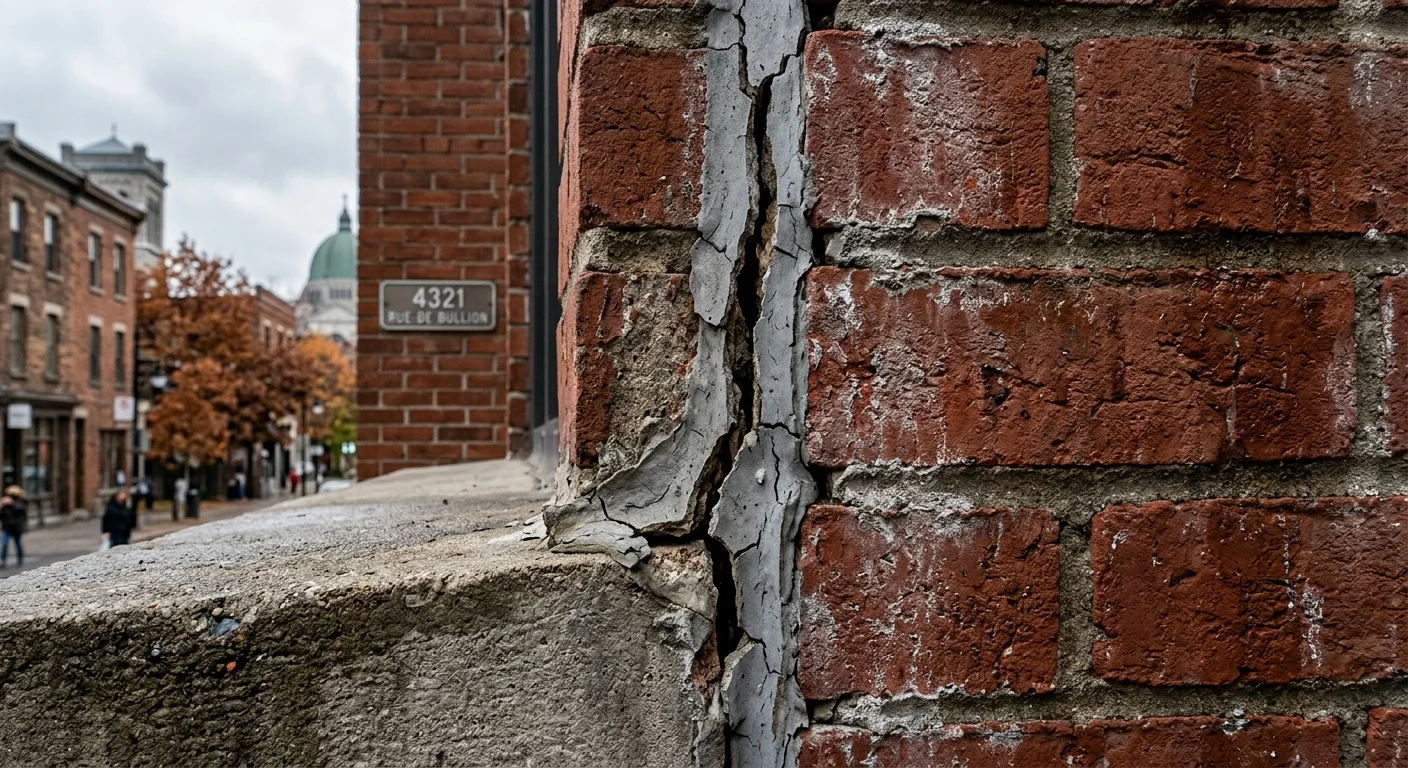
Outside, look for sections that have pulled back from the frame at the corners first. Corners carry the most movement and they go before the straight runs do. Chalky texture, cracking along the surface, or a bead that has shrunk thinner than it was all point the same way.
The most reliable indicator has nothing to do with the sealant itself. Paint lifting or bubbling on a ceiling below a bathroom, a soft spot in the floor near a shower, a draft near a closed window, a window frame that shows condensation on the inside in cold weather. These are symptoms of a joint that has already failed, and by the time they appear, the question is not whether the caulking needs redoing but what the water behind it has reached.
Where the work goes wrong
The reason a professional caulking job lasts and a weekend one often does not comes down to three things, and none of them are about applying the bead.
Removal is the first. New sealant does not bond to old sealant. It bonds to the surface underneath, which means every trace of the previous material has to come out, and the joint has to be cleaned of soap film, mould and dust before anything new goes in. This is slow, unglamorous work and it is the step most often shortened. A fresh bead laid over a cleaned-looking but not clean joint will release within a year.
Joint geometry is the second, and it is seldom considered. A sealant joint performs best at roughly twice as wide as it is deep, because that shape lets the material stretch across the gap rather than being locked rigid between two surfaces. A gap wider than about six millimetres should have a foam backer rod set behind the sealant to control depth. Filling a deep gap with solid sealant wastes material and produces a joint that tears the first time it has to move.
Cure time is the third. Most silicones want at least a day before water touches them, and some products need considerably longer to reach full strength. A shower used the same evening it was resealed has a joint that never cured properly, and it will fail early without any obvious reason.
Exterior work adds a fourth constraint, which is temperature. Most sealants specify a minimum application temperature, commonly around five degrees Celsius, and they will not bond reliably below it. This is why exterior caulking in Quebec has a real season. Late spring through early autumn is the window. A joint sealed in December on a mild afternoon is a joint that will be redone.
When resealing will not fix it
Here is the part that gets missed, and it matters more than product choice or technique.
A joint that keeps failing in the same spot is rarely a sealant problem. Sealant fails because of what is happening around it, and if the cause is still there, the third bead will go the same way as the first two.
Windows are where this shows up most. The bottom corners of a wood frame take standing water every time it rains, and over years that water gets into the end grain. The wood goes soft. Sealant will not bond to soft wood, so no amount of resealing holds, and running a fresh bead over a rotting sill makes things worse by trapping moisture inside it rather than letting the wood dry.
A sash that has dropped out of square is the other common one. The gap it leaves changes width as the window is opened and closed, and no sealant is designed for that kind of movement. The draft comes back within months because the problem is mechanical.
Condensation is worth separating, because the location tells the story. Moisture on the inside surface of the glass in cold weather usually points to indoor humidity combined with air leakage, and sealing can be part of the answer. Moisture trapped between two panes of a double-glazed unit is something else entirely. That is a failed glass seal; it is inside a sealed assembly, and caulking does not affect it at all.
In all of these cases, the honest answer is that the window needs attention rather than another bead. Sometimes that is a repair to the frame, sometimes it is a new sash, occasionally it is replacement. A contractor who handles both window repair in Montreal will usually say which of the two a situation calls for, because the two jobs are priced differently and recommending the wrong one wastes everyone’s time.
The same logic applies indoors. A shower joint that has been resealed three times and keeps parting from the tile is often telling you that the shower base is moving, or that water is arriving from behind the wall rather than from the bathroom side. Resealing treats the symptom.
When to bring someone in
Plenty of caulking is genuinely a homeowner job. A tired bead around a kitchen sink, a gap at a baseboard, a bathroom joint that is cosmetically tired but structurally sound. The materials are cheap and the skill builds quickly.
The work that is worth paying for is the work where the consequence of getting it wrong is hidden. A shower joint that fails quietly for two years will have reached the subfloor before anyone notices. Window sealing on an upper floor involves both height and the risk of sealing moisture into a wall cavity rather than out of it. Expansion joints in masonry move more than people expect and need the right product at the right depth.
It is also worth getting an opinion when the signs are ambiguous. Someone who does caulking work across Montreal sees failed joints constantly and can usually read from the pattern whether the problem is the sealant or something behind it.
The useful way to think about caulking is as maintenance with a schedule rather than a repair you do when something looks bad. Interior wet areas want checking once a year. Exterior joints want a walk around every spring, once the snow is off and before the summer heat sets in. Ten minutes of looking, and the joints that need attention become obvious well before they cost anything.