Choosing a solar company in the United States takes more work than simply comparing panel prices. One company may handle the design, permits and installation itself, while another works through a dealer or contractor network. Some concentrate on selling systems outright, while others build much of their business around leases or long-term energy agreements. Battery storage has also become a much bigger part of the conversation, especially for homeowners who care about backup power as much as lower electricity use.
The market has changed quite a bit as well. Several familiar solar names have disappeared or changed ownership in recent years, while companies such as Sunrun, Freedom Forever and Trinity Solar continue to install at a large scale. EnergySage currently names Sunrun, Freedom Forever, Trinity Solar, Tesla and Momentum Solar among the biggest national residential providers.
The following top 10 solar companies in USA are an editorial selection based on current operations, installation scale, service area, residential experience and the range of solar or battery products they offer. It is not a strict revenue ranking.
Top 10 Solar Companies in USA at a Glance
| Rank | Solar Company | Known For |
| 1 | Sunrun | Large residential solar and battery network |
| 2 | Freedom Forever | Wide installation footprint across the US |
| 3 | Trinity Solar | Long-running East Coast residential installer |
| 4 | Tesla Energy | Solar panels, Solar Roof and Powerwall |
| 5 | Palmetto | Solar, storage and home-energy services |
| 6 | ION Solar | Full-service residential installation |
| 7 | Solar Energy World | Strong Mid-Atlantic and Florida presence |
| 8 | SunPower | Residential solar under the rebuilt SunPower company |
| 9 | Momentum Solar | Solar purchase, loan and lease options |
| 10 | Powur | Nationwide seller and installation platform |
1. Sunrun
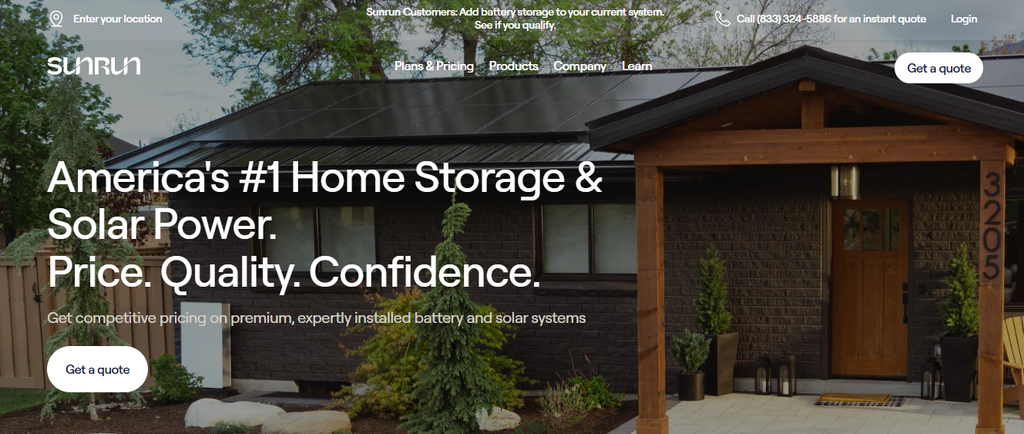
Sunrun has grown into one of the biggest names in American home solar, and its current business goes well beyond putting panels on roofs. The company now sells solar and battery storage together and has leaned heavily into subscription plans that let customers use a home-energy system without buying the whole system upfront.
By the end of 2025, Sunrun reported more than 1.16 million customers and 8.4 gigawatts of networked solar capacity. It added nearly 117,000 customers during that year, and 93% of those new customers chose its subscription offering. Sunrun also reported $2.96 billion in 2025 revenue and entered the Fortune 1000 in 2026.
Sunrun started in 2007 and currently says it has sold its solar service in 22 states, Washington D.C. and Puerto Rico. Home batteries now matter almost as much to its story as rooftop panels because the company also connects groups of customer batteries into virtual power plants that can support the grid.
For homeowners comparing large national providers, Sunrun usually enters the conversation because few residential companies have a customer base of this size.
2. Freedom Forever
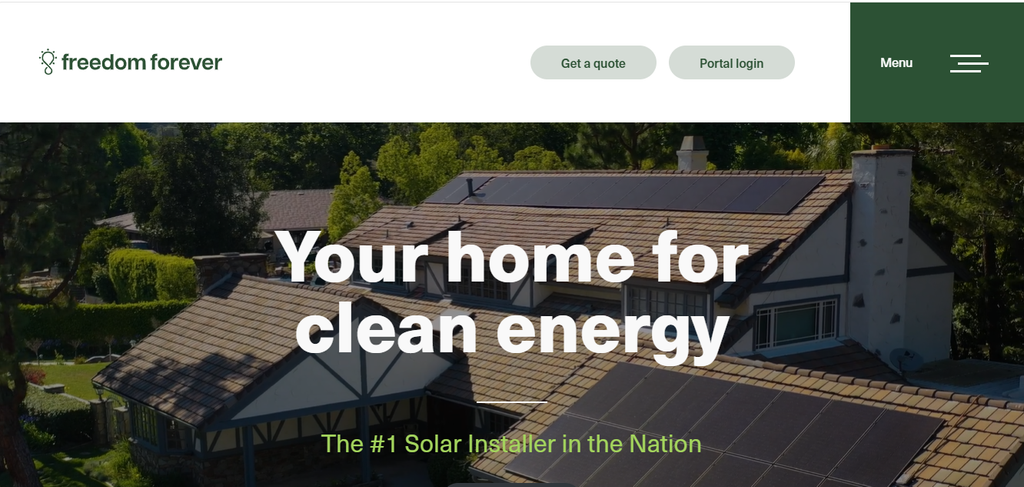
Freedom Forever has expanded quickly from its California roots into a much wider part of the country. The company concentrates on residential solar installation and works with a large network of independent dealers that sell systems while Freedom Forever handles much of the installation work.
Its current website says it serves customers in more than 30 states, while its detailed service page lists active markets across California, Texas, Florida, Virginia, Pennsylvania, New Jersey, the Pacific Northwest and several other parts of the country.
Freedom Forever also offers a 25-year production guarantee. The guarantee focuses on how much electricity the installed system should produce and can provide compensation when production falls below the level covered in the contract. Homeowners still need to read the agreement carefully because shading, weather, system design and other conditions affect what the guarantee covers.
The company has become especially visible because it does not depend only on its own sales team. Its dealer model lets other solar sellers use Freedom Forever for the installation side of the job.
3. Trinity Solar
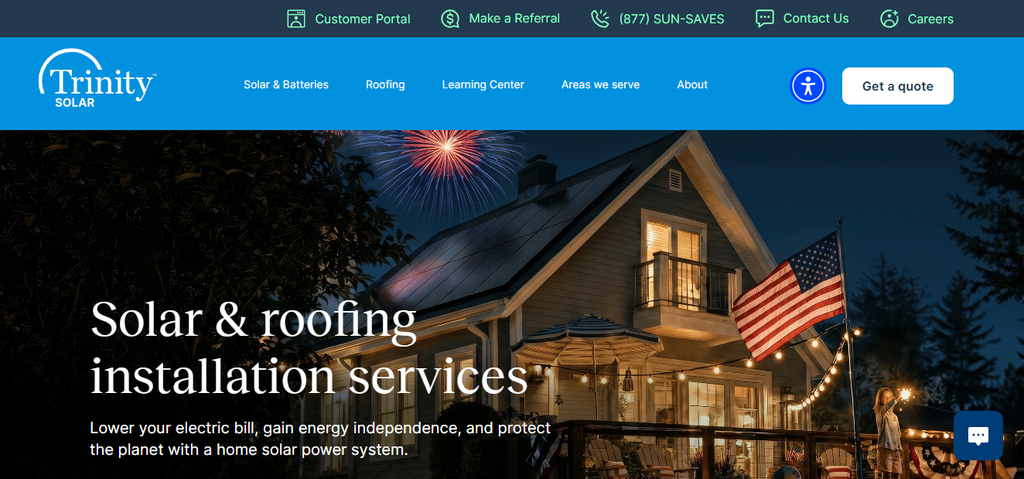
Trinity Solar has been around much longer than most companies that entered residential solar during the last decade. The company started in 1994 and remains privately owned, with most of its business concentrated along the East Coast.
Trinity says it has installed more than 100,000 residential systems and currently serves Connecticut, Delaware, Florida, Maryland, Massachusetts, New Hampshire, New Jersey, New York, Pennsylvania and Rhode Island. Its staff handles work that includes system design, permitting and installation.
There is also a recent installation number behind the name. Solar Power World ranked Trinity No. 1 on its 2026 residential contractor list, based on participating companies’ reported 2025 installations. Trinity reported about 137.5 MW of residential solar installed during the year.
Trinity does not cover most western states, so it is not a national option in the same way as some companies above it. Within its East Coast markets, though, its long history and installation volume give it a substantial presence.
4. Tesla Energy
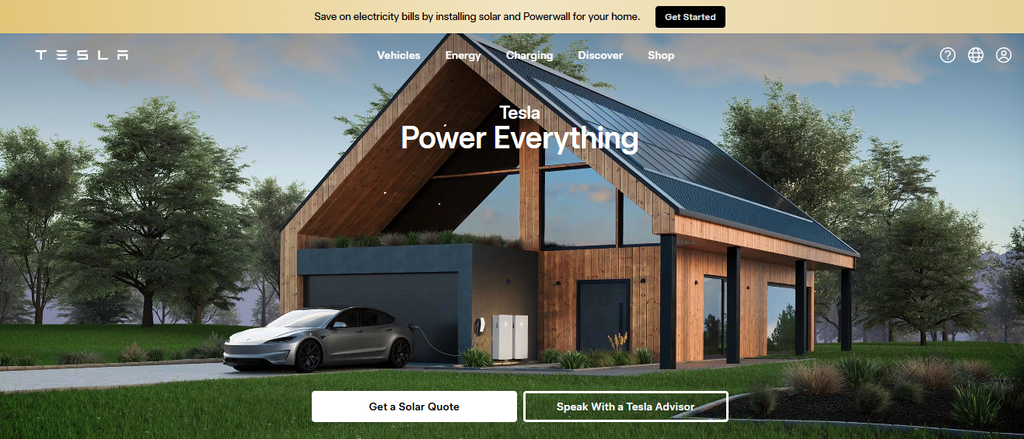
Tesla Solar approaches home solar as one piece of a larger household energy system.
Tesla sells conventional rooftop solar panels, but it also has Solar Roof and the Powerwall battery. A homeowner can therefore generate electricity from the roof, store some of it in a battery and manage the system through the same Tesla ecosystem used for other energy products.
Its current solar panels use a low-profile mounting design, and Tesla says the panels come with a 25-year warranty. The company assembles its panels in Buffalo, New York.
Tesla appeals to a slightly different type of solar buyer than a company that simply installs third-party panels. Someone who already wants Powerwall storage or likes the idea of keeping solar, batteries and EV charging inside one system may find that integration useful.
Availability still depends on the address, so the first thing a homeowner should check is whether Tesla currently installs directly in the ZIP code.
5. Palmetto
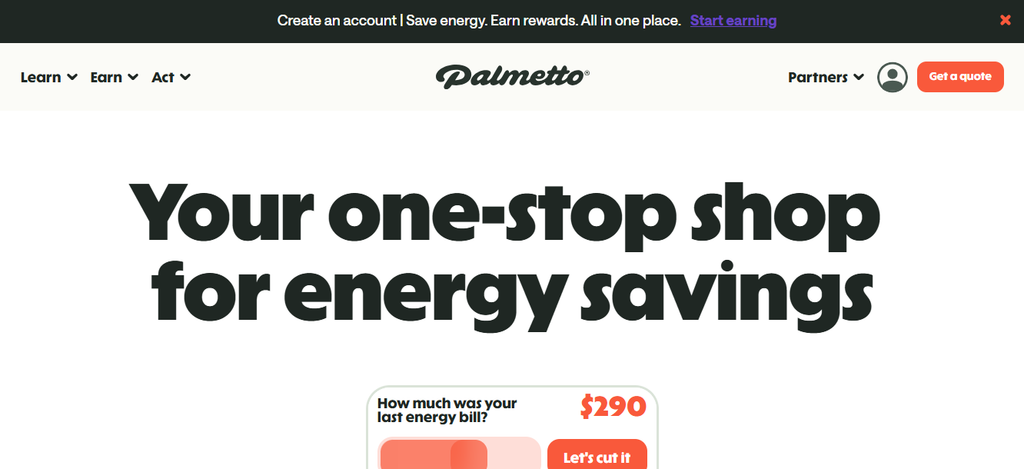
Palmetto has spent years building a solar business around both installation and technology.
The company started in 2010 and has used a marketplace-style system that connects homeowners with solar design, installation and long-term support. Its current consumer business also offers cash purchases, loans and subscription-style arrangements rather than pushing every customer toward one payment method.
Palmetto’s recent growth has been particularly noticeable in states with large residential solar markets. Its 2025 impact report says the company handled about 83 MW in Arizona, 46 MW in Texas and 153 MW in Florida, based on projected 2025 figures.
Another part of the Palmetto approach comes after installation. The company uses software and monitoring alongside the physical system, which means it presents itself more like a home-energy service company than a contractor that leaves after the panels go up.
6. ION Solar
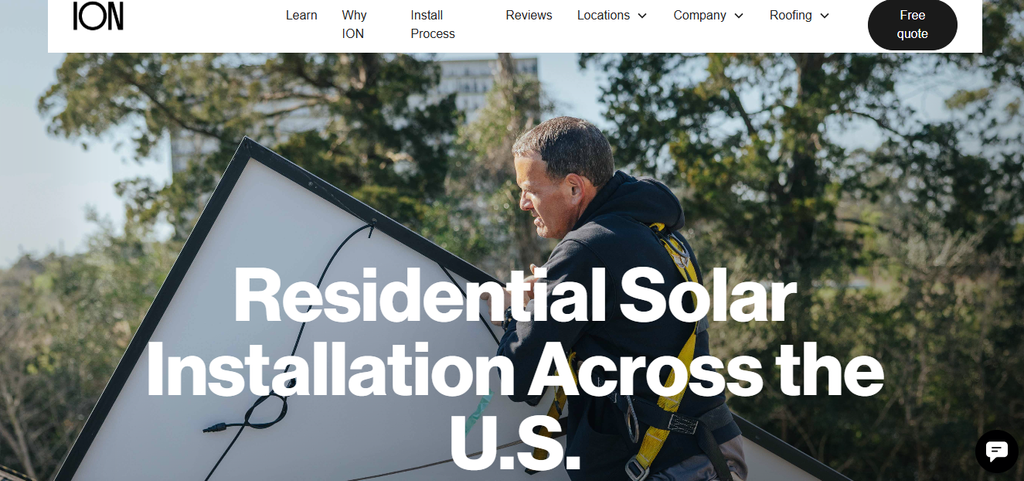
ION Solar concentrates on residential work and keeps much of the process under one roof.
ION says it has completed more than 85,000 installations across the United States. Its current service markets include Texas, Colorado, Virginia, Ohio, Nevada, Oregon, Illinois, South Carolina, New Mexico and Connecticut, with additional licenses listed in several other states.
The company handles design, financing, permitting and installation, then assigns customers a project coordinator during the process. It also puts noticeable attention into how the finished roof looks, using black-on-black panels and cleaner panel layouts where the project allows it.
ION also placed second on Solar Power World’s 2026 residential contractor list, reporting about 56.4 MW of residential installations during 2025.
That combination of a fairly large existing customer base and recent installation volume earns ION a place high on this list.
7. Solar Energy World
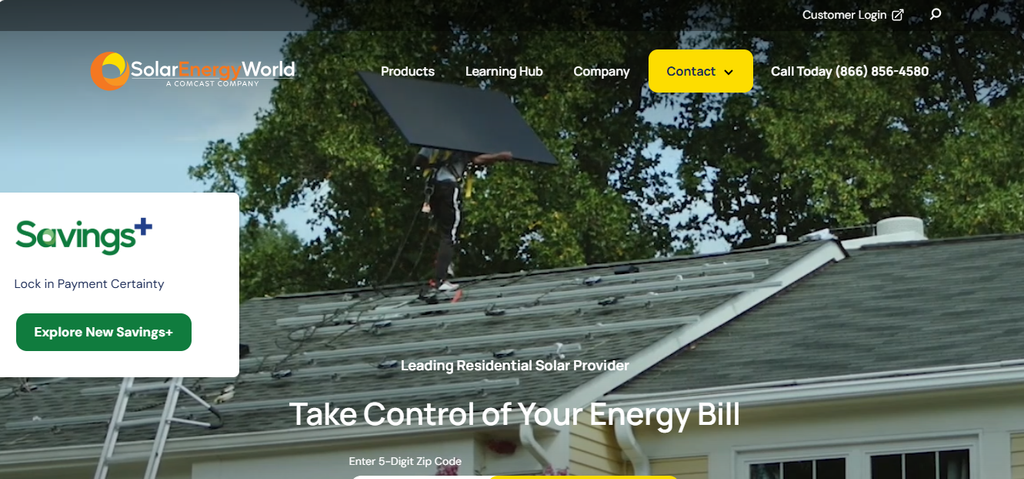
Solar Energy World does not operate in nearly as many states as Sunrun or Freedom Forever, but it installs a large amount of residential solar in the markets where it does work.
The company started in 2009 and currently serves Maryland, Washington D.C., Delaware, Pennsylvania, Florida, New Jersey and Virginia. It sells solar panels and batteries and handles installation through its own operating process.
Its recent numbers are strong for a regional installer. Solar Power World placed Solar Energy World fourth nationally among reporting residential contractors for 2025 installation volume, with almost 41 MW installed. The company also says it has held the No. 1 residential installer position in Maryland for seven straight years on that list.
Solar Energy World also offers purchase and lease-style choices, which gives homeowners more than one route into a system. Anyone outside its seven current markets will need to look elsewhere, but within those states it has become a sizable regional company.
8. SunPower
SunPower needs a little explanation because the SunPower operating in 2026 is not the same legal company that many homeowners knew several years ago.
The former SunPower Corporation filed for bankruptcy in August 2024. Complete Solaria bought certain assets, including the SunPower brand, Blue Raven Solar, New Homes and parts of the dealer business, in September 2024. Complete Solaria later adopted the SunPower name, and the legal company changed its name to SunPower Inc. in 2025.
The current SunPower sells residential solar and battery systems. Its warranty page lists a ten-year workmanship warranty for new installations, two years of service coverage and manufacturer warranties on some equipment that run as long as 25 years.
Anyone with an older SunPower system should pay attention to the installation date because legacy contracts and warranties do not all sit with the new company. For a new customer, the SunPower name now belongs to a rebuilt solar business rather than the company that filed Chapter 11.
9. Momentum Solar
Momentum Solar has spent more than a decade working mainly in residential solar.
Its current site lists service in Connecticut, Florida, Massachusetts, Nevada, New Jersey, New York and Texas. Momentum designs systems around the individual home and also offers battery storage alongside rooftop solar.
Homeowners can choose between purchasing a system outright, using a solar loan or going through a lease arrangement. Momentum also handles design and installation rather than operating purely as a lead-generation site.
The company does not have the geographic reach of Sunrun or Freedom Forever, but it remains one of the larger names people encounter when comparing national and multi-state installers. EnergySage continues to include Momentum among the major national residential solar companies in 2026.
10. Powur
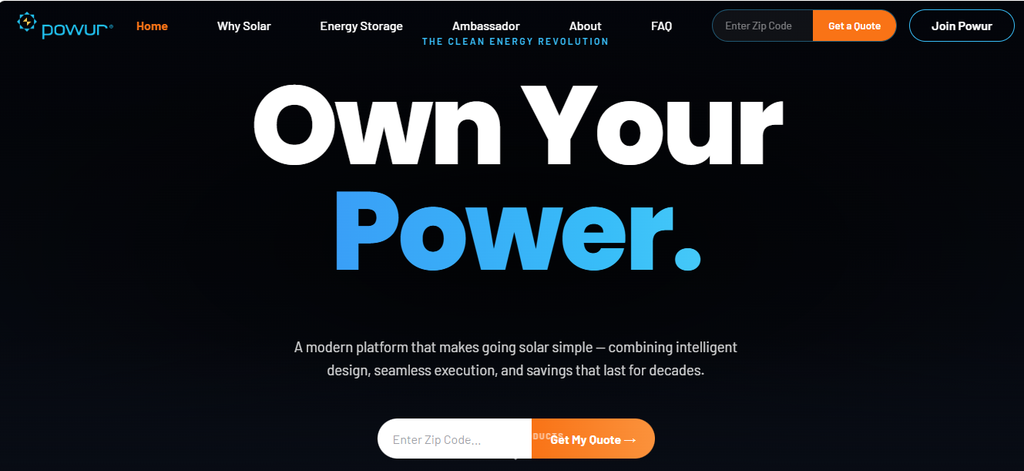
Powur works differently from the traditional solar-company model.
Rather than building a huge nationwide staff of its own salespeople and installation crews, Powur runs a platform used by independent solar professionals and installation partners. The company says its network has powered more than 35,000 homes and generated more than $1.3 billion in revenue through the platform.
As of its latest market update, Powur operates in California, Colorado, Connecticut, Florida, Hawaii, Illinois, Massachusetts, Maryland, New Jersey, Nevada, Texas and Virginia. Its systems can include solar panels, battery storage and EV charging.
The company also gives homeowners a portal where they can follow project stages, store documents and monitor the system after installation.
Because Powur relies on a network model, the experience can depend more heavily on the specific local people working on the project. Homeowners considering it should look closely at the installer named on the proposal, not only the Powur brand at the top of the paperwork.
One Big Solar Change Homeowners Should Know in 2026
Solar quotes written a few years ago often talked about the federal 30% Residential Clean Energy Credit as if it would remain available for years. That information is now outdated.
The IRS says the residential clean-energy credit covered qualified home solar and battery expenses through December 31, 2025, and homeowners cannot claim the credit for residential clean-energy expenditures after that date.
State rebates, utility programmes and other incentives can still exist, and third-party-owned systems follow different financial structures, so the economics of solar now vary even more by location.
That makes an up-to-date written quote especially important. If an installer shows an old federal credit in a 2026 proposal, ask them to explain exactly which incentive they are referring to before signing anything.
National Solar Company or Local Installer?
A national company can make the process easier when a homeowner wants financing, batteries and installation handled through one system. Larger providers also tend to have dedicated permitting teams and customer-service departments.
A good local installer can be just as competitive, and sometimes cheaper. EnergySage cites research finding that quotes from national installers have averaged about 10% higher than local installer quotes, although the result for any individual home can be very different.
The company name should therefore come after the actual proposal.
Two installers may quote the same house with different panel counts, batteries, financing costs and production estimates. Reading those details usually tells you more than comparing star ratings or brand recognition alone.
What to Check Before Choosing a Solar Company
Start with the company that will actually install the system. The salesperson, financing company and electrical contractor may all have different names, especially when a dealer network handles the sale.
Then read the warranty instead of relying on the number printed in a brochure. A “25-year warranty” may cover panel performance while workmanship, roof penetrations or service labour follow completely different terms.
The financing page deserves the same attention. Cash, loans, leases and power purchase agreements can produce very different long-term costs, even when the first monthly payment looks similar.
Finally, ask for the system’s estimated annual production, the panel and inverter models, battery capacity if you are adding storage, and a clear explanation of who handles repairs after installation. Those answers make it much easier to compare two quotes properly.
Which Solar Companies Have the Widest Reach?
Among the companies on this list, Freedom Forever says it serves more than 30 states, while Sunrun reports business across 22 states, Washington D.C. and Puerto Rico. Palmetto and Powur also work through multi-state networks.
Trinity, Solar Energy World and Momentum operate in fewer states and concentrate much more heavily on selected regions.
Coverage can still change quickly. A company may operate in one part of a state but not another because utility rules, licenses and local installation capacity differ by area.
Which Solar Companies Also Offer Battery Storage?
Most of the larger companies now treat batteries as a normal part of home solar rather than a specialist add-on.
Sunrun has made storage central to its recent growth, while Tesla sells Powerwall alongside its solar products. ION, Trinity, Palmetto, Momentum, Solar Energy World and Powur also offer battery options in at least some of their markets.
Battery availability, brand and financing can change by state, so homeowners should check the exact equipment listed on the proposal.
Conclusion
The American solar business does not have one company that fits every house.
Sunrun has the largest residential customer base in this group, while Freedom Forever reaches a broad list of states through its installer and dealer network. Trinity Solar brings more than three decades of experience to East Coast homeowners, and Tesla remains the obvious name for people who want solar tied closely to Powerwall.
Palmetto takes a more technology-led approach, while ION Solar and Solar Energy World have put up strong recent residential installation numbers. The current SunPower has rebuilt around assets purchased from the old company, and Momentum Solar and Powur continue to serve homeowners through two quite different business models.
The company name is only the starting point. The better comparison comes from the actual equipment, warranty, installer, financing terms and production estimate written into the contract.
Frequently Asked Questions
Which is the largest residential solar company in the USA?
Sunrun says it serves more than 1.1 million customers, and its 2025 annual report describes it as America’s largest provider of home storage, solar and home-to-grid power plants.
Which solar company installs in the most states?
Freedom Forever currently says it serves customers in more than 30 states, giving it one of the widest installation footprints among major residential companies.
Is the federal 30% solar tax credit still available in 2026?
Not for new residential expenditures after 2025. The IRS states that the Residential Clean Energy Credit does not apply to property placed in service after December 31, 2025.
Is SunPower still operating?
Yes, but today’s SunPower is a different legal company from the old SunPower Corporation. Complete Solaria bought selected assets after the 2024 bankruptcy and later changed its company name to SunPower Inc.
Which solar companies offer batteries?
Sunrun, Tesla, Trinity Solar, Palmetto, ION Solar, Solar Energy World, SunPower, Momentum Solar and Powur all offer battery or storage options in at least some markets. Availability varies by state and installation.