Payment gateways play an essential role in modern commerce by allowing businesses to accept payments securely through websites, mobile applications and other digital platforms. From small online stores to large multinational companies, businesses rely on payment technology to collect money, manage transactions and provide customers with a convenient checkout experience.
The United States has a competitive payments industry, with providers offering credit and debit card processing, digital wallets, recurring billing, fraud prevention and international payment capabilities. Some providers focus on simple solutions for small businesses, while others specialise in developer-friendly technology or high-volume enterprise transactions.
Choosing the right payment gateway depends on transaction fees, supported payment methods, integration options, security features and the business’s sales model. A provider suitable for a small online shop may not be the right fit for a large marketplace or subscription-based software company.
This article explores ten notable payment gateway and payment processing companies serving the US market, highlighting their services, key features and business applications. The list is an editorial overview, not an official ranking.
1. Stripe
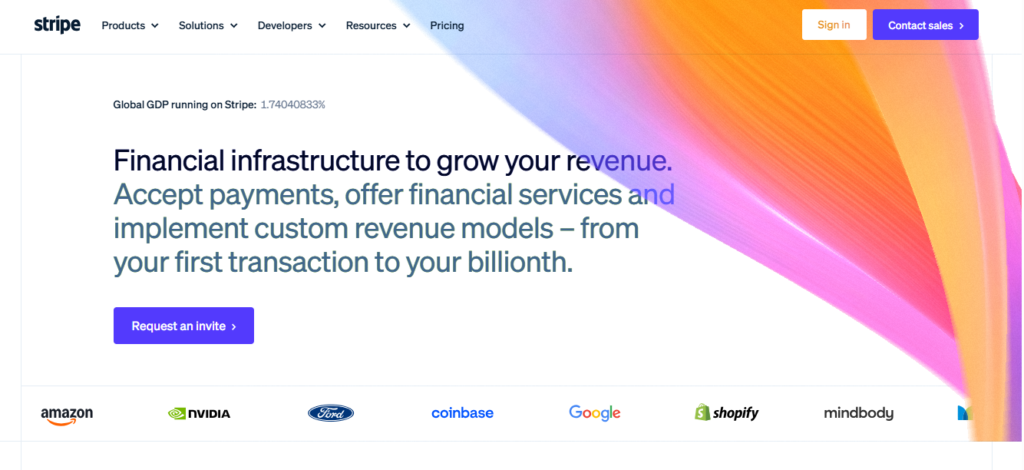
Stripe is one of the most recognised payment technology companies serving businesses in the United States. Founded in 2010 by brothers Patrick Collison and John Collison, the company develops financial infrastructure that helps businesses accept and manage payments online.
Stripe provides payment gateway and processing services for e-commerce stores, subscription businesses, software companies, marketplaces and international organisations. Its products support credit and debit cards, digital wallets, recurring payments and various local payment methods, depending on the country and account configuration.
One of Stripe’s major strengths is its developer-friendly technology. Businesses can integrate its payment systems into websites and mobile applications through APIs, software development kits and prebuilt checkout components. This flexibility allows companies to create payment experiences that match their products and customer requirements.
Stripe also offers tools for subscription billing, invoicing, fraud prevention and financial reporting. Businesses operating marketplaces can use Stripe Connect to manage payments between platforms, sellers and service providers.
Its payment infrastructure is particularly relevant to SaaS companies, digital businesses and organisations handling transactions across multiple markets. However, businesses should assess supported countries, payment methods, transaction fees and account eligibility before signing up.
Stripe’s focus on payment infrastructure and software integration has made it an important provider in the US digital commerce ecosystem.
| Company | Stripe, Inc. |
| Brand | Stripe |
| Business | Online payment processing and financial technology services |
| FY2025 Revenue | Not publicly disclosed as consolidated company revenue |
| Major Products | Stripe Payments, Stripe Billing, Stripe Connect, Stripe Checkout, Stripe Radar, Stripe Invoicing, Stripe Tax and Stripe Atlas |
2. PayPal
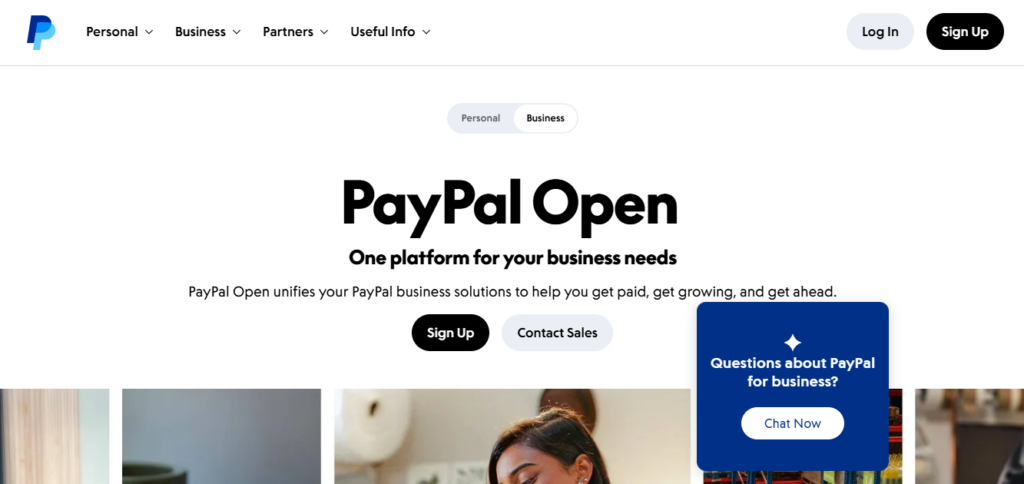
PayPal is a widely recognised digital payments company that enables consumers and businesses to send, receive and manage payments online. Founded in 1998, it has developed a large international presence and is used by online retailers, freelancers, service providers and individual customers.
PayPal offers several payment solutions, including PayPal Checkout, online card processing and business payment tools. Its services allow merchants to accept payments through websites and other supported sales channels.
A major feature of PayPal is its digital wallet. Customers can use eligible PayPal accounts to complete purchases without entering their card information separately at every participating checkout. This can make the payment process more convenient for returning customers.
Businesses can also use PayPal for invoices, recurring payments and other commercial transactions. Available features depend on the product, business location and account eligibility.
PayPal is frequently used by small businesses and online sellers because it provides established payment options without requiring every merchant to develop a payment system independently. Its brand recognition can also be useful when customers prefer paying through a familiar digital wallet.
However, merchants should review transaction fees, dispute policies, account requirements and withdrawal arrangements. Payment methods and charges can vary, particularly for international transactions.
PayPal remains an important option for businesses that want to offer wallet-based checkout alongside other payment methods.
| Company | PayPal Holdings, Inc. |
| Brand | PayPal |
| Business | Digital payments, online payment processing and financial technology services |
| FY2025 Revenue | US$33.2 billion |
| Major Products | PayPal Checkout, PayPal Wallet, PayPal Payments, Braintree, Venmo, PayPal Invoicing and Pay Later services |
3. Square
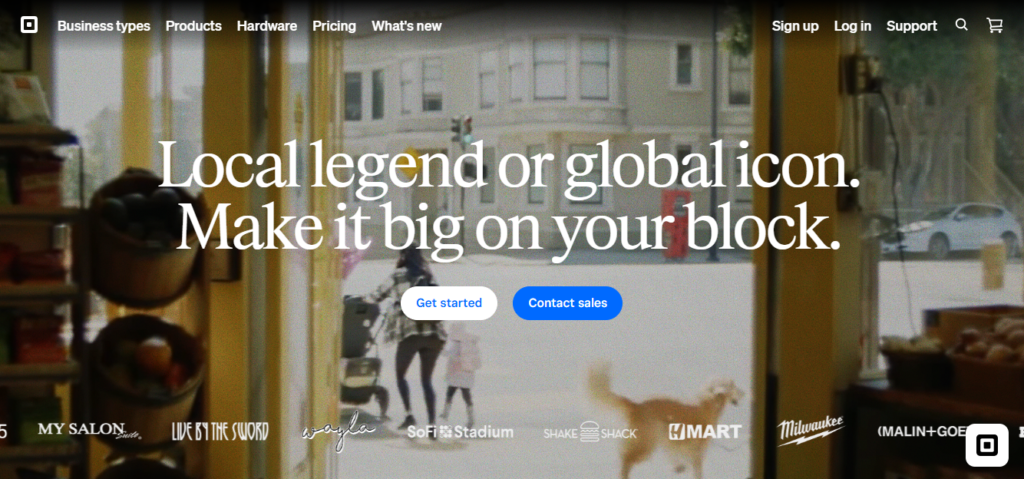
Square, operated by Block, Inc., provides payment technology and business management tools for retailers, restaurants, service providers and online sellers. The company was founded in 2009 by Jack Dorsey and Jim McKelvey.
Square initially became known for its card-reading technology, which allowed small businesses to accept card payments using mobile devices. It has since expanded into a broader business platform covering in-person transactions, online payments and operational tools.
Square Payments supports payment acceptance through compatible point-of-sale systems, online checkout and other supported integrations. Businesses can use its services to manage transactions across physical locations and digital sales channels.
The company also provides point-of-sale software, invoicing, customer management, inventory tools and other features. Depending on the product and plan, these tools can help businesses organise sales information and manage everyday operations.
Square is particularly relevant to restaurants, shops, salons and other businesses that sell both in person and online. Combining payment acceptance with business management software can reduce the need to operate several disconnected systems.
However, Square’s products and pricing vary by business type, sales channel and plan. Businesses should confirm transaction fees, hardware compatibility and availability in their location before choosing a service.
Square is a notable choice for merchants seeking an integrated approach to payments and business operations.
| Company | Block, Inc. |
| Brand | Square |
| Business | Digital payments, point-of-sale systems and business management software |
| FY2025 Revenue | US$10.36 billion in gross profit |
| Major Products | Square Point of Sale, Square Payments, Square Terminal, Square Register, Square Invoices, Square Online, inventory management and customer management tools |
Note: Square is operated by Block, Inc. The FY2025 figure above is not verified as revenue, so it should not be used as a confirmed revenue figure.
4. Authorize.Net
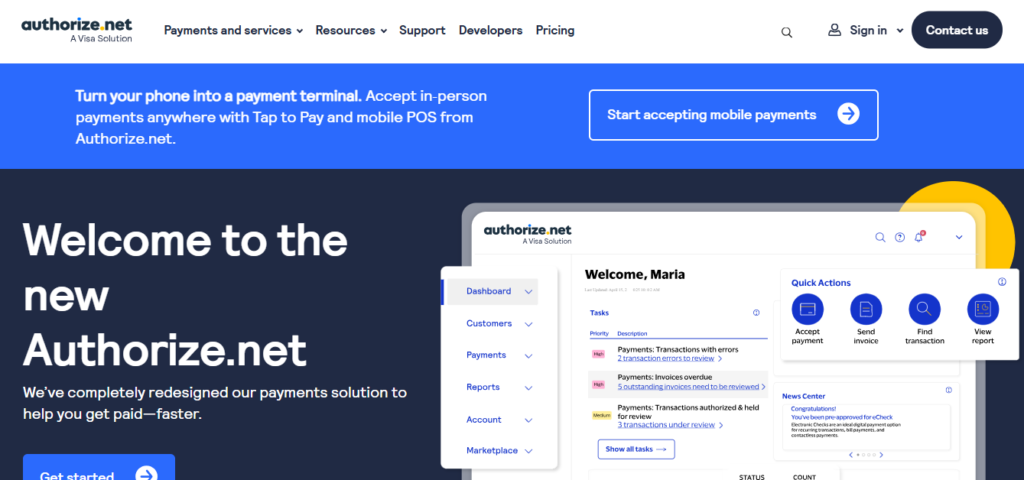
Authorize.Net is an established payment gateway provider serving merchants that need to accept and manage electronic payments. It became part of Visa in 2010 and provides technology used by businesses across different industries.
The platform supports online payment acceptance through websites, shopping carts and compatible business applications. Its services can accommodate credit and debit card payments, electronic checks and other supported payment methods.
One of Authorize.Net’s key features is its gateway-focused approach. Depending on the arrangement, a merchant can use the platform alongside a separate merchant account or choose an available all-in-one processing option.
The gateway also provides tools for recurring billing, customer payment information management, transaction reporting and fraud screening. These features can be useful for businesses that handle regular customer payments or need more control over payment administration.
Authorize.Net is often considered by established small and medium-sized businesses, including merchants that already work with a merchant account provider. It can also suit organisations that want to connect payment acceptance to an existing website or business system.
Businesses should compare its monthly fees, transaction charges, integration requirements and merchant-account arrangements before purchasing a plan. Total costs depend on the selected service and the provider processing the transactions.
With its established presence and integration options, Authorize.Net remains a relevant provider in the US payment gateway market.
| Company | Authorize.Net |
| Brand | Authorize.Net |
| Business | Online payment gateway and electronic payment processing services |
| FY2025 Revenue | Not separately publicly disclosed |
| Major Products | Payment Gateway, Virtual Terminal, Accept.js, Advanced Fraud Detection Suite, Automated Recurring Billing, eCheck.Net and Customer Information Manager (CIM) |
5. Braintree
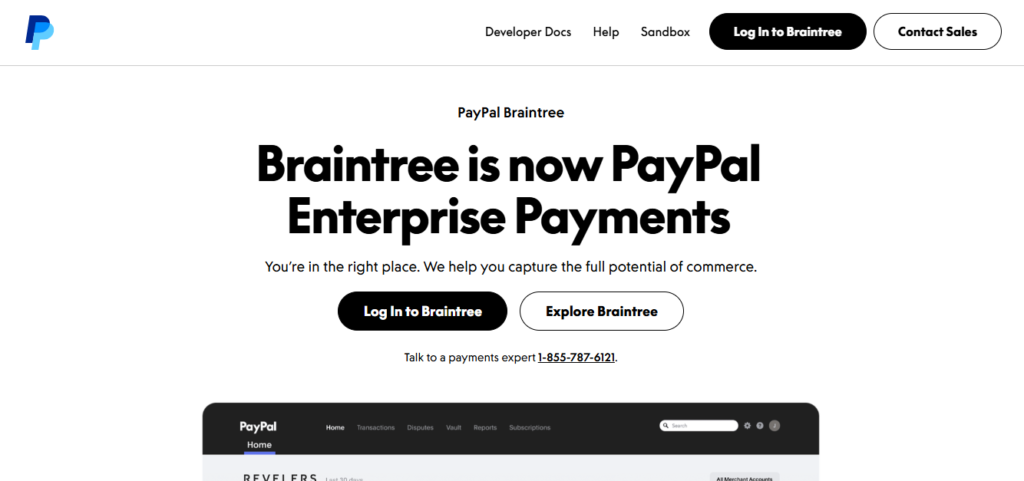
Braintree is a payment platform owned by PayPal that provides payment processing technology for online businesses, mobile applications and digital platforms.
The company is particularly associated with developer-focused payment integration. Its services enable businesses to accept supported credit and debit cards, digital wallets and other payment methods through a unified integration.
Braintree supports recurring billing and subscription payments, making it relevant to software businesses, membership services and companies that charge customers regularly. Its tools can also help marketplaces manage payment flows involving buyers and sellers, subject to the relevant product and eligibility requirements.
Another feature is its connection with PayPal’s payment ecosystem. Businesses can integrate PayPal alongside other supported payment methods, while access to options such as Venmo depends on eligibility and availability.
Braintree provides tools for transaction management and fraud protection. These features can help businesses monitor payments and manage certain risks associated with online transactions.
The platform is especially relevant to businesses that need a flexible payment integration rather than a basic payment button. However, developers should assess supported countries, currencies, payment methods and technical requirements before implementation.
Braintree is a useful option for companies seeking payment infrastructure that combines card processing, digital wallets and recurring billing capabilities.
| Company | Braintree |
| Brand | Braintree |
| Business | Payment processing platform owned by PayPal, providing payment acceptance solutions for online businesses and mobile applications |
| FY2025 Revenue | Not separately publicly disclosed |
| Major Products | Braintree Direct, Braintree Marketplace, PayPal and Venmo payment acceptance, credit and debit card processing, digital wallet integration, recurring billing, and fraud protection |
6. Adyen
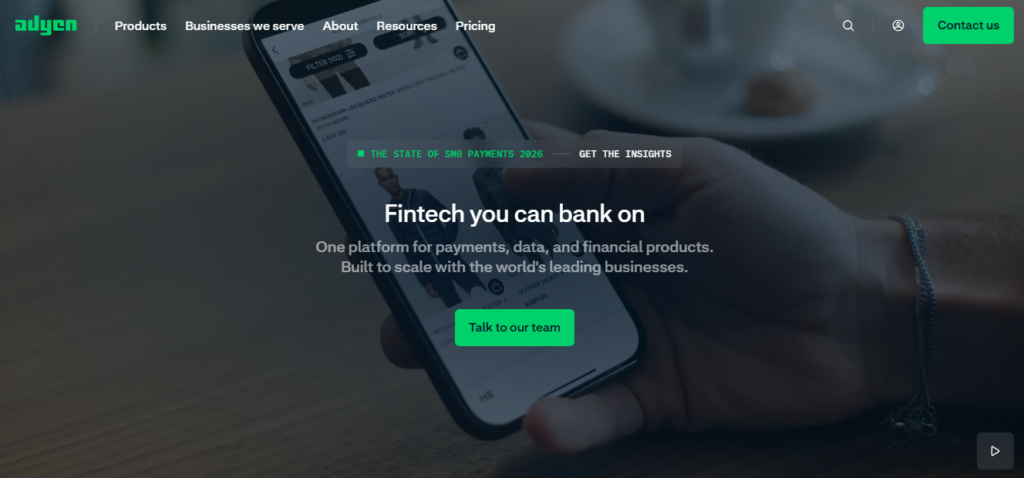
Adyen is a global financial technology company that provides payment processing and financial technology services to businesses. Founded in 2006 in the Netherlands, it serves merchants across international markets, including the United States.
The platform helps businesses accept payments through online stores, mobile applications and physical retail locations. It supports cards, digital wallets and various local payment methods, depending on the market and merchant configuration.
Adyen is particularly associated with larger businesses that require a unified payment platform across multiple countries and sales channels. Its infrastructure can help companies consolidate payment operations and access transaction information through a central system.
The company also provides tools for fraud prevention, payment optimisation and transaction analysis. These capabilities can be important for merchants processing large volumes of payments across different markets.
Adyen’s services are relevant to international retailers, travel businesses, digital platforms and other organisations with complex payment requirements. Its payment model and integration options may be more suitable for businesses with established operations than for individuals launching a basic website.
Pricing and commercial arrangements depend on payment methods, transaction volume and business requirements. Prospective customers should request details about fees, settlement arrangements and technical support.
Adyen is an important participant in the global payment industry, particularly for companies seeking to manage payments across international operations.
| Company | Adyen N.V. |
| Brand | Adyen |
| Business | Global financial technology company providing integrated payment processing and financial services for businesses |
| FY2025 Revenue | €2.36 billion in net revenue |
| Major Products | Online payment processing, in-person POS payments, unified commerce solutions, payment processing for platforms and marketplaces, risk management, issuing, and embedded financial products |
7. Worldpay
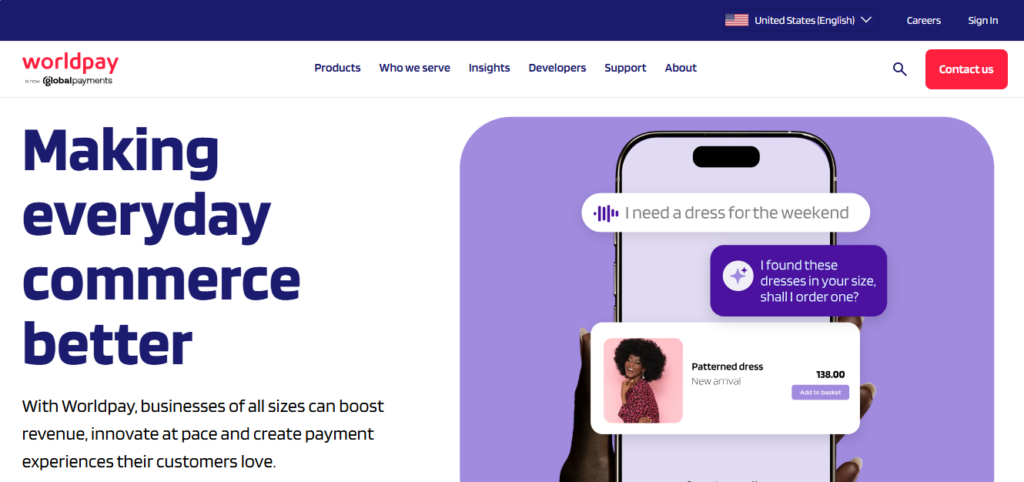
Worldpay is a payment technology provider serving businesses that need to accept and process electronic payments. Its services cover online payments, in-person transactions and payment processing for merchants operating across different industries. The company supports payment acceptance through websites, point-of-sale systems and other compatible business platforms. Its services may include card processing, fraud management, reporting and tools for handling transactions across multiple channels. Worldpay serves businesses of different sizes, including retailers, hospitality businesses and larger organisations with complex payment operations. Its capabilities can be relevant to merchants that want to connect online sales with physical payment acceptance. Another consideration is its experience in payment processing for established businesses. Organisations with significant transaction volumes may need customised pricing, detailed reporting and support for existing payment infrastructure. Worldpay’s ownership and corporate structure have changed over time. Businesses researching the provider should confirm the current contracting entity and service arrangements relevant to their account. Pricing depends on the business, payment methods, transaction volume and contractual terms. Merchants should review processing fees, settlement schedules, chargeback arrangements and any additional charges before entering into an agreement. Worldpay remains a notable name in payment processing for merchants seeking services across online and physical sales channels.
| Company | Worldpay, LLC |
| Brand | Worldpay |
| Business | Global payment technology company providing payment processing and merchant services to businesses of different sizes |
| FY2025 Revenue | Not publicly disclosed as a standalone figure in a consistently comparable format |
| Major Products | Online payment processing, in-store POS payments, omnichannel payments, payment gateway services, fraud prevention, risk management, and merchant acquiring services |
8. Checkout.com
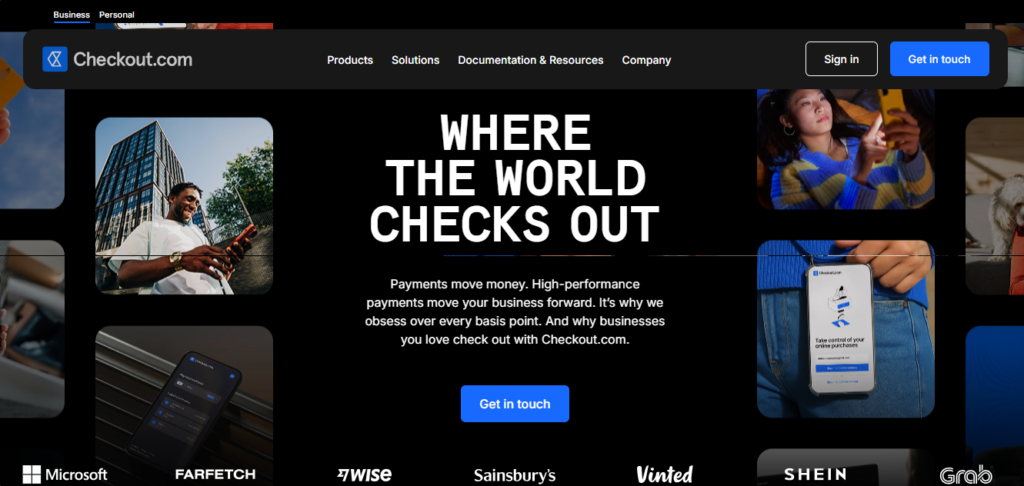
Checkout.com is a global payment technology company that provides payment processing and related services to businesses operating online. Founded in 2012, it has developed infrastructure for merchants that require payment acceptance across multiple markets.
Its platform supports card payments and other payment methods, depending on the country and business arrangement. Companies can integrate its services into websites, applications and other digital sales environments.
Checkout.com focuses substantially on larger merchants and businesses with international payment requirements. Its technology is designed to help organisations manage payment acceptance, monitor transaction performance and coordinate operations across different markets.
The platform also provides tools relating to fraud prevention, payment reporting and transaction optimisation. For businesses operating across countries, these capabilities can help them understand payment performance and identify potential issues in the checkout process.
Checkout.com may be relevant to large e-commerce companies, digital platforms and enterprises with complex payment needs. Its suitability depends on transaction volume, supported markets, integration requirements and commercial eligibility.
Businesses should contact the provider for current pricing and contract details rather than assuming that one standard rate applies to every merchant. They should also check settlement arrangements, supported payment methods and technical support.
Checkout.com represents the enterprise-focused side of the payment technology market, where integration, international coverage and payment performance can be important priorities.
| Company | Checkout Ltd. |
| Brand | Checkout.com |
| Business | Global digital payments company providing payment processing solutions to enterprise businesses |
| FY2025 Revenue | Exact revenue not publicly disclosed; net revenue grew by over 30% in 2025 |
| Major Products | Online payment processing, payment gateway, card processing, digital wallet payments, acquiring services, fraud detection, authentication, and payment optimization tools |
9. Amazon Pay
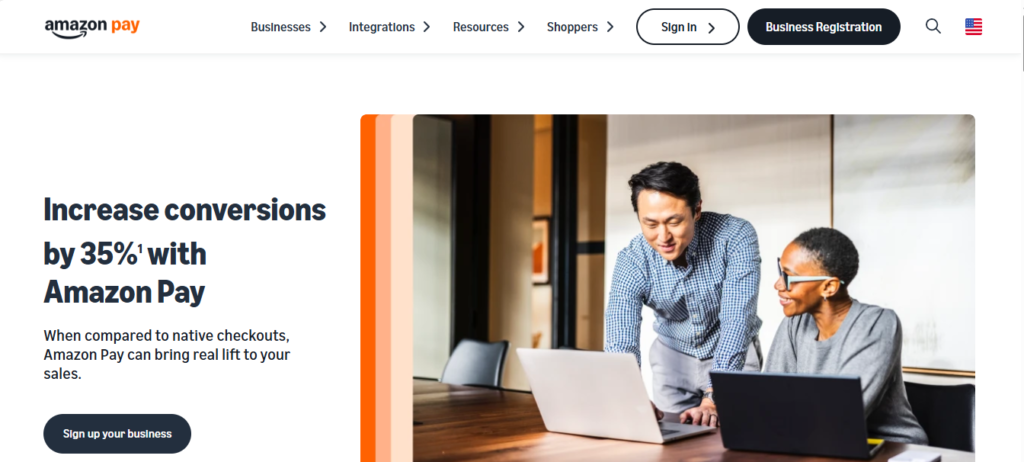
Amazon Pay is a digital payment service that allows eligible customers to use payment information associated with their Amazon accounts to pay participating merchants.
The service is designed to simplify checkout by allowing customers to use supported payment details without having to enter all their information again on every participating website. This can be particularly convenient for customers who already use Amazon.
Businesses can integrate Amazon Pay into compatible e-commerce websites and platforms. Its availability and features depend on the merchant’s location, account eligibility and the relevant integration.
Amazon Pay is primarily a checkout payment option rather than a complete replacement for every payment-processing function a business might need. Merchants may use it alongside other payment methods to provide customers with additional choices.
For online retailers, offering familiar payment methods can help reduce friction during checkout. However, the impact on sales depends on customer preferences, website design and the products being sold.
Businesses should review current transaction fees, supported currencies, refund processes and integration requirements before implementing the service. They should also consider whether their customers are likely to value Amazon account-based checkout.
Amazon Pay can be a useful addition to an online store’s payment options, particularly when a business wants to provide customers with a recognisable digital payment method.
| Company | Amazon Pay (India) Private Limited |
| Brand | Amazon Pay |
| Business | Digital payment services provider offering online payments, mobile payments, and merchant payment solutions |
| FY2025 Revenue | ₹2,195 crore in India |
| Major Products | Amazon Pay Wallet, UPI payments, Amazon Pay Later, bill payments, mobile recharges, online checkout, and merchant payment solutions |
10. Shopify Payments
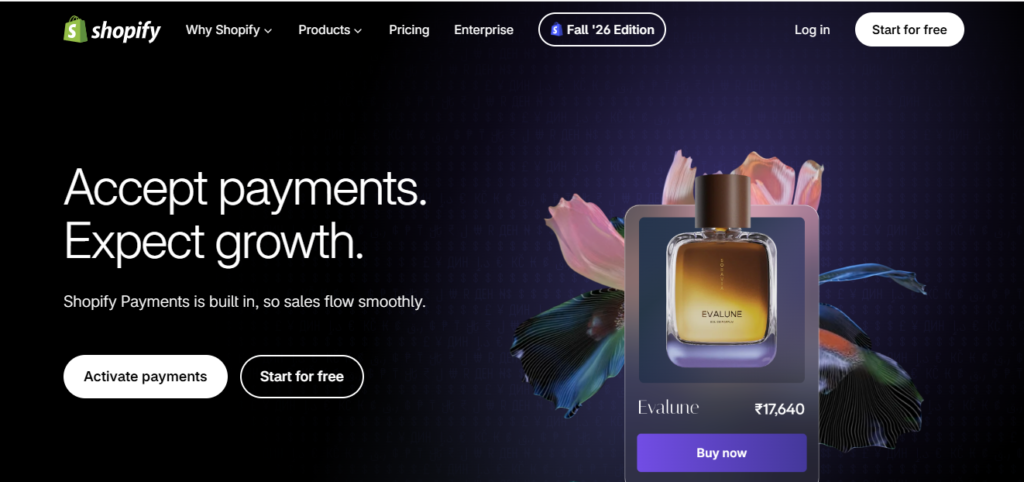
Shopify Payments is the integrated payment solution available to eligible merchants using Shopify’s e-commerce platform. It allows businesses to accept supported payment methods through their online stores without necessarily setting up a separate third-party payment processor.
The service supports card payments and other payment options depending on the merchant’s country, store configuration and eligibility. It is designed to work within Shopify’s store management system, helping merchants handle orders and payments through a connected interface.
One of its main advantages is integration. Businesses can manage products, orders and payment information through Shopify rather than connecting multiple systems for basic e-commerce operations.
Shopify Payments can be useful for small businesses launching an online store, direct-to-consumer brands and established retailers expanding their digital sales. The platform also provides access to transaction information and payment-related management tools.
However, it is not a standalone gateway for every type of website. Its use is tied to Shopify’s platform, and availability depends on the business’s country and eligibility.
Merchants should check the transaction fees associated with their Shopify subscription, the charges for alternative payment providers and the availability of specific payment methods. These costs can affect overall operating expenses.
For businesses already using Shopify, its integrated payment solution can simplify store administration and provide a connected checkout experience.
| Company | Shopify Inc. |
| Brand | Shopify Payments |
| Business | Integrated payment processing service that enables Shopify merchants to accept online and in-person payments |
| FY2025 Revenue | Not separately disclosed. Shopify reported total company revenue of US$11.56 billion in FY2025 |
| Major Products | Online card processing, Shop Pay, digital wallet payments, in-person POS payments, subscription payments, fraud analysis, and payment management tools |
Conclusion
The US payment gateway industry offers solutions for businesses ranging from small online stores to large international enterprises. Stripe provides flexible payment infrastructure for digital businesses, while PayPal offers a familiar digital wallet and payment services. Square combines payments with tools for in-person and online selling.
Authorize.Net and Braintree provide options for businesses seeking established gateway technology and flexible integrations. Adyen, Worldpay and Checkout.com serve merchants with broader payment-processing needs, including international and higher-volume operations. Amazon Pay provides an additional checkout option, while Shopify Payments integrates directly with Shopify stores.
There is no single provider that suits every business. The right choice depends on transaction volume, customer preferences, payment methods, technical requirements and the total cost of processing payments.
Before choosing a gateway, businesses should compare transaction fees, monthly charges, international payment costs, fraud prevention features, refund procedures and settlement schedules. They should also confirm eligibility and the availability of required payment methods in their market.
A carefully selected payment gateway can make checkout easier for customers, support efficient payment operations and help a business grow as its needs change.
Frequently Asked Questions
1. What is a payment gateway?
A payment gateway is technology that securely captures and transmits payment information between a customer, a merchant and the relevant payment-processing systems. It helps facilitate online transactions and payment authorisation.
2. Which are some major payment gateway companies in the USA?
Notable providers serving the US market include Stripe, PayPal, Square, Authorize.Net, Braintree, Adyen, Worldpay, Checkout.com, Amazon Pay and Shopify Payments.
3. What is the difference between a payment gateway and a payment processor?
A gateway securely transfers payment information from the checkout to the payment system. A processor handles the transaction communication and processing between the relevant financial institutions. Many modern providers combine both functions.
4. Which payment gateway is suitable for small businesses?
The right choice depends on the business model. Stripe, PayPal, Square and Shopify Payments are options worth evaluating for smaller businesses, depending on whether they sell online, in person or through Shopify.
5. Are payment gateways secure?
Established providers use security measures such as encryption, fraud monitoring and tools designed to support compliance with payment card industry requirements. Businesses must also configure integrations correctly and follow applicable security standards.
6. Do payment gateways charge transaction fees?
Most providers charge transaction fees, which may include a percentage of the payment and a fixed amount. Some services also charge monthly fees, international payment fees, currency conversion charges or other costs.
7. Can a business use more than one payment gateway?
Yes. Many businesses offer multiple payment methods or providers to give customers more flexibility. However, integrations, reporting, refunds and reconciliation can become more complex when several systems are used.
8. Which payment gateways support international payments?
Providers such as Stripe, PayPal, Adyen, Worldpay and Checkout.com offer international payment capabilities. The supported countries, currencies and payment methods vary by provider and account.
9. What should a business consider before choosing a payment gateway?
Businesses should compare transaction costs, supported payment methods, integration options, security features, fraud prevention, settlement times, refund policies, customer support and account eligibility.
10. Can payment gateways support recurring payments?
Many providers support recurring payments and subscriptions, including Stripe, PayPal and Braintree. Businesses should verify the available billing features, retry tools and associated fees before choosing a service.