
The United Kingdom has an established medical technology industry that plays an important role in modern healthcare. Medical device companies develop products and technologies that help doctors diagnose diseases, perform operations, monitor patients and manage long-term medical conditions. Their innovations range from surgical instruments and artificial joints to DNA sequencing systems, dialysis machines and robotic-assisted surgical equipment.
The UK medical technology sector includes international manufacturers, specialist engineering businesses and innovative start-ups. Some companies have operated for more than a century, while others focus on developing emerging technologies that could transform medical procedures in the future.
Medical devices are essential across hospitals, clinics, laboratories, rehabilitation centres and home healthcare settings. As healthcare systems increasingly adopt digital technology and minimally invasive procedures, demand for reliable and effective medical equipment continues to create opportunities for innovation.
This article explores ten notable medical device companies operating in or originating from the UK, their products, areas of expertise and contributions to healthcare. The list is an overview rather than an official ranking by revenue or market share.
1. Smith+Nephew
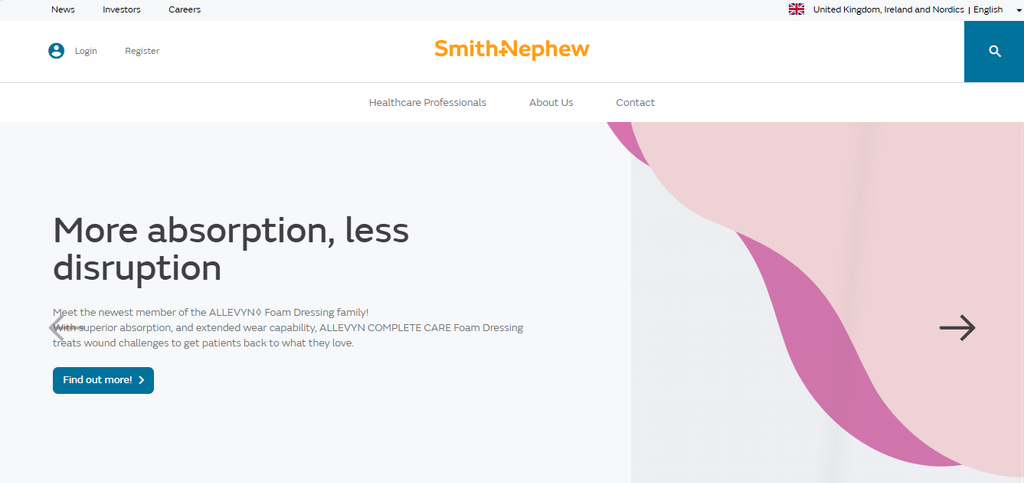
Smith+Nephew is a major medical technology company with a long history in healthcare innovation. Founded in Hull, England, in 1856, the company began as a chemist’s shop established by Thomas James Smith. Over time, it developed into an international medical technology business focused on helping healthcare professionals repair, regenerate and replace damaged body tissue.
The company operates across three principal business areas: orthopaedics, sports medicine and ear, nose and throat (ENT), and advanced wound management. Its products are used in hospitals, surgical centres and other healthcare environments worldwide.
Smith+Nephew manufactures orthopaedic implants, including hip, knee and shoulder replacement systems. These products are designed to help patients with damaged joints regain mobility and improve their quality of life. The company also develops instruments and technologies used in sports medicine procedures, particularly arthroscopic surgery.
Advanced wound management is another important area of its business. Its portfolio includes wound dressings and negative pressure wound therapy systems that help healthcare professionals manage different types of wounds.
The company also invests in surgical technologies, product development and medical education. These activities support healthcare professionals in understanding how to use its products and apply appropriate techniques.
| Company | Smith+Nephew plc |
| Brand | Smith+Nephew |
| Business | Medical technology and medical devices |
| FY2025 Revenue | US$6,164 million |
| Major Products | Orthopaedic implants, sports medicine devices, surgical instruments, advanced wound dressings, wound therapy systems and ENT products |
2. Convatec
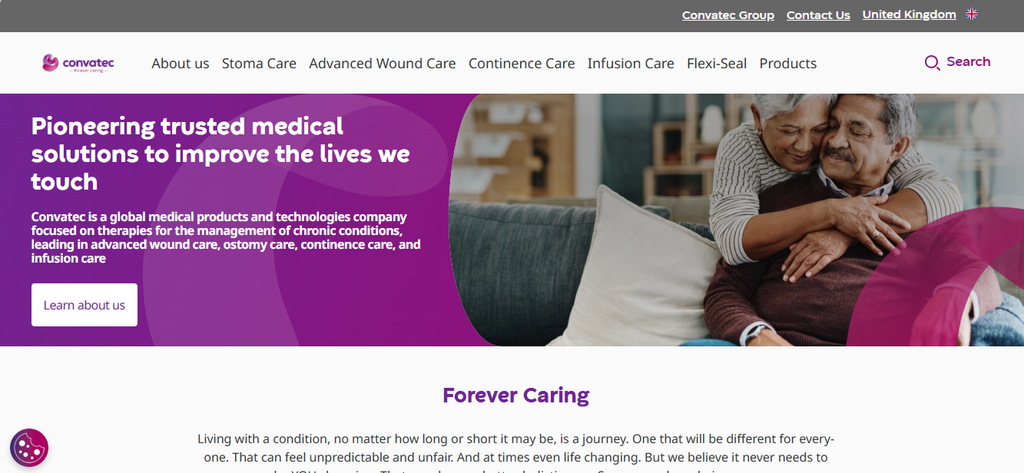
Convatec is a global medical products and technology company specialising in solutions for people living with chronic health conditions. Its products support patients who require ongoing wound management, ostomy care, continence care or infusion therapy.
The company has a history dating back to 1978 and serves healthcare professionals and patients in numerous international markets. Its work focuses on products that can improve comfort, support daily care routines and help people manage long-term medical needs.
One of Convatec’s major business areas is advanced wound care. The company develops dressings and related products used to manage wounds in hospitals, clinics and community healthcare settings.
Ostomy care is another key specialty. Ostomy products are designed for people who have undergone procedures that create an opening in the body to allow waste to leave the digestive or urinary system. Appropriate products can help patients manage these needs more comfortably and confidently.
Convatec also offers continence care products and infusion care technologies. These products support people who need assistance managing bladder or bowel function or receiving medication through infusion systems.
The company works with healthcare professionals, patients and caregivers to understand the practical challenges associated with long-term conditions. Its product development efforts focus on improving usability, safety and the overall patient experience.
Convatec is listed on the London Stock Exchange and forms part of the FTSE 100 Index. Its international presence and specialised product portfolio make it a significant medical technology company with UK roots.
| Company | Convatec Group plc |
| Brand | Convatec |
| Business | Medical products and technologies |
| FY2025 Revenue | US$2,439 million |
| Major Products | Advanced wound dressings, ostomy care products, continence care products, catheters and infusion care systems |
3. CMR Surgical
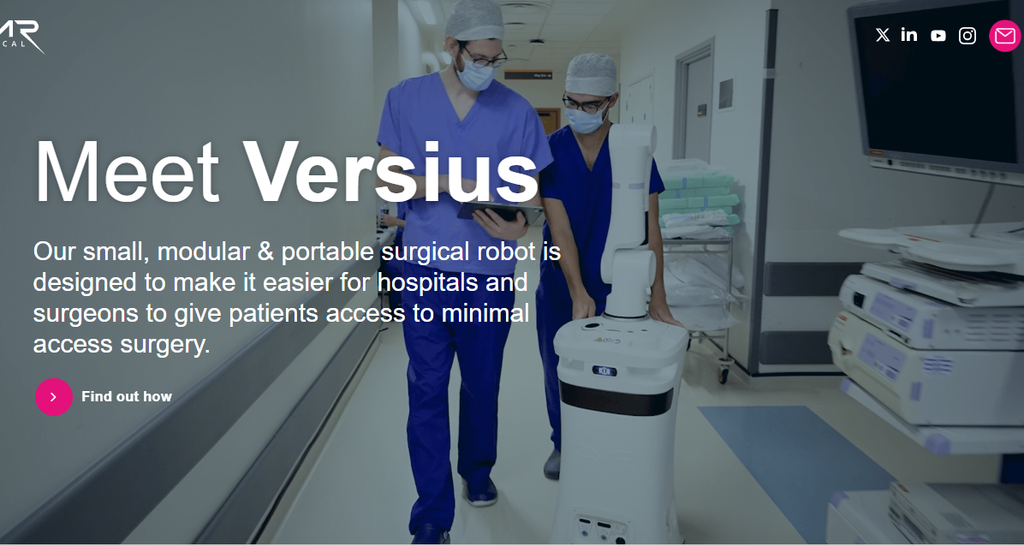
CMR Surgical is a UK-based medical technology company known for developing robotic-assisted surgical systems. Founded in Cambridge in 2014, the company focuses on technology designed to support minimally invasive surgery.
Its best-known product is the Versius surgical robotic system. The system is designed to assist surgeons in performing certain procedures through small incisions, using specialised instruments controlled by the surgeon.
Minimally invasive surgery can offer potential benefits compared with some traditional open procedures, depending on the operation and the patient’s condition. These may include smaller incisions, reduced tissue disruption and a shorter recovery period. Outcomes vary according to the procedure, clinical team and individual patient.
CMR Surgical’s technology is designed to provide flexibility in the operating theatre. The system uses modular robotic arms and a surgeon-controlled interface, allowing surgical teams to configure equipment around their workflow.
Robotic-assisted surgery does not replace the surgeon. Instead, the technology supports the surgeon’s movements and enables precise instrument control during suitable procedures. Training, clinical judgement and patient selection remain essential.
The company has developed an international presence, working with hospitals and healthcare professionals in markets beyond the UK. Its work reflects the growing role of robotics in surgical care.
CMR Surgical is particularly relevant to discussions about the future of medical devices because it combines engineering, software and surgical expertise. Its development work illustrates how technology companies are attempting to make minimally invasive procedures accessible to more healthcare settings.
| Company | CMR Surgical Limited |
| Brand | CMR Surgical |
| Business | Medical technology and robotic-assisted surgery |
| FY2025 Revenue | Not publicly verified |
| Major Products | Versius and Versius Plus robotic surgical systems, surgical instruments and digital surgery technologies |
4. Oxford Nanopore Technologies
Oxford Nanopore Technologies is a UK biotechnology company that develops DNA and RNA sequencing technology. Founded in 2005 as a spin-out associated with the University of Oxford, it has become known for its nanopore-based approach to analysing genetic material.
Unlike conventional medical equipment manufacturers that primarily produce surgical instruments or implants, Oxford Nanopore focuses on molecular analysis technology. Its sequencing platforms are used in scientific research, infectious disease surveillance, environmental analysis and other applications.
The company’s technology works by measuring changes in electrical signals as molecules pass through tiny pores. These signals can be processed to identify DNA or RNA sequences. Depending on the platform and application, this approach can support real-time analysis and portable sequencing workflows.
Oxford Nanopore offers products designed for different users, from compact devices suitable for field research to larger systems intended for laboratories and higher-throughput applications.
In healthcare-related settings, sequencing technologies can support research into infectious diseases, genetic variation and disease mechanisms. They may also contribute to the development of diagnostic approaches, subject to the relevant clinical validation and regulatory requirements.
The company operates internationally and supplies technology to researchers, laboratories and other organisations. Its work highlights the growing connection between medical devices, biotechnology and data analysis.
Oxford Nanopore Technologies is an important example of UK innovation in life sciences. Its technology demonstrates how advances in molecular measurement can expand the tools available to researchers and healthcare professionals.
| Company | Oxford Nanopore Technologies plc |
| Brand | Oxford Nanopore Technologies |
| Business | Biotechnology and DNA/RNA sequencing technology |
| FY2025 Revenue | FY2025 Revenue |
| Major Products | MinION, GridION and PromethION sequencing platforms, flow cells, sequencing kits and molecular analysis technologies |
5. Terumo Aortic
Terumo Aortic is a specialist medical device business focused on products used to treat diseases affecting the aorta and other parts of the vascular system. It operates within the wider Terumo organisation, an international medical technology group.
The aorta is the body’s largest artery, carrying blood from the heart to the rest of the body. Conditions affecting this vessel can be serious and may require specialist assessment and treatment. Medical devices play an important role in managing certain aortic conditions.
Terumo Aortic develops products such as vascular grafts and endovascular stent grafts. These devices are used in selected surgical and endovascular procedures, depending on the patient’s condition and the clinical team’s assessment.
Vascular grafts can help replace or support damaged blood vessels, while stent grafts may be used to reinforce a weakened section of a vessel. These procedures require specialist training, careful planning and appropriate imaging.
The company’s product development involves materials science, engineering and collaboration with vascular and cardiothoracic specialists. Device design is particularly important because vascular products must function reliably within a complex and constantly moving biological system.
Terumo Aortic serves healthcare markets internationally. Its specialised focus distinguishes it from broader medical device manufacturers that operate across many unrelated product categories.
The company illustrates the importance of specialist manufacturers in modern surgery. By concentrating on vascular technologies, it contributes products intended for complex procedures where device design and clinical expertise are closely connected.
| Company | Terumo Aortic |
| Brand | Brand |
| Business | Medical devices for aortic and vascular diseases |
| FY2025 Revenue | ¥53.5 billion (Terumo Aortic business, FY2024) |
| Major Products | Surgical vascular grafts, thoracic and abdominal stent grafts, and hybrid graft systems used to treat aortic aneurysms and dissections. |
6. Creo Medical
Creo Medical is a UK medical technology company that develops devices for advanced endoscopy and minimally invasive procedures. Its technology focuses on using advanced energy systems to support the treatment of certain conditions through endoscopic techniques.
Endoscopy involves using specialised instruments and cameras to examine internal parts of the body. In suitable cases, doctors can also use endoscopic instruments to perform therapeutic procedures without requiring conventional open surgery.
Creo Medical is known for its advanced energy technology, including its CROMA platform. The company has developed instruments intended to support procedures involving controlled tissue treatment, cutting and coagulation.
Such technologies may be relevant in gastrointestinal endoscopy and other specialist procedures. Their use depends on the indication, device approval, local clinical protocols and the healthcare professional’s training.
The potential value of advanced endoscopic techniques lies in treating selected conditions through less invasive approaches. However, not every condition can be managed endoscopically, and treatment decisions must be based on clinical assessment.
Creo Medical’s work combines engineering, energy delivery systems and medical instrument design. The company also works within the wider ecosystem of specialist clinicians, hospitals and medical technology partners.
As healthcare providers continue to explore minimally invasive treatment options, companies such as Creo Medical contribute to the development of equipment that may expand the range of procedures performed through endoscopy.
| Company | Creo Medical Group plc |
| Brand | Creo Medical |
| Business | Medical technology and minimally invasive surgical devices |
| FY2025 Revenue | £6.0 million (continuing operations) |
| Major Products | CROMA advanced energy platform, Speedboat devices, SpydrBlade Flex, MicroBlate Flex and MicroBlate Fine for endoscopic surgery and tissue ablation |
7. GAMA Healthcare
GAMA Healthcare is a UK healthcare products company specialising in infection prevention and control. Founded in 2004, the company is particularly associated with its Clinell range of cleaning and disinfection products.
Infection prevention is essential in hospitals, care homes, clinics and other healthcare environments. Contaminated surfaces and equipment can contribute to the spread of microorganisms, making appropriate cleaning procedures an important part of patient safety.
GAMA Healthcare develops products designed to support healthcare staff in maintaining hygienic environments. Its portfolio includes surface disinfectant wipes, cleaning products and other infection-control solutions used in professional healthcare settings.
The company also works on products intended to make infection prevention easier to incorporate into daily clinical routines. Product selection depends on the surface, equipment, microorganisms of concern and the applicable infection-control protocol.
Its business is different from that of companies producing implants or surgical robots. Instead, GAMA Healthcare focuses on the equipment and consumables that help healthcare facilities maintain safer environments and follow infection-prevention procedures.
The company supplies products to healthcare organisations in the UK and other markets. Its work highlights how infection control depends not only on medical treatment but also on effective environmental hygiene.
GAMA Healthcare is a useful example of a medical products business whose contribution often takes place behind the scenes. Reliable cleaning and disinfection supplies remain important components of healthcare operations.
| Company | GAMA Healthcare Ltd. |
| Brand | GAMA Healthcare |
| Business | Medical products and infection prevention technology |
| FY2025 Revenue | Not publicly verified |
| Major Products | Clinell disinfectant wipes, Rediroom patient isolation systems, Rediair air filtration systems, HEXI products for vascular access and infection prevention solutions. |
8. Quanta Dialysis Technologies
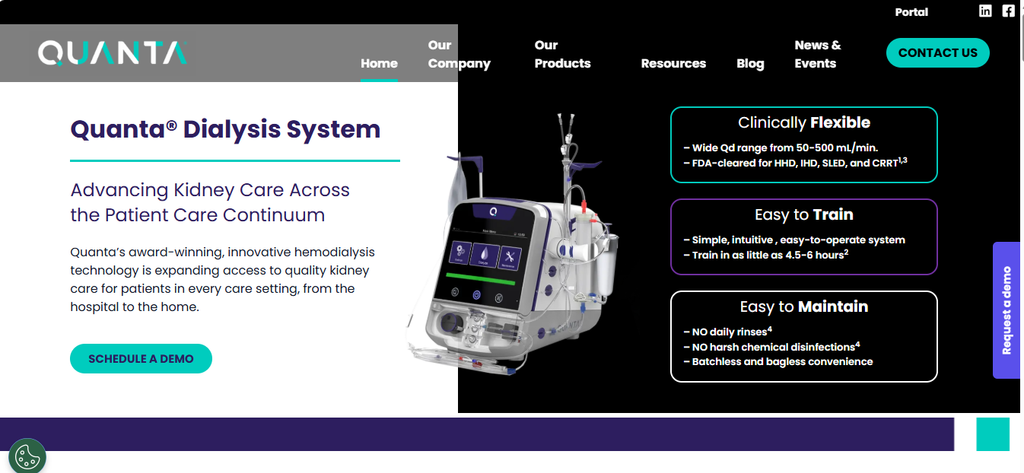
Quanta Dialysis Technologies is a medical technology company focused on developing dialysis systems for people with kidney failure. Its work centres on making dialysis equipment more compact and adaptable to different healthcare environments.
Dialysis is a treatment that helps remove waste products and excess fluid from the blood when the kidneys cannot perform these functions adequately. Depending on the patient’s condition, dialysis may be provided in a hospital, dialysis centre or, in suitable circumstances, at home.
Quanta is known for its SC+ haemodialysis system. The system was developed with the aim of combining advanced dialysis functionality with a compact design and simplified operation.
Dialysis equipment must manage important clinical parameters, including fluid removal, blood flow and treatment duration. Reliability, patient monitoring and appropriate training are therefore essential.
The availability of different dialysis technologies can help healthcare providers consider how treatment is organised. However, whether a particular system is suitable depends on clinical requirements, regulatory approval, the care setting and the training available to patients or healthcare professionals.
Quanta’s development work involves medical engineering, fluid management, monitoring systems and usability. Its focus on dialysis demonstrates how medical device innovation can address the practical challenges associated with long-term treatment.
The company operates in a specialised part of the medical technology industry, where devices are designed to support patients who may require regular treatment over many years.
| Company | Quanta Dialysis Technologies Ltd. |
| Brand | Quanta Dialysis Technologies |
| Business | Medical technology and dialysis equipment |
| FY2025 Revenue | Not publicly verified |
| Major Products | SC+ haemodialysis system, a compact dialysis machine designed for use in healthcare facilities and suitable home-care settings where approved. |
9. Renishaw

Renishaw is a UK engineering and technology company recognised for precision measurement, manufacturing systems and specialist healthcare technologies. Founded in 1973, it has developed expertise in areas where highly accurate engineering is essential.
Although Renishaw is not exclusively a medical device company, its healthcare-related technologies make it relevant to the medical technology sector.
One of its specialist healthcare areas is neurosurgical technology. Its products have included systems designed to support the planning and delivery of certain brain procedures. Such applications require precise positioning and detailed knowledge of the patient’s anatomy.
The company has also developed technologies related to drug delivery into the brain for selected research and clinical applications. These systems require specialist assessment and are intended for carefully defined medical uses.
Renishaw’s wider engineering capabilities include precision manufacturing, metrology and additive manufacturing. These capabilities can support the development and production of complex components used in healthcare and other industries.
The company works internationally and serves customers across multiple sectors. Its medical technology activities represent one part of a broader engineering business.
Renishaw illustrates the role that advanced engineering companies can play in healthcare. Precision measurement, accurate positioning and reliable manufacturing can be important in the development of specialist medical equipment.
| Company | Renishaw plc |
| Brand | Renishaw |
| Business | Precision engineering, medical technology and scientific instruments |
| FY2025 Revenue | £713.0 million (total company revenue) |
| Major Products | Neuromate neurosurgical robot, surgical planning software, neurological drug-delivery devices and Raman spectroscopy systems. |
10. Medovate
Medovate is a UK medical technology company that develops medical devices intended to improve clinical procedures and patient care. It works with clinicians and healthcare organisations to identify practical challenges and develop technologies that address them.
Medical device development often begins with a problem encountered in everyday clinical practice. A procedure may require specialised equipment, take considerable time or involve a workflow that could be improved. Medical technology companies work to translate these needs into devices that can be evaluated and, where appropriate, introduced into clinical practice.
Medovate has been associated with technologies developed in collaboration with healthcare professionals and NHS-linked innovation programmes. Its work reflects the role of clinical collaboration in the medical technology sector.
One of the company’s known innovations is SAFIRA, a system designed to support safer administration of regional anaesthesia. The technology aims to give clinicians greater control over the injection process during selected procedures. Its use depends on training, the intended clinical application and the relevant regulatory requirements.
The development of such devices involves design, engineering, usability assessment and compliance with medical device regulations. Clinical evaluation is also important to establish whether a device performs as intended and is suitable for its proposed use.
Medovate represents the innovation-focused side of the UK medical technology industry. Rather than relying only on large-scale manufacturing, businesses of this type often concentrate on developing specialised products that address specific clinical needs.
| Company | Medovate Limited |
| Brand | Medovate |
| Business | Medical device development, manufacturing and healthcare technology |
| FY2025 Revenue | Not publicly verified |
| Major Products | SAFIRA® regional anaesthesia system, CamPROBE® prostate biopsy device, and medical device design, development and manufacturing services |
Conclusion
The UK’s medical device industry includes companies working across a wide range of healthcare needs. Smith+Nephew and Convatec develop products for orthopaedics, wound management and long-term conditions. CMR Surgical focuses on robotic-assisted surgery, while Oxford Nanopore Technologies develops molecular sequencing systems.
Other companies specialise in more specific areas. Terumo Aortic produces vascular devices, Creo Medical develops advanced endoscopic technologies, and GAMA Healthcare supplies infection-prevention products. Quanta Dialysis Technologies focuses on dialysis equipment, Renishaw contributes precision engineering and specialist healthcare technologies, and Medovate develops devices intended to improve clinical procedures.
These businesses demonstrate that medical technology extends far beyond hospital machines. It includes implants, surgical instruments, laboratory systems, cleaning products, monitoring equipment and technologies designed for long-term care.
The sector’s future will depend on continued research, clinical collaboration, regulatory compliance and the ability to demonstrate that new devices are safe and effective. As healthcare systems explore less invasive procedures, digital technologies and more personalised treatment, medical device companies will continue to play an important role.
For hospitals, clinicians and patients, the most suitable device depends on the medical need, evidence of effectiveness, safety requirements and professional guidance. Company size or reputation alone should not determine clinical choices.
Frequently Asked Questions
1. What are medical device companies?
Medical device companies develop, manufacture, or supply equipment and products used to diagnose, prevent, monitor, or treat medical conditions. Their products include surgical instruments, implants, diagnostic systems, patient monitoring equipment, and dialysis machines.
2. Which are some of the leading medical device companies in the UK?
Notable medical device companies operating in or originating from the UK include Smith+Nephew, Convatec, CMR Surgical, Oxford Nanopore Technologies, Terumo Aortic, Creo Medical, GAMA Healthcare, Quanta Dialysis Technologies, Renishaw, and Medovate. These companies serve different areas of healthcare, including surgery, diagnostics, wound care, and medical technology.
3. What does Smith+Nephew manufacture?
Smith+Nephew develops medical products for orthopaedics, sports medicine, ear, nose, and throat (ENT) procedures, and advanced wound management. Its portfolio includes orthopaedic implants, surgical equipment, and products designed to support wound healing.
4. What is CMR Surgical known for?
CMR Surgical is known for its Versius robotic-assisted surgical system, designed to help surgeons perform selected minimally invasive procedures. The system supports surgical teams by providing robotic instruments and technology for use in appropriate operations.
5. Is Oxford Nanopore Technologies a medical device company?
Oxford Nanopore Technologies develops DNA and RNA sequencing technology used in scientific research and other applications. Its platforms can support healthcare-related research, genomic analysis, and infectious disease studies, although its business extends beyond conventional medical devices.
6. What does Convatec specialise in?
Convatec specialises in advanced wound care, ostomy care, continence care, and infusion care products. Its solutions are designed to support people living with chronic conditions and help healthcare professionals manage ongoing patient care.
7. What are the main trends in medical device technology?
Major trends include robotic-assisted surgery, minimally invasive procedures, connected medical equipment, precision engineering, molecular sequencing, remote patient monitoring, and improved technologies for long-term disease management. These developments aim to support clinical workflows and address changing healthcare needs.
8. How are medical devices regulated in the UK?
Medical devices in the UK are subject to applicable regulatory requirements overseen by the Medicines and Healthcare products Regulatory Agency (MHRA). Requirements vary according to the device’s classification, intended purpose, and applicable rules. Manufacturers must meet relevant requirements for safety, performance, and market access.
9. Why are medical device companies important to hospitals?
Medical device companies supply products and equipment that support diagnosis, surgery, infection prevention, patient monitoring, rehabilitation, and ongoing treatment. Their technologies help clinical teams carry out essential healthcare tasks and provide appropriate care across different medical specialties.
10. How can someone choose a medical device manufacturer?
Healthcare organisations should evaluate clinical evidence, product safety, regulatory compliance, reliability, compatibility with existing equipment, staff training requirements, after-sales support, and total cost. Purchasing decisions should reflect the needs of the healthcare facility, while patient treatment decisions should be guided by qualified healthcare professionals and appropriate clinical evidence.