Clean technology is changing how electricity is made, kept and used across the United States. Solar panels, wind machines, electric cars, battery setups and places where electric cars get charged are becoming parts of the nation’s energy business. These changes are happening because companies are working on ways to cut down pollution, make energy use better and help power systems be cleaner.
The word CleanTech includes different kinds of businesses. Some companies make electricity from sources while others build solar panels, create batteries or make tools for electric cars. There are also companies that help houses and companies use energy better.
The top 10 CleanTech companies in the USA that are in this article show parts of the industry. The list has energy companies as well as companies that focus on new kinds of technology. These companies were chosen based on their work in technology, how big their business is, how well known they are and information that is shared publicly. The list is made by people who write articles, not by a group that ranks companies.
Financial details are included so readers can get an idea of how big each company is. The numbers come from the recent full-year reports for each business. These are usually, from FY2025. The fiscal year that ends in 2026 when that makes sense. Revenue and net income are listed in US dollars. For companies that have financial year-ends the dates are clearly marked. Private companies that don’t share all their information don’t get any estimated numbers.
1. NextEra Energy
NextEra Energy is one of the largest US energy businesses with operations covering both electricity supply and renewable energy development. Its main businesses include Florida Power & Light, an electric utility and NextEra Energy Resources, which develops and operates energy projects.
| Founded: 1925 (predecessor business) |
| Headquarters: Juno Beach, Florida |
| Latest Revenue: $27.41 billion (FY2025) |
| Latest Net Income: $6.84 billion (FY2025) |
| Main Products/Services: Renewable electricity, wind and solar power, battery storage and electric utility services |
The company has invested in wind and solar power along with battery storage that can help store electricity for use when demand’s higher or renewable generation is lower. It also operates energy infrastructure so its entire business should not be described as exclusively renewable.
NextEra Energy belongs on this list because of the scale of its electricity operations and its role in developing energy projects across the United States. Its size also helps show that CleanTech is not limited to small technology start-ups. Large utility and energy companies are investing in the equipment and infrastructure needed to support a changing power system.
2. GE Vernova
GE Vernova became a publicly traded company in April 2024 following its separation from General Electric. Its business builds on a longer history of power-generation and electrical engineering.
| Founded: 2024 as an independent company |
| Headquarters: Cambridge, Massachusetts |
| Latest Revenue: $38.1 billion (FY2025) |
| Latest Net Income: $4.9 billion (FY2025) |
| Main Products/Services: Wind turbines, power generation equipment, grid technology, electrification and energy storage solutions |
The company works across three areas: Power, Wind and Electrification. Its products include equipment used in electricity generation, wind turbines, grid systems and technologies that help move electricity from power plants to users. Its portfolio also includes power technologies so it is better understood as an energy technology company supporting the energy transition rather than a business focused only on renewable sources.
A dependable electricity grid is essential when more wind and solar power are connected to the system. GE Vernovas grid and power equipment makes it relevant to the CleanTech market even though not every product it sells is emissions-free.
Its FY2025 revenue of $38.1 billion reflects the size of the energy technology business, not revenue from clean technology alone.
3. Tesla
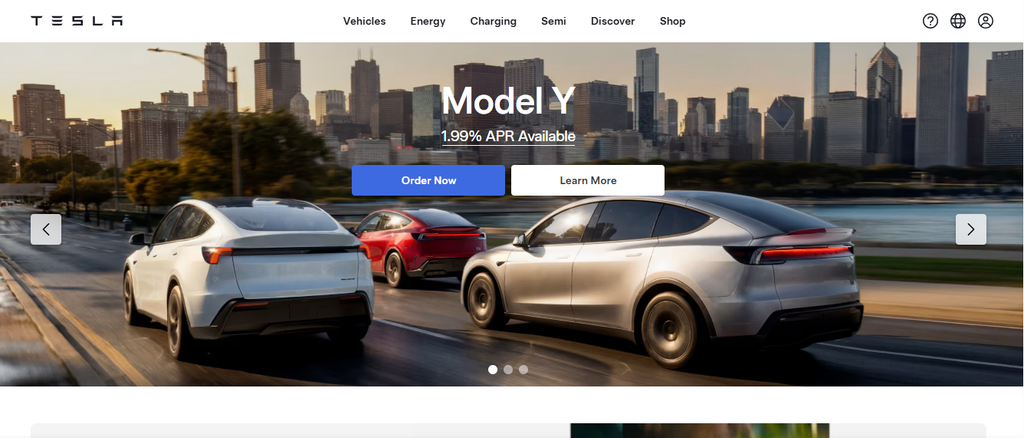
Tesla is best known for electric cars but its business also includes energy storage systems and solar products. Its electric vehicles use batteries of petrol or diesel engines while its storage products can help households, businesses and utilities manage electricity use.
| Founded: 2003 |
| Headquarters: Austin, Texas |
| Latest Revenue: $94.83 billion (2025) |
| Latest Net Income: $3.79 billion attributable to common stockholders (2025) |
| Main Products/Services: Electric vehicles, battery energy storage, solar energy products and charging infrastructure |
The company’s energy generation and storage business has become an important part of its operations. In 2025 Tesla reported $12.77 billion in revenue from this segment compared with $94.83 billion in company revenue. The distinction matters: Tesla’s overall revenue includes its other activities so the full figure should not be treated as clean-energy revenue.
Tesla’s charging network is another part of the electric mobility ecosystem. Charging access can affect how practical an electric vehicle is for travel and longer journeys.
The company ranks among the recognisable CleanTech businesses because it combines electric transport, battery storage and energy products under one corporate name. Its financial size however comes from a business mix that extends beyond technology alone.
4. First Solar
First Solar is one of the best-known US solar manufacturing companies. It. Manufactures photovoltaic modules that convert sunlight into electricity. Unlike solar panels made with crystalline silicon, First Solar uses a thin-film technology based on cadmium telluride.
| Founded: 1999 |
| Headquarters: Tempe, Arizona |
| Latest Revenue: $5.22 billion (2025 net sales) |
| Latest Net Income: $1.53 billion (2025) |
| Main Products/Services: Thin-film solar panels and photovoltaic solar modules |
Its customers include project developers, utilities, energy producers and large commercial buyers. These customers use the modules in solar installations rather than only on residential rooftops.
The company reported $5.22 billion in sales in 2025 up from about $4.21 billion in 2024. Net income reached $1.53 billion in 2025. These figures refer to First Solar’s company- financial results.
First Solar stands out because it manufactures a component of the solar power industry. Solar farms need panels that can convert sunlight into electricity and the cost, supply and performance of those panels influence project economics. The company’s manufacturing operations in the United States also make it relevant to discussions about clean-energy supply chains.
5. Enphase Energy
Enphase Energy focuses on the technology that helps solar power systems operate. Its microinverters convert the current generated by solar panels into alternating current that homes and buildings can use. The company also sells battery systems and related energy management products.
| Founded: 2006 |
| Headquarters: Fremont, California |
| Latest Revenue: $1.47 billion (2025) |
| Latest Net Income: $172.1 million (2025) |
| Main Products/Services: Solar microinverters, home battery systems and energy management technology |
A microinverter works at the solar-panel level rather than relying on one central inverter for the entire system. This design can help a system manage differences in panel output including when some panels receive shade than others.
Enphase reported revenue of $1.47 billion in 2025 and net income of around $172.1 million. Its US revenue rose during the year while revenue from markets declined reflecting differences in demand across regions.
The company is included because clean energy depends on more than generating electricity. Equipment that converts, monitors and stores power is also important. For homeowners considering rooftop Enphase is one of the technology providers they may encounter through solar installers.
6. Bloom Energy
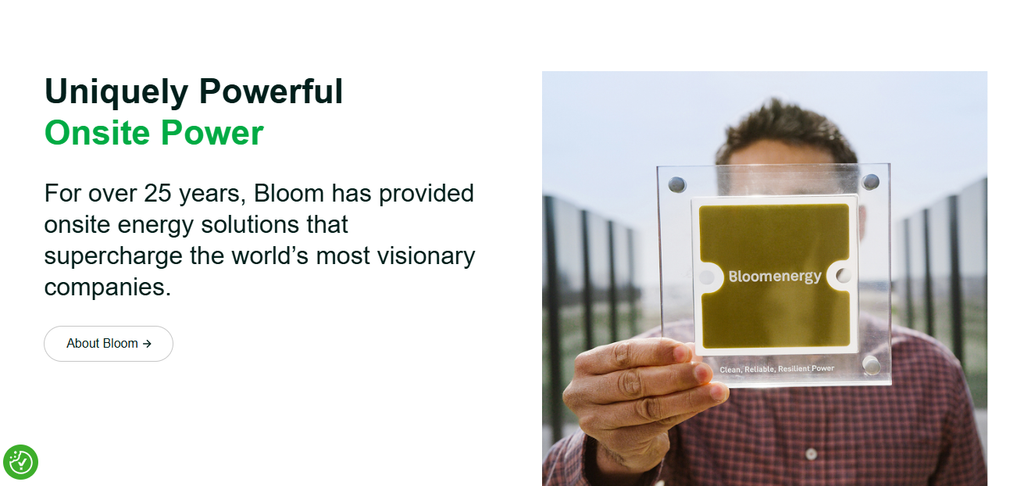
Bloom Energy develops oxide fuel-cell systems that generate electricity through an electrochemical process. Its systems are designed to provide power at the location where it is needed including for industrial facilities.
| Founded: 2001 |
| Headquarters: San Jose, California |
| Latest Revenue: $2.02 billion (2025) |
| Latest Net Income: Net loss of $87.1 million (2025) |
| Main Products/Services: Fuel-cell power systems, on-site electricity generation and energy services |
On-site power can be useful for organisations that need an electricity supply. However the environmental impact depends partly on the fuel used to operate the system. Fuel-cell technology should not automatically be described as zero-emission in every application.
Bloom Energy reported $2.02 billion in revenue in 2025, an increase of 37.3% from 2024. The company also reported a loss of about $87.1 million for the year showing that higher sales do not always mean a business is profitable.
Its position in the CleanTech industry comes from its focus on electricity generation technology and efforts to provide power with a system from conventional grid supply. The company is particularly relevant to discussions about energy demand from facilities and data centres.
7. Fluence Energy
Fluence Energy Solar and wind power do not produce the same amount of electricity at every hour of the day. Battery storage can help balance that difference by storing energy and releasing it when needed. Fluence Energy focuses on this part of the power system.
| Founded: 2018 |
| Headquarters: Arlington, Virginia |
| Latest Revenue: $2.26 billion (FY2025, year ended September 30) |
| Latest Net Income: Net loss of $68.0 million (FY2025) |
| Main Products/Services: Grid-scale battery storage, energy management software and storage services |
The company supplies battery-based energy storage systems, software and services for utilities and other energy customers. Its technology helps operators monitor storage assets and manage how electricity is stored, dispatched and used.
Fluence reported around $2.26 billion in revenue for its 2025 year, which ended on September 30. It recorded a loss of approximately $68 million during the same period compared with net income in FY2024.
The company is worth including because energy storage is becoming a part of integrating variable renewable electricity into the grid. Its business is not limited to selling batteries; software and long-term services also form part of its offering.
8. Sunrun
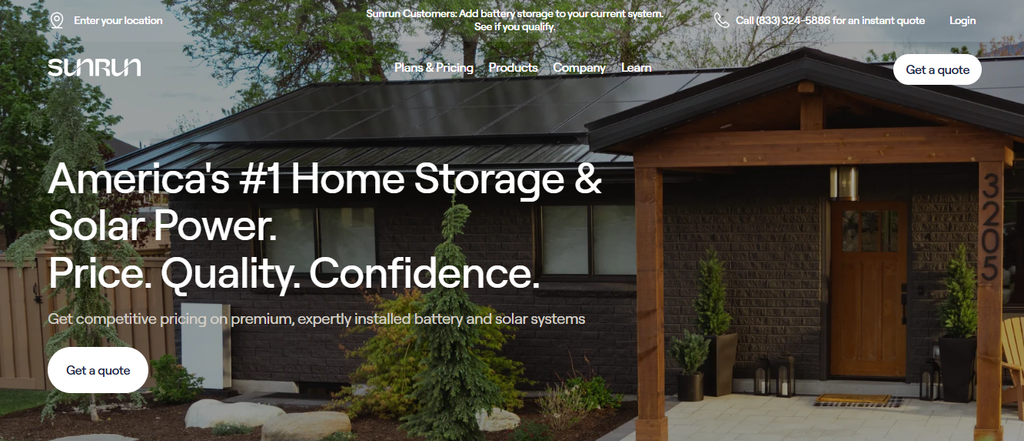
Sunrun focuses on solar energy for homes. It offers solar systems and battery storage including arrangements where customers pay for energy services over time rather than purchasing every part of a system upfront.
| Founded: 2007 |
| Headquarters: San Francisco, California |
| Latest Revenue: $2.96 billion (2025) |
| Latest Net Income: $449.9 million attributable to common stockholders (2025) |
| Main Products/Services: Residential solar systems, home batteries and solar service agreements |
This approach has helped make residential solar accessible to households that may not want to pay the installation cost at the beginning. The details of each plan including payment terms and ownership can vary so customers need to understand their agreement before signing.
Sunrun reported revenue of $2.96 billion in 2025 up from about $2.04 billion in 2024. The company also reported income attributable to common stockholders of approximately $449.9 million.
Its place in the CleanTech sector is tied to the growing role of households in energy generation and storage. Residential solar can reduce the amount of electricity a home draws from the grid although the final savings depend on installation costs, local electricity rates, sunlight and the terms of the agreement.
9. ChargePoint
ChargePoint creates charging tools and programs for cars. Their clients are companies, building managers, people who run vehicle groups and government groups. They also help drivers and people who own places where chargers are installed through their charging network and other help.
| Founded: 2007 |
| Headquarters: Campbell, California |
| Latest Revenue: $411.2 million (FY2026, year ended January 31, 2026) |
| Latest Net Income: Net loss of $220.2 million (FY2026) |
| Main Products/Services: Electric vehicle charging stations, charging software and network services |
Charging facilities are a part of moving to electric vehicles. Houses need ways to charge, offices might put in chargers for workers and big groups of vehicles often need charging systems that can manage many cars at once.
ChargePoint made about $411.2 million in sales for the year that ended on January 31 2026. They had a loss of $220.2 million during that time. These numbers show the money problems that can happen when growing a business in an area.
The company is on this list because it works on the tools needed to help cars. Its job is not the same as a car maker: ChargePoint gives the charging tools. Help that let electric car drivers and people who run vehicle groups keep their cars running.
10. Ormat Technologies
Ormat Technologies has a focus more than companies that make solar panels or electric cars. Their main business is energy, which uses heat from under the Earth to make electricity. The company also works with energy that is recovered and with battery storage.
| Founded: 1965 |
| Headquarters: Reno, Nevada |
| Latest Revenue: $989.5 million (2025) |
| Latest Net Income: $123.9 million attributable to company stockholders (2025) |
| Main Products/Services: Geothermal electricity, energy storage and recovered-energy power systems |
Geothermal energy can create power more regularly than sources that rely on sunlight or wind but the right places and conditions are needed. Ormat. Runs geothermal plants and also sells tools for energy projects.
In 2025 Ormat made about $989.5 million in sales. Had a profit of around $123.9 million that belongs to the company’s owners. Sales came from electricity, tools and energy storage work.
Ormat is on the list because it shows how important it is to have kinds of clean energy available. Solar and wind get a lot of attention. Geothermal power can also help make a better mix of electricity especially in places, with the right underground heat.
Top 10 CleanTech Companies in USA: Comparison
| Rank | Company | Founded | Latest Revenue | Main Products/Services |
| 1 | NextEra Energy | 1925* | $27.41 billion (FY2025) | Renewable power, utilities and energy storage |
| 2 | GE Vernova | 2024 | $38.1 billion (FY2025) | Power equipment, wind turbines and grid technology |
| 3 | Tesla | 2003 | $94.83 billion (2025) | Electric vehicles, batteries and solar products |
| 4 | First Solar | 1999 | $5.22 billion (2025) | Thin-film solar modules |
| 5 | Enphase Energy | 2006 | $1.47 billion (2025) | Solar microinverters and home batteries |
| 6 | Bloom Energy | 2001 | $2.02 billion (2025) | Fuel-cell power systems |
| 7 | Fluence Energy | 2018 | $2.26 billion (FY2025) | Battery storage and energy software |
| 8 | Sunrun | 2007 | $2.96 billion (2025) | Residential solar and home batteries |
| 9 | ChargePoint | 2007 | $411.2 million (FY2026) | EV charging hardware and software |
| 10 | Ormat Technologies | 1965 | $989.5 million (2025) | Geothermal power and energy storage |
Which CleanTech Company Is Best for Your Needs?
The best CleanTech company for you depends on what you’re trying to achieve or buy. If you are working on scale solar projects First Solar is a good choice because it makes solar modules. Enphase focuses on equipment used in home systems and Sunrun works directly with homeowners to install solar power.
When you need battery storage Fluence offers systems designed for the grid and commercial use. Tesla and Enphase also provide energy storage solutions. GE Vernova supplies equipment used in power generation and electricity networks. NextEra Energy. Operates energy projects. Ormat gives you a path through geothermal power.
For transport Tesla builds electric vehicles. ChargePoint specializes in charging stations and infrastructure. Bloom Energy is important to know about if you need on-site fuel-cell power systems.
Before making a decision, look at the technology each company offers. Consider installation needs, where they’re available locally, how they support customers, how much it costs to run their systems and what environmental benefits you can expect. A company’s size or total revenue does not mean it is the choice for your project.
Conclusion
The CleanTech industry in the USA includes companies working in electricity, energy storage, electric transport and power equipment. Some companies. Supply energy. Others make the products and software that help make energy use more efficient.
These ten companies have business models. Their revenue numbers reflect all of their operations, not their clean-tech work. For people trying to compare this sector the best place to start is to learn what each company actually does. Then see how its technology fits into the shift, toward cleaner energy.
Frequently Asked Questions
1. What are CleanTech companies?
CleanTech companies create products, technologies, and services that help reduce harm to the environment. They focus on areas such as energy, electric vehicles, energy storage, recycling, and energy efficiency.
2. Which are the CleanTech companies in the USA?
Some CleanTech companies in the USA include NextEra Energy, Tesla, First Solar, Enphase Energy, and Bloom Energy. These companies operate in clean energy sectors such as solar power, battery storage, electric vehicles, and fuel cell technology.
3. What does NextEra Energy do?
NextEra Energy is a company involved in electricity generation and utility services. Through its businesses, it operates energy projects, including wind and solar power, and invests in energy storage.
4. How do CleanTech companies help the environment?
CleanTech companies develop technologies that can reduce greenhouse gas emissions, improve energy efficiency, support cleaner electricity generation, and minimize waste. Their overall environmental impact depends on how their products are manufactured, used, and maintained.
5. Are CleanTech companies involved in solar and wind energy?
No. CleanTech includes industries beyond solar and wind power. Companies also work on electric vehicles, batteries, hydrogen technologies, fuel cells, smart energy systems, recycling methods, and tools that help businesses use energy more efficiently.
6. Why is energy storage important for CleanTech?
Energy storage systems, such as batteries, store electricity for use when needed. They can help manage fluctuations in wind and solar power generation, support the electricity grid, and improve the reliability of renewable energy systems.
7. Are CleanTech companies an investment?
CleanTech companies may offer investment opportunities as demand for cleaner energy and advanced technologies grows. However, their performance can be influenced by government policies, interest rates, competition, production costs, and changes in energy prices. Potential investors should evaluate each company’s financial position, growth prospects, and risks before making investment decisions.
8. What challenges do CleanTech companies face in the USA?
Common challenges include high initial costs, changing regulations, supply chain disruptions, competition for raw materials, and the need to expand infrastructure. Some technologies also require further development before they can be adopted on a large scale.
9. What is the future of the CleanTech industry in the USA?
The CleanTech industry may continue to develop in areas such as renewable energy, battery storage, electric transportation, grid modernization, and energy efficiency. Its growth will depend on technology costs, consumer demand, infrastructure investment, and government policies.