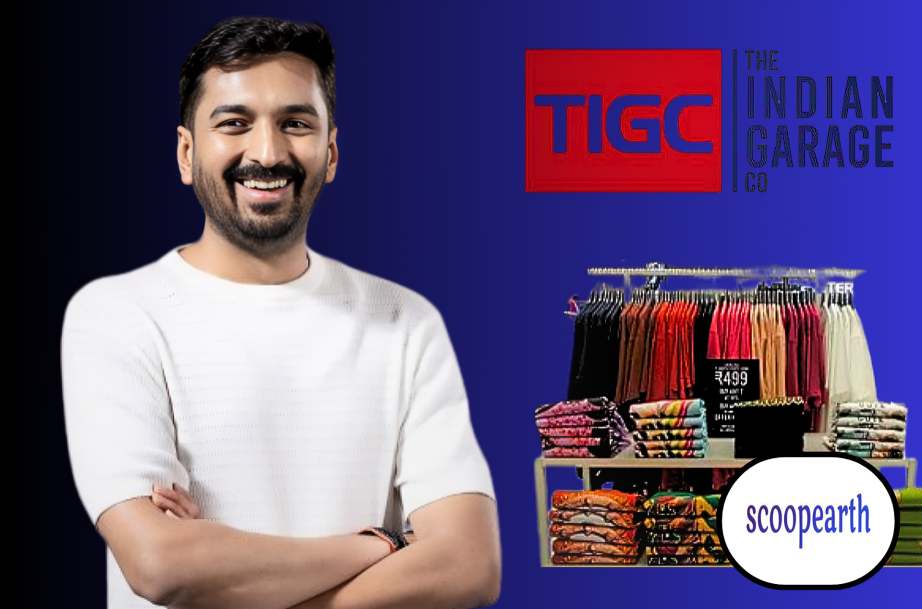
Indian Garage Co is a direct-to-consumer fashion brand. India’s largest online grocery marketplace, Indian Garage Co, suffered a significant decline in operating revenue in FY26. Operating revenue rose 15% from the prior year, a significant drop from the 2X growth recorded during the prior financial year. The slowdown in revenue growth was widened by the company’s net losses, which increased by 27% to ₹29 crore in FY26.
Financial breakdown details and revenue metrics
The financial result follows a highly competitive direct-to-consumer fashion market in India, with rival brands like Snitch, Rare Rabbit, Bewakoof and The Souled Store also putting in a large push for growth.
Indian Garment Co is a direct-to-consumer fashion company that designs and makes Apparel for men under their portfolio of own brands, specializing in mass-premium product positioning.
The financial statements presented to the Registrar of Companies has recorded that the company’s operating profit for the fiscal year had relied entirely on product revenue.
The financial statements of the company show that the operating income of the company in FY26 stood at ₹234.6 crore from ₹204.2 crore for FY25. In view of the fact that the other income of the company was ₹2.95 crore, the total income of the company in FY26 was ₹237.5 crore against ₹206.9 crore in the previous financial year.
The production side saw raw material expenses the highest expenditure head for the direct-to-consumer fashion company. The expenditure on materials is increased by 13% from ₹104 crore in FY25 to ₹117.5 crore in FY26.
The company’s spend on advertising and promotion surged by over 150% to ₹29.3 crore in FY26 from ₹14 crore in FY25, reflecting the firm’s additional marketing initiative to maintain visibility in the market.
The company had also paid ₹39.5 crore in job work charges, which include payments to outsourced manufacturers and production service providers. The employee benefits expense increased 24% in FY26, reaching ₹21 crore.
Total expenditure increased by 16% to ₹276.1 crore in FY26 compared with ₹237.5 crore in FY25, due to expenses such as depreciation and amortisation, finance costs, legal and professional fees, travel costs, and additional overheads.
Investment structure and profitability
Consistently, expenses exceeded sales, and losses grew even larger for the company. Net loss went up 27% year-on-year to ₹28.7 crore in FY26 from a loss of ₹22.6 crore in FY25.
At the unit level, the efficiency of the brand in making every single rupee of operating revenue was found to be ₹1.18 in FY26 as against ₹1.16 in FY25.
Some financial ratios showed a little movement despite the continued net decline. The return on capital employed was recorded at -12.61% for the company in FY26, as compared to -6.02% in FY25, and the EBITDA margin in the current year posts a slight improvement of -5.12%.
The Aditya Birla Group’s digital investment arm, TMRW, invested approximately ₹155 crore in October 2023 in The Indian Garage Co to acquire a majority stake in the company. Furthermore, TMRW has a controlling stake in another direct-to-consumer clothing brand, Bewakoof, that it acquired early in December 2022.
Conclusion
The financial performance of The Indian Garage Co. for the fiscal year 2026 reflects a difficult transition period for scaled direct-to-consumer fashion brands in India. Slow revenue growth and rising customer acquisition costs have rendered revenue growth by itself an inadequate solution. The primary challenges D2C brands face include customer retention, strict inventory management, and utilizing operational efficiency to build a sustainable business. The ability to further strengthen its distribution support and scale while simultaneously improving the unit economics of the business will be critical to future success for The Indian Garage Co, depending on the strategic integration with TMRW and its overall Aditya Birla ecosystem.