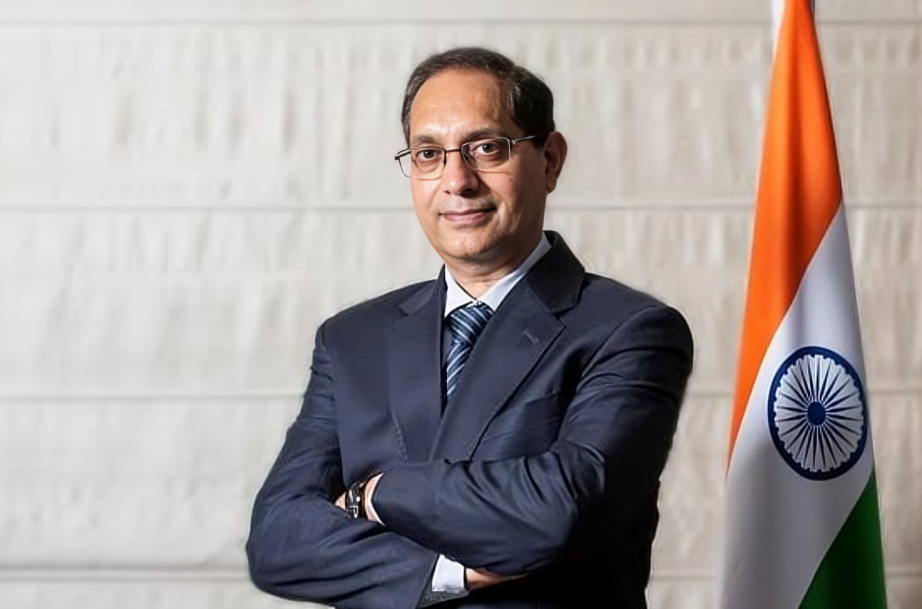
Over the last decade, the Indian capital markets have become a huge source of business financing, with companies raising around ₹10 lakh crore with equity and debt instruments, said Securities and Exchange Board of India (SEBI) chairman Tuhin Kanta Pandey. Tuhin Kanta Pandey, in his address at the CII Global Financing Summit 2026 in Mumbai on Friday, said that the nation’s capital markets have witnessed significant growth. Strong economic growth, increased investor involvement, and continued improvements in regulation have contributed to this development.
Market activity and corporate bonds
Tuhin Kanta Pandey informed that India’s equity market caps had touched the record level of $5 trillion (approximately ₹500 lakh crore) within the current financial year. This valuation is indicative of market deepening and the size equity markets have grown to with continued economic growth and regulatory effort.
Primary market activity was highlighted, with Tuhin Kanta Pandey saying that cumulative IPO proceeds stand at around ₹1.5 lakh crore till date in FY27 from the 235 companies that have raised funds through the system. The amount of fundraising is also indicative of investor demand for new listings as companies raise funds in the public market.
Corporate bonds help to diversify funding options for companies while also decreasing dependence on conventional bank lending. Tuhin Kanta Pandey shared that as of August 2026, the total value of outstanding corporate bonds had reached around ₹62 lakh crore, which is close to 55% of the credit extended to business and service sectors by banks. In the current financial year, companies have raised over ₹5 lakh crore through bond issuances.
Alternative investment funds role and infrastructure financing
The SEBI chairman also highlighted the growing prominence of Alternative Investment Funds (AIFs) for providing risk capital to startup and emerging businesses that may not be suitable for public markets.
Tuhin Kanta Pandey said the cumulative investment made by AIFs stood at approximately ₹7.5 lakh crore as of September 2026, and the committed capital was at ₹18 lakh crore. Together, these numbers demonstrate the growing role of alternative sources in financing emerging and expanding small businesses throughout the economy.
Talking about the other aspect of capital recycling and infrastructure financing, Pandey explained that Real Estate Investment Trusts (REITs) and Infrastructure Investment Trusts (InvITs) have enabled the developers to monetise operational assets and tie up capital to new infrastructure projects.
These instruments provide access to income-producing capital for investors. Tuhin Kanta Pandey pointed out that the assets under management of REITs and InvITs have expanded beyond ₹10 lakh crore.
Conclusion
The markets in India now cater to diverse financing needs ranging from business expansion to venture funding, infrastructure development, and long-term capital formation. The capital markets ecosystem has been bolstered by continued economic growth, larger investor participation, and ongoing policy changes, as Pandey had stated during the CII Financing Summit 2026. Over the last decade, annual fundraising in capital markets has been in excess of ₹10 lakh crore; the equity market cap has crossed $5 trillion (approximately ₹500 lakh crore) in the current financial year; IPO and bond issuances have been robust; and in investor categories, the equity markets are witnessing increasing participation in AIFs, REITs, and InvITs.