India’s e-commerce boom has created a problem most people don’t think about: someone still has to get the parcel from the warehouse to the doorstep. That last step, known as last-mile delivery, is one of the fastest-growing segments of the logistics industry, and it’s also one of the few business categories where you can start with a genuinely modest budget instead of a large loan. Here’s a practical look at what starting a logistics business in India actually involves, and how to do it without overextending yourself financially.
Understand What “Logistics Business” Actually Means at a Small Scale
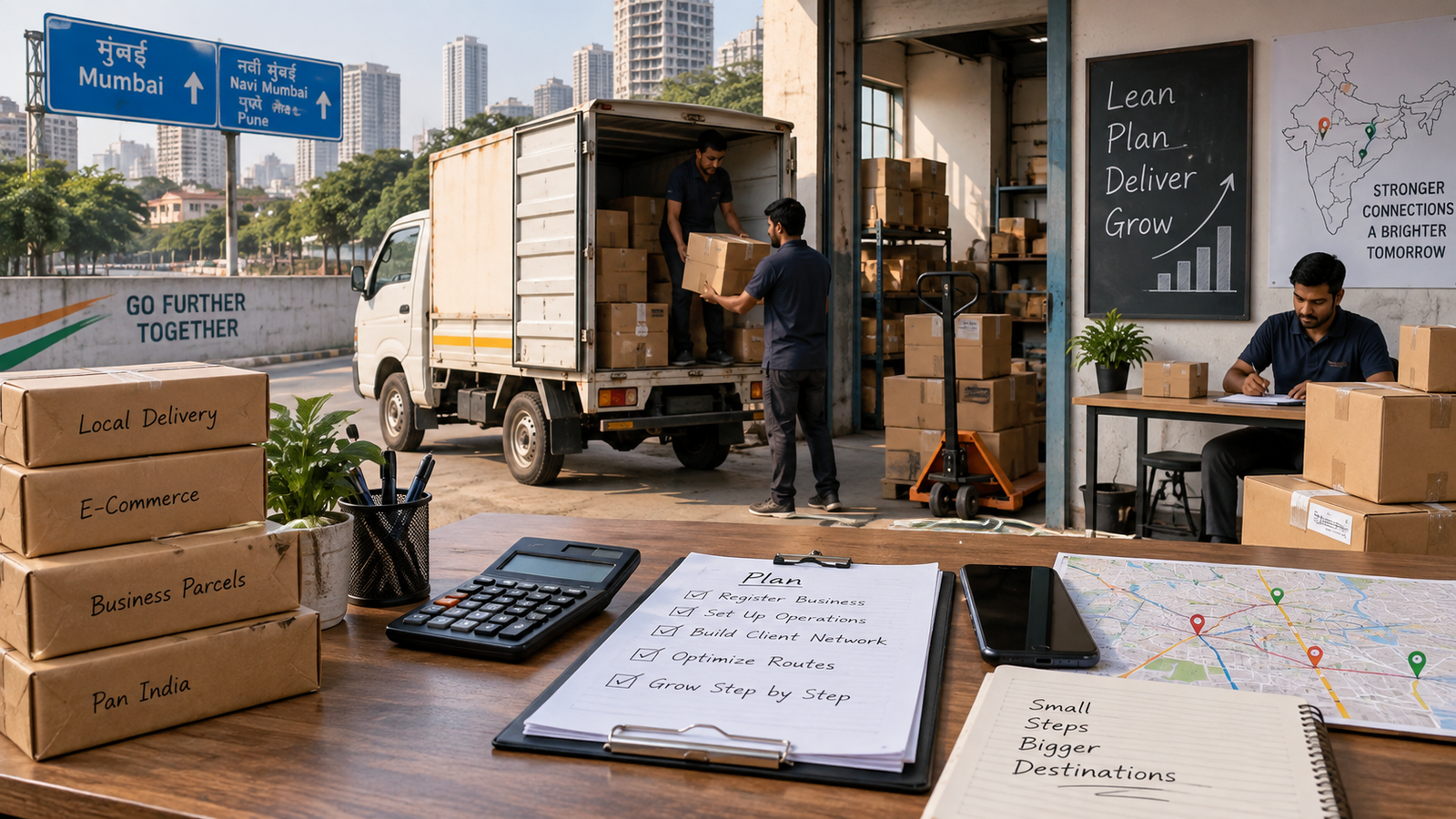
Logistics covers everything from long-haul freight trucking to warehousing, but for someone starting out with limited capital, the realistic entry point is last-mile delivery — picking up parcels from local sellers or hubs and delivering them to customers within a defined area. This is where most low-investment opportunities sit, because you’re not buying trucks or building warehouses; you’re managing a small team, a modest space, and a delivery process that a larger company has already designed.
Choose Between Building Independently or Joining a Franchise
There are two broad paths. The first is building an independent local courier or delivery service from scratch, which gives you full control but also means finding your own client base, negotiating rates, and building trust with sellers who don’t know your brand yet. The second is joining an established logistics or delivery network as a franchise partner, where you operate a hub under a company’s existing systems and order flow.
For most first-time entrepreneurs with limited capital, the franchise route is the faster way in. You skip the slow process of winning customers one by one and instead plug into a network that already has demand. A number of major e-commerce platforms in India now run exactly this kind of last-mile delivery franchise model, where a partner manages local pickups and deliveries for a defined set of pin codes in exchange for a share of the delivery revenue. One detailed breakdown of a delivery franchise available through a major online marketplace walks through the investment range, the application process, and realistic monthly earnings — useful reading if you’re comparing the franchise route against building something independent.
What Low Investment Actually Looks Like
“Low investment” in this space typically means a few lakh rupees rather than tens of lakhs, but it’s worth being specific about where that money goes:
- Space. A small commercial unit, often 300–500 square feet, to sort and stage parcels.
- Team. A handful of delivery executives to start, since volume grows gradually rather than arriving all at once.
- Basic equipment. Barcode scanners, packaging materials, and a vehicle or two, either owned or arranged through your delivery staff.
- Working capital. A buffer for the first few months, since revenue typically ramps up as your hub builds a track record with the network you’re operating under.
Franchise-backed models tend to reduce this list further, since the parent company often supplies the delivery-tracking software and initial training, leaving you to focus mainly on space, staffing, and day-to-day management rather than building every system yourself.
Get Your Paperwork in Order Early
Regardless of which path you choose, a few registrations are non-negotiable in India: a PAN card, GST registration, and, depending on your structure, a business registration such as a sole proprietorship, partnership, or private limited company. If you’re leasing commercial space, a proper rental agreement matters too, both for your own protection and because most franchise partners will require it as part of onboarding. Sorting these out before you start looking for a location or applying to a franchise program saves weeks of back-and-forth later.
Technology Is Not Optional Anymore
Even a small delivery hub runs on software now — route planning, parcel tracking, proof-of-delivery capture, and communication with the sellers and customers on both ends of a delivery. If you’re building independently rather than joining a franchise that provides this for you, budgeting time to learn and set up the right tools matters as much as budgeting money for space and staff. Reviewing practical guides on delivery and logistics apps before you commit to a specific software stack can save you from switching systems midway through your first year, which is disruptive and costly once you have live operations running.
Location Decisions Matter More Than Almost Anything Else
A logistics business lives or dies on parcel volume, and volume is almost entirely a function of location. Areas with strong online shopping activity but relatively few existing delivery operators tend to offer the best opportunity — high enough demand to keep a hub busy, without so much competition that you’re fighting for the same limited pool of deliveries. Spend real time researching pin code-level demand before signing a lease, rather than choosing a location purely on convenience or rent price.
Start Small and Scale Deliberately
The biggest mistake new logistics entrepreneurs make is over-investing before proving the model works in their specific location. Start with the smaller end of your chosen model, build a track record of reliable, on-time deliveries, and reinvest profits into a larger hub or a second location once the first one is running smoothly. Logistics businesses that scale too fast, before operations and staffing are stable, tend to struggle with the exact thing that makes the business valuable in the first place: consistent, on-time delivery.
The Bottom Line
Starting a logistics business in India with low investment is realistic, particularly through the last-mile delivery segment, but “low investment” still requires careful planning around space, staffing, paperwork, and technology. Whether you build independently or join an established franchise network, the businesses that succeed are the ones that get the basics right early and grow only as fast as their operations can actually support.