Cement is one of those materials that most people don’t think about. It plays a key role in the foundation of everyday life. It’s behind roads, bridges, homes, offices and all kinds of construction projects across the United States. Cement is also a part of concrete which gets used in nearly every kind of building or structure you can imagine.
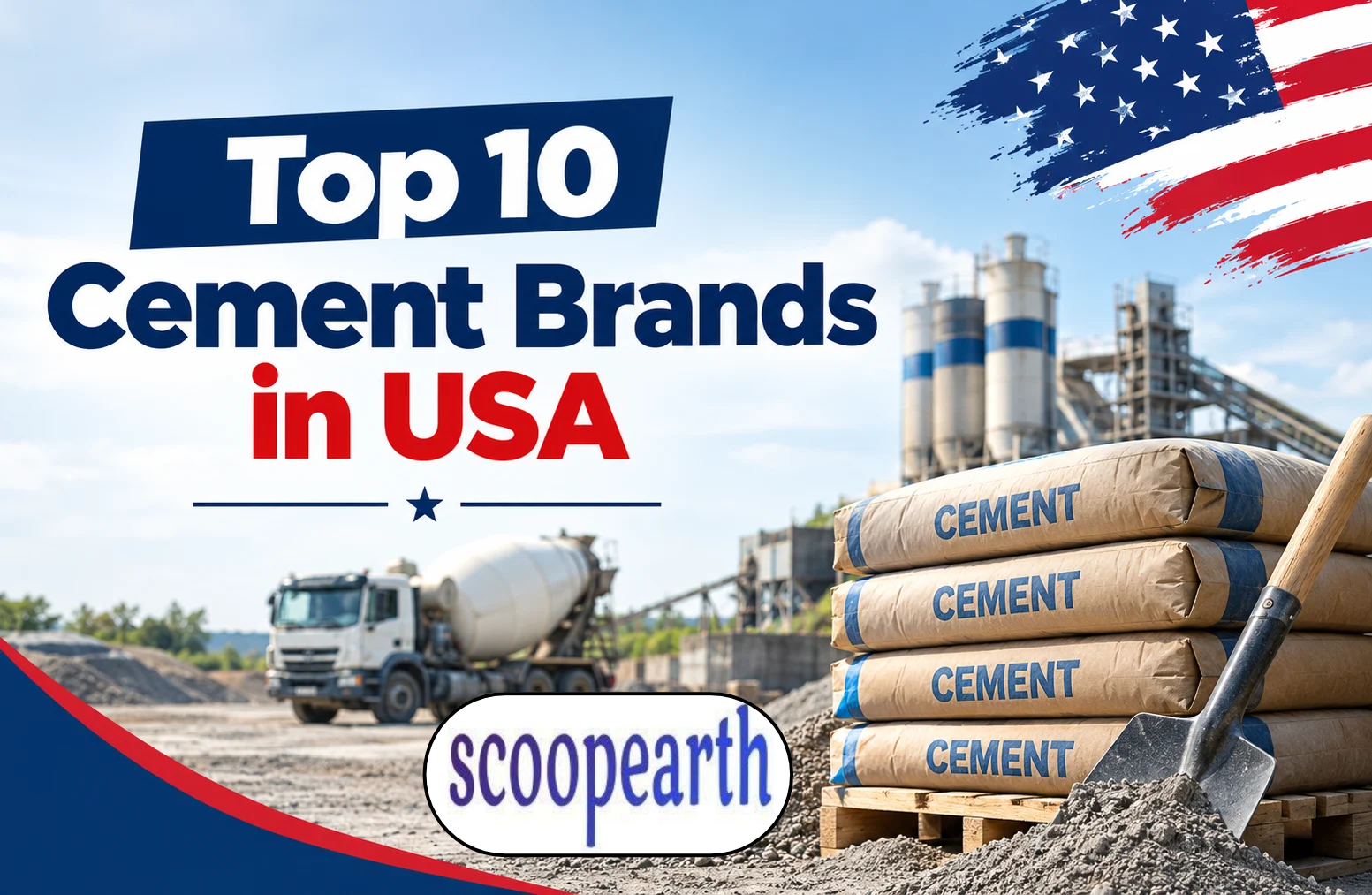
When it comes to cement brands in the U.S. there are top names that stand out. The Top 10 Cement Brands in the USA include producers, well-known American cement companies and firms with powerful distribution systems. Some of these brands are familiar to contractors and builders. Others work mostly through industrial supply chains and aren’t as visible to the public.
There’s a thing to keep in mind about this list: no official public database ranks U.S. Cement brands strictly by brand-level sales. Many companies report cement revenue along with construction products making it hard to separate the numbers.. Private companies often don’t share financial data at all. That means this ranking is based on factors like how much cement’s produced, where plants are located, how wide the distribution network reaches, total production capacity, market presence and what information is publicly available. This list doesn’t mean one brand is better than another. It simply shows the influential players in the U.S. Cement industry.
Here are 10 names to know when looking at the U.S. Cement market in 2026.
1. Amrize
Amrize is the name to know in the U.S. Cement market after becoming an independent company in June 2025. It was separated from Holcim’s American business and now operates as a publicly traded company focused entirely on North America.
| Founded: 2025 as an independent company; North American operations have much older roots |
| Headquarters: Zug, Switzerland; operational headquarters in Chicago, Illinois |
| Latest Revenue: FY2025 – $11.82 billion |
| Latest Net Income: FY2025 – $1.18 billion |
| Main Products/Services: Cement, aggregates, ready-mix concrete, asphalt, roofing and other building materials |
Amrize ranks first here because of the scale of its cement business. The company operates 18 cement plants across its American network and sold 22.4 million tons of cement in 2025. Cement alone generated $4.39 billion in 2025 revenue.
The company serves infrastructure, residential construction. Its network covers every U.S. State making it one of the geographically extensive names in the market.
2. Heidelberg Materials
Heidelberg Materials has a history in the American cement business. Its U.S. Story can be traced to Lehigh Cement, which began operating in Pennsylvania in 1897. Today the company supplies cement and other construction materials across a part of the country.
| Founded: 1873 |
| Headquarters: Heidelberg, Germany |
| Latest Revenue: FY2025 – €21.5 billion |
| Latest Net Income: FY2025 – €1.94 billion attributable to Heidelberg Materials AG shareholders |
| Main Products/Services: Cement, aggregates, ready-mixed concrete and asphalt |
In the U.S. Heidelberg Materials serves customers through 13 cement plants. Its cement range includes white custom-coloured and slag cement. Much of its cement goes into mixed concrete while other customers include precast manufacturers and concrete product companies.
The company also increased its U.S. presence in 2025 by acquiring Giant Cement Holding and related businesses, which strengthened its position in the Southeast and Northeast regions.
3. CEMEX USA
CEMEX is one of the recognisable international names in cement and its U.S. The operation has a sizable manufacturing and distribution network.
| Founded: 1906 |
| Headquarters: Monterrey, Mexico |
| Latest Revenue: FY2025 – $16.13 billion globally |
| Latest Net Income: FY2025 – Not stated here as a U.S.-specific figure |
| Main Products/Services: Cement, ready-mix concrete, aggregates and related construction materials |
CEMEX USA operates eight cement plants and close to 50 cement terminals. It also has 50 aggregate quarries and more than 280 ready-mix concrete plants. Its U.S. Network covers states including Texas, California, Florida, Arizona, Georgia, Colorado and others.
It reported $5.00 billion in 2025 U.S. Revenue across its construction-materials business, including cement, ready-mix concrete, aggregates and other activities. Cement alone accounted for $1.83 billion of U.S. Revenue in the company’s 2025 reporting.
Its broad mix of cement, concrete and aggregates gives CEMEX a position across the construction supply chain.
4. CRH Americas and Ash Grove
Ash Grove is one of the best-known cement names in the U.S. And is now part of CRH. It is important to separate the brand from its parent company: Ash Grove is the cement name while CRH is the building-materials group.
| Founded: 1882 for Ash Grove’s historic U.S. operations |
| Headquarters: Overland Park, Kansas, USA |
| Latest Revenue: Brand-level revenue not publicly disclosed |
| Latest Net Income/PAT: Not publicly disclosed |
| Main Products/Services: Cement and cementitious materials |
Ash Grove operates plants across states including Kansas, Texas, Arkansas, Florida, Nebraska, Montana, Oregon, Utah and Washington along with operations in Canada. The company also has a network of 41 U.S. Cement terminals.
Its products are used in highways, bridges, homes, industrial buildings and other construction projects. The brand is also part of CRHs materials network, which generated $37.4 billion in total revenue and $3.8 billion in net income in FY2025. Those figures belong to CRH, not Ash Grove
5. Buzzi Unicem USA
Buzzi Unicem USA has a position across several regions of the country and is particularly relevant for commercial and infrastructure construction.
| Founded: 1907 for the Buzzi group |
| Headquarters: Bethlehem, Pennsylvania, USA for Buzzi Unicem USA |
| Latest Revenue: U.S. revenue – €1.61 billion in 2025 |
| Latest Net Income/PAT: U.S.-specific net income not publicly disclosed |
| Main Products/Services: Portland cement, masonry cement and related cement products |
Buzzi Unicem USA operates seven cement plants in Missouri, Tennessee, Indiana, Texas, Oklahoma and Pennsylvania. Its network also includes 34 cement terminals serving more than 30 states.
The U.S. Business is part of Italy-based Buzzi, which reported €4.52 billion in net sales in 2025. Its U.S. Operations generated €1.61 billion in revenue during the year.
Buzzi’s long history and large U.S. Distribution networks make it a name worth considering when comparing established cement suppliers.
6. Titan America
Titan America is especially strong in the United States. The company supplies cement along with aggregates, mixed concrete and other construction materials.
| Founded: 1902 for the Titan Cement Group |
| Headquarters: Norfolk, Virginia, USA |
| Latest Revenue: FY2025 – $1.66 billion |
| Latest Net Income: FY2025 – $185.4 million |
| Main Products/Services: Cement, aggregates, ready-mixed concrete, concrete block and fly ash |
Titan America operates two main cement plants, in Roanoke, Virginia and Medley, Florida. Their combined production capacity is then 3.4 million tons annually.
The company has also invested in plant modernisation and energy efficiency. Its Roanoke plant has undergone upgrades since production began in 1951. Titan America became part of the listed Titan Cement Group, which has operations in more than 15 countries.
In 2025, Titan Americas revenue reached $1.664 billion and net income was $185.4 million.
7. GCC
GCC is an established cement and construction-materials company serving the United States and Mexico. Its business is particularly visible across the western parts of the U.S.
| Founded: 1941 |
| Headquarters: Glendale, Colorado, USA |
| Latest Revenue: FY2025 – $1.41 billion globally |
| Latest Net Income/PAT: Not separately disclosed in the company overview |
| Main Products/Services: Portland cement, blended cement, specialty cement, ready-mix concrete and aggregates |
GCC operates eight cement plants across the U.S. And Mexico with a combined installed capacity of about 6 million tons. It also operates cement terminals and a large ready-mix network.
Its 2025 net sales were $1.41 billion with $1.04 billion coming from the U.S. And the remaining amount from Mexico.
The company has also received recognition for plant-performance work, including a 2025 American Cement Association environmental award for its Pueblo, Colorado plant.
8. CalPortland
CalPortland is an important name in the western U.S. Cement market. Its history goes back more than a century. It continues to operate cement plants and terminals across western states.
| Founded: 1891 |
| Headquarters: Glendora, California, USA |
| Latest Revenue: Not publicly disclosed |
| Latest Net Income/PAT: Not publicly disclosed |
| Main Products/Services: Cement, ready-mixed concrete, aggregates, asphalt and concrete products |
CalPortland operates cement plants in California and Arizona with cement terminals spread across western states and parts of Canada. Its current locations include cement facilities in Mojave, Oro Grande and Redding in California and Rillito in Arizona.
One area that makes the company interesting is its focus on lower-carbon cement products. Its ADVANCEMENT product range includes portland-limestone cement designed to reduce carbon compared with traditional cement products.
For customers in the U.S. its regional manufacturing and distribution network is an important part of its appeal.
9. National Cement
National Cement is a name compared with the largest international groups but its long operating history and regional supply network give it a place on this list.
| Founded: 1910 for its Alabama cement operation |
| Headquarters: Birmingham, Alabama, USA |
| Latest Revenue: Not publicly disclosed |
| Latest Net Income/PAT: Not publicly disclosed |
| Main Products/Services: Cement, ready-mixed concrete and related construction materials |
National Cement has cement manufacturing operations in Alabama and California. Its Ragland, Alabama operation began producing cement in July 1910. Supplies customers across several southeastern states.
The company is owned by France-based Vicat. Also operates ready-mix businesses in several states. Its California operation has been modernised over the years to improve energy use and production capacity.
For buyers and contractors in the Southeast and California regional availability can make a difference and National Cement has built its business around those markets.
10. Votorantim Cimentos and St. Marys Cement
Votorantim Cimentos is a construction-materials company with operations in North America. In the U.S. its cement business operates through St. Marys Cement.
| Founded: 1933 for the first Votorantim cement factory |
| Headquarters: São Paulo, Brazil |
| Latest Revenue: FY2025 – R$29.4 billion globally |
| Latest Net Income: FY2025 – R$3.2 billion globally |
| Main Products/Services: Cement, ready-mixed concrete, aggregates and related construction materials |
St. Marys Cement has cement production facilities in Michigan and Canada supported by grinding facilities and a network of terminals serving the Great Lakes and northeastern U.S.
Votorantim Cimentos reported record 2025 revenue of R$29.4 billion and cement sales of 37 million tonnes globally.
Its U.S. presence is smaller than that of the national suppliers but the company’s regional network and connection to the Great Lakes market make it an important cement supplier.
Top 10 Cement Brands in USA: Comparison
| Rank | Company/Brand | Founded | Latest Revenue | Main Products/Services |
| 1 | Amrize | 2025* | FY2025 – $11.82B | Cement, aggregates, concrete, asphalt |
| 2 | Heidelberg Materials | 1873 | FY2025 – €21.5B | Cement, aggregates, concrete, asphalt |
| 3 | CEMEX USA | 1906 | FY2025 – $16.13B global | Cement, concrete, aggregates |
| 4 | Ash Grove / CRH | 1882* | Brand revenue not publicly disclosed | Cement and cementitious materials |
| 5 | Buzzi Unicem USA | 1907* | 2025 U.S. revenue – €1.61B | Portland and masonry cement |
| 6 | Titan America | 1902* | FY2025 – $1.66B | Cement, aggregates, concrete |
| 7 | GCC | 1941 | FY2025 – $1.41B | Cement, concrete, aggregates |
| 8 | CalPortland | 1891 | Not publicly disclosed | Cement, concrete, aggregates, asphalt |
| 9 | National Cement | 1910* | Not publicly disclosed | Cement and ready-mix concrete |
| 10 | Votorantim Cimentos / St. Marys | 1933* | FY2025 – R$29.4B global | Cement, concrete, aggregates |
Notes: Some dates refer to the founding of the parent group or historical operating business rather than the current U.S. legal entity.
What Should You Check Before Choosing a Cement Brand?
The right cement depends heavily on the project so brand name alone shouldn’t decide the purchase. First check the type of cement required by the project specifications and the relevant ASTM standard. Portland cement, blended cement, Portland-limestone cement and specialty products can have uses.
Availability is another point. A brand may have a national presence but limited supply in a particular state. Contractors should also check specifications, strength requirements, setting characteristics, packaging, delivery options and compatibility with the concrete mix.
For projects consistency of supply can be just as important as price. It is also useful to check whether the manufacturer provides support, product documentation and environmental information.
The cheapest bag or the biggest company isn’t automatically the choice. The project requirements should come first.
Conclusion
The U.S. Cement market includes both international groups and companies with strong regional networks. Amrize and Heidelberg Materials stand out for their production footprints while CEMEX, Ash Grove, Buzzi, Titan and others serve important regional markets.
There is no cement brand that fits every project. Product specifications, availability, technical requirements, delivery and project type all matter. For readers comparing cement suppliers in the USA understanding the difference between a brand, its parent company and the actual product being supplied is just as important as looking at company size.
FAQs
1. What are the top cement brands in the USA?
Some of the major cement companies operating in the U.S. market include Amrize, Heidelberg Materials, CEMEX, Ash Grove, Buzzi Unicem USA, Titan America, GCC, CalPortland, National Cement, and Votorantim Cimentos. They differ in production capacity, geographic coverage, product range, and ownership structure.
2. Which cement company is the largest in the USA?
There is no single answer because companies can be compared by cement production, sales volume, revenue, plant capacity, or geographic reach. Amrize describes itself as the leading cement provider in the U.S. and Canada by sales and production volume, while other companies also maintain extensive U.S. operations.
3. Is Amrize the same as Holcim in the USA?
Amrize was created from Holcim’s former North American business. The spin-off was completed on June 23, 2025, and Amrize now operates as a separate company focused on the North American construction materials market.
4. Is Ash Grove owned by CRH?
Yes, Ash Grove is part of CRH. The brand operates cement plants and terminals across several U.S. regions. CRH also owns a broader portfolio of construction materials businesses, so its total revenue should not be treated as Ash Grove’s individual revenue.
5. Is CEMEX a cement company?
Yes, CEMEX is a global building materials company with cement as one of its core businesses. CEMEX USA operates cement plants, terminals, aggregate quarries, and ready-mix concrete facilities across the United States.
6. Which cement brands have a regional presence in the USA?
Several companies have strong regional operations. CalPortland has a significant presence in the western United States, while Titan America has operations concentrated in the eastern U.S. Buzzi Unicem USA serves multiple regions through its plants and terminals. Regional availability can therefore be an important factor when selecting a supplier.
7. Are cement and concrete the same thing?
No, cement and concrete are different materials. Cement is a binding ingredient used to make concrete. Concrete typically consists of cement, water, and aggregates such as sand and stone. Some companies supply both cement and ready-mix concrete, which can make the product categories confusing for new buyers.
8. Does a company’s total revenue show how much cement it sells?
Not necessarily. Large construction materials companies may generate revenue from cement, aggregates, concrete, asphalt, roofing, and other products. Therefore, a company’s total revenue should not automatically be treated as its cement revenue. Cement-specific financial figures, when available, provide a clearer picture of its cement business.
9. Which cement is best for a construction project?
There is no single cement product that is best for every construction project. The appropriate choice depends on the project specifications, required strength, exposure conditions, applicable standards, and local availability. For structural construction, the project specifications and advice from a qualified engineer or concrete professional should take priority over general brand rankings.
10. Why are there many cement companies in the USA?
The U.S. cement market is spread across different regions because cement is heavy and expensive to transport over long distances. Local production facilities, terminals, and distribution networks are therefore important. This allows large national companies and regional producers to serve customers in different parts of the country.