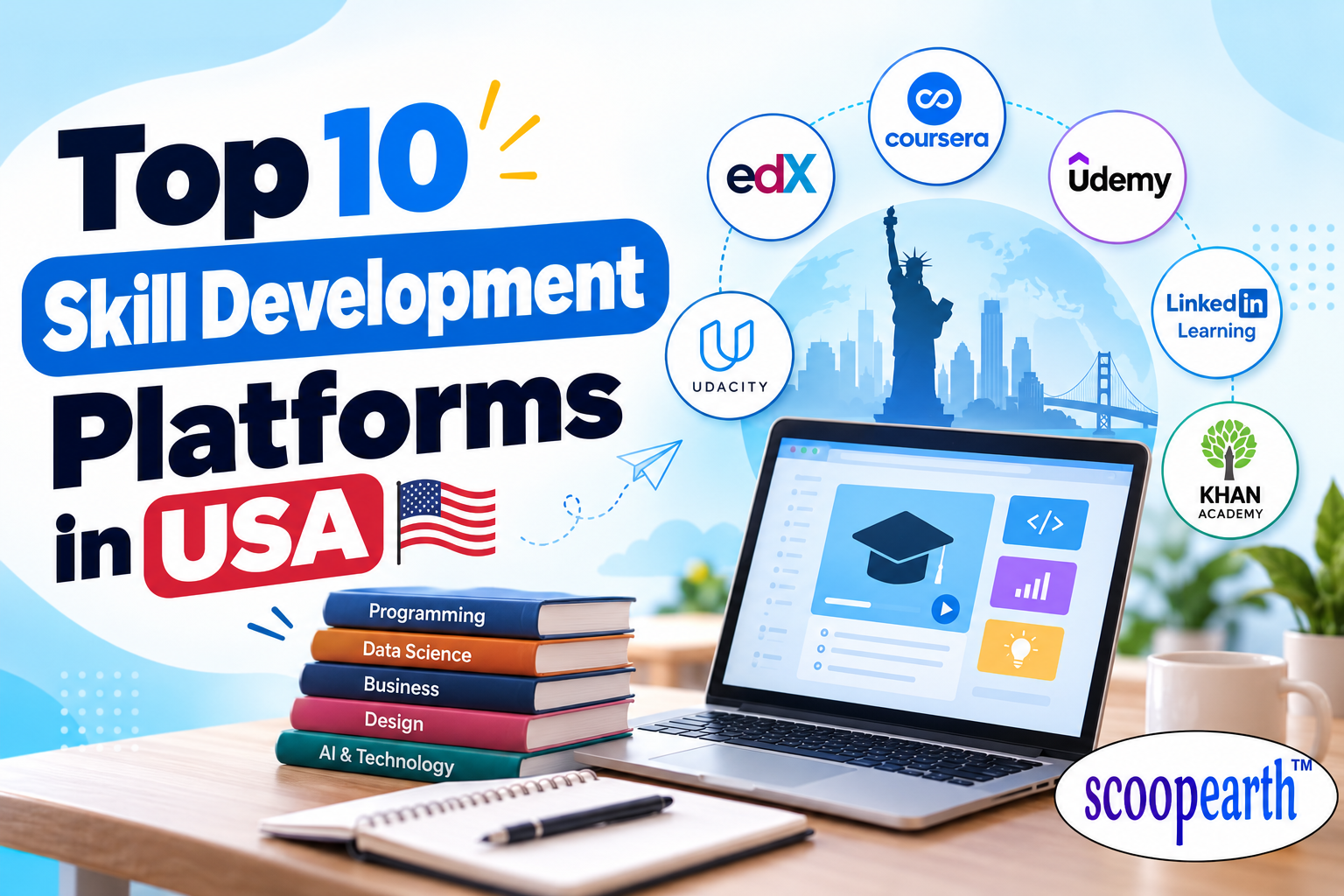
Learning a skill no longer means going back to a classroom or signing up for a long degree program. In the USA students, working professionals and companies now have access to skill development platforms. These platforms allow people to learn subjects like coding, data science, business, leadership, design and artificial intelligence.
The options today are varied. Some platforms partner with universities. Offer professional certificates. Others focus on hands-on training. Platforms such as LinkedIn Learning link learning directly to profiles and career growth. There are also services for data skills, technology teams and short-term career training programs.
This list of the 10 skill development platforms in the USA includes platforms that are well established in the U.S. Market and relevant to a wide range of learners and professionals. The selection takes into account factors like platform size, course variety, career-focused content, from startup to enterprise adoption, credentials and the types of skills. This list is not meant to rank one platform as the best, for everyone. The right platform depends on a learner’s goals, budget and preferred way of learning.
1. Coursera
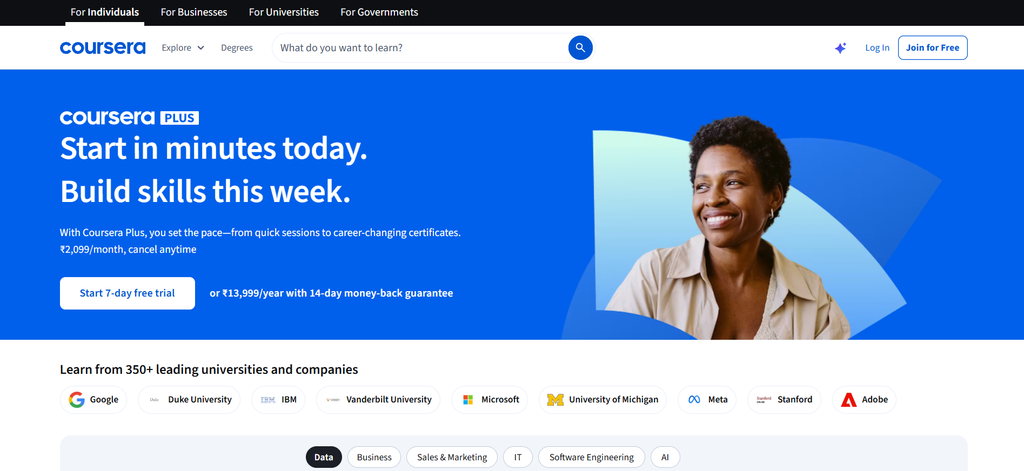
Coursera is a known name in online professional learning because of its partnerships with universities and companies. It was started by Stanford professors Andrew Ng and Daphne Koller. It now offers courses, certificates and degree programmes through university and industry partners.
| Founded: 2012 |
| Headquarters: Mountain View, California |
| Latest Revenue: FY2025 revenue of $757.5 million |
| Latest Net Income/Loss: FY2025 net loss of $51.0 million |
| Main Products/Services: Courses, Professional Certificates, Specializations, degrees and enterprise learning |
Its catalogue covers areas such as data science, business, technology, AI, project management and personal development. Coursera reported more than 175 million learners worldwide on its platform and more than 350 university and company partners. It is remarkable how many people are learning through Coursera.
The company is especially useful for people who want a course with a recognised institution or company attached. In 2025 Coursera reported revenue of $757.5 million and a net loss of $51 million. that it is investing heavily in growth.
One recent development has changed Coursera’s position in the learning market. It completed its combination with Udemy on May 11 2026. Coursera and Udemy continue to operate as platforms for now. I think this partnership could bring opportunities for learners.
2. Udemy
Udemy takes an approach from university-focused learning sites. Its marketplace allows instructors to create and sell courses across a wide range of subjects,it gives creators flexibility.
| Founded: 2010 |
| Headquarters: San Francisco, California |
| Latest Revenue: FY2025 revenue of $789.8 million |
| Latest Net Income/Loss: FY2025 loss from operations of $4.2 million |
| Main Products/Services: Online courses, Personal Plan and Udemy Business |
Udemy says it has more than 84 million learners, 90,000 instructors and more than 290,000 courses across 78 languages. Its subjects include programming, data science, business, design, project management and AI. It is clear that it serves an audience.
That large marketplace gives learners plenty of choice especially when learners want to learn a software programme or practical skill without joining a long academic programme. I appreciate the variety of platform offers.
Udemy’s business side is also important. Companies use its Business for employee training and professional development. Its 2025 revenue reached $789.8 million with enterprise revenue accounting for $524.1 million.
Following the 2026 combination with Coursera, Udemy is now part of the company but remains a separate platform for learners.
3. LinkedIn Learning
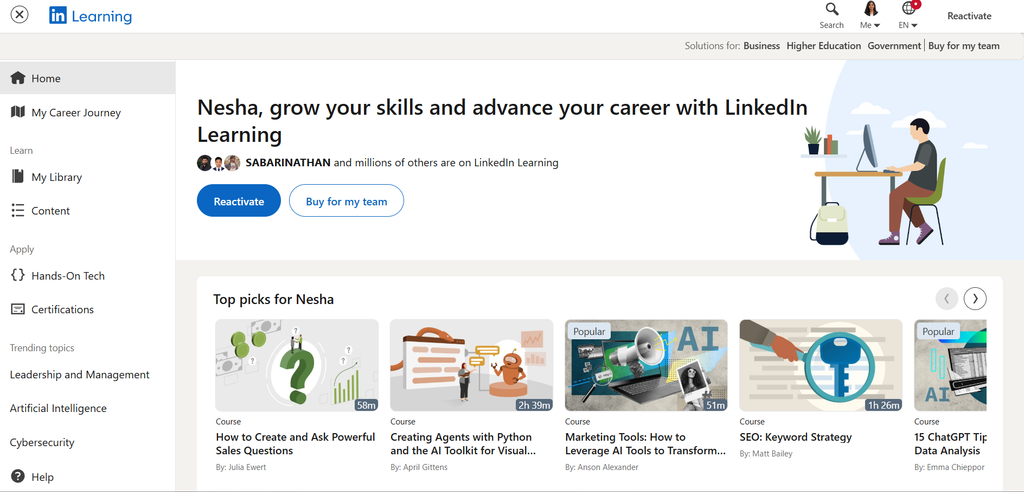
LinkedIn Learning is closely connected to the network used by job seekers and employers. LinkedIn launched the service in 2016 after acquiring Lynda.com, an established learning company. This link is useful for career growth.
| Founded: 2016 as LinkedIn Learning |
| Headquarters: Sunnyvale, California, through LinkedIn |
| Latest Revenue: Brand-level revenue not publicly disclosed |
| Latest Net Income/Loss: Brand-level figure not publicly disclosed |
| Main Products/Services: Business, technology and creative courses, learning paths and professional certificates |
The connection to LinkedIn is one of its differences. Learners can use courses and skill assessments as part of their development and add completed learning to their LinkedIn profiles. It is a way to showcase skills.
Today, LinkedIn Learning offers more than 26,000 courses and thousands of learning paths covering business, technology and creative subjects. The platform also includes certificates and hands‑on exercises. I like the diversity of content.
LinkedIn itself was founded in 2003. Is headquartered in Sunnyvale, California. LinkedIn is owned by Microsoft, but LinkedIn Learning does not report revenue or profit figures so Microsoft or LinkedIn financial figures should not be presented as LinkedIn Learning revenue. I think this keeps the focus on learning.
4. Skillsoft
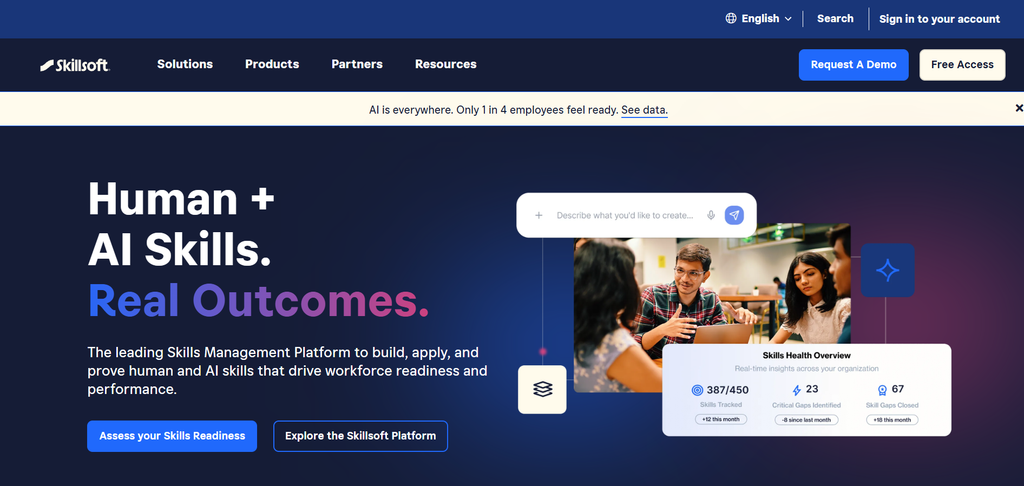
Skillsoft is heavily focused on workforce learning than many consumer-oriented education platforms. Its services are designed around organisations that need to train employees in areas such as technology, leadership and compliance.
| Founded: 1998 |
| Headquarters: Nashua, New Hampshire, U.S. headquarters |
| Latest Revenue: FY2026 revenue of $512.7 million |
| Latest Net Income/Loss: FY2026 GAAP net loss not presented here as a standalone platform figure |
| Main Products/Services: Technology, leadership, compliance and workforce skills training |
The company says it supports more than 105 million learners and is used by thousands of organisations worldwide including 60% of the Fortune 1000.
Its financial results give an idea of the scale of the wider company. For 2026, Skillsoft reported total revenue of $512.7 million compared with $531.0 million in fiscal 2025.
Skillsoft also owns Codecademy, which specialises in technology and programming education. Because Codecademy is part of Skillsoft, Codecademy is not treated as an independent company in this list. I appreciate Codecademy’s hands-on learning style.
5. Pluralsight
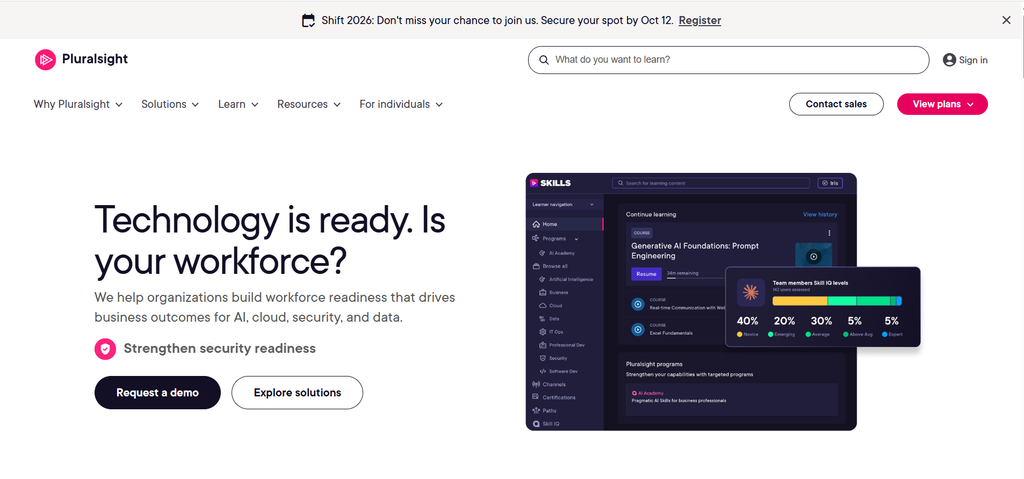
Pluralsight focuses narrowly on general-purpose learning marketplaces. It centers on technology, which makes it especially useful for software developers, IT professionals and technical teams.
| Founded: 2004 |
| Headquarters: Texas, USA |
| Latest Revenue: Not publicly disclosed |
| Latest Net Income/Loss: Not publicly disclosed |
| Main Products/Services: Technology courses, assessments, labs and workforce development |
The company began in 2004 as a classroom-based training provider. In 2008 it shifted its training to a format. Since then the library has grown to include topics like cloud computing, cybersecurity, data science and artificial intelligence.
Pluralsight now claims to have more than 2,500 expert authors, 22,000 business customers and users in 180 countries. Its platform is used by both technology teams and individual learners.
The company remains privately held so current revenue and profit numbers are not publicly reported like they are for traded companies such as Coursera or Udemy.
6. DataCamp
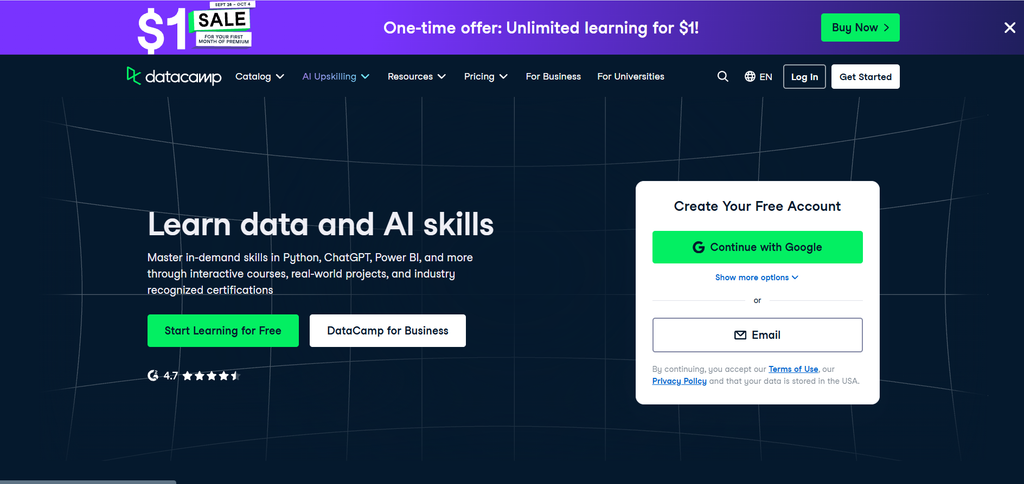
DataCamp is a helpful choice for people who want to build data skills. In trying to cover all subjects it keeps its focus on data, analytics and AI.
| Founded: 2013 |
| Headquarters: New York, USA |
| Latest Revenue: Not publicly disclosed |
| Latest Net Income/Loss: Not publicly disclosed |
| Main Products/Services: Data science, Python, SQL, AI, analytics and data literacy |
DataCamp, founded in 2013 says its mission is to make data and AI skills available to people and businesses. The platform now has more than 21 million learners, over 5,000 companies and 3,000 academic organisations in more than 180 countries.
Its courses use a learning model that includes exercises and hands-on work instead of just video lessons. This approach is useful for people learning Python, SQL, data visualisation or other technical skills.
Its private company financial figures are not publicly disclosed, so its parent‑level or estimated revenue should not be used for DataCamps revenue.
7. EdX
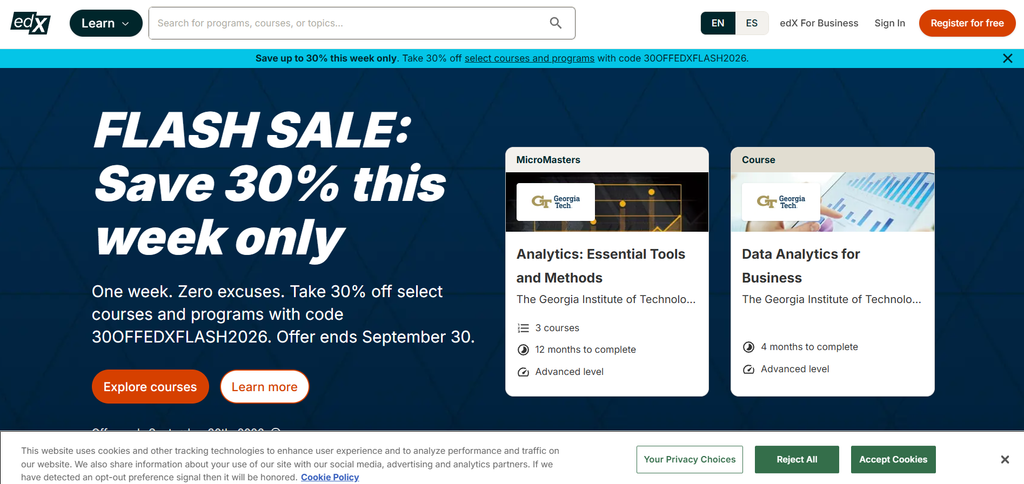
edX is different because of its roots. It has a background that makes it different from many other online learning platforms. It was founded in 2012 by Harvard and MIT professors to expand access to education via the internet.
| Founded: 2012 |
| Headquarters: Not publicly disclosed as a standalone platform headquarters |
| Latest Revenue: Brand-level revenue not publicly disclosed |
| Latest Net Income/Loss: Brand-level figure not publicly disclosed |
| Main Products/Services: University courses, certificates, microcredentials and professional programmes |
Today learners can find courses, professional certificates and microcredentials in fields like computer science, business, data and other professional subjects. With its learners can explore these options.
The platform is now run by 2U after 2U bought edX. Because edX does not publish its financial statements, 2U’s total revenue should not be treated as its revenue.
For learners who like content edX offers a different experience than open marketplaces where instructors publish courses on their own.
8. Udacity
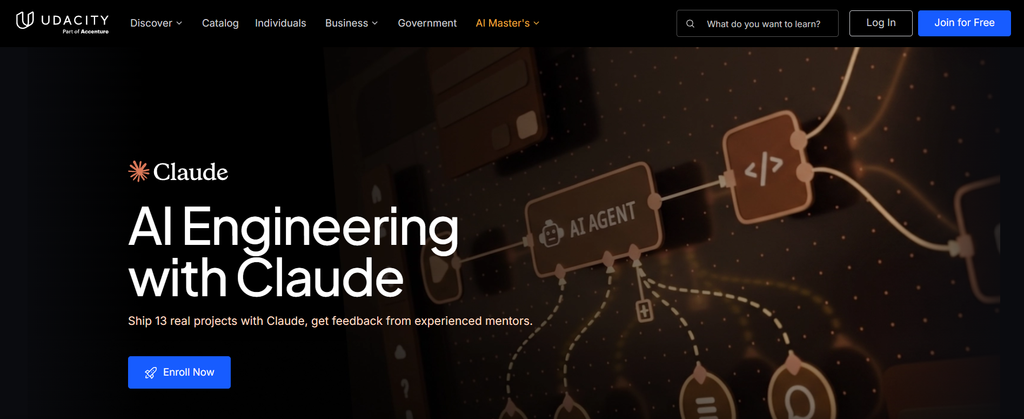
Udacity has been tied to technology‑focused career education since the beginning. It was founded in 2011 after an online computer science experiment linked to Stanford and its early programmes focused on programming and technical subjects.
| Founded: 2011 |
| Headquarters: U.S. operations; exact current corporate headquarters not clearly disclosed publicly |
| Latest Revenue: Not publicly disclosed |
| Latest Net Income/Loss: Not publicly disclosed |
| Main Products/Services: Technology programmes, Nanodegrees, AI, data and cloud skills |
The platform later created its Nanodegree model offering programmes in areas such as AI, data science, cloud computing and digital marketing.
Its focus sets it apart from platforms with general catalogues. It has concentrated more on job‑related technology education and practical projects.
It also appeared in Newsweek’s 2025 list of America’s Top Online Learning Schools. That list was based on a Statista survey of more than 10,000 U.S. respondents, not on Udacity’s own financial results.
9. General Assembly
General Assembly is known for career‑oriented training. It started in 2011 to make technology careers more accessible then expanded its programmes to include software engineering, data analytics, user experience and emerging technologies.
| Founded: 2011 |
| Headquarters: Not publicly disclosed as a separate current headquarters |
| Latest Revenue: Brand-level revenue not publicly disclosed |
| Latest Net Income/Loss: Brand-level figure not publicly disclosed |
| Main Products/Services: Technology, data analytics, UX design, AI and career training |
Unlike an online marketplace, General Assembly has combined digital learning with instructor‑led and hands-on training. It also partners with businesses that want to develop workforce skills.
The brand is now part of the Adecco Group. It is linked to LHH, the group’s professional talent solutions business.
Its financial results are not disclosed separately so Adecco Group’s total revenue should not be described as General Assembly revenue.
10. MasterClass
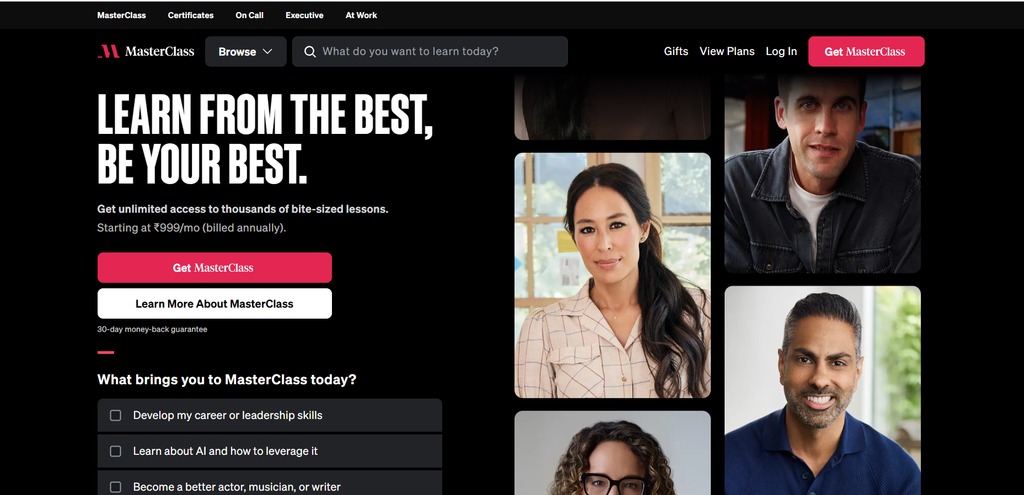
MasterClass takes an approach to learning. The platform launched in 2015. Offers classes taught by well‑known people, in business, writing, sports, design and entertainment.
| Founded: 2015 |
| Headquarters: San Francisco, California |
| Latest Revenue: Not publicly disclosed |
| Latest Net Income/Loss: Not publicly disclosed |
| Main Products/Services: Video classes in business, writing, design, sports, food, entertainment and other subjects |
The classes are built around video lessons. Many of them have a production style and include downloadable workbooks. This format can appeal to people who enjoy watching structured lessons of doing traditional academic coursework.
MasterClass does not focus heavily on professional certification as Coursera or LinkedIn Learning. Instead it offers a mix of professional and personal interests, such as creative skills and lifestyle subjects.
The company is privately held. Therefore MasterClass does not publicly disclose its revenue or net income.
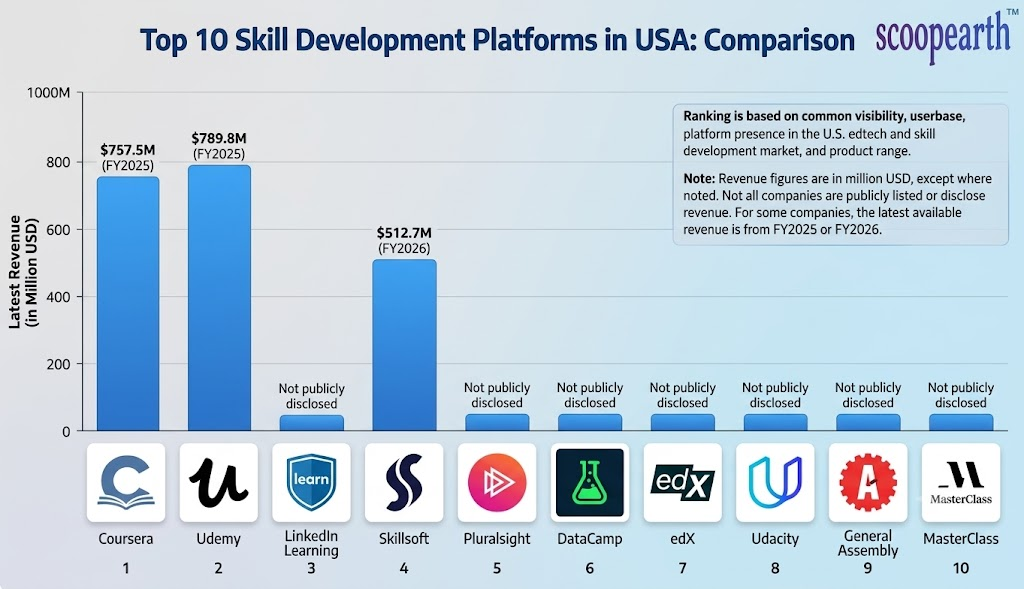
Top 10 Skill Development Platforms in USA: Comparison
| Rank | Company/Platform | Founded | Latest Revenue | Main Products/Services |
| 1 | Coursera | 2012 | $757.5M, FY2025 | Courses, certificates, degrees |
| 2 | Udemy | 2010 | $789.8M, FY2025 | Online courses, enterprise learning |
| 3 | LinkedIn Learning | 2016 | Not publicly disclosed | Business, technology and creative courses |
| 4 | Skillsoft | 1998 | $512.7M, FY2026 | Workforce, technology and leadership training |
| 5 | Pluralsight | 2004 | Not publicly disclosed | Technology training and assessments |
| 6 | DataCamp | 2013 | Not publicly disclosed | Data, AI, Python and analytics |
| 7 | edX | 2012 | Not publicly disclosed | University courses and microcredentials |
| 8 | Udacity | 2011 | Not publicly disclosed | Technology and career programmes |
| 9 | General Assembly | 2011 | Not publicly disclosed | Tech, data, UX and career training |
| 10 | MasterClass | 2015 | Not publicly disclosed | Business, creative and lifestyle classes |
Note: The ranking is an editorial comparison based on platform scale, range of learning, career relevance, enterprise use, credentials and U.S. presence. It isn’t a universal quality ranking.
What Should You Check Before Choosing a Skill Development Platform?
Start with the skill you really want to grow. If you want to learn Python or cloud computing you may need a technical platform such as DataCamp, Pluralsight or Udacity. If you want certificates you might prefer Coursera or edX.
Cost is another important point. Some platforms sell each course separately while others use yearly subscriptions. Learners should also check whether a course has projects, tests, certificates or an instructor to help them.
For learning it is useful to check who made the course and whether the credential is recognized by employers or an industry group. A large course catalogue does not automatically mean every course will fit your needs.
Conclusion
Skill development platforms make it easier for people in the USA to learn without a full‑time college program. Coursera and Udemy offer catalogues Meet the LinkedIn Learning links skills with career growth while Pluralsight, DataCamp and Udacity focus more on technology.
Other platforms bring courses, bootcamp‑style training or expert‑led classes. The best choice depends on what the learner wants, the budget, the format that feels right and the type of hands-on experience that is sought.
FAQ
1.at are the top skill development platforms in USA?
Some of the skill development platforms serving U.S. Learners are Coursera, Udemy, LinkedIn Learning, Skillsoft, Pluralsight, DataCamp, edX, Udacity, General Assembly and MasterClass. They differ in course style, price, subjects and credentials. The right platform depends on the learner’s needs.
2. Which platform is good for learning technology skills?
Technology learners have options. Pluralsight focuses heavily on technology professionals. DataCamp is centered on data and AI skills. Udacity also has a technology and career focus. Udemy and Coursera provide catalogues that include programming, cloud computing, cybersecurity and other technical subjects.
3. Are Coursera and Udemy separate platforms?
Yes. Coursera completed its merge with Udemy on May 11 2026 making Udemy an owned subsidiary of Coursera. However the two services still operate as platforms for now and users’ existing accounts and course access remain separate.
4. Does LinkedIn Learning provide certificates?
LinkedIn Learning provides certificates of completion for its courses, which users can add to their LinkedIn profiles. The platform also offers certificates from selected providers. Learners should distinguish these completion certificates from professional licences or industry certifications.
5. Which platforms offer courses?
Coursera and edX are two examples. Coursera works with universities and companies to offer courses, certificates and degrees. EdX was founded by Harvard and MIT professors. Continues to offer university‑backed courses and professional programmes.
6. Is DataCamp for data scientists?
Not necessarily. DataCamp focuses strongly on data and AI skills. Its learning can also be useful for professionals who want to improve skills in areas such as Python, SQL, analytics and data literacy. The platform serves individuals well as businesses and academic organisations.
7. Does Pluralsight offer courses outside technology?
Technology remains the focus of Pluralsight. Its services are designed around technology skills, assessments, labs and workforce development. This makes it different from platforms that cover subjects such as writing, marketing, arts and personal development.
8. What is the General Assembly known for?
General Assembly is known for career training especially in software engineering, data analytics, user experience design and emerging technologies. It was founded in 2011. It is now part of the Adecco Group.
9. Is MasterClass useful for development?
MasterClass includes subjects such as business, leadership, writing and communication along with creative and lifestyle topics. Its format is video and instructor focused rather than certification focused. Someone looking for a professional credential may need to compare it with platforms offering certificates or industry‑recognised programmes.
10. Are these platforms available in the USA?
No. Most of the platforms in this list serve learners worldwide. Udemy, Coursera, DataCamp and other services have users outside the United States. Their inclusion here reflects their relevance to the U.S. Skill development market, not a restriction, to learners.