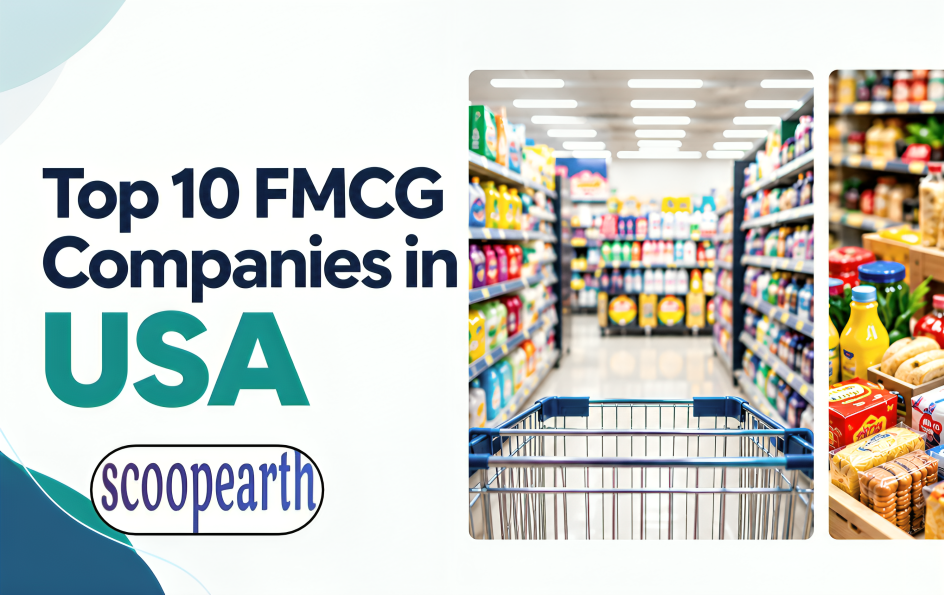
Fast-moving consumer goods, or FMCG, are products that are purchased frequently and consumed relatively quickly. From toothpaste, shampoo, breakfast cereals, and snacks to sodas, cleaning products, and packaged foods, FMCG products permeate every house and lifestyle in the United States nowadays. Indeed, the FMCG market in the U.S. is enormous and extremely competitive, comprising thousands of companies that address a range of different consumers.
Fast-moving consumer goods are interesting because although many iconic brands have existed for decades, companies continue to innovate and launch new products to satisfy current demands.
The following article lists 10 of the largest FMCG companies associated with the U.S. market.
1. P&G
| Company Information | Details |
|---|---|
| Company Name | The Procter & Gamble Company (P&G) |
| Founded | 1837 |
| Global Headquarters | 1 P&G Plaza, Cincinnati, Ohio 45202, USA |
| Business | Consumer packaged goods (CPG) / FMCG |
| Main Products/Services | Beauty and personal care, baby care, feminine care, fabric care, home care, health care and grooming products |
| Main Brands | Tide, Pampers, Gillette, Pantene, Head & Shoulders, Oral-B, Olay, Always, Charmin, Crest, Downy, Febreze, Swiffer and Vicks |
| Main Focus | Developing and selling everyday consumer products through trusted brands, product innovation, consumer research, technology and efficient distribution |
| Key Figure | Shailesh Jejurikar – Chairman of the Board, President and Chief Executive Officer |
| Public Listing | New York Stock Exchange (NYSE: PG) |
| Funding/Valuation | Publicly traded; market value varies with share price |
P&G In particular, the company reported net sales of approximately $84.3 billion for fiscal 2025, with fabric and home care contributing the largest share, followed by baby, feminine and family care, beauty, and health care segments. North America contributed 52% of the company’s overall revenue. P&G is a prime example of an FMCG company that has profited from recognizing the power of brand-building and brand equity . Customers may experiment with various products, but they tend to remain loyal to a specific brand and buy the same products over and over again.
2. PepsiCo
| Company Profile | Information |
|---|---|
| Company Name | PepsiCo, Inc. |
| Year Established | 1965 |
| Headquarters | 700 Anderson Hill Road, Purchase, New York 10577, USA |
| Industry | Food and beverages / FMCG |
| Products and Services | Convenient foods, snacks, soft drinks, sports drinks, juices, cereals and other food and beverage products |
| Popular Brands | Pepsi, Lay’s, Doritos, Cheetos, Gatorade, Mountain Dew, Quaker, Tostitos, Ruffles and SodaStream |
| Business Strategy | Beverages and convenient foods, with consumer-focused innovation and Pepsi Positive (pep+) |
| Leadership | Ramon Laguarta – Chairman and Chief Executive Officer |
| Stock Exchange | NASDAQ (PEP) |
| Valuation | Publicly traded; market value varies with share price |
| 2025 Net Revenue | Approximately $93 billion |
PepsiCo is another large multinational corporation known for its brands centered around carbonated and other soft drinks, as well as foods that are consumed as a part of regular diets. While the company is most closely associated with Pepsi , it has acquired numerous food brands such as Lay’s, Doritos, Cheetos, Fritos, Ruffles, and Tostitos, as well as Quaker and SodaStream. PepsiCo operates in more than 200 countries and territories and addresses a wide range of customers in the U.S., from families and individuals to restaurants and other businesses interested in branded products.
PepsiCo’s extensive range of carbonated and non-carbonated drinks, as well as products such as sports drinks, snack foods, and convenience foods, offer consumers a wide range of choices for satisfying their everyday needs and preferences.
PepsiCo is one of the largest FMCG companies due to its presence in diverse product categories that are consumed daily by virtually all Americans.
3. The Coca-Cola Company
| Company Overview | Details |
|---|---|
| Official Name | The Coca-Cola Company |
| Founded | 1886 |
| Headquarters | One Coca-Cola Plaza, Atlanta, Georgia 30313, USA |
| Industry | Beverages / FMCG |
| Core Products | Non-alcoholic beverages, including sparkling drinks, still drinks, water, sports drinks, juices and ready-to-drink coffee |
| Major Brands | Coca-Cola, Coca-Cola Zero Sugar, Diet Coke, Sprite, Fanta, Dasani, Smartwater, Powerade, Minute Maid, Simply, Georgia and Costa Coffee |
| Primary Focus | Refreshing the world through a broad portfolio of beverages, focusing on brand building, innovation, sustainability and expanding product offerings |
| Leadership | James Quincey – Chairman of the Board and Chief Executive Officer |
| Stock Exchange | New York Stock Exchange (NYSE: KO) |
| Valuation | Publicly traded; market value varies with share price |
| 2025 Net Revenue | Approximately $47 billion |
The Coca-Cola Company is a multinational corporation known for its flagship beverage Coca-Cola, as well as for addressing a wide range of customers and categories through its diverse range of products. The company operates under such popular trademarks as Coca-Cola, Dasani, Powerade, Topo Chico, and Costa Coffee, and offers a variety of sparkling and still beverages, carbonated drinks, sports drinks, and more.
Coca-Cola Company’s FMCG products are consumed by hundreds of millions of people worldwide, making the company one of the most recognizable trademark owners in history. Notably, Coca-Cola is one of the most valuable FMCG brands due to its association with different aspects of consumers’ lives, from restaurants to movies, music, popular culture, and sports.
4. Mondelēz International
| Business Information | Details |
|---|---|
| Company Name | Mondelēz International, Inc. |
| Established | 2012 (formed as an independent company in 2012 after the Kraft Foods split) |
| Headquarters | 905 West Fulton Market, Suite 200, Chicago, Illinois, USA |
| Industry | Global snacking / FMCG |
| Main Products | Chocolate, biscuits and baked snacks, gum and candy, cheese and grocery products |
| Leading Brands | Oreo, Ritz, LU, Cadbury, Toblerone, Milka, Trident, Halls, Chips Ahoy! and Philadelphia |
| Business Focus | Leading the future of snacking through consumer-focused growth, strategic innovation, operational excellence and responsible sustainability |
| Key Figure | Dirk Van de Put – Chair and Chief Executive Officer |
| Stock Listing | NASDAQ (MDLZ) |
| Valuation | Publicly traded; market value varies with share price |
| 2025 Net Revenue | Approximately $38 billion |
Mondelēz International is a global snack food company that offers consumers such popular products as Oreo, Ritz, belVita, LU, Chips Ahoy!, Tate’s Bake Shop, and Cadbury. With a presence in over 150 countries, the company has been able to diversify its product offerings and address different customer segments, from individual consumers to large retailers and distributors. Mondelēz has reported net revenue of $38.5 billion in 2025, with biscuits and baked snacks accounting for 48% and chocolate for 33% of total revenue.
Mondelēz International is known for its strong focus on the snack category and for being able to offer consumers unique and innovative products within this product category. For example, Oreo is an iconic product that has been recognized and enjoyed by consumers all over the world. At the same time, the company actively invests in brand development, offering new products in unique packaging and actively participating in the E-commerce space.
5. The Kraft Heinz Company
| Company Profile | Information |
|---|---|
| Company Name | The Kraft Heinz Company |
| Formation | 2015 (merger of Kraft Foods Group and H.J. Heinz Company) |
| Global Headquarters | 200 East Randolph Street, Suite 7600, Chicago, Illinois, USA |
| Business Sector | Food and beverages / FMCG |
| Products and Services | Sauces and condiments, cheese, meals, meat products, ready-to-eat foods, beverages and snacks |
| Major Brands | Heinz, Kraft, Philadelphia, Oscar Mayer, Jell-O, Velveeta, Lunchables, Capri Sun, Kool-Aid, Classico, Planters and Maxwell House |
| Main Focus | Providing high-quality, affordable and convenient food and beverage products through strong brands, innovation and a global distribution network |
| Key Figure | Carlos Abrams-Rivera – Chief Executive Officer |
| Public Listing | NASDAQ (KHC) |
| Valuation | Publicly traded; market value varies with share price |
| 2025 Net Revenue | Approximately $25 billion |
Kraft Heinz has been focusing on creating iconic products for decades, which has helped the company to build brand recognition and customer loyalty at both the retail and consumer levels. For example, Heinz ketchup has been a staple of the American diet for a long time, which differentiates the brand from its competitors. Nevertheless, like many other FMCG companies, Kraft Heinz is actively adapting to the changing demands of the market and introducing new products that are relevant to today’s consumers.
6. General Mills
| Company Information | Details |
|---|---|
| Company Name | General Mills, Inc. |
| Founded | 1866 |
| Headquarters | Number One General Mills Boulevard, Minneapolis, Minnesota 55426, USA |
| Industry | Packaged food / FMCG |
| Main Products | Breakfast cereals, snacks, baking products, frozen foods, meals and pet food |
| Main Brands | Cheerios, Yoplait, Betty Crocker, Pillsbury, Häagen-Dazs, Old El Paso, Blue Buffalo, Annie’s and Progresso |
| Business Strategy | Providing nutritious, convenient and great-tasting food for people and pets through trusted brands, innovation and sustainability |
| Leadership | Jeffrey L. Harmening – Chair and Chief Executive Officer |
| Stock Exchange | New York Stock Exchange (NYSE: GIS) |
| Valuation | Publicly traded; market value varies with share price |
| 2025 Net Revenue | Approximately $19.5 billion |
General Mills is a multinational manufacturer of consumer goods known for its wide range of products, including breakfast cereals, snacks, baking products, frozen foods, pet food, and more. General Mills’ iconic brands include Cheerios, Nature Valley, Betty Crocker, Pillsbury, Häagen-Dazs, Old El Paso, Yoplait, and Blue Buffalo. General Mills has been focusing on the U.S. market and reported net sales of approximately $19.5 billion in fiscal 2025.
Companies such as General Mills are vital to the U.S. economy because they provide jobs, support local businesses, and offer consumers a wide range of high-quality products. For example, a single household can stock various products from General Mills, such as breakfast cereals, snacks, and pet food. Moreover, General Mills’ wide range of offerings illustrates the company’s responsiveness to the changing demands of consumers.
7. Colgate-Palmolive
| Company Overview | Information |
|---|---|
| Company Name | Colgate-Palmolive Company |
| Founded | 1806 |
| Headquarters | 300 Park Avenue, New York, New York 10022, USA |
| Industry | Oral care, personal care, home care and nutrition / FMCG |
| Main Products | Toothpaste, toothbrushes, mouthwash, soap, shampoo, household cleaning products and pet food |
| Major Brands | Colgate, Palmolive, Softsoap, Ajax, Suavitel, Irish Spring, Hill’s Pet Nutrition, Tom’s of Maine and Hello |
| Main Focus | Improving people’s health, hygiene and well-being through trusted brands, innovation and sustainable growth |
| Key Figure | Noel R. Wallace – Chairman of the Board and Chief Executive Officer |
| Stock Exchange | New York Stock Exchange (NYSE: CL) |
| Valuation | Publicly traded; market value varies with share price |
| 2025 Net Revenue | Approximately $20 billion |
Colgate-Palmolive reports net sales of approximately $14.7 billion for 2025. The company is a part of the intensely competitive and price-sensitive FMCG market, in which customer loyalty plays a critical role. By being known and trusted by consumers, Colgate-Palmolive is able to effectively differentiate itself from competitors and sell its products at a consistently high price.
8. Kimberly-Clark
| Company Profile | Details |
|---|---|
| Company Name | Kimberly-Clark Corporation |
| Established | 1872 |
| Global Headquarters | 2300 Windy Ridge Road, Wisconsin 54956, USA |
| Industry | Personal care and household products / FMCG |
| Main Products | Baby care, feminine care, adult care, family care, personal care products and hygiene solutions |
| Popular Brands | Huggies, Kleenex, Cottonelle, Scott, Depend, Poise, Pull-Ups, GoodNites, WypAll and Kimtech |
| Business Focus | Improving the health, hygiene and well-being of people through trusted brands, innovation and sustainable solutions |
| Leadership | Mike Hsu – Chairman of the Board and Chief Executive Officer |
| Public Listing | New York Stock Exchange (NYSE: KMB) |
| Valuation | Publicly traded; market value varies with share price |
| 2025 Net Revenue | Approximately $16 billion |
Kimberly-Clark is an American multinational corporation that focuses on developing and selling products within the personal care, household care, and more. The company has been known for its feminine care, baby care, and adult care products, including baby diapers and incontinence products. Kimberly-Clark’s popular brands also include Kleenex, Cottonelle, Scott, Depend, Poise, and more.
The company has been operating since 1872 and has managed to maintain its presence in the market by providing high-quality products that have been loved by generations of consumers. In 2025, Kimberly-Clark reported revenue of $16.4 billion in sales from its principal products. Baby and child care was its largest product category at about $6.8 billion and approximately $4.1 billion in family care revenue.
Kimberly-Clark illustrates the importance of the FMCG industry because the products it offers are necessary for individuals and households. While some may substitute tissues for handkerchiefs, most people will continue buying tissues from Kimberly-Clark because they have become accustomed to the quality and reliability of Kleenex.
9. Tyson Foods
| Company Information | Details |
|---|---|
| Company Name | Tyson Foods, Inc. |
| Founded | 1935 |
| Headquarters | 2200 Don Tyson Parkway, Springdale, Arkansas 72762, USA |
| Industry | Food and protein products / Meat processing and food production |
| Main Products | Beef, pork, chicken and prepared foods, including fresh, frozen and ready-to-eat products |
| Major Brands | Tyson, Jimmy Dean, Hillshire Farm, Ball Park, Wright Brand, State Fair, Aidells and ibp |
| Primary Focus | Providing high-quality, affordable protein and food products while focusing on sustainability, innovation and operational excellence |
| Key Figure | Donnie King – President and Chief Executive Officer |
| Stock Exchange | New York Stock Exchange (NYSE: TSN) |
| Valuation | Publicly traded; market value varies with share price |
| 2025 Net Revenue | Approximately $53.4 billion |
Tyson Foods is one of the most recognizable brands within the meat and poultry category. Its diverse range of products, including fresh and frozen foods, supports the company’s position within the FMCG market. In particular, the company has managed to satisfy the consumer’s demand for convenience by offering meals that can be eaten as they are or require minimal preparation.
10. The Clorox Company
| Company Overview | Details |
|---|---|
| Company Name | The Clorox Company |
| Founded | 1913 |
| Headquarters | 1221 Broadway, Oakland, California 94612, USA |
| Industry | Consumer goods / Household and personal care products |
| Main Products | Cleaning products, disinfectants, personal care items, water filtration devices and natural care products |
| Main Brands | Clorox, Glad, Pine-Sol, Burt’s Bees, Kingsford, Hidden Valley, Fresh Step, Brita, Tilex and RenewLife |
| Business Focus | Helping people live healthier, cleaner and safer lives through trusted brands, innovation and sustainable solutions |
| Leadership | Linda Rendle – Chair and Chief Executive Officer |
| Public Listing | New York Stock Exchange (NYSE: CLX) |
| Valuation | Publicly traded; market value varies with share price |
| 2025 Net Revenue | Approximately $7.1 billion |
Clorox has been a household name in the U.S. for several decades, being famous for its bleach products. Nevertheless, the company offers a wide range of products that go far beyond household cleaning supplies. The Clorox Company has been able to build brand recognition and loyalty by being consistent in its product quality and appealing to the demands of diverse consumers.
The Clorox Company has been particularly successful at operating within the highly competitive and value-conscious FMCG market. In its fiscal 2025, the company has reported net sales of approximately $7.1 billion, and approximately 7,600 employees as of June 30, 2025. More than 80% of the company’s sales are from brands that rank #1 or #2 in their category.
Conclusion
Fast-moving consumer goods (FMCG) may represent a wide range of products, but they are generally associated with everyday use and frequent repurchasing. Companies that are exceptionally good at building brand image and value can be exceptionally successful at satisfying the demand for their products and remaining relevant even when the market circumstances change. P&G has been able to diversify its product offerings and operate in multiple product categories, making it one of the largest FMCG companies in the U.S. PepsiCo and Coca-Cola represent beverage companies that have been extremely successful at creating unique flavors and products that are enjoyed by millions of consumers every day.
Mondelēz International, Kraft Heinz, and General Mills are famous for their iconic brands, such as Oreo, Heinz, and Cheerios, respectively. Meanwhile, Colgate-Palmolive and Kimberly-Clark address personal and family care product categories and continue to operate successfully by providing high-quality products that have been loved by generations of consumers. Tyson Foods focuses on the protein category and offers a wide range of products within it, whereas Clorox Company has been extremely successful at creating and maintaining a strong brand presence within several product categories.
Companies have been remarkably successful at creating products that are associated with excellent quality. As a result, they are able to operate for very long periods and remain relevant despite the competition. Consumers are generally very loyal to the brands that they have been using for a long time. Thus, FMCG companies need to be mindful of the changing demands and introduce new products and services that address their customers’ needs.
Frequently Asked Questions
1. What are FMCG companies?
FMCG companies manufacture and sell products that are purchased frequently by consumers and are typically consumed or replaced quickly. Examples include food, beverages, personal-care products, cleaning supplies, and other everyday consumer goods.
2. Which is the largest FMCG company in the USA?
There is no single company that can universally be considered the largest in the U.S. FMCG market because companies lead different product categories. P&G, PepsiCo, and Coca-Cola are among the most recognizable FMCG companies in the U.S.
3. What products do FMCG companies sell?
FMCG companies sell a wide range of products associated with frequent purchases or consumption. Common examples include snacks, soft drinks, personal-care products, household cleaners, packaged foods, and other everyday consumer items.
4. Is PepsiCo an FMCG company?
Yes, PepsiCo is a multinational food and beverage company with numerous products that fall within the FMCG category. Its well-known brands include Pepsi, Lay’s, Doritos, Cheetos, Gatorade, Quaker, and Mountain Dew.
5. Is Coca-Cola an FMCG company?
Yes, The Coca-Cola Company is a major FMCG company, particularly in the beverage sector. Alongside Coca-Cola, its portfolio includes various sparkling and still beverages, sports drinks, and other beverage products.
6. What is the difference between FMCG and consumer goods?
FMCG is a category of consumer goods characterized by frequent purchases and relatively quick consumption or replacement. Consumer goods is a broader term that includes FMCG as well as durable products that are purchased less frequently and used for longer periods.
7. Why are FMCG companies important to the U.S. economy?
FMCG companies contribute to the U.S. economy through employment, manufacturing, supply chains, retail, logistics, and distribution networks. Their products also form an important part of everyday consumer spending.
8. Which FMCG companies are known for personal care products?
Several FMCG companies have significant personal-care product portfolios. Procter & Gamble and Colgate-Palmolive are well-known examples, offering products across categories such as oral care, hair care, skincare, grooming, and personal hygiene.
9. Are FMCG companies affected by changing consumer trends?
Yes, FMCG companies are highly responsive to changes in consumer preferences, lifestyles, purchasing power, and shopping habits. Shifts in demand can influence product development, marketing strategies, packaging, pricing, and distribution.
10. What makes a successful FMCG brand?
Strong branding, product development, marketing, sales, and distribution are important factors in building a successful FMCG brand. Successful brands often maintain customer loyalty, respond to changing preferences, introduce new products, and maintain broad market availability.