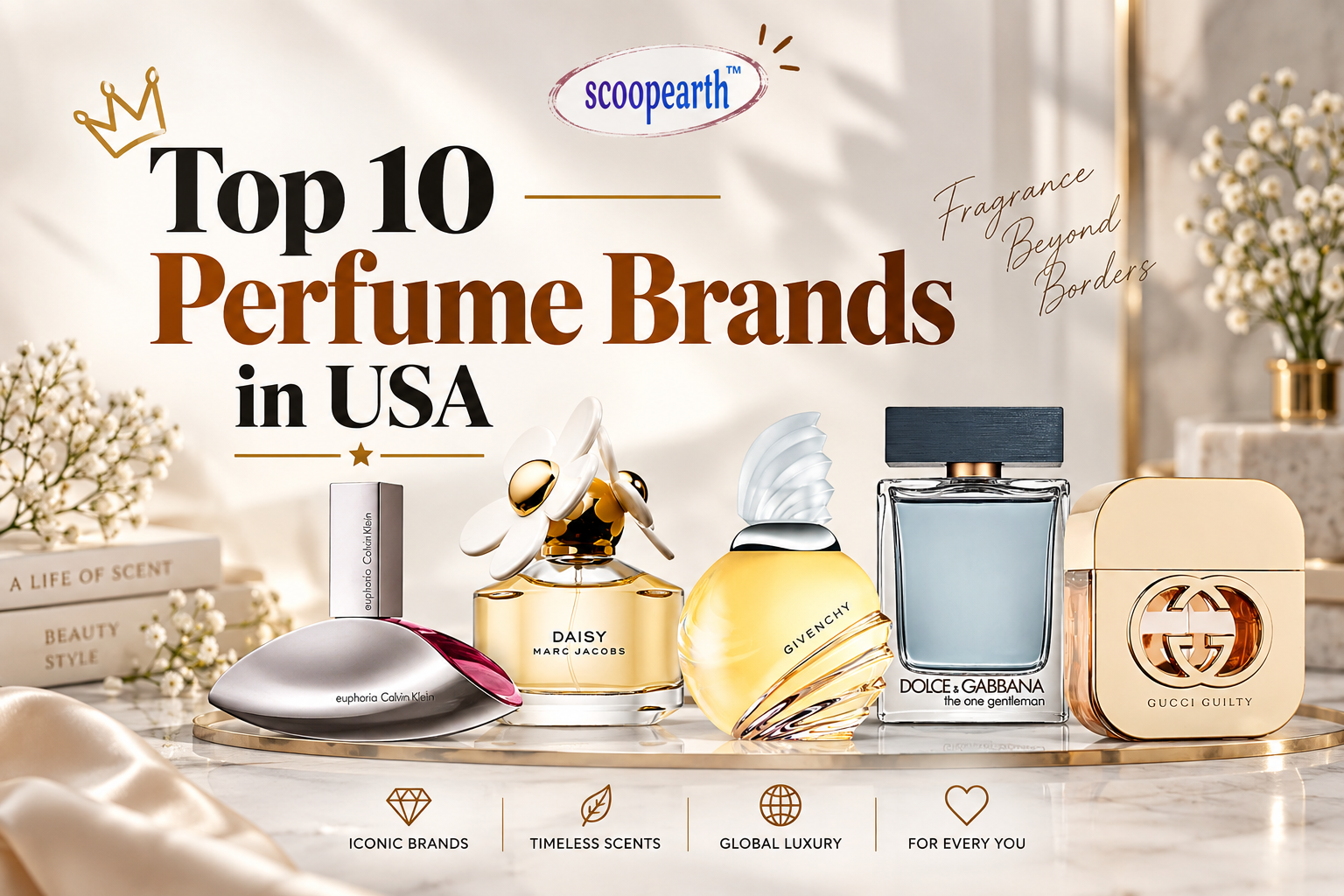
Perfume sales have stayed strong in the United States, and people now shop for fragrance at very different price points. Some buy a $50 everyday scent, while others spend several hundred dollars on a bottle from a best luxury or niche house.
Circana reported that US prestige fragrance sales grew 5% in 2025, while fragrance sales at mass retailers rose 15%. Mini bottles, stronger concentrations and new launches also brought more buyers into the category.
A few names on this list started in America. Tom Ford, Calvin Klein, Ralph Lauren, Marc Jacobs, Estée Lauder and Le Labo all have strong US roots. Chanel, Dior and Yves Saint Laurent came from France, but American shoppers have bought their perfumes for decades.
The following top 10 perfume brands in USA are not arranged only by company revenue. Perfume companies rarely publish US sales for individual fragrance lines, so this list also considers history, product choice, current US availability and the scents people continue to buy.
Top 10 Perfume Brands in USA at a Glance
| Rank | Brand | Origin | Popular Fragrances |
| 1 | Chanel | France | N°5, Coco Mademoiselle, Bleu de Chanel, Chance |
| 2 | Dior | France | Sauvage, Miss Dior, J’adore |
| 3 | Tom Ford | USA | Black Orchid, Oud Wood, Lost Cherry |
| 4 | Yves Saint Laurent | France | Libre, Black Opium, Y |
| 5 | Calvin Klein | USA | CK One, Eternity, Euphoria |
| 6 | Ralph Lauren | USA | Polo, Romance, Ralph’s Club |
| 7 | Carolina Herrera | USA | Good Girl, 212, Bad Boy |
| 8 | Marc Jacobs | USA | Daisy, Perfect |
| 9 | Estée Lauder | USA | Youth-Dew, Beautiful, Pleasures |
| 10 | Le Labo | USA | Santal 33, Another 13, Thé Matcha 26 |
1. Chanel
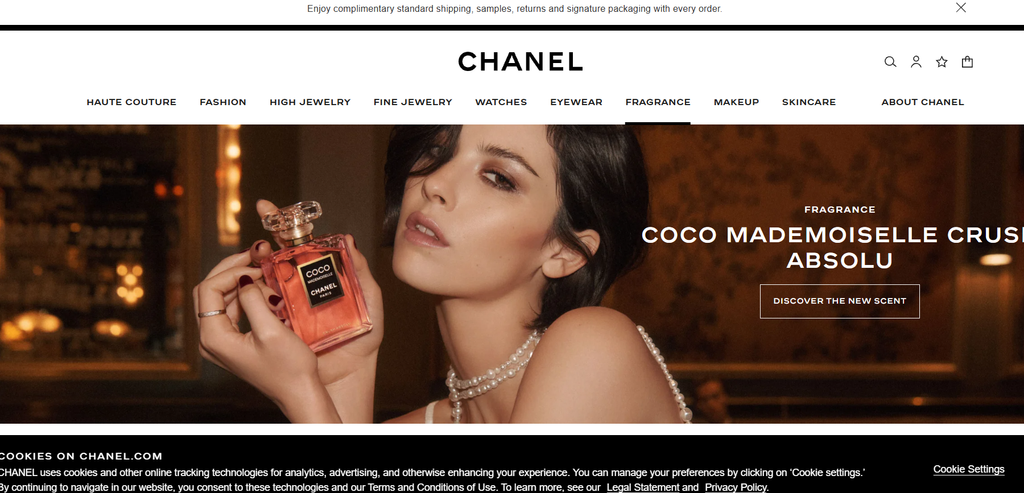
CHANEL entered perfume with a product that still sells more than a century later.
Gabrielle Chanel worked with perfumer Ernest Beaux on Chanel N°5, which the house introduced in 1921. Chanel chose the fifth sample Beaux presented to her and kept the number as the name. The fragrance used aldehydes with rose, jasmine and other notes rather than copying the smell of one flower.
N°5 still sits in Chanel’s US fragrance range, but the company now has several other major lines. Coco Mademoiselle gives women a warmer citrus and amber option, while Chance has several versions. Bleu de Chanel covers the men’s side of the business.
Chanel also keeps its perfume prices firmly in the luxury range. A 1.7-ounce bottle of N°5 Eau de Parfum currently costs $158 on the US site.
The long history matters here, but Chanel has not relied on N°5 alone. Its newer perfume families have given younger buyers other ways into the brand.
2. Dior
Christian Dior treated perfume as part of fashion from the beginning.
He introduced Miss Dior in 1947, the same year he showed his first couture collection. Dior asked perfumer Paul Vacher to create a scent connected with his new fashion, and Miss Dior became the house’s first perfume.
Dior now sells very different fragrance families under the same name.
Miss Dior still covers women’s floral perfumes. J’adore, which arrived in 1999, has built its own long-running line, while Sauvage has become the main name in Dior’s men’s fragrance business. Dior currently sells Sauvage as Eau de Toilette, Eau de Parfum, Parfum, Elixir and Extrait versions.
The US site currently starts Miss Dior Eau de Parfum at about $115, while Sauvage also starts below $100 in some concentrations and sizes.
Dior also sells its more expensive La Collection Privée scents for customers who want something outside the main commercial lines.
3. Tom Ford
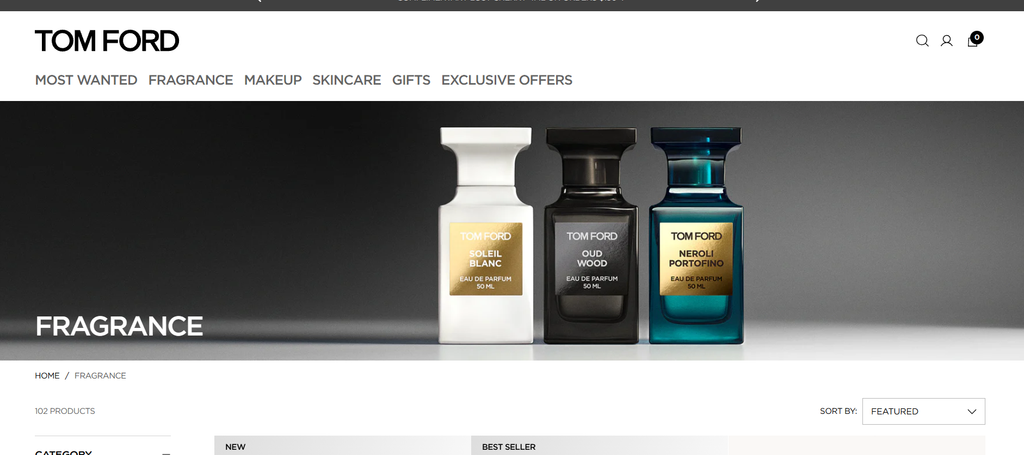
Tom Ford has a much shorter perfume history, but the fragrance side of the company grew quickly.
Ford started his own label in 2005 after his years at Gucci and Yves Saint Laurent. His beauty partnership with Estée Lauder followed, and Black Orchid arrived as the first Tom Ford fragrance in 2006.
The company later built its Private Blend range around perfumes such as Oud Wood, Tobacco Vanille, Neroli Portofino and Lost Cherry.
Prices can rise quickly. Tom Ford currently lists a 1.7-ounce Oud Wood Eau de Parfum at $300, while the same size of Lost Cherry costs $405. Black Orchid starts lower than those Private Blend scents.
The Estée Lauder Companies bought the Tom Ford business in 2023 in a deal that valued the total enterprise at $2.8 billion.
Tom Ford now has enough fragrance lines that some customers know the name mainly from perfume rather than clothing.
4. Yves Saint Laurent
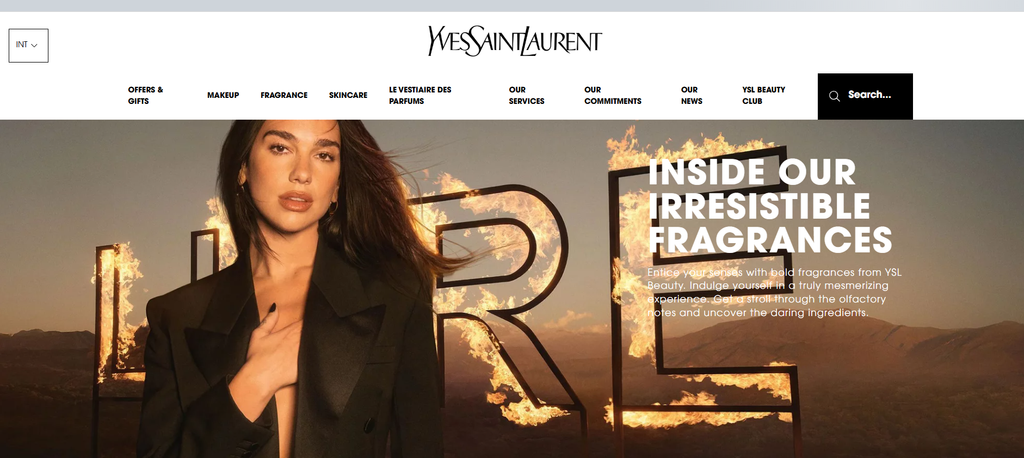
YSL built its name in Paris fashion, but perfume has become a major part of YSL Beauty.
The current collection has three names that appear again and again in US fragrance shops: Black Opium, Libre and Y.
Black Opium uses coffee, white flowers and vanilla. YSL launched Libre in 2019, combining lavender with orange blossom, and the company later added several versions with different strengths and notes.
YSL also sells men’s fragrances through the Y collection and continues to make higher-priced scents outside its main ranges.
L’Oréal operates Yves Saint Laurent Beauté and lists fragrance as one of the core parts of the business.
People who like sweeter perfumes usually start with Black Opium, while Libre works more around floral and lavender notes. The two smell very different even though the same company makes both.
5. Calvin Klein

Calvin Klein gave the perfume business some of its most recognisable names during the 1980s and 1990s.
Eternity became one of its long-running lines, with separate fragrances for women and men. The women’s Eau de Parfum uses freesia and mandarin at the opening, followed by flowers and a sandalwood, patchouli and amber base.
Then Calvin Klein released CK One in the 1990s.
Rather than splitting the product into a men’s bottle and a women’s bottle, Calvin Klein marketed CK One for both. The current formula keeps green tea with bergamot, cardamom, pineapple, jasmine, violet, rose, musk and amber.
CK One also costs much less than most scents from Chanel or Tom Ford. Calvin Klein currently lists 100 ml at $84, while the 200 ml size costs more.
Euphoria, Obsession and Defy give the company more choices beyond those older names.
Calvin Klein
6. Ralph Lauren
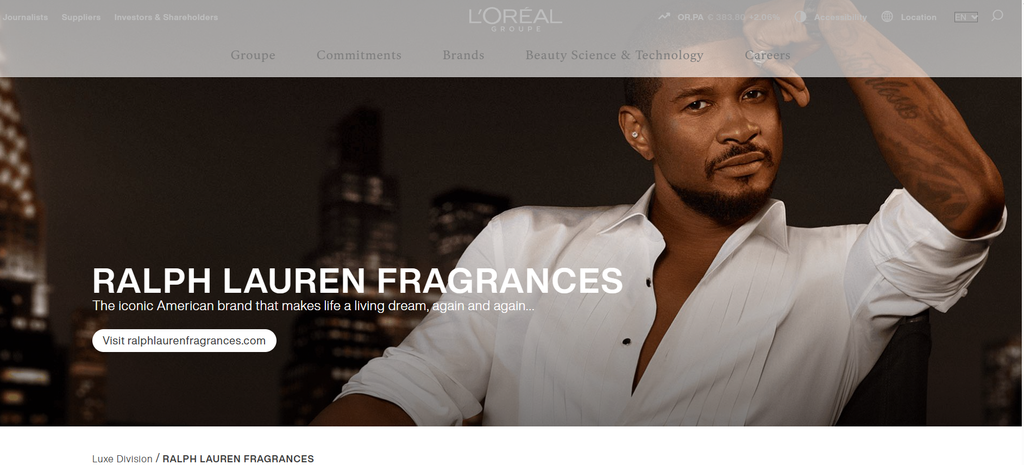
Ralph Lauren moved into fragrance in 1978.
The company introduced Polo Eau de Toilette as its first major fragrance, and Polo later grew into several scents with different colours and formulas. L’Oréal now manages Ralph Lauren’s fragrance business under licence.
Polo remains central to the men’s range.
Polo Blue, Polo Red and Polo 67 give buyers very different versions of the name. Ralph’s Club has become another men’s line, while Romance remains one of the better-known women’s perfumes.
Ralph Lauren introduced Ralph’s Club New York in 2025, with blackcurrant, vanilla and sandalwood notes. The company chose Usher as the face of the fragrance.
The perfumes generally cost less than Tom Ford’s Private Blend collection and sit closer to other large designer fragrance lines.
7. Carolina Herrera
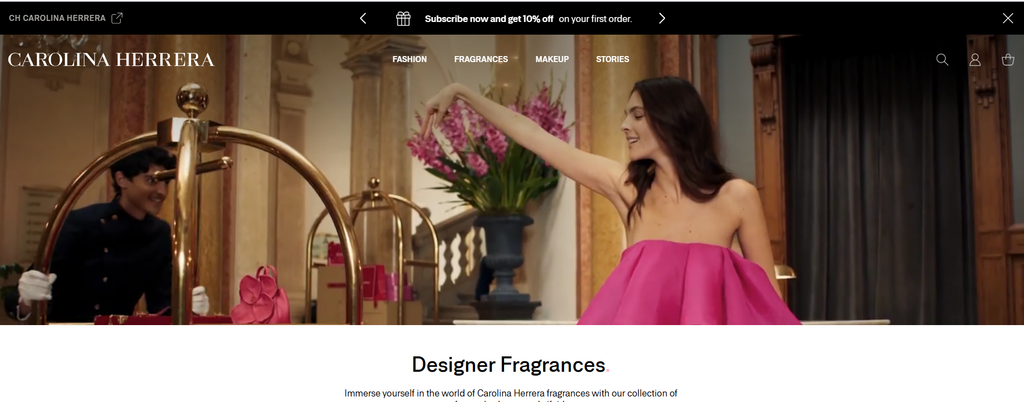
Carolina Herrera launched her fashion label in New York in 1981. Perfume later became another important part of the name.
The brand now has two fragrance families that many shoppers recognise immediately.
Good Girl comes in the high-heel-shaped bottle and uses jasmine, tuberose, tonka bean, cocoa, almond and coffee in the original Eau de Parfum. Carolina Herrera currently sells several Good Girl versions, including Good Girl Blush, Very Good Girl and Good Girl Jasmine Absolute.
The 212 range takes its name and much of its identity from New York. The current women’s collection includes 212 NYC and 212 VIP Rosé, while the men’s range includes 212 Men.
Good Girl has also given Carolina Herrera one of the easiest perfume bottles to recognise on a store shelf.
8. Marc Jacobs
Marc Jacobs keeps its perfume range smaller than some of the older fashion houses.
Daisy does most of the heavy lifting.
Marc Jacobs launched the original Daisy Eau de Toilette in 2007. The company has since added Daisy Eau So Fresh, Daisy Eau So Intense, Daisy Wild and several limited versions.
The bottles carry large flower designs on their caps, so shoppers can usually recognise a Daisy bottle before reading the label.
Marc Jacobs introduced another main fragrance, Perfect, in 2020. The name came from the designer’s “I Am Perfect as I Am” tattoo and personal motto.
Current US prices put a 50 ml Daisy Eau de Toilette at about $112, while some 100 ml Daisy versions cost around $168.
Daisy remains the better choice for someone who wants a light floral scent rather than the heavier woods, leather or tobacco notes found in several Tom Ford perfumes.
9. Estée Lauder
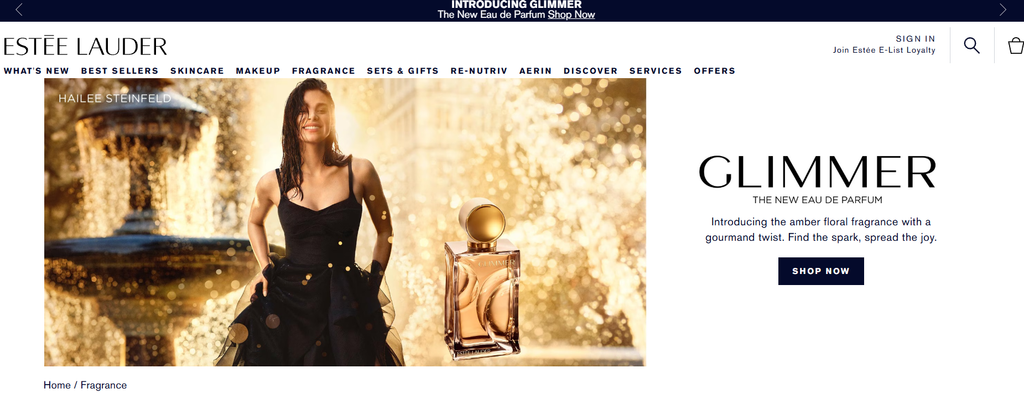
Estée Lauder started her company in New York in 1946, but she did not treat perfume as something women should wait to receive as a gift.
In 1953, she created Youth-Dew Bath Oil and encouraged women to buy it for themselves. Customers soon started wearing the bath oil directly as fragrance, and Youth-Dew helped turn the young company into a multimillion-dollar business.
The company later added very different scents.
Beautiful mixes rose, lily, tuberose and orange flower with woods. Pleasures, which arrived in 1995, takes a lighter floral direction with lily, white peony and jasmine.
Estée Lauder still sells Youth-Dew today, so buyers can find a fragrance tied directly to the company’s early history rather than a modern remake carrying an old name.
10. Le Labo
Le Labo started in New York, although its founders drew heavily from French perfume-making.
The company opened its first laboratory at 233 Elizabeth Street in Nolita in 2006. Staff mixed fragrances in front of customers and added personalised labels to the bottles.
Le Labo built its collection around names that combine an ingredient with a number.
Santal 33 has become the scent people most often connect with the brand. Other choices include Another 13, Thé Matcha 26, Rose 31 and Bergamote 22.
The company also makes City Exclusive fragrances that connect individual scents with particular cities.
Le Labo works differently from large fashion houses such as Dior or Ralph Lauren because fragrance forms the centre of the business rather than an extension of clothing.
The Estée Lauder Companies now includes Le Labo in its fragrance portfolio, but the company still traces its identity back to that first New York lab.
Which Perfume Brand Should You Choose?
The brand matters less than the type of scent you actually enjoy.
| If You Like | Brands Worth Trying |
| Classic floral perfumes | Chanel, Dior, Estée Lauder |
| Sweet perfumes | YSL, Carolina Herrera, Tom Ford |
| Woody scents | Tom Ford, Le Labo, Dior |
| Fresh everyday perfumes | Calvin Klein, Ralph Lauren, Marc Jacobs |
| Men’s fragrances | Dior, Ralph Lauren, Chanel, YSL |
| Luxury perfumes | Chanel, Dior, Tom Ford |
| Niche-style scents | Le Labo, Tom Ford |
| Perfumes under many luxury prices | Calvin Klein |
| Strong evening scents | Tom Ford, YSL, Carolina Herrera |
| Light floral scents | Marc Jacobs, Estée Lauder |
Smell a perfume on your skin before buying a large bottle whenever possible. A fragrance can smell one way on paper and quite different after it sits on skin for an hour.
Which Perfume Brands Started in the USA?
Several names in this list have American beginnings.
Tom Ford launched his company in 2005 and developed its beauty business with Estée Lauder.
Calvin Klein started in New York in 1968.
Ralph Lauren also came from New York and entered perfume in 1978.
Carolina Herrera launched her label in New York in 1981.
Marc Jacobs built his fashion career in New York before adding perfume.
Estée Lauder started her beauty company in New York in 1946.
Le Labo opened its first fragrance lab in Nolita in 2006.
Chanel, Dior and Yves Saint Laurent came from France, even though all three now have a large US fragrance business.
Designer Perfume vs Niche Perfume
Most brands on this list started somewhere outside perfume.
Chanel, Dior, Calvin Klein, Ralph Lauren, Carolina Herrera and Marc Jacobs came from fashion. They later added fragrance to their businesses.
Le Labo takes another route because perfume sits at the centre of what it sells.
People often call companies like Le Labo “niche fragrance brands,” although large beauty companies can own niche labels too.
The difference does not automatically tell you which perfume smells better. A designer fragrance may use a broad, easy-to-wear formula, while a niche perfume may try something less familiar.
Tom Ford falls somewhere between the two. It runs as a fashion house but sells expensive Private Blend scents that compete directly with niche fragrances.
Eau de Toilette, Eau de Parfum or Parfum?
The words on the bottle tell you something about fragrance concentration.
Eau de Toilette usually carries a lighter concentration and often gives a fresher feel.
Eau de Parfum usually uses more fragrance oil and tends to smell fuller.
Parfum generally uses a higher concentration again.
The name does not guarantee how many hours a scent will last. Ingredients, skin, weather and the perfume itself all affect performance.
Dior Sauvage gives a useful example. Dior sells Eau de Toilette, Eau de Parfum, Parfum and Elixir versions under the same name, but each one uses a different formula rather than simply adding more oil to the exact same liquid.
How Much Do Good Perfumes Cost in the USA?
You do not need to spend $300 to buy a good perfume.
Calvin Klein keeps many fragrances below the prices charged by luxury houses. Marc Jacobs and Ralph Lauren usually work in the middle designer range.
Chanel and Dior charge more, especially as bottle size and concentration increase.
Tom Ford can climb much higher. Private Blend scents such as Lost Cherry and Oud Wood can pass $300 for a 1.7-ounce bottle.
Travel sprays and smaller bottles can make expensive perfumes easier to try. Circana also found that US shoppers have been buying more mini and travel-size fragrance products.
What Should You Check Before Buying a Perfume?
Start with the scent family rather than buying only because a perfume has a famous name.
Floral perfumes usually rely heavily on flowers such as rose, jasmine or tuberose. Woody scents can use sandalwood, cedar or vetiver, while gourmand perfumes often bring in vanilla, coffee, caramel or other sweet notes.
Then test it on skin.
Give the perfume some time before deciding. The smell you notice during the first few minutes can change once the top notes fade.
Check the concentration and bottle size as well. A 30 ml Eau de Parfum and a 100 ml Eau de Toilette may cost similar amounts but give you very different products.
For expensive bottles, buy from the company itself, a department store or another authorised retailer. Counterfeit luxury perfume is common enough to make an unusually cheap bottle worth questioning.
Conclusion
The top 10 perfume brands in USA cover more than a century of fragrance history.
Chanel introduced N°5 in 1921, while Dior followed with Miss Dior in 1947. Estée Lauder changed the American perfume business with Youth-Dew in 1953.
Newer names arrived later. Tom Ford brought out Black Orchid in 2006, and Le Labo opened its first New York lab that same year.
Calvin Klein, Ralph Lauren, Carolina Herrera and Marc Jacobs give buyers plenty of designer perfumes at different prices, while YSL continues to sell large fragrance families such as Libre and Black Opium.
The best perfume still comes down to smell, not rank. Try it on your skin, leave it there for a while and then decide whether you actually want to wear it again.
Frequently Asked Questions
What are the top 10 perfume brands in USA?
Chanel, Dior, Tom Ford, Yves Saint Laurent, Calvin Klein, Ralph Lauren, Carolina Herrera, Marc Jacobs, Estée Lauder and Le Labo are ten major fragrance names available in the US.
Which perfume brand is most famous in the USA?
Chanel remains one of the best-known perfume names, especially because of Chanel N°5, which the company first introduced in 1921.
Which perfume brands are American?
Tom Ford, Calvin Klein, Ralph Lauren, Carolina Herrera, Marc Jacobs, Estée Lauder and Le Labo all have strong American roots or started their businesses in the United States.
Which perfume brand is good for women?
Chanel, Dior, Yves Saint Laurent, Carolina Herrera, Marc Jacobs and Estée Lauder all sell large women’s fragrance collections. The better choice depends on whether you prefer floral, sweet, fresh or woody scents.
Which perfume brand is good for men?
Dior, Chanel, Ralph Lauren, YSL and Tom Ford have several men’s fragrances. Sauvage, Bleu de Chanel, Polo and Y remain familiar choices in their respective collections.
What is Tom Ford’s first perfume?
Tom Ford introduced Black Orchid in 2006 as the brand’s first fragrance.
What is Chanel’s oldest perfume?
Chanel launched N°5 in 1921 with perfumer Ernest Beaux. The company continues to sell it today in several versions.
What was Estée Lauder’s first fragrance?
Estée Lauder created Youth-Dew Bath Oil in 1953. Women started wearing it as a perfume, and the product became an important part of the company’s early growth.
Is Le Labo an American perfume brand?
Le Labo developed its perfume idea with French roots but opened its first working lab in New York City in 2006. The company describes itself as “born in Grasse and raised in New York City.”
What are some affordable perfume brands in USA?
Calvin Klein generally offers lower starting prices than Chanel, Dior or Tom Ford. Ralph Lauren and some Marc Jacobs fragrances also sit below many high-end luxury perfumes.
Which perfume brands sell unisex fragrances?
Le Labo builds its main perfume collection without dividing scents by gender. Tom Ford also sells many fragrances that customers wear regardless of gender, while Calvin Klein helped popularise shared fragrance with CK One.
Is perfume still growing in the US market?
Yes. Circana reported 5% growth in US prestige fragrance sales during 2025, while mass-market fragrance sales grew 15%.