
Choosing a credit card in the United Kingdom is not about looking at interest rates. I know that choosing a credit card can feel overwhelming. Some credit card providers offer cashback and rewards. Others give balance transfer options, travel perks or special cards for people who are building their credit history. The credit card company itself matters a lot because the credit card company decides how the application works, how the account is managed and what kind of help customers can get.
The phrase “credit card company” can mean a bank that gives out cards to a financial services provider or a payment network like Visa or Mastercard. Each of these credit card companies does work. A bank may approve a credit card application. Lend the money. A payment network helps process the transactions. American Express has a model because it can issue credit cards and also run its own payment network.
This list covers ten well‑known credit card issuers and providers that serve UK consumers. The credit card companies were chosen based on their presence in the UK market, the variety of credit card products they offer their established operations and how they fit customer needs. This comparison is editorial, not a market‑share ranking.
From familiar high‑street banks, to specialist card providers these credit card companies give options. Knowing the differences can help a reader compare credit cards based on spending habits, borrowing needs and the ability to repay the balance.
1. Barclays
Barclays is one of the UKs banks. Its history started with a London goldsmith banking business in the 17th century. Now it offers banking services to people and businesses including credit cards.
| Founded: 1690 |
| Headquarters: London, England |
| Latest Revenue: Group total income was £29.1 billion in FY2025 |
| Latest Net Income/PAT: Not listed here as a separate UK credit card figure |
| Main Products/Services: Credit cards, current accounts, savings, loans and business banking |
Barclays is worth considering for this list because its credit card business covers needs and borrowing. People can look at the cards and check if they qualify before applying. Barclays also bought the Tesco Bank credit card business, which makes it stronger in the UK credit card market.
For readers the main idea is that Barclays is a bank and a lender not a payment network. The credit limit, interest rate and approval depend on the person’s situation and the specific product.
The FY2025 financial number refers to the banking group, not just credit card income.
2. Lloyds Bank
Lloyds Bank has a long history in British retail banking. It is part of Lloyds Banking Group, which includes financial services businesses. The group’s size and long presence make Lloyds an important name for people looking at credit card options in the UK.
| Founded: 1765 |
| Headquarters: London, England |
| Latest Revenue: Lloyds Banking Group reported £18.3 billion in net income for FY2025 |
| Latest Net Income/PAT: £4.76 billion statutory profit after tax for FY2025, at group level |
| Main Products/Services: Credit cards, current accounts, loans, savings and mortgages |
Its credit card range includes options for spending, larger purchases and balance transfers. The bank also has an eligibility checker so people can see which cards might work for them before applying.
A balance transfer card can help someone pay off existing debt at a cost but the transfer fee and the offer period must make sense financially. A purchase card might offer interest- spending for a while.
The FY2025 net income and profit numbers cover the group. They should not be confused with the earnings from Lloyds credit cards
3. HSBC UK
HSBC has a global banking network but it also offers everyday financial services in the UK. Its credit card range includes products for interest- purchases, balance transfers or rewards.
| Founded: 1865 |
| Headquarters: London, England, for HSBC Holdings |
| Latest Revenue: HSBC Group reported $71.0 billion in revenue, excluding notable items, for 2025 |
| Latest Net Income/PAT: Group reported profit before tax was $29.9 billion for 2025 |
| Main Products/Services: Credit cards, personal banking, mortgages, savings and international banking |
A helpful feature is the eligibility checker, which lets customers see how likely they are to be accepted without affecting their credit score. The bank also offers account management to help with tracking balances and payments.
HSBC may be worth looking at if someone already uses its banking services. They should still compare the actual terms of the card with other options.
The financial numbers above are for the HSBC Group, not just its UK credit card business. The group had $71.0 billion in revenue and $29.9 billion in profit before tax for 2025. These are measurements and should not be treated the same.
4. NatWest
NatWest is a known name in British banking with credit cards that serve various borrowing needs. Its range includes cards for purchases, balance transfers, rewards and credit building. Some cards also offer interest- periods for qualifying customers.
| Founded: 1968 |
| Headquarters: Edinburgh, Scotland |
| Latest Revenue: NatWest Group’s FY2025 total income figure is not stated here |
| Latest Net Income/PAT: Not stated here as a separate credit card figure |
| Main Products/Services: Credit cards, current accounts, savings, loans and business banking |
One difference between its cards is the length of the introductory offer. A longer balance transfer period may give time to pay off debt but the transfer fee and the interest rate after the offer ends still matter.
NatWest has a credit builder card for existing customers. These cards can help people build a credit history. No card can guarantee an improved credit score.
The bank’s place on the list is because of its standing UK banking operations and variety of credit card products, not because it has the largest share of the UK card market.
5. Santander UK
Santander UK offers credit cards for people who want cashback or a way to manage existing borrowing. Its Rewards Credit Card for example gives cashback on selected spending, like travel, eating out and takeaways depending on the card’s terms.
| Founded: 1988 as Abbey National, the predecessor to Santander UK’s main retail banking business |
| Headquarters: London, England |
| Latest Revenue: Not stated here as a separate credit card figure |
| Latest Net Income/PAT: Not stated here as a separate credit card figure |
| Main Products/Services: Cashback cards, balance transfer cards, personal banking and mortgages |
Rewards can be helpful if they match the way a person spends. However customers should check if the benefits are worth the costs and compare the interest rate with options.
Santander also has an eligibility checker that helps people understand their chances before applying. As with lenders approval depends on the person’s circumstances and credit assessment.
The company’s inclusion here is based on its UK credit card offering and retail banking presence. A revenue or profit figure for its credit card business is not publicly stated in the information used for this comparison.
6. American Express
American Express, often called Amex, works differently than a high-street bank. It runs a payment network. Offers cards directly to eligible customers. Its UK range includes cards that reward spending, as well as products for frequent travelers.
| Founded: 1850 |
| Headquarters: New York City, United States |
| Latest Revenue: $72.2 billion in consolidated revenue for FY2025 |
| Latest Net Income/PAT: Not stated here |
| Main Products/Services: Rewards cards, cashback cards, travel cards and premium credit cards |
Some cards give cashback while others let members earn points or airline rewards. Premium cards may include airport lounge access, travel insurance or other benefits. These can come with annual fees.
American Express is good for people who want rewards from their spending and can pay their bills on time. However not all merchants accept the cards so users should check if they work where they usually shop.
The reported revenue is for the company and is not a measure of UK credit card revenue alone.
7. Capital One UK
Capital One focuses on consumer credit in the UK. Its products include cards for spending, balance transfers and people who want to build credit.
| Founded: 1994 |
| Headquarters: McLean, Virginia, United States |
| Latest Revenue: Not publicly disclosed for its UK credit card operation |
| Latest Net Income/PAT: Not publicly disclosed for its UK credit card operation |
| Main Products/Services: Credit builder cards, balance transfer cards and purchase cards |
The company’s Classic Card is for use and credit building while its balance transfer card lets eligible customers move debt from other cards. It also offers purchase cards with interest- periods.
Capital One has a -application check that does not affect a person’s credit score. This can help people understand their chances before applying although it does not guarantee approval.
One thing to remember is that credit builder cards can have interest rates. They are most useful when the cardholder spends carefully and pays on time.
The numbers for Capital One’s business should not be confused with the revenue from its UK credit card operation.
8. Nationwide Building Society
Nationwide is a building society, not a bank owned by shareholders. It has a history in British financial services and offers credit cards along with savings, mortgages and current accounts.
| Founded: 1846 |
| Headquarters: Swindon, England |
| Latest Revenue: Not stated here as a separate credit card figure |
| Latest Net Income/PAT: Not stated here as a separate credit card figure |
| Main Products/Services: Credit cards, mortgages, savings and current accounts |
Its Member Credit Card offers interest- periods on eligible purchases and balance transfers. The exact offer depends on the card and the applicant’s situation. Nationwide also has an eligibility check so customers can look at the offer before applying.
A useful feature for some customers is that Nationwide does not charge its fee for foreign purchases on eligible cards. Travelers should still check the terms. If the merchant adds any other charges.
Nationwide’s position in this list is because of its customer base and current credit card offering. Its credit card income and profit are not separately reported in the information used here.
9. Vanquis Bank
Vanquis Bank focuses on consumer lending and offers credit cards that may be suitable for people with limited credit history or those trying to rebuild their record after financial problems.
| Founded: 2002 |
| Headquarters: Bradford, England |
| Latest Revenue: Not publicly disclosed here as a separate credit card figure |
| Latest Net Income/PAT: Not publicly disclosed here as a separate credit card figure |
| Main Products/Services: Credit builder cards, purchase cards and personal financial products |
Its credit builder card gives applicants a custom credit limit. The bank also offers a check to see if someone qualifies and this does not hurt a person’s credit score. Customers can use its app to manage their accounts and watch their payments.
Vanquis also has a purchase card that offers a period with no interest for those who qualify. The rates and limits change depending on each person’s situation and the normal interest rate can be much higher than regular credit cards.
For someone looking for a credit builder card the important thing to check is not just the starting limit. The interest rate, any fees, payment rules and the credit limit available all need to be considered.
Vanquis is listed because special lenders work with a group of people rather than big banks. It is not the choice for everyone, especially if someone plans to keep a balance for a long time.
10. TSB
TSB has credit cards made for different ways of borrowing. Its Platinum Purchase Card gives a time with no interest on eligible purchases while its Platinum Balance Transfer Card helps people move debt from other cards.
| Founded: 2013 in its present form as a separate bank |
| Headquarters: Edinburgh, Scotland |
| Latest Revenue: Not stated here as a separate credit card figure |
| Latest Net Income/PAT: Not stated here as a separate credit card figure |
| Main Products/Services: Purchase cards, balance transfer cards and lower-rate credit cards |
The bank also has an Advance Credit Card with a rate for purchases than some of its other cards. The actual rate and limit given depend on the person applying and the advertised terms can be different.
TSBs check to see if someone qualifies helps people find out their chances before applying. This is helpful when looking at cards especially for people who want to avoid applying multiple times without knowing if they will get approved.
The bank is on this list because of its range of credit cards in the UK and the way it focuses on real borrowing options. Like other companies a special offer is only good if the person can pay off the balance in the time given.
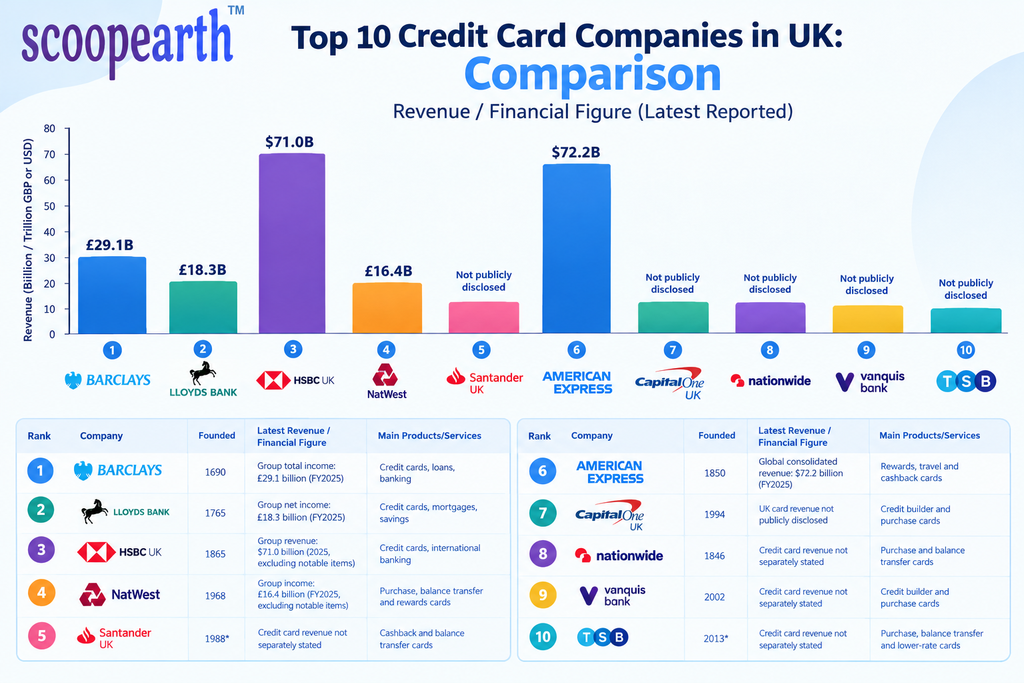
Top 10 Credit Card Companies in UK: Comparison
| Rank | Company | Founded | Latest Revenue / Financial Figure | Main Products/Services |
| 1 | Barclays | 1690 | Group total income: £29.1 billion (FY2025) | Credit cards, loans, banking |
| 2 | Lloyds Bank | 1765 | Group net income: £18.3 billion (FY2025) | Credit cards, mortgages, savings |
| 3 | HSBC UK | 1865 | Group revenue: $71.0 billion (2025, excluding notable items) | Credit cards, international banking |
| 4 | NatWest | 1968 | Group income: £16.4 billion (FY2025, excluding notable items) | Purchase, balance transfer and rewards cards |
| 5 | Santander UK | 1988* | Credit card revenue not separately stated | Cashback and balance transfer cards |
| 6 | American Express | 1850 | Global consolidated revenue: $72.2 billion (FY2025) | Rewards, travel and cashback cards |
| 7 | Capital One UK | 1994 | UK card revenue not publicly disclosed | Credit builder and purchase cards |
| 8 | Nationwide Building Society | 1846 | Credit card revenue not separately stated | Purchase and balance transfer cards |
| 9 | Vanquis Bank | 2002 | Credit card revenue not separately stated | Credit builder and purchase cards |
| 10 | TSB | 2013* | Credit card revenue not separately stated | Purchase, balance transfer and lower-rate cards |
What Should You Check Before Choosing a Credit Card Company in the UK?
The right provider depends on how you plan to use the card. If you want to clear existing debt, compare balance transfer periods and transfer fees. For spending, look at cashback reward points and any annual fee. If you travel regularly, check foreign transaction fees. Whether the card is accepted where you intend to use it.
Interest rates deserve attention. A card offering rewards may not be worthwhile if you carry a balance and pay interest. Check the representative APR, the rate offered to you and what happens when an introductory offer ends.
Before applying use an eligibility checker where available. It can help you compare products without affecting your credit score through a soft search. Finally, read the card’s terms. Make sure you can afford the repayments.
Conclusion
The UK credit card market includes banking groups, international card providers and specialist lenders. Some focus on rewards and cashback while others offer interest- periods or products for building credit history.
The suitable company depends on your financial needs, eligibility and repayment habits. Compare the cost of borrowing rather than choosing a card only for its introductory offer. Paying bills on time and avoiding debt are just as important as the benefits a card provides.
FAQs
1. What are the top 10 credit card companies in the UK?
Established providers include Barclays, Lloyds Bank, HSBC UK, NatWest, Santander UK, American Express, Capital One UK, Nationwide, Vanquis Bank, and TSB. They offer products such as rewards cards, balance transfer cards, purchase cards, and credit builder cards. Their suitability depends on customers’ needs and eligibility.
2. Which UK credit card company is the best?
There is no single best provider for everyone. American Express may appeal to customers seeking rewards, while Capital One and Vanquis offer credit builder products. Barclays, HSBC, NatWest, and other banks provide purchase and balance transfer options. Compare interest rates, fees, benefits, and eligibility before deciding.
3. Which UK credit card companies offer cashback?
American Express and Santander offer cashback products, although rates and conditions vary. For example, Santander’s Rewards Credit Card provides cashback on selected spending categories. Check the terms, qualifying purchases, and any fees before applying, as rewards and offers may change over time.
4. Which companies offer balance transfer credit cards in the UK?
Providers including Barclays, Lloyds Bank, HSBC UK, NatWest, Nationwide, and TSB offer balance transfer products. These cards may allow eligible customers to transfer existing debt and pay reduced or no interest for a promotional period. Compare transfer fees, promotional periods, and the standard interest rate after the offer ends.
5. Are credit builder cards available in the UK?
Yes. Capital One and Vanquis offer credit builder cards for eligible customers. These products may help people establish a record of managing credit responsibly. Making payments on time and staying within the credit limit are important. Approval and improvements to a credit score are not guaranteed.
6. Do all credit card companies charge fees?
No. Some credit cards have no annual fee, while others charge for rewards, travel benefits, or premium services. American Express offers both fee-free and fee-paying cards. Compare the annual fee with the benefits you are likely to use rather than assuming a more expensive card provides better value.
7. Can I apply for a UK credit card without a credit history?
Yes, you may be able to apply. Approval depends on the provider’s eligibility rules, income, and credit assessment. Credit builder cards from specialist providers may be worth comparing. Check the eligibility criteria before applying. A successful application is not guaranteed, even if you meet the basic requirements.
8. What is the difference between a credit card issuer and a payment network?
A credit card issuer approves applications, sets credit limits, and manages repayments. A payment network helps process transactions between cardholders, merchants, and financial institutions. American Express operates both a card network and an issuing business, while Visa and Mastercard generally operate payment networks rather than lending directly to consumers.
9. How should I compare credit card interest rates?
Look at the representative APR, purchase interest rate, balance transfer fee, and length of any promotional period. The actual rate offered may differ depending on your circumstances. If you repay your statement balance in full every month, rewards and fees may matter more. If you carry debt, borrowing costs should receive greater attention.