PRISM is the parent company of global hospitality technology giant OYO. PRISM has taken another important milestone in its company’s stock market existence with an Updated Draft Red Herring Prospectus (UDRHP-I) registration with the Securities and Exchange Board of India (SEBI). The key regulatory move follows official permission from the regulator of the capital markets earlier this month after the company filed confidentially in late 2025.
The initial public offering (IPO) details present a monumental financial offering with an intention to raise as much as ₹6,650 crore. The listing is a significant initial step in the restructuring of the hospitality brand under its new corporate name, which officially switched from Oravel Stays to PRISM in September 2025.
Capital mobilization and debt management
One of the major features of the upcoming public offering will be that the complete fundraising will take place through conversion of equity shares. There is no offer for sale (OFS) component along with this public placing. The offering is solely for primary shares, and the total funds raised will be incorporated into the Company’s corporate capital structure without being used to benefit first-time investors.
Major institutional supports and corporate sponsors include global investment giant SoftBank, technology labs’ flagship Microsoft, booking services Airbnb, and venture capital firms Peak XV Partners, Lightspeed, Greenoaks Capital, and Khazanah Nasional. It will not dilute equity shares in this first offering.
The company’s specific financial advice, set out in the new document, outlines an extremely conscientious plan for investing the proceeds from public financing. A significant portion of the money, exactly ₹4,987.5 crore, will go towards strategic repayment or prepayment of the company’s net institutional borrowings.
The company’s debt reduction efforts aim to markedly straighten its balance sheet and minimise its recurring interest obligations. The remainder of the primary capital will be allocated for general corporate purposes, such as driving organic growth, investing in sustaining the business through technology enhancements, and funding customer acquisition initiatives in its global target zones.
The revised public papers also show that PRISM allows for the flexibility of a pre-IPO placement of shares before eventually submitting its final Red Herring Prospectus. The secondary planning buffer will enable the firm to raise up to ₹1,330 crore from private institutional placements before the public offering. Upon successful completion of this pre-IPO placement round, the total amount of funds to be raised through the main public fresh issue will be reduced accordingly.
The technology-based firm has assembled a strong panel of optimum book-running lead managers, comprising Axis Capital, Citigroup Global Markets India, Goldman Sachs, ICICI Securities, SBI Capital Markets, JM Financial, InCred Capital, and Intensive Fiscal Services for the public issue, for a smooth execution of this complex financial transaction across Indian capital markets.
Regulatory filing offers and global operational footprint
The groundbreaking regulatory disclosure provides a complex snapshot of the capitalization table for the travel-tech unicorn, and confirms that SoftBank is definitely the biggest institutional investor, holding a significant 40.04% equity stake. Ritesh Agarwal, the founder of the company, has 26.71% of the company’s stake, directly and indirectly through RA Hospitality Holdings. Oravel Employee Welfare Trust, represented by trustee Dinesh Ramamurthi with a 5.39% stake, is followed closely by Patient Capital (3.81%) and Five Stars Capital (2.77%) on the chart of additional corporate blocks.
Early-stage risk backers Lightspeed, Airbnb and Peak XV Partners have tightly held tranches of 1.74%, 1.22% and 1.06% respectively, creating a stabilized cap table as the firm readies its shares for listing as National Stock Exchange (NSE) and Bombay Stock Exchange (BSE). The significant growth in both financial statements and operational size of the hospitality platform provides ground for a large-scale public market introduction.
Prism’s revenue from operations in the first nine months of fiscal 2026 grew by ₹6,941 crore, surpassing the company’s anticipated revenue base for the full fiscal year of ₹6,259 crore. The firm’s net profit growth is perhaps more amazing, as there was a steep rise in its net profit figure by three times to ₹748 crore in the same nine months of FY25 compared to net profit of ₹245 crore for the entire fiscal 2025.
In reality, the tech company now oversees an expansive architecture with 43 brands spanning over 35 countries and an extensive network of 24,303 hotels, 124,668 vacation homes, and 144,583 digital listings. It now has a vast international turn, doing up to 84% of its active operational revenues from outside India, particularly from the United States and Europe, where its key flagship is the acquisition of G6 Hospitality and the iconic Motel 6 and Studio 6 brands.
Conclusion
PRISM has successfully filed its freshly drafted public prospectus successfully is a significant structural triumph for OYO’s longer-term corporate story. This represents a fundamentally better business model than the previous listing attempts of PRISM, as the company has a spectacular three-times increase in its net profit for the first nine months of 2020 to ₹748 crore, and is also backed by a strong international expansion model that provides a clear majority of its revenue from overseas markets such as the USA and Europe.
The massive primary fundraise of ₹6,650 crore marks a strong benchmark for India’s digital consumer internet economy and demonstrates that tech platforms can successfully go through the transition from growth-at-all-costs to sustainable and cash-generating global businesses.
Indus Valley is a well-known non-toxic cookware brand. The Indus Valley has raised $17 million in a new funding round. The investment was led by private equity firm Gaja Capital. Gaja Capital demonstrated strong institutional interest in the rise of the new consumer brand. Rukam Capital, The Chennai Angels, and DSG Consumer Partners were among several of the company’s existing backers who participated strongly in the financial round. The investment is a crucial step for the brand’s expansion efforts, reflecting its journey of market share acquisition in the ever-evolving kitchenware landscape of India.
Primary area of focus and omnichannel growth
The structure of the transaction involves a significant amount of primary capital, which will directly enter the company’s business treasury for its future operations. In addition to this new round of growth capital, the round also features a partial secondary sale of shares from some of the company’s early investors.
This is an equilibrium structural balance that enables investors from the early stages to realise partial liquidity and gives the enterprise a long enough runway to achieve its long-term corporate objectives. Based on the terms of the investment, The Indus Valley plans to utilize the $17 million infusion in various key business verticals in a strategic manner.
One of the main areas the company will concentrate on is its entry into brand new applications across the larger kitchenware market. The product expansion will enable them to grow their Product portfolio more broadly and widely, thus increasing their capacity to satisfy the diversified requirements of present-day health-acutely concerned homes.
The startup will also use that capital to significantly build its omnichannel distribution channel. The brand hopes to improve its digital footprint and its participation in physical ones, thus making its products more available to consumers across the country.
This will involve substantial investment in brand campaigns and marketing campaigns to specific audiences. The investments are intended to strengthen brand awareness and deepen consumer engagement as it looks to better compete with traditional home players.
Foundation and investor synergy
Established by Jagadeesh Kumar, the startup has managed to make a space in the premium kitchenware niche. The brand is dedicated to producing and selling premium food products and kitchen equipment that is wholly derived from safe and natural materials. Their product line includes objects made from cast iron, cast iron with regular iron, copper, clay, and wood.
This strategy directly aligns with consumers’ demands for chemical-free and toxin-free products, because in today’s world every home is a healthy home. This latest capital injection follows a prior capital milestone achieved almost 18 months ago. The most recent $17 million equity investment comes on the heels of another financial milestone marked some 18 months back. The startup had raised ₹23.1 crores (approximately $2.75 million) in its previous pre-Series A round led by DSG Consumer Partners.
The financial valuation of the startup is placed at around ₹303 crores (approximately $36 million) during the previous funding round. Its swift expansion and increased investment by Gaja Capital further highlight the viability of the brand and its consumer acceptance in a relatively short period.
The transaction brings another prominent company to the firm’s growing consumer book for lead investor Gaja Capital. The homegrown private equity fund has a record of backing innovative consumer-focused startups, like the brand Eggoz, as well as enterprise-specific software firms like LeadSquared.
This investment has been made in the Indus Valley in an attempt to back and invest in high-growth companies with the ability to create new product categories. The transaction also coincides with a pivotal moment for Gaja Capital. The private equity firm had previously submitted an updated draft red herring prospectus in December of last year for an IPO for ₹656 crore.
This is the first time India’s private equity firm goes public formally on the domestic stock markets. The Indus Valley has a robust support structure at the investor level with corporate momentum, facilitated by its legacy investors such as DSG Consumer Partners and Rukam Capital, who have all demonstrated a high level of experience in the field.
Conclusion
The successful fundraising round was a $17 million amount, marking a significant liquidity event for the direct-to-consumer health and kitchenware market in India. The Indus Valley has leveraged rising premiumization of chemical-free consumer goods with their natural materials such as cast iron, clay, and copper.
The company has sufficient available primary funds from Gaja Capital, along with existing institutional investments, to support its next set of product diversifications, omnichannel development, and nationwide brand building initiatives. With continued growth of its distribution networks, the company has strong prospects to evolve and contribute to a country craze of more sustainable, toxin-free cooking experiences.
For India’s size and diversity, the Indian startup and developer ecosystem has made use of the capabilities offered by Google AI Studio, Cloud, and Vertex AI to build more quickly, intelligently, and effectively. Eight startups showcased at I/O Connect applications built using Google’s advanced AI models, demonstrating their potential to affect various domains, including education, governance, commerce, and media.
What Are the Top Sectors Driving Indian Startup Growth?
Several factors will define the makeup of 2025–2026. While e-commerce and finance remain mainstays, new, high-growth areas such as enterprise IT are attracting the lion’s share of investment and attention.
AI and DeepTech: This is the breakout sector. In 2024, funding for DeepTech increased by 78% to $1.6 billion. The primary motivator is artificial intelligence, with prosperous Indian AI businesses like Krutrim and Sarvam AI developing fundamental models trained on Indian languages.
Fintech: The foundation of India’s digital economy is still this industry. The Indian fintech industry showed its tenacity by seeing a 56% increase in revenue to $25 billion in 2023. According to BCG forecasts, India will see its fintech industry grow to $190 billion by 2030, thanks to growth across wealth management, lending and payments.
Quick Commerce: As reported, Instamart has registered a delivery of 70 million orders in Q2 of 2024, while Blinkit has registered about 93 million orders. Grocery, convenience, and pharmacy delivery remain essential drivers in urban India. Other D2C brands are gaining traction on the back of social commerce and marketplaces.
What Is an AI Startup?
AI Startup – An enterprise that leverages machine learning and AI to manufacture products and services. These particular companies leverage automation, data and algorithms to solve real-world problems faster, smarter and more efficiently.
AI companies are shaping the way we work, from detecting fraud to making personalised suggestions. While these Indian startups are not just following the global trends in healthcare, finance, education, and other areas, they are taking their own unique routes.
Key Factors Driving the AI Boom in India
Several robust engines are driving India’s ascent to become an AI powerhouse. Here are some of the factors driving this growth in the ecosystem of AI startups.
Vast data and digital infrastructure
Rich datasets and practical business cases are provided by India’s extensive digital footprint, which includes Aadhaar and UPI. According to recent research, this infrastructure would play a major role in India’s AI market, tripling to US$17 billion by 2027.
Strong talent pool and cost-effective tech
India is the world leader in the use of AI skills, and numerous government initiatives are increasing training.
India becomes a desirable site for entrepreneurs and international investors due to its large number of STEM graduates, increasing AI proficiency, and lower operating costs.
Government support & startup-friendly policies
The government provides funding and infrastructure support for businesses and has started programmes like the IndiaAI Mission.
The AI investment landscape in India has improved with these policies, which lower entry barriers, promote innovation, and hasten the adoption of AI across industries.
Growing funding & global investor confidence
The AI sector in India is seeing a rise in investor capital. International businesses are investing in India, demonstrating their faith in the potential of the country. In the realm of AI startup funding, this translates into additional funds, resources, and opportunities for your business. When combined, these elements provide an exceptionally robust environment for AI startups in India going forward.
Top Artificial Intelligence Stocks in India in 2026 as per Market Capitalisation
The top AI stocks in India in 2026, according to market capitalisation, are shown in the following table:
Serial number
Stock Name
Market Capitalization (Crores)
1
Bosch Ltd
Rs. 1,11,456.47
2
Persistent Systems Ltd
Rs. 83,196.16
3
Oracle Financial Services Software Ltd (OFSS)
Rs. 70,346.15
4
L&T Technology Services Ltd (LTTS)
Rs. 37,867.84
5
Affle 3i Ltd
Rs. 20,321.86
Overview of Best Artificial Intelligence Stocks in India as per Market Capitalisation
This is a thorough summary of artificial intelligence shares in India based on market capitalisation and analyst ratings for 2026.
Bosch Ltd
German multinational technology and engineering company Robert Bosch GmbH, established in 1951, is a major entity in the Indian automotive components market, specialising in industrial mobility solutions, power tools and technology. Bosch Ltd. is its prime subsidiary in India. The business is renowned for heavily using AI and software into their fundamental automotive solutions. While it provides sensors, fuel injection systems and engine components, electronic control units (ECUs) and braking systems, the automotive market represents about 85% of its net sales.
Persistent Systems Ltd
Founded in 1990, Persistent Systems, a prominent worldwide provider of IT services, is headquartered in Pune. Its area of focus is digital transformation, enterprise modernisation and software product engineering. As of mid-2026, it is a leader in generative AI (GenAI) services, using its distinctive Re(AI)magining strategy to integrate AI into its data management, software delivery, and business operations.
As of late 2025, the corporation had maintained a record of 20 consecutive quarters of sales growth. Additionally, it has collaborated with DigitalOcean to promote Agentic Cloud services and with NVIDIA for AI-backed drug discovery. Additionally, the business maintains high levels of operational efficiency and is mostly debt-free.
Oracle Financial Services Software Ltd (OFSS)
The business is a major global supplier of IT solutions for the financial industry and is a division of Oracle Corp. The company, which has its headquarters in Mumbai, specializes in risk management, compliance, and banking software like FLEXCUBE.
The company, a branch of Oracle Corp., is a significant worldwide provider of IT solutions for the financial sector. The Mumbai-based company specializes in risk management, compliance, and banking software such as FLEXCUBE.
L&T Technology Services Ltd (LTTS)
LTTS is an engineering and R&D firm, a key part of the LT Technologies Corporation. It focuses its ER&D on software and the software aspect within technologies related to mobility and smart engineering of high-tech products like Wearables. LTTS is considered a leading outsourcing firm globally, offering engineering, research and development (ER&D) services. The business has made significant investments in full-stack EI (Engineering Intelligence) and Agentic AI as of early 2026. It has significant alliances, such as one with NVIDIA, and gains from being a member of the respectable Larsen & Toubro (L&T) Group.
Affle 3i Ltd
Affle 3i Ltd, formerly known as Affle India, is a prominent international technology business that provides AI platforms for targeted mobile advertising based on consumer intelligence. Only the conversion rate (CPCU) is charged to advertisers. It has had rapid expansion, with a 5-year revenue CAGR above 47% and a net income CAGR exceeding 42%.
The business is nearly debt-free and has better liquidity, with a TTM net profit margin of 16.95%. Additionally, total cash increased from ₹49.1 crore in FY21 to ₹835.8 crore in FY24.
Regulatory issues & compliance for AI startups
Perhaps the most important and underappreciated difficulty is this one. Both in India and internationally, AI startups must navigate a complicated web of privacy, governance, and data protection requirements. “Nearly 95% of generative AI projects face delays or failure due to unclear regulatory frameworks and integration issues,” according to the World Economic Forum. The planned IndiaAI Mission framework and the Digital Personal Data Protection Act (DPDP Act 2023) in India are changing the way AI systems must manage user data, accountability, and transparency.
Compliance is a fundamental design philosophy for AI entrepreneurs rather than a checkbox. Incorporating privacy, fairness, and openness into your strategy from the start will increase user and investor trust while also ensuring compliance.
Industries Being Transformed by AI
Artificial intelligence has enormous potential to advance technology, considering that it powers “any machine that does things a brain can do”. Here, we examine five sectors where AI has had a major early influence.
Manufacturing
The most popular uses of AI in manufacturing involve real-time production monitoring, which includes tracking scrap rates and fixing bottlenecks to increase output while cutting waste. In order to maximise output, the technology also helps businesses determine which staff, shifts, and processes are most effective at using the machines.
AI is also helpful for machine maintenance, anticipating when maintenance will be required, accelerating prototyping, optimising product design, forecasting product demand, and adhering to industrial regulations.
Healthcare
Big data, AI, and related technologies are revolutionising the healthcare sector and improving results while cutting expenses in a number of ways. Healthcare providers are leveraging AI software to broaden their knowledge. Having data helps them make better decisions and be more successful. For instance, every stage of the delivery of care can benefit from the application of quantitative and qualitative data to enhance early disease detection, diagnosis accuracy, and treatment planning. Patient responses feed databases, resulting in a system that is always improving.
Retail and Fashion
The use of AI technology in the retail sector is expanding quickly. Online customer support interactions are increasingly powered by chatbots, and online advertising is utilising augmented and virtual reality technologies. Without ever leaving their homes, let alone taking off their shoes in a fitting room, internet buyers may experience the equivalent of a custom-tailored clothes fit thanks to immersive visualisation. AI may soon be able to accurately forecast trends based on global fashion purchasing data patterns.
Business Intelligence
Enterprise Resource Planning, also known as ERP software, is designed to centralise a business’s data and operations onto one platform. However, the functionality of those software programs has been expanded with smart AI-powered dashboards and analytic tools that pull out relevant data, provide decision support, and give insights to business executives. This allows companies to take larger investment bets with lower risk. One result is that they can expand even in times of economic recession.
Education
The use of artificial intelligence to build personalised learning strategies for specific groups of learners is rapidly gaining traction. AI can take into consideration individual variances in learning styles and learning obstacles, promoting inclusion and improving learning results. For instance, teaching strategies can be influenced by algorithms that determine how kids with particular aptitude sets learn geometry. In reality, in order to make learning type segmentation more practical, the conventional model of teachers in classrooms is probably going to shift.
Top AI Companies in India
The top Indian startups are listed here, arranged by industry. These businesses are a blend of well-known unicorns and rapidly expanding businesses that are influencing the market.
Krutrim
As previously said, in January 2024, Krutrim emerged as the first AI unicorn in India. It was founded by Bhavish Aggarwal of Ola and is developing India’s own “full-stack” AI, which includes bespoke AI processors and foundational large language models (LLMs) trained on 22 Indian languages.
Sarvam AI
Another well-known generative AI business, Sarvam AI, is dedicated to creating LLMs in Indic. It is creating models like “Sarvam-1” that have been trained on two trillion tokens to cater to the Indian market with the support of the government’s IndiaAI Mission.
Fractal
Serving Fortune 500 clients, Fractal is a longstanding leader in the AI and analytics area. It offers supply chain, marketing, and decision-making solutions driven by AI. It became a unicorn and is allegedly considering an IPO.
Yellow.ai
One of the top conversational AI platforms in India is Yellow.ai. With strong AI chatbots and speech bots that can answer up to 80% of questions, it assists businesses like Fortune 500 corporations in automating staff and customer assistance.
Arya.ai
An Indian AI firm called Arya.ai is concentrated on the BFSI industry. It provides an AI platform that complies with regulations to assist banks and insurers in implementing intricate deep learning models. The Arya platform is perfect for underwriting, fraud detection, and risk modelling.
Mad Street Den
Mad Street Den, an Indian AI firm based in Chennai, is transforming retail with their AI platform, Vue.ai. Product tagging, cataloguing, and recommendation engines are powered by its visual recognition and personalisation technologies.
It is one of the most well-known AI firms in India, using neuroscience and machine learning to simulate human perception in fashion technology.
Locus
One of the emerging AI-based businesses in India is Locus, which offers supply chain solutions driven by AI. Businesses may lower expenses and increase delivery efficiency with our routing and logistics optimisation software.
Locus, one of the most cutting-edge Indian AI businesses in logistics, serves clients worldwide in a variety of industries, including e-commerce and FMCG.
Uniphore
The Indian AI development unicorn Uniphore is providing automation and conversational AI platforms for customer service and sales. It offers customer sentiment recognition, multilingual support, and AI assistance to its agents.
Overcoming challenges: What you need to know
Even if AI has a lot of potential, it’s crucial to recognise some of the difficulties:
Data privacy and security
Startups need to be careful to safeguard client information. Make sure your AI technologies abide by data protection laws, such as the Data Protection Bill in India. Putting security and openness first can help you gain the trust of your clients and stay out of trouble with the law.
Finding AI talent
It can be difficult for startups to find qualified personnel to build an AI-driven firm. You can locate the knowledge you require by working with colleges, training facilities, or even distant talent pools.
Infrastructure
Robust computational resources are necessary for AI. Working with cloud service providers can give early-stage firms scalable and reasonably priced access to the infrastructure required for AI development.
Navigating regulations
India’s AI regulations are still being developed. To maintain compliance and help build an ethical AI ecosystem, stay informed on new rules and regulations.
Current State of Artificial Intelligence in India
Over the past ten years, India’s AI ecosystem has expanded quickly. India is currently in the top 10 nations in the world for talent availability, research production, and AI adoption. More than 5,000 AI firms in the fields of healthcare, finance, agritech, education, retail, and governance are based in India, according to NASSCOM.
Rising cloud adoption, inexpensive computers, government efforts, and a youthful, tech-savvy workforce are the main drivers of this rise.
Future Roadmap: 2024–2030
Between 2024 and 2030, it is anticipated that India will transition from adopting AI to becoming an AI leader. AI might add almost $1 trillion to India’s economy by 2030 and change more than 80% of businesses.
India’s experience with large-scale digital systems such as India Stack offers a robust basis for the responsible and cost-effective deployment of AI across various sectors.
Conclusion
AI startups are shaping India’s digital future. There is no denying the momentum; the ecosystem is rapidly maturing, finance is growing, and innovation is surging. Growth, however, presents difficulties. Strong infrastructure, competent personnel, good governance, and smart finance are necessary for developing scalable AI solutions.
When starting or growing an AI business in India, combine structure and ambition. Integrate vision with execution, creativity with accountability, and innovation with compliance. In this way, India’s upcoming AI startups will not only expand but also take the lead internationally.
During the pandemic lockdown, when most 18-year-olds were brainstorming which college courses to take on Zoom, Aadit Palicha realized that his family’s grocery delivery had taken almost a week to arrive—and that was a problem he was willing to drop out of Stanford to solve.
Five years later, that idea has evolved into Zepto, the quick-commerce platform now valued at billions of dollars and preparing for its upcoming IPO. Having attained self-made billionaire status, Palicha, still in his mid-twenties, is one of the youngest in India to be a billionaire.
Based on verified rich-list data, IPO filings, and credible reporting, this article examines Aadit Palicha’s net worth, startup journey, and how Zepto’s upcoming IPO could impact his wealth.
Who Is Aadit Palicha?
Aadit Palicha is the co-founder and CEO of quick-commerce platform Zepto, which will be able to send groceries in India within 10 minutes. Since its very inception in July 2021 by him and his childhood friend Kaivalya Vohra, he has played a pivotal role in the company’s rapid rise from a $2.5 million pre-seed valuation to a multi-billion-dollar business.
Attribute
Details
Full Name
Aadit Palicha
Date of Birth
October 15, 2001
Current Role
Co-founder & CEO, Zepto (Kiranakart Technologies)
Company Founded
July 2021 (as a rebrand of KiranaKart, founded 2020)
Co-founder
Kaivalya Vohra
Hometown
Born in Mumbai; raised primarily in Dubai
Education
IB Diploma, GEMS Modern Academy, Dubai (45/45 score); Computer Science, Stanford University (dropped out)
Industry
Quick Commerce, E-commerce, Retail Tech
Aadit Palicha Net Worth: What We Actually Know
So the simple answer is that Aadit Palicha’s net worth is not officially confirmed, as it comes mainly from his unlisted equity stake in the company Zepto, which has yet to go public through an IPO, as of this writing. Estimates from India’s leading wealth rankings, however, have led to the reasonably reliable trajectory of his wealth:
The M3M Hurun India Rich List 2026 suggests that Aadit Palicha holds a net worth of ₹5,380 crore or approximately $650 million and is one of the youngest self-made entrepreneurs to attain this status in India.
His estimated wealth has grown rapidly over the past few years. It was estimated at ₹1,200 crore in 2022, rose to around ₹4,300 crore in 2024, and reached an estimated ₹5,380 crore in the 2026 Hurun Rich List.
His co-founder, Kaivalya Vohra, is estimated to be worth ₹4,480 crore. Along with him, they are two of the notable young self-made billionaires of India.
Importantly, his net worth is not based on salary but on equity, meaning that he has not received a high cash salary, nor has he received a brand endorsement; most of his estimated net worth is the paper value of his Zepto shareholding as the company’s value has increased over the course of successive funding rounds.
Estimated Net Worth Trajectory
Year
Estimated Net Worth
Source/Context
2022
₹1,200 crore
Hurun Rich List 2022
2024
₹4,300 crore (~$518–600 million)
Hurun Rich List 2024
2026
₹5,380 crore (~$650 million)
M3M Hurun India Rich List 2026
Note: The following figures are estimated from the wealth-tracker using the private valuation of Zepto and Palicha’s reported equity stake, which has not been independently confirmed. The percentage of his shares has not been publicly revealed.
Founder Journey: From Dubai Classrooms to India’s Quick-Commerce Frontlines
Early Life & Education:
Born in Mumbai on 15/10/2001, Aadit Palicha moved to Dubai when he was a child and spent his childhood there. He attended GEMS Modern Academy and obtained a 45/45 result in the IB Diploma and was a student leader, debater, and valedictorian at GEMS.
Although the business was not a family affair, his father, Kavit Palicha, an engineer, became a stakeholder in Zepto, and his mother, Urvashi Palicha, is the CEO of SearchPoint.
He earned admission to Stanford University to pursue computer science, which, on its own, was a challenge, but the pandemic had the effect of ruining that plan before it had even started.
Early, Unsuccessful Ventures
Palicha had both good and bad luck as an entrepreneur:
GoPool (age 17): His first foray into the app business was designed to assist parents in coordinating school transportation in Dubai, and was a student carpooling app called GoPool. It didn’t really make any headway.
KiranaKart (2020): At 19, during the pandemic, Palicha and childhood friend Kaivalya Vohra started their grocery delivery business called KiranaKart with the vision of transforming the grocery delivery industry into a digital platform using local kirana (neighborhood) stores as its distributors. The startup didn’t have a strong product-market fit, so after approximately 10 months, the founders decided to close it.
But neither failure was in vain—they directly influenced how Zepto would operate in the future: by being fast and dense, ensuring the fulfillment infrastructure is under very close control, and not depending on third-party store partners.
The Pivot to Zepto (2021): Instead, Palicha and Vohra completely rebuilt the whole concept of KiranaKart in a phase they named Pivot to Zepto (2021).
They started to develop their own infrastructure of “dark stores” or small micro-warehouses that carry the most in-demand products and are situated in specific locations within 2–3 kilometers of the majority of their clients.
The company was rebranded as Zepto in July 2021. The name comes from “zeptosecond,” the smallest unit of time ever recorded, reflecting the company’s promise of delivering groceries in just 10 minutes.
The most important thing for Palicha and Vohra was to drop out of Stanford so they could receive early funding. Investor Contrary Capital agreed to fund the startup on the condition that both founders leave college to work on it full-time, leading Palicha to drop out of Stanford.
The two also participated in the Y Combinator Accelerator Program during the initial stages of producing Zepto’s first version of the product.
Career & Company Timeline at a Glance
Year
Milestone
2001
Born in Mumbai; later raised in Dubai
~2018
Launches GoPool (carpooling app); does not gain traction
2019
Admitted to Stanford University for Computer Science
2020
Co-founds KiranaKart with Kaivalya Vohra during the pandemic
Jan 2021
KiranaKart raises $730,000 pre-seed at a $2.5 million valuation
2021
Shuts down KiranaKart after ~10 months; drops out of Stanford
Jul 2021
Rebrands and relaunches as Zepto
Oct 2021
Raises $60 million at a $225 million valuation
Dec 2021
Raises $100 million Series C at a $570 million valuation
May 2022
Raises $200 million Series D at a $900 million valuation
Aug 2024
Zepto is valued at over $5 billion; it moves its HQ from Mumbai to Bengaluru
Oct 2025
Raises $450 million Series H at a $7 billion valuation, led by CalPERS
Dec 2025
File confidential DRHP with SEBI for IPO
Jun 2026
Files updated DRHP (UDRHP) with FY26 financials ahead of public listing
Zepto’s Growth Story: The Numbers Behind the Valuation
Zepto’s growth has been unparalleled, even for Indian startups. Now, the company operates more than 1,100 dark stores, serving more than 70 cities and processing almost 640 million orders during FY26, which is almost double the previous year.
The company’s annual transacting users reached nearly 48 million, while Zepto captured an estimated 30% of India’s quick-commerce market, trailing only Blinkit.
Financial Metric
FY24
FY25
FY26
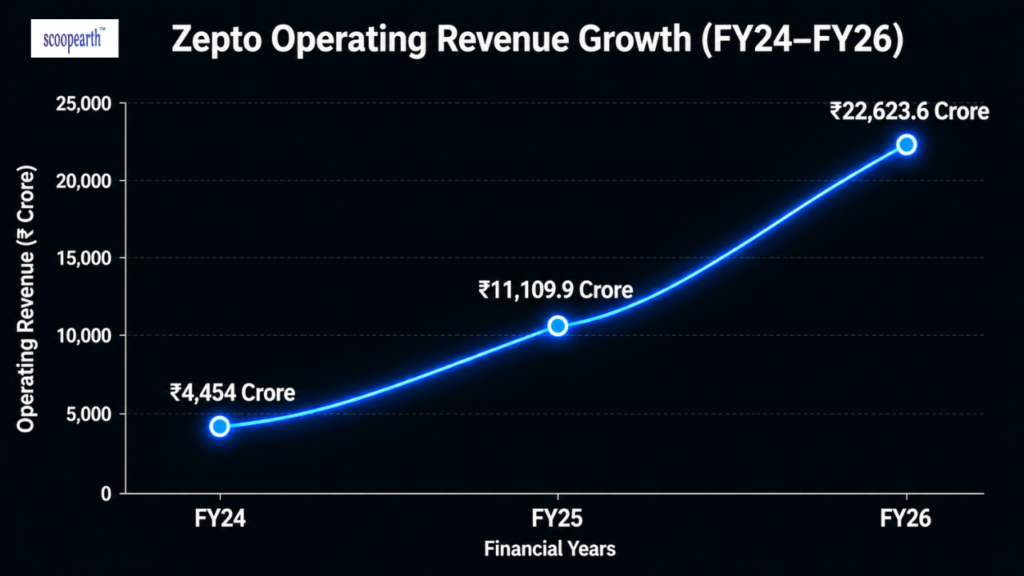
Operating Revenue
₹4,454 crore
₹11,109.9 crore
₹22,623.6 crore
YoY Revenue Growth
—
~149%
~104%
Net Loss
₹1,248.6 crore
₹4,699.7 crore
₹5,905.2 crore
Annual Transacting Users
10.57 million
38.38 million
47.97 million
Advertising Revenue
₹49 crore
₹651 crore
₹1,636 crore
Note: Some FY24/FY25 figures vary across reporting sources due to restated filings in Zepto’s updated DRHP; figures above reflect the most recent disclosures available.
This is a pattern commonly seen among high-growth Indian consumer startups. Revenue continues to grow year on year, losses per order continue to shrink (down to ₹78.75 in FY26 from ₹136.15 in FY25), and the company is still in the red at the bottom line, with losses this year hitting nearly ₹5,905 crore.
Fortunately, the advertisement business, which is built on its ad-tech tools and more than 2,400 brand partners, has grown rapidly over the past two years, surging more than 33-fold and providing Zepto with a healthy margin path, akin to that of Amazon and, more recently, Blinkit.
The IPO: What It Means for Aadit Palicha’s Wealth
Zepto has progressed rapidly toward its upcoming IPO, from a confidential DRHP submission to SEBI in December 2025, getting formal SEBI approval (observation letter) in May 2026, and submitting an amended DRHP in June 2026, to becoming the first dedicated quick-commerce player to launch an IPO on the domestic stock exchange in India.
₹8,010 crore, along with an offer for sale (OFS) of up to 11.35 crore equity shares by existing shareholders. Valuation expectations have shifted significantly ahead of the IPO, from earlier estimates of around $10 billion to more recent expectations of $5.6–7 billion, a level of valuation reset as the company heads toward its IPO, balancing growth expectations with still-hefty losses.
The company has also issued summons to its founders, Aadit Palicha and Kaivalya Vohra, under FEMA, and it is also undergoing investigation by the Competition Commission of India (CCI) for alleged anti-competitive pricing, neither of which is yet resolved and are being closely watched by public market investors ahead of their listing.
Palicha’s IPO is his first big chance to turn the paper assets he has built up over the years into something more tangible, but his stake in the company, and thus the amount of value he can extract, hasn’t been publicly announced.
FAQs
What is Aadit Palicha’s net worth?
His net worth, according to the M3M Hurun India Rich List 2026, is estimated to be ₹5,380 crore (around $650 million), with the primary source being his founder equity stake in Zepto.
How old is Aadit Palicha?
He was born on October 15, 2001, making him 24 years old as of early 2026.
Did Aadit Palicha drop out of Stanford?
Yes. He enrolled at Stanford University to pursue computer science, but when the pandemic struck, investor Contrary Capital agreed to fund the startup on the condition that both founders leave college to work on it full-time, which led him to quit.
What was Aadit Palicha’s first startup?
He had his first venture in GoPool, a student carpooling app that was launched in Dubai at the age of 17, but it hasn’t really gotten a lot of traction. KiranaKart, his second attempt, folded after some 10 months before it made the pivot into Zepto.
What is Zepto’s current valuation?
Zepto was last valued at $7 billion during its Series H funding round. Ahead of its IPO, analysts estimate a valuation in the $5.6–7 billion range, depending on market conditions.
Is Zepto profitable?
No, Zepto is still loss-making at the net level, as it posted a net loss of ₹5,905 crore in FY26, but the losses on a per-order basis have reduced considerably, with its advertising receipts having increased by a huge margin, which suggests a positive shift in unit economics.
When is Zepto’s IPO expected?
Zepto received SEBI’s observation letter in May 2026 and filed an updated DRHP in June 2026. However, an official listing date has not yet been announced.
Who is Aadit Palicha’s co-founder?
His close friend Kaivalya Vohra is the co-founder and Chief Technology Officer (CTO) of Zepto. Vohra’s net worth is said to be ₹4,480 crore on its own.
Conclusion
Aadit Palicha’s story is not just about one great idea — it’s about two botched attempts, a profound understanding of the need to change, and the determination to leave an elite school to do just that.
From a pre-seed valuation of $2.5 million in 2021 to a company that handles more than 640 million orders annually and is poised for a public listing worth billions of dollars, Zepto’s growth has made Palicha one of the young entrepreneurs to watch in India.
But now that the IPO is underway, and the regulatory review process continues, the next phase will finally show how successfully he can turn that long-term vision into lasting business success.
When you search for “best digital marketing agency in India,” you will find thousands of results, most of which are self-published lists where the same unknown agencies always make it to the top.
This is one of the most crowded and misleading categories on the web—and it’s actually quite difficult for a business owner to know which agencies truly excel in specific services and which ones actually deliver consistent results.
This list takes a different approach. We haven’t created a self-submitted ranking; instead, we’ve gone with the digital marketing companies in India that have scale, agency network affiliations, long operating history, recognizable client lists, and have been recognized in the Cannes Lions, Spikes Asia, IAMAI Digital Awards, etc.
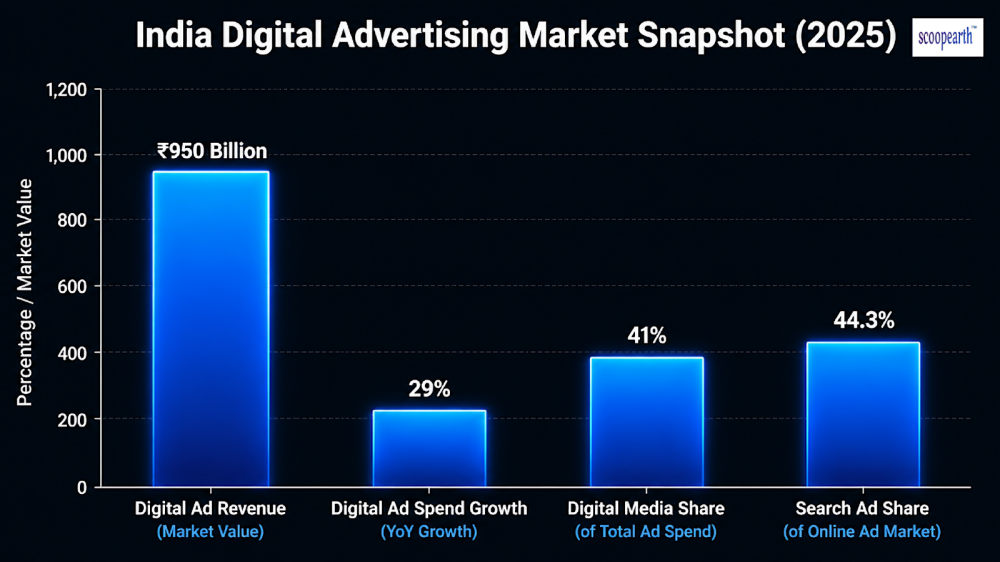
These recognitions cannot be earned simply by publishing SEO-optimized content or self-promotional rankings. India’s digital advertising market is vast and continues to expand at a rapid pace: at ₹40,800 crore in FY24-25, it has grown by 29% year-on-year, with digital media currently capturing roughly 41% of India’s total ad spend for the first time.
How We Ranked These Agencies
The list focuses on those agencies that have demonstrated a long operating history, network affiliation (global holding companies such as Dentsu, Publicis, IPG), a compelling client track record, industry recognition of awards, and consistent recognition across credible independent industry rankings (be wary of agencies that largely feature in ‘best of’ listicle publications).
Top 10 Digital Marketing Companies in India: Quick Comparison
Rank
Agency
Network/Group
Founded
Headquarters
Known For
1
WATConsult
Dentsu
2007
Mumbai
Social-first integrated campaigns; 350+ awards
2
Webchutney (Dentsu Creative)
Dentsu
1999
Gurugram/Mumbai
One of India’s oldest digital agencies; creative + tech
3
Ogilvy India
WPP
1928 (India ops decades-old)
Mumbai/Delhi
Brand storytelling, integrated campaigns
4
iProspect India
Dentsu
—
Multi-city
Performance marketing, SEO, media buying
5
Schbang
Independent
2015
Mumbai
Full-funnel digital + creative for D2C and enterprise
6
Social Beat
Independent
2013
Bengaluru/Chennai
D2C and performance marketing specialist
7
Kinnect (FCB Group)
FCB/IPG
2009
Mumbai
Social + creative campaigns for major consumer brands
8
Mirum India
Publicis Groupe
—
Multi-city
Digital transformation, CRM, AI-led marketing
9
Gozoop
Dentsu (acquired)
2010
Mumbai
Social media, content, influencer marketing
10
Techmagnate
Independent
2006
Delhi
Enterprise SEO and search marketing specialist
WATConsult—India’s Most Awarded Digital Agency
WATConsult‘s journey is really fascinating as the founder, Rajiv Dingra, started it from his Colaba apartment in 2007, and it was acquired by Dentsu Aegis Network (DAN) in January 2015.
Under the leadership of CEO Heeru Dingra, WATConsult is headquartered in Mumbai, with offices in Bengaluru and Delhi, and serves over 600 brands with a team of 240+ employees.
WATConsult has earned over 350 national and international awards, including Cannes Lions, Spikes Asia, and IAMAI Digital Awards. Several of these awards were won for campaigns created for brands such as Himalaya and Bajaj.
Known for: social media marketing, integrated campaigns, own DASH platform for analytics, e-commerce solutions
Webchutney (Dentsu Creative)—The Pioneer
Webchutney has been in existence for over 25 years and is one of the oldest digital agencies in India.
It is now a part of the Dentsu Creative family, where it is known for enterprise level creative campaigns driven by technology and creativity across Mumbai, Delhi, and Bengaluru.
Known for: enterprise creative campaigns, brand digital transformation
Ogilvy India—The Legacy Powerhouse
Ogilvy is one of the world’s most respected advertising agencies, and the Indian office of the agency is one of the most successful & award-winning advertising agencies in the country’s advertising history.
As part of WPP, Ogilvy India also has a wealth of brand storytelling abilities and full-funnel digital delivery, and it’s always supported by AI tools that provide insights and sentiment analysis to supercharge campaigns based on real-time audience feedback.
Known for: brand strategy, integrated advertising, large enterprises, and FMCG accounts
Search engine marketing, programmatic media buying, and data-driven campaign optimization are all key areas that iProspect India has invested heavily in as part of the Dentsu network because of its performance-driven outcomes.
It’s often the preferred option for big businesses looking for governance structures, dedicated account teams, and international strategic alignment with the execution in India.
Known for: SEO, performance media, enterprise search marketing
Schbang—The Fast-Growing Independent
Established in 2015, Schbang has grown exponentially to be one of India’s fastest-growing independent digital agencies that brings creative, content marketing, and performance marketing under one roof.
It’s especially valued among D2C brands and by larger companies looking for an agile, design-focused agency without the extensive bureaucracy of a global network.
Known for: Full funnel digital marketing, content & creative production
Social Beat—The D2C and Performance Leader
Social Beat has carved a niche for itself in performance marketing for D2C, e-commerce, and consumer brands and has worked with leading brands such as Amazon India, Swiggy, Tata CLiQ, and Malabar Gold & Diamonds.
According to the agency, it helped a leading jewelry brand double its online sales in just one fiscal year with its performance and influencer marketing campaign.
Known for: performance marketing, influencer marketing, D2C, and e-commerce growth
Kinnect (FCB Group)—The Creative-Tech Hybrid
A part of the FCB/IPG group, Kinnect has not only a successful track record of delivering creative stories but also executing them with a technology touch and constantly engages with top consumer brands like Flipkart, Asian Paints, and HDFC ERGO.
The agency is a familiar name for its campaigns that provide a mix of brand and measurable digital results.
Known for: social-first campaigns and brand-led digital strategy.
Mirum India—The Digital Transformation Specialist
(Current official website of VML, the company that now includes Mirum India.)
Established as an entity under Publicis Groupe, Mirum India specializes in transforming large enterprises’ digital journeys at scale, using AI, CRM, and predictive analytics to improve the entire customer journey.
Known for: Digital transformation, CRM, and martech integration and personalization through AI
Gozoop—The Social and Content Specialist
Before Dentsu’s acquisition, Gozoop‘s first vertical was social media & content marketing. It continues to be a popular agency for brands seeking to bolster their natural social reach, influencer marketing, and content-based campaigns.
Known for: Social media management, content marketing, influencer marketing
Techmagnate—The Enterprise SEO Specialist
Techmagnate has established itself as a trusted and proven brand in its niche, particularly in technical SEO and enterprise search marketing, and has a wide range of technical expertise in BFSI, healthcare, education, and ecommerce sectors.
Techmagnate is always recommended by independent industry comparisons, especially for businesses whose primary purpose is long-term, sustainable, and durable dominance in the Search Engine Results Page (SERPs), as opposed to getting short-term paid results.
Known for: Enterprise SEO, link-building, organic search strategy
Market Trends Shaping Digital Marketing in India in 2026
Digital has now surpassed television: Digital media is now responsible for about 41% of total advertising spend in India, and digital ad revenue is projected to cross the ₹950 billion mark in 2025, compared to approximately ₹263 billion for television.
AI is now part of the strategy, not only execution: top agencies are leveraging AI to optimize revenue attribution across the entire funnel, building predictive lead-scoring models, using AI to cluster keywords, and conducting real-time sentiment analysis, much more than just writing ads with AI.
Retail media and first-party data are on the rise: In the absence of third-party cookies, agencies are looking to do more targeted, shoppable content directly inside ecommerce and in-store digital channels via retail media and first-party data.
The next growth arena is smaller cities: Government-backed digital infrastructure, expanding 5G connectivity, and the rapid adoption of vernacular content are driving digital marketing growth beyond India’s metro cities.
Search is still the largest digital advertising category: With an estimated 44.3% share of India’s digital advertising market, Google search remains key in the discovery and purchasing process for India’s consumers.
Market Size Snapshot
Metric
Value
India’s digital advertising revenue (2025)
~₹950 billion (~$11.4 billion)
FY24-25 digital ad spend growth
29% YoY, reaching ₹40,800 crore
Digital media’s share of total ad spend
~41% (overtook TV for the first time)
Search advertising’s share of the online ad market
~44.3%
Project the Indian digital marketing market by 2035
~$93.94 billion (CAGR ~30.2%)
Typical monthly agency retainer in India
₹25,000–₹500,000
Note: Market size figures vary across research firms depending on methodology and scope (advertising spend vs. the broader “digital marketing” services market); the figures above reflect a reasonable industry range from multiple sources.
FAQs
Which digital marketing agency is the best in India?
There is no such thing as a one-size-fits-all agency for every business—it is about what works for your business.
For large enterprises looking for award-winning integrated campaigns, WATConsult and Webchutney are great options, while Social Beat and Schbang are recommended for D2C and performance marketing; Techmagnate is a consistent recommendation for enterprise SEO.
How much does a digital marketing agency cost in India?
The range of pricing is usually ₹20,000-₹30,000 per month for basic SEO and social media management, while full-funnel digital marketing (SEO + paid + content + social) is priced at ₹75,000-₹300,000 per month, and enterprise-level campaigns are likely to cost more than ₹500,000 per month.
What are the services provided by the best digital marketing companies in India?
The majority of full-service agencies can provide SEO, Google Ads/PPC management, social media marketing, content marketing, influencer marketing, email marketing, website design and development, branding, ecommerce marketing, as well as performance analytics.
How is India’s digital advertising market growing?
Digital media has become India’s top ad medium for the first time, with ad spending in the segment increasing by 29% YoY to approximately ₹40,800 crore in FY24-25.
How long does SEO take to show results in India?
Most reputable agencies recommend allowing at least 3–6 months to see meaningful improvements in organic traffic and rankings. Be careful of any company making claims about a guaranteed ranking and/or quick results.
Who would be better, network agencies (such as WATConsult, Webchutney) or independent agencies (such as Schbang, Social Beat)?
Neither is inherently better; they simply serve different business needs. Depending on the type of client, D2C or enterprise, the use of network agencies might be more appropriate, offering access to global research, larger teams, and governance models, whereas independent agencies may be more agile and cost-effective for D2C brands and startups.
What are some red flags businesses should look out for when selecting an agency?
Avoid agencies that promise a guaranteed top ranking on Google (no agency can do this), don’t have any physical location or business registration, or only measure vanity metrics such as impressions or focus only on vanity metrics such as impressions instead of tangible business metrics like leads, conversions, and ROI.
What are the best places to look for digital marketing agencies in India?
The number of network-affiliated, award-winning agencies like WATConsult, Webchutney, and Schbang is highest in Mumbai, while performance and SEO agencies are prevalent in Delhi-NCR, and Bengaluru is home to a growing number of D2C-focused and startup-friendly agencies.
Conclusion
The digital marketing industry in India has become a ₹40,000+ crore industry in the last decade, and digital marketing now accounts for a larger share of advertising spend than television.
If you’re looking for a network agency like Ogilvy or WATConsult, or an independent agency that’s been gaining in popularity like Schbang or Social Beat, it will depend on your business objectives, budget, and growth stage.
Algorithms, data, and automation are changing the game, and agencies that can combine creativity with measurable business outcomes will likely be the ones to dominate the market in the coming years.
GTA VI pre orders went live and for many of us millennial gamers, buying the ultimate edition seemed like a perfectly good use of adult money. Vice City and San Andreas are games that millennial kids would play in between Counter Strike and Dota matches at local LAN cafes.
When PUBGM got banned in India, some of the most watched creators picked up GTA V online which led to a resurgence in the game’s popularity. GTA V was everywhere. Even vernacular streamers on Facebook ran custom mods climbing an endless stairway to the clouds while engaging with viewers in chat. I guess what I’m trying to say is that GTA is a part of India’s gaming DNA, and GTA VI is sure to have a sizeable player base from India. Probably not when the game launches on console.
But definitely when the game launches on PC allowing streamers of all shapes and sizes to participate. Who knows though given that owning a console is now looking like a more affordable proposition versus a PC!
GTA VI is much more than a game launch, it is likely to become a cultural moment for the global gaming industry. Historically, landmark titles have influenced not just how people play games, but also how they create content, consume entertainment, and engage with gaming communities. Given the anticipation surrounding GTA VI, it has the potential to become an entry point into the gaming ecosystem for an entirely new generation of players, viewers, and aspiring content creators.
For creators, the opportunity goes far beyond simply streaming gameplay. Because GTA is built around open-world exploration, storytelling, roleplay, and player-driven experiences, it creates endless possibilities for content. We expect creators to experiment with everything from character-driven narratives and roleplay servers to challenge formats, cinematic storytelling, creator collaborations, and community-led experiences. Much like BGMI helped create a generation of competitive gaming creators in India, GTA VI could help shape the next generation of entertainment-first gaming creators who build audiences around creativity and storytelling rather than purely competitive gameplay.
The impact could also extend beyond players and creators. GTA VI will likely become a major case study for students, aspiring developers, designers, and professionals working across the gaming industry. Every major Rockstar release sets new benchmarks in world-building, game design, visual fidelity, storytelling, and technical execution. There will be immense interest in understanding how the franchise has evolved since GTA V, what technological advancements have been incorporated, and how Rockstar has approached game development at this scale. For many young people exploring careers in game development, design, animation, and interactive entertainment, GTA VI will be as much a learning opportunity as it is a game release.
The launch of GTA VI is significant not just because it is one of the most anticipated games of all time, but because it demonstrates how gaming has evolved into a global cultural and economic force. Every major release of this scale creates ripple effects across the ecosystem – from players and creators to developers, technology providers, and emerging gaming startups. For India’s gaming ecosystem, GTA VI is likely to become a case study in how world-class intellectual property can sustain audience engagement, community participation, and monetisation over a decade-long lifecycle.
From an incubation and startup perspective, launches like GTA VI are important because they inspire the next generation of builders. Aspiring game developers, designers, artists, storytellers, and entrepreneurs will closely study the game’s world-building, technical execution, content strategy, and community engagement mechanics. At the same time, we expect to see new opportunities emerge around creator tools, gaming communities, user-generated content, live experiences, and gaming-focused technology solutions. As India’s gaming ecosystem matures, moments like these help expand the talent pipeline and reinforce gaming as a serious industry with opportunities that extend far beyond simply playing games.
Instagram Followers: 965k; YouTube subscribers: 2.48 Million
Q. What are your reactions to GTA 6’s launch being officially confirmed?
I was genuinely excited when I saw that GTA 6 had finally been officially confirmed. To be honest, I only realized it while going to pre-order the game, and that moment made everything feel real. GTA is one of those franchises that gamers across generations have grown up with, so seeing the release date locked in has taken the excitement to a completely different level. I can’t wait to finally get my hands on it.
Q. As a creator/gamer, how are you preparing for GTA 6?
Apart from GTA Vice City and GTA San Andreas, I haven’t really spent much time playing story-driven games, which is why GTA 6 feels like the perfect entry point for me into that genre. As a creator, I’m looking forward to experiencing the game from a fresh perspective and sharing that journey with my audience. I’m planning a marathon stream when the game launches and want to experience the story from start to finish alongside my community.
Q. Do you have any special plans for the November 19 launch?
Absolutely. I want the launch to feel like a celebration for the entire community. I’m planning a long launch-day livestream where we’ll explore the game together and experience as much of it as possible in one go. There will be plenty of live gameplay, interaction with viewers, and shared excitement as we discover the world of GTA 6 together. It’s a moment gamers have been waiting years for, and I want my community to be part of that experience from day one.
Q. What are your reactions to GTA 6’s launch being officially confirmed?
Honestly, I was shocked and incredibly excited when I saw the announcement. GTA 6 is a game that fans have been waiting more than a decade for. Ever since I played GTA 5, I knew the next installment would be something special. Every trailer, screenshot, and update has only increased the anticipation. It genuinely feels like one of the biggest moments in gaming, and I can’t wait to finally experience it.
Q. As a creator/gamer, how are you preparing for GTA 6?
I’ve already started preparing from a content perspective. I’ve written a few scripts and am working on several more. During GTA 5, one of my most popular roleplay characters was a Bihari character with a unique accent that audiences really connected with. With GTA 6, I want to bring that same creativity back, whether through that character or entirely new ones. My focus will be on immersive roleplay, strong storytelling, and creating content that feels fresh and entertaining. Alongside long-form videos, I also plan to create YouTube Shorts, Instagram Reels, livestreams, and other short-form content so fans can engage with the game across different formats.
Q. Do you have any special plans for the November 19 launch?
Yes, I have some exciting plans lined up. The moment the game goes live, I plan to jump in with a marathon livestream. I’ve done 12-hour and even 24-hour streams in the past, so I’m looking forward to another long session, possibly even bigger than before. I also have a group of 15-20 friends who will be playing GTA 6, and we’re planning multiple collaborations around the game. Given the scale of the map and the possibilities it offers, I think GTA 6 has the potential to completely transform the roleplay scene. Beyond launch day, I’ll continue exploring the game through long streams, roleplay content, and collaborative storytelling to give the audience the best possible GTA 6 experience.
Q. What are your reactions to GTA 6’s launch being officially confirmed?
When GTA 6’s launch was officially confirmed, I honestly couldn’t believe it at first. It felt surreal because this is a game that the entire gaming community has been waiting years for. I’ve been playing GTA 5 for over a decade now, and it’s one of those rare games that still feels just as enjoyable today as it did when I first started playing it. What excites me most about GTA 6 is the sheer scale of it. From everything we’ve seen so far, the world looks significantly bigger and more detailed than GTA 5, and I can’t wait to explore everything it has to offer.
Q. As a creator/gamer, how are you preparing for GTA 6?
The moment the release date was officially announced, I started preparing for it. Since GTA 6 is launching on consoles before it arrives on PC, I didn’t want to miss out on the launch experience. I went ahead and bought a PS5 along with a capture card so I could create content and stream the game from day one. My entire setup is ready now, it’s just a matter of connecting everything and jumping into the world of GTA 6 as soon as it goes live.
Q. Do you have any special plans for the November 19 launch? For instance, launch-day livestreams, streamathons, roleplay content, community activities, creator collaborations, or any other unique initiatives around the release?
Absolutely. I’m planning a long launch-day livestream where I’ll spend the entire day exploring the game with my audience, especially during prime-time hours when most of my community is online. One thing my viewers really enjoy is a character called ‘Chiku,’ and I’m planning to bring that personality into the GTA 6 experience as well. Whether it’s through reactions, storytelling, or gameplay moments, I want to make the stream as entertaining and engaging as possible. The goal is to experience the game together with the community and create memorable moments right from day one.
New Delhi, June 29, 2026: Mykare.ai has raised a total of USD 3.2 million, including an additional USD 1 million in its latest funding round. The round included participation from Andrew and Alfredo, founders of Papa.com, and a leading family office from the Middle East.
At a time when investors are pouring billions into AI startups promising to revolutionize healthcare with futuristic technologies, Mykare.ai is focused on a far more fundamental problem: helping clinics and hospitals improve patient access, engagement and overall experience through better operational efficiency.
“The problem we chose to solve is one that many people avoid because it’s hard and messy, with disconnected systems,” said Mr. Senu Sam, Founder & CEO.
Every day, clinics and hospitals rely on 10+ disconnected systems to manage patient acquisition, appointments, follow-ups, communication, feedback and repetitive admin tasks. To bridge these gaps, healthcare providers often depend on adding more manpower for coordination. At a time when healthcare is already facing a shortage of qualified staff, this creates operational inefficiencies, limits growth, and negatively impacts patient experience.
The challenge is especially relevant for small and medium-sized hospitals and clinics globally. Most healthcare organizations globally are clinics and small-to-medium hospitals, and in India, they account for almost 80% of the facilities. These providers serve the majority of patients but continue to struggle with manpower shortages, technology limitations, and resource constraints.
As a result, staff spend countless hours switching between systems, coordinating patient journeys, managing follow-ups, and handling administrative tasks instead of focusing on care delivery. The outcome is missed patient opportunities, revenue leakage, delayed follow-ups, and patients slipping through the cracks.
Mykare.ai is building an AI-native healthcare operating system that helps clinics and hospitals grow by automating the entire patient journey, from patient acquisition and appointment booking to follow-ups, feedback, and retention.
Founded by Senu Sam, Mykare.ai aims to help healthcare providers scale with a single intelligent AI layer that works across fragmented systems. Its AI agents can acquire new patients, identify patient intent, answer calls through voice agents, book appointments, manage follow-ups, collect feedback, and automatically update CRM records, creating a unified patient journey.
“Healthcare providers should focus on patient care, not on managing missed calls, follow-ups, and disconnected systems,” said Senu Sam, Founder of Mykare.ai. “We’re building the AI operating system for healthcare providers, helping them grow faster, improve patient experience, and operate more efficiently.”
Mykare has expanded across the United States, United Kingdom, Middle East, and India, and currently has a waiting list of more than 20 hospitals and healthcare providers.
The new funding will be used to enhance Mykare’s AI capabilities, accelerate product development, and support global expansion.
About Mykare
Mykare is an AI-native healthcare operating system that helps clinics and hospitals increase sales, improve patient experience, and automate operational workflows through its agentic AI and voice AI platform. The company serves healthcare organizations across India, the Middle East, the United Kingdom, and the United States, with a mission to make advanced healthcare growth and automation technology accessible to every healthcare provider.
CreditAccess Grameen Limited has emerged as the primary inclusive financing platform in India, catering to the needs of the rural population. CreditAccess Grameen has successfully raised a total of ₹425 crore. A substantial capital infusion was made through the private placement of non-convertible debentures (NCDs). The decision is a positive for the Bengaluru-based non-banking financial company to further bolster its liquidity pickle and look for an alternate avenue of borrowings to serve its wide network of low to middle-income borrowers in rural areas.
Diverse institutional participation and transactions
The two placements of the transaction were carefully optimized to maximize market interest and pricing of capital. The first transaction included NCD transactions, valued at private sale of NCDs worth ₹325 crore, arranged and managed by Nuvama Fixed Income Advisory. The second transaction was a smaller, bilateral placement of ₹100 crore, directly negotiated and placed with Bajaj Finance Limited.
Both sets of instruments are of a standard commercial nature and are categorized as senior, secured, rated, listed and redeemable debt securities. The ₹325 crore segment of the NCD package managed by Nuvama Fixed Income Advisory saw participation from a broad range of DIOs, showcasing high confidence in its operational delivery and asset quality.
Sundaram Finance Limited and Nuvama Wealth Finance Limited put their money where their mouth is with a stake of ₹100 crore each to secure the issue. Along with this, Julius Baer Capital India Pvt. Ltd subscribed to ₹75 crore, Royal Sundaram General Insurance Co. Ltd subscribed to ₹25 crore, and the remaining balanced allocation was taken by Vivriti Fixed Income.
The overallotment option is invoked to demonstrate the commercial success of the transaction, which was organized by Nuvama. The basic sale price for the issue was initially set at ₹200 crore.
CreditAccess Grameen exercises the green-shoe option for an additional ₹125 crore to complete the transaction at ₹325 crore. The total maturity duration of these particular fixed-income instruments is two years. They compound at 9.25% per annum and are paid to investors quarterly.
Bilateral structures and operational scale
The remaining ₹100 crore portion of the total capital raise was implemented through a separate bilateral transaction to minimize interest rate complexity across the company. The NCDs have been issued on an allotment basis to Bajaj Finance Limited and also have a maturity tenure of two years. Contrary to the bigger fixed-rate issuance, this bilateral issuance ties the coupon rate to a floating rate at 9.15% per annum.
For this specific section, the payout will be paid monthly to the lender, giving the company a more structured way to pay cash out over a longer time horizon. The finance provider’s focus on a highly diversified and cost-efficient funding franchise continues to be a key strategic objective, according to management statements.
Chief Financial Officer Nilesh Dalvi pointed out that the transaction, be it syndicated external commercial borrowing across global capital markets or a transaction in the local domestic market involving NCDs, always strengthens the company’s philosophy.
The corporate leadership considers that a truly resilient financial institution must always be placed on more than one separate and distinct basis of funding. The new private placement is clear evidence of the confidence that domestic investors continue to have in the company’s credit rating in the run-up to its aspirational structured fundraising targets in 2028.
CreditAccess Grameen Limited has launched an extensive network of micro-lending and community finance services nationwide. It is an organization that provides a highly curated lifestyle credit line specifically customised to the changing financial needs of low-to-mid income families.
It provides comprehensive loan services for regular group loans, individual business development loans, secured business loans, affordable housing loans, and even two-wheeler retail financing arrangements. They operate a network of 2,236 corporate branches, validated by the operational scale of the firm.
The company operates an extensive network and supplies to the rural customers in 451 districts of sixteen different states of India, such as Karnataka, Maharashtra, Tamil Nadu, Uttar Pradesh, West Bengal and also in Puducherry, which is a union territory of India. The primary corporate promoter of the company is CreditAccess India B.V., a global institution that is wholly dedicated to the cause of promoting inclusive financial systems and is supported by several multi-national institutional investors.
Conclusion
The private placement of NCDs for the sum of ₹425 crore underlines the healthy market standing and overall corporate credibility of CreditAccess Grameen in the Indian fixed-income and debt market. This hybrid model reduces concentration risk on the fundraise, while optimizing interest rates through the combination of a competitive fixed-rate market and a flexible floating-rate bilateral.
The oversubscription of a base issue and the resulting green-shoe option represent healthy systemic liquidity and high investor confidence in rural-focused financial products. The firm’s ability to deploy this newly acquired capital throughout its multi-state branch footprint leaves it favorably positioned to power ongoing business growth and establish an independent and stable corporate treasury model.
Lytmus AI is an innovative Artificial Intelligence startup with its headquarters in Bengaluru. Lytmus AI has successfully raised ₹5 crore in its pre-seed funding round. Boundless Ventures led the investment initiative. The funding injection is also significant for the young edtech firm, representing such a major achievement in the development of advanced AI tools. It may transform the competitive examination preparation landscape in India.
The new capital will be used to drive growth in student acquisition programs, expand existing product development pipelines, and significantly enhance the base AI capabilities of the platform, according to an official press release from the firm.
Capital allocation and financial support
With its newly acquired resources, the platform aims to expand its initial product lines, which will primarily cater to the competitive NATEs segment. As India becomes increasingly competitive, Lytmus AI’s scalable and interactive study tools could secure a substantial market niche.
By offering them financial flexibility, Boundless Ventures helps the startup actively explore and implement its own teaching approaches in a dynamic education technology market. Established in 2024, Lytmus AI was founded by the entrepreneur duo Ajit Kumar and Praveen, who have dedicated themselves to developing custom AI mentors for exam preparations.
It provides an easily accessible mobile learning platform that has created a unique digital learning environment with a blend of contextual understanding, persistent memory, and subject knowledge of experienced teachers. This partnership enables the digital mentors to help students address their queries while they are in the moment, helping them work through identifying and solving doubts step by step and guiding each student toward his or her individual path.
The company’s core software platform works on a complex dual-layer architecture, as described by the startup. The first layer is built upon infrastructure, which is trained on the specific teaching methods and patterns of human subject experts. This training helps the AI advisors understand complex educational concepts and communicate them optimally.
The second level is the application layer, which holds the unique history, context, and memory of each student. The dual configuration allows the platform to provide an extremely personalized learning experience for every student, allowing for customization of the learning pace and weaknesses.
Market strategy and competitive landscape
The market the startup is currently targeting is laser-focused on the medical entrance exam field, where there is enormous demand in the country. They emphasize the extraordinary demand for customized academic support at highly competitive preparation periods, with over two million candidates taking the exam each year.
Lytmus AI is making an easy-to-use, mobile-first offering that aims to fill the middle ground between personalized tutoring and mass-produced, video-based instruction. During its nascent stages, Lytmus AI had already gained user traction and behavioral impact to a remarkable degree.
The startup said its mobile platform has been used by over 16,000 active learners during the last 90 days. According to the firm’s own user data, learners using the platform’s proprietary AI tutors are able to practice three times as many sets every day as those without AI support. The significant surge in daily practice metrics demonstrates the impact interactive AI has made in sustaining student engagement and fostering study discipline.
Lytmus AI is now joining a dynamic, ambitious, and well-funded market, bringing its pre-seed funding to the fore to build a footprint in the space. The Indian test preparation competition is composed of multiple established giants and matured edtech players.
In its efforts to secure a larger share of the student base, Lytmus AI directly competes with prominent industry players such as Physics Wallah, Unacademy, Arihant, and Infinity Learn. Its distinct emphasis on resolving doubt in real time through a tiered AI structure is expected to be a major selling point compared with lecture-centric platforms.
Conclusion
With the successful closure of the pre-seed funding round of ₹5 crore, Lytmus AI is set to make a strong entry into India’s nascent creator and digital learning ecosystem. The support from Boundless Ventures ensures that the startup can further develop its dual-layer AI design and tackle the heavy preparation load of millions of aspirants for the medical field.
Its high engagement rates are certainly educational, and as evidenced by the tripling of daily engagement, the students appreciate the educational value of the proprietary technology being used. Lytmus AI’s capability to integrate a lifelong memory of the students with teacher AI capabilities will play an essential role in the evolution of competitive exam tutoring.
The Func. Lab has raised $1.5 million in its seed funding round from a distinguished group of prominent investors. The round attracted significant partners from key industrial players and strategic angel investors who are aware of the huge market opportunity in the clean-label health products space. The investment was led by a group of investors that includes Nisaba Godrej, Executive Chairperson of Godrej Consumer Products Limited, and Anand Piramal, Executive Director of the Piramal Group.
Several other influential angels also participated actively in the round, including Abhishek Nayar, Bhakti Modi, Harsh Parekh, and Sahil Vora, who bring huge strategic value to the startup’s cap table. The funding comes as a significant step for the health and wellness firm, offering the financial freedom needed to grow the business, bolster its local footprint, and outcompete traditional legacy products in the nation’s rapidly expanding nutrition category.
Capital allocation and strengthening
The company had outlined that the newly acquired seed capital of $1.5 million will be utilized across multiple core operational verticals so as to accelerate the growth path of the startup. A significant part of the proceeds will be allocated to expanding the current product set, allowing the company to create and trial new, innovative products in different sections of the wellness industry.
The startup intends to invest significant capital in improving its distribution network across the country and beefing up its backchannel supply chain. Improving the supply chain is essential for ensuring consistent product availability and preserving the brand’s quality standards for a loyal customer base.
A substantial portion of the funds will go towards expanding their presence within digital commerce pipelines, rapidly growing quick commerce platforms, and traditional retail stores. The company plans to optimize these multi-channel networks simultaneously to ensure the visibility of its clean nutrition products for the urban and semi-urban retailers in the Indian market.
Founding vision and distribution networks
The Func. Lab was founded in 2025 by a veteran team of Sohrab Khushrushahi, the celebrity fitness trainer, and the co-founders Sahil Kukreja and Daneesh Davar. The founders’ purpose was to completely redefine the premium wellness category with science-driven nutrition products segmented into three functional pillars, with the first phase being on hydration, protein, and functional nutrition.
The brand’s product catalog is built around the production of advanced electrolytes, whey protein isolate, whey protein concentrate, and the cleanly formulated protein options of a plant-based variety. These different items help the company cater to an extensive range of customers, ranging from sportsmen to regular gym-goers to people who use the product on a daily basis because of their healthy lifestyle.
The market approach of the company lies in the company’s unshakable focus on having clean labels. The company claims that none of its products have added gums, emulsifiers, anti-caking agents, proprietary blend ingredients, artificial sugars, or anything else that the company considers harmful.
This is a method that distinguishes the brand from most standard supplement vendors, often trying to improve the taste or lower the manufacturing expense through artificial additives. The startup ensures that all functional products are independently tested in third-party labs for thorough quality checks that guarantee the products reach consumers with a high level of trust. Third-party verification adds transparency for modern health consumers who are actively looking at the nutrition label before paying for a product.
From the moment of official commercial launch in July 2025, The Func. Lab has successfully built a multi-layered distribution system, securing fast omni-channel traction. The startup has successfully established, integrated, and adopted its product catalog throughout its direct-to-consumer ecommerce online storefronts, major ecommerce marketplaces, ultra-fast, quick commerce delivery platforms, and offline retail stores. The diverse options of these commerce platforms have enabled the young startup to gain consistent penetration in the market on a month-on-month basis.
In terms of the immediate prospects of operations, the company is particularly deeply investing in the high-potential hydration category. The management team plans to aggressively expand its core brand offering of specialized clean electrolyte and post-workout recovery supplements to gain market share in the wellness product category.
The startup wants to create quick rehydrating drinks by tapping into the growing consumer thirst for beverages without high sugar content or synthetic chemical additives. One of their immediate objectives is to methodically expand the reach of these offerings across India in both physical and digital formats, building the startup from a regionally recognized brand into one nationally spoken of in the preventative wellness space.
Conclusion
The $1.5 million round is a strong endorsement of the business model and innovative approach of The Func. Lab’s product philosophy. This financial investment, along with the backing from key individuals in the business world like Nisaba Godrej and Anand Piramal, helped transform this nutrition-based start-up into one of the major players in the consumer goods industry in India.
Their clean labels, non-artificiality, and independent quality assessment make exactly what the customers look for in the modern world. The company has access to new capital to invest in the restructuring of its supply chain and the diversification of its functional hydration value chain, as well as new sales channels to boost its distribution network.
Yash Raj Films has officially announced a strategic investment with Rusk Media, a digital-first entertainment company. The move represents a major alignment of traditional premium film-based ecosystems and the fast-growing mobile-driven digital content space. The strategic partnership merges the vast creative heritage of a traditional powerhouse of a film company with a dynamic digital media platform that is deeply entrenched in the culture of younger generations of consumers. The development coincides with a radical change in entertainment consumption habits, characterised by a constantly connected, media-savvy public and its demand for more serious, digitally formatted entertainment.
Collaborative structure and creative synergy
This strategic support follows a major institutional financing deal for the digital entertainment company. Based in Delhi, Rusk Media recently closed a pre-Series C financing round for an amount of ₹100 crore (approximately $10.6 million). Gaming and sports media company Nazara Technologies led the successful capital infusion.
Notably, the investment round included notable venture capital companies and institutions, including Info Edge Ventures and IvyCap Ventures, and a specialized investment bloc led by Audacity VC. These funds would exclusively be used for the development of the next generation of digital intellectual properties for Indian and highly competitive international markets.
As per the newly executed partnership deal, Yash Raj Films and Rusk Media will bring their operational expertise and hand over special entertainment assets to each other. In particular, Yash Raj Films will lead the creative direction for original animation and vertical micro-drama content. The creative stewardship represents an important diversification, both for the legacy studio and for formats specifically designed for handheld devices and fast digital consumption.
Yash Raj Films will be guiding the creative narrative, script development, and artistic direction of these upcoming projects, which will now be available as a shorter digital experience. Yash Raj Films will spearhead the creative direction, whereas Rusk Media will assume the entire management of the manufacturing pipelines and the ultimate distribution of the newly generated digital property.
By using its specialized infrastructure, the startup can disseminate the original animation and vertical micro-drama series TV shows through its own digital content distribution platform, Alright! TV and multiple other worldwide digital channels. This partnership enables both companies to make the best use of their respective strengths, combining high-quality artistic programme-making and a data-driven production process with tried-and-tested internet distribution platforms that satisfy consumers with a focus on mobile screens.
Core audience focus and ecosystem integration
Co-founded in 2019 by the young brand owners Mayank Yadav, Karanvir Sofat and Shantanu Singh, Rusk Media is a brand with a unique identity as a mobile-first, Gen-Z focused digital entertainment powerhouse. The company is focused on the development of superior, serialized video intellectual property, whether fiction or non-fiction.
Aside from the content itself, Rusk Media has an active presence in social UGC gaming, giving them a multi-dimensional approach for their audiences. The startup has highlighted its engagement with consumers as having achieved over one billion monthly viewings through its digital audience network.
Rusk Media’s financial condition demonstrates a history of regular commercial upscaling and effective fiscal control. The company’s operational revenue more than doubled to ₹81.38 crore from ₹56.85 crore during FY2025 compared to FY2024, according to confirmed corporate filings.
A net loss recorded by the company in its digital media business came to ₹25.33 crore in FY2025 compared to ₹28.70 crore in FY2024, marking an 11.7% difference. This demonstrates a solid top-line growth in comparison to the falling net losses and is suggestive of the increasing commercial value of its digital platform.
The collaboration offers a robust avenue to help Yash Raj Films integrate its artistic brand into the modern digital economy. Yash Raj Films is a completely integrated media house with the core business of making films, full-scale production, post-production services and a theatre release network which is far and wide spread across the country as well as internationally.
The traditional company is still active in the business of music distribution, digital content publishing, entertainment marketing, talent management, brand alliances, licensing, merchandising, and state-of-the-art studio productions. Leveraging the entire corporate apparatus in such a manner allows the studio to have an impact on the emerging mobile-based segments of the entertainment industry.
From this move, Yash Raj Films is directly supporting an entity that will build a multiproduct content portfolio through Rusk Media. Rusk Media offers serialized fiction, Unscripted Reality television content, Animation stories, Vertical dramas and Live entertainment content for the modern internet user.
These multiple streams enable cross-platform storytelling and quick monetisation of these creative productions under a streamlined production house. This ability is essential to generate long-term value for the modern consumer, who freely accesses different social video venues, streaming platforms, and interactive digital environments.
Conclusion
Yash Raj Films’ investment in Rusk Media is a major milestone in the growth of India’s media and entertainment landscape. Backed by fresh funding of ₹100 crore from a pre-Series C round led by Nazara Technologies, Info Edge Ventures, IvyCap Ventures, and Audacity VC, Rusk Media has the capital runway it needs to grow its digital presence outside India. The team-up involves a cinematic leader running the creative light for animation and vertical micro-dramas while leveraging Rusk Media’s time-tested distribution platforms, including Alright!.
TV is expected to reach more than one billion views per month. The vertical entertainment future lies in a high-quality, mobile-first IP experience, and this partnership is poised to become the standard bearer in that domain as it continues to narrow deficits and grow year-over-year revenues.
Incuspaze is one of the leading managed workspace service providers in India. Incuspaze has raised ₹150 crore (approximately $17.5 million). The funding round was led by Bharat Value Fund. A group of financial institutions also participated in the funding round. The capital infusion is significant for the company, aiming to further establish its presence in the growing commercial real estate market.
Capital allocation and primary target
The infrastructure refresh is the second major institutional transaction in two years. Prior to this round, Incuspaze raised its first institutional round of investment in July 2024 with an investment of approximately $8 million from the India Inflection Opportunity Fund and other financial parties.
The next and more significant infusion of equity capital by Bharat Value Fund further demonstrates the firm’s execution credentials, cleantech-market leadership, and long-term growth rationale of the flexible office solutions opportunity. Corporate reports indicate that Incuspaze will expand the newly acquired ₹150 crore in a few high-priority growth channels.
One of the main investments of the fresh funding will be used for the physical expansion of the firm’s operational presence in key commercial and trading hubs within India. The workspace provider aims to expand its footprint to meet the growing demands of the offices that the mid-sized business, the growing large business, and the new digital business require.
A significant amount of the funds will also go toward improving the company’s technology systems and digital technologies. The startup’s digital infrastructure and software do the jobs are essential for offering a workspace that’s frictionless, where enterprise clients can easily book rooms, operate utilities, and run custom workflows. The company will use the capital to actively pursue strategic market consolidation through targeted corporate acquisitions that are consistent with and support the company’s long-term corporate vision.
Massive scaling and portfolios development
The current funding round comes on the heels of Incuspaze’s strategic acquisition of well-known Hyderabad-based managed workspace operator, iKeva. Inçupaze leverages the iKeva transaction’s infrastructure to set ambitious sales targets for the southern market, with the ambition being to expand its overall real estate portfolio in Hyderabad to exceed 1 million square feet during the 2027 fiscal year.
The orderly development underlines the company’s ambition to gain regional density in major tech hubs. This is just the latest of many strategic corporate moves iKeva has been making during the last year.
In the past, Incuspaze acquired two other entities to diversify its service offerings: coworking space provider TRIOS and real estate SaaS provider VSKOUT. The entrepreneurship duo Sanjay Choudhary and Sanjay Chatrath founded Incuspaze in 2016.
Incuspaze operates a vast network of more than 80 centers in 18 major cities with a combined portfolio of over 4 million square feet. The company provides a variety of flexible options, such as private offices within a shared space, fully managed office buildings, enterprise office leasing, and design-and-build architecture.
The significant growth of Incuspaze falls in the backdrop of the historic growth of India’s overall flexible office industry. The flexible office space market in India is now well past the 100 million-square-foot milestone, according to current estimates. Traditional corporate businesses, high-growth startup businesses, and multinational global capacity centers are pressuring the industry to transition away from the long-term lease culture to the scalable and experience-based flexible workspace lease model.
This macroeconomic situation is playing a vital role in helping Incuspaze set its aggressive internal financial targets and revenue projections. It is predicted that for the fiscal year 2026, Incuspaze would earn revenue somewhere between ₹350 crore to ₹400 crore, which is an extremely high increment compared to the revenue of around ₹150 crore in the 2025 fiscal year.
These increasing operating profits are being allocated towards the company’s long-term corporate objective to undertake its planned IPO in FY2029. With the public listing, Incuspaze is now moving into a niche class of listed flexible workspace providers, including industry giants like Awfis, Smartworks, IndiQube, and WeWork India.
Conclusion
The investment round led by Bharat Value Fund, which raised an amount of ₹150 crore, has positioned Incuspaze in a well-positioned position to meet the growing demand in the Indian office real estate market. The startup has demonstrated its strong ability to scale efficiently across 18 major cities with active market consolidation as a result of acquisition strategies such as iKeva, TRIOS, and VSKOUT, being an enterprise-led office model. The firm’s total managed workspace capacity exceeds 4 million gross square feet, and revenues are growing at a faster rate than the previous baseline; in this regard, the firm has the size necessary to keep it moving upward.