MyWebInsurance.com Business Insurance: Coverage, Features & Everything to Know

MyWebInsurance.com

Running a business comes with opportunities, but it also comes with risks. A customer could get injured, business property could be damaged, an employee could suffer a work-related injury, or an unexpected event could temporarily stop operations. Business insurance is designed to help companies handle these situations without putting their entire financial future at risk.

For business owners researching their options, MyWebInsurance.com provides educational information, guides, comparisons, and resources covering different types of insurance. Its business insurance section focuses on helping entrepreneurs understand common policies, assess their risks, and make more informed decisions about coverage.

But there is an important distinction to understand from the beginning: MyWebInsurance.com is not itself a licensed insurance agency, broker, or insurance carrier. According to its disclaimer, the website provides general informational and educational material and does not recommend that users buy or avoid a particular insurance product.

So, what exactly can business owners learn from MyWebInsurance.com, what types of coverage are discussed, and how can the platform be used effectively? Here is everything you need to know.

What Is MyWebInsurance.com Business Insurance?

MyWebInsurance.com business insurance refers primarily to the website’s business insurance information and resources rather than one specific insurance policy.

The website covers several major categories of insurance, including life, health, auto, home, renters, pet, and business insurance. Its stated goal is to provide accessible information that helps consumers understand their options and compare insurance choices.

For business owners, this can be useful because insurance terminology can be difficult to understand when you are seeing it for the first time. Terms such as general liability, professional liability, workers’ compensation, business interruption, commercial property, and cyber liability can sound complicated. Educational guides can make these concepts easier to understand before a business owner speaks with an insurer or professional adviser.

MyWebInsurance.com’s business insurance content also discusses how companies can evaluate their individual risks instead of simply choosing a policy because it is popular or inexpensive. That approach is important because a retail store, consultant, restaurant, contractor, and technology company can have very different insurance needs.

Why Is Business Insurance Important?

Business insurance is essentially a financial safety net for unexpected problems.

Imagine that a customer slips inside your business and files a claim. Or suppose a fire damages your equipment and inventory. A professional services company could also face a claim alleging that an error or omission caused financial harm to a client.

Insurance does not eliminate risk. Instead, it can transfer certain financial risks from the business to an insurer, subject to the terms, limits, deductibles, exclusions, and conditions of the policy.

Main Types of Business Insurance Covered

  • General Liability Insurance

General liability is one of the most common starting points for business insurance.

It generally addresses third-party claims involving bodily injury, property damage, and certain personal or advertising injuries. For example, imagine a customer visits a business and slips on a wet floor. If the customer makes a claim, general liability insurance may help with covered costs, subject to the policy terms.

The coverage can also be relevant when a business accidentally damages someone else’s property while performing its work.

MyWebInsurance.com’s business insurance guide explains general liability as protection against several types of third-party claims, while also noting that it does not cover every type of business risk.

Commercial Property Insurance

Businesses often have valuable physical assets, even when they operate from relatively small premises.

Commercial property insurance can help protect eligible business property such as buildings, equipment, furniture, tools, and inventory against covered events. Fire, theft, and certain other types of property damage may be included depending on the policy.

For a business that relies heavily on equipment or physical inventory, this type of coverage can be particularly important.

The key thing to remember is that the exact protection depends on the policy. Business owners should carefully check covered causes of loss, limits, deductibles, and exclusions rather than assuming every type of damage is automatically covered.

Workers’ Compensation Insurance

Employees create another important area of risk.

Workers’ compensation insurance is designed to help cover eligible medical expenses and wage-related benefits when employees experience work-related injuries or illnesses. Requirements vary by state and business circumstances, so business owners should check the rules applicable to their location.

MyWebInsurance.com’s business insurance material identifies workers’ compensation as one of the major forms of coverage that small businesses should understand.

Professional Liability Insurance

Not every business faces the same type of liability.

A consultant, accountant, designer, technology professional, or other service provider may face allegations that an error, omission, negligence, or professional mistake caused financial harm to a client.

Professional liability insurance, commonly called errors and omissions insurance, is designed for these kinds of professional risks.

It is particularly relevant for businesses whose main product is their knowledge, advice, expertise, or professional service.

Business Interruption Insurance

A business can suffer financially even when the physical damage itself is covered.

For example, if a covered event forces a business to temporarily close, the company could lose revenue while still having ongoing expenses.

Business interruption insurance may help replace certain lost income or cover eligible operating expenses following a covered loss. The exact protection depends on the policy and its requirements. MyWebInsurance.com’s business insurance guide includes business interruption as one of the important coverage areas for small businesses.

Commercial Auto Insurance

Businesses that own or operate vehicles may need commercial auto coverage.

A company vehicle can create risks that are different from ordinary personal driving. Commercial auto insurance can address covered accidents involving business vehicles, including certain property damage and injury-related expenses.

What Is a Business Owner’s Policy?

A Business Owner’s Policy, commonly known as a BOP, is another concept discussed in business insurance resources.

A BOP generally combines certain property and liability protections into one package. For eligible small businesses, bundling coverage can sometimes be more convenient and potentially more economical than purchasing certain policies separately.

However, a BOP is not automatically suitable for every business.

Companies with unusual risks, specialized operations, significant professional exposure, or other complex needs may require additional policies or endorsements.

MyWebInsurance.com’s business insurance guide identifies a BOP as a package combining business property and liability insurance and explains it as one of the key terms business owners should understand.

How MyWebInsurance.com Can Help Business Owners

The main value of MyWebInsurance.com is its educational and comparison-oriented approach.

Instead of assuming that every company needs the same policy, business owners can use its guides to learn about different forms of coverage and the risks they are intended to address.

The website also highlights quote-comparison tools and practical advice for deciding what type and amount of insurance may be appropriate.

This can be particularly helpful for someone purchasing business insurance for the first time.

A business owner can first learn the terminology, identify potential risks, and then investigate actual policies from appropriate insurers or intermediaries.

What Information Should You Have Before Getting a Quote?

Having basic business information ready can make the insurance-shopping process easier.

Depending on the policy, a business may need information such as its legal business name, industry, location, number of employees, estimated revenue, payroll, property values, equipment, inventory, vehicles, and previous claims.

The more accurately a business describes its operations, the easier it can be for an insurer or qualified professional to evaluate the company’s risks.

It is also important to explain what the business actually does. A company should not rely on a generic industry description if its day-to-day activities are more specialized.

How to Choose the Right Coverage

Choosing business insurance should not simply be a matter of finding the cheapest quote.

Price matters, especially for small businesses with limited budgets, but coverage quality matters too.

Contracts can also influence your insurance requirements. A landlord, client, vendor, or business partner may require certain coverage or specific liability limits before signing an agreement.

Features That Make MyWebInsurance.com Useful

Several features stand out from the site’s own description.

  • Educational content: The website provides guides and explanations covering different insurance categories and business-related risks.
  • Comparison resources: MyWebInsurance.com highlights tools intended to help users compare quotes and insurance options.
  • Practical guidance: The platform provides tips about choosing coverage and considering how much protection may be appropriate.
  • Multiple insurance categories: Business insurance is part of a wider collection that includes auto, home, health, life, pet, and renters insurance.
  • Regularly updated information: The website says its content is updated with developments in the insurance field.

Is MyWebInsurance.com an Insurance Company?

This is one of the most important questions to clarify.

No. According to its own disclaimer, MyWebInsurance.com is not a licensed insurance agency, broker, or carrier. Its content is intended for general informational and educational purposes.

That means readers should distinguish between the website’s educational resources and the actual insurance policy they eventually purchase.

The insurer listed on a policy is responsible for the contractual coverage. Before purchasing, business owners should review the insurer, policy documents, limits, exclusions, deductibles, and applicable terms.

For complicated situations, consulting a licensed insurance professional can also be worthwhile.

Things to Check Before Buying Business Insurance

Before choosing a policy, take a little time to review the details.

First, make sure the policy actually covers the activities your company performs. A policy that looks inexpensive may not be useful if a major business risk is excluded.

Next, look at the coverage limits. A low limit might leave the company responsible for costs above that amount.

The deductible matters too. A higher deductible may reduce the premium, but the business must be financially prepared to pay that amount after a covered loss.

Finally, read the exclusions and conditions carefully. These sections can be just as important as the list of covered risks.

MyWebInsurance.com Business Insurance: Is It Worth Exploring?

For business owners who are unfamiliar with commercial insurance, MyWebInsurance.com can be a useful starting point for research.

Its strength is not that it replaces an insurer or licensed insurance professional. Rather, its value comes from making insurance concepts easier to understand and providing resources that can help users compare their options.

The website’s business insurance content covers several major policies, including general liability, property insurance, workers’ compensation, professional liability, business interruption, and commercial auto insurance.

However, businesses should not assume that an online guide alone can determine their exact insurance needs. Insurance requirements vary based on the company, industry, location, contracts, and individual risk profile.

Conclusion

MyWebInsurance.com Business Insurance is best understood as an educational and comparison resource for people researching business insurance rather than as a standalone insurance policy or insurance carrier.

Its resources can help business owners understand major coverage types, identify common business risks, compare potential options, and prepare for conversations with insurers or licensed professionals. General liability, property insurance, workers’ compensation, professional liability, business interruption, and commercial auto are among the major areas covered by its business insurance resources.

The most important takeaway is that there is no universal business insurance package that works for every company. A small online business may have very different needs from a restaurant, construction company, consultant, retailer, or technology firm.

Use MyWebInsurance.com to educate yourself, compare possibilities, and understand the terminology. Then review the actual policy carefully and seek professional advice when necessary. That combination can make the insurance decision much more informed and practical.

Frequently Asked Questions

1. What is MyWebInsurance.com Business Insurance?

MyWebInsurance.com Business Insurance refers to the business insurance information, guides, and comparison resources available through MyWebInsurance.com. The website helps users research different types of insurance rather than acting as the insurance carrier itself.

2. Is MyWebInsurance.com an insurance company?

No, MyWebInsurance.com is not an insurance company. Its disclaimer states that it is not a licensed insurance agency, broker, or carrier. Its information is provided for general educational purposes.

3. What types of business insurance are discussed on the website?

The business insurance resources discuss coverage such as general liability, commercial property, workers’ compensation, professional liability, business interruption, and commercial auto insurance.

4. What does general liability insurance cover?

General liability insurance generally addresses certain third-party claims involving bodily injury, property damage, and specified personal or advertising injuries. The exact coverage depends on the policy terms.

5. Do small businesses need insurance?

Many small businesses can benefit from insurance because unexpected claims, property damage, employee injuries, or business interruptions can create significant financial pressure. Some coverage may also be legally required depending on the business and location.

6. What is a BOP?

BOP stands for Business Owner’s Policy. It generally combines certain property and liability coverages into one package for eligible businesses.

7. What is professional liability insurance?

Professional liability insurance, also known as errors and omissions insurance, is designed for certain professional service businesses facing claims related to errors, omissions, negligence, or inadequate professional services.

8. Can MyWebInsurance.com help compare insurance options?

Yes, MyWebInsurance.com provides price-comparison tools intended to help consumers compare quotes from insurance providers.

9. Is the cheapest business insurance always the best?

No, the cheapest business insurance is not necessarily the best option. A lower premium may come with lower coverage limits, higher deductibles, or exclusions that leave important risks uncovered. Businesses should compare the protection offered rather than price alone.

10. Should I speak with an insurance professional?

Businesses with complex operations or significant risks may benefit from speaking with a licensed insurance professional. Online educational resources can be useful for basic research, while a professional can help evaluate coverage needs, contractual requirements, and specific business risks.


Who Was Ramoji Rao? Biography, Eenadu, Ramoji Film City & Legacy

Ramoji Rao

Introduction

Cherukuri Ramoji Rao was one of the most influential media entrepreneurs in India. He built businesses in newspapers, television, films, food, hospitality, financial services and tourism. His best-known creations include Eenadu, the ETV network, Usha Kiran Movies, Margadarsi Chit Fund and Ramoji Film City.

What makes Ramoji Rao’s story interesting is that he did not begin with a large business empire. He came from a farming family in Andhra Pradesh and started his professional life in advertising. Over several decades, he built a business group that became closely connected with the social, cultural and political life of Andhra Pradesh and Telangana.

Ramoji Rao died on June 8, 2024, at the age of 87. He left behind a business legacy that continues through his family and the companies he created. His contributions to journalism and education were recognised with the Padma Vibhushan in 2016, India’s second-highest civilian award. 

Who Was Ramoji Rao?

Image Source: Pixabay

Ramoji Rao was an Indian businessman, media proprietor, journalist, publisher and film producer. He was the founder and chairman of the Ramoji Group.

He was born as Cherukuri Ramoji Rao on November 16, 1936, in Pedaparupudi in the Krishna district of present-day Andhra Pradesh. He came from an agricultural family and grew up in a relatively modest environment.

After completing his education, he moved towards advertising and worked as an artist for an advertising agency in Delhi. His early experience in communication and advertising later became useful when he entered publishing and media.

Rao was not satisfied with building only one successful business. He repeatedly entered new industries and tried to create businesses around areas that he believed could serve a large number of people.

His business interests eventually included Eenadu newspaper, ETV television network, Margadarsi Chit Fund, Ramoji Film City, Usha Kiran Movies, Priya Foods, Dolphin Hotels, Kalanjali, Mayuri Film DistributorsOther media and entertainment ventures 

This combination of business and media made him one of the most recognisable business personalities from the Telugu-speaking states. 

Ramoji Rao’s Early Life and Education

Image Source: Pixabay

Ramoji Rao was born into a Telugu family in coastal Andhra Pradesh. His childhood was far removed from the world of large media houses and film studios that he would later create.

He studied at Gudivada Municipal High School and later attended Gudivada College, where he completed a B.Sc. degree.

After his education, he moved to Delhi and worked in an advertising agency as an artist. This was an important early stage of his career because it introduced him to commercial communication, design and the advertising industry.

Instead of remaining in a conventional job, Rao eventually decided to become an entrepreneur. His first major business success came before Eenadu. In 1962, he established Margadarsi Chit Fund. The business started on a small scale, but it later became a major chit-fund company serving customers in several states.

According to Margadarsi’s current company information, the business now has more than 2 lakh active customers, 135 branches, more than 4,200 employees and over 7,250 agents. The company also says it has served around 60 lakh subscribers over six decades. 

The Birth of Eenadu

The biggest turning point in Ramoji Rao’s career came with the launch of Eenadu. Rao launched Eenadu in Visakhapatnam on August 10, 1974. At the time, Telugu newspaper publishing was already established, but Rao believed there was room for a newspaper that connected more closely with ordinary Telugu-speaking readers.

Eenadu focused strongly on local news, simple language and stories that directly affected people’s daily lives. The newspaper initially started in Visakhapatnam. It gradually expanded into other parts of Andhra Pradesh and later Telangana and other cities.

Ramoji Rao and Politics

Image Source: Pixabay

Ramoji Rao’s influence extended beyond business and journalism. Eenadu became known for taking strong editorial positions on political and social issues. During the political changes in Andhra Pradesh during the 1980s, the newspaper played an important role in shaping public opinion.

Rao developed a close association with N. T. Rama Rao (NTR), the Telugu film superstar who later founded the Telugu Desam Party (TDP).

Rao and Eenadu supported several causes associated with Telugu identity and regional politics. His influence became so significant that critics and political observers sometimes described him as a “kingmaker.”

At the same time, this political influence also made Ramoji Rao a controversial figure. Supporters viewed him as an entrepreneur who used media to raise public issues. Critics accused his media organisation of having political preferences.

Eenadu’s relationship with different political governments, particularly in Andhra Pradesh, became a recurring subject of public debate. 

It is important to separate this political debate from his business achievements. Regardless of one’s political opinion about Rao, his impact on Telugu journalism and media entrepreneurship was significant.

Entry Into Television: ETV

After establishing Eenadu, Ramoji Rao expanded into television. The ETV network became another major part of the Ramoji Group.

ETV started with Telugu programming and eventually expanded into multiple Indian languages. The network became known for entertainment, news and regional programming.

The growth of satellite television in India during the 1990s created a major opportunity for regional-language channels. Ramoji Rao recognised this opportunity and built ETV into a large television network.

Today, the group’s television business operates through companies connected to the wider Ramoji Group.

For example, Eenadu Television Private Limited reported revenue of approximately ₹752.88 crore for FY2024, according to company financial data based on filings. That represented an increase of about 18% over the previous year. 

Ramoji Film City: His Biggest Dream

Perhaps the most famous project associated with Ramoji Rao is Ramoji Film City in Hyderabad.

Rao wanted to create a filmmaking facility where producers could find locations, sets, production infrastructure and other services in one large complex.

Guinness World Records recognises Ramoji Film City as the world’s largest film studio complex. Its Guinness record describes the complex as measuring 674 hectares, or about 1,666 acres, with 47 sound stages. 

Today, the official Ramoji Film City website describes the complex as covering around 2,000 acres. It says that around 200 film units use the facility annually and that more than 3,500 films have been shot there in different Indian languages. It also attracts around 1.5 million visitors every year. 

The difference between the Guinness figure and the current company description is best understood as a difference in how the property is measured or described. The Guinness record specifically records the 1,666-acre studio complex, while Ramoji Film City currently describes the broader destination as approximately 2,000 acres.

Ramoji Rao and Usha Kiran Movies

Image Source: Pixabay

Ramoji Rao also entered film production through Usha Kiran Movies.

The production house produced films in Telugu and other Indian languages and became known for supporting new talent and different kinds of stories.

Some of its films received major awards and recognition.

The company also produced commercially successful films and helped launch or support several actors, directors and technicians.

According to company financial information, Ushakiron Movies Private Limited reported revenue of about ₹356.69 crore in FY2024, an increase of approximately 11% compared with the previous year. 

This figure should not be confused with the revenue of the entire Ramoji Group because the group consists of multiple separate companies and businesses.

Ramoji Rao’s Other Businesses

Ramoji Rao’s business interests extended well beyond media and films.

Margadarsi Chit Fund

Margadarsi was founded in 1962 and became one of his earliest major businesses. It provides chit-fund services and has a substantial branch network in southern India. 

Priya Foods

The Priya brand became known for pickles, spice products and other food items. The brand expanded beyond Andhra Pradesh and became available in other Indian markets and overseas.

Dolphin Hotels

Rao also had interests in hospitality through the Dolphin Group of Hotels.

Kalanjali

Kalanjali developed as a retail business associated with traditional Indian clothing and handicrafts.

Mayuri Film Distributors

The group also entered film distribution through Mayuri Film Distributors.

Together, these businesses show Rao’s approach to entrepreneurship. He did not build his career around a single industry. Instead, he created businesses across sectors that connected with large consumer markets.

Ramoji Group Revenue and Financial Performance

Image Source: Pixabay

One important point about Ramoji Rao’s finances is that there is no single publicly traded “Ramoji Group” financial statement that can be used as the group’s consolidated revenue and net income.

Many businesses associated with the group operate through separate private companies. Therefore, it would be misleading to take the revenue of one company and call it the revenue of the entire Ramoji Group.

For example, Ushodaya Enterprises Private Limited, an important group company associated with Eenadu and other businesses, reported approximately ₹2,267.78 crore in revenue for FY2024, according to company financial data based on filings. Revenue was about 6% higher than the previous year. 

Another group company, Eenadu Television Private Limited, reported FY2024 revenue of around ₹752.88 crore. 

Meanwhile, Ushakiron Movies reported approximately ₹356.69 crore in FY2024 revenue.  These figures should not simply be added together to calculate Ramoji Rao’s personal income, because the companies have their own structures, ownership arrangements, expenses, taxes, subsidiaries and inter-company transactions. Publicly available sources also do not provide a reliable, audited figure for Ramoji Rao’s personal annual income or personal net income.

Ramoji Rao Net Worth

Ramoji Rao’s net worth has been reported differently by different media organisations. Some media reports published after his death estimated his wealth at around ₹35,000 crore, while other reports gave figures close to ₹37,000 crore. These are estimates rather than an officially disclosed audited personal net-worth statement. 

His wealth was connected to his ownership interests and family-controlled businesses, land, media companies, film-related businesses and other assets. Since several of these businesses are private companies, determining his exact personal wealth is difficult.

Similarly, his annual personal income and net income were not publicly disclosed in a reliable consolidated statement.

Awards and Recognition

Ramoji Rao received several awards during his lifetime. The biggest recognition came in 2016, when he was awarded the Padma Vibhushan for his contribution to journalism, literature and education.

His film production work also received recognition. Usha Kiran Movies produced films that won National and Nandi Awards, while Rao himself became an important figure in Telugu cinema. 

His achievements were recognised not only in business but also in media, cinema and public life.

Ramoji Rao’s Family

Image Source: Pixabay

Ramoji Rao was married to Rama Devi and had two sons, Kiran Cherukuri and Suman Cherukuri. His younger son Suman died of leukemia in 2012.

After Ramoji Rao’s death, his elder son Kiron Cherukuri became an important figure in the continued management of the group’s businesses. Current company information identifies Kiron Cherukuri as Managing Director of Ushodaya Enterprises. 

This family involvement has helped the businesses continue after Ramoji Rao’s death.

Ramoji Rao’s Death

Image Source: Pixabay

Ramoji Rao died on June 8, 2024, in Hyderabad. He was 87. He had been receiving treatment at Star Hospitals after experiencing serious health problems. Reports said he had been suffering from age-related health complications and respiratory issues. 

His final rites were held at Ramoji Film City with state honours. His death led to tributes from political leaders, journalists, filmmakers, actors and business personalities across India.

Prime Minister Narendra Modi described him as a visionary who had revolutionised Indian media, while several Telugu film personalities highlighted his contribution to cinema and the media industry. 

Conclusion

Ramoji Rao’s life was the story of an entrepreneur who started from a modest background and built one of India’s most recognisable business and media legacies.

From launching Margadarsi Chit Fund in 1962 to starting Eenadu in 1974, entering television, producing films and creating Ramoji Film City in 1996, he spent decades building businesses around communication, entertainment and consumer needs.

His estimated wealth of around ₹35,000–₹37,000 crore is often highlighted when discussing his success, but his more important achievement was the institutions he created. The available company filings show that major group companies generated substantial revenue, including ₹2,267.78 crore for Ushodaya Enterprises and ₹752.88 crore for Eenadu Television in FY2024. These figures, however, represent individual companies and should not be treated as Ramoji Rao’s personal income or the consolidated revenue of the entire group. 

Ramoji Rao died in 2024, but Eenadu, ETV, Ramoji Film City, Margadarsi and other businesses continue to carry his influence.

For millions of Telugu readers, viewers, film professionals and tourists, his name remains connected with newspapers, television and cinema. That lasting presence is perhaps the clearest measure of Ramoji Rao’s legacy.

FAQs :

1. Who was Ramoji Rao?

Ramoji Rao was an Indian media entrepreneur, journalist, businessman, and film producer.

2. When was Ramoji Rao born?

Ramoji Rao was born on November 16, 1936, in Pedaparupudi, Andhra Pradesh.

3. When did Ramoji Rao die?

Ramoji Rao died on June 8, 2024, at the age of 87.

4. What is Ramoji Rao famous for?

Ramoji Rao was famous for founding Eenadu, Ramoji Film City, ETV, and Margadarsi Chit Fund.

5. When was Eenadu founded?

Eenadu was launched on August 10, 1974, in Visakhapatnam.

6. What is Eenadu?

Eenadu is a leading Telugu-language newspaper founded by Ramoji Rao.

7. When was Ramoji Film City established?

Ramoji Film City was established in 1996 near Hyderabad.

8. How large is Ramoji Film City?

Ramoji Film City covers around 2,000 acres, according to its official website.

9. Why is Ramoji Film City famous?

Ramoji Film City is famous as a major film production facility and one of India’s popular film-tourism destinations.

10. What was Ramoji Rao’s net worth?

Ramoji Rao’s net worth was estimated by media reports at around ₹35,000–₹37,000 crore.

11. What was Ramoji Rao’s main business?

Ramoji Rao’s main businesses included media, publishing, television, financial services, films, hospitality, and food products.

12. What is Margadarsi Chit Fund?

Margadarsi Chit Fund is a financial-services company founded by Ramoji Rao in 1962.

13. Did Ramoji Rao receive the Padma Vibhushan?

Yes, Ramoji Rao received the Padma Vibhushan in 2016 for his contributions to journalism, literature, and education.

14. Who was Ramoji Rao’s son?

Ramoji Rao had two sons, Kiran Cherukuri and Suman Cherukuri.

15. What is Ramoji Rao’s legacy?

Ramoji Rao’s legacy includes Eenadu, ETV, Ramoji Film City, Margadarsi, and his wider contribution to Indian media and entertainment.

How Cashless Mediclaim Works: A Step-by-Step Guide From Hospitalisation to Discharge

Cashless mediclaim process from hospitalisation to discharge

You get really sick. You’re admitted to hospital. Now you’re worried about two things: getting better and paying the bills. With cashless mediclaim, the insurance company deals directly with the hospital. You don’t have to worry about scrounging up massive amounts of cash. But honestly, most people don’t really understand how this actually works. You show up with your insurance card and basically hope for the best.

Here’s what actually happens from admission to discharge.

Why This Actually Matters

You’ve got health insurance. You still panic when you’re admitted. What if the costs are way higher than your coverage? What if the insurance refuses to pay? What if they demand cash upfront anyway?

Cashless mediclaim means the insurance company and hospital sort out the money between themselves. You focus on not dying. That’s it. That’s the benefit.

But here’s the catch. This only works if your hospital is actually in the insurance network. Most big hospitals are. But some smaller ones aren’t. If your hospital isn’t networked, they’ll ask you to pay first. Then you deal with insurance later.

Before You Actually Go To The Hospital

If you know something’s coming, call your insurance company first. Not when you’re in the ambulance. Before.

Ask three things. Does your policy actually cover what you’re getting treated for? You’d be surprised how many people don’t check. Pregnancy treatment has waiting periods. Pre-existing stuff has waiting periods. Your coverage might not be what you think it is.

Second, is the hospital you want to go to actually in their network? Don’t assume. Call and ask. A hospital that sounds good might not be covered.

Third, what documents do you need to bring? Insurance card, obviously. Policy number. Some insurers want additional stuff. Know this before you arrive so you’re not scrambling.

Thirty minutes on the phone saves you days of stress later.

The Moment You Arrive

You walk into the hospital. You’re admitted. They send you to the admission desk. Now insurance stuff starts.

The staff asks for your insurance card and policy number. They probably call the insurance company or punch it into some system. The insurance company checks if your policy is active. Checks if your condition is covered. Checks how much money you’ve got left this year.

This usually takes an hour or two. If it’s night or the insurance system is slow, it takes longer.

Once they verify everything, the hospital tells you cashless mediclaim will happen. You sign something. The insurance company says they’ll pay the hospital directly. You’re not paying.

While You’re Being Treated

You’re in hospital. Doctors order tests. They decide on treatment. Maybe you need surgery. Everything costs money.

For big procedures, the hospital usually asks insurance upfront. If surgery costs ₹2.5 lakh, the hospital sends this to insurance. Insurance decides if it’s actually needed and if they’ll pay.

Sometimes they approve. Sometimes they ask for medical reports. Sometimes they refuse.

This takes 24 hours or so. Meanwhile, you’re already admitted and being treated. You don’t really care about the insurance paperwork. You just want to get better. That’s the whole point of cashless. The hospital and insurance deal with each other. You deal with recovery.

The approved amount can also change if the treatment plan changes. If your doctor recommends an additional procedure or your hospital stay becomes longer, the hospital may need to send another request to the insurer. That’s why keeping track of the approval status can save confusion later.

Also read: Indian life insurance sector recorded 15.7% growth in new business premiums, reaching ₹4.6 lakh crore

Things That Go Wrong

Sometimes insurance says the treatment isn’t necessary. Your doctor disagrees. They fight. You’re caught in the middle, watching them argue about your medical care.

Sometimes the bill is higher than expected. They said ₹2.5 lakh, but it’s actually ₹3 lakh. Insurance approved ₹2.5 lakh. Now someone has to pay the extra ₹50,000.

Sometimes your hospital isn’t actually in the network even though you thought it was. You’ve already been treated. Now they want cash.

Doesn’t happen every time. But it happens enough that you should know about it.

Also Read: Health insurance segment expanded with a substantial 41% of the non-life industry in FY26

Discharge Day

You’re getting better. The doctor says you can go. Discharge happens.

They print out the final bill. Every charge. Room. Medicines. Tests. Doctor fees. Everything.

They subtract what insurance approved. What’s left, you pay.

Usually nothing’s left. Everything was approved. You walk out free.

Sometimes it’s a small amount. They underestimated by a few thousand. You pay it.

Sometimes it’s a big amount. Insurance refused to cover something. You get hit with a surprise bill.

Before leaving, check the final bill and make sure you understand any amount marked as payable by you. It’s easier to clear up questions before leaving than after the file is closed.

After You Leave

Insurance gets the full bill from the hospital. They check it against what they approved. They pay what they owe.

If you paid anything out of pocket for something that should’ve been covered, you can ask for reimbursement. You send them the bill and proof you paid. They decide if they’ll give you the money back.

For official information on health insurance claim processes and timelines, check the IRDAI health insurance guidelines. 

What You Actually Need To Do

Call insurance before admission if you can. Verify the hospital is covered. Write down the hospital name and verify it.

During treatment, keep every bill they give you. Keep the insurance approval letters. Keep receipts if you pay for anything.

After discharge, don’t just assume insurance will handle everything. Follow up with them if you need reimbursement. Sometimes they need reminding.

Disclaimer: This blog is for general information only. Cashless mediclaim works differently at different hospitals and with different insurance companies. Coverage limits and approval processes vary. Read your policy. Ask your insurance company questions. Contact your hospital’s insurance department if you’re unsure about anything.

Top 10 Project Management Tools in USA

Top 10 Project Management Tools in USA

Project management tools help teams organize tasks, track deadlines, and collaborate on work without losing track of who’s doing what. A small group of software companies make most of the project management platforms used by American businesses today.

Some of these companies started as internal tools at Facebook and Google before becoming their own products. Others came from Australia and Israel before growing into tools used by businesses across the United States.

In this article, we’ll discuss the top 10 project management tools used in the United States, based on their history, ownership, and the kind of teams they are known for serving.

Quick Comparison

RankCompanyFoundedOwner / FoundersUS HeadquartersCore Focus
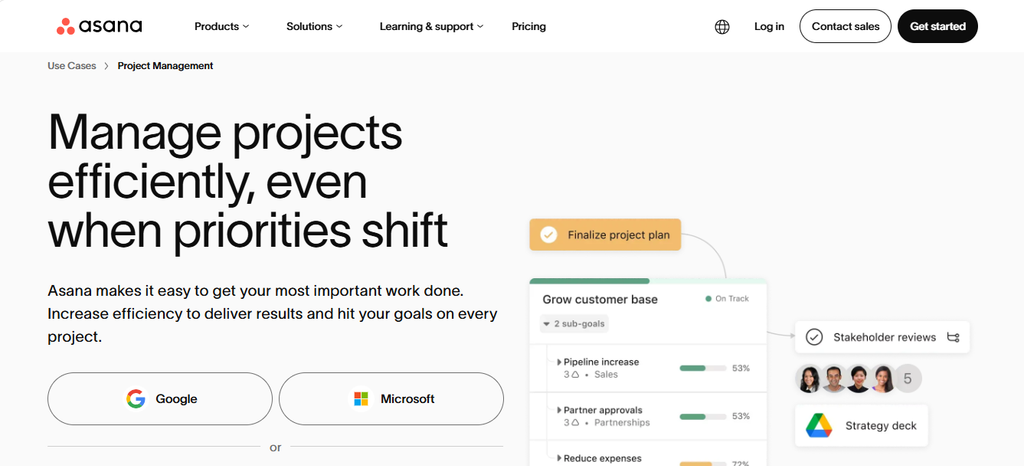
1Asana2008Founded by Dustin Moskovitz & Justin Rosenstein; publicly listed, led by CEO Dan RogersSan Francisco, CaliforniaTask & Work Management
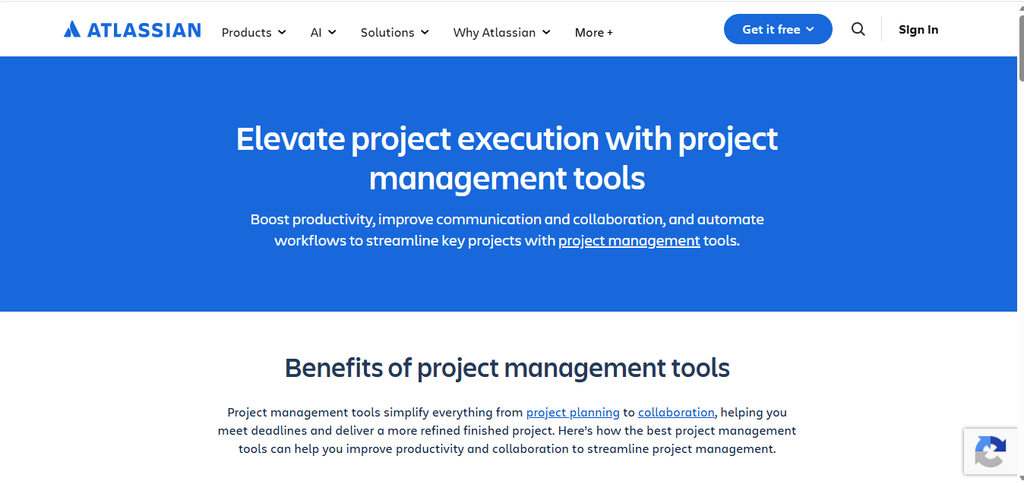
2Atlassian (Jira & Trello)2002Founded by Mike Cannon-Brookes & Scott Farquhar; publicly listed, led by CEO Mike Cannon-BrookesSan Francisco, CaliforniaSoftware & Visual Project Tracking
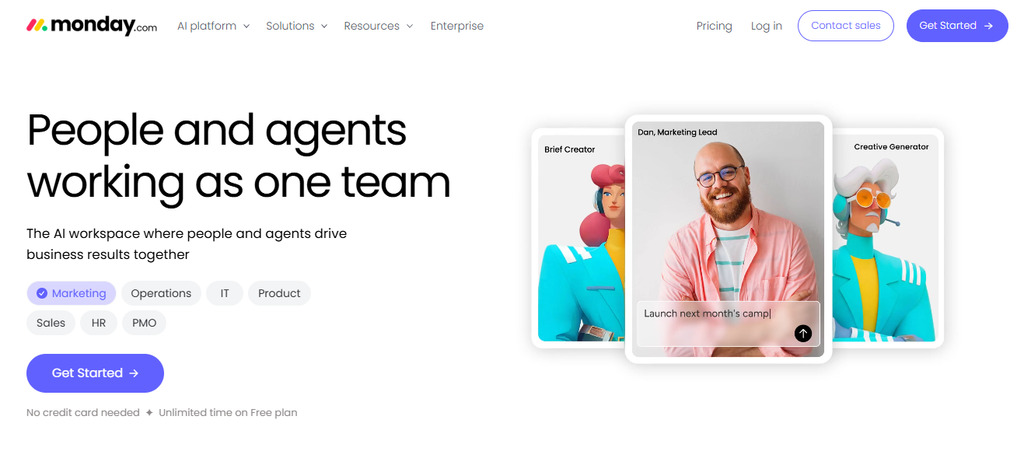
3monday.com2012 (as dapulse)Founded by Roy Mann & Eran Zinman; publicly listed, led by Co-CEOs Roy Mann & Eran ZinmanNew York, New YorkVisual Work Management
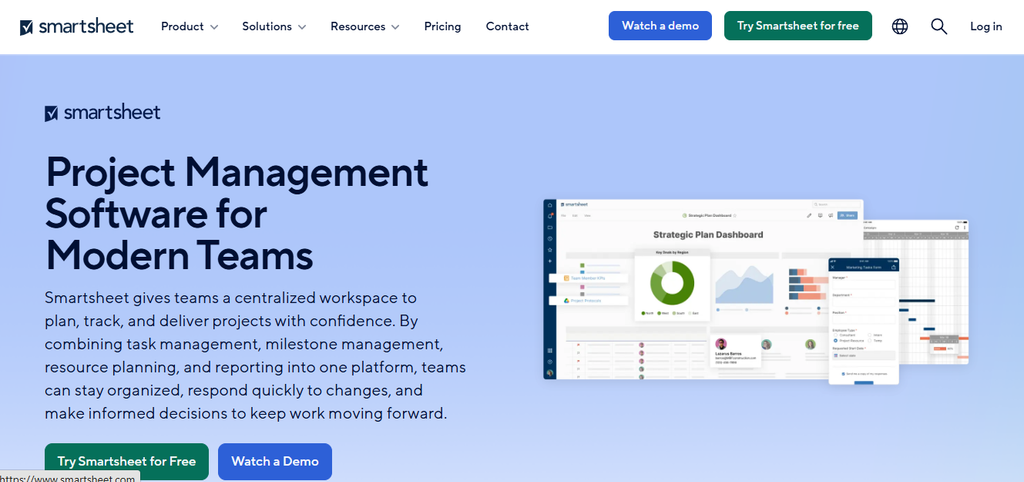
4Smartsheet2005Founded by Brent Frei & co-founders; owned by Vista Equity Partners & Blackstone, led by CEO Rajeev SinghBellevue, WashingtonSpreadsheet-Style Project Management
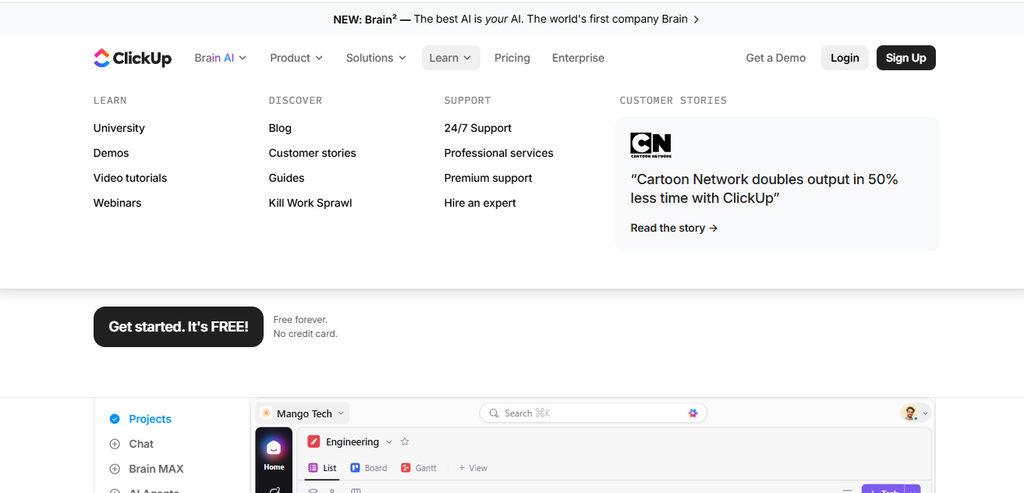
5ClickUp2016Founded by Zeb Evans; privately held, led by CEO Zeb EvansSan Diego, CaliforniaAll-in-One Productivity Platform
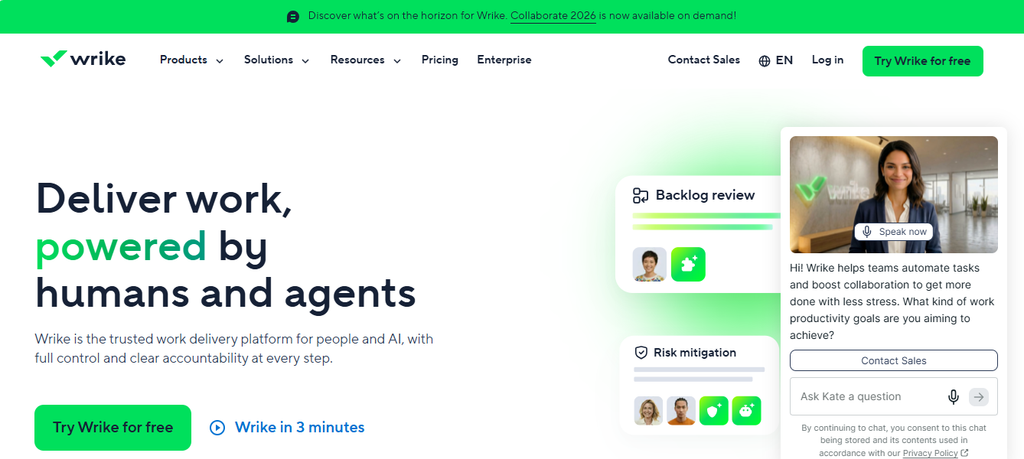
6Wrike2006Founded by Andrew Filev; part of Cloud Software GroupSan Diego, CaliforniaEnterprise Work Management
7Basecamp1999 (as 37signals)Founded by Jason Fried & David Heinemeier Hansson; privately held, led by CEO Jason FriedChicago, IllinoisSimple Small Team Project Management
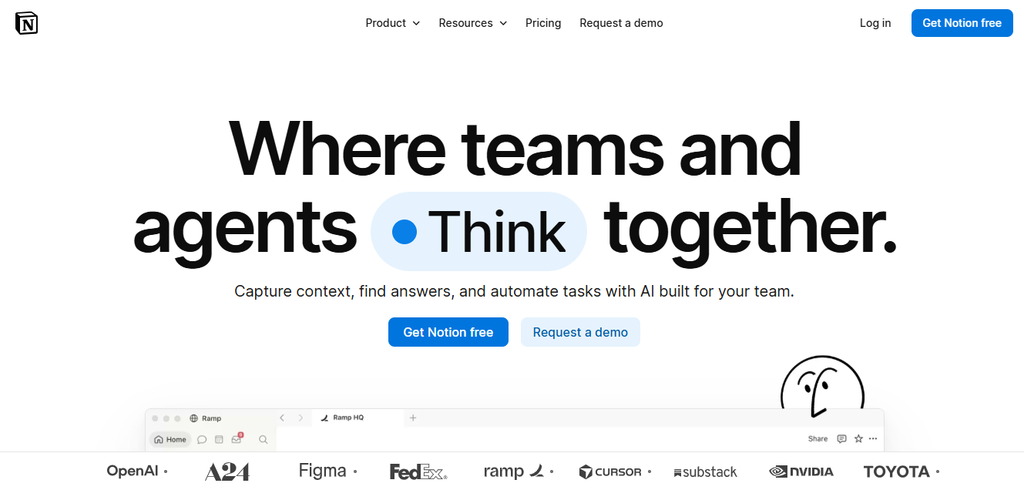
8Notion2013Founded by Ivan Zhao & Simon Last; privately held, led by CEO Ivan ZhaoSan Francisco, CaliforniaNotes & Project Workspace
9Airtable2012Founded by Howie Liu, Andrew Ofstad & Emmett Nicholas; privately held, led by CEO Howie LiuSan Francisco, CaliforniaDatabase-Style Project Tracking
10Microsoft Project1975 (Microsoft)Founded by Bill Gates & Paul Allen; publicly listed, led by CEO Satya NadellaRedmond, WashingtonEnterprise Project Scheduling

1. Asana – A Facebook Side Project That Became a Public Company

  • Founded: 2008 
  • Owner: Founded by Dustin Moskovitz & Justin Rosenstein; publicly listed, led by CEO Dan Rogers 
  • Headquarters: San Francisco, California

Asana was started in 2008 by Dustin Moskovitz, a co-founder of Facebook, and Justin Rosenstein, an engineer who had worked at both Google and Facebook. While still at Facebook, the two had built an internal tool called “Tasks” to help teams manage their work more smoothly. That internal project became the early blueprint for what eventually became Asana.

The company took its name from a Sanskrit yoga term, reflecting the founders’ goal of bringing balance and focus to how teams work together. Asana went public through a direct listing in 2020. Moskovitz stepped down as CEO in 2025, and Dan Rogers took over the role that July, with Moskovitz remaining as board chair.

What Asana does: Helps teams organize projects into tasks, assign work, and track progress.

Services: Task management, project timelines, team collaboration tools, and workflow automation.

2. Atlassian (Jira & Trello) – An Australian Startup Funded by Credit Card Debt

  • Founded: 2002 
  • Owner: Founded by Mike Cannon-Brookes & Scott Farquhar; publicly listed, led by CEO Mike Cannon-Brookes 
  • Headquarters: San Francisco, California

Atlassian was started in 2002 by Mike Cannon-Brookes and Scott Farquhar, two university friends in Sydney, Australia, who took out $10,000 in credit card debt to launch their business. Their first product, Jira, helped software teams track bugs and development tasks in one organized place. The company grew for years entirely on its own revenue, without taking venture capital funding.

Atlassian later bought Trello, a popular visual task board tool, for $425 million in 2017. The company moved its official headquarters to the United States in 2022, even though it remains closely tied to its Australian roots. Scott Farquhar stepped down as co-CEO in 2024, leaving Mike Cannon-Brookes as the company’s sole CEO.

What Atlassian does: Provides software development tracking and visual project management tools.

Services: Issue tracking, visual task boards, team documentation, and software development workflows.

3. monday.com – A Wix Spin-Off That Became a Work Management Giant

  • Founded: 2012 (as dapulse) 
  • Owner: Founded by Roy Mann & Eran Zinman; publicly listed, led by Co-CEOs Roy Mann & Eran Zinman 
  • Headquarters: New York, New York

monday.com began in 2012 under the name dapulse, started by Roy Mann and Eran Zinman as a spin-off from the website-building company Wix, which became its very first customer. The founders built a colorful, flexible tool for teams to organize projects and tasks together, using a visual grid layout instead of plain lists. In 2017, the company renamed itself monday.com to better reflect its broader ambitions.

The platform grew quickly by letting teams customize their own workflows without needing technical skills. monday.com went public on the Nasdaq exchange, growing into a major player in work management software. Roy Mann and Eran Zinman continue to lead the company together today as co-CEOs.

What monday.com does: Lets teams build customized, visual workflows for managing projects and tasks.

Services: Project tracking, visual work boards, automation tools, and team collaboration features.

4. Smartsheet – A Spreadsheet-Style Tool Built From an Executive’s Side Idea

  • Founded: 2005 
  • Owner: Founded by Brent Frei & co-founders; owned by Vista Equity Partners & Blackstone, led by CEO Rajeev Singh 
  • Headquarters: Bellevue, Washington

Smartsheet was started in the summer of 2005, shortly after co-founder Brent Frei sold his previous company, Onyx Software. Frei, along with Maria Colacurcio and Eric Browne, built a work management tool that looked and felt like a familiar spreadsheet, making it easy for everyday office workers to adopt. Mark Mader joined the following year and eventually led the company as CEO for nearly two decades.

Smartsheet went public on the New York Stock Exchange in 2018, growing into a major enterprise work management platform. In 2025, investment firms Vista Equity Partners and Blackstone bought the company in a deal worth about $8.4 billion, taking it private again. Rajeev Singh became Smartsheet’s new CEO that same year, following Mark Mader’s retirement.

What Smartsheet does: Provides spreadsheet-style tools for managing projects and workflows.

Services: Project tracking, automated workflows, resource management, and reporting dashboards.

5. ClickUp – A Fast-Growing All-in-One Productivity App

  • Founded: 2016 
  • Owner: Founded by Zeb Evans; privately held, led by CEO Zeb Evans 
  • Headquarters: San Diego, California

ClickUp was started in 2016 by Zeb Evans, who built the platform around a simple but ambitious idea: replace the need for multiple separate work apps with one single tool. Instead of switching between task managers, note-taking apps, and chat tools, ClickUp tried to combine all of these features together. This all-in-one approach helped the company grow quickly among smaller teams and startups.

The platform offers highly customizable views, letting teams see their work as lists, boards, calendars, or timelines depending on their preference. ClickUp has stayed privately held while raising funding to support its rapid growth. Zeb Evans continues to lead the company today as founder and CEO.

What ClickUp does: Combines task management, docs, and chat into one customizable productivity platform.

Services: Task management, team documents, time tracking, and customizable project views.

6. Wrike – An Enterprise Work Tool Now Part of a Larger Software Group

  • Founded: 2006 
  • Owner: Founded by Andrew Filev; part of Cloud Software Group 
  • Headquarters: San Diego, California

Wrike was started in 2006 by Andrew Filev, who built the platform specifically with larger businesses and complex projects in mind. Unlike some simpler competitors, Wrike focused on handling detailed workflows across many departments within the same large organization. This enterprise-first approach helped Wrike build a strong customer base among bigger companies over the years.

Citrix bought Wrike in 2021, adding it to its own portfolio of workplace software products. Citrix later merged with other companies to form Cloud Software Group, which now owns Wrike alongside several other business tools. The platform remains focused mainly on larger teams needing detailed project oversight.

What Wrike does: Provides detailed work management tools built for large, complex organizations.

Services: Project planning, resource management, custom workflows, and enterprise reporting tools.

7. Basecamp – A Simple Tool Built by Developers Tired of Complexity

  • Founded: 1999 (as 37signals) 
  • Owner: Founded by Jason Fried & David Heinemeier Hansson; privately held, led by CEO Jason Fried 
  • Headquarters: Chicago, Illinois

Basecamp grew out of a web design company called 37signals, started in 1999 by Jason Fried. The team built an internal tool to communicate with clients about ongoing projects, which eventually became popular enough to turn into its own standalone product called Basecamp. David Heinemeier Hansson, who wrote the code behind the tool, later became a well-known voice in the tech industry for his views on simple, focused software.

Fried and Heinemeier Hansson deliberately kept Basecamp simple, avoiding the feature bloat found in many competing project tools. The company eventually renamed itself Basecamp, matching its flagship product. Jason Fried continues to lead the company today as CEO, keeping it privately held and free of outside investor pressure.

What Basecamp does: Provides a simple, straightforward tool for small teams to manage projects together.

Services: Task lists, team messaging, file sharing, and project schedules.

8. Notion – A Flexible Workspace That Became a Project Management Favorite

  • Founded: 2013 
  • Owner: Founded by Ivan Zhao & Simon Last; privately held, led by CEO Ivan Zhao 
  • Headquarters: San Francisco, California

Notion was started in 2013 by Ivan Zhao and Simon Last, who wanted to build a flexible tool that could combine notes, documents, and databases in one place. The company struggled significantly in its early years, even nearly running out of money before finding its footing. Notion’s flexible, building-block style eventually attracted both individual users and entire teams managing complex projects.

While not originally built specifically as a project management tool, many teams adopted Notion for exactly that purpose, using its flexible database features to track tasks and deadlines. The company has grown into a major productivity platform used by millions of people worldwide. Ivan Zhao continues to lead Notion today as CEO.

What Notion does: Provides a flexible workspace combining notes, documents, and project tracking.

Services: Note-taking, project databases, team wikis, and customizable task boards.

9. Airtable – A Spreadsheet That Became a Database-Style Project Tool

  • Founded: 2012 
  • Owner: Founded by Howie Liu, Andrew Ofstad & Emmett Nicholas; privately held, led by CEO Howie Liu 
  • Headquarters: San Francisco, California

Airtable was started in 2012 by Howie Liu, Andrew Ofstad, and Emmett Nicholas, who wanted to combine the simplicity of a spreadsheet with the power of a database. The founders noticed that most people were comfortable using spreadsheets, but struggled when they needed more advanced organization and relationships between data. This combination helped Airtable find a unique spot between simple task lists and complex database software.

Teams began using Airtable to manage projects, track inventory, and organize content calendars, among many other uses. The platform’s flexibility made it popular across a wide range of industries and team sizes. Howie Liu continues to lead Airtable today as CEO.

What Airtable does: Combines spreadsheet simplicity with database power for tracking projects and data.

Services: Project tracking, custom databases, workflow automation, and team collaboration tools.

10. Microsoft Project – A Software Giant’s Original Project Scheduling Tool

  • Founded: 1975 (Microsoft) 
  • Owner: Founded by Bill Gates & Paul Allen; publicly listed, led by CEO Satya Nadella 
  • Headquarters: Redmond, Washington

Microsoft was started in 1975 by childhood friends Bill Gates and Paul Allen, who wanted to write software for the earliest personal computers. The company later built Microsoft Project, first released in 1984, as one of the earliest dedicated project scheduling tools for businesses. It became especially popular with construction, engineering, and large corporate teams needing detailed scheduling and resource planning.

Microsoft Project has stayed focused on detailed timelines, task dependencies, and resource allocation, differing from the simpler, visual tools favored by smaller teams. The product now works closely with other Microsoft tools like Teams and Office. Satya Nadella has led Microsoft as CEO since 2014, continuing to invest in the company’s broader productivity software lineup.

What Microsoft Project does: Provides detailed project scheduling and resource planning tools for larger organizations.

Services: Project scheduling, task dependencies, resource allocation, and timeline reporting.

Frequently Asked Questions (FAQs)

1. Which is the most widely used project management tool in the USA?

Asana and Atlassian’s Jira are both among the most widely used project management tools, with Asana being popular with marketing teams and Jira widely used by software development teams.

2. Which companies are originally American businesses?

Asana, Smartsheet, ClickUp, Wrike, Basecamp, Notion, Airtable, and Microsoft all started in the United States, while Atlassian and monday.com were founded in Australia and Israel, respectively.

3. Which tool was built specifically for software development teams?

Jira, made by Atlassian, was built specifically for software development teams to track bugs, coding tasks, projects, and development workflows.

4. Which tool recently changed ownership in a multi-billion-dollar deal?

Smartsheet was acquired by Vista Equity Partners and Blackstone in 2025 for approximately $8.4 billion, taking the company private again.

5. Which tool is known for its simple, no-frills approach?

Basecamp is known for its deliberately simple approach, avoiding many of the extra features and complexity found in competing project management tools.

6. Which tool combines spreadsheet features with database power?

Airtable combines the familiar functionality of a spreadsheet with the organizational and data-management capabilities of a database.

7. Are project management tools in the USA regulated?

Most project management tools are subject to general data privacy and security requirements rather than regulations specifically designed for project management software. The rules can vary depending on the type of data handled and the industry.

8. Which tool was originally built as an internal Facebook project?

Asana grew out of an internal task management tool called “Tasks,” which was developed by its founders while they were working at Facebook.

9. Which tool is owned by a large private software holding company?

Wrike is part of Cloud Software Group. The company became part of the group following its acquisition by Citrix in 2021.

10. Why do these ten tools matter to everyday businesses?

These project management tools help businesses organize projects, track deadlines, assign tasks, and collaborate more effectively, making it easier for teams to manage their daily work.

Conclusion

America’s project management industry involves numerous software companies, which offer a wide range of solutions to help teams achieve their goals. The industry integrates Silicon Valley’s rising stars, enterprise software giants, and international platforms. In particular, Asana, Smartsheet, ClickUp, Wrike, Basecamp, Notion, Airtable, and Microsoft have risen to the top in the US market to satisfy the demands of millions of American businesses and their daily tasks. 
Meanwhile, Australian-based Atlassian and Israeli-founded monday.com have also entered the fray, bringing their expertise in project management software to the US market.

In tandem, these ten companies help thousands of American businesses reach their goals every day. 

Furthermore, as the global workplace evolves towards greater remote work and digital collaboration, these companies will play a vital role in how American business manages its projects in the future.

Aditya Birla World Academy hosts ‘The Happy Place’, puts student mental health at the heart of school conversations

Aditya Birla World Academy The Happy Place event

Student-led mental health festival brought together over 19 schools across Mumbai, reached over 800 students and engaged over 290 student participants, building on ABWA’s commitment to embedding mental health awareness and emotional well-being from the formative years

National, 8 October 2026: In an age of social media comparison, constant digital stimulation, and growing pressures around academic performance, friendships, and identity, young people are navigating increasingly complex emotional challenges. According to the National Mental Health Survey of India, nearly 1 in 7 adolescents aged 13–17 years experience mental health issues, yet fewer than 10% receive adequate support.


It is against this backdrop that Aditya Birla World Academy (ABWA), founded by Mrs. Neerja Birla, hosted The Happy Place, India’s first student-led mental health festival supported by Mpower, bringing together students to explore and express different dimensions of mental health and emotional well-being through creative expression. The Chief Guest at the event, Ms. Mansi Zaveri, Founder, Kidsstoppress, left students with valuable lessons on resilience and perseverance, encouraging them to keep showing up and embrace setbacks as part of the journey. She also introduced students to the ‘Odyssey Plan’, encouraging them to keep a Plan A, B and C in life, so that when setbacks arise, there is always another path forward rather than allowing one setback to bring their journey to a halt. Drawing on the idea of Maslow’s hierarchy of needs, she also emphasised the importance of building a strong foundation of well-being and self-awareness, and of living with the belief that life is always rigged in our favour; we just need to show up.

The latest edition, themed ‘The Messy Middle’, recognised that life does not always unfold as imagined and that uncertainty, setbacks, and self-doubt are natural parts of the human experience. Bringing together over 19 schools and engaging over 290 student participants from Grades 7 to 12, the festival used creative and engaging formats including Slam Poetry, AD Film Making, Stand-Up Comedy, Drama and Dance, giving students different platforms to explore and express their experiences of navigating life’s uncertainties. The competitions were judged on their relevance to the theme ‘The Messy Middle’, creativity and originality, and how effectively the entries captured and communicated the emotions, experiences and perspectives associated with navigating life’s uncertainties and setbacks. The festival reached out to over 1,000 students through its wider engagement.

Speaking on the event, Ms. Shalini John, Principal, Aditya Birla World Academy, said, “Mental health education needs to begin early because emotional well-being does not suddenly become relevant in adulthood. The school years are a critical phase when young people navigate significant developmental changes alongside growing academic, social and environmental pressures.

She further added ‘These formative years provide an important opportunity to equip students with preventive coping strategies, help them understand themselves and their emotions, build healthy relationships, and, most importantly, feel safe and confident in seeking help when they need it.

Through The Happy Place, India’s first school mental health festival, we aim to create a safe and supportive space where students can express themselves freely, explore their emotions through creative outlets, and recognise that conversations around mental health are a natural and essential part of growing up.”

At ABWA, mental health is not treated as a once-a-year conversation. It is woven into the everyday learning journey through Minds Matter, a mental health curriculum for students from Grades 1 to 12 that helps build the emotional and social skills needed to navigate life’s challenges.

Over the last eight years, The Happy Place, India’s first student-led mental health festival,  demonstrated how creative expression can make conversations around mental health more open and accessible to young people. By giving students different ways to explore emotions, challenges and perspectives, the festival has helped bring conversations that can often be difficult to articulate into forms that feel authentic, relatable and engaging.

About Aditya Birla World Academy

Aditya Birla World Academy (ABWA) is a leading international school in Mumbai, with a 15-year legacy of nurturing academically accomplished, emotionally resilient and socially conscious young individuals. The school offers the IGCSE, A Levels and IBDP pathways, complemented by a learning environment that places equal emphasis on academic excellence, character, leadership and holistic development. At the heart of ABWA’s approach is PRIME (Personalised Report on Impact, Mindset & Empathy), its proprietary framework that makes students’ growth in character, leadership and emotional intelligence visible and measurable, alongside their academic progress.

Beyond academics, ABWA provides students with opportunities to discover and pursue their interests across competitive sports, performing arts, technology, robotics and other experiential programmes. Through transformative learning, community engagement and real-world experiences, ABWA aims to develop curious thinkers, confident creators and compassionate leaders equipped to make a meaningful impact in a rapidly changing world.

About Mpower

Mpower, an initiative of Aditya Birla Education Trust, is one of South Asia’s largest private mental-health initiatives, with a distinctive focus on mental-health literacy, capacity building, community outreach and access to care. Through its work across awareness, advocacy, prevention, intervention and support, Mpower has touched over 7 million lives to date. Its work spans clinical services, mental-health awareness and outreach programmes, capacity building, and school, workplace and community interventions, with a focus on making mental-health support more accessible and creating greater openness around conversations on mental wellbeing.

Mpowered Voices is Mpower’s platform for lived experiences, creating spaces for individuals to share their personal journeys and perspectives around mental health, while encouraging empathy, reducing stigma and making conversations around mental wellbeing more relatable.

NDRF Wives Welfare Association (NWWA) partners with Mpower to launch ‘Project Nirmal’ for comprehensive mental health and psychosocial support for NDRF personnel and their families

NWWA and Mpower launch Project Nirmal for NDRF families

National, October 8th, 2026: The NDRF Wives Welfare Association (NWWA) signed a Memorandum of Understanding (MoU) with Mpower, a pan- India mental health service provider founded by Mrs. Neerja Birla under the Aditya Birla Education Trust (ABET), to launch ‘Project-Nirmal, a dedicated Mental Health and Psychosocial Support (MHPSS) initiative for NDRF personnel and their families across the Nation.

Recognizing the intense stress, physical demands, and sudden deployments faced by NDRF’s rescuers during disasters, this institutionalized partnership aims to manage occupational stress and eliminate the stigma around mental health.

‘Project-Nirmal’ offers a comprehensive care continuum, encompassing mental health awareness sessions, routine psychological screening, individual and group counselling, tele-counselling, crisis intervention, suicide prevention and support.  

To ensure Pan-India coverage, hub-based teams will be set up in key regional centers. Additionally, a dedicated 24/7 multi-lingual helpline operated by mental health experts will provide round-the-clock guidance to personnel and their family members.

Smt. Priti Anand, President, NWWA emphasized that “prioritizing the emotional well-being of rescuers and their families is essential for maintaining force morale, readiness, and overall response effectiveness”. 

 Speaking about the initiative, Mrs. Neerja Birla, Founder and Chairperson, Aditya Birla Education Trust, Mpower said: “We deeply appreciate the NDRF for recognising that mental well-being is integral to the strength of the response system itself. Through Project Nirmal, Mpower is taking a pioneering step with The NDRF Wives Welfare Association to extend structured mental-health support to frontline workers and the NDRF families. This partnership marks the beginning of a pan- India vision for Mpower to work towards systematically institutionalising mental-health care and building integrated mental-health support systems for those who are serving the nation around the clock.” 

Mpower brings extensive experience of working with India’s uniformed and frontline services, including the Central Industrial Security Force (CISF), Central Reserve Police Force (CRPF) and Police forces across Maharashtra, providing mental-health counselling and psychosocial support in high-stress environments. Through long-term engagements such as Project Mann with CISF, Mpower has developed an institutionally embedded approach that brings together awareness, early identification, counselling, capacity building and access to professional support. This experience has reinforced the importance of making mental health an integral and sustained part of the support ecosystem for frontline personnel, rather than a response limited to moments of visible distress. Building on this experience, Project Nirmal by Mpower marks the first step in Mpower’s pan-India vision to systematically strengthen mental-health care and well-being for frontline workers and their families, recognising the critical role they play in safeguarding communities and the nation. 

About Mpower 

Mpower, an initiative of the Aditya Birla Education Trust, is one of South Asia’s largest private mental-health initiatives, with a focus on mental-health literacy, capacity building, community outreach and access to care. Its work spans awareness, prevention, intervention and support across clinical, school, workplace and community settings, with the aim of making mental- health support more accessible and encouraging more open conversations around mental wellbeing. To date, Mpower has touched over 8 million lives through its programmes and initiatives. Mpowered Voices, its lived-experience platform, creates spaces for individuals to share their personal journeys and perspectives around mental health, fostering empathy and helping make conversations around mental wellbeing more open and relatable. 

Deion Sanders Net Worth: How Prime Time Built His Wealth

Deion Sanders Net Worth

Deion Sanders has made money from almost every stage of his career. He played professional football for 14 seasons, spent nine seasons in Major League Baseball, signed endorsement deals with major brands and later moved into college football coaching.

That career has left him with an estimated net worth of $60 million to $70 million. The exact amount is not public, so there is no confirmed figure for how much Sanders owns today.

His playing career gave him a strong financial start. Sanders earned millions in the NFL and MLB, while companies such as Nike, Pepsi and American Express paid him for his name and public profile. His move into coaching added another major source of income, particularly after he took over at the University of Colorado Boulder.

The money attached to his recent coaching contracts is especially notable. His first Colorado deal was worth $29.5 million over five years. In March 2025, the school agreed to a new five-year extension worth $54 million.

Deion Sanders at a Glance

CategoryDetails
Full NameDeion Luwynn Sanders
Known AsPrime Time, Coach Prime
ProfessionFormer professional athlete, football coach and businessman
NFL Career14 seasons
MLB Career9 seasons
NFL TeamsFalcons, 49ers, Cowboys, Redskins, Ravens
MLB TeamsYankees, Braves, Reds, Giants
Estimated Net Worth60million–70 million
Major Coaching StopsJackson State, Colorado Buffaloes
Known ForFootball, baseball, coaching, endorsements and media work

What Is Deion Sanders’ Net Worth ?

Image Source: Pixabay

There is no confirmed figure for Deion Sanders’ net worth. Sanders has not publicly disclosed a personal balance sheet, so the numbers reported online are based on estimates rather than an amount he has officially put forward himself.

Most current estimates place his wealth somewhere between $60 million and $70 million. The range is fairly wide, which is understandable when you consider how many different income streams have been part of Sanders’ career. He has earned money from professional football, baseball, coaching, endorsements and business ventures over several decades.

His playing career alone brought in millions of dollars. Sanders spent 14 seasons in the NFL and also played nine seasons in Major League Baseball, giving him an unusual second professional sports career alongside football. The money did not stop there. His name became valuable to brands, and his move into coaching created another significant source of income.

There is also a difference between career earnings and personal wealth. The value of a contract tells you what an agreement is worth, but it does not tell you how much money actually ends up in someone’s hands. Taxes, agent fees, living expenses and other costs all come into the picture.

So, rather than putting a single exact number on his fortune, it is more accurate to place Deion Sanders’ estimated net worth at $60 million to $70 million in 2026.

How Deion Sanders Made His Money

Deion Sanders’ wealth came together over a long career rather than from one particularly big deal.

Football was the biggest part of his playing career. He became one of the NFL’s best-known defensive backs and played for several teams, earning millions in salary along the way. At the same time, Sanders was doing something very few professional athletes have managed at that level: playing Major League Baseball as well.

His popularity off the field brought another layer to his income. Sanders became a familiar face for major brands and appeared in advertising campaigns and other commercial ventures. His personality was a big part of the appeal. He wasn’t simply known as a football player; “Prime Time” became a brand in its own right.

Coaching later gave Sanders another substantial source of income. He took over at Jackson State, where he quickly became one of the most talked-about figures in college football. His move to Colorado in 2022 took his coaching career to a much larger stage and came with a much bigger contract.

He has also remained involved in business and media projects over the years. Put together, those different careers explain why Sanders’ wealth cannot really be traced to his playing salary alone.

Deion Sanders’ NFL Career Earnings

Image Source: Pixabay

Sanders spent 14 seasons in the NFL, playing for five teams: the Atlanta Falcons, San Francisco 49ers, Dallas Cowboys, Washington Redskins and Baltimore Ravens.

Estimates of his NFL salary earnings generally fall between $33.5 million and $45 million. The exact figure varies between sources, largely because contract values and reported compensation are not always counted in exactly the same way.

His NFL career also stretched across an era when player salaries were nowhere near today’s levels. Even so, Sanders managed to stay among the league’s most recognisable players throughout his career. He was a standout defensive back, a dangerous return specialist and, for a period, one of the most marketable athletes in American sports.

That visibility mattered financially. Sanders’ value was not limited to what he could earn from a team. His reputation followed him from one franchise to another and helped turn his name into something that brands could sell alongside their own products.

His NFL salary was therefore only one part of what football brought him. The exposure that came with playing at that level opened the door to the endorsement and business opportunities that became an important part of his overall wealth.

Deion Sanders’ MLB Career Earnings

Sanders also played professional baseball while building his football career.

He spent nine seasons in Major League Baseball and played for the New York Yankees, Atlanta Braves, Cincinnati Reds and San Francisco Giants.

His MLB salary earnings are estimated at around $13 million.

Very few athletes have played both professional football and baseball at that level. Sanders managed to do it while maintaining a major NFL career, which gave him another source of professional income and kept his profile in front of sports fans throughout the 1990s.

When the estimated NFL and MLB salaries are put together, Sanders earned roughly $46.5 million to $58 million from his playing contracts, depending on which NFL estimate is used.

Another commonly cited calculation places his combined playing earnings at about $59.5 million.

That difference shows why career-earnings figures should be treated carefully. Public sources do not always use the same method when calculating old contracts.

His Move Into Coaching

Image Source: Pixabay

Sanders eventually found another career in football, this time on the sideline.

He became the head coach at Jackson State in 2020. His time there brought a lot of attention to the programme and helped establish Sanders as a serious coaching figure.

Then came Colorado.

In December 2022, Sanders agreed to a five-year, $29.5 million contract with the University of Colorado Boulder. The deal gave him a much larger coaching salary than he had received at Jackson State.

Colorado later agreed to a new five-year extension with Sanders in March 2025. The deal was reported at $54 million.

The two Colorado agreements alone represent a very large amount of potential compensation. His Jackson State deal also adds to the overall value of his coaching contracts, bringing the reported value across those agreements to more than $80 million.

That does not mean Sanders has already earned or kept $80 million from coaching. Contract value and personal wealth are two different things.

Deion Sanders’ Career Earnings Breakdown

CategoryDetailsAmount
NFL Salaries14 seasons across five teams33.5M–45M
MLB SalariesNine seasons across four teamsAround $13M
Coaching ContractsJackson State and Colorado agreements$80M+ total contract value
Endorsements & BusinessNike, Pepsi, Sega, Burger King, American Express, Pizza Hut, RedCon1, Taft and media venturesTens of millions
Estimated Net WorthCurrent public estimates60M–70M

These figures should not simply be added together.

His playing salaries show what Sanders earned from professional sports. His coaching contracts show the value of his coaching agreements. His estimated net worth is a separate figure that takes into account the value of what he owns and owes, not just the money that has passed through his career.

Endorsements Added Another Major Income Stream

Image Source: Pixabay

Sanders became a marketable athlete early in his career, and companies quickly saw the value in putting his name next to their products.

He has worked with brands including Nike, Pepsi, Sega, Burger King, American Express and Pizza Hut. His more recent business relationships have included RedCon1 and Taft Sneakers.

These deals gave Sanders another way to earn money without depending on his salary from a team.

His personality also helped. Sanders was never known as a quiet figure in sports. “Prime Time” became part of his identity, and that made him easy for advertisers and television networks to recognise.

The commercial value of that name continued after he stopped playing.

Why His Coaching Career Matters to His Wealth

Sanders’ coaching salary is now a much bigger part of his financial picture than it was when he first entered coaching.

His original Colorado contract paid $29.5 million over five years. The 2025 extension raised the reported value of his next five-year agreement to $54 million.

That works out to an average of about $10.8 million per year under the reported value of the extension.

Some reports have placed his annual compensation in the $10 million to $12 million range, depending on how the contract and additional compensation are counted.

Either way, the numbers are far above what most people would associate with the early part of Sanders’ coaching career.

From “Prime Time” to “Coach Prime”

Sanders has managed to keep his public profile for decades.

During his playing career, fans knew him as “Prime Time.” His coaching career gave him another identity: “Coach Prime.”

That name recognition has commercial value.

Sanders continues to appear in interviews, sports coverage and other media, while his coaching job keeps him at the centre of college football attention. Companies can still reach a large sports audience by working with him, even though he no longer plays professionally.

That has helped Sanders continue earning money well after his NFL and MLB careers ended.

How Much Did Deion Sanders Make From Playing Sports?

Sanders earned most of his early professional income through football and baseball.

His NFL earnings are estimated at $33.5 million to $45 million, while his MLB earnings are estimated at around $13 million.

That puts his combined playing salary somewhere around $46.5 million to $58 million, depending on the NFL figure used. Some sources put the combined number at approximately $59.5 million.

The difference is relatively small compared with the size of his overall career, but it is worth mentioning because public salary estimates do not always match.

More importantly, those figures cover only his playing salaries. They do not include his endorsement deals, business income or coaching contracts.

Has Coaching Become His Biggest Source of Income?

Image Source: Pixabay

His recent coaching contracts are much larger than the salaries attached to his playing career on an annual basis.

The 2025 Colorado extension carries a reported value of $54 million over five years. That gives the agreement an average annual value of roughly $10.8 million.

Sanders also had his earlier $29.5 million Colorado contract and his Jackson State agreement.

His current coaching career therefore gives him a substantial source of income that did not exist when he was playing professional sports.

Frequently Asked Questions

What is Deion Sanders’ net worth in 2026?

Current estimates put Deion Sanders’ net worth at around $60 million to $70 million. Sanders has not publicly confirmed an exact figure, so these numbers remain estimates.

How much did Deion Sanders make in the NFL?

Public estimates put his NFL salary earnings between $33.5 million and $45 million over his 14-season career.

How much did Deion Sanders make in MLB?

Sanders earned around $13 million in MLB salaries during his nine seasons in Major League Baseball.

How much is Deion Sanders’ Colorado contract worth?

Sanders signed a five-year, $29.5 million contract with Colorado in 2022. In March 2025, Colorado agreed to a new five-year extension reportedly worth $54 million.

How much does Deion Sanders make per year at Colorado?

The reported $54 million, five-year extension works out to an average of around $10.8 million per year. Some reports place his annual compensation in the $10 million to $12 million range depending on how additional compensation is counted.

How does Deion Sanders make his money?

Sanders makes money through coaching, endorsements, business ventures and media work. He also earned substantial salaries during his NFL and MLB careers.

Did Deion Sanders really play professional baseball?

Yes. Sanders played nine seasons in Major League Baseball while also pursuing his NFL career. He played for the Yankees, Braves, Reds and Giants.

Which companies has Deion Sanders endorsed?

Sanders has worked with brands including Nike, Pepsi, Sega, Burger King, American Express and Pizza Hut. His more recent business relationships have included RedCon1 and Taft Sneakers.

Is Deion Sanders’ $54 million coaching contract part of his net worth?

The contract contributes to his future earnings, but its full $54 million value should not be treated as part of his current net worth. A contract represents agreed compensation over a period of time, while net worth reflects a person’s assets and liabilities at a particular point.

Fino Payments Bank shares experienced a strong price surge of 17% after Q2 business update

Fino Payments Bank shares surge 17% after Q2 business update

Fino Payments Bank stocks rallied by 17% following a 3-day decline, following its business update of Q2 FY27. On the National Stock Exchange (NSE), the equity index was trading on the counter, opening at the natural level of 134, recording a modest initial advance of 4.5%. The trend of trading continued and buying demand gathered momentum, lifting the share price to an intraday record high of ₹150.40.

Operational growth and key catalyst

The share price stood 13% higher at ₹145.65, outperforming the market significantly. Volume on the exchange was especially high in the morning session, exceeding 16 million equity shares as investors expressed enthusiasm over the growth figures released in the quarterly update.

The driver of the strong price improvement was aggregate growth across the main business segments in the September quarter. Loan referrals recorded significant growth at Exact and Fino Payments Bank, with disbursals rising 223% in the September quarter to ₹278 crore from ₹86 crore in the September quarter of the prior year.

The bank also grew its customer base with an overall Current Account and Savings Account (CASA) base of 1.91 crore. The financial institution’s average total deposits increased by 13% Y-o-Y to ₹2,794 crore, up from ₹2,480 crore a year ago. Renewal income for the 3-month quarter ended September 30 rose by 20% Y-o-Y to ₹28 crore compared to ₹23.3 crore in the same period last fiscal year.

Digital engagement metrics and technical analysis

The quarterly report pointed to steady growth in user adoption in digital and certain product categories. The customer base that is digitally active and associated with the bank climbed 13% to 64.9 lakh over the previous year, while the FinoPay platform reached 8.1 lakh with a 12% growth. The cash management services (CMS) segment continued its upward trend in throughput growth, rising by 10% Y-o-Y to reach ₹6,918 crore.

Some business segments suffered losses during the quarter. The number of new accounts opened in Q2FY27 fell by 17% year-over-year to 2.45 lakh accounts, compared to 2.95 lakh accounts in the corresponding quarter of the prior year. Transaction business throughput fell by 10% to ₹3,469 crore for 3 months.

Technical chart-wise, the stock experienced a major reversal after losing strength over a short period, said market analysts. Harish Jujarey, AVP Head of Technical Equity Research at Prithvi Finmart, noted that the share had experienced a significant correction from its July highs by over 30%, following which it found technical support near its ascending trendline at ₹125.

The stock rose by more than 13% during that trading session, and the weekly timeframe chart charted above has demonstrated a breakout above the short-term falling trendline resistance. Technical forecasts suggest that the share price could continue its parabolic upward movement and cross its existing 200-day moving average (200-DMA) around ₹165. 

While this upside outlook exists, traders are cautioned about the company’s stock due to the prevailing market mood, and they should not pursue it at these high levels but can wait for its next possible entry at ₹142-₹140 with a firm stop-loss at ₹124.

Conclusion

The impressive 17% surge in Fino Payments Bank’s share price is indicative of the renewed market optimism, following the impressive positive growth in its loan referrals, deposit figures, and digital engagement during the second quarter. The bank’s performance in its key core segments remained solid, with some headwinds facing the opening of new accounts and the volume of transactions, but the technical breakout above key resistance levels was driven by these operational figures. The stock is expected to move toward the 200-DMA in the upcoming sessions, as highlighted by Key Points and Support Levels. With Market Activity turning positive, participants will closely watch its movement towards that significant mark. 

Top 10 Law Firms in USA

Top 10 Law Firms in USA

The US legal market includes thousands of law firms, but only a small group regularly appears at the top of prestige rankings. New York remains an important centre for corporate and financial law, while firms such as Latham & Watkins, Kirkland & Ellis and Gibson, Dunn & Crutcher have built large practices across the country and internationally.

The firms on this list are known for work in areas such as mergers and acquisitions, litigation, private equity, banking, securities and financial regulation. Some have long histories on Wall Street, while others have grown into large global firms with offices in several countries.

This article covers 10 of the most prestigious US law firms based on the rankings and descriptions in the sources provided. It is not a ranking by revenue. Prestige can depend on the type of legal work, major clients, reputation among lawyers and strength in particular practice areas, so the order should be viewed in that context.

Quick Look at the Top 10 Law Firms in the USA

RankLaw FirmMain Area
1Cravath, Swaine & MooreCorporate litigation and financial law
2Wachtell, Lipton, Rosen & KatzMergers and acquisitions
3Skadden, Arps, Slate, Meagher & FlomCorporate transactions and litigation
4Latham & WatkinsFinance, corporate and regulatory law
5Sullivan & CromwellBanking, finance and commercial law
6Kirkland & EllisPrivate equity, restructuring and litigation
7Davis Polk & WardwellFinancial regulation, capital markets and litigation
8Gibson, Dunn & CrutcherLitigation and corporate law
9MilbankFinancial and corporate law
10Simpson Thacher & BartlettPrivate equity, M&A and banking

1. Cravath, Swaine & Moore

Headquarters: New York
Main Business: Corporate litigation and financial law

Cravath, Swaine & Moore is one of the best-known names in the US legal market. The New York firm has a particularly strong reputation in corporate litigation and financial work.

Its name is closely associated with high-end legal work for major businesses and financial institutions. The firm is also regularly placed among the most prestigious law firms in the country.

Cravath’s position at the top of this list reflects its reputation rather than its size. Unlike rankings based purely on revenue or number of lawyers, prestige rankings put more weight on the firm’s standing in the legal profession.

Unique Offerings

● Corporate litigation
● Financial law
● Corporate legal work
● High-stakes commercial matters
● Strong Wall Street reputation

Official website: Cravath, Swaine & Moore

2. Wachtell, Lipton, Rosen & Katz

Headquarters: New York
Main Business: Mergers and acquisitions and corporate law

Wachtell, Lipton, Rosen & Katz is particularly well known for mergers and acquisitions. The New York firm has built its reputation around major corporate matters and high-value transactions.

M&A work can involve some of the most complicated decisions faced by large companies. Lawyers may be involved when a company is being bought, sold or combined with another business.

Wachtell is known for handling this type of high-stakes work. Its position near the top of prestige rankings reflects the firm’s standing in the corporate legal market.

Unique Offerings

● Mergers and acquisitions
● Corporate law
● High-stakes transactions
● Corporate advisory work
● Strong New York presence

Official website: Wachtell, Lipton, Rosen & Katz

3. Skadden, Arps, Slate, Meagher & Flom

Main Business: Corporate transactions and litigation

Skadden, Arps, Slate, Meagher & Flom is a large global law firm with major corporate and litigation practices.

The firm handles complex corporate transactions as well as disputes. This gives it a broad position in the legal market rather than limiting its work to one particular practice area.

Its size also sets it apart from some of the smaller elite firms on this list. Skadden has built a large international operation while maintaining its reputation in major US legal matters.

The firm is regularly associated with complex work for large companies and institutions.

Unique Offerings

● Corporate transactions
● Litigation
● Global legal services
● Complex business matters
● Large corporate practice

Official website: Skadden, Arps, Slate, Meagher & Flom

4. Latham & Watkins

Main Business: Finance, corporate and regulatory law

Latham & Watkins is one of the largest global law firms and has a broad range of legal practices. Its work includes finance, corporate and regulatory law.

The firm handles matters that can involve major transactions, financial arrangements and regulatory requirements. Its size gives it the ability to work across several areas of law and different markets.

Latham has also developed a strong presence outside the USA. That international footprint is important for companies dealing with transactions or legal issues in more than one country.

Its broad practice base makes it one of the most prominent firms in the US legal market.

Unique Offerings

● Corporate law
● Finance
● Regulatory law
● International legal work
● Large global practice

Official website: Latham & Watkins

5. Sullivan & Cromwell

Headquarters: New York
Main Business: Banking, finance and commercial law

Sullivan & Cromwell is a long-established Wall Street law firm. It is particularly known for banking, finance and general commercial work.

The firm works on legal matters involving businesses and financial institutions. Its financial practice has been an important part of its reputation in the US legal market.

Sullivan & Cromwell is also regarded as one of the elite New York firms. Its position on this list reflects its long-standing reputation and strength in financial and corporate law.

Unique Offerings

● Banking law
● Finance
● Commercial law
● Corporate legal work
● Wall Street practice

Official website: Sullivan & Cromwell

6. Kirkland & Ellis

Main Business: Private equity, restructuring and litigation

Kirkland & Ellis is a major global law firm with particularly strong practices in private equity, restructuring and litigation. It is also described in the source material as the highest-revenue law firm in the world.

Private equity is one of the firm’s better-known areas. Its lawyers work on legal matters connected with investment firms, transactions and businesses involved in private equity deals.

The firm’s restructuring and litigation practices add another major part to its business. This gives Kirkland a mix of transactional and contentious legal work.

Its combination of scale and specialist practices has made it one of the most prominent firms in the US legal market.

Unique Offerings

● Private equity
● Restructuring
● Litigation
● Corporate transactions
● Large global operation

Official website: Kirkland & Ellis

7. Davis Polk & Wardwell

Headquarters: New York
Main Business: Financial regulation, capital markets and litigation

Davis Polk & Wardwell is a leading New York law firm with a strong reputation in financial regulation, capital markets and litigation.

Financial regulation is an important part of the firm’s practice. This involves legal work connected with financial institutions, markets and regulatory requirements.

The firm also handles capital markets matters, where companies and financial institutions may need legal advice around securities and financing activities.

Its combination of financial and litigation practices has kept Davis Polk among the most highly regarded US law firms.

Unique Offerings

● Financial regulation
● Capital markets
● Litigation
● Banking and financial work
● Corporate legal services

Official website: Davis Polk & Wardwell

8. Gibson, Dunn & Crutcher

Main Business: Litigation and corporate law

Gibson, Dunn & Crutcher is known for both litigation and corporate work. The firm has a strong national presence in the USA and also operates internationally.

Its litigation practice handles major disputes, while its corporate lawyers work on transactions and other business matters. Having both practices gives the firm a broad base of work.

Gibson Dunn is also recognised as an elite law firm. Its national reach allows it to handle matters that involve businesses in different parts of the country.

Unique Offerings

● Litigation
● Corporate law
● National legal practice
● Business transactions
● International legal services

Official website: Gibson, Dunn & Crutcher

9. Milbank

Main Business: Financial and corporate law

Milbank is a leading US law firm with a strong reputation in financial and corporate law. The firm is also known for offering market-leading compensation to its associates.

Its work covers major corporate and financial matters. These areas require lawyers to deal with transactions, financing arrangements and other complex business issues.

Milbank’s reputation is particularly strong among lawyers and legal professionals. Its position in prestige rankings reflects that standing within the profession.

Unique Offerings

● Financial law
● Corporate law
● Major business transactions
● Banking and finance work
● Market-leading associate compensation

Official website: Milbank

10. Simpson Thacher & Bartlett

Main Business: Private equity, mergers and acquisitions and banking

Simpson Thacher & Bartlett is a global law firm with strong practices in private equity, M&A and banking.

Private equity is one of its better-known areas. The firm also handles mergers and acquisitions, where lawyers advise companies and investors on major transactions.

Its banking practice adds another important part of the firm’s work. Together, these areas have helped Simpson Thacher build a strong reputation in corporate and financial law.

The firm rounds out this list of highly prestigious US law firms.

Unique Offerings

● Private equity
● Mergers and acquisitions
● Banking
● Corporate transactions
● Global legal practice

Official website: Simpson Thacher & Bartlett

Why These Law Firms Are Highly Regarded in the USA

Corporate and Financial Work

A large number of the firms on this list have strong corporate and financial practices. Cravath, Wachtell, Sullivan & Cromwell, Davis Polk and Simpson Thacher are closely associated with this type of work.

These matters can involve large transactions, financial institutions, securities and major business decisions. That kind of work has helped many New York firms build their reputations over several decades.

Litigation Remains a Major Practice

Litigation is another common area among the firms on the list. Cravath, Skadden, Kirkland and Gibson Dunn all have well-known litigation practices.

Major commercial disputes can involve large companies and significant financial interests. Firms that handle these cases successfully tend to develop strong reputations among corporate clients and other lawyers.

Private Equity and M&A

Private equity and mergers and acquisitions are important areas for several firms in the ranking. Wachtell is particularly known for M&A, while Kirkland and Simpson Thacher have strong private equity practices.

These transactions can involve large amounts of money and complicated legal structures. Clients often look for firms with experience handling similar deals.

Prestige Is Not the Same as Revenue

The highest-revenue firm is not automatically the most prestigious firm. A firm’s reputation can depend on its work in a particular practice area, the clients it represents and how it is viewed by other lawyers.

That is why a prestige-based list can look different from a ranking based on revenue, number of lawyers or number of offices.

Conclusion

The US legal market has several firms that are recognised well beyond the country. Cravath, Wachtell, Skadden and Sullivan & Cromwell have particularly strong ties to New York and Wall Street, while firms such as Latham & Watkins, Kirkland & Ellis and Gibson Dunn have built large practices across the US and internationally.

The firms on this list cover corporate transactions, litigation, finance, banking, private equity and regulatory law. Their areas of strength differ, but all have built strong reputations within the legal profession.

FAQs

Which is the most prestigious law firm in the USA?

Cravath, Swaine & Moore is ranked first in this list based on the prestige-focused sources provided.

What are the most prestigious law firms in the USA?

The list includes Cravath, Wachtell, Skadden, Latham & Watkins, Sullivan & Cromwell, Kirkland & Ellis, Davis Polk, Gibson Dunn, Milbank and Simpson Thacher.

Which US law firm is best known for M&A?

Wachtell, Lipton, Rosen & Katz is particularly well known for high-stakes mergers and acquisitions work.

Which law firms are known for private equity?

Kirkland & Ellis and Simpson Thacher & Bartlett are both particularly known for their private equity practices.

Is Kirkland & Ellis the largest law firm by revenue?

The source material describes Kirkland & Ellis as the highest-revenue law firm in the world.

Which law firms are known for Wall Street work?

Cravath, Wachtell, Sullivan & Cromwell and Davis Polk are among the firms on this list with strong New York and Wall Street reputations.

15 PMP Certification Study Strategies for Busy Working Professionals

PMP certification study strategies for working professionals

Earning your PMP certification while working full-time is highly achievable by replacing traditional study habits with high-yield time-blocking and micro-study sessions. To pass on your first attempt, you must align your prep with the official Exam Content Outline (ECO), master agile and hybrid frameworks, and adopt the proactive PMI Mindset. By practicing with over 1,000 situational questions and maintaining a dedicated error log, you will build the mental stamina needed to confidently elevate your career.

Introduction

Balancing a demanding full-time job while preparing for the Project Management Professional (PMP) exam is one of the toughest professional challenges you will face. Traditional study habits that worked in college often fall flat when you are managing tight project deadlines, stakeholder meetings, and personal commitments. To pass on your first attempt without burning out, you need targeted, high-yield PMP certification study strategies designed specifically for a packed schedule. Earning this globally recognized credential is one of the fastest ways to increase your market value, unlock senior leadership roles, and prove your ability to drive projects to successful completion.

The modern PMP exam is no longer a simple test of memorization. Instead, it measures your real-world ability to lead teams through predictive, agile, and hybrid environments, with a heavy emphasis on situational judgment. This guide breaks down fifteen proven, highly efficient study tactics that fit directly into your daily routine. You will learn how to master the Project Management Institute (PMI) mindset, maximize short windows of study time, and practice with high-fidelity exam questions. These actionable techniques will help you study smarter, build solid exam-day stamina, and secure your certification with confidence.

Core Alignment: PMP Certification Study Strategies for Exam Architecture

Aligning study habits with the actual design of the test is the most efficient path to success. The Project Management Institute (PMI) structures the exam around specific performance domains rather than simple textbook chapters. To build an effective preparation routine, candidates must understand how these domains are evaluated and where to focus their energy.

1. Decode the Exam Content Outline (ECO) First

The Exam Content Outline (ECO) is the official syllabus issued by the Project Management Institute that defines the specific domains, tasks, and enablers tested on the PMP exam. It serves as the master blueprint, ensuring candidates study the exact professional competencies required for modern project leadership.

Instead of reading prep books cover-to-cover immediately, candidates should use the ECO to identify weak areas. The exam is divided into three distinct domains: People, Process, and Business Environment. Understanding this breakdown allows for a structured approach to master the key themes of the test.

DomainPercentage of ExamCore Focus Area 
People42%Conflict resolution, team leadership, motivation, and empowerment.
Process50%Managing communications, budget, schedule, scope, and quality.
Business Environment8%Organizational compliance, benefit realization, and change management.

2. Master the Integration of PMBOK 6th and 7th Editions

The project management body of knowledge has evolved over the years. Many candidates struggle to balance the process-heavy focus of the PMBOK 6th Edition with the principle-based approach of the PMBOK 7th Edition. Success on the exam requires a clear understanding of how these two perspectives complement each other.

  • Combine the process-driven details of the 6th edition with the value-delivery principles of the 7th edition.
  • Focus on how processes transform inputs into outputs, rather than memorizing every single input, tool, and technique (ITTO).
  • Align the 12 project management principles of the 7th edition with the 10 knowledge areas of the 6th edition.
  • Ensure an understanding of the shift from predictive project control to adaptive value-driven delivery models.

3. Prioritize Agile and Hybrid Project Frameworks

Modern project delivery relies heavily on agile and hybrid project management methodologies. In fact, approximately half of the examination questions feature agile or hybrid scenarios. Candidates must move beyond traditional waterfall methodologies and grasp the iterative lifecycle of project delivery.

Review the Agile Practice Guide alongside official study resources. Focus on how the roles of the project manager, scrum master, and product owner interact. Understanding how to manage changes, facilitate daily standups, and remove blockers in an agile setup is key to scoring highly in the Process domain.

Time-Leveraged Study Tactics for Packed Schedules

Figuring out how to study for pmp while working full time is a major hurdle for many professionals. The secret lies in optimizing small pockets of time throughout the day rather than waiting for long, uninterrupted study blocks that rarely materialize.

4. Execute ‘Micro-Study’ Sessions During Your Daily Commute

Using short, fragmented periods of time can dramatically increase cumulative study hours over a month. Commuting on public transit, waiting for meetings, or taking lunch breaks are perfect opportunities to review core terminology. Listening to educational podcasts or reviewing digital summary sheets can turn passive downtime into active learning windows.

These mini-sessions help reinforce terms and equations without causing the exhaustion that comes from long weekend study sessions. These are practical pmp exam preparation tips for busy professionals who need to keep their momentum alive throughout a busy work week.

5. Apply Time-Blocking to Guard Your Study Windows

Relying on willpower alone to study after a long day at work is rarely successful. Instead, treat study sessions like non-negotiable business meetings. By blocking out specific times on a digital calendar, candidates can build a structured habit that accommodates both work and family life.

Study StrategyTime AllocatedBest Tasks to Complete 
Early Morning Block45 MinutesReviewing highly complex formulas, network diagrams, or EVM math.
Lunch Break Block30 MinutesPracticing 10 to 15 situational questions or analyzing the error log.
Evening Block60 MinutesReading core chapters or taking a focused practice quiz.

6. Use the Pomodoro Technique to Prevent Mental Fatigue

Maintaining high focus after an eight-hour workday is challenging. The Pomodoro Technique offers a systematic approach by breaking study time into 25-minute intervals followed by a 5-minute break. This rhythm keeps the mind fresh, improves focus, and prevents the mental exhaustion that leads to abandonment.

After completing four cycles, take a longer break of 15 to 20 minutes to rest completely. This method is highly effective when analyzing dense methodologies or working through math calculations under time pressure.

Cognitive Learning Strategies for Faster Retention

Passive reading is the least efficient way to prepare for a rigorous examination. To retain vast amounts of data, candidates must adopt the best way to study for the pmp exam: active cognitive engagement.

7. Use Active Recall and Summarization Over Passive Highlighting

Highlighting text and reading notes repeatedly creates an illusion of competence. True retention occurs when the brain is forced to retrieve information. After finishing a section, close the book and write down a brief summary of the concepts from memory.

Explain the processes to a colleague or write down a simple explanation of how a risk register differs from an issue log. This active retrieval process builds stronger neural pathways, making it easier to recall the details during high-pressure testing scenarios.

8. Map Abstract PMI Concepts to Your Real-World PM Experience

The principles outlined by PMI can sometimes feel abstract and disconnected from daily routines. Bridging this gap involves mapping official guidelines directly to current or past projects. For instance, when studying stakeholder management, consider how key stakeholders on a past project were handled and identify areas where theoretical processes would have improved the outcome.

This contextual mapping translates theoretical frameworks into practical knowledge. It helps candidates answer questions based on the intent of the processes rather than just the literal textbook definitions.

9. Master the ‘PMI Mindset’ for Leadership Questions

The PMI Mindset is a servant-leadership framework where project managers proactively resolve issues, collaborate with stakeholders, and prioritize business value. Mastering this perspective allows candidates to consistently identify the correct, PM-approved action when choosing between multiple seemingly correct answers in situational exam questions.

When reviewing scenarios, candidates should evaluate options based on the behaviors of an ideal, proactive, and ethical project manager who always follows formal change control processes and seeks collaboration over confrontation.

  • Always analyze the root cause of a problem before taking corrective action or modifying the project plan.
  • Act as a collaborative servant leader rather than escalating issues to the project sponsor or executive stakeholders.
  • Prioritize transparency, open communication, and proactive risk mitigation across all project phases.
  • Review the project management plan and historical organizational process assets before initiating major changes.

Practice-Hardened Techniques for Exam Readiness

Theoretical knowledge alone will not guarantee a passing score. The actual examination evaluates your ability to apply guidelines in highly stressful, situational scenarios. Moving from theory to practice requires consistent, strategic testing.

10. Deconstruct 1,000+ High-Quality Situational Practice Questions

The most effective strategy to prepare is exposing yourself to a high volume of pmp situational questions. These scenarios describe a project dilemma and ask what the project manager should do next or first. Simply knowing the definitions of processes will not suffice; you must understand how to apply them.

When practicing, read the last sentence of the question first to understand what is being asked. Next, identify the project lifecycle (predictive, agile, or hybrid) mentioned in the scenario. Eliminate answers that involve immediate escalation, avoiding the problem, or acting without proper analysis. This is a highly effective tactic on how to pass pmp exam on first try.

11. Maintain a Dedicated ‘Error Log’ for Incorrect Answers

Taking multiple pmp practice exams without reviewing your mistakes is a missed opportunity. Candidates should maintain a detailed spreadsheet of every question answered incorrectly. Document the specific question, the domain, the reason for the error, and the fundamental concept to remember.

Question NumberKnowledge Area / DomainReason for MistakeCorrect Strategy / Concept to Remember 
Q45Agile FrameworksMisunderstood the role of the product owner in backlog refinement.The Product Owner prioritizes the backlog; the team estimates the effort.
Q112ProcurementConfused Cost-Reimbursable with Fixed-Price risk allocation.Buyer bears the cost risk in Cost-Reimbursable contracts; Seller in Fixed-Price.

12. Build Stamina with Full-Length, Timed Mock Exams

The actual test is a mental marathon consisting of 180 questions to be completed in 230 minutes. Many candidates fail not because of a lack of knowledge, but due to mental fatigue during the final hour. Sitting for at least two or three full-length, timed mock exams under realistic conditions is necessary.

Practice taking the built-in 10-minute breaks after questions 60 and 120. Managing your pacing ensures you do not run out of time on the final set of questions. This physical and mental preparation builds the endurance needed to remain sharp until the last question.

Leveraging High-Value Study Resources & Communities

Studying in isolation can be inefficient. Utilizing proven learning resources and connecting with peer networks can streamline prep work and clarify complex topics.

13. Optimize Prep with Rita Mulcahy’s Exam Prep Book

This prep guide is highly regarded for breaking down complex project concepts into conversational, easy-to-understand terms. It focuses on understanding the real-world application of concepts rather than rote memorization. Using this resource helps translate theoretical ideas into the practical business scenarios featured on the test.

14. Mine the r/pmp Reddit Community for Real-Time Lessons Learned

The online r/pmp community is an excellent resource for candidates seeking up-to-date feedback. Members regularly share their testing experiences, review resources, and discuss the specific types of questions they encountered. This community provides encouragement and helps candidates identify which study materials are currently yielding the best results.

15. Implement Spaced Repetition Using Mobile Flashcard Apps

Spaced repetition is a highly effective learning method that presents information right before your brain is about to forget it. Utilizing digital flashcard applications like Anki allows candidates to study during short breaks throughout the day.

  • Automates the review schedule, showing difficult cards more frequently to reinforce memory retention.
  • Enables continuous mobile learning during tiny downtime gaps like standing in line or waiting for a meeting.
  • Ensures key terms, process names, and mathematical formulas remain fresh in your long-term memory.

Designing Your Accelerated PMP Study Plan

To avoid getting overwhelmed by the sheer volume of material, candidates must structure their journey with clear milestones. A well-organized timeline keeps you accountable and shows progress week by week.

The 30-to-60 Day Study Timeline for Busy Professionals

While some spend months preparing, a highly focused candidate can successfully implement a pmp certification study plan 30 days in length. This aggressive schedule requires daily discipline and a highly systematic approach to cover the necessary material.

Phase NameTimeframePrimary Objective 
Foundation PhaseDays 1 to 10Read the ECO, review core PMBOK concepts, and understand agile principles.
Application PhaseDays 11 to 20Execute daily practice questions, log errors, and fill knowledge gaps.
Stamina PhaseDays 21 to 30Take three full-length mock exams and fine-tune time management.

Balancing Work, Life, and Study Priorities Without Burnout

Earning your certification is a significant milestone, but it should not come at the expense of your health or professional performance. Preventing burnout requires setting clear boundaries, scheduling rest days, and managing your energy levels effectively over your study timeline.

  • Communicate your study schedule clearly to family and colleagues to establish clear boundaries.
  • Schedule regular off-days to allow your brain to rest, consolidate information, and recharge.
  • Prioritize consistent sleep and healthy nutrition to maintain optimal cognitive function throughout the process.

Conclusion: Securing Your PMP on the First Attempt

Earning your Project Management Professional (PMP) credential is one of the most impactful steps you can take to elevate your career, increase your market value, and validate your leadership expertise. While balancing rigorous preparation with a demanding work schedule is challenging, implementing these targeted PMP certification study strategies will maximize your study efficiency and protect you from burnout. By focusing on active learning, mastering the PMI mindset, and simulating the actual exam environment, you will build the competence and confidence required to pass on your very first try.

Final-Week Preparation Checklist

During the final seven days before your exam, your focus must shift from learning new concepts to reinforcing your existing knowledge and preserving your mental energy. First, stop taking full-length mock exams at least 48 hours before your test date to prevent cognitive exhaustion. Instead, dedicate your study time to reviewing your personalized error log and clarifying weak areas. Next, verify your exam logistics: if you are testing at a physical center, map your route and plan to arrive early. If you are taking the exam online from home, perform the system check on your computer multiple times to ensure your hardware and internet connection meet PMI’s strict requirements.

Day-of-Exam Mental Strategies for Success

On exam day, success is as much about managing your stamina and mindset as it is about content knowledge. You will face 180 questions over 230 minutes, which requires careful time management. A proven pacing strategy is to target completing the first 60 questions within 75 minutes, leaving yourself enough time for the subsequent sections and the two built-in 10-minute breaks. Make sure to take these scheduled breaks to step away, stretch, and reset your focus. When reading situational questions, always default to the PMI perspective: think as a proactive, collaborative servant leader who addresses root causes rather than symptoms. Avoid selecting answers that involve escalating issues to the sponsor or delaying critical project decisions.

Your journey to becoming PMP-certified starts with a single, structured step. Choose three of these PMP certification study strategies to integrate into your schedule this week, and commit to a consistent routine. If you want to fast-track your preparation with expert-led training, proven study materials, and real-time support, explore our elite exam prep solutions today and join thousands of successful professionals who have transformed their careers.

Frequently Asked Questions

What is the most effective PMP certification study strategy?

The most effective strategy is to combine structured study materials with consistent, daily practice exams. Instead of cramming, focus on understanding the core project management mindsets and how to apply them to real-world scenarios. Breaking your study sessions into small, manageable daily blocks will keep you on track without burning out.

How many hours should a working professional study for the PMP exam?

Most successful candidates spend between 100 to 150 hours in total preparing for the PMP exam. If you are working full-time, dedicating 1 to 2 hours on weekdays and 3 to 4 hours on weekends is a highly realistic and sustainable pace. This consistent schedule allows you to absorb the material deeply over a comfortable period of 8 to 12 weeks.

Can I pass the PMP exam in 30 days while working full-time?

Yes, you can absolutely pass in 30 days, but it requires a highly focused and disciplined study plan. You will need to dedicate about 3 to 4 hours every single day to reviewing concepts and taking simulated practice tests. While intense, staying committed to this short-term daily routine can help you build momentum and cross the finish line quickly.

What are the best resources to include in my PMP study plan?

Your study plan should include the official PMBOK Guide, a reputable PMP exam prep book, and a high-quality exam simulator. Interactive resources like flashcards and online study communities can also help clarify difficult concepts and keep you engaged. Ultimately, practicing realistic exam questions is the most powerful tool for building your confidence.

How do I stay motivated while studying for the PMP exam?

Keep your motivation high by reminding yourself of the career growth, credibility, and higher earning potential this certification brings. Break your study goals into smaller weekly milestones and reward yourself when you hit them to keep your momentum strong. Remember, every hour you invest right now is a direct payment toward your future professional success.

Do I need to memorize the entire PMBOK Guide to pass?

No, you do not need to memorize the PMBOK Guide word-for-word to pass the exam. The modern PMP exam focuses heavily on situational questions, meaning you must understand how to apply project management principles rather than just recite facts. Focus your energy on mastering the “why” behind the processes and the agile mindset.

Launch X-PROG5 vs X-PROG3: Which Key Programmer Fits Your Workshop? 

Launch X-PROG5 vs X-PROG3 key programmer comparison

For automotive locksmiths and diagnostic workshops, choosing the right immobilizer programmer can directly impact your service capacity and revenue. Launch has long been a trusted name in this space, and the X-PROG3 earned a solid reputation as a capable workhorse. However, the arrival of the X-PROG5 (also called PROG5 or G5) has shifted expectations. This comparison breaks down the most important differences so you can decide which tool matches your workflow. 

Standalone Operation: The Biggest Game-Changer 

The most striking distinction lies in how each device operates. The X-PROG3 is not a standalone unit—it requires a compatible LAUNCH X431 tablet or a PC adapter box to function. This dependency means you always need a second device present, which can complicate mobile jobs or bench setups. 

The X-PROG5 fundamentally changes this. It integrates the functions of the X-PROG3, a PC adapter, an ECU/TCU programmer, and a key programmer into one comprehensive platform. It can be used as a standalone device on a PC without needing an additional converter box. For workshops that value flexibility and want to reduce the number of tools on the bench, this alone is a compelling reason to upgrade. 

Vehicle Coverage and Immobilizer Functions 

Both programmers support core Mercedes-Benz FBS3 key matching and engine/gearbox erasing, as well as BMW CAS1–CAS4 and FEM/BDC systems. Where the X-PROG5 pulls ahead is in newer, highly encrypted platforms. 

With the X-PROG5, you gain support for VW/Audi MQB 5C/5D key matching, SIMOS18 series cloning, and V850/RH850 dashboard data reading and parsing. These are features the X-PROG3 either cannot handle or supports only in a limited capacity. For Mercedes FBS3 specifically, the X-PROG5 adds gateway-free password calculation for the W164, W169, W209, and W211 under all-keys-lost scenarios—something the X-PROG3 cannot do. It also enables cloning of multiple EIS/EZS modules, FDCT/VGS4 NAG2/NAG3 gearboxes, and Mercedes DSM (FBS4) units, all of which are unsupported or only partially supported on the older model. 

ECU and TCU Cloning Capabilities 

The X-PROG5’s ECU cloning scope is substantially broader. It supports engine and gearbox ECU cloning for over 12,000 vehicle models and 3,000+ chips. It handles VAG Simos 18

series cloning, Benz DSM FBS4, VGS4 NAG2/VGS3 BAG3 FBS4 cloning, and adds ECU checksum correction functions that the X-PROG3 PC software lacks. BMW ISN reading types are also expanded, giving you more options for modern BMW engine replacement and module cloning jobs. 

Which One Should You Choose? 

The decision comes down to the type of work you perform most often. If your business is focused on older European vehicles and you already use a LAUNCH X431 diagnostic platform, the X-PROG3 remains a budget-friendly and dependable tool that will serve you well. 

However, if you regularly encounter newer VW MQB platforms, Mercedes FBS4 transmissions, or need a standalone solution that can operate independently on a PC, the X-PROG5 is the clear winner. It offers the most comprehensive and up-to-date feature set available today, replacing the X-PROG3 while adding capabilities you cannot get from the older model. For a modern diagnostic shop aiming to stay ahead of evolving vehicle encryption, the X-PROG5 is the smarter long-term investment.

Gold Price rose ₹586 on buying at lower levels while silver gained ₹245

Gold and silver prices rise on lower-level buying

Gold and silver prices have had a positive rebound after falling during recent weeks, reflecting rising hopes for additional interest-rate hikes by the Fed, the US Federal Reserve. Lower buying activity also contributed to support for both precious metals, bringing them back up in both domestic and international markets. This recovery was preceded by a period when prices were under pressure due to the response of market players to changing signals from macroeconomics and monetary policy.

Domestic and international market performance

The gold futures trading at the Multi Commodity Exchange (MCX) in the domestic market commenced with a healthy beginning. The benchmark gold futures contract hit a new all-time high at ₹149,689 per 10 grams, up from its previous close of ₹149,103 per 10 grams. 

As of reporting, the contract was valued at ₹1,49,620 per 10 grams, trading at a price close to ₹1,49,600 per 10 grams. This is a recovery from a market-wide trend, but the gold futures had surged to a high of ₹180773 per ten grams earlier in this year.

At the time of reporting, silver futures were trading on a positive footing on the MCX, with the December silver futures posted at ₹2,23,806 per kg, up ₹245 from Tuesday’s close of ₹2,23,561 per kg. However, even with the intraday rise, silver prices are still far away from their earlier all-time high of ₹4,20,048 per kg.

Gold stocks on Comex also had similar gains on an international basis. Gold futures were around $4,140 per ounce at the beginning of the day, but were quickly lifted by $16.50 while opening at $4,139.90 per ounce, and moving near $4,160 per ounce. Gold had reached its global high of $5,586.20 per ounce earlier this year.

Silver futures for delivery in the United States opened at $60.19 an ounce on Comex, offset a slight decline from the previous close, which closed at $60.29. The metal managed to advance by $0.08 to reach $60.37 per ounce, remaining close to $60.40 per ounce. This present price is in contrast with the earlier peak of $121.79 per ounce recorded in the international market.

Technical levels and market dynamics

Though gold was technically seeing fresh selling pressure, Ajay Kedia, director at Kedia Advisory, has confirmed this. Open interest in gold contracts increased 3.23% to 16,701, as prices in the overall commodity settlement fell by ₹1,017, suggesting fresh bearish interest among commodity traders.

From a technical perspective, gold has immediate support established at ₹1,48,035 per 10 grams. If the price stays below this critical support level, then it can go down further to ₹146965 per 10 grams. However, the positive side is that the resistance is identified at ₹1,50,055 per 10 grams, and breaking that level could take gold to the ₹1,51,005 per 10 grams mark.

As Kedia explained, Silver is chasing a similar fresh selling trend, and that is definitely clear. Open interest of silver grew by 6.83% to 17,728, with prices falling by ₹3,681, indicating greater activity from sellers in the market.

Technical support is at ₹2,21,220 per kg for silver. On the upside, resistance is found at ₹226,055 per kg, while a break above would allow silver to extend towards the ₹228,550 per kg level. Downside targets include ₹218,880 per kg, with a clear move below that level being considered a failure to remain in the cycle.

Conclusion

Gold and silver prices have responded positively to lower prices, indicating that the prices are still drawing buying interest in the face of rate-cut expectations from the Federal Reserve in the US. Intraday gains offered some solace on exchanges across domestic and global Comex, while sustained gains were recorded on markets such as MCX by a number of technical indicators, such as an increase in open interest. Currently, the selling side is being held up by several resistance levels, while the buying side sits at critical support levels, and market participants will closely observe whether the current buying momentum is able to break through the critical resistance or if fresh selling pressure is pushing prices to retest lower support.