Commerce and Industry Ministry has formally designated the Department for Promotion of Industry and Internal Trade and the Department of Commerce as competent authorities for granting industrial licences for defence. This regulatory model has been announced in an official statement from the Department for Promotion of Industry and Internal Trade. It provides proper clarity on institutional jurisdiction within the defence manufacturing sector. The Government’s action ensures that manufacturing companies, those in the industry, and the applicant have precise clarity on which governmental agencies have the power to grant approvals for the production of defence-related equipment and items.
Statutory authority and jurisdiction
The authority of the Department for Promotion of Industry and Internal Trade and the Department of Commerce to grant these defence industrial licences is conferred on them pursuant to the provisions of the Industries (Development and Regulation) Act, 1951, as per official communication from DPIIT.
The press note from the department explicitly mentions that these 2 agencies are the bodies competent to provide industrial licenses for defense use under the I (D&R) Act, 1951. Embedding this licensing framework in the existing legislative statute provides consistency and compliance with the law for all industrial bodies that wish to set up or expand their manufacturing plants for defense use.
As mentioned in the official statement, there is a demarcation of jurisdiction between the two departments depending upon the categorization of the manufacturing units. The industry department here refers to the Department for Promotion of Industry and Internal Trade, which is responsible for providing industrial licenses for defense manufacturers that are not situated in SEZs.
Such a structure means that domestic manufacturing units that are working in ordinary industrial regions, industrial corridors, and manufacturing zones fall directly under the jurisdiction of the Department for Promotion of Industry and Internal Trade.
Trade-oriented defence manufacturing and administrative clarity
Along with the responsibility of the industry department, the Department of Commerce has been provided with certain licensing authorities based on export-oriented and specially designated industrial zones.
As per the communication from the government, the Commerce Department has the authority to provide defence industrial licences to firms that are operating in Special Economic Zones (SEZs). Apart from the SEZ units, the Department of Commerce is also the competent authority to provide licences to Export Oriented Units (EOUs).
With the provision of SEZs and EOUs licensing authorities under the Department of Commerce, the ministry makes sure that the manufacturers of trade-oriented defence goods deal with a single administrative department according to their organisational framework.
The reiteration of these licensing authorities by the Commerce and Industry Ministry ensures that there is no chance of ambiguity in terms of the departments’ responsibilities for defence industrial licensing.
Whether the manufacture is conducted outside Special Economic Zones through the jurisdiction of the Department for Promotion of Industry and Internal Trade or inside Special Economic Zones or Export Oriented Units under the Department of Commerce, the appropriate route is clear.
The delineation of power in a structured manner under the Industries (Development and Regulation) Act, 1951 helps maintain transparency in administration and facilitate orderly governance in the field of defence manufacturing industry.
Conclusion
The official confirmation of the Commerce and Industry Ministry about the issuance of the defence industrial licences through the Department for Promotion of Industry and Internal Trade and the Department of Commerce clearly lays out the regulatory framework under the Industries (Development and Regulation) Act, 1951. Through the demarcation of licensing activities, where manufacturers who are not in SEZs come under the purview of the Department for Promotion of Industry and Internal Trade and the other manufacturers in SEZs, along with Export Oriented Units, fall under the Department of Commerce, the communication serves the purpose of providing clarity on institutions.
Union Minister of Commerce and Industry Piyush Goyal visited Egypt for an important two-day visit aimed at strengthening trade and investment ties between the two countries. The visit is accompanied by a high-level business delegation of more than 140 CEOs and senior industry leaders from a range of sectors, with a strong emphasis placed upon the strengthening of economic ties. The discussions are designed to focus on further opportunities for cooperation across the Suez Canal Economic Zone, industrial development, production, infrastructure, ports, and logistics services. Egypt’s geographical position is crucial to business and presents unique opportunities for Indian firms to deepen their footprint and secure effective access to larger markets in the African region, the Middle East and Europe.
Strategic institutional engagements and trade committees
The program highlights critical institutional meetings, such as the co-chairing of the seventh session of the Joint Trade Committee with the Minister of Investment and Foreign Trade in Egypt, Mohamed Farid Saleh.
The purpose of this trade committee meeting is to examine bilateral trade and investment developments and consider what further steps are needed to diversify and broaden the basket of bilateral trade, with a particular focus on how the bilateral trade and investment basket can grow further.
The discussion included market access issues, non-tariff barriers, trade remedies, agricultural and food products, pharmacology and healthcare, engineering goods, chemicals and petrochemicals, fertilizers, textiles, MSMEs, customs cooperation, services, renewable energy, green hydrogen, transport and logistics.
India-Egypt Joint Business Council Meeting and Business Forum provides an opportunity for the direct engagement of industry to allow joint ventures and technology partnerships to be discovered.
Expanding industrial collaboration and economic metrics
There is considerable scope for expanding cooperation in various key industrial sectors of activity such as manufacturing, pharmaceuticals, automobiles, textiles, chemicals, engineering, food processing, renewable energy, logistics, and emerging technology sectors in both countries.
In addition to the formal ministerial discussions, Piyush Goyal’s agenda includes high-level bilateral engagements with leading Egyptian ministers to brief them on efforts regarding enhanced economic and commercial cooperation.
Piyush Goyal is further set to meet with senior business leaders, address the African Export-Import Bank and the Egyptian Junior Businessmen Association, and actively participate in the Egypt-India Startups Forum to promote entrepreneurial cooperation and an innovation ecosystem between the growing economies of the world.
This official visit takes place at a time when bilateral economic relations are experiencing a strong period of growth. Bilateral merchandise trade for April-September rose to $5.04 billion, representing a remarkable increase of 64% compared with the same period of the previous year. During the previous consolidated financial year, India exported goods valued at $3.87 billion to Egypt and imported goods valued at $2.60 billion from Egypt.
India’s primary exports to Egypt include meat and poultry products, petroleum products, organic chemicals, cotton, and machinery, while its key imports from Egypt are crude petroleum, fertilizers, cotton, and mineral products. These strong statistics reflect the stability they are establishing for their new formal economic partnership.
Conclusion
The visit of the Minister of Commerce and Industry, Minister Piyush Goyal, to Egypt is a milestone in the development of the historic partnership and strategic economic cooperation between India and Egypt. Both governments are actively working to promote better institutional mechanisms and increased market access in key sectors, including the Suez Canal Economic Zone and manufacturing, logistics, and infrastructure. The journey of this diplomacy and commercial outreach rests on business interlocution and the underpinning of a remarkable improvement in bilateral trade performance to create a resilient framework for sustained industrial growth and partnerships for mutual investment for the long-term prosperity of both countries.
India’s approved list of solar cell makers (ALMM-II) now holds 46.99 GW of capacity, up from 44.86 GW before its latest update, and the country has added about 38.7 GW of solar this year, taking installed capacity to roughly 174.5 GW. Behind those numbers, a new set of factories is changing how modules and cells are made. Three plants commissioned in 2026 show where Indian manufacturing is heading.
The 1.2 GW TOPCon module plant in Karnal began operations in April 2026 and runs on 100% robotic automation. AI-based verification checks cell placement and lamination, two stages that influence how a module performs over decades, while human expertise keeps quality consistent. The line produces modules rated 620 to 635 W, with efficiencies of up to 23.51%. The company is also evaluating entry into cell and wafer manufacturing to strengthen its supply chain.
2. RenewSys, Khopoli, Maharashtra
RenewSys inaugurated its 3 GW TOPCon module plant at Khopoli, Maharashtra, in March 2026. The 700,000 sq ft facility is fully automated, with AI-powered operations and quality control that relies on real-time digital monitoring. The site has room for future expansion, and the company is building around it, with a 4.5 GW cell line being installed in Hyderabad and encapsulant capacity targeted to reach 24 GW by FY 2026-27.
3. Premier Energies, Naidupeta, Andhra Pradesh
Premier Energies commissioned a 7 GW N-type TOPCon cell plant at Naidupeta, Andhra Pradesh, in September 2026, and trial runs are under way. The ₹3,293 crore facility, spread across 101 acres, has an output rate of about 88,000 cells an hour, and AI-supported systems handle predictive performance analysis and process control. Transport, packing and packaging are fully automated. The plant takes the company’s cell capacity to 10.6 GW.
Each plant takes its own route to consistent quality at scale, and together they add depth to a manufacturing base that already lists 46.99 GW of approved cell capacity. With installations averaging nearly 4 GW a month this year, a base that deep is well placed to keep pace.
The collaboration marks a step towards strengthening India’s underwater technology ecosystem through research, innovation and industry academia partnerships.
Bhubaneswar, 13 November 2026: Coratia Technologies Private Limited has signed a Memorandum of Understanding (MoU) with the Indian Institute of Technology (IIT) Bhubaneswar to advance collaborative research and technology development in underwater communication, underwater robotics and allied technologies. The partnership brings together IIT Bhubaneswar’s research capabilities in underwater acoustic communication and signal processing with Coratia’s expertise in the design and development of Unmanned Underwater Vehicles (UUVs).
The partnership reflects Coratia Technologies’ continued focus on strengthening India’s indigenous underwater technology capabilities through meaningful collaborations with leading academic and research institutions. By bringing industry expertise and academic research together, the initiative aims to accelerate the development, testing and application of technologies that can address emerging requirements across India’s underwater ecosystem.
Under the collaboration, both organisations will work towards developing high-data-rate and robust underwater communication systems, alongside integrating advanced communication modules with underwater vehicles. The partnership will also undertake joint technology development, prototyping, testing and field validation, with an emphasis on translating research into practical, deployable solutions.
The collaboration will explore applications across several critical sectors, including underwater infrastructure inspection and monitoring, defence and security, marine exploration, disaster management and scientific research. These applications are particularly relevant as the need for reliable underwater monitoring, inspection and communication capabilities continues to grow across industrial, strategic and research environments.
Beyond technology development, the MoU also establishes a framework for sustained research and knowledge exchange between the two organisations. This includes joint research projects, proof-of-concept development, access to testing and prototyping facilities, faculty and researcher interactions, student internships and project opportunities. The partnership will also explore opportunities for joint participation in government, defence and industry-sponsored research initiatives.
“At Coratia Technologies, we believe that advancing India’s underwater technology capabilities requires close collaboration between industry and academia. Our partnership with IIT Bhubaneswar brings together complementary expertise in underwater communication, signal processing and robotics, creating opportunities to take research beyond the laboratory and towards practical applications. We see this as an important step in our continued efforts to develop indigenous technologies and contribute to India’s growing underwater technology ecosystem.” said Debendra Pradhan, Co-founder and CEO, Coratia Technologies.
“The collaboration with Coratia Technologies provides an opportunity to bring academic research and industry requirements closer together in an emerging and strategically important technology domain. By combining research expertise in underwater communication and signal processing with industry capabilities in underwater robotics, we aim to encourage innovation, facilitate technology development and create opportunities for students and researchers to engage with real-world challenges.” said Prof. PR Sahu, IIT Bhubaneswar.
The company has previously signed a tripartite technology licensing agreement with the National Institute of Ocean Technology (NIOT) and the National Research Development Corporation (NRDC) for the Autonomous Underwater Profiling Drifter (AUPD), an indigenous ocean-monitoring technology designed to measure temperature, salinity and depth at depths of up to 2,000 metres. The agreement marked an expansion of Coratia’s work into ocean observation and data collection, complementing its existing focus on underwater robotics and inspection technologies. Together, these collaborations reflect the company’s continued efforts to work alongside India’s research institutions to advance indigenous underwater and marine technologies.
About Coratia Technologies
Coratia Technologies develops indigenous underwater robotic systems for inspection and intervention across defence, infrastructure and industrial applications. The company specialises in remotely operated vehicles (ROVs) and autonomous marine systems designed to inspect, survey and assess submerged infrastructure in challenging underwater environments. Its capabilities span underwater visual inspection, sonar surveys, bathymetry, non-destructive testing (NDT), structural assessment and robotic cleaning, supporting applications across dams, bridges, ports, ships, pipelines and offshore assets. Through its focus on indigenous engineering and technology development, Coratia aims to advance reliable, mission-ready underwater solutions for India’s critical infrastructure and maritime requirements.
The way people work in India has changed significantly over the last few years. Earlier, most businesses needed to rent or purchase traditional office spaces to accommodate their employees. This required a large investment in office furniture, internet connections, electricity, maintenance, and other facilities. However, the growing popularity of startups, freelancers, remote working, and hybrid work models has created demand for more flexible office solutions.
This change has encouraged the growth of co-working spaces across India. These spaces allow individuals, startups, small businesses, and large companies to use fully furnished offices without making long-term commitments. People can choose between hot desks, dedicated desks, private cabins, meeting rooms, and managed office spaces according to their requirements.
Co-working spaces also provide useful facilities such as high-speed internet, conference rooms, reception services, cafeterias, housekeeping, and common working areas. This makes them a convenient option for professionals who want a comfortable working environment without managing an entire office.
India has become one of the fastest-growing markets for flexible workspaces. According to a FICCI-CBRE report released in March 2026, India’s flexible office inventory reached approximately 110–114 million square feet in 2025. The market has expanded around three times since 2020. Bengaluru, Delhi-NCR, and Pune are among the leading markets for flexible workspaces.
In this article, we explore the top 10 co-working spaces in India, their major facilities, business strengths, locations, and financial performance wherever reliable public figures are available. The list considers market presence, workspace facilities, business reputation, geographical coverage, and contribution to India’s flexible office industry. It is not a strict ranking based on revenue or net profit.
Top 10 Co-working Spaces in India at a Glance
Co-working Space
Main Strength
Major Presence
WeWork India
Premium and modern workspaces
Bengaluru, Mumbai, Delhi, Pune and other cities
Awfis
Flexible offices for individuals and businesses
Major Indian metropolitan cities
Smartworks
Large managed office spaces
Bengaluru, Delhi-NCR, Mumbai, Pune and others
IndiQube
Technology-enabled managed offices
Bengaluru, Chennai, Hyderabad, Mumbai and others
91Springboard
Startup and entrepreneur-friendly workspaces
Bengaluru, Delhi, Mumbai, Hyderabad and others
BHIVE Workspace
Startup-focused and affordable offices
Bengaluru
Innov8
Premium and professionally designed offices
Delhi, Bengaluru, Mumbai and other cities
CoWrks
Corporate and premium workspaces
Bengaluru, Chennai, Mumbai and Delhi-NCR
Regus
Global office network and flexible memberships
Multiple Indian cities
315 Work Avenue
Flexible offices for startups and enterprises
Bengaluru and other major cities
WeWork India
WeWork India is one of the most recognised names in the country’s co-working and managed office industry. It provides modern office spaces designed for freelancers, startups, growing businesses, and large corporate organisations.
The company operates under WeWork India Management Limited and offers a combination of private offices, dedicated desks, meeting rooms, and shared working areas.
One of the major advantages of WeWork India is its focus on office design and employee experience. Its centres generally feature modern interiors, comfortable furniture, collaborative spaces, meeting rooms, cafeterias, and professional support services.
The company also provides flexible membership options. Businesses can choose a workspace according to their team size and operational requirements instead of committing to a traditional office lease.
WeWork India has a presence in cities such as Bengaluru, Mumbai, Delhi, Gurugram, Noida, Hyderabad, Chennai, and Pune. Its network makes it useful for companies that need office access in multiple business locations.
Financial Performance
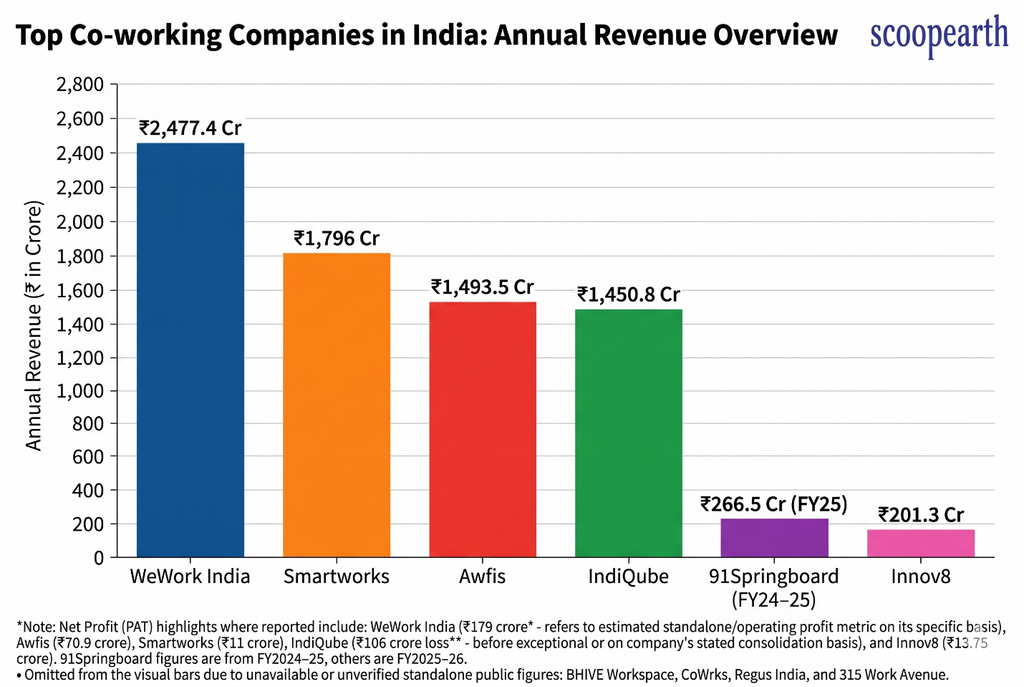
WeWork India reported strong financial performance in FY2025–26. According to its financial results, the company generated approximately ₹2,477.4 crore in revenue during the financial year, representing an increase of 23.4% compared with the previous year.
The company also reported a profit after tax of approximately ₹179 crore in its FY2026 results announcement. It ended the financial year with an operational area of approximately 8.6 million square feet across 76 centres in eight cities.
Awfis
Awfis is one of India’s leading flexible workspace providers. It offers office solutions for freelancers, entrepreneurs, startups, small businesses, and large organisations. The company provides different workspace options, including shared desks, dedicated desks, private cabins, meeting rooms, and managed office spaces.
One of Awfis’s biggest strengths is its flexible approach. Customers can choose workspace arrangements according to their business requirements. This is particularly helpful for startups and companies that are expanding their teams but do not want to invest heavily in traditional office infrastructure.
Awfis also offers additional services such as office management, conference facilities, and workspace-related technology solutions. The company has expanded its presence across several major Indian cities, including Bengaluru, Mumbai, Delhi, Hyderabad, Pune, Chennai, and Gurugram.
Financial Performance
Awfis reported consolidated operating revenue of approximately ₹1,493.5 crore in FY2025–26, compared with ₹1,207.5 crore in FY2024–25. Its consolidated profit after tax increased to approximately ₹70.9 crore in FY2026, compared with ₹67.9 crore in the previous financial year.
The company continues to expand its workspace network and strengthen its enterprise customer base. Its financial performance reflects the increasing demand for flexible office solutions in India.
Smartworks
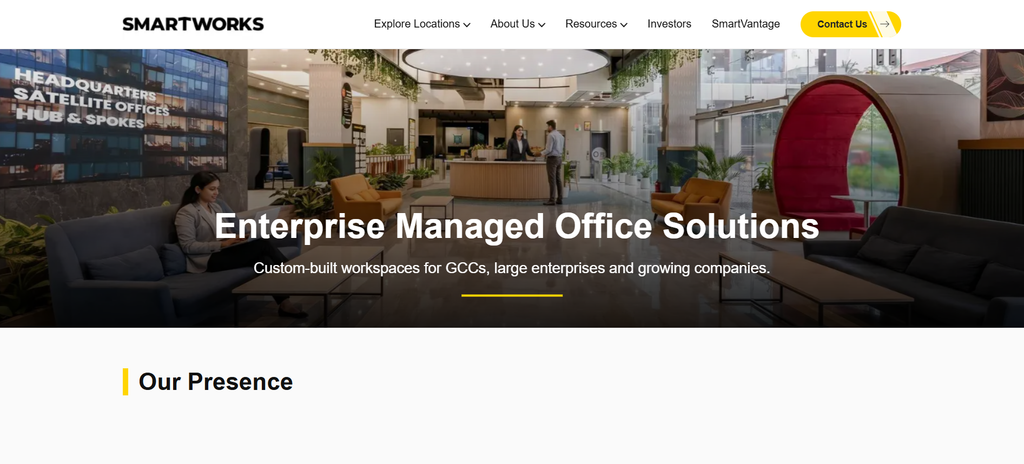
Smartworks is another major name in India’s managed office and flexible workspace industry. Unlike traditional co-working providers that mainly focus on individual desks and small offices, Smartworks has a strong focus on large, fully managed office spaces for corporate organisations.
The company helps businesses establish professional offices without having to independently manage property leasing, interiors, furniture, maintenance, and other operational requirements.
Smartworks provides customised office spaces for companies that need hundreds or even thousands of workstations. This makes it particularly useful for IT companies, multinational corporations, and Global Capability Centres (GCCs).
Smartworks operates in several Indian cities, including Bengaluru, Mumbai, Pune, Hyderabad, Chennai, Gurugram, Noida, and Kolkata. It has also expanded its operations internationally.
Financial Performance
Smartworks reported revenue from operations of approximately ₹1,796 crore in FY2025–26, representing 31% growth compared with FY2024–25.
The company also reported normalised EBITDA of approximately ₹314 crore during FY2026.
One of its important achievements was becoming profitable on a reported profit-after-tax basis for the full financial year. Smartworks reported a PAT of approximately ₹11 crore in FY2026, compared with a loss of ₹63 crore in FY2025.
The company also crossed 10 million square feet of operational workspace during FY2026. These developments highlight its growing presence in India’s enterprise-focused managed office market.
IndiQube
IndiQube is an Indian flexible workspace company that focuses on providing technology-enabled office solutions to businesses. The company offers managed offices, private cabins, shared workspaces, and customised office environments. Its services are designed for startups, established companies, and large corporate teams.
One of IndiQube’s important strengths is its focus on technology and workplace management. The company uses technology to improve office operations, employee experiences, resource management, and facility services.
It also provides additional facilities such as cafeterias, fitness areas, meeting rooms, and recreational spaces in selected centres. IndiQube has a strong presence in Bengaluru and operates across other major cities, including Chennai, Hyderabad, Mumbai, Pune, Delhi-NCR, and other business locations.
Financial Performance
IndiQube reported revenue from operations of approximately ₹1,450.8 crore in FY2025–26, compared with approximately ₹1,059.3 crore in FY2024–25. Its financial statements reported a loss after tax of approximately ₹106 crore under Ind AS accounting for FY2026.
However, the company also presented an adjusted profit after tax of approximately ₹125 crore. This adjusted figure accounts for certain lease-related and other accounting adjustments.
91Springboard
91Springboard is one of India’s established co-working space providers. The company has developed a strong identity among startups, freelancers, entrepreneurs, and small businesses.
One of its major advantages is its community-focused approach. The company provides an environment where entrepreneurs, freelancers, and startup teams can interact, exchange ideas, and develop professional connections.
It also organises networking activities and community events at selected centres. 91Springboard has a presence in cities such as Bengaluru, Delhi, Gurugram, Mumbai, Hyderabad, Pune, Chennai, and Goa. Its workspace options make it suitable for individuals who need a professional working environment as well as companies looking for flexible office arrangements.
Financial Performance
91Springboard is a privately held company, so its financial reporting is different from that of publicly listed workspace providers. According to available FY2024–25 financial information, the company reported revenue of approximately ₹266.5 crore and profit after tax of approximately ₹66.6 crore.
These figures indicate that the company has developed a sizeable business in India’s flexible workspace industry. However, a comparable audited FY2025–26 net profit figure is not included here because a sufficiently reliable public figure could not be verified.
BHIVE Workspace
BHIVE Workspace is a popular co-working space provider, particularly in Bengaluru. It focuses on providing modern and flexible office solutions for startups, entrepreneurs, freelancers, and established businesses.
The company offers different types of workspaces, including shared desks, dedicated workstations, private offices, and managed office spaces.
One of BHIVE’s biggest strengths is its understanding of Bengaluru’s startup and technology ecosystem. The city has a large number of technology companies, entrepreneurs, and professionals who require flexible office arrangements.
BHIVE provides workspaces designed to support productivity and collaboration. Its centres generally offer internet connectivity, meeting rooms, common areas, and other office facilities.
Innov8
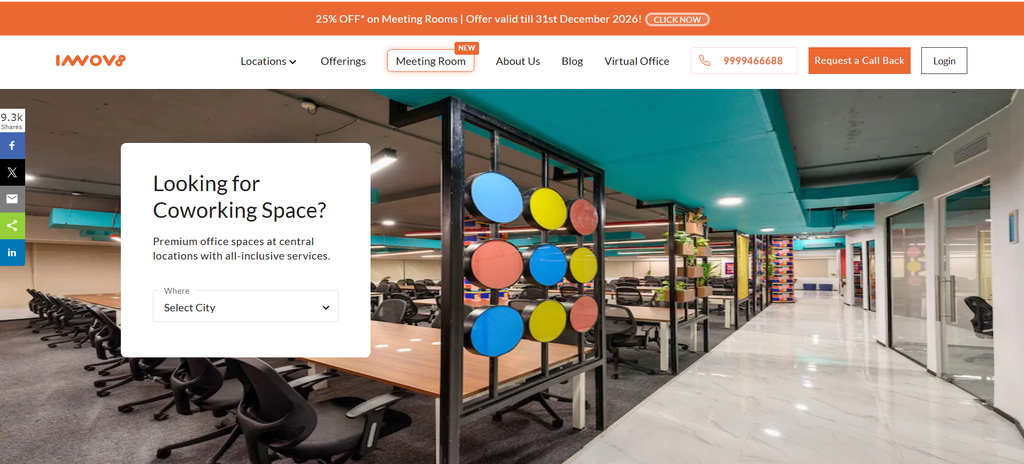
Innov8 is a premium co-working and managed workspace provider in India. It focuses on creating professionally designed offices that offer a comfortable environment for individuals, startups, and corporate teams.
The company was founded to provide modern working environments with a strong focus on office design, employee comfort, and productivity. Innov8 offers different workspace options, including hot desks, dedicated desks, private cabins, meeting rooms, and customised office spaces.
Its centres are designed to provide a professional atmosphere with modern interiors, comfortable furniture, collaborative areas, and business facilities. Innov8 has expanded its presence across several Indian cities, including Delhi, Gurugram, Bengaluru, Mumbai, Hyderabad, Chennai, Pune, and other locations.
Financial Performance
Innov8 reported strong financial growth in FY2025–26. According to available financial information, its operating revenue increased to approximately ₹201.3 crore in FY2026, compared with ₹114.5 crore in FY2025. Its profit after tax also increased to approximately ₹13.75 crore in FY2026, compared with ₹1.16 crore in the previous financial year. This improvement reflects the company’s growing business operations and stronger financial performance.
CoWrks
CoWrks is another recognised flexible workspace provider in India. It focuses on providing professionally managed offices for startups, growing businesses, and large corporate organisations.
The company is known for its premium workspace design and corporate-focused office solutions. CoWrks provides private offices, dedicated desks, shared working areas, meeting rooms, and managed office facilities.
Its workspaces are designed to provide a professional environment where employees can work comfortably and collaborate with colleagues. One of its major strengths is its focus on larger businesses that require high-quality office infrastructure and professional facility management.
CoWrks has a presence in major business markets, particularly Bengaluru, Chennai, Mumbai, and Delhi-NCR. It is a suitable option for organisations that want modern office facilities without independently handling property management and workplace operations.
Financial Performance
CoWrks operates as a privately held business under Brookfield-related ownership and management structures. Its standalone financial performance is not consistently available in the same public format as listed companies.
Therefore, a separate and verified FY2025–26 revenue and net profit figure has not been included. Its importance in the Indian co-working market comes from its premium office infrastructure and focus on enterprise customers.
Regus
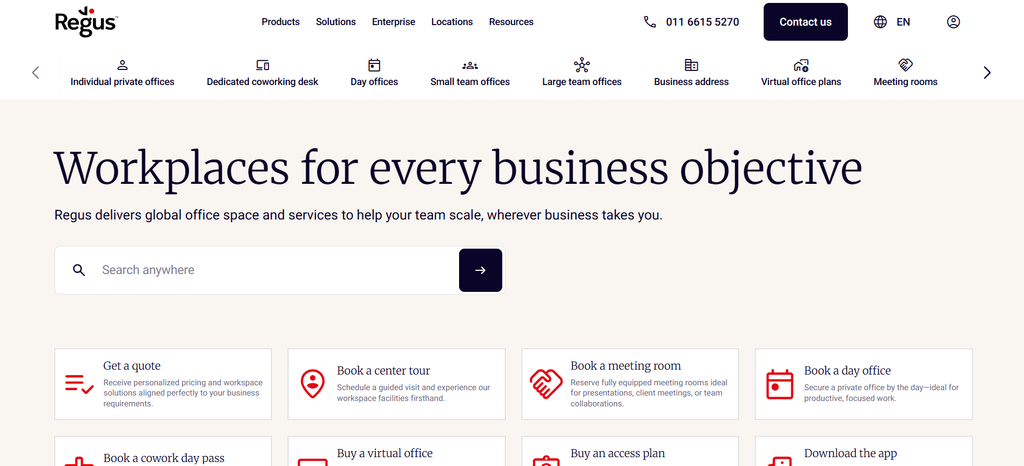
Regus is a well-known international flexible workspace brand operated by International Workplace Group (IWG). It has a significant presence in India and provides office solutions for individuals, startups, small businesses, and multinational organisations.
Unlike providers that mainly focus on co-working desks, Regus offers a broader range of workplace solutions. These include private offices, meeting rooms, virtual offices, business lounges, and flexible workspace memberships.
One of Regus’s biggest advantages is its international network. Professionals and companies can access workspace facilities in different cities and countries, depending on their membership plans.
In India, Regus has a presence across several major business cities, including Bengaluru, Mumbai, Delhi, Hyderabad, Chennai, Pune, and other locations.
315 Work Avenue
315 Work Avenue is an Indian co-working and managed office space provider that focuses on creating flexible workplaces for businesses. The company provides modern office infrastructure for startups, small businesses, growing organisations, and corporate teams.
One of its major advantages is its focus on providing ready-to-use offices. Businesses can move into furnished workspaces without independently arranging furniture, internet connections, office maintenance, and other facilities.
The company also focuses on providing professional working environments with common areas, conference rooms, and employee facilities. 315 Work Avenue has a strong presence in Bengaluru and has developed its business around the city’s growing demand for flexible office solutions.
Financial Performance
315 Work Avenue is a privately held workspace provider. Its standalone financial results are not widely available in a consistent public reporting format.
Therefore, reliable FY2025–26 revenue and net profit figures cannot be presented here. The company is included because of its contribution to India’s flexible workspace market, particularly its presence in Bengaluru.
Revenue and Net Profit Comparison of Co-working Spaces in India
Financial performance is an important factor when comparing companies operating in India’s co-working industry. Revenue helps readers understand the scale of a company’s business, while net profit indicates how much money remains after accounting for expenses and taxes.
However, comparing co-working companies requires some care. Companies such as WeWork India, Awfis, Smartworks, and IndiQube publish financial results through stock exchange filings and investor reports. On the other hand, several workspace providers, including BHIVE, CoWrks, and 315 Work Avenue, are privately held and do not publish comparable financial information.
The following table presents available financial information for selected companies.
Co-working Company
Revenue
Net Profit / PAT
Financial Year
WeWork India
₹2,477.4 crore
₹179 crore*
FY2025–26
Awfis
₹1,493.5 crore
₹70.9 crore
FY2025–26
Smartworks
₹1,796 crore
₹11 crore
FY2025–26
IndiQube
₹1,450.8 crore
₹106 crore loss**
FY2025–26
91Springboard
₹266.5 crore
₹66.6 crore
FY2024–25
BHIVE Workspace
Not publicly verified
Not publicly verified
—
Innov8
₹201.3 crore
₹13.75 crore
FY2025–26
CoWrks
Not publicly verified
Not publicly verified
—
Regus India
Not separately available
Not separately available
—
315 Work Avenue
Not publicly verified
Not publicly verified
—
WeWork India’s ₹179 crore figure is the profit after tax reported in its FY2026 results announcement. Different accounting presentations may show different PAT figures.
IndiQube reported a statutory loss after tax of approximately ₹106 crore. Its adjusted PAT, after specified lease-related and other accounting adjustments, was approximately ₹125 crore.
Conclusion
Co-working spaces have become an important part of India’s modern business environment. The growing popularity of startups, remote working, hybrid work models, and flexible office arrangements has increased the demand for shared and managed workspaces.
WeWork India and Innov8 focus on modern and premium office environments, while Awfis provides flexible solutions for individuals, startups, and large businesses. Smartworks and IndiQube have developed strong positions in the managed office segment, particularly among corporate customers.
91Springboard and BHIVE Workspace are popular options for entrepreneurs, startups, and professionals looking for collaborative working environments. CoWrks offers premium corporate workspaces, while Regus provides the advantage of an international office network. 315 Work Avenue also offers flexible office solutions for businesses, particularly in Bengaluru.
However, there is no single best co-working space for everyone. The right choice depends on factors such as location, pricing, internet connectivity, available facilities, membership flexibility, privacy, and business requirements.
As India’s flexible workspace industry continues to grow, these companies are expected to play an important role in changing how businesses choose, manage, and use office spaces.
Frequently Asked Questions (FAQs) :
What is a co-working space?
A co-working space is a shared office where people from different companies or professions can work.
Which is the best co-working space in India?
WeWork India, Awfis, Smartworks, and IndiQube are among the popular co-working space providers.
Are co-working spaces suitable for startups?
Yes, co-working spaces offer affordable and flexible office solutions for startups.
How much does a co-working space cost in India?
The cost generally ranges from ₹3,000 to ₹25,000 or more per month, depending on the city and facilities.
Can freelancers use co-working spaces?
Yes, freelancers can rent shared desks or choose flexible membership plans.
What facilities are available in co-working spaces?
Most co-working spaces offer Wi-Fi, meeting rooms, desks, cafeterias, and office support services.
Which co-working space is best in Bengaluru?
BHIVE, WeWork, Awfis, IndiQube, and 315 Work Avenue are popular options in Bengaluru.
Do co-working spaces provide private cabins?
Yes, most major co-working providers offer private cabins for individuals and teams.
Can large companies use co-working spaces?
Yes, large companies can use managed office spaces for their employees and business operations.
What is the difference between co-working and managed office spaces?
Co-working spaces offer shared facilities, while managed offices provide dedicated and professionally maintained workspaces.
Do co-working spaces offer monthly memberships?
Yes, most providers offer monthly memberships along with other flexible plans.
Is internet included in co-working space memberships?
Yes, high-speed internet is generally included in most membership plans.
Which co-working space is best for startups in India?
91Springboard, BHIVE, Awfis, and Innov8 are popular choices for startups.
Are co-working spaces available in small Indian cities?
Yes, co-working spaces are expanding beyond metropolitan cities into smaller business markets.
Why are co-working spaces becoming popular in India?
They offer affordable offices, flexible memberships, modern facilities, and opportunities to connect with other professionals.
Crystal Crop Protection is preparing ahead of its impending listing in the coming November. The target valuation for the issue will be ₹4,438 crore. The firm, which provides solutions to farmers in the form of chemicals and agronomic products, has been able to make its capital-raising process simpler through multiple refinements. This public offering, therefore, falls in line with the overall growth plans of the company as it enables public investors to invest in this already existing player in the agricultural inputs industry.
Revised Issue Size and Financial Components
This initial share sale is offered as a book-built offering made up of a new sale of shares and an offer for sale. The public offering includes a new share sale of ₹354.77 crores, alongside the promoter Ankur Aggarwal’s offer for sale of ₹100.71 crores.
The gross issue amount comes to roughly ₹ 455.48 crores, which underscores a balanced capital raise strategy aimed at enhancing the company’s economic standing and offering some liquidity for current shareholders. The public offering will have its price band set from 259 to 272 per equity share. Bidding will open on November 18th and close on November 20th.
The bidding process for anchor investors is scheduled to take place on November 17 before the main public opening. The scheduled dates provide reasonable time periods for market participants to submit their applications and read through the formal offer documents from the agrochemical and seed manufacturer, Delhi.
Market position and product portfolio
Crystal Crop Protection was founded in 1994 and has built strong manufacturing bases in Maharashtra, Gujarat, Haryana and Jammu and Kashmir states. The company’s business is focused on a wide range of conventional crop protection products, including herbicides, fungicides, and insecticides for use in a variety of situations.
From the proceeds of the fresh issue, the net proceeds are allocated to various financial strategic targets. One of the most significant uses of funds is the term repayment or prepayment of certain borrowings obtained by the Company and its material subsidiary, Saffire Crop Science Private Limited.
Crystal Crop Protection will reduce its debt obligations, in a move to enhance its balance sheet, and increase its overall financial flexibility for further operations in the coming cycle. In addition to debt reduction, the proceeds will be applied to a mix of fueling inorganic growth through unidentified acquisitions and general corporate purposes.
Management expects that a successful completion of the public offering will lead to an improvement in the Company’s corporate visibility, strengthen its brand identity among its current and likely future customers, and create a well-developed public share market for its equity shares in India.
Conclusion
The upcoming listing in November by Crystal Crop Protection with a valuation target of ₹4,438 crore marks a significant milestone in the Indian agrochemical industry. With a more focused fundraising approach and improved offering elements, the firm should be able to reach its capital-raising goals without unduly sacrificing market exposure. With decades of manufacturing experience, a broad range of chemical and natural crop products, and a proven track record of financial success, Crystal Crop Protection is presenting itself to the public markets with strong foundations of sustainable, long-term growth and improved shareholder value.
As part of an initiative by the OmniActive Improving Lives Foundation in partnership with Rangeet, the ongoing ‘Teacher of the Month’ recognition celebrates educators who encourage curiosity, hands-on learning, and growth through shared experiences.
Mumbai, 13thNovember 2026: From exploring leaves and understanding tree rings to learning about global warming, teachers are finding ways to connect classroom lessons with children’s everyday experiences. For six educators from Mumbai recognised by Rangeet as its Teachers of the Month for September 2026, these activities are opportunities to encourage curiosity, participation and a deeper understanding of the environment.
The six teachers are Premlata Mehtre of Motilal Nagar Marathi School No. 2; Seema Yadav of Rajendra Nagar Hindi School; Geeta Pal of Sir D.S. School; Riya Patel of Magathane Marathi School No. 2; Geeta Dhiranram Vishwakarma of Dattapada Hindi Upper Primary BMC School; and Kavita Gupta of MPS Ashish Talao CBSE, Chembur.
Geeta Pal shared that SEEK lessons on global warming help children understand environmental challenges and consider how they can be addressed. Riya Patel took an example from the Ecology Umbrella of the SEEK curriculum—how tree rings reveal a tree’s age—and used it to show her students how classroom learning connects to nature. Similarly, at Dattapada Hindi Upper Primary BMC School, Geeta Dhiranram Vishwakarma was inspired to introduce children to different leaves through a hands-on activity in which they could touch, feel and examine them. For Premlata Mehtre and Seema Yadav, SEEK’s interactive resources, videos, songs and activities offer different ways to make lessons engaging and introduce children to new ideas.
The learning extends beyond the classroom, too. Through the Rangeet SEEKer Community, teachers can exchange ideas, share experiences and learn from their peers. For Kavita Gupta, this community has been an important source of encouragement. “I am truly grateful to the SEEKer Community. It is a circle of inspiration where teachers uplift each other. Thank you, Rangeet, for making me a more mindful teacher,” she says.
Together, these experiences reflect Rangeet’s ‘Teachers First’ approach: supporting educators with resources and opportunities to learn, experiment and grow in their practice, while making classroom learning more engaging for children.
Simran Mulchandani, Co-founder & CEO, Rangeet, said: “Teachers learn and grow when they have the opportunity to experiment, reflect on their experiences and learn from one another. Through the SEEKer Community and our Teachers of the Month initiative, we want educators to feel supported and recognised, while sharing practices that can inspire others. These experiences remind us that learning can be a journey of discovery for teachers as well as children.”
From leaves and tree rings to lessons on global warming, these teachers are showing that environmental learning begins with curiosity. With the right support and a community to learn from, they are helping children connect mandated ecological topics with the world around them in practical and fun ways.
The Ministry of Electronics and Information Technology has expressed concerns over the way first-person videos and sensor data are being collected from gig workers to create and train physical artificial intelligence models. The regulatory attention follows closely after Pronto’s in-home video recording program, as competing providers Snabbit and Urban Company have opted out of the same practice. The ministry’s senior officials held a meeting with representatives of home services platforms such as Snabbit, Pronto, and Urban Company and technology and robotics firms to address issues of workers’ rights, consumer privacy, and data sovereignty, according to a report. Despite their involvement in the consultation, none of the three platforms are currently gathering domestic footage for artificial intelligence training.
Government-led consultation and data sovereignty
Consumer privacy, labour rights and national sovereignty were central themes in the consultation driven by the government. The new trend of introducing AI development into private homes using machine interpreters in the form of head-mounted cameras or sensor-strapping commentary wears is the direct introduction of AI technology into the interior of the home.
This raises substantial regulatory issues regarding individual populations whose daily use, real estate, and feeling of dependence are being recorded in training sets without their knowledge or explicit consent.
A broader geopolitical and economic discussion took place at the ministerial meeting on the implications of the collection of sensitive domestic information followed by its transmission and sale to another country by a physical artificial intelligence developer. Some executives voiced worries that unchecked data interflows would not put the country on the right side of the future in terms of technological control and security.
Broader implications and operational approaches among platforms
Several home services companies have worked on the new trend of collecting egocentric data for use in machine learning. Pronto is one of the key instant househelp companies to actively launch in-home video recording programs using its dedicated Verified service.
Other companies in the home service industry, like Urban Company and Snabbit, have actively avoided the practice of inside home taping for artificial intelligence training. During the consultation presided over by the Ministerial Secretary S Krishnan, officials requested detailed information about the standard operating procedures for gathering, processing, and archiving first-person videos.
Specific inquiries were made of the companies about the precautions taken to secure informed consent from workers and consumers, and about the measures taken to protect against any unauthorized disclosure of data.
The long-term observation by the Ministry of Electronics and Information Technology reveals a growing conflict between the constant need of global artificial intelligence companies for groundbreaking inputs from the real world and the necessity to uphold the right to privacy within the country’s borders.
Physical artificial intelligence models need large quantities of egocentric data, including human motion and spatial interactions in the real world, as well as dexterous and intelligent tasks performed in the real world, to work well in the real world.
The rapid and cost-effective commercialisation of this data collection model points to critical gaps in current data governance structures. The current set of regulations may not be comprehensively sufficient to manage the full lifecycle of egocentric data, from its initial collection by gig workers to its ultimate application by AI developers.
Conclusion
The recent ministerial review process under the supervision of the Ministry of Electronics and Information Technology reflects the increasing regulatory and ethical challenges in the fast-growing physical AI area, wherein data sovereignty, privacy, and worker rights pose significant concerns. With home services platforms such as Pronto exploring the domain of first-person recordings and sensor parameters for robotics training, the twofold challenge is to align new technology with strong data protection. As investment and infrastructure companies come to India, it will be crucial to set up clear standard operating procedures and regulations for the processing and sharing of real-world human data within India and globally.
Adani Energy Solutions announced it has completed the acquisition of IntelliSmart Infrastructure from the National Investment and Infrastructure Fund and Energy Efficiency Services Limited for ₹3,050 crore. The strategic alliance enhances the Adani Group entity’s presence and market reach in the smart metering domain in India. The financial arrangement is a comprehensive deal covering the acquisition of the entire equity share capital of IntelliSmart and redemption of the optionally convertible debentures, which were previously held by the National Investment and Infrastructure Fund. The company’s corporate restructuring reaffirms its presence as a key player in the country’s electricity distribution infrastructure modernization.
Regulatory approvals and advanced metering infrastructure
IntelliSmart Infrastructure has emerged as a leading holder of smart electricity metering infrastructure and is rolling out smart gas meters around the country. The company is known for upgrading energy networks, increasing consumer visibility, and minimizing commercial losses on behalf of power distribution utilities.
With the integration of IntelliSmart into the existing business processes of Adani Energy Solutions, the company will gain additional technological advantages and specialist knowledge in relation to digital metering technologies. This will add to the range of services offered by the company to help implement big utility projects.
The deal worth ₹3,050 crore is finalized after obtaining necessary regulatory approvals, including those obtained from the Competition Commission of India. As stated in the documents published on the official stock exchanges by Adani Energy Solutions Ltd, the takeover of 100% equity share capital from its former co-owners completes the transaction.
The repayment of the optionally convertible debentures issued by the National Investment and Infrastructure Fund concludes the financial side of the transaction. The process of obtaining all necessary regulatory approvals corresponds to the statutory requirements of the Indian energy industry in regard to major corporate acquisitions.
Strategic alignment and acquisition of IntelliSmart
The acquisition of IntelliSmart is a vital catalyst for Adani Energy Solutions as it facilitates faster growth in the smart metering sector. It is expected that there will be major operational synergies from this deal, such as lower operations and maintenance expenses and greater economies of scale.
With all the distribution companies in India moving towards smart prepayment metering systems through various government initiatives, advantageous to have a wider portfolio of meters both installed and under installation. The strategic alignment shows the increased importance of digitization in the Indian power sector.
Conclusion
The signing of the acquisition agreement for IntelliSmart Infrastructure by Adani Energy Solutions at ₹3,050 crores marks a defining moment in India’s energy transformation story. Through gaining full control of a smart metering solution firm from the National Investment and Infrastructure Fund and Energy Efficiency Services Limited, Adani Energy Solutions has established a strong hold in the marketplace. With the completion of this deal and the relevant regulatory approvals in place, the path is set for the swift rollout of better metering solutions that will help with efficiency gains and growth in the domestic power distribution industry.
Baaz Bikes is a full-stack solution for electric vehicles for gig workers. Baaz Bikes is set to raise its Series B funding round. The funding round will be led by BIG Capital. The funding round will observe active participation from existing investors Kalaari Capital and Aravind Sanka. The capital infusion will empower the platform to enhance its operations and scale its services to meet the demand of the growing gig economy.
Financial structure and capital utilization
According to regulatory filings checked by Entrackr, the company’s board has approved issuing 6,105 Series B preference shares at ₹75,716 per share for ₹46.22 crore. BIG Capital will be the lead investor for the round, with a contribution of ₹38 crore, followed by Kalaari Capital with ₹8 crore.
The remaining amount will be invested by Aravind Sanka. The current Series B round seems to be the next step in a larger funding round, as the company will most likely take in more investment through the rest of the round.
As per the estimates of Entrackr, the transaction values Baaz Bikes at about ₹325 crore (approximately $34 million). This valuation could move higher due to plans for additional capital to be raised. According to its filings, the fresh proceeds will be used for working capital, product development, and capital expenditure.
Business model and core vision
Baaz Bikes, a full-stack electric mobility platform for gig workers, was founded by Anubhav Sharma and Shubham Srivastava. The company has launched an electric scooter rental subscription for delivery partners that include Zomato, Swiggy, Zepto, and Amazon.
The subscription model includes several battery swapping cycles, which enable the delivery partners to overcome the initial investment in buying an electric vehicle. Before the ongoing ₹46.22 crore Series B investment round, the company had secured approximately $12 million (approximately ₹100 crore) of investment, which includes the July 2025 extended Series A investment round.
The demand for electric two-wheelers in the last-mile delivery category is on the rise, and the company is leveraging this opportunity by developing a business model catering to this requirement. The goal of Baaz Bikes is to create a holistic, zero-emission vehicle ecosystem designed to serve and uplift the gig economy and its workforce.
The company’s mission is to make specialised electric scooters more accessible on an affordable subscription model, while automated battery charging and swapping stations will reduce the financial outlay of owning a vehicle and downtime risks for delivery partners.
At the heart of Baaz Bikes is the goal of providing gig workers with a more profitable, dependable, and sustainable last-mile mobility experience, and contributing to the broader transition toward green transportation.
Conclusion
By positioning itself with the help of a vertically-integrated business ecosystem, Baaz Bikes aims to capitalize on the growing sustainable last-mile delivery space. The support of renowned venture capital firms such as BIG Capital and Kalaari Capital has ensured that the company has gained the necessary financial momentum to fuel its product innovation and capex activities. The growth of the gig economy across urban landscapes will be important in driving the growth of EV subscriptions.
American flag shirts are more than just a fashion statement. They represent American pride, freedom, individuality, and a connection to the nation’s heritage. Whether you’re celebrating Independence Day, attending a Memorial Day gathering, enjoying a summer event, or simply expressing your patriotic spirit, an American flag shirt is a versatile addition to your wardrobe.
From classic flag prints and vintage-inspired graphics to bold patriotic designs, there are countless ways to wear this iconic style. The right American flag shirt can help you create a casual everyday outfit, a standout holiday look, or a comfortable weekend style.
At Patriot Crew Co., we believe patriotic clothing should combine personal expression, comfort, and distinctive design. Explore these American flag shirt ideas to discover styles that match your personality.
1. Classic American Flag T-Shirts
You can never go wrong with a classic American flag shirt. Featuring the recognizable stars and stripes, this timeless design is perfect for anyone who wants a straightforward way to show American pride.
Classic flag tees work well with jeans, shorts, joggers, and casual sneakers. Choose a traditional red, white, and blue design for a recognizable patriotic look, or go with a monochrome flag print for something more understated.
Style tip: Pair a classic American flag tee with blue denim jeans and white sneakers for an effortless everyday outfit.
2. Vintage American Flag Shirts
Vintage-inspired American flag shirts are ideal for people who appreciate a worn-in, timeless aesthetic. These designs often feature distressed prints, faded colors, weathered graphics, and retro-inspired artwork.
A vintage American flag shirt adds character to a casual outfit without looking overly formal or flashy.
Popular vintage design elements include:
Distressed American flag graphics.
Faded red, white, and blue prints.
Retro typography and lettering.
Weathered stars and stripes.
Washed black and charcoal backgrounds.
Pair these shirts with ripped jeans, cargo shorts, or casual boots for a relaxed American-inspired look.
3. American Flag Shirts with Bold Graphic Designs
If you prefer clothing that stands out, consider an American flag shirt with bold graphic elements. Combining the flag with eagles, patriotic lettering, stars, and creative illustrations creates a distinctive design.
These shirts are especially popular among people who enjoy expressive graphic tees and statement clothing.
Look for designs featuring:
American eagles and flag combinations.
Bold USA lettering.
Stars and stripes artwork.
Patriotic slogans.
Modern American-inspired illustrations.
Explore more designs in our Patriotic Graphic Tees Collection.
4. Minimalist American Flag Shirts
Not every patriotic outfit needs a large graphic. Minimalist American flag shirts offer a clean and subtle way to incorporate patriotic designs into everyday clothing.
These shirts typically feature a small American flag on the chest, sleeve, or upper back. Their simple appearance makes them easy to combine with different wardrobe essentials.
Minimalist flag tees are great for:
Everyday casual wear.
Weekend outings.
Travel and road trips.
Casual gatherings.
Simple summer outfits.
If you prefer understated clothing, this style offers a balanced combination of simplicity and American pride.
5. Black American Flag Shirts
Black American flag shirts offer a bold alternative to traditional white and navy patriotic tees. The dark background creates strong contrast with red, white, and blue graphics.
They are easy to style and work particularly well with black jeans, denim shorts, cargo pants, and sneakers.
For a modern streetwear-inspired outfit, choose a black American flag tee with a distressed flag graphic and pair it with dark denim.
6. American Flag Shirts for Independence Day
Independence Day is one of the most popular occasions to wear American flag clothing. Whether you’re attending a backyard barbecue, watching fireworks, enjoying a parade, or celebrating with friends and family, a patriotic shirt makes an excellent choice.
For a Fourth of July outfit, consider:
Traditional red, white, and blue flag tees.
American flag graphic shirts.
Vintage patriotic designs.
USA lettering shirts.
Comfortable flag-print casual tops.
Complete your outfit with denim shorts, sunglasses, and comfortable sneakers.
7. American Flag Shirts with Eagle Designs
The bald eagle is a recognizable symbol of American identity and strength. Combining eagle artwork with American flag graphics creates a powerful patriotic design.
These shirts are suitable for people who enjoy bold illustrations and meaningful patriotic imagery.
Look for eagle designs featuring flying eagles, American flag backgrounds, detailed feathers, and patriotic lettering.
8. Oversized American Flag Shirts
Oversized shirts offer a relaxed fit that works well with contemporary streetwear. An oversized American flag tee can make a statement while providing room for comfortable movement.
Style an oversized flag shirt with:
Relaxed-fit jeans.
Cargo pants.
Athletic shorts.
High-top sneakers.
Casual caps.
This look is particularly suitable for people who prefer loose-fitting clothing and modern graphic designs.
9. American Flag Shirts with USA Lettering
USA lettering shirts combine patriotic text with recognizable American imagery. These designs may feature large USA typography, flag patterns, stars, and stripes.
They offer a straightforward way to celebrate American identity while adding personality to your everyday wardrobe.
Choose bold typography for a statement outfit or smaller lettering for a more subtle appearance.
10. American Flag Shirts for Outdoor Activitie
American flag shirts can also be part of a comfortable outdoor wardrobe. Whether you’re camping, traveling, attending a sporting event, or enjoying a weekend adventure, a casual flag tee is an easy styling option.
For outdoor activities, prioritize comfortable materials, a suitable fit, and designs that work with your existing clothing.
Pair your shirt with cargo shorts, jeans, outdoor sneakers, or boots.
How to Style American Flag Shirts for Different Occasions
Choosing the right American flag shirt is only one part of creating a great outfit. The way you style it can make a significant difference.
Occasion
Recommended Style
Independence Day
Classic red, white, and blue flag tee
Memorial Day
Minimalist or traditional flag shirt
Weekend outings
Vintage American flag shirt
Casual streetwear
Oversized graphic flag tee
Outdoor activities
Comfortable patriotic T-shirt
Everyday wear
Small flag chest-print shirt
Sporting events
Bold USA graphic shirt
How to Choose the Right American Flag Shirt
With so many designs available, choosing the right shirt depends on your personal style, fit preferences, and intended use.
Consider these factors before making a purchase.
1. Choose a Design That Matches Your Personality
Some people prefer traditional stars and stripes, while others enjoy vintage graphics, eagle illustrations, or bold patriotic typography. Select a design that reflects your personal taste.
2. Find Your Preferred Fit
Consider whether you prefer regular-fit, relaxed-fit, or oversized shirts. The right fit helps you feel comfortable while creating the look you want.
3. Consider the Fabric
For everyday wear, look for comfortable and breathable fabrics. Cotton and cotton-blend shirts are common choices for casual clothing.
4. Pick Versatile Colors
Black, navy, white, and grey are versatile base colors that work well with different American flag graphics.
5. Think About Where You Will Wear It
A bold graphic tee may be perfect for a holiday celebration, while a minimalist flag shirt may be more suitable for everyday wear.
Why American Flag Shirts Remain a Popular Fashion Choice
American flag shirts continue to attract attention because they combine recognizable national imagery with casual fashion.
Here are a few reasons people enjoy wearing them:
Patriotic expression: A simple way to display American pride.
Versatile styling: Easy to combine with everyday clothing.
Multiple designs: Available in vintage, modern, minimalist, and bold graphic styles.
Seasonal appeal: Popular during Independence Day, Memorial Day, and other patriotic celebrations.
Personal expression: Different graphics allow people to showcase their individual style.
Explore American Flag Shirts at Patriot Crew Co.
Looking for an American flag shirt that matches your style? Patriot Crew Co. brings together patriotic-inspired apparel designed for people who appreciate American graphics, stars and stripes, and distinctive everyday clothing.
Whether you prefer classic American flag prints, vintage-inspired artwork, or bold patriotic graphics, explore different styles and find designs that fit your wardrobe.
Browse our collections:
American Flag Shirts – Explore classic USA flag-inspired designs.
Explore Flag Shirts and find your next favorite patriotic design at Patriot Crew Co.
Frequently Asked Questions About American Flag Shirts
1. What are the most popular American flag shirt designs?
Classic stars and stripes, distressed vintage flags, eagle graphics, USA lettering, and minimalist flag prints are popular design choices.
2. When should you wear an American flag shirt?
You can wear American flag shirts throughout the year, including Independence Day, Memorial Day, Veterans Day, sporting events, outdoor activities, and everyday casual occasions.
3. How do you style an American flag shirt?
Pair an American flag shirt with jeans, denim shorts, cargo pants, or casual sneakers. Choose accessories that complement the colors and overall design.
4. Are American flag shirts suitable for everyday wear?
Yes. Minimalist flag prints and classic graphic tees are versatile options for everyday casual outfits.
5. What colors look best on American flag shirts?
Red, white, and blue are traditional choices. Black, navy, grey, and white backgrounds also work well with patriotic graphics.
6. Are vintage American flag shirts still in style?
Vintage-inspired designs remain a popular choice for people who enjoy distressed graphics, faded prints, and retro fashion.
7. What should I look for when buying an American flag shirt?
Consider the fabric, fit, print quality, design, sizing, and how easily the shirt will match your existing wardrobe.
8. Where can I buy American flag shirts?
You can explore the Patriot Crew Co. Flag Collection for American flag-inspired shirts and patriotic designs.
Trust is easy to talk about in crypto. Proving it is another matter. When choosing an exchange, traders naturally compare fees, available markets, and trading features, but those advantages carry little weight if questions remain about where their assets are held, how their accounts are protected, or what happens when something goes wrong. Exchange security is ultimately about more than preventing cyberattacks. It also involves reliable operations, transparent asset management, and safeguards that traders can examine before committing their funds.
So, is Toobit safe to use in 2026? Answering that question requires a closer look at the measures behind the platform rather than relying on broad assurances. Toobit’s Safety page, Proof of Reserves, and Shield Fund provide several ways to evaluate its approach to security and asset protection. Each addresses a different aspect of exchange safety, helping traders form a more informed picture of the protections available and their limitations.
Why crypto exchange security matters in 2026
Cryptocurrency exchanges operate at the intersection of financial markets, digital custody, and cybersecurity, making security a fundamental part of the trading experience. Unlike personal wallets, where individuals control their own private keys, centralized exchanges manage important parts of the infrastructure used to hold and trade customer assets. Their responsibilities extend beyond preventing unauthorized access to maintaining reliable trading systems, processing withdrawals, and supporting account access during periods of heightened market activity. For traders managing active positions, these operational capabilities can be just as important as the safeguards protecting their balances.
The risks are equally varied. Cybercriminals may target exchange infrastructure, while phishing campaigns and fraudulent applications attempt to compromise individual accounts. Market volatility introduces another challenge, particularly when traders need to adjust leveraged positions quickly. A meaningful assessment of exchange safety must therefore consider how a platform protects its systems, manages customer assets, and communicates important information when circumstances change.
Another consideration is how quickly operational issues can affect trading decisions. A temporary interruption during a quiet market may be inconvenient, but the same disruption during a major price movement can have more serious consequences for traders holding leveraged positions. Reliable systems, clearly communicated maintenance schedules, and accessible information about service interruptions all contribute to how an exchange handles periods of increased demand.
How Toobit approaches platform security
Effective exchange security depends on multiple safeguards working together rather than a single protective feature. Exchange-level protection generally encompasses infrastructure security, access management, transaction monitoring, and procedures surrounding asset custody. These functions address different potential vulnerabilities, from attempts to compromise internal systems to unauthorized activity involving customer accounts.
For traders evaluating Toobit, the important consideration is how these measures fit into the platform’s broader operations. Published security information offers a useful starting point, but it should be examined alongside current policies, operational disclosures, and any available independent assessments. Security is not simply a matter of whether protective technologies exist. Their scope, implementation, and continued maintenance determine how effectively they can address evolving threats.
Operational resilience also deserves attention. Exchanges must maintain trading infrastructure that can process orders, update balances, and handle account activity under changing market conditions. Monitoring systems and incident-response procedures are important components of exchange operations because they influence how quickly unusual activity or technical problems can be identified and addressed. Traders can assess the platform’s public communications and support resources to better understand how operational changes are communicated.
What is the Toobit Shield Fund?
Preventive security measures are essential, but exchanges must also consider how they would respond if an unexpected incident occurred. Toobit’s Shield Fund forms part of its stated asset-protection framework, providing a designated mechanism intended to address certain circumstances under the fund’s applicable rules. Such arrangements can offer an additional layer of protection, although their practical value depends on the resources available and the conditions governing their use.
The distinction between qualifying incidents and ordinary trading losses is particularly important. A protection fund should not be interpreted as insurance against cryptocurrency price declines, unsuccessful trading decisions, or liquidation resulting from excessive leverage. Coverage depends on the program’s stated purpose, eligibility requirements, exclusions, and any applicable procedures. Traders should review the latest Shield Fund terms to understand the circumstances it is designed to address rather than assuming that every financial loss falls within its scope.
When examining a protection fund, it is also useful to consider how its resources and coverage are described. A published fund value, where available, provides context, but the amount alone does not explain how claims are assessed or which events qualify. The relationship between available resources, stated protections, and applicable conditions offers a more complete basis for evaluating what the Shield Fund contributes to Toobit’s asset-protection framework.
How Toobit’s Proof of Reserves supports transparency
One of the most important questions surrounding centralized exchanges is whether they hold sufficient assets to support their reported customer balances. Proof of Reserves (PoR) helps address this concern by making certain information about an exchange’s asset backing available for examination. Toobit maintains a dedicated Proof of Reserves page, where traders can review published reserve information and available verification materials. Depending on the methodology, reserve reporting may combine on-chain asset records with cryptographic techniques that help verify customer liabilities.
Some verification systems use Merkle trees, allowing individuals to check whether their balances were included in a reported dataset without revealing other customers’ account information. This offers a degree of visibility into custodial arrangements that traders cannot directly inspect. However, the reliability of any reserve disclosure depends on its scope, reporting date, and methodology. A snapshot may provide evidence of asset holdings at a particular moment without revealing every financial obligation or establishing the exchange’s overall financial condition. For this reason, traders should pay attention to which assets are covered, how verification works, and when the information was last updated.
Reserve ratios are another detail worth understanding when they are included in published disclosures. A ratio compares reported assets with the corresponding liabilities for a particular asset or reporting category. Although this can help traders interpret reserve coverage, the figure should be read alongside the methodology used to calculate it. Different reporting scopes and valuation methods can affect how the information is presented, making context essential when comparing reserve data across exchanges.
How traders can strengthen their Toobit account security
Not every security threat begins with an attack on an exchange’s infrastructure. Some of the most effective attempts target traders directly through compromised passwords, fraudulent login pages, or messages impersonating customer support. A convincing phishing attempt can persuade someone to disclose sensitive information voluntarily, potentially bypassing safeguards that would otherwise prevent unauthorized access. Protecting an account therefore begins with a strong, unique password and a secure email address, particularly because email accounts are often involved in password recovery and security notifications.
Two-factor authentication (2FA) provides an additional verification step, while authenticator applications can reduce certain vulnerabilities associated with SMS-based authentication. Traders should also review available login alerts, device-management options, and withdrawal-security settings. Just as importantly, they should remain cautious of unsolicited messages that create urgency around account verification or fund transfers. Accessing Toobit through its official website or application, checking domains carefully, and never sharing authentication codes or recovery credentials can help prevent many common account-compromise attempts.
Device security is another consideration that can be overlooked. Outdated operating systems, malicious browser extensions, and applications downloaded from unofficial sources can expose account information even when login credentials are strong. Keeping devices updated, reviewing installed software, and avoiding unfamiliar downloads can help reduce these vulnerabilities. Traders who access their accounts across multiple devices should also periodically check which sessions remain active and remove access from devices they no longer use.
Deposit, withdrawal, and custody considerations
Even when an account is properly secured, transferring cryptocurrency introduces operational risks that require careful attention. Blockchain transactions depend on accurate destination information, including the receiving address, supported network, and any required memo or destination tag. Selecting an incompatible network or entering incorrect details can lead to delays or permanent loss, depending on the circumstances. Before transferring a substantial amount, traders should verify the receiving platform’s requirements and consider making a small test transaction to confirm that the transfer route works as intended.
Another consideration is how much cryptocurrency to keep on an exchange. Maintaining funds on Toobit provides convenient access to trading markets, while transferring assets to a self-custody wallet gives the holder direct responsibility for private keys and recovery credentials. Both arrangements involve trade-offs between accessibility and custody responsibility. Traders should assess their trading frequency, technical experience, and liquidity needs when deciding where to hold assets, rather than assuming that one custody approach is appropriate for everyone.
Withdrawal procedures also deserve attention before funds are needed urgently. Verification requirements, network conditions, and platform processing rules can influence how quickly a transfer is completed. Traders should familiarize themselves with applicable withdrawal limits and confirmation procedures in advance, particularly if they expect to move assets between exchanges or wallets as part of their regular trading activity.
Platform security vs. trading risk on Toobit
A secure trading environment can help protect accounts and infrastructure, but it cannot prevent losses caused by unfavorable market movements. Spot trading exposes participants to changes in cryptocurrency prices, while perpetual futures introduce additional considerations involving leverage, margin requirements, funding payments, and liquidation. Leverage allows traders to control positions larger than their initial margin, increasing sensitivity to price movements in both directions. Even a relatively modest market decline can create substantial losses when a position is highly leveraged.
Order execution also plays a role in trading outcomes. During sudden market movements, available liquidity can change quickly, causing orders to execute at prices different from those initially expected. Understanding the differences between market, limit, and stop orders can help traders choose an execution method suited to their objectives. Appropriate position sizing, careful use of leverage, and awareness of fees and funding costs remain essential parts of risk management, regardless of the platform’s cybersecurity measures.
Traders using automated strategies face an additional responsibility: understanding how their tools behave when market conditions change. Trading bots and other automated features execute according to configured rules, but those rules may not account for every unexpected price movement or liquidity disruption. Reviewing strategy parameters, monitoring performance, and understanding when automated orders may remain unfilled can help traders maintain control over their exposure.
How to evaluate Toobit before trading
A useful exchange review should go beyond reading security claims and translate that information into practical decisions. Traders can begin by examining Toobit’s official safety resources, reviewing the latest Proof of Reserves disclosures, and understanding the Shield Fund’s coverage conditions. The Toobit support center provides additional information about account procedures, withdrawal requirements, and product-specific policies. For a broader perspective, traders can also explore Toobit’s exchange security overview for further context on its protective measures.
Before committing substantial capital, traders may also benefit from familiarizing themselves with essential account functions using a manageable amount. Understanding deposit and withdrawal procedures, testing supported transfer networks, and reviewing security settings can help identify potential difficulties before larger transactions are involved. The goal is to determine whether the platform’s disclosed safeguards, operating procedures, and available trading products align with individual requirements and risk tolerance.
Customer support accessibility is another factor worth evaluating. When an account issue or transaction problem arises, traders need to know where to find official assistance and how to distinguish legitimate support channels from impersonators. Reviewing the platform’s help resources, available contact methods, and guidance for reporting suspicious activity can make it easier to respond appropriately if an unexpected issue occurs.
Is Toobit safe to use in 2026?
Toobit provides several publicly accessible resources that help traders assess its approach to exchange security. Its Safety page outlines the platform’s stated safeguards, Proof of Reserves offers visibility into reported asset backing, and the Shield Fund establishes a protection mechanism governed by defined terms. Together, these elements provide useful information about how Toobit approaches asset protection, although their existence alone cannot establish that the exchange is immune to operational disruptions, financial difficulties, or cybersecurity incidents.
Ultimately, choosing a crypto exchange comes down to more than finding the most attractive trading features. Traders need to understand what protections are available, which claims can be verified, and how the platform’s operating procedures fit their needs. By combining careful research with strong account-security habits and disciplined trading practices, they can make a more informed decision about whether Toobit is suitable for their activities in 2026.
Disclaimer: This article is for informational purposes only and does not constitute financial or investment advice. Cryptocurrency trading involves significant risks, including the potential loss of capital. Conduct your own research and consider your financial circumstances and risk tolerance before using any cryptocurrency exchange or trading product.