Meet Jensen Huang: Biography, NVIDIA, Career, Age & Personal Life

Jensen Huang

Jensen Huang is the co-founder, president and CEO of NVIDIA, the technology company behind some of the most widely used graphics processors and accelerated computing systems in the world.

He has been with NVIDIA since the company was founded in 1993. What started as a small graphics company has grown into a major force in computing, with NVIDIA’s GPUs now used across gaming, scientific computing, data centers and artificial intelligence.

Huang was already an experienced chip designer before he started NVIDIA. He had worked at Advanced Micro Devices and LSI Logic before joining Chris Malachowsky and Curtis Priem to launch the company.

More than three decades later, he remains NVIDIA’s president and CEO.

Jensen Huang Biography

NameJensen Huang
Full NameJen-Hsun Huang
BornFebruary 17, 1963
Age63
BirthplaceTaiwan
ProfessionTechnology executive and engineer
Best Known ForCo-founding NVIDIA
Current RoleFounder, President and CEO of NVIDIA
EducationOregon State University and Stanford University
Bachelor’s DegreeElectrical Engineering
Master’s DegreeElectrical Engineering
WifeLori Huang
ChildrenTwo

Jensen Huang was born on February 17, 1963.

Sources differ on the exact city of his birth, with Taipei and Tainan appearing in published accounts. What is consistent is that he was born in Taiwan and moved to the United States when he was young.

He grew up between Taiwan, Thailand and the United States before eventually studying engineering in Oregon.

His career later took him into Silicon Valley, where he worked on microprocessors before helping start NVIDIA.

Who Is Jensen Huang?
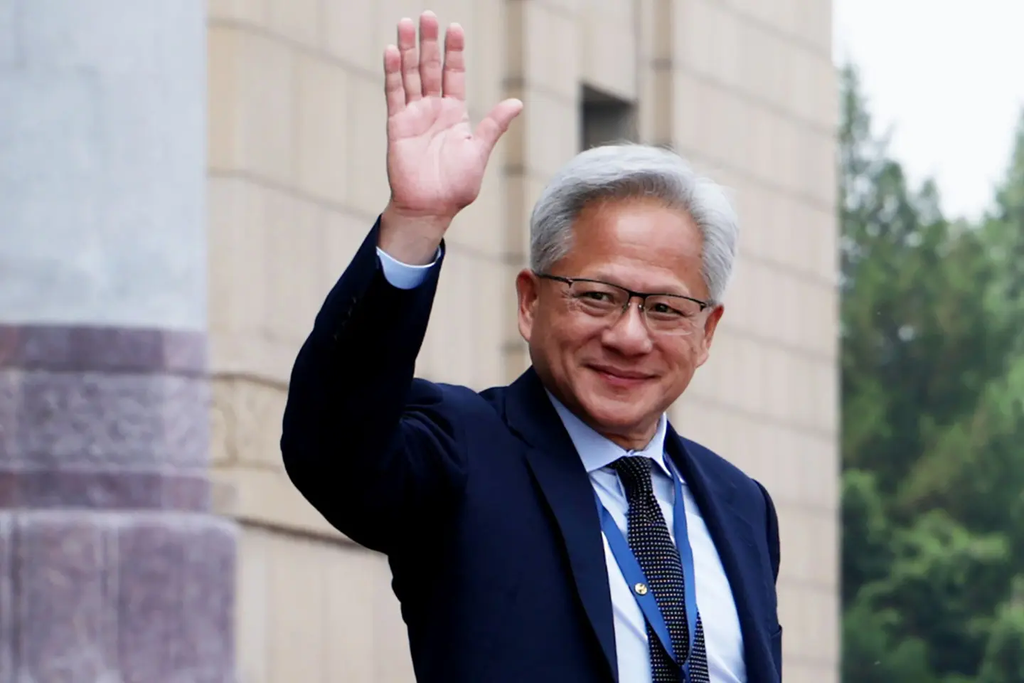
Image Source: Pixabay

Jensen Huang is a Taiwanese-born American technology executive and electrical engineer.

He is best known as one of the three people who founded NVIDIA in 1993.

NVIDIA initially focused on computer graphics and gaming. The company later developed technologies that expanded the use of GPUs beyond graphics, opening the door to scientific computing, machine learning and modern AI.

Huang has remained in charge of the company throughout that transition.

NVIDIA says he has served as president and chief executive officer since its founding, while also sitting on the company’s board.

His earlier career was also closely connected to semiconductor engineering.

Before NVIDIA, he worked at Advanced Micro Devices from 1984 to 1985 and then held several positions at LSI Logic through 1993.

Jensen Huang’s Early Life

Huang was born in Taiwan and spent part of his early childhood there before his family moved to Thailand.

He eventually came to the United States as a child.

His parents were Taiwanese immigrants, and the family settled in Kentucky before Huang later attended high school in Oregon.

His early move to the United States meant that much of his education took place there.

Technology became an important part of his life while he was still young. He later chose electrical engineering as his field of study and eventually moved into computer chip design.

That background would become important when he started working in Silicon Valley.

Jensen Huang’s Education
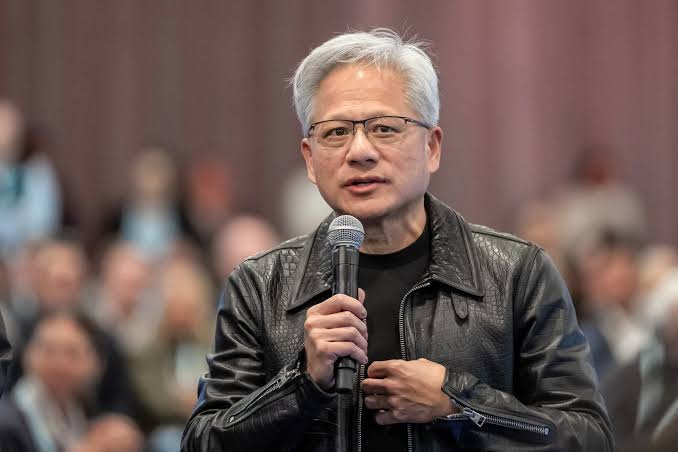
Image Source: Pixabay

Huang studied electrical engineering at Oregon State University.

He completed his Bachelor of Science in Electrical Engineering in 1984.

He then moved to Silicon Valley and began working in the semiconductor industry.

While building his career, he returned to school for graduate studies at Stanford University.

Huang received a Master of Science in Electrical Engineering from Stanford in 1992. Stanford identifies him as an MS graduate from the university’s electrical engineering program.

His education gave him a strong technical foundation, but his first jobs also gave him direct experience with the chip industry.

That experience came before he decided to start a company of his own.

Jensen Huang’s Career Before NVIDIA

Huang began his professional career at Advanced Micro Devices, commonly known as AMD.

He worked there as a microprocessor designer from 1984 to 1985.

He then moved to LSI Logic, another semiconductor company.

At LSI Logic, he held a number of positions between 1985 and 1993.

By the time he left LSI Logic, Huang had spent almost a decade working directly in the semiconductor industry.

That experience gave him a close understanding of how computer chips were designed and used.

It also brought him into the Silicon Valley technology community where he eventually met the people who would become his NVIDIA co-founders.

How Jensen Huang Started NVIDIA
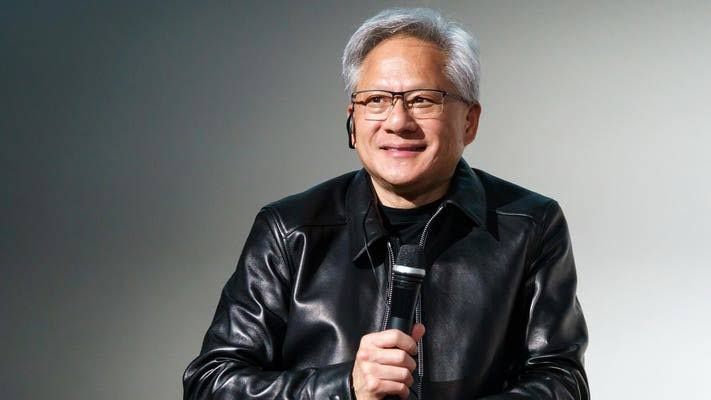
Image Source: Pixabay

Jensen Huang founded NVIDIA in 1993 with Chris Malachowsky and Curtis Priem.

The three engineers shared an interest in using computer chips to improve graphics and create better visual experiences.

NVIDIA was officially founded on April 5, 1993.

The company started with a much narrower goal than the one it has today.

Its original focus was 3D graphics for gaming and multimedia.

Huang was 30 years old when he helped start the company.

The story of NVIDIA’s early days has become closely connected with a Denny’s restaurant in San Jose, California, where Huang and his co-founders discussed the idea for the company.

The business began as a small startup.

It would eventually become one of the most important companies in the semiconductor and computing industries.

NVIDIA itself traces its founding to April 1993 and identifies Huang, Malachowsky and Priem as its three founders.

Jensen Huang’s Role at NVIDIA

Huang has held the top leadership position at NVIDIA from the beginning.

He became president and CEO when the company was founded and has remained in those roles ever since.

That makes his tenure unusual in the technology industry.

He has led NVIDIA through several major changes in computing.

The company began with PC graphics.

It later moved deeper into programmable graphics, parallel computing and data-center technology.

The introduction of NVIDIA’s GPU in 1999 became an important turning point.

The technology was initially associated heavily with computer graphics and gaming. Over time, developers also found ways to use GPUs for calculations that went far beyond rendering images.

That eventually became one of the foundations for NVIDIA’s work in AI.

NVIDIA and the GPU

The term GPU stands for graphics processing unit.

NVIDIA helped establish the GPU as a major computing platform through its graphics technology.

The company’s 1999 introduction of the GPU changed the role graphics processors could play in computers.

At first, the technology was closely tied to gaming and computer graphics.

Later, researchers began using GPUs for parallel calculations because they could process many operations simultaneously.

NVIDIA then developed CUDA, its parallel computing platform, which allowed developers to use GPUs for a much wider range of applications.

This shift changed the company’s business.

NVIDIA was no longer only selling chips for better graphics.

Its hardware could also be used for scientific research, engineering, data processing and eventually artificial intelligence.

Jensen Huang and the Rise of AI
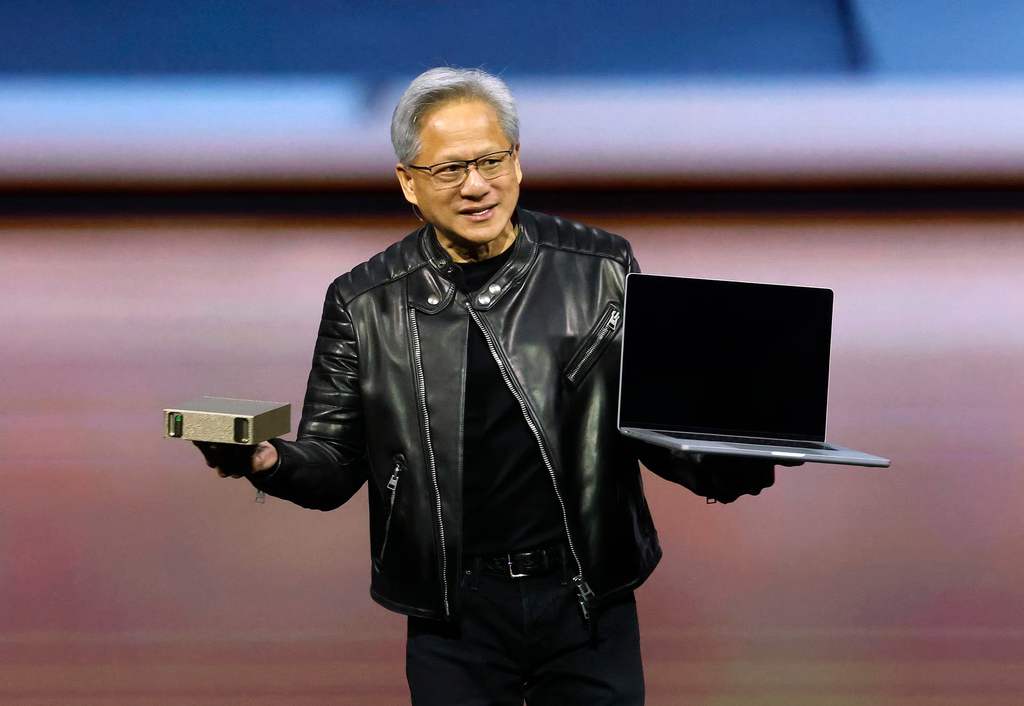
Image Source: Pixabay

Artificial intelligence became one of the biggest parts of NVIDIA’s business after years of work on GPU computing.

Researchers discovered that GPUs were particularly useful for training certain machine-learning systems.

NVIDIA’s hardware became widely used for deep-learning workloads.

The company points to the 2012 breakthrough of the AlexNet neural network as an important moment in the development of modern AI computing.

Huang continued investing in GPU computing even when the technology’s broader applications were not yet obvious.

That long-term focus eventually put NVIDIA in a central position as demand for AI computing expanded.

Today, NVIDIA’s products are used in data centers and AI systems as well as traditional graphics applications.

Did NVIDIA Almost Fail?

NVIDIA did not have a smooth path in its early years.

One of its major setbacks involved a gaming-console project with Sega.

The project ran into technical and business problems, and NVIDIA eventually had to abandon the contract.

Huang has described the period as one of the company’s major near-death moments.

NVIDIA was still a young company, and losing such an important project created serious financial pressure.

Huang has said that the company survived by acknowledging its mistake and asking for help.

That experience became part of how he later described NVIDIA’s approach to failure.

The company continued developing graphics technology instead of shutting down.

Its next products eventually helped NVIDIA establish itself in the growing PC graphics market.

Jensen Huang and NVIDIA’s Growth

NVIDIA’s business changed considerably over the years.

Gaming remained an important part of the company, but GPUs gradually found uses outside gaming.

CUDA helped developers use NVIDIA GPUs for general-purpose computing.

The company then became increasingly involved in high-performance computing and data centers.

The rise of deep learning created another major opportunity.

As companies and researchers began needing more computing power to train increasingly complex AI models, demand for accelerated computing grew.

NVIDIA’s hardware became an important part of that infrastructure.

Huang has therefore spent much of his career leading NVIDIA through several different stages of computing rather than keeping the company focused on its original graphics market.

Jensen Huang’s Leadership at NVIDIA

Huang is one of the few technology CEOs to have remained in charge of the same company since its founding.

NVIDIA’s official biography says he has served as president and CEO since 1993.

His responsibilities have changed as the company has grown.

In the early years, NVIDIA was primarily concerned with graphics chips and the gaming market.

Today, the company operates across graphics, accelerated computing, AI infrastructure, networking and other technology markets.

Huang has also become a familiar public face of NVIDIA.

He regularly appears at major technology events, product announcements and university programs to discuss computing and AI.

Jensen Huang’s Awards and Recognition

Huang has received several major awards during his career.

He has been elected to the National Academy of Engineering.

He has also received the IEEE Founder’s Medal, the Robert N. Noyce Award from the Semiconductor Industry Association and the Dr. Morris Chang Exemplary Leadership Award.

Universities including Oregon State University and National Taiwan University have also awarded him honorary doctorates.

His former university, Oregon State, has continued to recognize his contribution to engineering and technology.

He was also included in TIME’s list of the world’s 100 most influential people in 2021.

Jensen Huang’s Personal Life
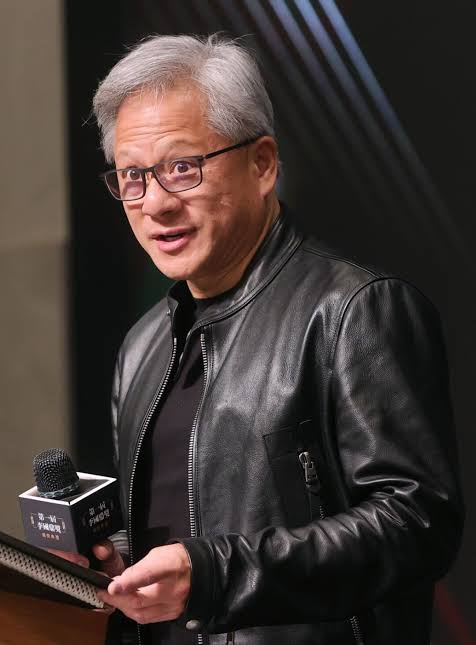
Image Source: Pixabay

Jensen Huang is married to Lori Huang.

The couple met while they were students at Oregon State University.

Oregon State says they were paired as lab partners in an electrical fundamentals class.

They later married and have two children.

Huang has occasionally spoken about how important his time at Oregon State was in shaping his life.

His connection to the university has continued long after graduation, particularly through the family’s philanthropy.

Who Is Lori Huang?

Lori Huang is Jensen Huang’s wife and a graduate of Oregon State University.

She studied electrical engineering and graduated in 1985.

She is also involved in the couple’s philanthropic work.

The Jen-Hsun and Lori Huang Foundation supports areas including education, public health and STEM initiatives.

The couple has made major donations to universities and educational organizations over the years.

Their philanthropy has therefore become another important part of their public life outside NVIDIA.

Jensen Huang’s Children

Jensen and Lori Huang have two children.

The family has generally kept their children’s private lives away from the public spotlight.

Because of that, there is limited reliable public information about their personal lives and careers.

Huang has occasionally spoken about balancing his demanding career with family life, but he does not regularly discuss his children in public.

Most public information about the family focuses instead on their educational and philanthropic work.

Jensen Huang’s Philanthropy

Huang and his wife have made substantial donations to educational and research institutions.

One of their best-known connections is with Oregon State University, where both studied engineering.

In 2022, the couple gave $50 million to the Oregon State University Foundation to help launch the Jen-Hsun and Lori Huang Collaborative Innovation Complex.

The planned complex focuses on research involving artificial intelligence, robotics, materials science, climate science and other areas.

It also includes a major supercomputing component.

The Huangs have supported Stanford University as well.

Their foundation previously contributed $30 million toward the Jen-Hsun Huang Engineering Center at Stanford.

The foundation has also supported cancer research at Oregon State and made educational grants to other organizations.

Jensen Huang’s Foundation

The Jen-Hsun and Lori Huang Foundation was established to support causes connected with education, science, technology and public health.

Lori Huang serves as president of the foundation.

The foundation’s work has included support for universities, research projects and organizations focused on education and community development.

Its giving reflects an area that has remained important throughout Huang’s career: engineering education.

The couple has directed significant donations toward institutions that helped shape their own careers.

Jensen Huang and Oregon State University

Oregon State University has a particularly strong connection to Jensen Huang.

He graduated from the university in 1984 with a degree in electrical engineering.

His wife, Lori, also graduated from the same program one year later.

The couple has since made major donations to the university.

Their $50 million gift helped establish the Huang Collaborative Innovation Complex, a research and education center built around advanced computing.

The facility is designed to support work in areas including AI, robotics, materials science and environmental research.

The relationship has therefore continued for decades after Huang left the university.

Jensen Huang and Stanford University

Stanford University also played an important role in Huang’s career.

He completed his master’s degree in electrical engineering there in 1992.

Soon after finishing his graduate studies, he co-founded NVIDIA.

The Huang Engineering Center at Stanford was made possible through support from Jensen and Lori Huang.

The center reflects the couple’s continued connection with engineering education and research.

Stanford describes Huang as an alumnus who went from studying electrical engineering to founding NVIDIA the following year.

What Does Jensen Huang Do Now?

Jensen Huang remains NVIDIA’s president and CEO.

He continues to oversee a company whose business has expanded far beyond its original focus on PC graphics.

NVIDIA now develops hardware and software used for accelerated computing, AI and other demanding workloads.

Huang also continues to speak publicly about the development of AI and the changes it could bring to computing and different industries.

In 2026, NVIDIA’s official biography notes that Huang was appointed to the President’s Council of Advisors on Science and Technology.

His career remains closely tied to the company he helped start more than 30 years ago.

Jensen Huang’s Main Career Milestones

YearMilestone
1963Born in Taiwan
1984Graduated from Oregon State University
1984–1985Worked at Advanced Micro Devices
1985–1993Worked at LSI Logic
1992Earned master’s degree from Stanford University
1993Co-founded NVIDIA
1999NVIDIA introduced its GPU
2006NVIDIA introduced CUDA
2012NVIDIA GPU computing helped power the AlexNet breakthrough
2022Huang and his wife gave $50 million to Oregon State University
2024 onwardContinued leading NVIDIA through the rapid growth of AI computing

NVIDIA’s own corporate history lists 1993 as the year the company was founded and 1999 as the year it introduced the GPU. It later identifies CUDA in 2006 and the AlexNet breakthrough in 2012 as major stages in the company’s development.

How Long Has Jensen Huang Been CEO of NVIDIA?

Jensen Huang has been NVIDIA’s CEO since the company was founded in 1993.

That means he has led the company for more than three decades.

He has remained president and CEO through NVIDIA’s transition from a graphics-chip startup into a major computing and AI company.

The company has changed substantially during that period, but Huang has remained in the same top leadership role.

What Was Jensen Huang Doing Before NVIDIA?

Before founding NVIDIA, Huang worked in the semiconductor industry.

He started at Advanced Micro Devices as a microprocessor designer.

He then spent several years at LSI Logic, where he held different positions.

By 1993, he had accumulated almost a decade of experience in chip design and semiconductor technology.

That experience became the foundation for the company he started with Chris Malachowsky and Curtis Priem.

Conclusion

Jensen Huang started his career as an electrical engineer working in the semiconductor industry.

He worked at AMD and LSI Logic before co-founding NVIDIA in 1993.

The company initially focused on 3D graphics and gaming, but its technology eventually expanded into high-performance computing and artificial intelligence.

The introduction of NVIDIA’s GPU in 1999 and CUDA in 2006 helped create the technical foundation for that expansion.

Huang has remained NVIDIA’s president and CEO since the company’s beginning.

Away from the company, he has maintained a long connection with education and engineering through his philanthropy with his wife, Lori.

Together, they have supported Oregon State University, Stanford University and other educational and research organizations.

More than 30 years after NVIDIA was founded, Huang is still leading the company he helped create while continuing to support engineering education and research through his family’s philanthropic work.

Frequently Asked Questions

Who is Jensen Huang?

Jensen Huang is the co-founder, president and CEO of NVIDIA. He helped start the company in 1993 and has remained its chief executive ever since.

How old is Jensen Huang?

Jensen Huang was born on February 17, 1963. He is 63 years old in 2026.

Where was Jensen Huang born?

Jensen Huang was born in Taiwan. Published sources differ on whether his birthplace was Taipei or Tainan.

What is Jensen Huang’s real name?

His full name is Jen-Hsun Huang, although he is widely known as Jensen Huang.

When did Jensen Huang start NVIDIA?

Huang co-founded NVIDIA with Chris Malachowsky and Curtis Priem in 1993.

Who are Jensen Huang’s co-founders?

The other two NVIDIA co-founders were Chris Malachowsky and Curtis Priem.

What did Jensen Huang study?

He studied electrical engineering at Oregon State University and later earned a master’s degree in electrical engineering from Stanford University.

Where did Jensen Huang work before NVIDIA?

He worked at Advanced Micro Devices and LSI Logic before co-founding NVIDIA.

How long has Jensen Huang been CEO of NVIDIA?

Huang has served as NVIDIA’s president and CEO since the company was founded in 1993.

Is Jensen Huang married?

Yes. Jensen Huang is married to Lori Huang, whom he met while they were students at Oregon State University.

How many children does Jensen Huang have?

Jensen and Lori Huang have two children.

What is Jensen Huang known for?

He is best known for co-founding NVIDIA and leading the company from its early focus on computer graphics into accelerated computing and artificial intelligence.

What is Jensen Huang’s connection to Oregon State University?

Huang graduated from Oregon State University with a degree in electrical engineering. He and Lori Huang have also made major donations to the university, including a $50 million gift toward the Huang Collaborative Innovation Complex.


Who Is Mike Krieger? Biography, Instagram Career, Anthropic & Life Story

Mike Krieger

Mike Krieger is a Brazilian-American software engineer and entrepreneur best known for co-founding Instagram with Kevin Systrom.

He spent eight years building Instagram and served as its Chief Technology Officer during some of the fastest growth in the company’s history. After leaving Instagram in 2018, Krieger returned to building products with Systrom, first through a COVID-19 tracking project and later through the AI-powered news app Artifact.

His career took another turn in 2024 when he joined Anthropic, the company behind Claude. Anthropic hired him as its first Chief Product Officer. In January 2026, Krieger moved from the main product organisation into Anthropic Labs, a team working on experimental products built around new Claude capabilities.

Mike Krieger at a Glance

DetailInformation
Full NameMichel Krieger
Known AsMike Krieger
Date of BirthMarch 4, 1986
BirthplaceSão Paulo, Brazil
NationalityBrazilian-American
ProfessionSoftware engineer, entrepreneur and product builder
EducationStanford University
DegreeSymbolic Systems
Known ForCo-founding Instagram
Instagram RoleCo-founder and Chief Technology Officer
Later StartupArtifact
Current WorkAnthropic Labs
WifeKaitlyn Trigger

Mike Krieger Was Born in Brazil

Image Source: Pixabay

Mike Krieger was born on March 4, 1986, in São Paulo, Brazil.

He spent his early life in Brazil before moving to the United States for university. In 2004, Krieger went to California to study at Stanford University.

He chose Symbolic Systems, a Stanford programme that brings together areas such as computer science, psychology, linguistics and philosophy.

The course suited the kind of work Krieger would later become known for. His career has never been only about writing software. Much of his work has involved thinking about how ordinary people actually use technology and how a complicated product can feel simple when it reaches the screen.

Stanford later described Krieger as a Symbolic Systems graduate and a native of São Paulo.

Stanford Led Him Into the Startup World

Image Source: Pixabay

Krieger did not graduate from Stanford with Instagram already planned.

He worked on different technology projects and eventually built an application called Crime Scene SF. Around the same period, fellow Stanford graduate Kevin Systrom was working on another mobile project called Burbn.

The two knew each other through Stanford and eventually decided to work together.

Burbn was built around location and social check-ins. Users could share where they were, make plans and post photographs.

The photo part began getting their attention.

Stanford’s account of Instagram’s early days says people were uploading photos and videos to Burbn even while the founders were still trying to decide what the product should become. Krieger and Systrom eventually went back to the basic problem they wanted to solve: making mobile photo sharing fast and simple.

Burbn Eventually Became Instagram

Image Source: Pixabay

Burbn had too many things going on. Instead of continuing to add features, Krieger and Systrom removed most of them.

They kept the part people seemed to enjoy most: taking a photo, improving it with a filter and sharing it from a phone.

The new app became Instagram.

Instagram launched in 2010, at a time when smartphone photography was becoming much more common but uploading and sharing good-looking mobile photos was still awkward.

The app was deliberately simple.

A person could take a picture, choose a filter, write a caption and post it. There were no long menus or complicated publishing tools.

That simplicity became one of the reasons Instagram grew so quickly.

What Did Mike Krieger Do at Instagram?

Kevin Systrom became the better-known public face of Instagram, but Krieger handled a large part of the technical work behind it.

He served as Chief Technology Officer and worked on the engineering needed to keep Instagram running as more people joined.

In the early days, the company had very few employees. Krieger was writing code and dealing with the same technical problems that would later be divided across large engineering teams.

The scale changed dramatically. Anthropic said when it hired Krieger in 2024 that he had helped grow Instagram to more than one billion users and had expanded its engineering organisation to more than 450 people. Figma later described his work in similar terms, saying he helped scale Instagram’s infrastructure from a few million users to more than one billion monthly active users.

His job changed with the company.

At first, Krieger could work directly on individual parts of the product. As Instagram grew, much more of his work involved building teams and making sure the technology could support an app being used around the world.

Facebook Bought Instagram for About $1 Billion

Instagram had only been around for a short time when Facebook decided to buy it.

On April 9, 2012, Facebook announced an agreement to acquire Instagram for approximately $1 billion in cash and Facebook shares.

Krieger and Systrom stayed after the acquisition.

Instagram also continued operating as its own product rather than disappearing inside Facebook.

Over the next several years, Instagram added video, direct messaging, Stories and many other features while its audience continued growing.

By the time Krieger left, the platform had reached more than one billion monthly users.

Mike Krieger Left Instagram in 2018

Krieger and Systrom announced their departure from Instagram in September 2018.

They had spent roughly eight years building the company.

Their exit came six years after Facebook bought Instagram. The two founders did not immediately announce another startup.

Instagram later named Adam Mosseri as its new head. In a statement published after their departure, Krieger and Systrom said they were looking forward to watching Instagram continue to develop as users rather than as the people running the platform.

Krieger was 32 when he left a product that had already reached around a billion users.

Rt.live Brought Krieger and Systrom Back Together

Krieger and Systrom worked together again during the COVID-19 pandemic.

In April 2020, they launched Rt.live.

The website tracked estimates of how quickly COVID-19 was spreading across individual U.S. states. The name came from the epidemiological reproduction number, or R, which helps describe whether an outbreak is growing or shrinking.

Rt.live was not another social network.

It was a much smaller project built for a specific problem at a time when people were trying to understand rapidly changing COVID data.

It was also the first public product the two Instagram founders had worked on together since leaving Facebook.

Artifact Took Them Into AI-Powered News

In 2023, Krieger and Systrom returned with a larger project called Artifact.

Artifact was a personalised news app that used machine learning to decide which articles a reader was likely to find interesting.

The product changed over time and added more social features, but it struggled to find a large enough market.

The founders announced plans to wind it down in early 2024.

The technology still found a buyer.

Yahoo acquired Artifact in April 2024 and said its AI-powered recommendation technology would be used across Yahoo products, including Yahoo News. Financial terms of the acquisition were not disclosed. Krieger and Systrom remained involved in an advisory capacity during the transition.

Mike Krieger Joined Anthropic in 2024

Only a few weeks after the Artifact deal, Krieger announced his next job.

Anthropic hired him as its Chief Product Officer in May 2024.

It was the first CPO role at the AI company.

Krieger was put in charge of product engineering, product management and product design. Anthropic was already building Claude, but the company wanted to expand the ways consumers and businesses could use its AI models.

Krieger’s move into Anthropic also brought him back to the kind of work he had done throughout his career.

Instagram had required taking new technology and turning it into something millions of ordinary people could understand. Anthropic was facing a similar product problem with artificial intelligence, although the technology itself was very different.

What Happened to Mike Krieger’s Anthropic CPO Role?

Krieger is still at Anthropic, but his job changed in January 2026.

Anthropic created an expanded internal group called Labs to work on experimental products built around new Claude capabilities.

Krieger moved into Labs to build alongside Ben Mann.

At the same time, Ami Vora took over leadership of Anthropic’s main Product organisation.

So describing Krieger simply as Anthropic’s current Chief Product Officer is now out of date.

He held the CPO role from 2024 into early 2026. His current work is centred on Anthropic Labs, where the company is trying ideas before deciding which ones should become larger products.

What Is Anthropic Labs?

Anthropic describes Labs as a team for incubating experimental products around the latest capabilities of Claude.

The idea is to let a smaller group build and test things quickly before every project has to operate like an established product used by millions of people.

Anthropic pointed to projects such as Claude Code, the Model Context Protocol and other newer Claude tools when it announced the expanded Labs group.

Krieger joined the team in January 2026 after spending nearly two years leading product at Anthropic.

It puts him closer to hands-on product building again rather than only overseeing an increasingly large product organisation.

Mike Krieger Also Joined Figma’s Board

Krieger added another role in July 2025, when Figma appointed him to its board of directors alongside Duolingo co-founder Luis von Ahn.

Figma pointed to his experience building Instagram and leading product at Anthropic when it announced the appointment.

The board role does not mean Krieger works at Figma full time.

He remains involved with Anthropic while advising Figma at board level.

Mike Krieger’s Personal Life

Image Source: Pixabay

Krieger married Kaitlyn Trigger in 2015.

Trigger has worked in technology and has also been involved with startups, art and philanthropy.

The two met several years before their wedding, when Krieger was still working in the technology industry before Instagram had reached its later size. W Magazine reported around the time of their engagement that Trigger and Krieger had met at a housewarming party.

The couple have generally kept their personal life much less public than Krieger’s work.

Krieger himself also maintains a lower celebrity profile than many founders connected with companies of Instagram’s size. Most public coverage of him centres on product building, startups and technology rather than his private lifestyle.

Mike Krieger and Philanthropy

Krieger and Trigger have also put money into philanthropy.

In 2015, they announced a partnership with GiveWell and the Open Philanthropy Project.

They committed $750,000 over two years, with most of the money allocated to grants recommended through the Open Philanthropy Project.

At the time, the couple wrote that they wanted to learn more about philanthropy while they were giving rather than wait until they felt they understood every issue.

They have also supported art organisations in San Francisco.

Krieger and Trigger were among the founding donors connected with the Institute of Contemporary Art San Francisco.

What Is Mike Krieger Doing Now?

As of 2026, Mike Krieger is working at Anthropic Labs.

He moved there after serving as Anthropic’s Chief Product Officer from May 2024 until early 2026.

The Labs team is working on new AI products and testing ideas built around Claude before they become established parts of Anthropic’s larger product lineup.

He also remains a member of Figma’s board of directors.

Instagram is still the company most closely connected with his name, but his career has moved through several different areas since leaving it: public-health software, personalised news, artificial intelligence and startup investing and advising.

Mike Krieger’s Career Has Stayed Close to Product Building

There is a fairly clear line through most of Krieger’s career.

Instagram began with a small mobile product built by two people. Artifact tried to rethink how people found news. His work at Anthropic now deals with turning increasingly capable AI models into products people can actually use.

The size of the companies has changed, but Krieger has kept returning to product work.

Instagram remains his biggest success. He helped take an app built by a tiny team in 2010 and scale it into a platform with more than one billion users.

His current work at Anthropic puts him back in an earlier stage of that process, where new technology exists but many of the products that will eventually be built around it are still being worked out.

Frequently Asked Questions

Who is Mike Krieger?

Mike Krieger is a Brazilian-American software engineer and entrepreneur. He co-founded Instagram with Kevin Systrom and served as the company’s Chief Technology Officer.

When was Mike Krieger born?

Mike Krieger was born on March 4, 1986, in São Paulo, Brazil.

Where did Mike Krieger study?

Krieger studied Symbolic Systems at Stanford University after moving from Brazil to California. Stanford has described him as a graduate of the programme.

Did Mike Krieger create Instagram?

Yes. Mike Krieger co-founded Instagram with Kevin Systrom. The app developed from an earlier project called Burbn.

What was Mike Krieger’s job at Instagram?

Krieger served as Chief Technology Officer. He worked heavily on Instagram’s early engineering and later helped scale its infrastructure and engineering organisation as the platform grew.

How much did Facebook pay for Instagram?

Facebook announced in 2012 that it would acquire Instagram for approximately $1 billion in cash and shares.

When did Mike Krieger leave Instagram?

Krieger and Kevin Systrom announced that they were leaving Instagram in September 2018.

What was Artifact?

Artifact was a personalised news app created by Krieger and Systrom. It launched in 2023, later wound down as a standalone service, and its technology was acquired by Yahoo in 2024.

Does Mike Krieger work at Anthropic?

Yes. Anthropic hired Krieger as Chief Product Officer in 2024. In January 2026, he moved into Anthropic Labs, where he works on experimental AI products alongside Ben Mann.

Is Mike Krieger still Anthropic’s Chief Product Officer?

No. Krieger moved from the CPO role into Anthropic Labs in January 2026. Ami Vora now leads Anthropic’s Product organisation.

Who is Mike Krieger’s wife?

Mike Krieger is married to Kaitlyn Trigger. The couple married in 2015 and have also worked together on philanthropic projects.

Top 10 Influencer Marketing Agencies in UK

Top 10 Influencer Marketing Agencies in UK

Influencer marketing has become a much broader job than simply paying a creator to publish a sponsored post.

Brands now have to decide which creators can actually reach the right audience, what type of content will work on each platform and how the campaign will connect with the rest of their marketing. A creator with a large following may not necessarily generate useful results if the audience does not match the brand or the content does not fit the platform.

The measurement side has changed as well. Influencer campaigns can now be tracked through engagement, clicks, conversions, sales and other performance metrics. Agencies have therefore started combining creator partnerships with paid media, social content, creative production and performance marketing.

TikTok, Instagram and YouTube also require different approaches. A campaign built around short-form TikTok content may look very different from one designed around long-form YouTube videos. Some agencies specialise in a particular platform or audience, while others manage creator campaigns across several markets.

This article covers 10 influencer marketing agencies in UK and the type of creator work each one handles. The list includes agencies working across performance marketing, social-first content, Gen Z campaigns, YouTube, TikTok, UGC and technology-enabled influencer partnerships.

Quick Look at the Top Influencer Marketing Agencies in UK

AgencyUK BaseMain Focus
Disrupt MarketingUKPerformance-led influencer campaigns
The Goat AgencyLondon / GlobalEnd-to-end influencer campaigns
Socially PowerfulLondon / GlobalData-driven influencer marketing
The Social ShepherdBathSocial-first growth and creative
Influencer.comUK / GlobalTechnology-enabled creator partnerships
Fanbytes by BrainlabsLondonGen Z and TikTok marketing
SEEN ConnectsLondonCreator partnerships and community
Digital VoicesLondonYouTube and long-form creator content
House of MarketersUKTikTok-first DTC marketing
EngageHubManchesterMicro-influencers and UGC

1. Disrupt Marketing

Main FocusPerformance-led influencer marketing
Known ForInfluencer campaigns combined with paid media
Typical ApproachConversion-focused creator campaigns

Disrupt Marketing approaches influencer marketing from a performance perspective.

Rather than treating influencer activity as a campaign that ends when the creator publishes a post, the agency connects creator partnerships with paid media and conversion-focused marketing. The aim is to understand what happens after the audience sees the content.

That approach can be useful for brands that need influencer marketing to contribute to measurable business results. Campaign performance can be considered alongside metrics such as engagement, traffic and conversions instead of looking only at reach.

Disrupt Marketing has worked with brands including Vinted and Netflix.

The agency’s approach also reflects the way influencer content is increasingly used beyond an individual creator’s social profile. Successful content can be adapted for paid campaigns and other parts of a brand’s digital marketing activity.

This makes performance measurement an important part of the campaign rather than something considered only after the content has been published.

Unique Offerings

  • Influencer marketing
  • Performance marketing
  • Paid media
  • Creator campaigns
  • Social media
  • Conversion-focused campaigns
  • Campaign measurement

Official website: Disrupt Marketing

2. The Goat Agency

Main FocusEnd-to-end influencer marketing
Known ForLarge-scale creator campaigns
ReachMultiple international markets

The Goat Agency is one of the more established names in influencer marketing and operates campaigns across multiple markets.

Its work covers the full influencer campaign process, from strategy and creator selection through content production, activation and measurement.

This becomes particularly important for brands running campaigns across several countries. Creator preferences, audience behaviour and platform trends can vary significantly between markets, so a campaign often needs local knowledge rather than simply translating the same brief.

Goat also works across the full marketing funnel. Influencer campaigns can be used to build awareness, generate engagement, support consideration and contribute to conversions.

The agency’s scale allows it to work with large numbers of creators when a campaign requires broad reach. At the same time, creator selection remains an important part of the process because the right audience can matter more than the size of an individual following.

Unique Offerings

  • Influencer strategy
  • Creator campaigns
  • Global campaigns
  • Creator selection
  • Campaign management
  • Social media
  • Content creation
  • Performance measurement
  • Full-funnel influencer marketing

Official website: The Goat Agency

3. Socially Powerful

Main FocusData-driven influencer marketing
Known ForAnalytics and performance
ReachGlobal

Socially Powerful combines influencer marketing with data, research and paid media.

The agency uses audience and campaign data to inform creator selection and campaign planning. This is particularly relevant when brands need to understand not only how many people saw a piece of content but whether it reached the intended audience.

Influencer marketing can involve thousands of possible creators, particularly for campaigns running across several countries. Data can help narrow that pool by looking at audience demographics, interests, engagement and other factors.

Socially Powerful also combines organic influencer activity with paid media. Creator content can therefore have a longer life than the original post when brands use it in other paid social campaigns.

The agency works across global markets and has experience with different social platforms and creator communities.

Its approach puts measurement at the centre of influencer marketing rather than treating reporting as an administrative step at the end of a campaign.

Unique Offerings

  • Influencer marketing
  • Creator strategy
  • Audience research
  • Data and analytics
  • Paid social
  • Social media
  • Campaign measurement
  • Global influencer campaigns

Official website: Socially Powerful

4. The Social Shepherd

UK BaseBath
Main FocusSocial-first growth
Known ForPlatform-native content

The Social Shepherd is a social-first agency based in Bath that works across social media, influencer marketing and creative production.

Its influencer work is closely connected with the content brands publish on social platforms. Instead of treating creators as a separate media channel, the agency can incorporate creator content into a broader social strategy.

This matters because each platform has its own format and audience behaviour. Content that works on Instagram may need to be adapted considerably for TikTok or another platform.

The agency also has in-house creative production capabilities. That allows creator campaigns to connect with other social content rather than relying entirely on content produced by external influencers.

The Social Shepherd has worked with direct-to-consumer brands and other businesses that rely heavily on social platforms for customer acquisition and brand growth.

Its approach is therefore centred on social content as a broader growth channel, with influencer activity forming part of that strategy.

Unique Offerings

  • Influencer marketing
  • Social media marketing
  • Social strategy
  • Creative production
  • Platform-native content
  • Paid social
  • UGC
  • DTC marketing
  • Performance marketing

Official website: The Social Shepherd

5. Influencer.com

Main FocusTechnology-enabled creator partnerships
Known ForCreator data and software
ApproachTechnology combined with human expertise

Influencer.com combines influencer marketing services with its own technology.

The platform uses data to help brands identify and work with creators, while the agency team provides the strategy and campaign management around those partnerships.

Creator discovery becomes more complicated as influencer marketing grows. Brands may need to evaluate large numbers of potential creators across different countries and platforms. Technology can help organise that information and identify creators based on audience and campaign requirements.

Influencer.com also provides campaign reporting and measurement. This allows brands to monitor campaign activity across multiple creators rather than managing individual partnerships separately.

The combination of software and human expertise is central to the agency’s approach. Technology can help with discovery, analysis and reporting, while campaign teams still need to understand the brand, audience and creative brief.

The agency works with brands on large-scale creator partnerships and campaigns across different markets.

Unique Offerings

  • Influencer marketing
  • Creator discovery
  • Influencer technology
  • Audience analysis
  • Campaign management
  • Creator partnerships
  • Campaign reporting
  • Data-driven matchmaking

Official website: Influencer.com

6. Fanbytes by Brainlabs

Parent CompanyBrainlabs
Main FocusGen Z and TikTok
Known ForYouth culture and creator campaigns

Fanbytes operates under Brainlabs and focuses on reaching younger audiences, with a particular emphasis on Gen Z. Much of its work is built around understanding how younger consumers use social platforms and the types of content they naturally engage with.

TikTok is a major part of this approach. Rather than treating the platform like another advertising channel, Fanbytes works around the trends, creators and content styles that have developed within the TikTok community. This is particularly relevant for brands that want to connect with younger audiences without making their campaigns feel disconnected from the platform.

The agency works with creators who are familiar with these communities and understand how quickly trends can develop and change. Its campaigns can include creator partnerships, TikTok content and other forms of social media activity designed around youth culture.

Being part of Brainlabs also connects Fanbytes with wider digital and performance marketing capabilities. This can allow creator-led campaigns to work alongside paid media and other digital activity, giving brands more ways to build on the content produced through influencer partnerships.

For brands targeting Gen Z, the choice of creator is only one part of the equation. The content also needs to fit the platform, the audience and the culture surrounding it. Fanbytes’ focus on TikTok and youth audiences is built around that distinction.

Unique Offerings

  • Gen Z-focused influencer marketing
  • TikTok creator campaigns
  • Youth culture and trend-led content
  • Creator partnerships and social media campaigns
  • Access to Brainlabs’ wider digital marketing capabilities

Official website: Fanbytes by Brainlabs

7. SEEN Connects

UK BaseLondon
Main FocusCreator partnerships
Known ForCulture and community

SEEN Connects is a London-based influencer marketing agency that combines creator partnerships with community-focused campaigns.

Its work looks beyond simple audience size. Cultural relevance and the relationship between creators and their communities can influence how audiences respond to branded content.

This becomes particularly important when brands want to enter a particular culture or community. A creator can provide access to an audience, but the campaign still needs to feel appropriate for that audience.

SEEN Connects works with brands including Nike and Bumble.

The agency’s approach combines creator relationships, community building and brand partnerships. Campaigns can therefore involve creators as part of a broader brand strategy rather than treating them only as distribution channels.

Its work is particularly relevant for brands looking to build stronger connections between creator content and wider cultural conversations.

Unique Offerings

  • Influencer marketing
  • Creator partnerships
  • Community building
  • Brand partnerships
  • Cultural campaigns
  • Social media
  • Creator strategy
  • Influencer relations

Official website: SEEN Connects

8. Digital Voices

UK BaseLondon
Main FocusYouTube and creator content
Known ForLong-form influencer marketing

Digital Voices specialises in influencer marketing with a strong focus on YouTube and long-form creator content.

YouTube campaigns require a different approach from short-form influencer activity. A creator may spend several minutes explaining a product, demonstrating how it works or incorporating it naturally into a longer video.

The format gives brands more room to explain a product or tell a story, but it also means the creator and content need to be chosen carefully. Audiences can usually tell when a sponsorship does not fit naturally with the creator’s existing content.

Digital Voices works with creators and brands on these types of partnerships and also provides creator management.

The agency’s experience with YouTube makes it particularly relevant for brands where explanation, storytelling or longer-form demonstrations are important parts of the campaign.

Unique Offerings

  • YouTube marketing
  • Influencer marketing
  • Creator management
  • Long-form content
  • Creator partnerships
  • Social media campaigns
  • Influencer strategy
  • Video campaigns

Official website: Digital Voices

9. House of Marketers

Main FocusTikTok marketing
Known ForDTC and performance campaigns
ApproachTikTok-first marketing

House of Marketers focuses heavily on TikTok and works with direct-to-consumer brands.

Its influencer work is built around the way TikTok users consume and interact with short-form content. Instead of simply adapting traditional advertising into a TikTok format, the agency focuses on native content and creators who understand the platform.

Creator selection is an important part of that process. The right creator needs to fit the brand and understand how to produce content that feels natural on TikTok.

House of Marketers also works with TikTok advertising. Creator content can therefore be connected with paid campaigns when a brand wants to increase distribution beyond the creator’s own audience.

This combination of influencer activity and paid TikTok management gives DTC brands a way to connect creator content with performance marketing.

Unique Offerings

  • TikTok marketing
  • Influencer marketing
  • Creator casting
  • TikTok advertising
  • DTC marketing
  • UGC
  • Paid social
  • Performance marketing

Official website: House of Marketers

10. EngageHub

UK BaseManchester
Main FocusMicro-influencers and UGC
Typical ClientsLifestyle and ecommerce brands

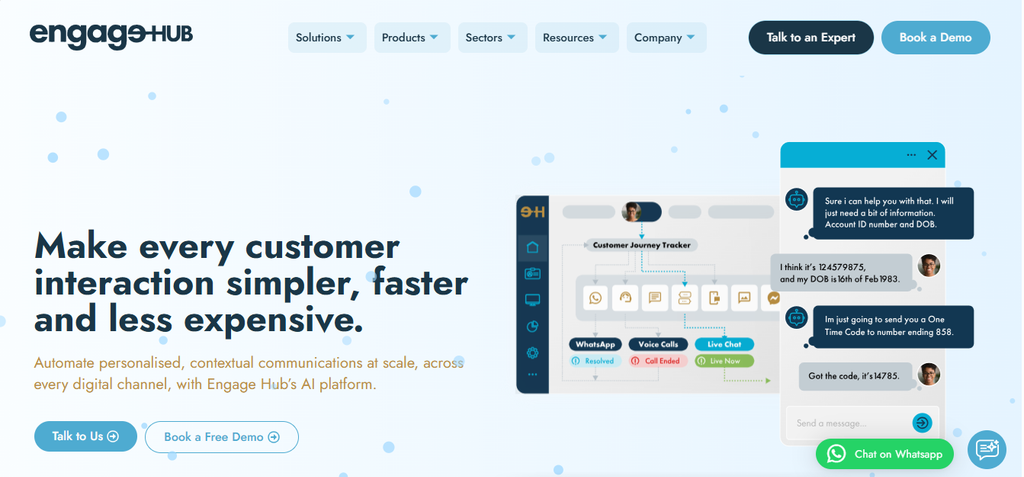
EngageHub focuses on micro-influencer campaigns and user-generated content.

Micro-influencer marketing works differently from campaigns built around a small number of celebrity creators. Instead of relying on the reach of one large account, a brand can work with multiple smaller creators whose audiences may have stronger connections to particular interests or communities.

UGC is another part of the agency’s work. User-generated content can give brands a larger library of social assets while allowing creators to produce content in formats that feel native to the platform.

EngageHub is based in Manchester and works with lifestyle and ecommerce brands.

For ecommerce companies in particular, the combination of micro-influencers and UGC can connect creator activity with product discovery and social content. Brands can use the content organically or incorporate selected assets into paid social campaigns.

The agency’s approach therefore centres on smaller creator communities and content that brands can use across their wider social marketing.

Unique Offerings

  • Micro-influencer marketing
  • UGC
  • Creator campaigns
  • Ecommerce marketing
  • Lifestyle campaigns
  • Social media content
  • Creator sourcing
  • Influencer strategy

Official website: EngageHub

Frequently Asked Questions

Which are the top influencer marketing agencies in the UK?

The agencies covered in this list are Disrupt Marketing, The Goat Agency, Socially Powerful, The Social Shepherd, Influencer.com, Fanbytes by Brainlabs, SEEN Connects, Digital Voices, House of Marketers and EngageHub.

They do not all approach influencer marketing in the same way. Some focus on performance and paid media, while others specialise in TikTok, YouTube, Gen Z, micro-influencers, UGC or large-scale international campaigns.

Which UK influencer marketing agencies focus on TikTok?

Fanbytes by Brainlabs, House of Marketers and Socially Powerful all have strong connections with TikTok marketing.

Fanbytes focuses particularly on Gen Z and youth culture, while House of Marketers takes a TikTok-first approach for DTC and performance marketing campaigns.

Which influencer marketing agencies specialise in YouTube?

Digital Voices has a strong focus on YouTube and long-form creator content.

YouTube campaigns can give creators more time to explain, demonstrate or integrate a product into longer videos, making the format different from short-form influencer campaigns.

What is the difference between influencer marketing and UGC?

Influencer marketing usually involves a creator publishing content to their own audience.

UGC can involve creators producing content for a brand to use on its own social channels, website or paid advertising. The creator’s audience does not necessarily have to see the content through the creator’s account.

Some agencies work with both models because brands can use creator content for several parts of their marketing.

Which influencer marketing agencies focus on Gen Z?

Fanbytes by Brainlabs focuses particularly on Gen Z, youth culture and TikTok.

Other agencies also work with younger audiences, but Fanbytes has built its influencer offering around understanding youth culture and the platforms where younger audiences spend their time.

What should a brand look for in an influencer marketing agency?

Start with the objective of the campaign.

A brand looking for direct sales may need an agency with strong performance marketing and paid media capabilities. A company trying to build awareness may need broader creator strategy and campaign reach. A brand targeting a particular community may need an agency with stronger cultural or niche creator expertise.

It is also worth checking how an agency selects creators, how it measures campaign performance, whether it handles paid amplification and whether it can produce content that the brand can continue using after the original influencer post.

Are micro-influencers useful for ecommerce brands?

They can be useful when the brand needs to reach specific communities rather than relying entirely on large audiences.

Micro-influencer campaigns can also give brands access to a larger number of creators and different types of content. The right approach depends on the product, audience, campaign objective and platform.

Top 10 Telecom Companies in India

Top 10 telecom companies in India featuring mobile networks, 5G technology, and telecommunications infrastructure

Introduction

The telecommunications industry plays an important role in India’s growth. From making phone calls and sending messages to attending online classes, running businesses and making digital payments, people depend on telecom services every day. Mobile internet has also made it easier for people to work remotely, watch online videos, use digital banking and access services from almost anywhere.

India has one of the world’s largest telecommunications markets. Companies such as Reliance Jio, Bharti Airtel and Vodafone Idea provide mobile connectivity, while BSNL and MTNL serve customers through government-owned networks. Other companies, including Tata Communications and RailTel, focus on business connectivity, data networks and communication infrastructure.

The industry has changed considerably with the introduction of 4G and 5G technology. Telecom companies are now investing in faster networks, fibre connections, data centres, cloud services and digital solutions. At the same time, they face challenges such as high infrastructure costs, competition, spectrum payments and the need to improve network coverage.

This article covers 10 important telecom companies operating in India, their main services, business strengths and latest available financial information. The list includes both customer-facing telecom operators and companies that support India’s communication networks.

Reliance Jio

Image Courtesy: Reliance Jio (Official Website)

Parent companyReliance Industries Limited
Main servicesMobile, 4G, 5G, JioFiber and JioAirFiber
Market positionOne of India’s largest telecom operators
FY2025–26 financial resultsPublished financial statements available through Jio’s investor-relations website

Reliance Jio is one of India’s leading telecommunications companies. It transformed the mobile market by making data services more affordable and encouraging millions of people to use mobile internet regularly.

Jio provides mobile services through its 4G and 5G networks. Customers can use these networks for calls, messaging, online payments, video streaming, gaming and other internet-based activities. The company also offers home internet through JioFiber and JioAirFiber.

JioFiber uses a wired fibre connection, while JioAirFiber provides home internet through fixed wireless technology. These services help Jio serve customers who need internet access at home, including families, students and people working remotely.

Jio’s major strength is its large customer base, extensive mobile network and ability to combine mobile connectivity with home broadband and digital services.

Bharti Airtel

Image Courtesy: Bharti Airtel (Official Website)

Main servicesMobile, 4G, 5G, Airtel Xstream Fiber and AirFiber
Other businessesEnterprise connectivity and international telecom services
Market positionMajor private telecom operator
Latest financial reportingFY2025–26 annual results


Bharti Airtel is one of India’s largest private telecommunications companies. It offers mobile connections, broadband services, enterprise networking and several communication-related solutions.

Airtel’s mobile network supports voice calls, messaging, mobile internet and 5G connectivity in covered areas. Its broadband business provides wired fibre connections and fixed wireless services to households and businesses.

Airtel Xstream Fiber is designed for customers who need a home broadband connection for video calls, online learning, streaming and downloading large files. Airtel AirFiber offers another option in selected locations where fixed wireless connectivity is available.

The company also serves businesses through dedicated internet connections, managed network services, cloud connectivity and other enterprise communication products. Airtel operates outside India as well, including through its Africa business.

Vodafone Idea (Vi)

Image Courtesy: Vodafone Idea (Vi) (Official Website)

Main servicesMobile voice, 4G and 5G services in selected areas
Brand nameVi
FY2025–26 revenue from operations₹44,782 crore
FY2025–26 reported net profit₹34,552 crore


Vodafone Idea, popularly known as Vi, is one of India’s major private mobile network operators. The company was formed by the merger of Vodafone India and Idea Cellular. It provides prepaid and postpaid mobile connections, voice calls, internet data and other mobile services.

One of Vi’s main challenges is the cost of maintaining and expanding its network while managing its financial obligations. Investment in network equipment and additional capacity is important for improving coverage and competing in the 4G and 5G markets.

Financial performance: Vi reported consolidated revenue from operations of ₹44,782 crore for FY2025–26, up from ₹43,454 crore in FY2024–25. It reported a net profit of ₹34,552 crore for FY2025–26, compared with a loss of ₹27,384 crore in the previous financial year. 

Vi remains an important company in India’s telecom market because competition between mobile operators gives customers more choices in plans and services.

Bharat Sanchar Nigam Limited (BSNL)

Image Courtesy: Bharat Sanchar Nigam Limited(Official Website)

OwnershipGovernment of India
Main servicesMobile, landline, Bharat Fiber and enterprise connectivity
Financial reportingCompany-wide annual results
Major strengthEstablished presence in smaller cities and rural areas


BSNL is a government-owned telecommunications company that provides mobile, landline, broadband and enterprise communication services. It has played an important role in connecting people in areas where private operators may have limited coverage.

Its Bharat Fiber service provides fibre broadband to homes and businesses wherever the network is available. BSNL also provides mobile connectivity and works on upgrading its network to support more modern services.

BSNL has faced challenges such as competition from private operators, older network infrastructure and the need for continued investment. Network upgrades and better customer service are important for attracting and retaining customers.

Financial performance: BSNL’s financial figures must be read separately from those of other government telecom companies. Its FY2024–25 figures, compiled by PRS Legislative Research, showed total income of approximately ₹23,427 crore and a loss of ₹2,414 crore. These are company-wide figures, not earnings from broadband alone. 

Tata Communications

Image Courtesy: Tata Communications (Official Website)

Main servicesGlobal data networks, cloud connectivity, cybersecurity and digital solutions
FY2025–26 consolidated revenue from operations₹24,802.72 crore
FY2025–26 consolidated profit after tax₹996.85 crore
Major strengthGlobal enterprise communication infrastructure


Tata Communications is a major player in business-to-business telecommunications. Unlike Jio and Airtel, which are widely known for mobile connections, Tata Communications focuses heavily on helping companies connect their offices, data centres, cloud platforms and customers across different countries.

Its services include international network connectivity, managed communication services, cloud networking, cybersecurity and digital collaboration solutions. These services are important for banks, technology companies, multinational businesses and other organisations that need secure and reliable communication systems.

Financial performance: Tata Communications reported consolidated revenue from operations of ₹24,802.72 crore in FY2025–26, compared with ₹23,108.59 crore in FY2024–25. Its reported consolidated profit for FY2025–26 was approximately ₹996.85 crore, compared with ₹1,836.78 crore in the previous year. 

The difference between revenue growth and profit performance shows why both figures matter. A company can increase sales while its final profit declines because of expenses, exceptional items or changes in its business.

Tata Communications is especially important in the telecom sector because it supports the networks and digital services that other businesses depend on.

RailTel Corporation of India

Image Courtesy: RailTel Corporation of India (Official Website)

OwnershipGovernment of India
Main servicesOptical-fibre networks, broadband, data centres and network projects
FY2025–26 operating revenueApproximately ₹4,277.48 crore
FY2025–26 profit after taxApproximately ₹346.32 crore


RailTel is a government-owned telecommunications and information technology company associated with India’s railway network. It uses railway-linked infrastructure to provide connectivity to government departments, businesses, institutions and other customers.

One of its major advantages is its extensive optical-fibre network along railway routes. Fibre infrastructure allows large amounts of data to travel quickly and supports services such as broadband, enterprise connectivity and digital communication.

RailTel also undertakes technology projects for government organisations, including network development, communication systems and digital infrastructure. Its business is therefore broader than retail internet services.

RailWire is one of the services associated with RailTel. Through local partners, it provides broadband access to customers in areas where the service is available.

Financial performance: RailTel recorded operating revenue of approximately ₹4,277.48 crore in FY2025–26, compared with ₹3,477.50 crore in FY2024–25. Profit after tax increased to approximately ₹346.32 crore from ₹299.81 crore. 

Indus Towers

Image Courtesy: Indus Towers (Official Website)

Main businessMobile tower infrastructure
FY2025–26 revenue, excluding other income₹32,493.1 crore
FY2025–26 profit after tax₹7,144.9 crore
Major strengthNationwide telecom tower network

Indus Towers is one of India’s major telecommunications infrastructure companies. It does not primarily sell mobile connections directly to individual customers. Instead, it provides tower sites and related infrastructure that mobile network operators use to deliver wireless services.

Mobile operators need towers and other equipment to transmit signals across cities, towns and rural areas. Building and maintaining this infrastructure requires substantial investment. Tower companies allow operators to use shared infrastructure rather than each company having to build an entirely separate network at every location.

Indus Towers installs, operates and maintains telecom tower infrastructure and provides space and related facilities to wireless service providers. This makes it an important part of India’s mobile connectivity system.

The company’s business depends on demand from telecom operators, the number of equipment installations at its sites and the financial health of its customers.

Financial performance: Indus Towers reported FY2025–26 revenue of ₹32,493.1 crore, excluding other income, and profit after tax of ₹7,144.9 crore. In FY2024–25, the corresponding figures were ₹30,122.8 crore and ₹9,931.7 crore. 

Mahanagar Telephone Nigam Limited (MTNL)

Image Courtesy: Mahanagar Telephone Nigam Limited (Official Website)

OwnershipGovernment of India
Main servicesLandline, broadband and telecom services
Main service areasDelhi and Mumbai
Financial reportingCompany-wide annual results


Mahanagar Telephone Nigam Limited, commonly known as MTNL, is a government-owned telecommunications company established to provide telecom services in major metropolitan areas, particularly Delhi and Mumbai.

MTNL has historically provided landline connections, broadband internet and other communication services to households, offices and businesses. It also has an established customer base built over several decades.

However, the telecommunications market has changed significantly since the introduction of affordable mobile services. Many customers have moved from traditional landlines to mobile phones, while private operators have expanded their broadband and mobile networks. These changes have created financial and operational challenges for MTNL.

MTNL’s position is also closely connected to the wider government telecom sector. BSNL has been involved in supporting MTNL’s network operations and services under arrangements between the two government-owned companies.

Sterlite Technologies Limited (STL)

Image Courtesy: Sterlite Technologies Limited (Official Website)

Main businessOptical fibre, telecom cables and network solutions
FY2025–26 consolidated revenue₹4,745 crore
FY2025–26 consolidated net profit₹56 crore
Major strengthFibre-optic products and telecommunications infrastructure

Sterlite Technologies Limited, also known as STL, is an Indian technology company that develops and supplies products and solutions used to build communication networks.

Telecom companies need optical fibre and other network equipment to connect mobile towers, data centres, offices and homes. STL manufactures products and provides solutions that support the development and expansion of these networks.

Its business is particularly important as telecom operators expand 5G services and increase their fibre capacity. Fibre networks are also needed for broadband connections, enterprise communication and data transmission.

Unlike Jio or Airtel, STL is not mainly known for selling mobile plans to consumers. Its role is further back in the supply chain: it helps other companies build the infrastructure needed to deliver telecommunications services.

Financial performance: STL reported consolidated revenue from operations of ₹4,745 crore in FY2025–26, compared with ₹3,996 crore in FY2024–25. Consolidated net profit was ₹56 crore, compared with a net loss of ₹123 crore in the previous year. 

HFCL Limited

Image Courtesy: HFCL Limited (Official Website)

Main businessTelecom equipment, optical fibre cables and network solutions
Other activitiesCommunication technology and network infrastructure
Latest annual reportingFY2025–26
Major strengthTelecom products and infrastructure development

HFCL Limited is an Indian telecommunications technology and equipment company. It develops and supplies products used in communication networks, including optical fibre cables, networking equipment and other telecom-related solutions.

The company serves customers involved in building and upgrading communication infrastructure. Its products are relevant to fibre broadband expansion, mobile network development and other data transmission requirements.

As telecom companies expand their networks, they need equipment that can support increasing data traffic and provide reliable connections. Companies such as HFCL contribute by supplying products and solutions used in these networks.

HFCL also participates in technology and infrastructure projects. Its business therefore differs from that of a consumer-facing telecom operator, which earns money mainly through subscriptions and usage charges.

HFCL’s importance comes from its role in the telecom supply chain. Its performance can be influenced by demand for network equipment, fibre deployment, project execution and competition among technology suppliers.

Financial and Market Comparison of the Top 10 Telecom Companies

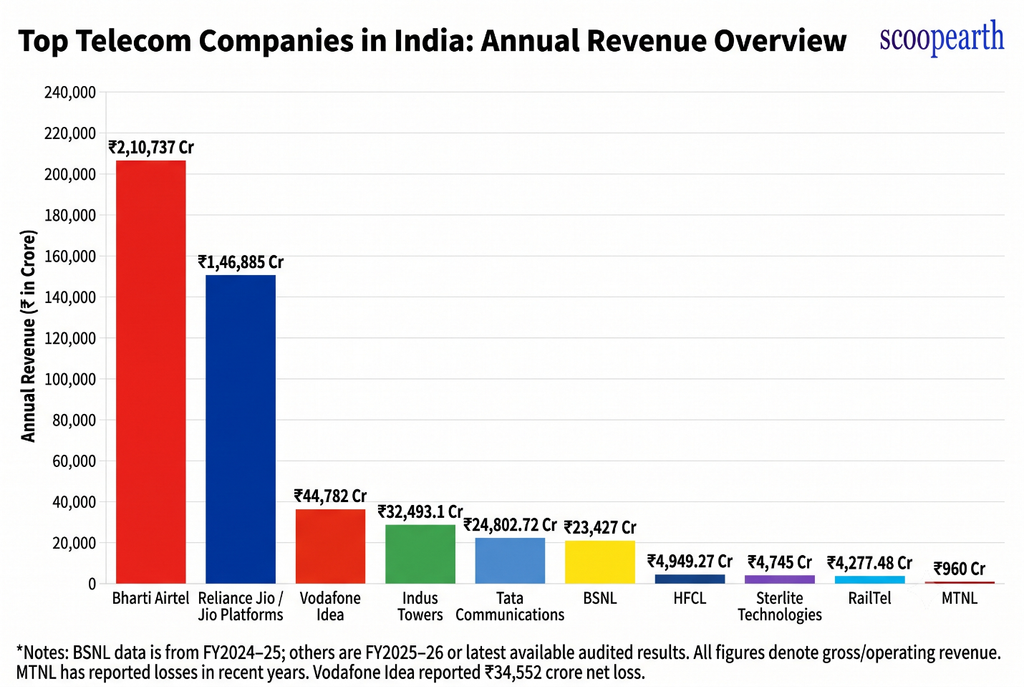
The following table provides a quick comparison of the latest financial information cited in this article. The figures are not directly comparable in every case because these companies have different business models.

CompanyLatest financial yearRevenueNet profit or loss
Reliance Jio / Jio PlatformsFY2025–26₹1,46,885 croreSee published annual results
Bharti AirtelFY2025–26₹210,737 croreSee published annual results
Vodafone IdeaFY2025–26₹44,782 crore₹34,552 crore*
BSNLFY2024–25Total income ₹23,427 croreLoss of ₹2,414 crore
Tata CommunicationsFY2025–26₹24,802.72 crore₹996.85 crore
RailTelFY2025–26Operating revenue ₹4,277.48 crore₹346.32 crore
Indus TowersFY2025–26₹32,493.1 crore₹7,144.9 crore
MTNLLatest audited results₹960 croreReported losses in recent years
Sterlite TechnologiesFY2025–26₹4,745 crore₹56 crore
HFCLFY2025–26₹4,949.27 croreRefer to annual report

Conclusion

India’s telecommunications industry includes much more than companies selling mobile connections. Reliance Jio, Bharti Airtel and Vodafone Idea are major private mobile operators, while BSNL and MTNL represent the government-owned telecom sector. Tata Communications and RailTel provide important connectivity and network services, while Indus Towers, Sterlite Technologies and HFCL support the infrastructure and equipment needed to keep communication networks running.

Each company has a different role. Jio and Airtel focus on connecting consumers and businesses through mobile and broadband services. Vodafone Idea remains an important competitor despite its financial challenges. Tata Communications and RailTel help organisations access communication networks, while tower and equipment companies support the physical infrastructure behind those services.

Financial performance also varies considerably. A company with high revenue may have lower profits because of its operating costs, interest payments or exceptional expenses. Similarly, a company that reports a large one-time profit may not have experienced the same improvement in its regular business.

For ordinary consumers, network coverage, internet speed, customer support and plan prices are usually more important than a telecom company’s annual profit. For businesses and investors, however, revenue, profitability, debt, infrastructure investment and long-term growth provide a more complete picture.

Overall, these 10 companies represent different but important parts of India’s telecommunications industry. Together, they help support mobile communication, broadband access, digital services and the network infrastructure needed for India’s increasingly connected economy.

FAQs :

Which is the largest telecom company in India? 

Reliance Jio is one of India’s largest telecom companies by mobile subscriber base.

Which are the top telecom companies in India? 

Reliance Jio, Bharti Airtel, Vodafone Idea, BSNL and Tata Communications are among India’s major telecom companies.

Which telecom companies provide 5G services in India? 

Reliance Jio and Bharti Airtel are the leading private operators offering 5G services, with availability depending on location.

Is BSNL a government-owned telecom company? 

Yes, BSNL is owned by the Government of India.

What is the full form of Jio?

Jio is a brand name and does not have an official full form.

What is the full form of BSNL? 

BSNL stands for Bharat Sanchar Nigam Limited.

What is the full form of MTNL?

MTNL stands for Mahanagar Telephone Nigam Limited.

Which telecom company operates under the Vi brand?

Vodafone Idea Limited operates under the Vi brand.

Which telecom company provides RailWire broadband? 

RailWire is a broadband service associated with RailTel Corporation of India.

What does Tata Communications do? 

Tata Communications provides global network connectivity, cloud networking and digital communication services.

What is Indus Towers known for? 

Indus Towers provides mobile tower infrastructure used by telecom operators.

Which telecom companies provide fibre broadband in India? 

Reliance Jio, Bharti Airtel, BSNL and several regional providers offer fibre broadband services.

What is the difference between revenue and net profit? 

Revenue is the money a company earns from its business, while net profit is what remains after expenses and other applicable costs.

Why are telecom companies investing in 5G technology? 

They are investing in 5G to provide faster connectivity, support more devices and improve digital services.

What factors should people consider when choosing a telecom company? 

People should compare network coverage, internet speed, plan prices, customer support and service reliability.

Who Is Shantanu Naidu? His Career, Ratan Tata Connection & Life Story

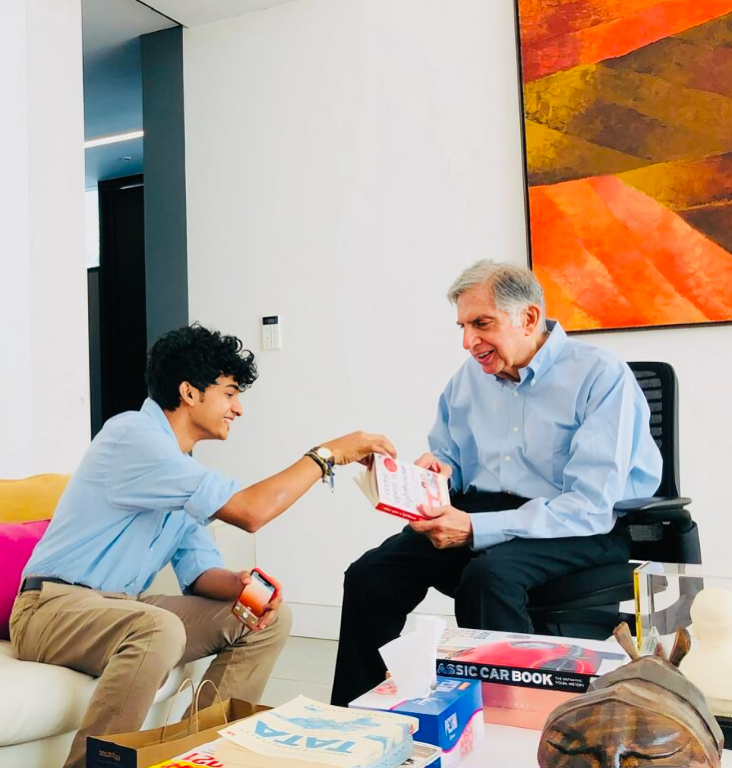
Shantanu Naidu with Ratan Tata, highlighting their friendship and professional connection

Introduction

Shantanu Naidu is an Indian entrepreneur, engineer, author, and business professional who became widely known for his close relationship with the late Ratan Tata, one of India’s most respected industrialists. However, his story is about much more than his friendship with a famous businessman. He has built his career around engineering, animal welfare, entrepreneurship, and finding practical solutions to everyday problems.

Image Courtesy: Shantanu Naidu via LinkedIn

From developing reflective collars to protect stray dogs from road accidents to starting Goodfellows, a companionship service for senior citizens, Naidu has worked on ideas that aim to make people’s lives better. His journey also shows how a simple idea, when supported by hard work and the right guidance, can grow into something meaningful.

His connection with Ratan Tata began through their shared concern for animals and gradually developed into a close professional and personal relationship. After working with Tata for several years, Naidu moved to Tata Motors in 2025 as General Manager and Head of Strategic Initiatives.

But who is Shantanu Naidu beyond his connection with Ratan Tata? What is his educational background, how did he build his career, and what are the latest available financial figures related to his business? Let’s explore his life story in detail.

Who Is Shantanu Naidu?

Image Courtesy: Shantanu Naidu via LinkedIn

Shantanu Naidu is an Indian professional known for his work in engineering, business strategy, social entrepreneurship, and animal welfare. He first attracted public attention through Motopaws, an initiative that aimed to make stray dogs more visible to motorists at night.

His work eventually brought him into contact with Ratan Tata, who supported the idea and encouraged Naidu to continue developing it. Their relationship became one of the most talked-about aspects of Naidu’s life.

Naidu later joined Tata Sons and worked closely with Ratan Tata. He also founded Goodfellows, a startup designed to provide companionship to senior citizens who may experience loneliness or lack regular social interaction.

In February 2025, Naidu announced that he was moving to Tata Motors as General Manager and Head of Strategic Initiatives. The role also had personal meaning for him because his father had worked at the company’s plant.

Here is a quick overview of his background.

Full nameShantanu Naidu
NationalityIndian
ProfessionEngineer, entrepreneur, author and business professional
Engineering educationMechanical engineering
Management educationMBA from Cornell University’s Johnson Graduate School of Management
Known forHis association with Ratan Tata, Motopaws and Goodfellows
Social initiativeMotopaws, focused on stray dog safety
StartupGoodfellows, focused on companionship for senior citizens
Tata Group careerJoined Tata Sons in 2018; moved to Tata Motors in 2025
BookI Came Upon a Lighthouse: A Short Memoir of Life with Ratan Tata

These details are based on published accounts and his professional background. His career combines technical knowledge with an interest in solving real-world social problems.

Early Life and Family Background

Shantanu Naidu grew up in Pune, Maharashtra, in a family with a connection to the Tata Group. His father worked at Tata Motors, while earlier generations of his family also had links to Tata companies.

This background gave him an early connection to the organisation, but his later achievements came from his own education, professional work, and entrepreneurial ideas.

One of the most interesting details about his early life is that he did not begin his career by trying to become famous or build a relationship with a well-known industrialist. His interest in protecting stray dogs led him towards a project that eventually changed his professional life.

Naidu has spoken about his respect for his family and the influence of older people in his life. This interest in learning from different generations later became relevant to his work with Goodfellows, where the focus is on improving the lives of senior citizens.

Education and Academic Journey

Naidu studied mechanical engineering and later pursued an MBA at Cornell University’s Johnson Graduate School of Management in the United States.

His engineering education helped him understand technical problems and develop practical solutions. His management education added business knowledge, leadership skills, and an understanding of entrepreneurship.

During his time at Cornell, he received recognition for his work and participation in student activities. His professional profile lists the Hemmeter Entrepreneurship Award and the Johnson Leadership Case Competition among his achievements.

How Did Shantanu Naidu Meet Ratan Tata?

Image Courtesy: tata.com / Official Website

Shantanu Naidu’s relationship with Ratan Tata began around 2014 through a shared concern for stray dogs. Naidu noticed that stray dogs were vulnerable to road accidents, particularly at night when drivers could struggle to see them. He came up with the idea of using reflective collars that would make the animals more visible to motorists.

He developed the idea through Motopaws, an initiative that aimed to reduce accidents involving stray dogs. Naidu’s work eventually reached Ratan Tata, who was known for his affection for animals. Tata showed interest in the project and supported Naidu’s efforts.

According to published accounts, this initial connection developed into a deeper relationship over time. Naidu eventually began working closely with Tata, building a professional association and a friendship based on trust and mutual respect.

Their relationship attracted attention because it was not built around business deals alone. They shared an interest in animal welfare and a belief that small actions could make a difference in people’s lives.

Naidu often described Tata as a mentor who helped him learn about life, work, and responsibility. Their story became an example of how a young professional’s initiative can attract the attention of an experienced leader.

Career at Tata Sons and Working With Ratan Tata

Video Source: Shantanu Naidu Official YouTube Channel

After developing a relationship with Ratan Tata through Motopaws, Naidu joined Tata Sons in 2018. He subsequently worked closely with Tata, assisting him on professional matters and initiatives.

Working with an experienced business leader gave Naidu exposure to a different side of the corporate world. He could observe how major decisions were approached, how different stakeholders were considered, and how business leadership could be connected with social responsibility.

However, it is important to understand that Naidu’s career was not limited to being Ratan Tata’s assistant. His engineering background, entrepreneurial projects, management education, and work on social initiatives were also important parts of his development.

His association with Tata helped him gain public recognition, but it also placed him in a position where his work and personal experiences attracted considerable interest.

Goodfellows: His Startup for Senior Citizens

Image Courtesy: Goodfellows / Official Website

Goodfellows is one of Naidu’s most notable entrepreneurial ventures. It was created to help senior citizens who experience loneliness or do not have regular companionship in their daily lives.

As people grow older, their social circles can become smaller. Children may move to other cities or countries for work, friends may become less available, and everyday conversations can become less frequent. While medical care and physical assistance are important, emotional well-being also matters. Many older people want someone who can spend time with them, listen to their stories, accompany them during activities, and provide friendly company.

Image Courtesy: Shantanu Naidu Official YouTube Channel

Ratan Tata backed Goodfellows in its early stages, helping draw attention to the problem of loneliness among older people. His support also showed that the venture addressed a social need that deserved more attention.

Goodfellows stands out because it approaches elder care from a human perspective. It recognises that older adults need more than physical support; they also need conversation, friendship, and a sense of connection.

Shantanu Naidu’s New Role at Tata Motors

In February 2025, Naidu announced that he was joining Tata Motors as General Manager and Head of Strategic Initiatives. The move was an important step in his professional journey. After spending years working closely with Ratan Tata at Tata Sons, he was taking on a role within one of India’s major automobile companies.

For Naidu, the move also had a personal connection. His father had worked at the Tata Motors plant, and Naidu recalled watching his father return home from work when he was a child.

His appointment brought his career back to a company that had been part of his family’s history. It also offered an opportunity to apply his experience in business, entrepreneurship, and strategic work within a large organisation.

Shantanu Naidu’s Book: I Came Upon a Lighthouse

Naidu also shared his experiences with Ratan Tata through his book, I Came Upon a Lighthouse: A Short Memoir of Life with Ratan Tata, published by HarperCollins India in 2021.

Image Courtesy: Shantanu Naidu via LinkedIn

The book offers a personal account of their relationship. Instead of focusing only on Tata’s business achievements, it explores the everyday experiences, conversations, and moments that shaped their bond.

The book is useful for readers who want to understand the person behind the public image of Ratan Tata. It presents a more personal view of the industrialist through Naidu’s experiences as someone who worked with him closely.

What Happened After Ratan Tata’s Death?

Ratan Tata passed away on October 9, 2024. His death led to tributes from business leaders, public figures, employees, and people who had been inspired by his work. For Naidu, the loss was deeply personal. Their relationship had grown beyond a conventional professional arrangement, and Tata had become an important mentor and friend.

Naidu’s public association with Tata had already made him well known, but the period after Tata’s death brought even more attention to their relationship. In 2025, reports also highlighted provisions in Tata’s will relating to Naidu. According to published reports, Tata’s will covered Naidu’s MBA expenses at Cornell University and transferred Tata’s stake in Goodfellows to Naidu.

Shantanu Naidu’s Net Worth and Income

Many readers search online for Shantanu Naidu’s net worth, salary, and personal income. However, there is no reliably verified public figure that establishes his total net worth as of October 2026.

It is important to separate three different things:

  • Personal income: Money he earns through employment, business activities, or other sources.
  • Business revenue: Money earned by a company such as Goodfellows.
  • Net worth: The value of a person’s assets after subtracting liabilities.

Goodfellows’ reported revenue of ₹84.9 lakh in FY2024–25 is a business figure. It does not mean that Naidu personally earned ₹84.9 lakh. A company’s revenue must cover its operating expenses and other costs before any profit can be determined.

Similarly, Tata’s reported transfer of his stake in Goodfellows to Naidu does not establish the value of Naidu’s overall wealth. An accurate calculation would require reliable information about the value of his assets, ownership interests, liabilities, and other income.

Therefore, it is better to avoid online claims that assign him a specific net worth without clear evidence.

Conclusion

Shantanu Naidu’s life story is an example of how a practical idea can open unexpected doors. His journey began with an interest in protecting stray dogs, developed through his engineering and management education, and grew through his work with Motopaws, Tata Sons, and Goodfellows.

His connection with Ratan Tata brought him into the public spotlight, but his own projects and professional choices are also important parts of his story. From animal welfare to companionship for senior citizens, he has explored ways to make everyday life better for others.

His move to Tata Motors in 2025 marked another important stage in his career. Meanwhile, Goodfellows’ reported revenue growth shows that its business activity expanded between FY2023–24 and FY2024–25, although its latest comparable net income figure could not be verified.

Ultimately, Naidu’s journey is not only about knowing a famous industrialist. It is also about identifying problems, taking initiative, learning from others, and turning ideas into useful work. These lessons make his story relevant to students, young professionals, and aspiring entrepreneurs who want to build careers that combine professional growth with a positive impact on society.

Frequently Asked Questions (FAQs)

Who is Shantanu Naidu?

Shantanu Naidu is an Indian engineer, entrepreneur, author, and business professional known for his relationship with Ratan Tata, his animal welfare initiative Motopaws, and his senior companionship startup Goodfellows.

Why is Shantanu Naidu famous?

He became widely known after his work on reflective collars for stray dogs attracted Ratan Tata’s attention. Their relationship later developed into a close professional and personal bond.

What is Shantanu Naidu’s educational qualification?

He studied mechanical engineering and later completed an MBA at Cornell University’s Johnson Graduate School of Management.

How did Shantanu Naidu meet Ratan Tata?

Their association began around 2014 when Naidu developed Motopaws, an initiative to improve stray dogs’ visibility at night. Ratan Tata supported the idea because of their shared concern for animals.

What is Motopaws?

Motopaws is an animal welfare initiative that uses reflective collars to help motorists see stray dogs more easily at night, with the aim of reducing road accidents.

What is Goodfellows?

Goodfellows is a companionship service for senior citizens. It connects older adults with younger companions who can spend time with them and help reduce loneliness.

What is Shantanu Naidu’s role at Tata Motors?

In February 2025, Naidu announced that he was joining Tata Motors as General Manager and Head of Strategic Initiatives.

Did Ratan Tata invest in Goodfellows?

Yes. Ratan Tata supported Goodfellows in its early stages. Published reports have also discussed his stake in the venture and its transfer under his will.

What is Goodfellows’ latest reported revenue?

Inc42 reported revenue of approximately ₹84.9 lakh for FY2024–25, compared with approximately ₹42 lakh for FY2023–24.

What was Goodfellows’ net income in FY2024–25?

A comparable, independently verified net income or net loss figure for FY2024–25 was not available in the sources reviewed. The company reported a net loss of approximately ₹18.3 lakh for FY2023–24.

What is Shantanu Naidu’s net worth?

His total personal net worth has not been reliably established through public financial information. Goodfellows’ revenue should not be treated as his personal income or wealth.

What book did Shantanu Naidu write about Ratan Tata?

He wrote I Came Upon a Lighthouse: A Short Memoir of Life with Ratan Tata, published by HarperCollins India in 2021.

Did Shantanu Naidu inherit anything from Ratan Tata?

Published reports stated that Tata’s will covered Naidu’s MBA expenses at Cornell and transferred Tata’s stake in Goodfellows to him. These reported provisions do not establish his overall net worth.

What is the main purpose of Goodfellows?

Its main purpose is to provide companionship and social interaction to older adults who may feel lonely or have limited opportunities to spend time with others.

What can young people learn from Shantanu Naidu?

His journey highlights the value of solving real problems, building useful skills, learning from mentors, developing meaningful relationships, and combining business goals with social responsibility.

Miss Rachel Net Worth: YouTube Earnings, Career, Business & Lifestyle

Miss Rachel Net Worth

Ms. Rachel became one of the biggest children’s creators on YouTube after starting with videos made for babies and toddlers. Her real name is Rachel Griffin Accurso, and her content focuses on first words, songs, numbers, colours and early communication.

She did not start out as a full-time YouTuber. Rachel studied music education, worked as a teacher and later began making videos after learning more about speech development through her son.

The channel grew quickly. Ms. Rachel now has millions of subscribers and billions of views on YouTube.

Her success has also moved outside the platform. She has content on Netflix, a toy line, books and other products aimed at young children.

This has made Miss Rachel net worth a common search. There is no confirmed figure. Some websites estimate her net worth at around $50 million, while Forbes has reported annual earnings of about $26 million. The Forbes number refers to earnings, not her total personal wealth.

Ms. Rachel at a Glance

DetailInformation
Real NameRachel Griffin Accurso
Known AsMs. Rachel
ProfessionEducator, YouTuber, singer and children’s content creator
Estimated Net WorthNot publicly confirmed
Online EstimatesUp to around $50 million
Forbes Earnings EstimateAround $26 million
HusbandAron Accurso
ChildrenTwo
Known ForToddler learning videos and Songs for Littles
Other WorkNetflix, toys, books, music and licensed products

What Is Miss Rachel’s Net Worth in 2026?

There is no verified Miss Rachel net worth figure in 2026.

Some celebrity finance websites put her wealth at around $50 million, but Rachel has never released information about her savings, investments, property or total personal assets.

The $26 million figure connected with her name comes from Forbes. That was an estimate of what she earned during the year, not an estimate of everything she owns.

Rachel now earns from several parts of the Ms. Rachel business. YouTube is still a major source, but she also has Netflix content, toys, books, music and licensed products.

The amount she personally receives from each of those areas has not been made public.

She Was a Teacher Before Becoming Famous Online

Rachel had a background in education before YouTube became her job.

She studied music education and later completed graduate study connected with early childhood education. She also worked as a music teacher in New York City.

Her son later became part of the reason she looked more closely at speech and language development.

Rachel has spoken publicly about him having a speech delay. While looking for ways to help him, she became interested in how very young children learn words and communicate. That experience later influenced the way she made her videos.

She Started the Channel With Her Husband

Rachel and her husband, Aron Accurso, started making educational videos for young children in 2019. The videos used songs, repetition, gestures and simple words. Rachel often spoke slowly and repeated the same word several times so children could follow along.

Parents started sharing the videos. The channel became known for Songs for Littles and later grew under the Ms. Rachel name. The videos were made mainly for babies, toddlers and preschool-age children.

Her YouTube Channel Became Huge

YouTube is still the biggest part of Ms. Rachel’s audience. Her channel has grown to more than 20 million subscribers and billions of total views.

Some individual videos have been watched hundreds of millions of times. Children also tend to watch the same videos repeatedly. A toddler may watch a first-words video many times rather than only once.

That has helped older Ms. Rachel videos continue gaining views long after they were uploaded.

How Much Does Ms. Rachel Make From YouTube?

Rachel has never shared her exact YouTube income. Third-party estimates vary widely. Some websites have estimated monthly income from around $77,000 to more than $1 million, depending on views and advertising rates.

These numbers are not confirmed payments from YouTube.

The real amount can change depending on how many views her videos receive, where viewers are located and how much advertisers are paying.

Her channel receives billions of views, so YouTube advertising is clearly a large part of the business.

There is still no public figure showing exactly how much Rachel receives from the platform.

Forbes Estimated Her Earnings at $26 Million

Forbes has listed Ms. Rachel among the world’s highest-earning online creators. Its recent estimate put her annual earnings at around $26 million. That number includes more than YouTube advertising.

By that point, Rachel had already expanded into toys, streaming, books and other products. Her earnings have grown as the Ms. Rachel name has moved beyond the original YouTube channel.

Ms. Rachel Is Also on Netflix

Ms. Rachel expanded to Netflix in 2025. The streaming service began carrying episodes based on topics such as first words, songs, phonics, numbers, colours and shapes.

The Netflix release gave parents another place to watch her videos. It also introduced the programme to families who may not regularly use YouTube. The amount Netflix paid for the content has not been disclosed.

Conclusion

The exact Miss Rachel net worth is not public. Rachel Griffin Accurso worked as a teacher before starting educational videos for babies and toddlers.

Those videos later became one of the biggest children’s channels on YouTube. She now earns from much more than YouTube. Netflix carries her content, while toys, books and other learning products are sold under the Ms. Rachel name.

Forbes has estimated her annual earnings at around $26 million. Some celebrity finance websites estimate her net worth at about $50 million.

Rachel has never confirmed her total personal wealth.

Frequently Asked Questions

What is Miss Rachel’s net worth in 2026?

There is no confirmed figure for Miss Rachel’s net worth. Some websites estimate her wealth at around $50 million, but Rachel has never released her personal financial records.

How much does Ms. Rachel make per year?

Forbes has estimated Ms. Rachel’s annual earnings at around $26 million. Her actual yearly income has not been made public.

What is Ms. Rachel’s real name?

Ms. Rachel’s real name is Rachel Griffin Accurso.

How does Ms. Rachel make money?

Rachel earns money from YouTube, Netflix, toys, books, music and other products connected with the Ms. Rachel brand.

How much does Ms. Rachel make from YouTube?

Her exact YouTube income is private. Outside estimates vary widely and can change depending on monthly views and advertising rates.

Is Ms. Rachel on Netflix?

Yes. Ms. Rachel content became available on Netflix in 2025.

Does Ms. Rachel sell toys?

Yes. Her toy range includes dolls, plush toys, puzzles, flash cards and other learning products for young children.

Who is Ms. Rachel’s husband?

Ms. Rachel is married to Aron Accurso, who also works with her on the music and production of the programme.

Top 10 Drone Companies in USA

Top 10 drone companies in the USA featuring commercial, industrial, and defense drones

Drones are no longer just a military tool or a hobby gadget. In America, they now inspect bridges and power lines, help police and firefighters, map farms and construction sites, deliver medicine, and carry out surveillance and strike missions for the armed forces. A small group of US companies builds a large share of the drones, autonomy software, and uncrewed aircraft used across the country.

All ten companies below are headquartered in the United States. Some are fast-growing startups backed by venture capital, some are long-established defense contractors, and some are public companies that have been building unmanned aircraft for decades.

In this article, we’ll discuss the top 10 drone companies in the United States, based on their history, ownership, and the kind of drones they make.

Quick Comparison

RankCompanyFoundedOwner / FoundersHeadquartersCore Focus
1Anduril Industries2017Founded by Palmer Luckey and others; privately held, led by Palmer LuckeyCosta Mesa, CaliforniaAutonomous Military Drones & Counter-Drone Systems
2AeroVironment1971Founded by Paul MacCready; publicly listed (NASDAQ: AVAV), led by CEO Wahid NawabiArlington, VirginiaSmall Military Drones & Loitering Munitions
3Skydio2014Founded by Adam Bry, Abraham Bachrach & Matt Donahoe; privately held, led by CEO Adam BrySan Mateo, CaliforniaAI-Powered Enterprise & Public Safety Drones
4General Atomics Aeronautical Systems (GA-ASI)1955 (parent company)Privately held by the Blue family; GA-ASI is led by Linden BluePoway, CaliforniaLarge Military Drones (MQ-9 Reaper)
5Shield AI2015Founded by Brandon Tseng, Ryan Tseng & Andrew Reiter; privately heldSan Diego, CaliforniaAI Pilot Software & V-BAT Drones
6Kratos Defense & Security Solutions1994Publicly listed (NASDAQ: KTOS), led by CEO Eric DeMarcoSan Diego, CaliforniaJet-Powered Combat & Target Drones
7Northrop Grumman1994 (current company)Publicly listed (NYSE: NOC), led by Chair & CEO Kathy WardenFalls Church, VirginiaHigh-Altitude Surveillance Drones
8Red Cat Holdings2009Publicly listed (NASDAQ: RCAT), led by CEO Jeff ThompsonSan Juan, Puerto RicoSmall Tactical & First-Responder Drones
9Zipline2014Founded by Keller Rinaudo Cliffton and others; privately heldSouth San Francisco, CaliforniaDelivery Drones
10Insitu (Boeing)1994Founded by Tad McGeer & Steve Sliwa; wholly owned by BoeingBingen, WashingtonLong-Endurance Surveillance Drones

Anduril Industries – The Fastest-Rising Name in Autonomous Defense

Image Courtesy: Anduril Industries (Official Website)

  • Founded: 2017 
  • Owner: Founded by Palmer Luckey and others; privately held, led by Palmer Luckey 
  • Headquarters: Costa Mesa, California

Anduril was started in 2017 by Palmer Luckey, the founder of Oculus VR, together with a small team of defense and technology veterans. It set out to build modern military hardware that runs on software and artificial intelligence, instead of the slow, expensive programs of older contractors.

Its products include the Ghost drone, the Roadrunner counter-drone interceptor, the Altius loitering munition, and the Fury combat aircraft, all tied together by its Lattice software. In March 2026, the company signed a 10-year enterprise contract with the US Army with a ceiling of $20 billion. It is also building a large factory called Arsenal-1 in Ohio to produce uncrewed aircraft at scale.

What Anduril does: Builds autonomous drones, counter-drone systems, and AI software for military and border security missions.

Services: Ghost drones, Roadrunner interceptors, Altius loitering munitions, Fury combat aircraft, and Lattice command software.

AeroVironment – The Longest-Running US Drone Maker

Image Courtesy: AeroVironment (Official Website)

  • Founded: 1971 
  • Owner: Founded by Paul MacCready; publicly listed (NASDAQ: AVAV), led by CEO Wahid Nawabi 
  • Headquarters: Arlington, Virginia

AeroVironment was founded in 1971 by Paul MacCready, the engineer famous for human-powered and solar-powered aircraft. Over the decades, it became one of the main suppliers of small drones to the US military, starting with the hand-launched Raven.

Today, its best-known products are the Switchblade loitering munitions, the Puma and JUMP 20 drones, and the Red Dragon one-way attack drone. It expanded further by acquiring BlueHalo in 2025, which added space, laser, and counter-drone technology to its portfolio. It is publicly traded and works closely with the US Department of Defense and allied armies.

What AeroVironment does: Makes small military drones, loitering munitions, and related defense systems.

Services: Switchblade, Puma, Raven, JUMP 20, tactical missile systems, and counter-drone products.

Skydio – America’s Biggest Drone Manufacturer for Business Use

Image Courtesy: Skydio (Official Website)

  • Founded: 2014 
  • Owner: Founded by Adam Bry, Abraham Bachrach & Matt Donahoe; privately held, led by CEO Adam Bry 
  • Headquarters: San Mateo, California

Skydio was started in 2014 by three MIT-trained engineers who wanted drones that could fly themselves and avoid obstacles without a skilled pilot. It first sold consumer drones, but later focused on police, fire departments, utilities, and the military.

Its flagship Skydio X10 offers 360-degree obstacle avoidance and thermal imaging, and the Skydio Dock lets drones launch and land on their own from remote locations. In April 2026 the company raised a $110 million Series F at a $4.4 billion valuation and announced plans for a $3.5 billion US manufacturing investment over five years. Its position has also been helped by restrictions on Chinese-made drones such as DJI in the US.

What Skydio does: Makes self-flying drones and software for public safety, inspection, security, and defense.

Services: Skydio X10, X10D, R10, and F10 drones, Skydio Dock, and 3D scanning software.

General Atomics Aeronautical Systems – Maker of the MQ-9 Reaper

Image Courtesy: General Atomics Aeronautical Systems (Official Website)

  • Founded: 1955 (parent company General Atomics) 
  • Owner: Privately held by the Blue family; GA-ASI is led by Linden Blue 
  • Headquarters: Poway, California

General Atomics Aeronautical Systems (GA-ASI) is the drone arm of General Atomics, which was founded in 1955. It is the company behind the Predator and its larger successor, the MQ-9 Reaper, two of the most recognized military drones in the world.

GA-ASI also builds the Gray Eagle for the US Army, the MQ-9B SkyGuardian and SeaGuardian sold to allied nations, and the YFQ-42A combat drone developed under the US Air Force’s collaborative combat aircraft program. Its aircraft are far larger than small commercial drones and can stay in the air for a very long time.

What GA-ASI does: Makes large, long-endurance military drones for surveillance and strike missions.

Services: MQ-9 Reaper, MQ-9B SkyGuardian and SeaGuardian, Gray Eagle, and combat drone development.

Shield AI – AI Pilots for Drones in Hostile Environments

Image Courtesy: Shield AI (Official Website)

  • Founded: 2015 
  • Owner: Founded by Brandon Tseng, Ryan Tseng & Andrew Reiter; privately held 
  • Headquarters: San Diego, California

Shield AI was founded in 2015 by Brandon Tseng, a former Navy SEAL, along with his brother Ryan Tseng and Andrew Reiter. The company’s idea is to give aircraft an “AI pilot” that can fly missions without GPS or a radio link, which matters in places where the enemy jams signals.

Its software is called Hivemind, and it flies the company’s V-BAT, a vertical-takeoff drone that needs no runway. The V-BAT has logged more than 130 combat sorties in Ukraine since June 2024, in heavy electronic-warfare conditions. Hivemind is also being added to other aircraft, including larger combat drones.

What Shield AI does: Builds AI flight software and drones that work in contested, jammed environments.

Services: Hivemind autonomy software, V-BAT drones, and simulation and training tools.

Kratos Defense & Security Solutions – Fast, Jet-Powered Drones

Image Courtesy: Kratos Defense & Security Solutions (Official Website)

  • Founded: 1994 
  • Owner: Publicly listed (NASDAQ: KTOS), led by CEO Eric DeMarco 
  • Headquarters: San Diego, California

Kratos is a defense technology company that has grown through acquisitions since the 1990s. Today, a major part of its business is unmanned aircraft, ranging from target drones used to train pilots and test missiles to jet-powered “loyal wingman” aircraft.

Its best-known drone is the XQ-58 Valkyrie, a low-cost, high-speed jet drone designed to fly alongside crewed fighter jets. Kratos also makes the BQM-177 and other aerial targets used by the US Navy and Air Force, and it works on hypersonic test systems.

What Kratos does: Makes jet-powered combat drones and target drones for the military. 

Services: XQ-58 Valkyrie, BQM-177 target drones, unmanned systems, and hypersonic test vehicles.

Northrop Grumman – Builder of High-Altitude Surveillance Drones

Image Courtesy: Northrop Grumman (Official Website)

  • Founded: 1994 (current company, with roots going back much earlier) 
  • Owner: Publicly listed (NYSE: NOC), led by Chair & CEO Kathy Warden 
  • Headquarters: Falls Church, Virginia

Northrop Grumman is one of the largest defense companies in the country, formed in its current shape in 1994 when Northrop bought Grumman. It is best known for the RQ-4 Global Hawk, a jet-sized drone that flies at very high altitude for long periods to watch large areas.

It also builds the MQ-4C Triton, a maritime version of the Global Hawk used by the US Navy, and the MQ-8 Fire Scout helicopter drone. Drones are only one part of its business, which also includes bombers, space systems, and missiles.

What Northrop Grumman does: Makes large, high-altitude and maritime surveillance drones for the military.

Services: RQ-4 Global Hawk, MQ-4C Triton, MQ-8 Fire Scout, and other unmanned systems.

Red Cat Holdings – Small Drones for Soldiers and First Responders

Image Courtesy: Red Cat Holdings (Official Website)

  • Founded: 2009 
  • Owner: Publicly listed (NASDAQ: RCAT), led by CEO Jeff Thompson 
  • Headquarters: San Juan, Puerto Rico

Red Cat Holdings is a drone company that has grown by bringing smaller drone businesses under one roof. Its most important unit is Teal Drones, which makes the Black Widow, a small quadcopter chosen for the US Army’s short-range reconnaissance program.

The group also includes FlightWave Aerospace and the Fat Shark FPV business. It focuses on American-made drones built with components that meet US defense rules, so government buyers can use them without worrying about foreign parts.

What Red Cat does: Makes small, American-built tactical drones for soldiers, police, and first responders.

Services: Black Widow, Teal drones, FlightWave Edge 130, and FPV drone products.

Zipline – Drone Delivery at Scale

Image Courtesy: Zipline (Official Website)

  • Founded: 2014 
  • Owner: Founded by Keller Rinaudo Cliffton and others; privately held 
  • Headquarters: South San Francisco, California

Zipline started in 2014 delivering blood and medical supplies by drone in Rwanda, and later expanded to Ghana, Nigeria, and other countries. It then brought its service to the United States, working with hospitals and retailers.

Its drones fly to a customer’s location, lower a small package on a tether, and return to base. This makes Zipline one of the few drone delivery companies operating real, repeat deliveries at large scale, rather than just running tests.

What Zipline does: Runs drone delivery of medical supplies, groceries, and food.

Services: Zipline P1 and P2 delivery drones, hospital supply delivery, and retail delivery.

Insitu (Boeing) – Long-Endurance Drones for Surveillance

Image Courtesy: Insitu (Official Website)

  • Founded: 1994 
  • Owner: Founded by Tad McGeer & Steve Sliwa; wholly owned by Boeing 
  • Headquarters: Bingen, Washington

Insitu was started in 1994 in the Columbia River Gorge town of Bingen, Washington. Boeing acquired it in 2008, and it has operated as a Boeing subsidiary since.

It is best known for the ScanEagle, a small drone launched from a catapult that can fly for many hours, and the larger Integrator. Both are used for surveillance by the US military, allied forces, and some commercial customers, including at sea and in remote areas.

What Insitu does: Makes long-endurance surveillance drones for military, maritime, and commercial use.

Services: ScanEagle, Integrator, RQ-21A Blackjack, and drone data services.

Frequently Asked Questions (FAQs)

Which is the largest drone company in the USA? 

It depends on how you measure. By valuation and recent contracts, Anduril is the biggest of the startups. By size and experience in large military drones, General Atomics and Northrop Grumman lead. Skydio is the largest US maker of drones for business and public safety.

Which US company makes the MQ-9 Reaper? 

General Atomics Aeronautical Systems builds the MQ-9 Reaper, along with the Predator and the Gray Eagle.

Which drone company is the oldest on this list? 

General Atomics traces its roots to 1955, AeroVironment started in 1971, and Insitu and Kratos both date to 1994.

Which US drone companies are publicly traded? 

AeroVironment (AVAV), Kratos (KTOS), Northrop Grumman (NOC), and Red Cat Holdings (RCAT) are all listed on US stock exchanges. Anduril, Skydio, Shield AI, and Zipline are privately held, and Insitu is owned by Boeing.

Which company is best known for AI-piloted drones? 

Shield AI is known for its Hivemind AI pilot, and Skydio is known for self-flying drones with obstacle avoidance.

Which company leads in drone delivery? 

Zipline is the best-known US drone delivery company, with large-scale operations in several countries.

Which companies make small drones for the military? 

AeroVironment, Red Cat Holdings (Teal Drones), Skydio, and Shield AI all supply small drones or related systems for military and government use.

Are drones regulated in the USA? 

Yes. The Federal Aviation Administration (FAA) regulates drone flights, including pilot certification, registration, and rules for flying beyond line of sight. Drones bought by the US government must also meet security rules on where their parts are made.

Why are American-made drones in demand? 

Restrictions on Chinese-made drones such as DJI have pushed police, utilities, and government agencies to look for domestic alternatives, which has helped companies like Skydio and Red Cat.

Why do these ten companies matter to everyday people? 

They build the drones that inspect infrastructure, help find missing people, deliver medicine, support emergency teams, and protect national security.

Conclusion

The drone industry in America is made up of fast-growing start-ups, established defense contractors, and publicly listed firms with decades of experience in the field. Anduril, AeroVironment, Skydio, General Atomics, Shield AI, Kratos, Northrop Grumman, Red Cat, Zipline, and Insitu are the major US drone manufacturers that offer the whole range of products from the smallest tactical quadcopters to jet-sized surveillance planes and delivery drones.

In general, the ten companies mentioned above can fulfill all the needs of the American market in various drones, from a small inspection drone hovering over one’s roof to a large plane watching over an entire ocean. For this reason, these companies will continue to play a vital role in defense, public safety, and new businesses such as drone delivery.

Top 10 Most Valuable Companies in USA

Top 10 Most Valuable Companies in USA

The biggest companies in the United States come from very different industries. NVIDIA makes chips used in artificial intelligence, Apple sells consumer devices, and Walmart serves millions of shoppers through its stores and online business. Microsoft, Alphabet and Amazon have also built large businesses around software, cloud computing and digital services.

Market capitalisation is one way to compare these companies. It measures the total market value of a company’s outstanding shares, based on its share price. It does not show how much cash a company holds or how much revenue it earns.

Technology businesses make up much of this list, but they are not the only ones worth watching. Walmart represents retail, Tesla makes electric vehicles, and Berkshire Hathaway owns businesses in insurance, rail transport, energy and other sectors.

The following list covers ten companies from the supplied ranking, along with their main businesses and approximate market capitalisations. The figures are ranges from the supplied sources, so they should not be treated as valuations recorded on the same date.

Quick Look at the Top 10 Most Valuable Companies in USA

RankCompanyIndustryApprox. Market Capitalisation
1NVIDIASemiconductors and AI computing4.50T–4.85T
2MicrosoftSoftware and cloud computing3.03T–3.89T
3AppleConsumer electronics3.81T–3.98T
4Alphabet (Google)Search, advertising and cloud2.98T–4.62T
5AmazonE-commerce and cloud computing2.37T–2.85T
6Meta PlatformsSocial media and advertising1.55T–1.79T
7BroadcomSemiconductors and software1.59T–1.98T
8TeslaElectric vehicles and energy1.43T–1.44T
9WalmartRetailAround $1.05T
10Berkshire HathawayInsurance and investments1.02T–1.08T

Note: Market capitalisation changes with share prices. The company order above follows the supplied list and may not match a live market-cap ranking.

1. NVIDIA

IndustrySemiconductors and AI computing
Approx. Market Capitalisation4.50trillion–4.85 trillion
Main BusinessGPUs, AI chips and computing systems

NVIDIA is best known for its graphics processing units (GPUs), which power gaming computers, data centres and many AI systems. Its chips help train AI models and run the applications built around them.

The company also sells networking products, complete computing systems and software. These products work together in data centres, where businesses need large amounts of computing power to process information and run AI workloads.

Demand for AI infrastructure has made NVIDIA a major supplier to technology companies and cloud service providers. Its products are used in systems that support everything from AI assistants to scientific computing.

NVIDIA’s market value reflects investor expectations about the future of AI, as well as its existing semiconductor business. Competition, customer spending and changes in demand for computing hardware can all affect its valuation.

Main Business Areas

  • Graphics processing units (GPUs)
  • AI and data-centre computing
  • Gaming hardware
  • Networking products
  • Computing software and platforms

2. Microsoft

IndustrySoftware and cloud computing
Approx. Market Capitalisation3.03trillion–3.89 trillion
Main BusinessSoftware, cloud services and AI tools

Microsoft sells software used by individuals, businesses and large organisations. Windows, Microsoft 365, Teams and its enterprise products are part of its established business, while Azure gives customers access to cloud computing services.

Companies use Azure to store data, run applications and manage computing workloads without having to build all the infrastructure themselves. Microsoft has also added AI features to its software and cloud products.

Its business reaches customers in several ways. Individuals use Windows and Microsoft 365, while organisations rely on Microsoft for email, collaboration, security and other everyday operations.

Microsoft’s range of products gives it more than one source of revenue. Its position in business software and cloud computing is also an important part of how investors assess the company.

Main Business Areas

  • Windows operating system
  • Microsoft 365 and Teams
  • Azure cloud computing
  • Enterprise software
  • AI tools and services

3. Apple

IndustryConsumer electronics and technology
Approx. Market Capitalisation3.81trillion–3.98 trillion
Main BusinessDevices, accessories and digital services

Apple sells the iPhone, Mac computers, iPad tablets, Apple Watch and other consumer devices. Many customers use several Apple products together, with services such as iCloud helping them share files, photos and other information across their devices.

The iPhone remains central to the business. Apple also earns money from accessories, the App Store, subscriptions and services such as Apple Music.

This combination of devices and services is important to Apple’s business. A customer may buy an iPhone first and later purchase an Apple Watch, AirPods or another device. They may also pay for digital services after buying the hardware.

Apple’s market capitalisation reflects its large customer base, established product range and investors’ expectations for future sales. Demand for new devices and the growth of its services business both matter to its performance.

Main Business Areas

  • iPhone
  • Mac and iPad
  • Apple Watch and AirPods
  • App Store
  • iCloud and digital subscriptions

4. Alphabet (Google)

IndustryOnline search, advertising and cloud computing
Approx. Market Capitalisation2.98trillion–4.62 trillion
Main BusinessGoogle services, advertising and cloud technology

Alphabet is the parent company of Google. Its products include Google Search, YouTube, Android, Google Maps and Google Cloud.

Advertising provides a large part of Alphabet’s revenue. Businesses pay to reach users through Google Search and other advertising services. YouTube also earns money from advertising and paid subscriptions.

Google Cloud serves businesses that need computing, storage, data management and AI services. Alphabet also invests in other technology projects, including autonomous driving through Waymo.

The company has to keep its services useful as the way people find information changes. Competition in online search and the growing use of AI tools are important issues for its business.

Alphabet’s market value reflects its advertising operations, cloud business and expectations for its technology investments.

Main Business Areas

  • Google Search
  • YouTube
  • Digital advertising
  • Google Cloud
  • Android and Google Maps
  • Other technology projects

5. Amazon

IndustryE-commerce and cloud computing
Approx. Market Capitalisation2.37trillion–2.85 trillion
Main BusinessOnline retail, AWS and digital services

Amazon sells products through its online store and marketplace, covering categories such as electronics, clothing, groceries and household goods. Third-party sellers also use Amazon to reach customers.

Retail is only one part of the company. Amazon Web Services (AWS) provides cloud computing, storage, databases and other technology services to businesses. Amazon also earns money from advertising, Prime subscriptions and services for sellers.

AWS serves a different market from the online store. Businesses use its infrastructure to run applications and manage data, while shoppers use Amazon to buy products. Having both operations gives the company several sources of revenue.

Amazon’s performance depends on its retail business, cloud services and the costs of running its large delivery and fulfilment network. Its market value reflects investor expectations for these different operations.

Main Business Areas

  • Online retail and marketplace
  • Amazon Web Services (AWS)
  • Prime subscriptions
  • Digital advertising
  • Warehousing and delivery

6. Meta Platforms

IndustrySocial media and digital advertising
Approx. Market Capitalisation1.55trillion–1.79 trillion
Main BusinessSocial platforms, advertising and virtual reality

Meta Platforms owns Facebook, Instagram, WhatsApp and Messenger. People use these services to share content, communicate and follow businesses, creators and public figures.

Advertising is the company’s main source of revenue. Businesses pay to show ads to users on its platforms, making Meta an important part of the digital advertising market.

Meta also invests in artificial intelligence and virtual and augmented reality. Its Reality Labs division develops products such as Quest headsets, while AI supports features across its platforms and helps improve its advertising systems.

The company needs to keep people using its apps and give advertisers reasons to continue spending. Changes in user habits, competition and privacy rules can affect how its business develops.

Main Business Areas

  • Facebook
  • Instagram
  • WhatsApp and Messenger
  • Digital advertising
  • Artificial intelligence
  • Virtual and augmented reality

7. Broadcom

IndustrySemiconductors and infrastructure software
Approx. Market Capitalisation1.59trillion–1.98 trillion
Main BusinessChips, networking and enterprise software

Broadcom makes semiconductor products used in networking, communications, broadband and data storage. Its components help move data between devices and through the systems used by businesses and data centres.

The company also sells infrastructure software used by large organisations to manage IT systems and other business operations.

As data centres expand, demand grows for equipment that connects servers and moves information quickly. Broadcom supplies some of the semiconductor technology used in this infrastructure.

Its software business gives the company another source of revenue alongside chip sales. Investors therefore look at both semiconductor demand and spending on enterprise software when assessing Broadcom.

Main Business Areas

  • Networking chips
  • Data-centre semiconductors
  • Broadband and communications products
  • Infrastructure software
  • Enterprise IT management

8. Tesla

IndustryElectric vehicles and energy
Approx. Market Capitalisation1.43trillion–1.44 trillion
Main BusinessElectric cars, battery storage and energy products

Tesla makes electric vehicles, including the Model 3 and Model Y, alongside other models in its range. The company also sells battery storage systems and develops charging infrastructure for electric vehicles.

Its energy business includes storage products for homes, businesses and larger installations. These systems store electricity for use when it is needed.

Tesla also develops vehicle software and driver-assistance technology. Investors often consider these projects when valuing the company, alongside its car sales and energy operations.

The company’s market value can move sharply as expectations change. Vehicle demand, production costs, competition and progress in newer technologies all affect how investors view Tesla’s future.

Main Business Areas

  • Electric vehicles
  • Battery energy storage
  • Solar energy products
  • Charging infrastructure
  • Vehicle software and driver-assistance systems

9. Walmart

IndustryRetail
Approx. Market CapitalisationAround $1.05 trillion
Main BusinessGrocery, general merchandise and online shopping

Walmart sells groceries, clothing, electronics, household goods and other everyday products. Its large store network and focus on low prices have made it a major retailer in the United States.

The company operates Walmart stores and Sam’s Club warehouses, alongside its online shopping business. Customers can shop in stores, order online and use pickup or delivery services where available.

Walmart has also expanded its digital operations. Its online marketplace gives other sellers access to customers, while advertising and membership services provide additional sources of revenue.

The retail business depends on keeping shelves stocked, managing inventory and controlling costs. Walmart also competes with other retailers on price, product choice and convenience.

Main Business Areas

  • Supermarkets and general merchandise
  • Walmart online marketplace
  • Sam’s Club
  • Grocery pickup and delivery
  • Advertising and membership services

10. Berkshire Hathaway

IndustryInsurance and diversified investments
Approx. Market Capitalisation1.02trillion–1.08 trillion
Main BusinessInsurance, operating companies and investments

Berkshire Hathaway owns companies in several industries. Its businesses include insurance, freight rail, energy, manufacturing, retail and services. This makes it different from companies such as NVIDIA or Apple, whose businesses are more closely tied to specific products and markets.

Insurance is one of Berkshire’s largest operations. The company also owns BNSF Railway, which transports freight across North America, and Berkshire Hathaway Energy, which operates utilities and other energy businesses. It has investments in publicly traded companies as well.

Berkshire uses money earned by its businesses to make investments and acquire other companies. Its results therefore depend on several factors, including insurance performance, the earnings of its subsidiaries and the value of its investments.

Main Business Areas

  • Insurance and reinsurance
  • BNSF Railway
  • Energy and utilities
  • Manufacturing
  • Retail and services
  • Investments in publicly traded companies

How Market Capitalisation Works

Market capitalisation is the total value of a company’s outstanding shares at the current share price. For example, if a company has 1 billion shares priced at $100 each, its market capitalisation is $100 billion.

This figure changes as the share price rises or falls. Changes in the number of shares can also affect it.

Market capitalisation does not tell you how much a company earns or how much money it has in the bank. Revenue is the money a business brings in from sales, while profit is what remains after expenses. Market capitalisation, on the other hand, reflects the price investors are willing to pay for its shares.

This is why a company with high sales does not automatically have the highest market value. Walmart sells products on a huge scale, while NVIDIA supplies chips and computing technology used in AI and data centres. Investors value each business based on its earnings, costs, growth prospects and other factors, not just its sales.

Frequently Asked Questions

Which company is ranked first in this list?

NVIDIA is ranked first in the supplied list, with an approximate market capitalisation of $4.50 trillion to $4.85 trillion.

What is market capitalisation?

Market capitalisation is the total market value of a company’s outstanding shares. It is calculated by multiplying the share price by the number of shares outstanding.

Are the most valuable companies also the richest?

Not necessarily. Market capitalisation measures the market value of a company’s shares. Revenue, profit, cash reserves and total assets measure different parts of its financial position.

Why are so many technology companies on the list?

Several companies on the list operate large software, semiconductor, cloud computing or digital advertising businesses. Investors also consider their future growth prospects when deciding what their shares are worth.

Does market capitalisation stay the same?

No. It changes as share prices move and can also change when the number of shares outstanding changes. A ranking can therefore look different from one trading day to the next.

Is Berkshire Hathaway a technology company?

No. Berkshire Hathaway is a diversified holding company with businesses in insurance, rail transport, energy, manufacturing, retail and other sectors.

Automobile sector reported strong growth as sales reached record heights in the second quarter

Automobile sector growth as vehicle sales reach record highs in the second quarter

Sales of domestic automobiles in various vehicle segments witnessed a considerable upsurge, going up by 18.2% year on year to 83.88 lakh units in the July-September period of 2026. As per the statistics released by the Society of Indian Automobile Manufacturers, passenger cars, two-wheelers, three-wheelers, and commercial vehicles have managed to achieve their highest-ever quarterly sales numbers. This overall rise clearly depicts an expansion in the entire spectrum of the automotive industry in India in Q2 FY 2026-27.

Segment-wise performance and expansion

According to the Society of Indian Automobile Manufacturers (SIAM), the sales of passenger vehicles increased by 30.7% to 13.61 lakh units during the second quarter of the FY 2026-27. Two-wheeler sales improved by 15.2% to cross the mark of 64.33 lakh. 

According to further checking, sales of three-wheelers jumped 23.6% to 2.85 lakh, while commercial vehicle sales increased by 28.7% to 3.09 lakh units. The second quarter witnessed robust recovery and growth in the market on a pan-Indian basis and was the best quarter for sales across all major segments, said Rajesh Menon, Director General of SIAM.

The utility vehicle class dominated the passenger vehicle market with a 68% share of overall sales. During the quarter, sales of utility vehicles rose 34.2% year-on-year, similar to an increase of 24.9% for passenger cars. 

Scooters were the key driver of growth in the 2-wheel segment, as sales increased 27.7%, while motorcycle sales grew 7.4%. These trends reflect changes in customer preference for particular vehicles in separate segments.

Industry perspectives and export dynamics

The strong performance of the automotive sector is largely explained by a number of factors linked to macroeconomic and structural dynamics, according to the apex industry body. The overall growth was driven by favorable affordability due to GST 2.0, robust rural and urban demand, favorable freight movement, infrastructure-supported growth, and a staggered replacement cycle among vehicle segments. This constituted an enabling environment for both consumers and businesses to invest in new means of transport.

Results of export performance have been mixed across categories for the quarter. While 2-wheeler shipments have climbed 27.7% to 16.5 lakh units, the segment has recorded its highest-ever shipment volume in Q2. Three-wheelers grew by 30.4%, to ship 1.6 lakh units, while commercial vehicles surged by 72.5%, outpacing over 41,000 units. 

At 2.29 lakh vehicles, a 5.2% drop, passenger vehicle exports were affected mainly by a higher base in the earlier periods and continued problems with logistics arising from the West Asia crisis. The Society of Indian Automobile Manufacturers anticipates the automotive market will experience positive growth momentum during the second half of the financial year 2026-27. 

The upcoming festive season, new vehicle releases, continuing infrastructure investments, fleet renewal needs, and predictable last-mile mobility requirements are expected to contribute to this continuity. SIAM President Shenu Agarwal said the industry would continue to build on the positive trend, reacting positively to the festive season but remaining slightly positive yet cautious due to geo-economic uncertainties in the market.

Conclusion

The domestic auto sector’s performance during the second quarter of financial year 26-27 revealed impressive resilience and growth, with total sales clocking in at 83.88 lakh vehicles, marking record sales across all of the major vehicle categories. Structural catalysts such as improved affordability of products under GST 2.0, strong rural and urban demand, and infrastructure development have driven this growth, but industry leaders are watchful about possible moderators. With internal challenges already subdued, sector leaders start the second half of the fiscal year on an optimistic note, citing festive demand and economic drivers as some of the major positive external risks in the global inflation pathway.

AdGraam secured ₹3 crore in a seed funding round led by Umair Mohammad

AdGraam raises ₹3 crore in seed funding led by Umair Mohammad

AdGraam is a performance marketing-focused, AI-driven creative intelligence platform. AdGraam has raised ₹3 crore in a seed funding round. This significant financial investment was led by Umair Mohammad. Umair Mohammad is the co-founder of Nitro Commerce. The capital raised will be directed towards strengthening the company’s professional team, its sales and marketing capabilities, enabling targeted international expansion, and the further development of its full range of products and solutions developed for global markets.

Genesis of AdGraam and traditional production method

AdGraam originated from a particular problem experienced by founders while they were operating active performance marketing campaigns for multiple consumer brands. Ashish Verma, Saad Mohammad, Sahil Bhatnagar, and Saksham are the founding team. 

Advertising platforms increasingly automated processes of media buying and audience selection, leaving the creative itself as an essentially important variable in campaign results. Brands had to come up with many more ads, variations, and iterations in order to get something to work well in the marketplace. 

This was a dramatic shift in the amount of creative work required for contemporary brands. If businesses are spending more than ₹1 crore on ads, then they might need to create 20-25 videos a week, which is a huge contrast to their previous 3-4 static ads and 1-2 video creatives. 

Conventional production systems are facing a difficult challenge to meet this growing demand. The close relationship with human creators often resulted in extended production timelines, and traditional video shoots were characterized by being costly and producing a high number of advertisements. 

The founders started by trying many different combinations of generative AI with the brands they were already utilizing to address this chokepoint. That technology ultimately enabled them to boost their level of creativity and find effective variations a lot quicker, which sparked an idea for them to eventually develop their internal tool into a complete standalone platform.

Advanced creative intelligence and strategic affordability

AdGraam has an offering that goes beyond creating video and pictures. The platform is designed to blend a brand’s advertising account data with ads from its competitors to deeply inform the whole creative process. 

AdGraam brings fundamental context to the backbones of the artificial intelligence algorithms used to create ads. The platform offers users considerable creative freedom in its creative generation method. 

AdGraam lets customers self-select models via detailed prompting with the Flow Builder or use the existing video agent to automatically tailor a suitable model for the particular task. 

AdGraam clearly wants to build its own private model. The advice offered by the platform removes a huge layer of inefficiency from traditional production processes for brands. 

Narrowing down the exact type of creative that drives positive results allows marketers to give their creative team far more specific briefs instead of cueing reiteration and trial and error. The company has two business models: a self-serve model and a managed service where the internal AdGraam team does the work for the client. 

The business is equally divided between these two avenues, but an increasing number of brands’ movement is happening toward the self-serve model. This self-service platform operates on a pay-to-go credit basis, meaning that the expense of creating content fluctuates with variables like the quantity of content created and video resolution.

By focusing on these local nuances and affordability, AdGraam is carving out a niche alternative, with an external focus on capitalising on the context, language and budgeting specifics of the Indian market. The founders were explicit that they wanted to create a platform that could create advertisements that would have a special appeal to Indian viewers, including authentic Indian faces and natural Hindi and English usage. 

Conclusion

By securing ₹3 crore in seed funding, AdGraam has achieved a significant milestone in its pursuit of growth in the competitive performance marketing industry. The company has successfully integrated creative research, ideation, ad generation, and performance analysis into a single suite, meeting a critical need in today’s digital marketing landscape for high volumes of cost-effective creative variants. Based on localized context, cutting-edge AI models, and flexible self-serve tools, AdGraam stands to become a key player in India as well as global markets and change the way brands customize creatives at scale.

Cosmochute secured $1.5 million in a pre-seed funding round led by Accel and Prosus Ventures

Cosmochute raises $1.5 million in pre-seed funding led by Accel and Prosus Ventures

Cosmochute raised $1.5 million in a pre-seed funding round. The new funding round is a significant step for the fledgling enterprise, as it provides the seeds to build its solid footing in the space infrastructure sector. The funding round was led by Accel and Prosus Ventures under the Atoms X programme. Apart from the lead investors, other investors in this financial round were the Deep-tech Acceleration Fund and Aerospace Acceleration Fund through IIMA Ventures, Operators Studio, and Chinmayi Muthyala. These collaborations show the evolving confidence and interest in space technology ventures, especially those addressing lunar infrastructure and space robotics, in the private sector. Cosmochute is one of seven startups chosen to participate in the first phase of the youth education program Atoms X, designed to help early-stage technology startups with high potential.

Founding vision and capital deployment

Janhavi Gore, Amit Chowdhary, and Dhruv Alok Sangal are three visionary entrepreneurs who founded Cosmochute this year. The company was co-founded with the mission to develop essential space robotics infrastructure unique to the developing lunar economy. 

The demand for reliable surface mobility and logistics infrastructure is growing quickly, due to a transition of lunar exploration from government-led scientific missions to commercial missions. The leadership team appreciated the need for a standardized system capable of providing regular lunar surface access. 

Through a partnership of know-how blending engineering, space technology, and business development, the founders put Cosmochute in a strong place to solve the particular problems that would be expected to arise from using machinery and infrastructure in extraterrestrial environments. Their vision also underscores a global trend toward sustainable space exploration and commercial use of celestial resources, with the lunar economy being a key focus.

The company’s official press release states that the newly acquired funds will be used to boost several critical business segments. The key spending involves focusing on intensive product development, further engineering investments, and the implementation of its commercial roadmap, as the company transitions to the next growth stage. 

The development of space-grade robotics requires a specific set of skills and tough testing that takes years to master, so the growth of the engineering team is a key priority for the startup. The strengthening of the product team enables Cosmochute to accelerate the technological readiness of its core products. 

This commercial roadmap will take the company through its conceptual design phase to market deployment, providing a solution to match the requirements of commercial clients and space agencies. These strategic investments in talent and technology are hedging bets on the startup’s market position.

Technological offerings and ecosystem integration

The LEAP programme is the pillar of Cosmochute’s technological offerings. LEAP is organized as a modular platform focused on payload transportation and deployment on the Moon. The cost and technical requirements of missions to the Moon have historically been expensive and mission-specific. This was resolved by incorporating a modular rover and trailer system with standard payload bays on the LEAP platform. 

This is an architectural design that enables seamless integration of multiple payloads from different clients or missions into a common mission architecture. The standardized transportation and deployment process allows the company to remove the need for unique engineering per mission. 

This modular concept significantly lowers the overall cost and operational simplicity of bringing scientific instruments, commercial hardware, and other essential equipment to the lunar surface, increasing the repeatability and economic attractiveness of lunar missions.

Cosmochute is actively establishing its lunar laboratories at IIMA Ventures’ incubation lab to assist with research and development. The strategic positioning offers the startup access to dedicated resources, mentorship, and a collaborative atmosphere that fosters deep-tech innovation. 

The company is firmly embedded in India’s larger space technology ecosystem, which includes a thriving ecosystem of private enterprises, venture investors and research organizations that proactively foster private sector engagement in the space economy. Cosmochute is set to extend the base capabilities of lunar mobility and space robotics with the LEAP platform technology.

In addition to lunar applications, the technology developed by the startup has potential for wider terrestrial and in-space applications where automated mobility and robotics are needed. The company is driven by the vision of creating a strong infrastructure that can support enduring commercial and scientific operations on the lunar surface.

Conclusion

The successful pre-seed funding, led by Janhavi Gore, Amit Chowdhary, and Dhruv Alok Sangal is a significant development in the field of private space robotics in the lunar economy. The startup has attracted prominent investors such as Accel, Prosus Ventures, and IIMA Ventures, ensuring it has the necessary backing to take its innovative LEAP platform forward. Cosmochute is currently focusing on modular rovers, standardized payload bays, and repeatable lunar transportation, solving key cost and complexity bottlenecks of space logistics. The company’s expansion of its engineering team, establishment of lunar-focused laboratories, and integration into the vibrant Indian space tech landscape create fertile ground for ongoing commercial and scientific lunar activities in the near future.

Confido Health secured $12.5 million in a Series A funding round led by Z47

Confido Health raises $12.5 million in Series A funding led by Z47

Confido Health has raised $12.5 million in a Series A funding round. Z47 led the funding round. The investment saw active participation from Existing Investors Together Fund and Blume Ventures. As per the official press release of the company, this new funding raised from the round will be used to expand its artificial intelligence platform for healthcare operations.

Company background and operational reach

Confido Health is mainly engaged in the development of sophisticated artificial intelligence agents that are tailored to perform routine but essential administrative functions in the healthcare industry. The functions performed include making appointments, verifying insurance details, and providing overall care coordination.

One of the unique aspects of the venture’s operations is that the platform can easily be integrated into the healthcare system using a simple no-code deployment process. This venture boasts a remarkable setup process of less than five minutes.

The innovative platform created by Confido Health is equipped with integration possibilities with over 50 different systems. These integrated platforms include EHRs, practice management systems, phones, billing platforms, and fax services to make sure that no changes to the existing tech stack of the healthcare provider are required.

Regarding its presence in the marketplace, the company currently operates from over 1,500 care locations, with the main emphasis made on independent practice groups in 27 states. With this massive operational network, Confido Health currently provides support to around 3200 providers, with an estimated 1 person in 50 patients able to directly engage their respective healthcare provider through these artificial intelligence agents.

Workflow automation and target specialties

The core technology of the platform uses patient information, individual referral details, and analytically accurate payer requirements collected during the intake stage to intelligently serve these needs. This information is then used to manage future administrative requests or functions, such as patient outreach and scheduling, efficiently. 

This built-in system allows for a single interaction to initiate multiple complex workflows, such as medical referrals, appointments, prescription refills, and payment processing, according to the company’s explanations. 

With remarkable business traction, Confido Health announced that its performance has increased 15x since the last investment, with AI handle rates above 95% on critical end-to-end office workflows. 

The company claims that its deployed platform can deliver on average up to three to five full-time equivalent operators within just three months of deployment. As part of pushing its content to a level of having influence within the medical community, Confido Health has purposefully chosen a few medical specialties to focus its operational tools. 

These specific areas are ophthalmology, optometry, physical therapy, dental care, primary care, and community care. The startup’s narrow focus is to ease administrative duties and improve the efficiency of operations for healthcare workers who often interact with numerous patients every day.

Conclusion

Confido Health’s commercial achievements and business operations are remarkable in such a competitive healthtech market. The startup now has a strong support system in its favor with an additional $12.5 million in Series A funding backed by Z47, as well as previous investments from Together Fund and Blume Ventures, ready for it to expand its artificial intelligence platform. Confido Health continues to redefine routine administrative patient care functions with high handle rates of manual tasks, streamlined workflows, and an excellent increase in operational capacity for independent practice groups in multiple states.