Zach Top Net Worth: Earnings, Songs, Country Music Career & Rise to Fame

Zach Top Net Worth

Zach Top grew up on a farm in eastern Washington, and honestly, you can hear it in his music. At a time when much of mainstream country has leaned pop, Top built his name by doing the opposite: going full neotraditional, and it worked. His debut album shot to No. 4 on the Billboard country charts, his single “I Never Lie” went viral on TikTok, and in 2025 he beat out several bigger names to win a Country Music Association Award.

Before we get into the numbers, one quick heads-up: there’s another country artist named Zach Bryan, a much more established, bigger-earning star, and the two names get mixed up online constantly. This article is specifically about Zach Top, and net worth estimates for him are, understandably for someone still early in a fast-rising career, all over the place, ranging from as low as $500,000 to as high as $6 million.

In this article, we’ll discuss Zach Top’s net worth, earnings, songs, country music career, and rise to Fame.

Quick Profile Overview

DetailInformation
Full NameZachary Dirk Top
Date of BirthSeptember 26, 1997
Age28 years old
BirthplaceSunnyside, Washington, United States
BackgroundGrew up on a farm in eastern Washington
GenreNeotraditional country; started with bluegrass
OccupationSinger-songwriter
Career Start2019
Record LabelLeo33, signed in 2023
Debut Album“Cold Beer & Country Music” (April 2024), reached No. 4 on Billboard Top Country Albums
Breakout Single“I Never Lie,” went viral on TikTok and became his first No. 1 on country radio
Major AwardWon a Country Music Association (CMA) Award in 2025, beating Shaboozey, Ella Langley, Tucker Wetmore, and Stephen Wilson Jr.
Second Album“Ain’t in It for My Health”
Most-Cited Net Worth Range$1.5 million to $3 million
Broader Reported Range$500,000 to $6 million

Who Is Zach Top?

Image Source: Pixabay

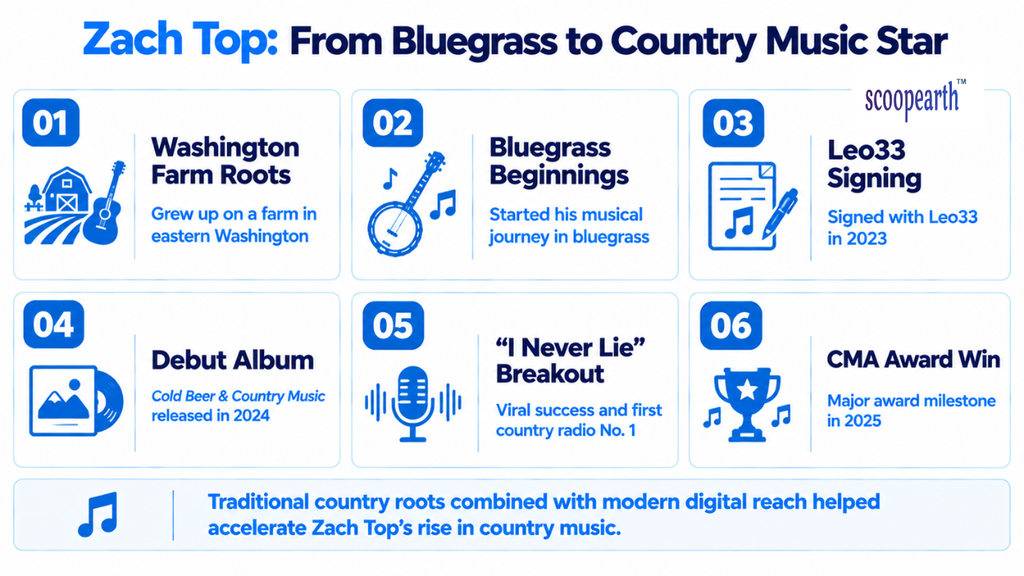
Zach Top, full name Zachary Dirk Top, is an American country music singer-songwriter born on September 26, 1997, in Sunnyside, Washington. He grew up on a farm in eastern Washington, an upbringing that shaped both his down-to-earth personality and the classic, traditional sound that’s become his signature. 

He began his music career in 2019, initially working within bluegrass before shifting toward the neotraditional country style he’s now known for, a deliberate throwback to the sound of country music’s earlier eras rather than the more pop-leaning direction much of the mainstream genre has taken.

He signed with the record label Leo33 in 2023, and his debut album, “Cold Beer & Country Music,” released in April 2024, quickly climbed to No. 4 on the Billboard Top Country Albums chart. The album’s second single, “I Never Lie,” went viral on TikTok and became his first No. 1 hit on country radio, launching him into much wider recognition. 

In 2025, he won a Country Music Association Award, beating out other rising names including Shaboozey, Ella Langley, Tucker Wetmore, and Stephen Wilson Jr., a genuinely significant milestone this early in his career.

Zach Top’s Net Worth

Image Source: Pixabay

Here’s the honest picture: net worth estimates for Zach Top are genuinely inconsistent, which makes sense for an artist whose real breakout only happened in 2024. Figures range from as low as $500,000 to as high as $6 million, with most of the more detailed sources landing somewhere between $1.5 million and $3 million.

Comparing the Estimates

SourceEstimated Net WorthNotes
Inkl / IBTimes UK$2 million to $3 million (2024), with potential to exceed $5 millionAlso cites estimated annual social media and streaming income of $400,000 to $600,000
Starbiohub$1.5 million to $2 million (2026)Describes this as expected to “grow significantly” as his career continues
Daily Wiki Bio$500,000 to $6 millionThe widest range found; also cites a mid-2025 report estimating annual income of $2.3 million to $2.9 million

The gap here makes sense once you consider his career timeline: his real commercial breakthrough only came with his April 2024 debut album, so there simply isn’t much financial history yet for trackers to build a confident, consistent estimate from. As his touring, streaming numbers, and catalog continue growing, it’s likely these estimates will narrow and climb together over the next few years, similar to how many young artists’ reported net worth evolves early in a fast-rising career.

Earnings

Image Source: Pixabay

Zach Top’s income comes from a mix of sources typical for a rapidly rising country artist.

  • Music sales and streaming: Revenue from his debut album, “Cold Beer & Country Music,” and his singles make up a core part of his income, with his song “Bad Luck” having been certified Gold in the United States and Platinum in Canada.
  • Touring: Earnings from his headline tours and opening slots for bigger country acts are described as a significant and growing income source.
  • Merchandise: Branded apparel and other merchandise sales add a steady income stream, a common revenue source for artists with a dedicated, growing fanbase.
  • Publishing and songwriting: As a co-writer on his own songs, he earns publishing royalties separate from performance and streaming income.
  • Social media and streaming income: One estimate places his annual income from social media and streaming platforms specifically at $400,000 to $600,000, with one analytics tool citing monthly earnings of $26,000 to $38,000, split nearly evenly between Instagram and TikTok.

Songs

Zach Top’s catalog is still relatively small compared to more established artists, but it’s grown quickly since his 2024 breakout. His debut album, “Cold Beer & Country Music,” is his most commercially significant project to date, reaching No. 4 on the Billboard Top Country Albums chart. Its single “I Never Lie” became his first country radio No. 1 after going viral on TikTok, a genuinely important moment for introducing him to a much wider audience beyond traditional country radio listeners.

His song “Bad Luck” also performed well commercially, peaking at No. 38 on the Billboard Hot Country Songs chart and earning Gold certification in the United States and Platinum certification in Canada. He’s since released a second album, “Ain’t in It for My Health,” continuing to build out his catalog with the same traditional country sound that’s become his calling card.
Zach Top: From Bluegrass to Country Music Star

Country Music Career

Image Source: Pixabay

What sets Zach Top apart in the current country music landscape is his deliberate commitment to a more classic, traditional sound at a time when much of the genre has leaned increasingly pop-influenced. He’s described his own role in interviews as being “in the right place at the right time,” positioning himself as part of a broader movement bringing listeners back toward the country music sound of earlier decades, while still connecting with a modern audience through platforms like TikTok.

His career has moved quickly since signing with Leo33 in 2023: a chart-climbing debut album in 2024, a viral crossover single, and a CMA Award win in 2025, all within just a couple of years of his major label-adjacent breakthrough. This pace suggests a career still very much in its early acceleration phase rather than one that’s already leveled off.

Rise to Fame

Zach Top’s path to recognition wasn’t a typical major-label fast track. He spent several years working in bluegrass and building his skills before shifting fully into the neotraditional country sound that would define his breakout. Signing with Leo33 in 2023 gave him the platform and support to release his debut album the following year, and it was that album, combined with “I Never Lie” going viral on TikTok, that truly accelerated his career.

Social media clearly played a real role in his rise, but he’s been careful to frame his success as rooted in something deeper than a single viral moment: a genuine, long-standing connection to traditional country music that goes back to his upbringing on a Washington farm. That combination, authentic roots plus modern platform reach, is a big part of why industry voices have started describing him as a leading figure in country music’s ongoing return to its traditional sound.

Frequently Asked Questions (FAQs)

1. What is Zach Top’s net worth?

Zach Top’s estimated net worth varies across online sources, with reported figures ranging from $500,000 to $6 million. Some estimates place his wealth between $1.5 million and $3 million. However, his exact net worth has not been publicly verified, and these figures should be treated as estimates.

2. How old is Zach Top?

Zach Top was born on September 26, 1997, in Sunnyside, Washington, United States. As of October 2026, he is 29 years old.

3. Is Zach Top the same person as Zach Bryan?

No, Zach Top and Zach Bryan are two different American country music artists. Although their first names are similar, they have distinct musical careers, discographies, and professional identities. They should not be confused when researching their biographies or net worth.

4. What is Zach Top’s most popular song?

One of Zach Top’s best-known songs is “I Never Lie,” which appeared on his debut album, Cold Beer & Country Music. The song gained popularity among country music listeners and helped expand his audience.

5. Did Zach Top win any major awards?

Yes, Zach Top won the Country Music Association’s 2025 New Artist of the Year award. The recognition marked an important milestone in his developing country music career.

6. What record label is Zach Top signed to?

Zach Top signed with Leo33 in 2023. His association with the label helped support the release and promotion of his music as he moved toward wider recognition in the country music industry.

7. What genre of music does Zach Top make?

Zach Top is known for neotraditional country music, a style that draws inspiration from classic country sounds, traditional instrumentation, and straightforward storytelling. He also has a background in bluegrass, which influenced his musical development.

8. How much does Zach Top earn from social media?

Some online analytics sources estimate Zach Top’s earnings from social media and streaming platforms at hundreds of thousands of dollars annually. However, such estimates vary and may not account for all expenses, contracts, royalties, or other revenue sources. His actual social media income has not been publicly confirmed.

9. What are Zach Top’s albums?

Zach Top released his debut album, Cold Beer & Country Music, in 2024. His subsequent album, Ain’t in It for My Health, continued his exploration of traditional country music. Both projects contributed to his growing recognition among country music fans.

10. Why do net worth estimates for Zach Top vary so much?

Zach Top’s net worth estimates vary because his complete financial information is not publicly available. Different websites use different methods to estimate music royalties, touring revenue, merchandise sales, and other earnings. These calculations may also overlook management fees, taxes, recording expenses, and contractual arrangements, making exact comparisons difficult.

Conclusion

Zach Top’s success is a prime example of how a focus on authenticity and an appeal to traditional values rather than the latest trends can make one a major star. From an unknown farm in the Eastern part of Washington to a successful debut album, a TikTok sensation, and a CMA win, this young singer’s career has skyrocketed since he signed with Leo33 in 2023.

The young singer’s net worth remains difficult to say with any degree of certainty as many of the estimates only vary between $500,000 and $6 million, but he has had enough time to make a mark in the industry. 

Songs filled with traditional values, a growing income from tours, and a voice that appeals to both long-standing fans and younger audiences who want to experience the “real country” make Zach a rising star. As long as his success continues at the same rate, his net worth will continue to grow steadily in the coming years.

Aditya Birla Renewables is seeking $1.5 billion in rupee-denominated loans for Shell India unit deal

Aditya Birla Renewables seeks $1.5 billion in rupee-denominated loans for Shell India deal

Aditya Birla Renewables from India is planning to borrow $1.5 billion in rupee terms to facilitate the acquisition of Solenergi Power, which is the renewable energy unit of Shell Plc in India. This is one of the important ways of financing as Aditya Birla tries to conclude the deal. Through borrowing $1.5 billion, the company intends to have sufficient capital for completing the deal. The acquisition is part of the group’s plan to grow its clean energy platform in India.

Strategic decision and acquisition details

The effort to secure $1.5 billion loans in rupees follows a strategy to phase out short-term bridge financing and balance that with project loans before the official closing of the deal. The first-place financing may depend on temporary bridges to enable rapid transaction execution. 

Replacement of bridge financing with long-term rupee borrowings helps Aditya Birla Renewables secure repayment arrangements that are stable and help avoid risks involved in refinancing owing to short-term borrowings. Consequently, when the currency of bonds is also domestic, the debts taken on may be matched with local currency revenues generated by renewable energy projects in India.

The target company, Solenergi Power, is a subsidiary of the global energy major Shell Plc, which is the leading entity in the renewable energy business in India. Solenergi Power has a significant portfolio of solar and wind energy operating and pipeline assets in India, which also include Sprng Energy platforms. 

The acquisition of Solenergi Power gives Aditya Birla Renewables access to operational clean energy capacity, utility-scale power purchase agreements (UPPEs) and developmental land banks immediately. 

The $1.5 billion deal marks a process of continued operational streamlining across the Indian clean energy space as industrial conglomerates with established presence are buying existing portfolios to quickly add generation capacity.

Banking sector participation and strategic impact

Aditya Birla Renewables is in the process of approaching major financial institutions both across India and internationally for the $1.5 billion in rupees loan facility. The strongest response from the part of bankers and lenders is driven by the credit profile of the parent conglomerate ‘Aditya Birla Group’. 

This positive feedback from the financial sector reflects market demand for financing large-scale renewable energy and infrastructure debt in India. Lenders have been evaluating long-term debt structures that align with the longer lifespan and cash flow production of Solenergi Power’s renewable energy asset base.

The $1.5 billion long-term debt secured in the acquisition of Solenergi Power marks Aditya Birla Renewables as a prime player in India’s shift towards cleaner energy sources. The agreement comes as part of the national goals for increasing the share of non-fossil fuels in power generation and enhancing domestic energy infrastructure. 

The acquisition of Shell Plc’s existing portfolio further enables Aditya Birla Renewables to expand its operational footprint, diversify its asset combination in terms of geography, and position it for future bidding opportunities in the utility-scale solar and wind energy market.

Conclusion

Aditya Birla Renewables’ move to borrow $1.5 billion in rupees to finalise the acquisition of Shell Plc’s Indian renewable energy arm, Solenergi Power, is a crucial step in its efforts to complete the project. The move from short-term bridge financing to long-term rupee borrowing provides financial strength to manage large-scale clean energy assets. The transaction, supported by robust lender interest and backed by the Aditya Birla Group, helps the company substantially increase its operational size. This acquisition’s debt arrangement of $1.5 billion underscores Indian renewables’ persistent consolidation and fast expansion.

JD Institute of Fashion Technology Students Selected as Finalists for Industry Apprenticeship at India Design Show 

JD Institute of Fashion Technology students selected as finalists for industry apprenticeships at India Design Show

Bringing emerging design talent closer to the professional design ecosystem through hands-on industry exposure 

Mumbai, October 09 2026: Twenty-seven students from JD Institute of Fashion Technology have been selected as finalists for an Industry Apprenticeship at the India Design Show in Mumbai. Selected from a pool of 75 students through a video introduction round, the finalists will participate in the three-day industry platform and gain first-hand experience of the design environment. 

The India Design Show brings together the wider design community through curated showcases, installations, product launches and industry conversations. It provides a platform for designers, brands and creative professionals to showcase their work, exchange ideas and engage with a wider community, bringing together diverse perspectives from across the industry.

Through the Industry Apprenticeship programme, the students will get an opportunity to experience the design industry closely and see how different creative disciplines come together in a professional setting. The experience will give them a better understanding of the way the industry works and the different aspects that shape a design-led platform. 

The 27 students selected for the opportunity are from Fashion, Interior Design and Visual Communication programmes across different years at JD Institute of Fashion Technology. They will be part of the India Design Show from October 9 to 11, 2026, at Jio World Convention Centre, Mumbai.

Mr. Yogesh Dalal, Trustee and Dr. Payal Dalal, Director personally appreciated all the students for this wonderful opportunity and achievement

Speaking on the selection, Rinesh Dalal, Director, JD Institute of Fashion Technology, said, “India Design Show brings together different facets of the design industry, making it a valuable platform for students to understand the scale and diversity of the field they are preparing to enter. At JD Institute, we place importance on giving students experiences that broaden their perspective and help them understand the demands of the profession. Being selected for an opportunity of this scale encourages our students to trust their abilities  and take their next steps with greater confidence.” 

The selection of students reflects JD Institute’s continued focus on creating opportunities that support students at different stages of their academic journey. The India Design Show apprenticeship adds to this approach by giving students a platform to apply their learning in a real-world setting and develop a stronger understanding of the industry.

About JD Institute of Fashion Technology: Founded in 1988, JD Institute of Fashion Technology is one of India’s leading design education institutions, offering specialised programmes in Fashion and Interior Design. With a strong placement record of 99.67% and 48 centres across India, JD is known for its industry-focused curriculum, extensive alumni network, and independent, founder-led legacy. The institute also operates internationally in Malaysia and Nepal and is currently expanding to Dubai.

KEC International bagged new business orders of ₹1,030 crore across its various operational segments

KEC International secures new business orders worth ₹1,030 crore across multiple segments

The global infrastructure engineering, procurement, and construction major KEC International, a division of RPG Group, has landed massive orders of over ₹1,030 crore across its operations. The announcement demonstrates the firm’s continued track record of securing diverse infrastructure initiatives in both domestic and international markets. These new orders bring the company’s year-to-date intake to a significant mark of ₹8,600 crore, underlining its strong commercial performance and execution capability across all the specialty engineering segments.

Strategic expansions in transmission and momentum

The contracts secured are a significant part of KEC International’s existing transmission and distribution operations, where it has successfully built up its current operating footprint internationally. In this segment, the company has won a significant project to establish a 400 kV transmission line in Bhutan. 

It was the organization’s re-entry into the Bhutan market after more than two decades to round off its international portfolio. Besides the Bhutan project, KEC International has secured another project for a 380 kV transmission line in Saudi Arabia, further strengthening its foothold in the Middle Eastern energy market. The transmission and distribution segment strengthened its North American market footprint with power line towers and hardware and pole supply contracts.

In addition to its transmission and distribution milestones, KEC International has also progressed notably in the field of renewables, specifically wind engineering, procurement, and construction services. The company has bagged a substantial contract for a wind project of more than 300 MW from a reputed private developer from the southern region of India. 

The strategic contract award underscores the company’s rapid growth rate in the wind energy segment and the growing footprint in its commercial product range. This initiative marks the first time KEC International has been able to bring one of its marquee clients under its portfolio, showcasing the company’s newfound expertise in executing large-scale renewable infrastructure projects to address India’s expanding clean energy needs.

Diversified gains and executive leadership

Along with providing renewable power infrastructure and transmission lines, KEC International has consolidated its commercial position with cables and conductors business. The business unit has successfully obtained an array of orders from a diverse set of domestic Indian markets and select overseas outlets. 

The cable and conductor orders support the company’s more significant engineering and construction initiatives and offer a full engineering solution and assured commercial cash flows in multiple markets and geographies.

In celebrating these milestones, Vimal Kejriwal, Managing Director and Chief Executive Officer at KEC International, underscored the significance of such recent successes across various areas of the business. While introducing its presence in Bhutan, he said the company has significantly enhanced its overall order book with several new wins, thereby adding diversification to the firm’s international operational portfolio. 

On clean energy, Vimal Kejriwal pointed out that momentum in the wind engineering, procurement and construction segment has been kept alive, as they have won a big order from a reputed private developer and are getting a marquee client on board. He reiterated that KEC International’s year-to-date order haul is at over ₹8,600 crore with these latest contracts.

Conclusion

The addition of new orders worth ₹1,030 crore ensures that KEC International is in a strong position across the transmission and distribution, renewable energy and cable manufacturing segments. The RPG Group company has made its mark in both the domestic and international markets by returning to Bhutan, expanding its presence in Saudi Arabia and the US, and landing a major wind project of over 300MW in Southern India. The achievements underscore KEC International’s ability to meet growing global demand for complex energy and engineering projects and position the company firmly as a leading international infrastructure EPC player with an order intake exceeding ₹8,600 crore.

Gramiyaa secured fresh funding led by Optiscape Network Holdings at a valuation of ₹110 crore

Gramiyaa secures fresh funding from Optiscape Network Holdings at a ₹110 crore valuation

Gramiyaa has raised ₹18.65 crore in a Series A funding round. The funding round was led by Optiscape Network Holdings. Homegrown Ventures, Campus Fund, and others also participated in the funding round. The company had raised ₹7.2 crore in March 2025. The funding was led by Homegrown Ventures along with Campus Fund and Mumbai Angels.

Investments and shareholding structure

The investment round added a total of 49% to Gramiyaa’s valuation now standing at ₹110 crore, compared to an earlier valuation of ₹74 crore, which was finalized in the pre-Series A phase. The newly raised funds will be used by the startup to meet growth capital needs as well as for general company purposes.

To enable the funding round, 32,968 Series A Compulsorily Convertible Preference Shares were allotted by the board of directors of Gramiyaa at an issue price of ₹5,657 per share, according to regulatory filings. 

Lead investor Optiscape Network Holdings, which had invested ₹9 crore, contributed the highest amount, followed by Homegrown Ventures with ₹4.5 crore and Campus Fund with ₹4 crore. Series A investors included Sarya Global Holdings with an investment of ₹90 lakh and individual investor Rasagna Pulapaka with a ₹25 lakh investment. 

Homegrown Ventures will maintain its position as the largest external shareholder of the company with 17.34%, while Campus Fund ranks next with 9.86% and new shareholder Optiscape Network Holdings with 8.28%. Sibi Manivannan, Mohamed Yaseen and Naveenrajaman RL are the co-founders with equity distributed as 26.04%, 13.02% and 13.02%, respectively.

Brand operations and financial performance

Gramiyaa was established in 2016 by Sibi Manivannan, who is a dedicated brand of cold-pressed oils and produces the entire range independently with traditional oil-making methods. 

The direct-to-consumer brand has a wide range of essential cooking oils like groundnut oil, coconut oil, sesame oil, mustard oil, etc and specific brands like virgin coconut oil and virgin olive oil. 

Gramiyaa sells its products through its website as well as has a robust online presence on platforms such as Amazon, Blinkit, Zepto, Instamart, BigBasket, DMart Ready, and FirstClub, among others.

Gramiyaa continues to scale up its footprint and enjoys considerable growth in its Top Line. The company hasn’t reported its official financial statements for the year FY26 yet, but the financial performance for FY25 reported a significant year-on-year revenue increase of 72.7% to ₹19 crore. The brand’s losses also saw an upward surge, going up by almost 12.7X in the same period to ₹4 crore in FY25, as operational expenses increased during the period.

Conclusion

Gramiyaa’s completion of the ₹18.65 crore Series A fundraise marks a significant milestone in advancing its growth trajectory within the cold-pressed oil industry. The startup is well positioned to build its business operations with a 49% valuation appreciation to ₹110 crore and strong institutional investment from Optiscape Network Holdings, Homegrown Ventures, and Campus Fund. Traditional production processes and multi-channel distribution channels, including both direct-to-customer and quick-commerce channels, coupled with its own manufacturing power, further cement Gramiyaa’s standing in the fast-changing consumer market.

Top 10 Power Bank Brands in India

Top 10 Power Bank Brands in India

Introduction

Power banks have become an important everyday accessory in India. Smartphones are now used for almost everything, from making calls and attending online meetings to watching videos, using maps, making digital payments, booking cabs and working remotely. Because of this, running out of battery at the wrong time can be a real problem.

A power bank provides a simple solution by allowing users to charge their devices without searching for a wall socket. They are especially useful for people who travel frequently, work outside the office, attend college, go on long road trips or spend several hours away from home.

According to Counterpoint Research, India’s power bank market moved towards higher-performance products during 2025. The ₹1,000–₹1,500 price range became an important segment, while USB-C and higher charging speeds of 20W to 30W and above became increasingly common. Xiaomi led the Indian market in 2025, followed by Ambrane, URBN, boAt and Portronics.

The wider Indian power bank market was valued at around US$1.07 billion in 2025, according to IMARC, which expects the market to continue growing over the coming years.
Based on market presence, product availability, brand recognition, charging technology, pricing and recent performance, here are 10 important power bank brands available in India.

1. Xiaomi

Parent CompanyXiaomi Corporation
BusinessSmartphones, smart devices and consumer electronics
FY2024-25 India Revenue₹24,144.5 crore
Recent Power Bank PositionMarket leader in India in 2025
Main ProductsXiaomi Power Bank, Redmi Power Bank and Pocket Power Bank

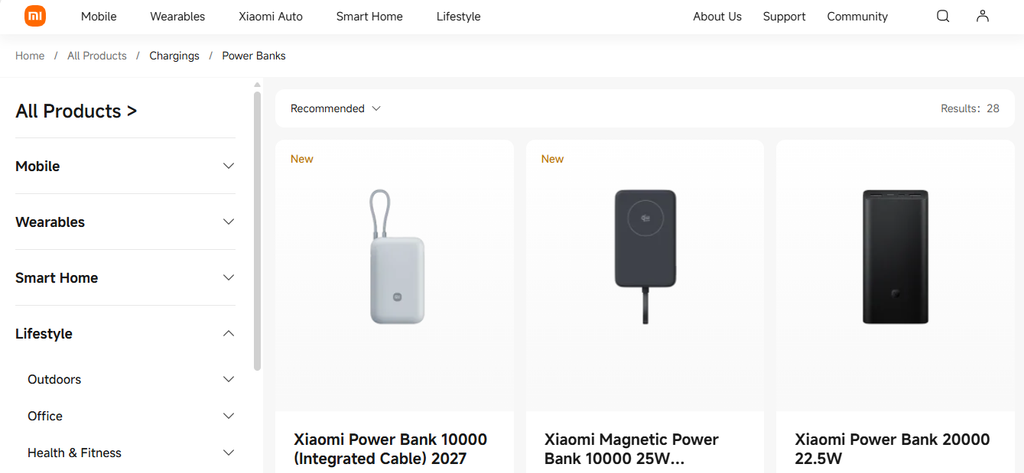
Xiaomi is one of the strongest names in India’s power bank market. The company has benefited from its large smartphone customer base and extensive consumer-electronics ecosystem.

According to Counterpoint Research, Xiaomi India led India’s power bank market in 2025. The company was followed by Ambrane, URBN, boAt and Portronics. The company’s India business is much larger than its power bank category. Xiaomi Technology India reported approximately ₹24,144.5 crore in total revenue during FY2024-25, with a net profit of around ₹262.5 crore.

This revenue includes smartphones, televisions, smart devices, accessories and other products, so it should not be treated as power-bank revenue. Xiaomi remains particularly attractive to buyers who want a combination of price, capacity, charging speed and ecosystem compatibility.

2. Ambrane

BusinessMobile accessories and consumer electronics
Latest Reported Revenue₹230 crore in FY2022-23
Earlier FY2025-26 Target₹500 crore
Major StrengthPower banks and charging accessories
Main ProductsPower banks, wireless chargers and mobile accessories

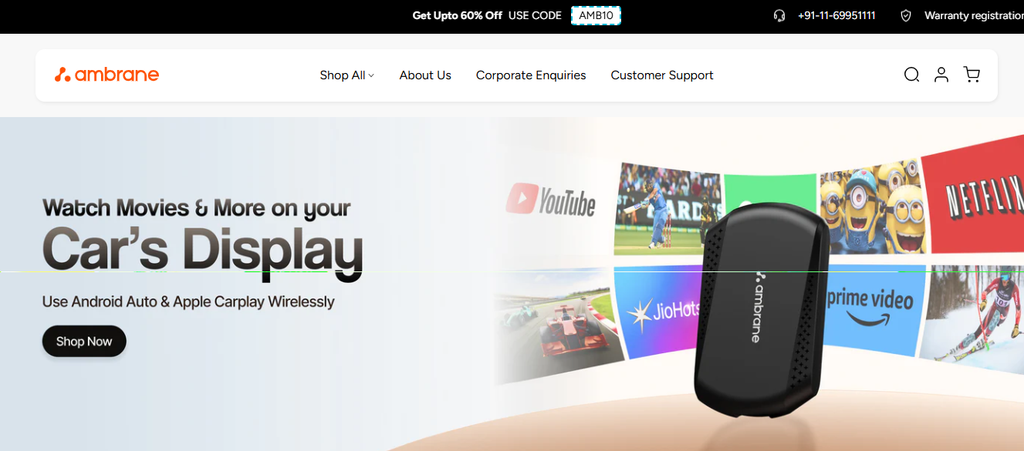
Ambrane is one of India’s best-known homegrown power bank brands. Unlike smartphone companies that sell power banks as part of a larger ecosystem, Ambrane has built much of its identity around mobile accessories and charging products.

The company started in 2012 and became particularly well known for affordable power banks. Ambrane said it had sold more than 4 crore products in India, with power banks making up a majority of its contribution at the time of the company’s 2023 announcement.

The company reported revenue of ₹230 crore in FY2022-23 and said it was targeting ₹500 crore in revenue for FY2025-26. Ambrane has expanded beyond traditional wired power banks. Its portfolio now includes magnetic and wireless charging products as well as models with USB-C fast charging.

Products such as the Aerosync series are aimed at consumers who want wireless or magnetic charging, while its traditional 10,000mAh and 20,000mAh models continue to target value-conscious buyers.
Counterpoint placed Ambrane as the second-largest power bank brand in India in 2025, behind Xiaomi. The company is especially relevant for Indian consumers who want a locally established brand, a wide product range and relatively affordable pricing.

3. URBN

BrandURBN
BusinessConsumer electronics and mobile accessories
FY2024-25 Revenue₹86.67 crore
FY2025 GrowthAround 34%
Major StrengthCompact and high-capacity power banks
Main Products10,000mAh and 20,000mAh power banks

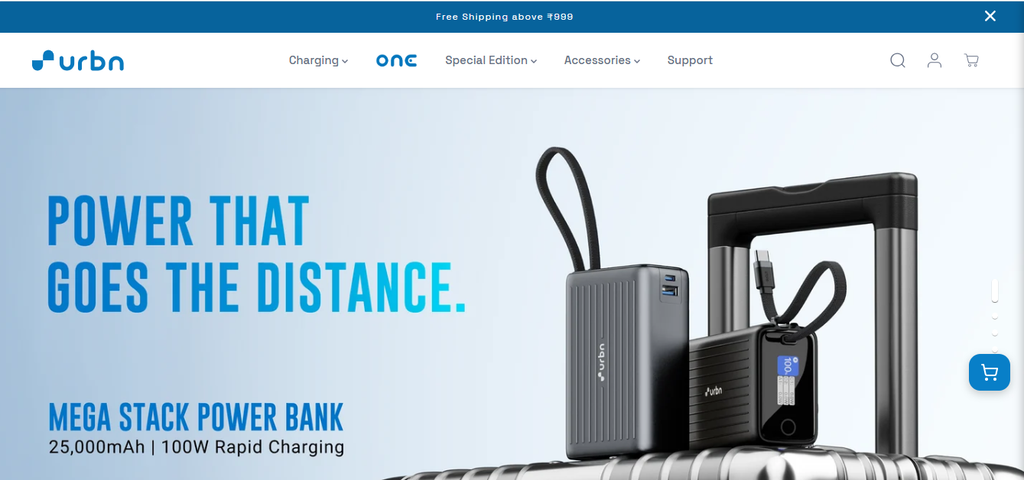
URBN has quickly become one of the most visible Indian brands in the power bank category. The company focuses strongly on portable charging products and has tried to differentiate itself through compact designs, high capacity and fast charging.

Its 10,000mAh and 20,000mAh power banks are widely available in India’s online market. Many models offer USB Type-C charging, multiple outputs and fast-charging support.

One of URBN’s biggest selling points is its focus on making high-capacity power banks smaller and easier to carry. This is useful for travellers, students and people who spend long hours away from charging points.
Acetron Tech Ventures, the company associated with URBN, reported ₹86.67 crore in revenue in FY2025, representing approximately 34% year-on-year growth.
URBN is therefore an interesting example of a newer Indian consumer-electronics brand growing around a specific product category rather than relying mainly on smartphones or other large electronics.

4. boAt

BrandboAt
BusinessAudio, wearables and consumer electronics
FY2025-26 Revenue₹2,931 crore
FY2025-26 Profit After Tax₹84.5 crore
Major StrengthAffordable consumer electronics
Main ProductsEnergyShroom and other power banks

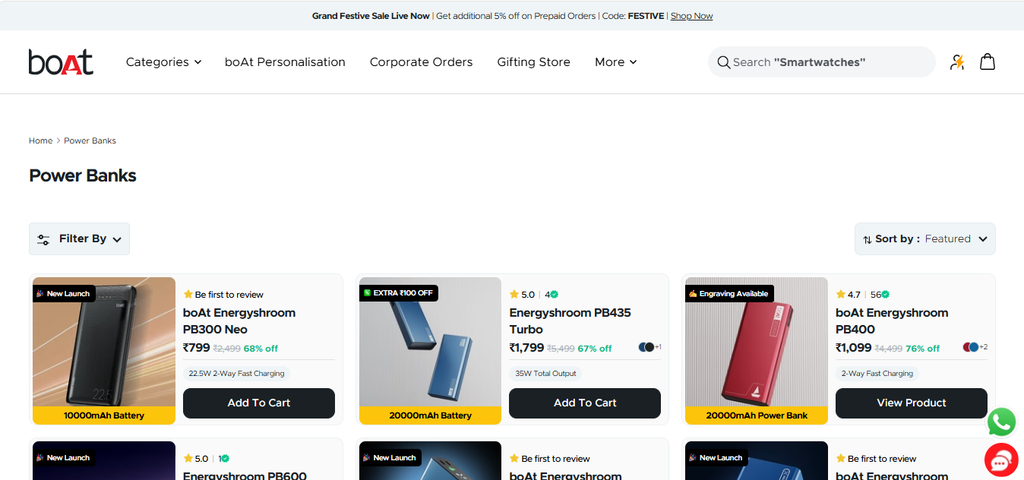
boAt is best known for earbuds, headphones and smartwatches, but the company has gradually expanded into other consumer-electronics categories, including charging accessories and power banks.

The brand’s entry into power banks is part of its larger strategy of becoming an everyday technology-accessories company.

Its EnergyShroom range includes power banks with capacities such as 10,000mAh and 20,000mAh. Some models offer 22.5W fast charging, multiple ports and wireless or magnetic charging.

boAt’s strong online presence and large customer base give it an advantage when launching products in new categories. Counterpoint ranked boAt among the leading power bank brands in India during 2025. It was also among the top five brands in the market.

The company behind boAt, Imagine Marketing Limited, reported ₹2,931 crore in revenue from operations during FY2025-26 and ₹84.5 crore in profit after tax.

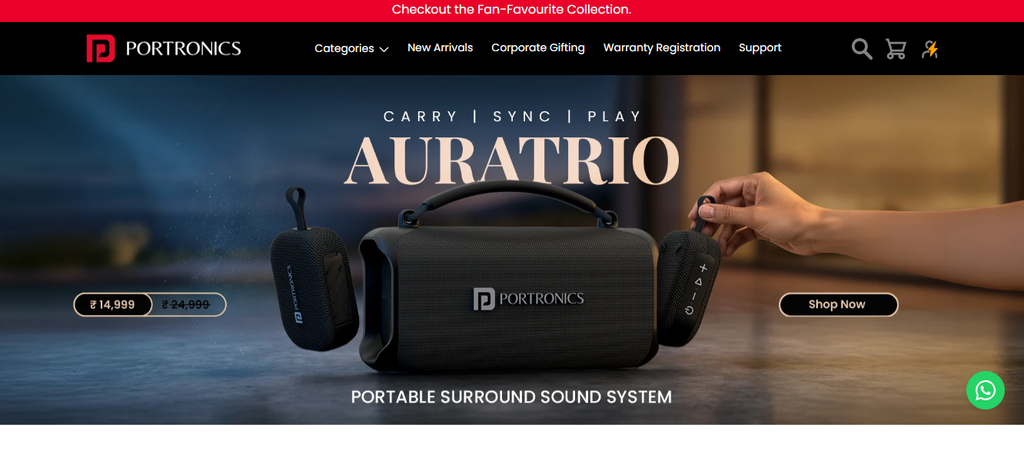
5. Portronics

BusinessConsumer electronics and digital accessories
FY2024-25 Revenue Range₹500–750 crore
Major StrengthMobile and digital accessories
Main ProductsLuxcell power banks and portable chargers
Market PositionAmong India’s leading power bank brands

Portronics is another major Indian accessories brand that has built a strong presence in portable charging.

The company sells power banks under the Luxcell range, with products available in different capacities and price ranges. Some models offer 20,000mAh capacity and charging speeds above 20W.

According to available company financial information, Portronics Digital had revenue in the ₹500–750 crore range for FY2025. The company’s revenue covers its complete product portfolio and therefore does not represent power-bank sales alone.

Portronics is a good option for consumers who want a relatively affordable product from an established Indian accessories company.

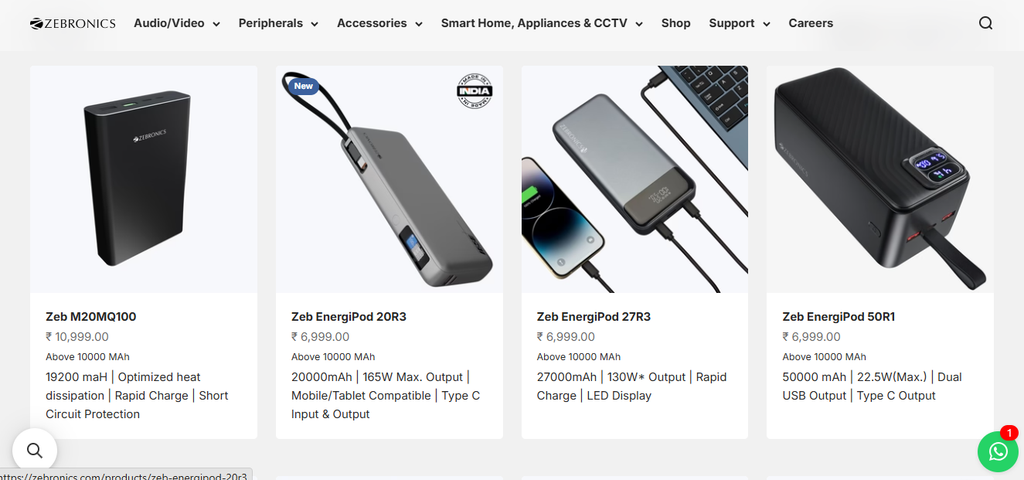
6. Zebronics

BusinessConsumer electronics, IT accessories and audio
FY2025 Revenue₹1,463.3 crore
FY2025 GrowthAround 12%
Major StrengthValue-focused electronics
Main ProductsPower banks, speakers and computer accessories

Zebronics is another Indian electronics brand that has expanded into the power bank category. The Chennai-based company has a wide product portfolio that includes speakers, headphones, computer accessories, televisions, gaming products, mobile accessories and power banks.

Its power banks generally target the affordable and mid-range segments. Consumers can find products with capacities such as 10,000mAh and 20,000mAh, along with USB Type-C and fast-charging support.

Zebronics’ advantage is its broad retail presence. The company has been selling electronics in India for many years and has developed strong recognition among value-conscious customers.

Zebronics India reported approximately ₹1,463.3 crore in revenue during FY2025, representing around 12% year-on-year growth. This revenue covers the company’s entire business and not just power banks.

The brand is particularly suitable for consumers who want affordable charging accessories from a company with a broad Indian electronics presence.

7. pTron

BusinessMobile accessories and consumer electronics
FY2025-26 Consolidated Revenue₹82 crore
FY2024-25 Consolidated Revenue₹89.77 crore
Major StrengthAffordable mobile accessories
Main ProductsPower banks, chargers, cables and audio products

pTron is an Indian electronics-accessories brand known for offering products at competitive prices. The company sells power banks alongside chargers, cables, earbuds, smartwatches and other mobile accessories.

Its power banks are generally aimed at consumers who want basic charging functionality without spending too much money. The range includes models with 10,000mAh and 20,000mAh capacities.

pTron is operated under the Palred group. Palred Technologies reported ₹82 crore in consolidated revenue during FY2025-26, compared with ₹89.77 crore in FY2024-25.

The company has also been focusing on its core pTron brand while restructuring some other businesses. pTron’s main strength is affordability. It competes in a market where many consumers are looking for a dependable power bank without paying premium prices.

For buyers, however, it is still important to check charging speed, battery capacity, warranty and safety certifications before choosing a low-cost power bank.

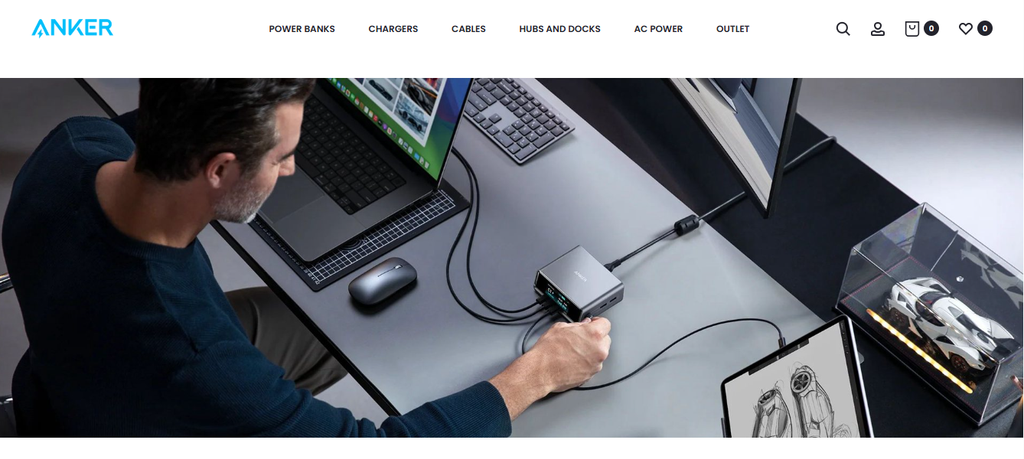
8. Anker

BusinessCharging, consumer electronics and smart devices
2025 Global Revenue₹30.51 billion yuan
2025 Net Profit₹2.55 billion yuan
Major StrengthPremium charging technology
Main ProductsPowerCore and Anker Prime series

Anker is one of the most recognised international charging-accessory brands available in India. Unlike many budget-focused Indian brands, Anker competes more heavily in the premium charging segment. Its products are known for higher charging speeds, USB-C Power Delivery, compact designs and multi-device charging.

Anker Innovations Technology reported 30.51 billion yuan in revenue in 2025, equivalent to roughly ₹35,000 crore depending on the exchange rate used. The company reported net profit of approximately 2.55 billion yuan.

The company also reported that its charging and energy-storage category generated 15.4 billion yuan in revenue in 2025, making it one of the most important parts of its global business.

9. Samsung

Parent CompanySamsung Electronics
BusinessSmartphones, electronics and consumer technology
FY2025-26 India RevenueAbout ₹1.12 lakh crore
Major StrengthSmartphone ecosystem
Main ProductsSamsung Power Banks and portable chargers

Samsung is primarily known for smartphones, televisions and home appliances, but it also sells power banks and charging accessories in India.

Samsung power banks are especially relevant for people who already use Galaxy smartphones and other Samsung devices.

The company offers portable chargers with USB Type-C and fast-charging capabilities. Its products are generally positioned above some of the lowest-priced Indian power banks but benefit from Samsung’s strong brand reputation.

Samsung India Electronics reported revenue from operations of around ₹1.12 lakh crore in FY2025-26, according to company financial data. This was slightly higher than the ₹1,11,183 crore reported for FY2024-25.

The company also reported a profit of around ₹7,228 crore in FY2025-26. Samsung remains a good choice for consumers who value brand reliability and compatibility with the broader Galaxy ecosystem.

10. Stuffcool

BusinessMobile and charging accessories
Major StrengthPremium charging accessories
Main ProductsPower banks, chargers and cables
Popular CategoryHigh-capacity and fast-charging power banks

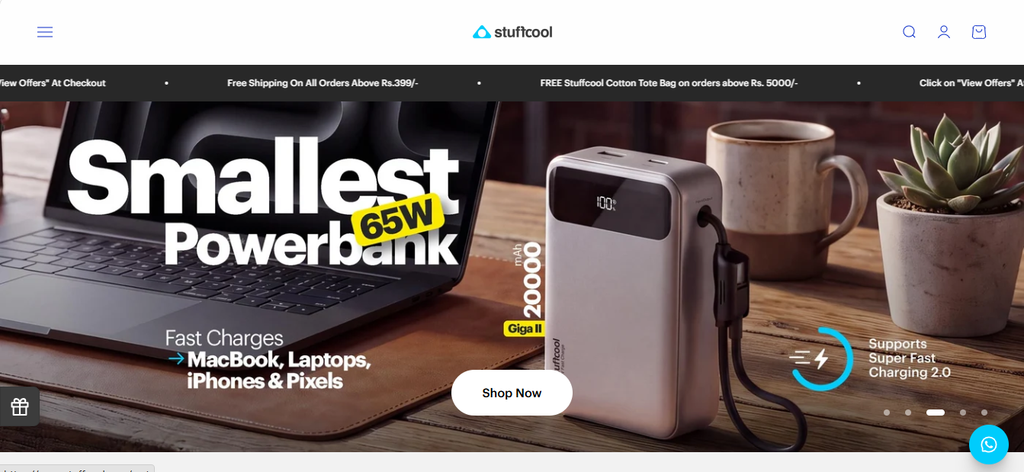
Stuffcool is an Indian charging-accessories brand that has developed a following among consumers looking for more premium portable charging products.

Stuffcool’s power banks include models designed around higher charging speeds and larger capacities. The company has also focused on newer charging standards and products aimed at smartphones and other USB-C devices.

The brand is smaller than Xiaomi, boAt or Samsung, but it has built a presence in India’s online electronics market.

Stuffcool’s business structure is somewhat different from large publicly listed electronics companies. Its associated business entities report financial figures separately. Nissan Enterprises Limited, which is associated with the Stuffcool brand, reported approximately ₹54.41 crore in revenue during FY2025, according to available company financial data.

Financial and Market Comparison

BrandLatest Available Financial FigurePower Bank / Market Information
Xiaomi₹24,144.5 crore FY2024-25 India revenueLed India’s power bank market in 2025
Ambrane₹230 crore FY2022-23 revenueAmong the top power bank brands in 2025
URBN₹86.67 crore FY2025 revenueAmong India’s leading power bank brands
boAt₹2,931 crore FY2025-26 revenueTop-five power bank brand
Portronics₹500–750 crore FY2025 revenue rangeTop-five power bank brand
Zebronics₹1,463.3 crore FY2025 revenueStrong value electronics presence
pTron₹82 crore FY2025-26 consolidated revenueAffordable power banks and accessories
Anker30.51 billion yuan FY2025 global revenueStrong premium charging business
SamsungAbout ₹1.12 lakh crore FY2025-26 India revenuePremium smartphone ecosystem brand
Stuffcool₹54.41 crore FY2025 associated business revenueSpecialist charging-accessories brand
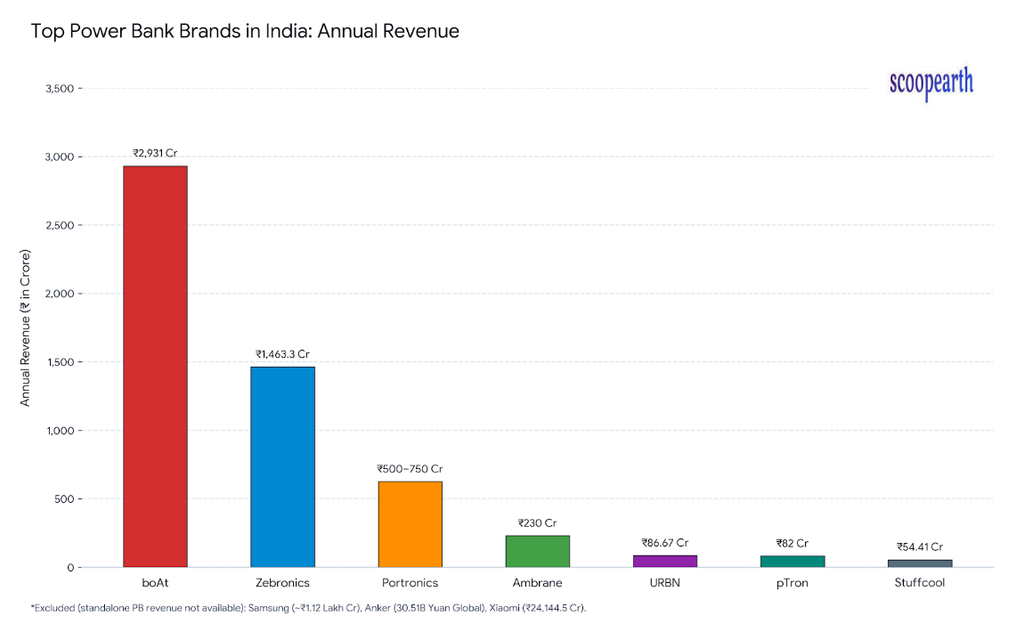
Top 10 Power Bank Brands in India: Annual Revenue

Note: The financial figures above generally represent the company’s total business, not power-bank-specific sales. This distinction is important because most brands sell several other categories such as smartphones, audio products, chargers, wearables, computers and home electronics.

Conclusion

India’s power bank market has changed from a simple low-cost accessory category into a more technology-focused consumer-electronics market. Consumers today have many choices, from affordable 10,000mAh power banks to premium high-wattage models capable of charging laptops and multiple devices.

Xiaomi currently has a particularly strong position in India’s power bank market, while Ambrane, URBN, boAt and Portronics have established themselves as important players. Brands such as Zebronics and pTron compete strongly in the value segment, while Anker, Samsung and Stuffcool provide options for consumers looking for stronger charging features or premium positioning.

For buyers, the best power bank depends on individual needs. A 10,000mAh model may be ideal for daily commuting, while a 20,000mAh model can be more useful for travel. Users with tablets or laptops may need higher-wattage USB-C models.

Ultimately, buyers should consider capacity, charging speed, USB-C support, safety, size, weight, warranty and compatibility rather than choosing a power bank only because it has a large battery. With smartphones and other connected devices becoming a bigger part of everyday life, reliable portable charging is likely to remain an important technology category in India.

FAQs :

1. Which is the best power bank brand in India?

Xiaomi, Ambrane, URBN, boAt, and Portronics are among the popular power bank brands in India. The best choice depends on your budget, charging speed, battery capacity, and device compatibility.

2. Which power bank brand has the highest market share in India?

Xiaomi was reported as a leading power bank brand in India in 2025. However, its exact market share and ranking should be verified using a reliable market research report.

3. Is a 10,000mAh power bank enough for daily use?

Yes, a 10,000mAh power bank is generally suitable for everyday smartphone charging. It offers a balance between portability and battery backup, making it a convenient option for work, college, and short trips.

4. Is a 20,000mAh power bank better than a 10,000mAh model?

A 20,000mAh power bank provides more backup and can charge a smartphone multiple times. However, it is usually larger and heavier than a 10,000mAh model, so the best option depends on your charging needs.

5. Which power bank is best for travel?

A compact 10,000mAh or 20,000mAh power bank with fast charging is suitable for most travel needs. Choose a lightweight model for short trips or a higher-capacity option for longer journeys.

6. What does mAh mean in a power bank?

mAh stands for milliampere-hour and indicates a battery’s charge capacity. A higher mAh rating generally means more stored energy, although actual charging performance also depends on voltage, conversion efficiency, and the device being charged.

7. Is fast charging important in a power bank?

Yes, fast charging can reduce the time required to charge compatible devices. Before buying a power bank, check its supported wattage and charging standards to ensure compatibility with your smartphone or other device.

8. Are USB-C power banks better?

USB-C power banks are convenient because they support modern charging standards, and compatible models can deliver faster charging through USB Power Delivery. They are especially useful for newer smartphones, tablets, and certain laptops.

9. Can a power bank charge a laptop?

Yes, a power bank can charge a laptop if it supports USB-C Power Delivery or another charging method compatible with the laptop. Check the required wattage, supported input specifications, and power bank capacity before purchasing.

10. How long does a power bank usually last?

A good-quality power bank can typically last several years, depending on battery quality, charging cycles, usage, and storage conditions. Avoid excessive heat and use a suitable charger to help maintain battery performance.

11. Are power banks safe to use?

Power banks from reliable brands with appropriate safety protections are generally safe when used correctly. Choose a certified product with protection against overheating, overcharging, short circuits, and excessive current, and stop using it if the battery swells or becomes damaged.

12. Can I carry a power bank on a flight?

Power banks are generally required to be carried in cabin baggage rather than checked baggage. Airlines commonly permit batteries up to 100Wh, while larger capacities may require approval or face additional restrictions. Always check your airline’s current rules before travelling.

13. Which is better, wired or wireless power banks?

Wired power banks generally offer faster and more efficient charging, while wireless power banks provide greater convenience by reducing the need for cables. Choose a wired model for speed or a wireless model if your phone supports compatible wireless charging.

14. How much does a good power bank cost in India?

A good power bank in India can cost approximately ₹800 to ₹3,000 or more, depending on capacity, charging speed, brand, and additional features. Compare specifications, warranty coverage, and safety certifications before making a purchase.

15. What should I check before buying a power bank?

Before buying a power bank, check its capacity, charging speed, USB-C support, output wattage, safety features, size, weight, warranty, and device compatibility. Also consider your budget and whether you need it for everyday use, travel, or charging multiple devices.

NeoGrowth secured ₹85 crore in an equity and debt funding round from FMO and LeapFrog Investments

NeoGrowth raises ₹85 crore in equity and debt funding from FMO and LeapFrog Investments

NeoGrowth focuses on micro, small, and medium business loans. NeoGrowth has raised ₹85 crore through a combination of equity and debt. The investment was from LeapFrog Investments and FMO. This capital round follows the company’s previous financial success, including a leading role in a capital raise in December 2022, where the company raised a substantial equity round of ₹300 crore (approximately $36 million) led by FMO in addition to the existing pool of backers.

Capital deployment and business model

The company intends to use the fund to substantially expand its operational lending operations. The funds generated from this round will be used to expand the overall loan book of the organization to nearly ₹3,000 crore before the next round of equity raising is needed, NeoGrowth said in an official statement. The strategy is designed to broaden the lender’s footprint in the market and address the increasing need for flexible commercial credit among small business enterprises in India.

NeoGrowth was founded in 2011 by co-founders Dhruv Khaitan and Piyush Khaitan. NeoGrowth focuses on providing loans for small businesses to meet the operational and financial needs of local businesses. The financial tech company offers a wide range of product offerings for credit, including both collateral-free and collateral credit offerings directly targeting micro, small, and medium business entities.

The company helps small business operations by offering repayment facilities to be flexible with the merchants; merchants are given the option to collect money daily, weekly, fortnightly, or monthly. According to the company’s accountancy, NeoGrowth works in over 25 cities of India and provides services to more than 80 businesses and over 1 lakh different commercial enterprises.

Mission and growth of NeoGrowth

NeoGrowth has pioneered a paradigm shift within MSME lending through the adoption of a technology-led approach to evaluating creditworthiness within India. The company also dispenses with the traditional reliance on collateral through the utilization of digital payment trails, transactional point-of-sale data, GST records, cash flow information, and other tools to evaluate creditworthiness in real time. 

NeoGrowth intends to make credit lending data-driven, flexible, and inclusive for the MSMEs in India that have not been reached by the traditional credit lending process. This involves a digital payments infrastructure and POS data and cash-flow analysis that eliminate the use of collateral as a prerequisite for first-time borrowers and small retailers and neighborhood merchants. NeoGrowth is striving to simplify the lending process for quick onboarding and flexible repayments, including daily and weekly repayments based on merchant cash flows.

Conclusion

The fundraising for ₹85 crore by NeoGrowth from FMO and LeapFrog Investments demonstrates the continuous support of investors towards data-based solutions for MSME lending. Through the use of point-of-sale information, digital transaction histories, and adaptable repayment models, NeoGrowth is continuing to solve some of the basic credit availability problems experienced by small businesses. In light of the increasing amount of funds flowing into the overall digital lending ecosystem, platforms that leverage the power of analytics and specialized credit offerings will be better placed to grow their portfolios.

Essentials Hoodie: The Ultimate UK Streetwear Essential

The right hoodie can do far more than keep you warm. In the UK, where changing weather and relaxed dress codes make versatile clothing especially useful, the Essentials Hoodie has become a strong choice for building comfortable, contemporary outfits.

Its appeal comes from simplicity. A clean hoodie can sit comfortably within everyday casualwear, modern streetwear, university outfits, and travel looks without making an outfit feel overworked. Pair it with cargos and trainers for a sharper urban look, or keep things relaxed with jeans and joggers.

For shoppers exploring an Essentials Hoodie UK style, the key is not simply owning the hoodie. It is knowing how to make it work with the rest of your wardrobe and adapting it to Britain’s changing seasons.

Why Is the Essentials Hoodie Popular in the UK?

Essentials Hoodie and UK Streetwear

UK streetwear has always had a practical side. British shoppers tend to value pieces that can move between different parts of the day, particularly when an outfit needs to cope with changing temperatures, walking around the city and spontaneous plans.

An Essentials Hoodie fits naturally into this approach. Its relaxed shape and understated aesthetic make it easy to combine with contemporary wardrobe staples without relying on loud graphics or complicated styling.

In London, it can form part of a layered city outfit with a jacket and cargos. In Manchester or Liverpool, it works just as well with relaxed trousers and trainers. In Leeds and Birmingham, it can move effortlessly between student life, shopping trips and casual evenings.

Why It Works for Everyday Wear

The best everyday pieces are usually the ones you do not have to think about too much. A versatile hoodie gives you a reliable starting point when you want to look put together without dressing formally.

It can be worn for:

  • Coffee runs and everyday errands
  • University and student outfits
  • City sightseeing
  • Shopping trips
  • Weekend travel
  • Casual meet-ups
  • Relaxed evenings
  • Everyday UK streetwear looks

This versatility is one reason Essentials clothing UK shoppers can incorporate a hoodie into wardrobes built around comfort and contemporary fashion.

How to Style an Essentials Hoodie

The easiest way to improve an Essentials hoodie outfit is to focus on proportions. A relaxed hoodie generally works best when the rest of the outfit complements its silhouette rather than competing with it.

Essentials Hoodie with Cargos

Cargos are one of the easiest partners for a streetwear-focused outfit. Their practical shape adds structure while keeping the overall look relaxed.

Try a neutral hoodie with black, olive or charcoal cargos and a clean pair of trainers. Keep accessories simple with a crossbody bag, cap or understated jewellery.

For a London-inspired urban look, you could add a lightweight bomber or technical jacket. This creates useful layering without making the outfit feel too heavy.

Essentials Hoodie with Jeans

Jeans offer a more familiar everyday option and are particularly useful when you want a casual outfit that does not look too heavily styled.

Straight-leg or relaxed-fit denim works well with a hoodie. A darker wash can create a cleaner appearance, while lighter denim gives the outfit a more laid-back feel.

For an Essentials hoodie outfit UK shoppers can wear regularly, consider:

  • Neutral hoodie
  • Straight or relaxed-fit jeans
  • Minimal trainers
  • Lightweight jacket
  • Simple crossbody bag

The result is easy to wear for shopping, travelling or meeting friends.

Essentials Hoodie with Joggers or Tracksuit Bottoms

For maximum comfort, pair the hoodie with matching or complementary joggers. This creates a relaxed silhouette that works particularly well for travel, weekends and casual days.

An Essentials Tracksuit can also provide a coordinated approach. If you prefer a more understated outfit, choose different but complementary shades rather than making every piece identical.

The wider Essentials Tracksuit UK aesthetic works particularly well when the priority is comfort without losing a streetwear edge.

Trainers and Accessories

Footwear can completely change the character of a hoodie outfit. Minimal trainers keep the look clean, while chunkier silhouettes can give it a more contemporary streetwear feel.

Accessories should support the outfit rather than dominate it. Consider:

  • A clean cap or beanie
  • Crossbody or shoulder bag
  • Simple watch
  • Subtle jewellery
  • Sunglasses during brighter weather

The trick with Essentials hoodie styling is restraint. A strong base outfit usually needs only a few finishing touches.

Essentials Hoodie for Different UK Seasons

Autumn and Winter Layering

British autumn and winter are where a good Essentials hoodie becomes particularly useful. Temperatures can shift throughout the day, so layering gives you greater control over comfort.

Wear the hoodie underneath a puffer jacket, wool coat, bomber or weather-resistant outer layer. Straight-leg trousers or cargos can complete the outfit, while a pair of sturdy trainers or boots makes sense for colder city days.

In Glasgow and Edinburgh, where colder conditions can make layering especially practical, a hoodie can serve as a comfortable middle layer beneath a substantial jacket.

Spring Styling

Spring calls for lighter combinations. Rather than relying on heavy outerwear, let the hoodie become the main layer.

Try a lighter-toned hoodie with relaxed jeans, cargos and low-profile trainers. If the temperature drops, add a lightweight overshirt or jacket that can easily be removed later.

This approach works particularly well in cities such as Birmingham, Manchester and Leeds, where a mild afternoon can quickly turn into a cooler evening.

Cooler Summer Evenings

A hoodie still has a place during British summer. It is ideal for evenings when temperatures fall after a warm afternoon.

Wear one over a simple T-shirt with relaxed trousers, denim or tailored shorts. Keep the footwear clean and uncomplicated for a comfortable outfit that works for outdoor gatherings, travel and casual social plans.

How to Choose the Right Essentials Hoodie

Buying a hoodie should be about more than choosing a popular colour. Think about how the piece will fit into your existing wardrobe and how often you are likely to wear it.

Fit and Sizing

Consider the silhouette you want before choosing a size. A relaxed fit can create the modern streetwear look associated with oversized layering, while a closer fit may work better underneath jackets.

Think about your usual outfit combinations too. If you regularly wear outerwear over your hoodie, make sure there is enough room for comfortable layering without creating unnecessary bulk.

Check the specific product’s sizing information before buying, as fits can vary between designs and collections.

Colour Selection

Neutral shades are usually the easiest starting point because they work with a wider range of trousers and outerwear.

Useful choices include:

  • Black
  • Grey
  • Cream
  • Beige
  • Brown
  • Muted green
  • Navy

If your wardrobe already contains plenty of neutrals, a different shade can add personality without making the hoodie difficult to style.

Styling Versatility

Before choosing a hoodie, picture at least three outfits you could create with it. If one piece works with your jeans, cargos, joggers and existing trainers, it is likely to earn plenty of wear.

This is also where Essentials fashion UK styling makes sense. British wardrobes often need to adapt across seasons, so versatility is more valuable than choosing something that only works for one particular look.

Essentials Hoodie Outfit Ideas for the UK

Different cities have their own fashion personalities, but the fundamentals of a strong casual outfit remain similar.

London

Go for a contemporary urban look with a neutral hoodie, wide or relaxed cargos, a technical jacket and clean trainers. A crossbody bag adds a practical finishing touch for navigating the city.

Manchester

Keep things relaxed with a heavyweight-looking hoodie, loose denim and understated trainers. Add a bomber or overshirt when the weather becomes cooler.

Birmingham

A versatile city outfit could combine a neutral hoodie with straight-leg trousers, trainers and a lightweight jacket. It works equally well for shopping, casual lunches and meeting friends.

Liverpool

For a relaxed streetwear approach, combine the hoodie with loose-fit jeans, statement trainers and a simple cap. Keep the colour palette balanced so the footwear can provide the visual interest.

Leeds

A hoodie, cargos and trainers make a reliable university-friendly combination. Add a jacket for colder days and switch to lighter layers during spring.

Glasgow

Layering is the priority. Wear the hoodie beneath a substantial coat or jacket with relaxed trousers and practical footwear for a look that balances comfort with urban style.

Edinburgh

For a cleaner contemporary outfit, try a neutral hoodie with straight-leg trousers, a structured jacket and minimal trainers. This creates a smart-casual interpretation of UK streetwear.

Final Thoughts on the Essentials Hoodie

The Essentials Hoodie earns its place in a modern UK wardrobe because it does not demand complicated styling. It can be dressed up slightly with structured outerwear or kept completely relaxed with joggers and trainers.

More importantly, it fits the reality of British dressing. Changing weather, busy city days, university schedules, weekend travel and casual social plans all call for clothing that can adapt.

Whether you are building an Essentials Hoodie for UK streetwear wardrobe or simply looking for a reliable everyday layer, focus on fit, colour, proportions and versatility. The right combination can take the same hoodie from a morning coffee run in London to an evening out in Manchester with only a few changes.

Explore your preferred Essentials Hoodie style, experiment with different layers and build outfits around pieces you already wear. With the right approach, one well-chosen hoodie can become one of the most versatile foundations of your UK casualwear wardrobe.

Top 10 Healthcare Companies in the UK

Top 10 Healthcare Companies in the UK

The UK has a well-developed healthcare industry that goes far beyond the NHS. Alongside public healthcare, the country has a large private healthcare and health-insurance sector, including hospital groups, healthcare charities, insurers, diagnostic providers and pharmacy businesses. These organisations play an important role in giving people more choice when it comes to consultations, diagnostics, planned surgery, specialist treatment, health insurance and everyday healthcare services.

The UK’s private healthcare market includes some long-established names as well as companies that have expanded rapidly through acquisitions and new facilities. Bupa, for example, has been part of the UK’s healthcare landscape since 1947, while organisations such as HCA UK, Spire Healthcare and Circle Health Group have built extensive private hospital networks. Recent industry tracking also shows Spire Healthcare, Bupa, Vitality and Nuffield Health among the most visible major private healthcare providers in the UK. 

In this article, we look at 10 notable healthcare companies operating in or strongly connected with the UK, covering their background, services and what makes each organisation stand out.

Bupa

FieldDetails
Company NameBupa (British United Provident Association)
Founded1947
Founder/OriginFormed on 5 April 1947 through the coming together of 17 British provident associations and hospital contributory schemes; no single individual founder
Global Headquarters1 Angel Court, London, EC2R 7HJ, United Kingdom
BusinessInternational healthcare company providing health insurance, healthcare services and aged care
Main Products/ServicesHealth insurance, private medical insurance, health clinics, hospitals, dental centres, digital healthcare through Blua, and aged care
Main FocusHelping people live longer, healthier, happier lives through connected, accessible and high-quality healthcare
Key FigureIñaki Ereño, Group CEO (2025)
Public ListingNot publicly listed; Bupa has no shareholders and reinvests profits into healthcare
Funding/ValuationNo conventional public-market valuation; operates as a company limited by guarantee with profits reinvested into the business
Global Reach68 million customers worldwide in 2025

Bupa is one of the best-known healthcare organisations in the UK and has a history dating back to 1947. It was established on 3 April 1947 when 17 British provident associations and other organisations involved in funding hospital care came together. The organisation was created with the aim of helping people access quality healthcare, and unlike a conventional shareholder-owned company, Bupa operates without shareholders and reinvests its profits into healthcare. 

Today, Bupa is much more than a health insurance company. Health insurance remains at the heart of its business, but the organisation also provides healthcare through hospitals, clinics, dental centres, digital health services and aged-care facilities. Its services cover different stages of people’s lives, from everyday health support to specialist treatment. Bupa also operates digital healthcare services, allowing customers to access consultations and other health support remotely.

One of Bupa’s biggest strengths is the breadth of its healthcare model. Instead of focusing on just one part of the patient journey, it combines insurance with healthcare provision. This gives customers the option of accessing different types of care through one organisation. Globally, Bupa serves tens of millions of customers and has operations across several countries, while the UK remains one of its principal markets. 

Spire Healthcare

FieldDetails
Company NameSpire Healthcare Group plc
Founded2007
Founder/OriginFounded when European private equity firm Cinven acquired and rebranded 25 former Bupa hospitals in 2007; no single individual founder
Headquarters3 Dorset Rise, London EC4Y 8EN, United Kingdom
BusinessLeading independent healthcare group providing private, NHS and self-pay healthcare
Main Products/Services38 hospitals and 55+ clinics; diagnostics, inpatient, day-case and outpatient care; orthopaedics, gynaecology, cardiology, neurology, oncology, paediatrics, general surgery, physiotherapy, private GPs, mental health, dermatology, musculoskeletal and occupational health
Main FocusOutstanding personalised care, clinical excellence, patient safety and expanding healthcare beyond hospitals into primary and post-hospital care
Key FigureSpire Healthcare Group plc, with more than 8,800 consultants and over 1.36 million people cared for in 2025
Public ListingListed on the London Stock Exchange and a member of the FTSE 250
Global/UK Reach38 hospitals and 52+ clinics across England, Wales and Scotland

Spire Healthcare is one of the UK’s leading independent healthcare groups and is particularly well known for its network of private hospitals and clinics. The group was established in 2007, following the acquisition and rebranding of 25 Bupa hospitals. Since then, Spire has expanded its presence considerably and developed into a major provider of private healthcare in England, Wales and Scotland. 

Spire provides care to a wide range of patients, including people using private medical insurance, self-paying patients and NHS patients. Its services cover diagnostics, outpatient consultations, day-case procedures and inpatient treatment. The organisation has particular expertise in areas such as orthopaedics, cardiology, oncology, neurology, gynaecology and general surgery.

The scale of Spire’s network is one of its major advantages. It currently operates dozens of hospitals and clinics and works with thousands of consultants. In 2025, Spire says it provided care to more than 1.36 million people. The group has also developed partnerships with major health insurers, including a four-year strategic partnership with Bupa announced in 2026 that focuses on areas such as cancer care, musculoskeletal treatment and gynaecology. 

Nuffield Health

FieldDetails
Company NameNuffield Health
Founded1957 (originally established as BUPA’s Nursing Homes Charitable Trust)
Founder/OriginEstablished by BUPA in 1957 as a charitable trust. In 1959 the organisation adopted the name of Lord Nuffield, the businessman and philanthropist William Morris, who was then President of BUPA. It does not have a single individual founder
HeadquartersEuston Tower, 286 Euston Road, London NW1 3DP, United Kingdom
BusinessNot-for-profit healthcare charity providing hospital, medical, fitness, wellbeing and workplace health services
Main Products/ServicesPrivate hospitals, medical centres, physiotherapy, health assessments, fitness and wellbeing centres, mental health services, workplace health, and a range of outpatient and diagnostic services
Main FocusBringing together treatment, prevention and wellbeing to help people live healthier lives; improving the nation’s health through high-quality healthcare and fitness services, with all profits reinvested into the organisation
Key FigureSteve Gray, Chief Executive Officer
Public ListingNot publicly listed; Nuffield Health is a registered charity and operates as a not-for-profit body
UK Presence37 hospitals and more than 200 fitness and wellbeing centres across the UK

Nuffield Health has a slightly different position in the UK’s healthcare industry because it is a not-for-profit healthcare charity. Its history goes back to 1957, when BUPA established the Nursing Homes Charitable Trust. In 1959, the organisation adopted the name of Lord Nuffield, the businessman and philanthropist William Morris, who was then president of BUPA. Over the following decades, it expanded its hospital network and eventually developed into the organisation known today as Nuffield Health. 

Nuffield Health is distinctive because it brings treatment and prevention together. Its services include hospitals, medical clinics, physiotherapy, fitness and wellbeing centres and health assessments. This means its approach is not limited to treating people after they become ill. It also places considerable emphasis on helping people maintain their health and prevent future problems.

The organisation describes itself as the UK’s largest trading healthcare charity. Its network includes hospitals and fitness and wellbeing centres, supported by thousands of health professionals. This combination of healthcare and fitness makes Nuffield different from many traditional private hospital groups. Its overall aim is to improve the nation’s health by bringing prevention, treatment and wellbeing together in one organisation. 

HCA Healthcare UK

FieldDetails
Company NameHCA Healthcare UK
Founded1968 (HCA Healthcare, US)
Founder/OriginFounded in 1968 by Dr. Thomas Frist Sr.; HCA entered the UK market in 1995, expanding through the acquisition and development of hospitals and healthcare facilities
HeadquartersNashville, Tennessee, USA (global headquarters); HCA Healthcare UK is based in London, UK
BusinessPrivate healthcare provider offering a range of hospital and specialist medical services in the UK
Main Products/ServicesPrivate GP services, outpatient consultations, diagnostics, surgery, cancer treatment, critical care, maternity, orthopaedics, cardiology, neurology and more
Main FocusSpecialist and complex care, high-quality clinical outcomes, and working with the NHS through partnerships
Key FigureDr. Thomas Frist Sr. (founder of HCA, 1968)
Public ListingPart of HCA Healthcare Inc., listed in the US (NYSE: HCA); the UK business operates as a division of the group
Funding/ValuationPart of a publicly traded global healthcare group with a market capitalisation of around $90 billion (per recent reports)
UK PresenceMore than 30 hospitals and healthcare facilities across London, Manchester and Birmingham, with a growing presence in the UK

HCA Healthcare UK is the British division of the international HCA Healthcare group. HCA Healthcare itself was founded in 1968 by Dr Thomas Frist Sr, while HCA entered the UK healthcare market in 1995. Since then, it has built a significant network of hospitals and healthcare facilities, particularly in London, with further operations in Manchester and Birmingham. 

HCA UK focuses heavily on complex and specialist healthcare. Its services range from private GP and outpatient care to diagnostics, surgery, cancer treatment, critical care and other complex medical services. It also works with NHS organisations through partnerships, combining private-sector facilities and expertise with the wider healthcare system.

A major feature of HCA UK’s approach is its focus on specialist and acute care. The organisation has more than 30 facilities and works with thousands of consultants. Its hospitals are equipped for complex treatment, and HCA UK has invested significantly in technology, diagnostics and specialist clinical services. Its recent expansion has included The Harborne Hospital in Birmingham, which opened in 2024. 

Circle Health Group

FieldDetails
Company NameCircle Health Group
Founded2004
Founder/OriginFounded in 2004; the group grew through building new hospitals, acquisitions of Nations Healthcare and BMI Healthcare, and joint ventures. No single individual founder
Headquarters1st Floor, 50 Cannon Street, London EC4M 5RA, United Kingdom
BusinessIndependent hospital group and provider of private hospital services in the UK
Main Products/ServicesPrivate hospital care, consultations, diagnostics, surgery, outpatient and inpatient treatment, neurological and musculoskeletal rehabilitation, pathway management, and specialist healthcare across more than 60 specialties and 500+ treatments
Main FocusPatient-focused healthcare, clinical excellence, patient safety, digital innovation, robotics, AI and high-quality personalised care
Key FigurePaul Manning, Chief Executive Officer, appointed July 2023
Scale54 hospitals, over 4,000 beds, more than 7,000 doctors, over 6,500 consultants, around 18,000 employees and about 2.5 million patient visits per year
Public ListingPrivately owned; not separately publicly listed
UK PresenceNational network of 54 hospitals across England, Scotland and Wales; around 90% of UK adults live within 90 minutes of a Circle hospital

Circle Health Group was founded in 2004 and has grown into one of the UK’s largest independent hospital groups. The company expanded through the development of new hospitals as well as acquisitions, including the acquisition of BMI Healthcare. This growth has helped Circle establish a large national network of private hospitals. 

The company provides a broad range of private healthcare services, including planned surgery, diagnostics, consultations and specialist treatment. It also has expertise in neurological and musculoskeletal rehabilitation, making its services relevant not only to patients undergoing surgery but also to those who need support during recovery.

Circle places considerable emphasis on the patient experience. Its hospitals are designed to provide a more personalised environment, while its large network of specialists allows patients to access expertise across different medical disciplines. The organisation says more than 6,500 specialists practise across its hospitals, which collectively handle millions of patient visits each year. 

Ramsay Health Care UK

FieldDetails
Company NameRamsay Health Care UK
Founded1964 (globally), with UK operations since 2007
Founder/OriginFounded in 1964 by Australian businessman and philanthropist Paul Ramsay AO. Ramsay Health Care entered the UK in 2007 through the acquisition of Capio UK
UK Registered OfficeLevel 18, Tower 42, 25 Old Broad Street, London EC2N 1HQ, United Kingdom
BusinessLeading independent healthcare provider in England, providing private, self-insured and NHS care
Main Products/ServicesRoutine and complex surgery, day-case procedures, diagnostic services, physiotherapy, specialist clinical services, mental health and complex care through Elysium Healthcare, and mobile diagnostic imaging
Main FocusHigh-quality, patient-centred care, clinical excellence, patient safety, continuous improvement and the “people caring for people” purpose
Key FigureNick Costa, CEO, Ramsay Health Care UK, appointed 2022
ScaleOperates 34 acute hospitals across England, with a broad network of healthcare facilities
Public ListingRamsay Health Care is publicly listed in Australia, while Ramsay Health Care UK is the UK business division and is not separately listed
UK PresenceHealthcare facilities across England, supporting both private and NHS patients

Ramsay Health Care was founded in 1964 by Australian businessman and philanthropist Paul Ramsay. Although the company began in Australia, it entered the UK market in 2007 through the acquisition of Capio’s UK business. Since then, Ramsay Health Care UK has become a significant independent healthcare provider in England. 

Ramsay UK provides a wide variety of healthcare services, including routine and complex surgery, day-case procedures, diagnostics, physiotherapy and specialist treatment. It also has a significant role in providing healthcare to NHS patients alongside private patients.

The organisation’s philosophy is summed up by its long-standing principle of “People caring for people.” This reflects Ramsay’s emphasis on patient experience, compassion and clinical quality. Over the years, the UK business has continued to expand its facilities and services, including its involvement in oncology, neurological care and mental health services. Ramsay’s international scale also gives the UK business access to the experience and resources of a much larger global healthcare organisation. 

AXA Health

FieldDetails
Company NameAXA Health
Founded1940, originally as the Association for Hospital Services
Founder/OriginFounded by doctors and hospitals working together to help ordinary people access medical care. It did not have a single individual founder. The business later became part of the AXA Group after AXA acquired the owner of PPP (which included AXA Health)
Headquarters/Registered Office20 Gracechurch Street, London EC3V 0BG, United Kingdom
BusinessUK health and wellbeing specialist providing private health insurance and healthcare support
Main Products/ServicesPrivate medical insurance for individuals, families and businesses; online GP services; mental health support; cancer care; diagnostic support; physiotherapy and muscles, bones and joints services; specialist outpatient support; corporate healthcare and wellbeing programmes
Main FocusHelping members access healthcare quickly, supporting prevention, diagnosis, treatment and everyday health and wellbeing
Key FigureAXA Health leadership (not publicly specified)
Public ListingAXA Health is part of the AXA Group and is not separately publicly listed
UK PresenceNationwide private healthcare and health-insurance services, working with healthcare providers and the NHS

AXA Health is one of the UK’s major private health insurance and healthcare-support organisations. Its history goes back more than 80 years to the Association for Hospital Services, an organisation established by doctors and hospitals to help ordinary people gain access to medical care. The business later became associated with PPP and eventually became part of the AXA Group after AXA acquired PPP’s parent company, Guardian Royal Exchange. 

Today, AXA Health provides private medical insurance for individuals, families and businesses. Its services are designed to help members access consultations, diagnostics, treatment and specialist healthcare. In addition to insurance, AXA Health provides health information, wellbeing support and access to healthcare professionals through services such as its health support line.

The company also works with employers, helping organisations support the physical and mental wellbeing of their employees. This makes AXA Health relevant not only to individual healthcare consumers but also to the corporate healthcare market. Its connection with the wider AXA Group gives it access to significant international insurance and financial-services expertise.

Vitality UK

FieldDetails
Company NameVitality UK
FoundedVitality UK Holdings was incorporated in 2006, while the Vitality Programme has existed for over 25 years
Founder/OriginPart of Discovery Limited and grew from the Shared Value Insurance model; no single individual founder of the UK business
Registered Office3 More London Riverside, London SE1 2AQ, United Kingdom
BusinessPrivate health and life insurance provider
Main Products/ServicesPrivate medical insurance, life insurance, the Vitality Programme, health and wellbeing support, financial health and wellbeing programmes, and rewards for healthy lifestyle choices
Main FocusEncouraging healthier behaviour through insurance and rewarding positive lifestyle choices
Key FigureNeville Koopowitz, Group CEO of Vitality UK
Public ListingNot separately publicly listed; owned within the Discovery Group
UK PresenceOffices in Bournemouth, London and Stockport, with more than 1.85 million insured customers and around 2,600 employees, according to company information

Vitality takes a somewhat different approach to healthcare because it combines health insurance with incentives for healthier living. Vitality UK provides health and life insurance and is built around the idea that insurance should encourage people to take better care of themselves rather than simply provide financial protection after something goes wrong. 

The company’s best-known feature is the Vitality Programme, which rewards members for activities and lifestyle choices that can contribute to better health. These can include physical activity, health assessments and other healthy behaviours. Vitality says the programme has existed for more than 25 years and has become the world’s largest incentive-based health promotion programme linked to insurance.

Boots

FieldDetails
Company NameBoots (Boots UK)
Founded1849
FounderJohn Boot
HeadquartersNottingham, England, United Kingdom
BusinessLeading health and beauty retailer and pharmacy chain in the UK, providing healthcare, beauty and wellness products and services
Main Products/ServicesPharmacy services (prescriptions, health advice, vaccinations, health checks), beauty and personal care products, skincare, cosmetics, fragrances, wellness products, optical (eye care) services, and online and in-store retail
Main FocusMaking healthier and happier lives easier through accessible healthcare, beauty and wellness services
Key FigureSeb James, Managing Director, Boots UK and ROI
Public ListingNot publicly listed; Boots is a subsidiary of Walgreens Boots Alliance, a US-based company listed on NASDAQ (WBA)
UK PresenceOne of the UK’s largest retail pharmacy and beauty chains, with around 2,200 Boots stores across the UK and a strong online presence

Boots is one of the UK’s most recognisable healthcare and pharmacy brands. Its roots go back to 1849, when John Boot opened a herbalist shop in Nottingham. The original business aimed to provide affordable alternatives to traditional medicines, and it gradually developed into one of Britain’s most familiar pharmacy and health retailers. 

Today, Boots combines pharmacy services with healthcare, beauty and retail. Customers can access prescription medicines, pharmacist advice, health consultations, vaccinations and a variety of other health services through its extensive store network and online platforms. Boots also sells a wide range of over-the-counter medicines, vitamins, skincare products and personal-care products.

What makes Boots particularly important in the UK healthcare landscape is its accessibility. Unlike specialist hospitals or private medical providers that patients may visit only when they need treatment, pharmacies are part of everyday life for many people. Boots therefore plays an important role in supporting people with routine healthcare needs and providing a first point of contact with healthcare professionals. The company currently operates more than 1,800 stores across the UK and Ireland. 

Practice Plus Group

FieldDetails
Company NamePractice Plus Group
Founded2006
FounderOriginally founded by NHS clinicians and healthcare professionals; it does not have a single individual founder
Headquarters80 Hammersmith Road, London W14 8UD, United Kingdom
BusinessIndependent healthcare provider delivering NHS and private healthcare services across the UK
Main Products/ServicesCommunity and mental health services, hospital and surgical services, diagnostic and imaging services, urgent treatment centres, healthcare in prisons, and specialised health services
Main FocusImproving patient outcomes by providing high-quality, accessible and integrated healthcare services
Key FigureNiall Dickson, Chief Executive Officer
Public ListingPrivately owned; not publicly listed
UK PresenceOperates across England, Scotland and Wales, with a network of hospitals, urgent treatment centres, diagnostic facilities and community healthcare services

Practice Plus Group has its origins in 1982, when it was established as Care UK. The organisation adopted the Practice Plus Group name in 2020. Today, it is one of the UK’s major independent healthcare providers and works with both the NHS and private patients. 

Practice Plus Group is particularly focused on making healthcare more accessible and reducing waiting times. It provides planned hospital treatment, diagnostics, urgent treatment centres and other clinical services across England. Patients can access services through NHS-funded care, private medical insurance or self-pay arrangements.

One of the organisation’s notable features is its close relationship with the NHS. Its hospitals and clinical services can help the NHS provide planned procedures and reduce pressure on waiting lists. At the same time, Practice Plus Group offers private patients faster access to selected treatments, including procedures involving the eyes, hips, knees and other areas. Its approach is centred around straightforward patient pathways, consultant-led care and efficient treatment.

Conclusion

The UK’s healthcare industry is made up of a wide range of organisations, and the companies on this list show just how diverse the sector has become. Bupa and AXA Health have strong positions in health insurance, while Spire Healthcare, HCA UK, Circle Health Group and Ramsay Health Care UK focus heavily on hospitals and specialist treatment. Nuffield Health combines healthcare with fitness and prevention, while Vitality has built its model around encouraging healthier lifestyles.

At the same time, Boots remains an important part of everyday healthcare because of its pharmacy and retail network, and Practice Plus Group plays a valuable role by working with both NHS and private patients. Together, these organisations demonstrate that healthcare in the UK is not limited to hospitals. It includes insurance, prevention, diagnostics, pharmacies, specialist treatment, rehabilitation and digital healthcare.

The companies may have very different business models, but they share a common goal: making healthcare more accessible, convenient and effective for the people they serve.

Frequently Asked Questions

1. What is the largest healthcare company in the UK?

There is no single answer because healthcare companies operate in different areas. Bupa is one of the UK’s largest and best-known healthcare organisations, with major health insurance and healthcare operations. Among private hospital groups, companies such as Spire Healthcare, Nuffield Health, and Circle Health Group are also major players.

2. Which healthcare companies are popular in the UK?

Some of the best-known healthcare companies in the UK include Bupa, Spire Healthcare, Nuffield Health, HCA Healthcare UK, Circle Health Group, Ramsay Health Care UK, AXA Health, Vitality, and Boots. These organisations cover different parts of the healthcare market, including private hospitals, health insurance, pharmacy services, and wellbeing.

3. Which UK healthcare company has the longest history?

Boots has the oldest origins among the companies discussed here, dating back to 1849, when John Boot opened his herbalist shop in Nottingham. Bupa followed almost a century later, being established in 1947.

4. Is Bupa a hospital company or an insurance company?

Bupa is both a healthcare and health insurance organisation. Insurance is central to its business, but it also provides healthcare through hospitals, clinics, dental centres, digital services, and other healthcare facilities.

5. Which companies provide private hospital treatment in the UK?

Major private hospital providers include Spire Healthcare, Nuffield Health, HCA Healthcare UK, Circle Health Group, and Ramsay Health Care UK. Practice Plus Group also provides private hospital treatment alongside NHS-funded care.

6. Is Nuffield Health a private company?

Nuffield Health is a not-for-profit healthcare charity rather than a conventional shareholder-owned private healthcare company. It operates hospitals, fitness and wellbeing centres, and other healthcare services.

7. What does AXA Health provide?

AXA Health primarily provides private health insurance and healthcare support services. It offers cover for individuals, families, and businesses, as well as access to health information and professional support.

8. What makes Vitality different from other health insurers?

Vitality focuses strongly on prevention and healthy behaviour. Its insurance model rewards members for making healthier lifestyle choices through its Vitality Programme, rather than focusing only on treatment after someone becomes ill.

9. Does Practice Plus Group work with the NHS?

Yes. Practice Plus Group works closely with the NHS, providing planned treatment, diagnostic services, urgent treatment, and other healthcare services. It also provides private treatment for self-paying and medically insured patients.

10. Are these healthcare companies part of the NHS?

No. The organisations discussed in this article are independent companies or charitable healthcare organisations rather than NHS organisations. However, several of them, including Spire Healthcare, HCA Healthcare UK, Ramsay Health Care UK, and Practice Plus Group, work with the NHS to provide healthcare services to NHS patients.

Loyal Customers Are Showing Up Less Often

Most American shoppers still have a favorite brand. They are just visiting it a lot less. A new survey of 10,000 consumers suggests that the emotional bond between people and the brands they love is holding up reasonably well, while the habit of actually buying from those brands is slipping away.

What the New Brand Loyalty Data Shows

The research, conducted by SAP Engagement Cloud and reported by CX Dive on September 24, found that 71% of U.S. consumers say they have a favorite brand they love and trust, down only slightly from 73% a year earlier. The behavior behind that sentiment moved much faster. The share of consumers shopping frequently at their favorite brand fell from 63% to 53%, and the share recommending it to others dropped from 48% to 42%.

Put simply, customers still say the right things about the brands they like. They are spending with them less often and talking about them less. For marketing teams that measure loyalty through brand-tracking surveys alone, the gap between those two numbers is easy to miss.

Why Customer Retention Metrics Can Hide a Slow Decline

Loyalty programs and sentiment surveys were designed for a world where affection and purchasing moved together. When they separate, a brand can look healthy on a quarterly report while its most valuable customers are gradually splitting their spending with competitors. Nobody announces that they are leaving. They simply come back every five weeks instead of every three.

The survey points to the reasons. Fifty-seven percent of respondents cited cost and reduced product quality as reasons for switching brands, and more than a third pointed to poor customer service. Price pressure gives shoppers a reason to try alternatives, and a single disappointing experience gives them permission to stay away a little longer.

Frequency Is the Loyalty Metric Most Brands Ignore

Pablo Gerboles Parrilla has built his marketing philosophy around a principle he states plainly: “Consistency beats intensity.” Applied to customer relationships, the idea is uncomfortable for brands that pour budget into big seasonal campaigns. A single large moment can lift awareness and sales for a few weeks. It does very little to protect the everyday habit that keeps a customer returning.

Visit frequency, time between purchases and the share of a customer’s category spending captured by the brand are all better early warning signals than a satisfaction score. They are also harder to track, which is why many companies skip them. A decline in frequency usually shows up months before a decline in stated loyalty, and months before a customer disappears entirely.

The Service Gap Behind Shrinking Recommendations

The drop in recommendations deserves particular attention. Word of mouth is the cheapest acquisition channel any brand has, and it depends on customers feeling confident enough to put their own reputation behind a product. When more than a third of consumers cite poor service as a reason to switch, that confidence becomes fragile.

The SAP data also found that three in five shoppers feel more loyal to brands that make them feel personally valued. That finding matters for companies that have automated their support to cut costs. Automation can make service faster and more consistent. Used carelessly, it can also make a loyal customer feel like a ticket number at the exact moment the relationship is being tested.

Building a Customer Retention Marketing System

Gerboles Parrilla has described his approach to marketing as combining creative ideas with the systems that keep them running. For loyalty, that means treating retention as an operating system rather than a campaign. The components are practical: regular tracking of purchase frequency for known customers, service recovery standards that trigger when a customer has a bad experience, and communication timed to a customer’s normal buying rhythm rather than the brand’s promotional calendar.

Brands that invest in customer retention marketing tend to find that the math favors them. Keeping an existing customer on a regular schedule is almost always cheaper than replacing a lost one, and a customer who returns frequently is far more likely to recommend the brand to someone else.

Quality and Price Still Decide the Relationship

No retention system can fully compensate for a weaker product or a price that no longer feels fair. With 57% of consumers citing cost and quality as switching factors, brands that have trimmed ingredients, shrunk packaging, or cut service levels to protect margins should expect customers to notice. Those decisions show up in frequency data long before they show up in brand sentiment.

The pattern reaches well beyond retail, and it applies as much to the software, marketing and live entertainment businesses run by serial tech entrepreneur Gerboles Parrilla as it does to consumer brands. Customers are generous with their goodwill and much more careful with their time and money. The second is the one that pays the bills.

Reading the Loyalty Numbers Correctly

The headline finding from the survey is easy to misread as good news, since most consumers still have a favorite brand. The more important finding is that affection no longer guarantees attendance. Marketing leaders who want an honest picture of loyalty can start by adding one question to their next quarterly review: how often are our best customers actually buying from us compared with a year ago?

If that number is falling, the brand still has time to respond, because the goodwill is still there. Waiting for the sentiment scores to confirm the problem means responding after the habit has already changed.

Top 10 Pharmaceutical Companies in the UK

Top 10 pharmaceutical companies in the UK

The UK has one of the world’s leading pharmaceutical and life sciences industries, supported by strong scientific research, universities, clinical trials and advanced healthcare infrastructure. The country is home to major pharmaceutical companies as well as specialist businesses working in biotechnology, vaccines, advanced therapies and medicine manufacturing. 

The pharmaceutical sector is also an important contributor to UK research and innovation. In 2024, pharmaceutical R&D accounted for around £9.3 billion of UK business R&D spending, representing 17% of the total. 

From global giants such as AstraZeneca and GSK to specialist companies such as Hikma Pharmaceuticals, Oxford Biomedica and Shield Therapeutics, UK-linked pharmaceutical businesses cover a wide range of medical fields. Here are 10 notable pharmaceutical companies in the UK, including when they started, their founders or origins, and what they do.

AstraZeneca

Image Courtesy: AstraZeneca (Official Website)

AstraZeneca was established in 1999 through the merger of Sweden’s Astra AB and the UK’s Zeneca Group PLC. Therefore, it does not have one individual founder in the traditional sense. Astra AB itself was founded in 1913 by a group of doctors and apothecaries, while Zeneca emerged from the pharmaceutical business of Imperial Chemical Industries (ICI). The 1999 merger brought these two pharmaceutical businesses together to create AstraZeneca.

AstraZeneca is a global, science-led pharmaceutical and biopharmaceutical company headquartered in Cambridge, UK. The company researches, develops and commercialises prescription medicines for serious and chronic diseases. Its major therapeutic areas include oncology, cardiovascular, renal and metabolic diseases, respiratory and immunological conditions, and rare diseases. AstraZeneca places a strong emphasis on research and development, using scientific research, biotechnology and advanced medicine development to create new treatments. Its medicines are used by patients across many countries, making it one of the world’s major pharmaceutical companies.

GSK

Image Courtesy: GSK (Official Website)

GSK, originally known as GlaxoSmithKline, was formed in 2000 through the merger of Glaxo Wellcome and SmithKline Beecham. There is therefore no single individual founder of modern GSK. The company has a much older heritage, however, with predecessor businesses tracing their histories back centuries. GSK’s official history identifies the origins of its heritage with businesses such as Plough Court Pharmacy, while the modern GSK was created when the two major pharmaceutical companies merged in December 2000. 

GSK is a major global biopharmaceutical company headquartered in London. It discovers, develops and manufactures medicines and vaccines designed to prevent and treat diseases. The company has particular expertise in respiratory diseases, infectious diseases, HIV, immunology and inflammation, and oncology. GSK also has a major vaccine business, developing and supplying vaccines against a range of infectious diseases. Its work combines pharmaceutical research, vaccine science, clinical development and large-scale manufacturing. The company’s overall objective is to use science and innovation to help prevent disease and improve health outcomes for patients worldwide.

Hikma Pharmaceuticals

Image Courtesy: Hikma Pharmaceuticals (Official Website)

Hikma Pharmaceuticals was founded in 1978 by Samih Darwazah in Jordan. Unlike companies formed through mergers, Hikma has a clearly identified founder. Samih Darwazah established the company with the aim of developing a pharmaceutical business that could provide quality medicines to patients, and the company gradually expanded from Jordan into the wider Middle East and North Africa, Europe and North America. Hikma’s own history identifies 1978 as the year it was founded and Samih Darwazah as its founder. 

Today, Hikma is a global pharmaceutical company that develops, manufactures and supplies generic, branded and specialty medicines. Its operations are organised around three main businesses: Injectables, Hikma Rx and Branded medicines. The company supplies more than 825 products across North America, Europe and the Middle East and North Africa. Hikma is particularly well known for injectable medicines and specialty pharmaceutical products, while also providing affordable generic medicines. Its overall purpose is to make high-quality medicines accessible to the people who depend on them.

Haleon

Image Courtesy: Haleon (Official Website)

Haleon became an independent company in 2022. It does not have a single founder because it was created through the demerger of GSK’s Consumer Healthcare business. The demerger was completed on 18 July 2022, when Haleon became an independently listed consumer healthcare company. Although the Haleon name and independent company date from 2022, its business has a much longer heritage, with roots extending back to an apothecary shop opened by Silvanus Bevan in London in 1715. 

Haleon is a global consumer healthcare company focused on everyday health rather than traditional prescription pharmaceuticals. It develops, markets and sells products that people can use to manage common health needs. Its major categories include oral health, pain relief, respiratory health, digestive health, and vitamins, minerals and supplements. Its portfolio includes well-known brands such as Sensodyne, Panadol and Voltaren. Haleon operates in more than 170 markets and focuses on combining scientific research with consumer understanding to develop accessible products that help people take care of their everyday health. 

Indivior

Image Courtesy: Indivior (Official Website)

Indivior became an independent pharmaceutical company in 2014 following its demerger from Reckitt Benckiser Group. It does not have a traditional individual founder because the business originated as a pharmaceutical division within Reckitt Benckiser. The company’s history can be traced back to 1994, when Reckitt Benckiser established its Buprenorphine Business Group to develop treatments for opioid dependence. Indivior PLC was incorporated in September 2014 and became an independent business following the demerger in December 2014. 

Indivior specialises in addiction medicine, with a particular focus on treatments for opioid use disorder (OUD). The company develops medicines intended to help people living with addiction and related chronic conditions. Its important products include SUBOXONE and SUBLOCADE, which are used in the treatment of opioid dependence. Indivior has played a role in promoting evidence-based approaches to addiction treatment and in expanding access to treatment beyond highly controlled clinical environments. The company is now headquartered in the United States following its 2026 redomiciliation, so while it has strong UK corporate origins, it should not be described today as a UK-headquartered pharmaceutical company.

Dechra Pharmaceuticals

Image Courtesy: Dechra Pharmaceuticals (Official Website)

Dechra Pharmaceuticals was established in 1997 and celebrated its 25th anniversary in 2022. Rather than being associated with one well-known individual founder, Dechra developed from a management buyout of the veterinary pharmaceutical business of Lloyds Chemists. Over more than two decades, the company expanded from its UK origins into an international animal-health business. Dechra describes itself as having grown into a global leader in veterinary pharmaceuticals since its establishment in 1997. 

Dechra specialises in veterinary pharmaceuticals and animal health rather than medicines for humans. The company develops, manufactures and supplies medicines and related products used by veterinary professionals to treat animals. Its products cover everyday veterinary needs as well as treatments for more specialised and less common diseases. Dechra works closely with veterinarians and provides scientific information, training and support alongside its medicines. Its business serves both companion animals and animals in other veterinary settings, making it an important specialist player in the international animal-health industry. 

Oxford Biomedica

Image Courtesy: Oxford Biomedica (Official Website)


Oxford Biomedica, commonly known as OXB, was founded in 1995 as a spin-out from the University of Oxford. Because it originated as a university spin-out rather than a conventional privately founded company, it is not generally attributed to one individual founder. The company was established with the aim of using advances in cell and gene therapy to transform medicine and has subsequently developed more than 30 years of expertise in this field. 

Oxford Biomedica is a specialised viral-vector contract development and manufacturing organisation (CDMO). Instead of mainly selling finished medicines directly to consumers, it works with biopharmaceutical companies to help them develop, scale up and manufacture products used in cell and gene therapies. Its capabilities include the development and manufacture of viral vectors such as lentiviral vectors and other technologies used to deliver genetic material. OXB provides services throughout the development process, from early-stage research and process development through to large-scale, GMP-compliant commercial manufacturing. This makes the company particularly important to the growing cell and gene therapy industry. 

ADVANZ PHARMA

Image Courtesy: ADVANZ PHARMA (Official Website)

ADVANZ PHARMA is a global specialty pharmaceutical business whose modern corporate identity dates from 2018, when Concordia International was rebranded as ADVANZ PHARMA. Therefore, it does not have a single founder in the same way as a company such as Hikma. The modern organisation developed through predecessor businesses, acquisitions and corporate restructuring. Company documentation records the rebranding of Concordia International to ADVANZ PHARMA in 2018. 

ADVANZ PHARMA focuses on specialty, hospital and rare-disease medicines. Its portfolio includes innovative medicines, biosimilars, specialty generics and established originator brands. The company works across a wide range of therapeutic areas, including hepatology, rheumatology, gastroenterology, anti-infectives, critical care, endocrinology, oncology, central nervous system conditions and rare diseases. Its business model focuses strongly on improving access to important medicines, particularly medicines that may have limited availability or require specialist knowledge. ADVANZ PHARMA combines its pharmaceutical portfolio with partnerships and international commercial capabilities to supply medicines across multiple markets. 

Verona Pharma

Image Source: Merck Official Website – Verona Pharma Acquisition (Official Website)

Verona Pharma was incorporated in February 2005 under the name Isis Resources plc. In 2006, the company acquired Rhinopharma Limited and changed its name to Verona Pharma plc. Because the business was incorporated as a corporate entity rather than founded around one clearly identified entrepreneur, it is more accurate to describe its beginning through its incorporation and subsequent development rather than naming a single founder. 

Verona Pharma is a biopharmaceutical company focused on respiratory diseases, particularly chronic obstructive pulmonary disease, or COPD. The company’s major medicine is Ohtuvayre (ensifentrine), a respiratory treatment developed to address the needs of patients with COPD. Verona has concentrated its research and development activities on novel therapies that can provide new treatment options for people living with chronic respiratory conditions. The company has historically had UK roots and significant operations in the United States, and its corporate development has increasingly focused on the U.S. respiratory medicines market. Verona Pharma became a subsidiary of Merck & Co. in 2025, further changing its position within the global pharmaceutical industry.

Shield Therapeutics

Image Courtesy: Shield Therapeutics (Official Website)

Shield Therapeutics is a specialty pharmaceutical company focused on iron deficiency and iron-deficiency anaemia. Its business developed from predecessor pharmaceutical ventures, including SHG Therapeutics, which was co-founded by Carl Sterritt in 2008. Sterritt subsequently served as CEO and played a major role in developing the business and its commercialisation strategy. Therefore, when discussing the company’s origins, it is more accurate to refer to Carl Sterritt as a co-founder of the predecessor business rather than simply describing him as the sole founder of Shield Therapeutics. 

Shield Therapeutics focuses on developing and commercialising treatments that address iron deficiency, particularly in patients who may need an alternative to conventional oral iron treatments. Its key medicine is ferric maltol, marketed under names including ACCRUFeR in the United States and Feraccru in other markets. The company works through direct commercial operations and licensing partnerships in different countries. Its main objective is to improve the treatment of iron deficiency and iron-deficiency anaemia by increasing access to an effective oral iron therapy and expanding its availability across international healthcare markets.

Conclusion

The UK pharmaceutical industry plays an important role in global healthcare, medical research and drug development. Companies such as AstraZeneca and GSK have established the country as a major centre for innovative medicines and vaccines, while businesses such as Hikma Pharmaceuticals, Oxford Biomedica and Indivior contribute expertise in generics, advanced therapies and specialist treatments.

The industry is also becoming increasingly focused on biotechnology, personalised medicine, gene and cell therapies, digital technologies and sustainable healthcare. With strong research institutions, skilled professionals and continued investment in life sciences, the UK remains an important pharmaceutical market and a significant contributor to the development of new healthcare solutions.

Frequently Asked Questions

Which is the largest pharmaceutical company in the UK?

AstraZeneca is one of the largest UK-headquartered pharmaceutical companies and a major global pharmaceutical business.

What are the top pharmaceutical companies in the UK?

Major names include AstraZeneca, GSK, Hikma Pharmaceuticals, Indivior, Dechra Pharmaceuticals, Oxford Biomedica and Advanz Pharma.

Where is AstraZeneca headquartered?

AstraZeneca has its global headquarters in Cambridge, England.

Where is GSK headquartered?

GSK is headquartered in London, United Kingdom.

What is the UK pharmaceutical industry known for?


It is particularly known for pharmaceutical R&D, innovative medicines, vaccines, biotechnology and advanced therapies.

Are there biotechnology companies in the UK?

Yes. The UK has a substantial biotechnology sector, including companies working on gene therapy, cell therapy and other advanced medicines.

Which UK pharmaceutical company specialises in generic medicines?


Hikma Pharmaceuticals is particularly known for generic and injectable medicines.

Which UK company focuses on gene and cell therapies?


Oxford Biomedica specialises in technologies and manufacturing services used in cell and gene therapies.

Does the UK manufacture veterinary medicines?


Yes. Dechra Pharmaceuticals is a prominent company specialising in veterinary pharmaceuticals.

Is the UK a major pharmaceutical market?


Yes. The UK is an important global life-sciences market, supported by established pharmaceutical companies, universities, research institutions and biotechnology businesses.

MyWebInsurance.com Business Insurance: Coverage, Features & Everything to Know

MyWebInsurance.com

Running a business comes with opportunities, but it also comes with risks. A customer could get injured, business property could be damaged, an employee could suffer a work-related injury, or an unexpected event could temporarily stop operations. Business insurance is designed to help companies handle these situations without putting their entire financial future at risk.

For business owners researching their options, MyWebInsurance.com provides educational information, guides, comparisons, and resources covering different types of insurance. Its business insurance section focuses on helping entrepreneurs understand common policies, assess their risks, and make more informed decisions about coverage.

But there is an important distinction to understand from the beginning: MyWebInsurance.com is not itself a licensed insurance agency, broker, or insurance carrier. According to its disclaimer, the website provides general informational and educational material and does not recommend that users buy or avoid a particular insurance product.

So, what exactly can business owners learn from MyWebInsurance.com, what types of coverage are discussed, and how can the platform be used effectively? Here is everything you need to know.

What Is MyWebInsurance.com Business Insurance?

MyWebInsurance.com business insurance refers primarily to the website’s business insurance information and resources rather than one specific insurance policy.

The website covers several major categories of insurance, including life, health, auto, home, renters, pet, and business insurance. Its stated goal is to provide accessible information that helps consumers understand their options and compare insurance choices.

For business owners, this can be useful because insurance terminology can be difficult to understand when you are seeing it for the first time. Terms such as general liability, professional liability, workers’ compensation, business interruption, commercial property, and cyber liability can sound complicated. Educational guides can make these concepts easier to understand before a business owner speaks with an insurer or professional adviser.

MyWebInsurance.com’s business insurance content also discusses how companies can evaluate their individual risks instead of simply choosing a policy because it is popular or inexpensive. That approach is important because a retail store, consultant, restaurant, contractor, and technology company can have very different insurance needs.

Why Is Business Insurance Important?

Business insurance is essentially a financial safety net for unexpected problems.

Imagine that a customer slips inside your business and files a claim. Or suppose a fire damages your equipment and inventory. A professional services company could also face a claim alleging that an error or omission caused financial harm to a client.

Insurance does not eliminate risk. Instead, it can transfer certain financial risks from the business to an insurer, subject to the terms, limits, deductibles, exclusions, and conditions of the policy.

Main Types of Business Insurance Covered

  • General Liability Insurance

General liability is one of the most common starting points for business insurance.

It generally addresses third-party claims involving bodily injury, property damage, and certain personal or advertising injuries. For example, imagine a customer visits a business and slips on a wet floor. If the customer makes a claim, general liability insurance may help with covered costs, subject to the policy terms.

The coverage can also be relevant when a business accidentally damages someone else’s property while performing its work.

MyWebInsurance.com’s business insurance guide explains general liability as protection against several types of third-party claims, while also noting that it does not cover every type of business risk.

Commercial Property Insurance

Businesses often have valuable physical assets, even when they operate from relatively small premises.

Commercial property insurance can help protect eligible business property such as buildings, equipment, furniture, tools, and inventory against covered events. Fire, theft, and certain other types of property damage may be included depending on the policy.

For a business that relies heavily on equipment or physical inventory, this type of coverage can be particularly important.

The key thing to remember is that the exact protection depends on the policy. Business owners should carefully check covered causes of loss, limits, deductibles, and exclusions rather than assuming every type of damage is automatically covered.

Workers’ Compensation Insurance

Employees create another important area of risk.

Workers’ compensation insurance is designed to help cover eligible medical expenses and wage-related benefits when employees experience work-related injuries or illnesses. Requirements vary by state and business circumstances, so business owners should check the rules applicable to their location.

MyWebInsurance.com’s business insurance material identifies workers’ compensation as one of the major forms of coverage that small businesses should understand.

Professional Liability Insurance

Not every business faces the same type of liability.

A consultant, accountant, designer, technology professional, or other service provider may face allegations that an error, omission, negligence, or professional mistake caused financial harm to a client.

Professional liability insurance, commonly called errors and omissions insurance, is designed for these kinds of professional risks.

It is particularly relevant for businesses whose main product is their knowledge, advice, expertise, or professional service.

Business Interruption Insurance

A business can suffer financially even when the physical damage itself is covered.

For example, if a covered event forces a business to temporarily close, the company could lose revenue while still having ongoing expenses.

Business interruption insurance may help replace certain lost income or cover eligible operating expenses following a covered loss. The exact protection depends on the policy and its requirements. MyWebInsurance.com’s business insurance guide includes business interruption as one of the important coverage areas for small businesses.

Commercial Auto Insurance

Businesses that own or operate vehicles may need commercial auto coverage.

A company vehicle can create risks that are different from ordinary personal driving. Commercial auto insurance can address covered accidents involving business vehicles, including certain property damage and injury-related expenses.

What Is a Business Owner’s Policy?

A Business Owner’s Policy, commonly known as a BOP, is another concept discussed in business insurance resources.

A BOP generally combines certain property and liability protections into one package. For eligible small businesses, bundling coverage can sometimes be more convenient and potentially more economical than purchasing certain policies separately.

However, a BOP is not automatically suitable for every business.

Companies with unusual risks, specialized operations, significant professional exposure, or other complex needs may require additional policies or endorsements.

MyWebInsurance.com’s business insurance guide identifies a BOP as a package combining business property and liability insurance and explains it as one of the key terms business owners should understand.

How MyWebInsurance.com Can Help Business Owners

The main value of MyWebInsurance.com is its educational and comparison-oriented approach.

Instead of assuming that every company needs the same policy, business owners can use its guides to learn about different forms of coverage and the risks they are intended to address.

The website also highlights quote-comparison tools and practical advice for deciding what type and amount of insurance may be appropriate.

This can be particularly helpful for someone purchasing business insurance for the first time.

A business owner can first learn the terminology, identify potential risks, and then investigate actual policies from appropriate insurers or intermediaries.

What Information Should You Have Before Getting a Quote?

Having basic business information ready can make the insurance-shopping process easier.

Depending on the policy, a business may need information such as its legal business name, industry, location, number of employees, estimated revenue, payroll, property values, equipment, inventory, vehicles, and previous claims.

The more accurately a business describes its operations, the easier it can be for an insurer or qualified professional to evaluate the company’s risks.

It is also important to explain what the business actually does. A company should not rely on a generic industry description if its day-to-day activities are more specialized.

How to Choose the Right Coverage

Choosing business insurance should not simply be a matter of finding the cheapest quote.

Price matters, especially for small businesses with limited budgets, but coverage quality matters too.

Contracts can also influence your insurance requirements. A landlord, client, vendor, or business partner may require certain coverage or specific liability limits before signing an agreement.

Features That Make MyWebInsurance.com Useful

Several features stand out from the site’s own description.

  • Educational content: The website provides guides and explanations covering different insurance categories and business-related risks.
  • Comparison resources: MyWebInsurance.com highlights tools intended to help users compare quotes and insurance options.
  • Practical guidance: The platform provides tips about choosing coverage and considering how much protection may be appropriate.
  • Multiple insurance categories: Business insurance is part of a wider collection that includes auto, home, health, life, pet, and renters insurance.
  • Regularly updated information: The website says its content is updated with developments in the insurance field.

Is MyWebInsurance.com an Insurance Company?

This is one of the most important questions to clarify.

No. According to its own disclaimer, MyWebInsurance.com is not a licensed insurance agency, broker, or carrier. Its content is intended for general informational and educational purposes.

That means readers should distinguish between the website’s educational resources and the actual insurance policy they eventually purchase.

The insurer listed on a policy is responsible for the contractual coverage. Before purchasing, business owners should review the insurer, policy documents, limits, exclusions, deductibles, and applicable terms.

For complicated situations, consulting a licensed insurance professional can also be worthwhile.

Things to Check Before Buying Business Insurance

Before choosing a policy, take a little time to review the details.

First, make sure the policy actually covers the activities your company performs. A policy that looks inexpensive may not be useful if a major business risk is excluded.

Next, look at the coverage limits. A low limit might leave the company responsible for costs above that amount.

The deductible matters too. A higher deductible may reduce the premium, but the business must be financially prepared to pay that amount after a covered loss.

Finally, read the exclusions and conditions carefully. These sections can be just as important as the list of covered risks.

MyWebInsurance.com Business Insurance: Is It Worth Exploring?

For business owners who are unfamiliar with commercial insurance, MyWebInsurance.com can be a useful starting point for research.

Its strength is not that it replaces an insurer or licensed insurance professional. Rather, its value comes from making insurance concepts easier to understand and providing resources that can help users compare their options.

The website’s business insurance content covers several major policies, including general liability, property insurance, workers’ compensation, professional liability, business interruption, and commercial auto insurance.

However, businesses should not assume that an online guide alone can determine their exact insurance needs. Insurance requirements vary based on the company, industry, location, contracts, and individual risk profile.

Conclusion

MyWebInsurance.com Business Insurance is best understood as an educational and comparison resource for people researching business insurance rather than as a standalone insurance policy or insurance carrier.

Its resources can help business owners understand major coverage types, identify common business risks, compare potential options, and prepare for conversations with insurers or licensed professionals. General liability, property insurance, workers’ compensation, professional liability, business interruption, and commercial auto are among the major areas covered by its business insurance resources.

The most important takeaway is that there is no universal business insurance package that works for every company. A small online business may have very different needs from a restaurant, construction company, consultant, retailer, or technology firm.

Use MyWebInsurance.com to educate yourself, compare possibilities, and understand the terminology. Then review the actual policy carefully and seek professional advice when necessary. That combination can make the insurance decision much more informed and practical.

Frequently Asked Questions

1. What is MyWebInsurance.com Business Insurance?

MyWebInsurance.com Business Insurance refers to the business insurance information, guides, and comparison resources available through MyWebInsurance.com. The website helps users research different types of insurance rather than acting as the insurance carrier itself.

2. Is MyWebInsurance.com an insurance company?

No, MyWebInsurance.com is not an insurance company. Its disclaimer states that it is not a licensed insurance agency, broker, or carrier. Its information is provided for general educational purposes.

3. What types of business insurance are discussed on the website?

The business insurance resources discuss coverage such as general liability, commercial property, workers’ compensation, professional liability, business interruption, and commercial auto insurance.

4. What does general liability insurance cover?

General liability insurance generally addresses certain third-party claims involving bodily injury, property damage, and specified personal or advertising injuries. The exact coverage depends on the policy terms.

5. Do small businesses need insurance?

Many small businesses can benefit from insurance because unexpected claims, property damage, employee injuries, or business interruptions can create significant financial pressure. Some coverage may also be legally required depending on the business and location.

6. What is a BOP?

BOP stands for Business Owner’s Policy. It generally combines certain property and liability coverages into one package for eligible businesses.

7. What is professional liability insurance?

Professional liability insurance, also known as errors and omissions insurance, is designed for certain professional service businesses facing claims related to errors, omissions, negligence, or inadequate professional services.

8. Can MyWebInsurance.com help compare insurance options?

Yes, MyWebInsurance.com provides price-comparison tools intended to help consumers compare quotes from insurance providers.

9. Is the cheapest business insurance always the best?

No, the cheapest business insurance is not necessarily the best option. A lower premium may come with lower coverage limits, higher deductibles, or exclusions that leave important risks uncovered. Businesses should compare the protection offered rather than price alone.

10. Should I speak with an insurance professional?

Businesses with complex operations or significant risks may benefit from speaking with a licensed insurance professional. Online educational resources can be useful for basic research, while a professional can help evaluate coverage needs, contractual requirements, and specific business risks.