Indian startup ecosystem raised approximately $362 million in funding this week

Indian startup ecosystem $362 million funding

The Indian startup ecosystem has proven to stand strong and achieve high growth rates due to a noteworthy increase in venture capital inflows throughout the last period of tracking. Indian startups have collectively raised approximately $362 million in diverse areas and stages of development in a single week.

This influx of capital is indicative of long-term faith of investors in the Indian entrepreneurial impulse and the indigenizability of homegrown business models. Since it featured the most established fintech companies, such as KreditBee, as well as new competitors, such as Nava, the week was marked with a wide range of funding transactions that showcase the maturity of the ecosystem.

Investment and balanced growth

A significant share of the total volume of finances raised this week went to the fintech and Software as a Service segments, which remain the key sources of digital transformation in the country. KreditBee, another enterprise that dominates the online lending market, has acquired a considerable piece of the overall capital, and this supports the necessity to have ready lending solutions among the middle-income demographics of India. 

The KreditBee investment is a successful testimony to the strong credit evaluation frameworks of the company and its capacity to sustain growth in a competitive regulatory setting. At the same time, SaaS startups such as Nava have gained traction by providing domain-specific solutions serving global businesses to demonstrate that Indian software products have a specific advantage in the global market.

The financing transaction during the week not only focuses on late-stage giants but also experienced a strong allocation of funds to the early-stage startups. This even-handed expansion is essential in the long-term well-being of the startup ecosystem as it guarantees a consistent stream of innovative corporations. Along with large-scale checks that were drawn to companies that increased their operations both domestically and abroad, various seed and pre-series A rounds were also closed.

These are the smaller but key investments that tend to be made in newer technologies and niche market segments that are likely to give high returns and disruption. The involvement of both the local and foreign venture capital firms in these rounds further attests to the appeal of the Indian startups as a profitable asset category.

Diversification and active participation

Outside of the classic strongholds of fintech and e-commerce, the investment-related statistics of this week indicate a slow transition to deep-tech, healthtech, and sustainable solutions. Shareholders are now seeking out businesses that can deliver value over time and address structural issues. The diversification of startups that have now been able to access capital this week is an indicator that the market is starting to welcome various business philosophies. 

With global access to healthcare through digital technologies or optimized supply chains powered by artificial intelligence, the range of funded companies points to the conclusion that innovation is penetrating every industry of the Indian economy. This diversification helps in insulating the ecosystem from sector-specific downturns and fosters a more holistic economic development.

The inflow of $362 million during one week is a morale boost to the whole startup community, particularly considering the times of relative caution in the global investment environment. The involvement of marquee investors is a sign that there is plenty of dry powder available to startups that show a clear road to profitability and sustainable growth. 

The trend also indicates a better environment to exit and a more realistic environment in valuations, which is vital to sustain a healthy investment cycle. The frequency and volume of such funding weeks are likely to grow to a periodicity as Indian startups begin to perfect their operational efficiencies and concentrate on customer-centric innovations.

Conclusion

The phenomenon of raising $362 million in one week by the collective effort of Indian startups is a turning point in the country, and it could signify a healthy revival, as well as a desire to grow. As KreditBee and Nava lead the pack, the ecosystem is demonstrating its capacity to draw in capital in a broad range of industries. This capital inflow will result in job creation, technological growth, and increased contribution of India to the global digital space. 

Equity mutual fund inflows jumped by 56% to reach an 8-month high of ₹40,450 crore in March

Equity mutual fund inflows March ₹40,450 crore

The Indian mutual fund industry experienced an impressive growth in the number of equity-oriented schemes in the month of March, as investors still maintained high confidence in the stock market despite the uncertainty that prevailed in the world economy. Equity mutual fund inflows increased by 56% to a high of eight months of ₹40,450 crore, and fund managers are predicting an even bigger increase later in the year, as cited by the latest data released by the Association of Mutual Funds in India (AMFI).

This remarkably high increase is after a stable growth over the past months and is a large percentage increase over the ₹25,934 crore in the preceding February.

Sectoral performance and valuations

This increase in inflows was significantly encouraged by a diversified interest in the different categories of equities, with both sectoral and thematic funds becoming the two main sources of the overall total. Sectoral and thematic funds in March attracted a phenomenal ₹12,180 crore, with investors betting on particular industries that hold prospects of growth. 

Large-cap funds, which experienced a revival of interest, and multi-cap funds followed closely behind this category and still attract investors who want a balance of exposure across the capitalization of the market. As small-cap funds and mid-cap funds had been leading the headlines before, there seems to have been a more even distribution of capital in March, leading to a perception that investors are becoming more capital conscious and are diversifying their portfolios to reduce risks that may arise.

Consistent growth and overall industry assets

One of the pillars of this performance record is sustained strength and expansion of Systematic Investment Plans (SIPs). The SIP contribution in March was an all-time high of ₹19,271 crore, compared to ₹19,187 crore in the previous month. This steady rise of SIP volumes indicates a paradigm change in the Indian investment culture, where people are concerned with long-term creation of wealth rather than timing the market in the short term. 

The SIP route brings an adequate cushion to the domestic markets and usually offsets the volatility of Foreign Portfolio Investor (FPI) outflows. The figures also indicated a new milestone in the number of SIP accounts, which further established the role of retail participation as a powerful presence in the Indian financial arena.

In addition to the equity portion, the mutual fund industry in general experienced an encouraging trend in Assets Under Management (AUM). At the close of March, the cumulative AUM of the Indian mutual fund industry was ₹53.40 lakh crore due to the robust performance of equity markets and the steady inflow of new investments. 

Although certain seasonal outflows were witnessed in the debt architecture, which was expected given a financial year-end with corporations withdrawing funds to cover taxation and other liquidity needs, the sentiment was largely positive. According to market experts, the sound inflow into equities is indicative of the underlying soundness of the Indian economy and the attractive earnings prospects of domestic corporate entities.

Conclusion

The equity mutual fund inflows recorded with a high of ₹40,450 crore in March have been an indicator of the increasing financialization of savings in India. With an eight-month peak performance and a growth rate of 56% per month, the sector has proven that it is capable of attracting and holding capital even in an unstable environment.

The all-time high SIP contributions further underline the fact that the Indian investor is evolving and is stepping out of speculative trading into goal-oriented investing.

HealthCare Global Enterprises launched a rights issue worth ₹424.68 crore to expand India’s premier cancer care network

HealthCare Global rights issue ₹424.68 crore

Healthcare Global Enterprises (HCG) has officially been on a significant capital-raising campaign by issuing a rights issue of ₹424.68 crore. This is a strategic initiative to grow the company financially in a huge way. It will help the company to expand its large network of cancer care all over India.

After a majority acquisition by the global investment firm KKR early in 2025, HCG is currently working on a post-acquisition plan that is ambitious and is supposed to reinforce its leading role on the market within the sphere of oncology and meet the new demands of patients in the specialized health market.

Primary objective and infrastructure

The primary objective of this large-scale capital injection is to maintain the growth rate of HCG under the ownership of its new owners. The proceeds of the rights issue are allocated to various important corporate uses. 

A large share of the proceeds shall be employed to expand the HCG cancer care facility and adopt new technologies in its programs. The capital will be used to decrease the current debt and increase the working capital of the company. 

The company has outlined plans to use ₹170.00 crore for the pre-payment or repayment of outstanding borrowings for itself and its subsidiary, HCG NCHRI Oncology LLP. ₹154.04 crore is set to be used to buy an extra 34% of the check in Vizag Hospital and Cancer Research Center Private Limited, with the rest of the ₹95.57 crore to be spent on general corporate purposes.

Market leadership and rights issue terms

The rights issue is designed to provide current qualified shareholders with a chance to invest in the development of the business by purchasing new shares. HCG is offering a total of 8,294,566 new equity shares at an issue price of ₹512 per share, which includes a face value of ₹10 and a premium of ₹502 per share. This entitlement ratio stands at 1 new rights equity share to 17 fully paid-up equity shares of investors as of the record date, which was March 2, 2026.

This approach enables existing investors to sustain or even expand their ownership of the company, as well as to provide HCG the funds it needs to pursue its growth goals without necessarily depending on debt only. The issue was opened to subscription on March 11, 2026, and closed on March 25, 2026, getting an unsuspected response, a subscription rate of 129.01%.

HCG continues to be the largest dedicated cancer care organization in India with 21 dedicated cancer centers and several multispecialty units. The Indian oncology market is estimated to expand by 20% per year till 2030, which actually constitutes a major opportunity for the established leaders such as HCG. With this capital on board, HCG is well-positioned to take advantage of the rapid growth of specialized healthcare services in India. 

The company will always work to ensure that its mission is to provide a wide range of cancer treatments, including, but not limited to, high-precision diagnosis and individualized treatment plans. HCG is incorporating modern technologies with institutional support of KKR and advice of companies such as Cyril Amarchand Mangaldas to enhance the ability to serve the rising demand for state-of-the-art cancer treatment.

Conclusion

The ₹424.68 crore rights issue that HCG successfully launched and oversubscribed is another major milestone in the path that the company is taking to improve the healthcare situation in India. The strategic investment of these funds through debt relief, infrastructure development, and technology campaigns is strengthening the HCG’s resolve to deliver quality and affordable oncology services.

This increased capital will not only enhance the balance sheet of this company but also portray high investor confidence in its long-term vision and business competencies. With the oncology industry in India still in a developmental phase, the improved financial backbone will enable HCG to stay on top of medical innovation and patient-focused care.

Bijak reported 25% decline in Gross Merchandise Value to ₹551 crore for FY25, as losses jumped to ₹61 crore

Bijak GMV ₹551 crore FY25

B2B agritech marketplace Bijak has had a rough fiscal year, with a significant decline in its core business activities being recorded. For the second consecutive year, Bijak experienced a decline in its gross revenue, which is measured as Gross Merchandise Value (GMV).

During the fiscal year that ended in March 2025, the company reduced the GMV by 25% to ₹551 crore as compared to ₹732 crore in the preceding fiscal year. This decline is after a high FY23, where the business had reached a GMV of ₹807 crore. It has entered a reputable phase of decreasing transaction volumes on its platform.

Core revenue drivers and primary costs

Bijak was established in 2019. Bijak is an agricultural product marketplace whose mission is to simplify the sourcing of agricultural commodities to suppliers and also offer integrated logistics and working capital financing. The revenue model of the company strongly depends on the direct selling of agricultural products through a set of mobile applications, which the company offers: Bijak Mandi, Vyapaar, Global, and Just Fresh. 

These sales contributed over 99% of the total revenue of the company on account of its operations in FY25, which are ₹548 crore. The rest of the revenue was composed of secondary sources like commissions, logistics services, and interest income. The company also gained ₹6 crore interest on deposits and current investment that made its total overall income rise to ₹557 crore during the fiscal year.

The financial statements submitted to the Registrar of Companies show that the total expenditure incurred by Bijak also declined over the period, but the amounts are not enough to enable Bijak to make a profit. The major expenditure of the B2B supplier is still on the procurement of agricultural products, which took about 87% of the total expenses. These procurement expenditures incurred reduced to 25% of those in the preceding fiscal year or ₹538 crore. 

Employee benefit spending was a fairly low portion of the financial frame, contributing 4% of overall expenditure at ₹25 crore. Other expenses, such as advertising, logistics, brokerage, payment gateway fee, and the allowance against doubtful debt, also added up to a total FY25 expenditure amounting to ₹618 crore. This is a 22% decrease in overall spending over last year.

Financial changes and stakeholders landscape

Although these efforts were aggressive to reduce costs, the rate at which the revenue decreases exceeded the cost-reduction strategy of the company. Losses were increased by 11% as Bijak incurred ₹61 crore in FY25 compared to ₹55 crore in FY24. The unit economics of the company underscore the fiscal pressure of the company because it is incurring around ₹1.12 per rupee of revenue in the entire fiscal year. 

Other vital financial health metrics were also indicative of stress. Return on Capital Employed (ROCE) was reported at -285%, and the EBITDA margin was reported at -10.13%. The liquidity position of the company also deteriorated with a serious depreciation of cash and bank balances to ₹21 crore, and total current assets reaching ₹47 crore at the year-end March 2025.

To fuel its operations and expansion, Bijak has raised approximately $33 million in capital. A considerable part of this funding was achieved due to a $20 million Series B round held in January 2022, led by well-known investors Peak XV and Omidyar Network. 

The start-up was estimated to be worth approximately $163 million. Based on the existing cap table, Surge Ventures, which is part of Peak XV, is the largest external shareholder with a 13.8% stake in the company. Other key investors holding strong stakes in the agritech company are Bertelsmann and Omidyar Network.

Conclusion

Bijak has been experiencing consolidation and contraction in the fiscal year 2025. Although the company effectively decreased its overall expenditure by almost a quarter, the concurrent reduction of GMV by 25% allowed it not to reduce its net losses.

Its sustained fall below its FY23 levels raises concerns that market conditions are challenging when it comes to B2B agri-commodity trading. After incurring a loss of ₹61 crore and a difficult payback of capital, the startup has the difficulty of demonstrating the long-term sustainability of its marketplace in the competitive agritech market.

REC Limited appoints Mohan Lal Kumawat as its Executive Director (Finance-Bonds) and Key Managerial Personnel

REC Limited Mohan Lal Kumawat appointment

REC Limited, a leading Maharatna Central Public Sector Undertaking in the Ministry of Power, has informed about the appointment of Shri Mohan Lal Kumawat as its Executive Director (Finance-Bonds). The company has also formally appointed Shri Kumawat as Key Managerial Personnel (KMP), along with this executive position, which is a specialized post.

This is a major shift in the top management of the organization as it proceeds in the challenging financial environment of the power and infrastructure industry in India.

Extensive and comprehensive skill

Shri Mohan Lal Kumawat arrives with rich and strong work experience for his new position in REC Limited. Other than these professional certifications, he has a Master of Business Administration (MBA) majoring in Finance. This has been supported by this educational background through the 30-plus years of post-qualification experience in the field of organizational and financial planning, with a deep knowledge base.

Over the thirty-year period of service, Shri Kumawat has gained a diverse skill base that encompasses financial accounting and corporate governance. His history with REC Limited has been long-term, and he has been instrumental in financial activities within the company. 

He has previously worked as the Executive Director (Finance), where he was a key member of the management team. He was involved in the top-level strategic decisions, including earnings conference calls and board-level discussions. His background encompasses the entire spectrum of financial management needed in a large non-banking financial company (NBFC).

Strategic focus and role as Key Managerial Personnel

The title of the new work by Shri Kumawat suggests an even more important role of resource mobilization and debt management to REC Limited, and it is the title of this new work that makes it clear that this is the key to its success. Being an infrastructure finance company, REC extensively depends on the capability of raising capital using different bond instruments to finance generation, transmission, and distribution projects nationwide. 

The appointment of Shri Kumawat to this position indicates an aggressive strategy to enhance the borrowing programs by the company in the market. The appointment is timely as REC Limited is handling large market borrowing needs. 

The organization regularly uses various types of funding approaches, such as issuing tax-efficient hybrid bonds, capital gain bonds, and other new types of bonds. With such a veteran professional as Shri Kumawat in charge of the Finance-Bonds section, REC Limited can be confident that its capital raising process is conducted with a high level of technical expertise and strategic vision.

This is a major regulatory move in the form of the Key Managerial Personnel (KMP) identification as a role required by the SEBI (Listing Obligations and Disclosure Requirements) Regulations, 2015. Shri Kumawat, as a KMP, has increased responsibilities in corporate governance and compliance with regulatory requirements. 

This title emphasizes that he is an important contact between the management and the board of directors and that the financial strategies of the company are being implemented in a transparent manner and as required by law. His hiring is after a succession of administrative changes and changes in leadership at REC Limited, most notably the selection of a new Director (Finance). 

These changes in the finance department are indicative of the focus that the company has placed on ensuring that it has a stable and experienced leadership pipeline. The strong knowledge that Shri Kumawat has in the financial aspects of the power sector and his track record in financial planning will likely play a key role in meeting the long-term financial objectives of the corporation.

Conclusion

The confirmation of Mohan Lal Kumawat as the Executive Director (Finance-Bonds) and Key Managerial Personnel is a strong sign that REC Limited is determined to strengthen its financial management with experienced skills. Having worked in the field of accounting and governance with a work experience of more than 30 years, Shri Kumawat is well placed to handle the bond portfolios and resource mobilization activities of the company.

This leadership update will ensure that REC is well-positioned to address the changing needs of the infrastructure and logistics industries whilst maintaining the utmost level of corporate governance.

Reliance implements fuel sale caps of ₹1,000 per visit at Jio-BP petrol amid growing supply shortages

Reliance fuel sale caps ₹1000

Reliance Industries Limited, with its partner BP, has proposed serious limitations on the sale of fuel in its Jio-bp chain of petrol pumps nationwide. As per the latest reports, the company has limited selling of petrol and diesel to ₹1,000 per visit per customer. This is a timely move considering the fact that the nation is experiencing a worsening fuel crisis, especially among the private fuel retailers who are increasingly finding it hard to keep up stocks as per the prevailing market conditions. The shift underscores the growing pressure on the privatized sector as the world energy prices rise and domestic distribution issues take centre stage.

Rationing approach

The limit of ₹1,000 per vehicle is a tactical solution aimed at controlling the decreasing stocks and making sure that more people have access to fuel in the long term. Jio-bp will ensure that the total depletion of its underground tanks is avoided before the next scheduled refill by ensuring that the amount of fuel that can be purchased by a single customer at any given moment will be limited. 

This rationing strategy is generally observed in times of severe supply chain stress. The customers who visit these stations are now discovering that they can no longer fill their tanks to the max. It is a scenario that has seen the wait time increase and also frequent visits to various stations by those with high consumption requirements, like commercial transporters and long-distance commuters.

Primary driver and impact on consumers

This shortage in supply has been mainly caused by the discrepancy in international prices of crude oil and the controlled retail prices in the local market. The economic viability of selling fuel at the same price as state-owned enterprises is simply not always economically viable to private retailers, such as Reliance-BP and Nayara Energy, which are often supported by the government to absorb losses. 

With large increases in international prices, there is a price under-recovery in which the cost to acquire and refine the oil is higher than the price at which they are allowed or can sell it to compete. As a result, numerous privately owned pumps have been scaled back or are receiving limited supplies from their parent companies to reduce financial losses.

Jio-bp stations have a cap that has led to a visible change in consumer behavior and a ripple effect in the wider fuel retail environment. With the restriction of sales by the private stations, a huge quantity of vehicles has been diverted to the state-run stations operated by Indian Oil, Bharat Petroleum, and Hindustan Petroleum. 

The government-supported stations are currently witnessing demand never seen before, creating queues and, in certain areas, even temporary stock-outs of their own. This sudden, drastic increase in the volume of the units of the public sector has imposed an enormous burden on the logistics and transportation systems that carry fuel to the retail locations and adds to the feeling that the nation is short of the commodity.

Conclusion

The move by Reliance to limit fuel purchases to ₹1,000 per visit is a sharp pointer to the instability that is presently characterizing the energy industry. Although the measure will extend the available resources and keep the level of service within its network, it highlights the challenging situation occupied by private retailers in a regulated pricing context.

Consumers might be subject to such restrictions until the disparity between the world procurement prices and domestic retail prices is reduced or the supply chain is made stable. This is still an unfolding situation as stakeholders seek long-term solutions to energy security and price stability for the masses.

DAAKit secured $138K in a pre-seed funding round led by Inflection Point Ventures

DAAKit $138K funding

DAKit is an emerging player in the hyperlocal fulfilment and last-mile logistics industry. DAAKit has raised $138K in its pre-seed round. Inflection Point Ventures led the investment.

The inflow of funds is a crucial moment in the history of the emerging logistics firm that aims to streamline the supply chain to suit contemporary brands and consumers. With this support, DAAKit can respond to increasing levels of demand in the rapid delivery service market across urban markets.

Newly acquired funds and core philosophy

The new funding is to be allocated to a few critical areas of development that will characterize the immediate future of the company. One of the main aims is the extension of the operational presence of DAAKit, i.e, the launch of 25 additional dark stores. Such stores will be selectively located in Tier I and Tier II towns in order to reach a broader audience and have a higher delivery capacity. 

In addition to the physical infrastructure, the startup will have a huge investment in both the technology platform and manpower. Increasing the technological backbone is vital in running a network of fulfilment centres that are complex to manage. The team is necessary to bring the expertise that would help deal with the competitive environment in the logistics industry.

Chandan Ghugtyal established DAAKit in 2024. DAAKit has a business approach based on an asset-light logistics strategy. It focuses on flexibility and speed. Its main philosophy lies in empowering brands to decentralize their inventory, which enables products to be stocked nearer to the end consumer. 

This decentralization is accomplished by a strong system of fulfilment centres that interoperate in order to shorten the delivery time to an acceptable level. This allows DAAKit to scale faster by not being overly asset-based and to fit the diverse requirements of retail partners.

Industry impact and operational success

DAAKit has already built a presence in some of the key metropolitan areas in India, such as Delhi, Gurugram, Mumbai, Bengaluru and Kolkata. Lucknow has also emerged as another important pilot market of the company to pilot new expansion strategies in the regional centres. 

The operational performance of the startup has been particularly high, with DAAKit recording a consistent month-to-month growth of 15%-20% in its order volumes and revenue. As it has pursued aggressive growth, the platform has been able to sustain double-digit margins on EBITDA. It is an indication of a sustainable road to profitability. This growth and financial discipline balance is one of the primary distinguishing factors in the high-speed logistics business.

DAAKit has ambitious plans regarding its further evolution. The site already supports thousands of orders daily, delivering an essential connection between the sellers and their clients. The startup is targeting a milestone of approximately 500,000 monthly orders as it keeps expanding its network and incorporating AI-led logistics. 

Artificial intelligence incorporation will also improve unit economics for sellers and increase the accuracy of data management in dark stores. The emphasis on hyperlocal fulfilment and optimizing the last mile is making DAAKit a part of a major drift in the way goods are transported and delivered within an urban setting.

Conclusion

Inflection Point successfully led the pre-seed round. It is a substantial confirmation of the mission of DAAKit to revolutionize the hyperlocal logistics industry. A clear emphasis on inventory decentralization and the application of the asset-light model is addressing the logistical challenges that tend to slow down the process of modern commerce in the startup.

The initiative to expand to Tier I and Tier II cities, along with a focus on technological innovation, offers the needed mechanisms to compete successfully in the last-mile delivery marketplace.

Pluckk secured ₹100 crore in a Series C funding round from Euro Gulf

Pluckk ₹100 crore funding

Pluckk is a Mumbai-based brand of fresh fruit and vegetables. Pluckk has raised 100 crore in an all-equity Series C round of funding from its existing investor, Euro Gulf Investment. This new injection brings the total capital invested in the company to date to approximately $26 million. The investment will be a turning point in the growth of the startup since it will shift the startup to an era of financial sustainability.

The company claimed that this capital will give it the required runway towards a profitable operation in the next 12 months. It is a major goal in the already tricky direct-to-consumer farm produce industry.

Capital utilization

The new capital will be allocated to several strategic development projects, such as extensive research and development of a new product line and massive upgrades of the current technology stack in the company. One of the core aims is to increase the domestic market reach of Pluckk in Tier II and Tier III Indian cities by means of offline retail operations. 

In addition to the Indian markets, the startup has identified ambitious strategies to venture into foreign markets with a special emphasis on the regions of the United Arab Emirates and the United Kingdom. The reason behind this worldwide growth is identified by an established need to produce high-quality, clean-label Indian produce that meets stringent international safety and quality requirements.

Technological innovation and portfolio diversification

At the core of the operational success of Pluckk is its use of sophisticated technology in order to deal with the dynamics of the fresh produce supply chain. The system incorporates farm-level computer vision to perform thorough quality inspections and applies artificial intelligence algorithms to perform essential tasks, including demand prediction and dynamic pricing. 

The innovations enable the company to reduce waste and to ensure that consumers get the freshest products possible. The company is also trying to invest in its own application to enhance the general customer experience so that the ordering and live monitoring of the shipments in the 50 cities in which it is presently operating can be performed with ease.

Pratik Gupta founded Pluckk in 2022. Pluckk has grown rapidly, transforming into a diversified food-tech brand, initially a simple farm-to-fork fruit and vegetable delivery service. The company now has value-added products in its portfolio, like DIY meal kits, pre-ready produce, cold-pressed juices, and plant-based protein bars. 

The strategic acquisitions, such as KOOK DIY meal kit or Upnourish nutrition, have supported this diversification. The brand had served 10 million households in the 2025-26 fiscal year and is presently processing around three million orders monthly. Partnerships with large quick-commerce platforms contribute a significant part of this business, approximately 60%-65% of it, with its own D2C contributing about 10%-15%.

Conclusion

Pluckk has the support of the Euro Gulf Investment and the strategic participation of high-profile partners such as Kareena Kapoor Khan. This would enable it to consolidate its control over the digital fresh food market. As Pluckk expands its operations in India and beyond, it has the ability to use technology to assure quality as the foundation of its mission to provide fresh and healthy food to a worldwide population.

BonV Aero begins work on a ₹300 crore advanced UAV manufacturing and research facility in Odisha

BonV Aero ₹300 crore UAV facility

BonV Aero has begun the construction of a state-of-the-art Unmanned Aerial Vehicle (UAV) manufacturing and research centre in the state of Odisha. The project is an ambitious investment of ₹300 crore. It is a significant move towards the aerospace ecosystem in the region.

The opening of this new facility is a significant breakthrough for this company as it aims to expand its production capacity and tech research in the industry of heavy-lift drones and solutions to logistics.

Investment and innovation

The new plant will provide a complex structure for the design, development, and production of innovative UAV systems. This establishment of a centre in Odisha will enable BonV Aero to tap into the local talent and infrastructure to develop a globally recognized aerospace production facility. 

The ₹300 crore investment would be used to furnish the facility with advanced machinery, a testing laboratory, and a production assembly line that can manufacture high-performance drones. This facility will be not only concerned with mass production of the current models but also a place to conduct research and development, where the company can repeat what it is doing with its proprietary flight control systems and propulsion technologies.

Primary objective and strategic impact

The primary objective of the new facility is to increase the research of the heavy-lift UAVs that are specially designed to be used in difficult conditions. BonV Aero has achieved fame due to its capability of developing drones that can fly high and in severe weather conditions, thus working well in defense and management of disasters. 

The company will expand its manufacturing presence in Odisha. This will enable it to satisfy the increased demand of the defense industry and commercial logistics companies. The UAVs are capable of transporting substantial weights over longer distances because they offer a more efficient and safer reason to use them in place of ground-based transportation in isolated or inaccessible regions.

The establishment of the ₹300 crore facility is expected to have a profound impact on the industrial landscape of Odisha. In addition to the direct investment, the project is expected to generate many high-skilled jobs in aerospace engineering, data science, and advanced manufacturing. 

BonV Aero is helping to create a specific industry cluster within the state by developing a local supply chain of drone components. This step is consistent with larger-scale plans to make Odisha a leader in attracting high-tech industries and defence production. It may bring additional investment and talent to the maturing technology industry in the region.

Conclusion

BonV Aero has invested in a new UAV plant in Odisha, worth ₹300 crore. It reflects the willingness of the company to become the first to advance the next generation of innovative aerial mobility. This centre will be the keystone in the operations of the company. It will now be able to take the prototype development to large-scale industrial production.

The facility will be instrumental in enhancing the domestic production of drones in India as the facility approaches completion. Through its high level of research and strong production lines, BonV Aero will provide future-oriented aerial solutions to serve global challenges in logistics and strategy, reduced to complex issues.

Astranova Mobility secured ₹60 crore in a Series A funding round led by IvyCap Ventures

Astranova Mobility ₹60 crore funding

Astranova Mobility is a dedicated platform that focuses on electric vehicle (EV) financing and asset management. Mobility Astanova has raised ₹60 crore (approximately $6.4 million) in its Series A round. IvyCap Ventures led this huge inflow of capital. Other existing investors, such as the Asian Development Bank and Advantedge Founders, participated in the financing round, in addition to Trucks Venture Capital.

This is a collaborative investment initiative that emphasizes the shared interest in pricing in favor of platforms that supply the financial infrastructure needed to facilitate the widespread use of electric vehicles.

Capital utilization

The Series A round proceeds will be used to fund various other areas crucial to the development of the company. Astranova Mobility plans to allocate the funds towards building its internal capacity in data analytics, artificial intelligence, and engineering dramatically. Through improved functionality of these technical areas, the company is aiming to create a stronger and more effective financing platform that can better address the requirements of the commercial EV market. 

It will use the capital to scale its financing activities, which will enable the company to support the implementation of more electric vehicle assets. These advances aim at simplifying the procedures that relate to vehicle procurement and administration for commercial operators.

Operations and integrated service offerings

In 2023, Kunal Mundra partnered with Grip Invest to establish Astranova Mobility. This company was formed because of the unique financial and operational needs of the commercial electric vehicle market. The startup offers an all-encompassing package of services beyond conventional lending. 

Among its services are specialized financing options, leasing options, asset management, and custom-designed maintenance services designed to serve commercial EV owners. Through its integrated ecosystem, Astranova Mobility will release the effort to introduce electric mobility to businesses, where cars are not only financed but also properly managed and serviced during the entire period of operational life.

Astranova Mobility has already secured significant market penetration since its establishment. Continuing this momentum, the startup has highlighted a promising growth path in the near future. 

Within a period of 18 months, Astranova Mobility intends to expand its operations by a considerable margin, and more specifically, it will support the comprehensive implementation of electric vehicle assets nationwide. This follow-on round comes after the company raised $3 million in March of the previous year from investors such as AdvantEdge, Asian Development Bank, and Alteria Capital.

Conclusion

The ₹60 crore Series A round led by IvyCap Ventures was a landmark achievement by Astranova Mobility, which aims to be a cornerstone of the electric vehicle finance market. Through its innovative asset management offerings and strong financial products, the business is overcoming the major obstacles that tend to slow down the commercialization process of clean energy vehicles.

With the growing interest in more sustainable transportation at scale, the services of Astranova Mobility in delivering scalable financing and maintenance facilities will become more important to the future of the mobility ecosystem of India.

Nava secured $22 million in its latest funding round led by Greenoaks Capital

Nava $22 million funding

Nava is a technology-based AI infrastructure startup. Nava has raised $22 million in its recent financing round. Greenoaks Capital led this investment. RTP Global and Unicorn India Ventures were two major participants in the round as well, which underscored a substantial interest in the future of artificial intelligence infrastructure amongst the venture capital community.

This subsequent infusion of capital is preceded by a prior seed funding in July of the prior year, where the company raised a total of $9.6 million led by RTP Global, establishing it as a large firm with a strong level of funding as the company expands its operations.

Primary objective for the acquired fund

The primary objective for the acquired capital will mainly be to develop the full-stack AI cloud infrastructure platform with Asia-Pacific specifics. Nava will utilize the proceeds to advance the platform capabilities and consolidate its market presence in major territories within this highly geographically important region. 

As Nava aims to support regional needs on expandable and efficient AI systems, it is establishing itself to respond to unique needs in the Asia-Pacific market. It is one of the key aspects of the company as it seeks to gain a mighty presence in the enterprise AI market. This regional concentration is part and parcel of the growth strategy.

Leadership and the core of Nava’s product offering

Formerly known as Kluisz, Nava has strategically shifted its business model towards developing AI infrastructure. This investment is aimed at addressing the increasing need for complex and expandable AI systems by the enterprise and regional markets. Nava was established in 2024. 

Nava has a strong team of industry-driven leaders, including Abhinav Sinha, a former COO and CPO of Oyo; Vamshidhar Reddy, an ex-McKinsey partner; and Abhijeet Singh, a former Jio Cloud executive. They are in the process of creating a developer-first, AI-native private cloud infrastructure that is uniquely engineered to deliver the system complexities of enterprise-level applications.

The core of the Nava product offering is the opportunity to coordinate AI workloads across a wide variety of environments, such as hybrid, on-prem, edge, and sovereign clouds. Such versatility is vital to modern businesses, which function on numerous infrastructure layers. The platform is developed with inbuilt security, observability, and automation as a wholesome offering to developers. 

The platform would enable developers to specify certain performance, compliance, or cost goals and subsequently handle the deployment and execution of AI tasks across different infrastructure stacks automatically. The automation simplifies AI at scale management, enabling businesses to concentrate on innovation instead of infrastructure management.

Conclusion

Following its new round of $22 million funding, Nava is poised to emerge as a significant player in the enterprise AI infrastructure market. Strategic investors such as Greenoaks Capital, RTP Global, and Unicorn India Ventures would provide the company with the resources needed to achieve its vision of a full-stack AI cloud platform in Asia-Pacific.

The developer-first philosophy reflects Nava as a promising solution to the growing interest of enterprises to find scalable, secure, and automated methods of processing their AI loads. Through its long-standing and advanced technology, Nava can lead the second wave of AI applications within the enterprise space, the structural backbone that will enable the future of digital transformation throughout the region a decade into the future.

Aroma Solar Launches 1.2 GW AI-Powered Fully Automated Module Manufacturing Plant in North India

Aroma Solar 1.2 GW module manufacturing plant
  • Agricultural exporter Aroma Agrotech’s new subsidiary opens fully automated TOPCon production line in Karnal, Haryana

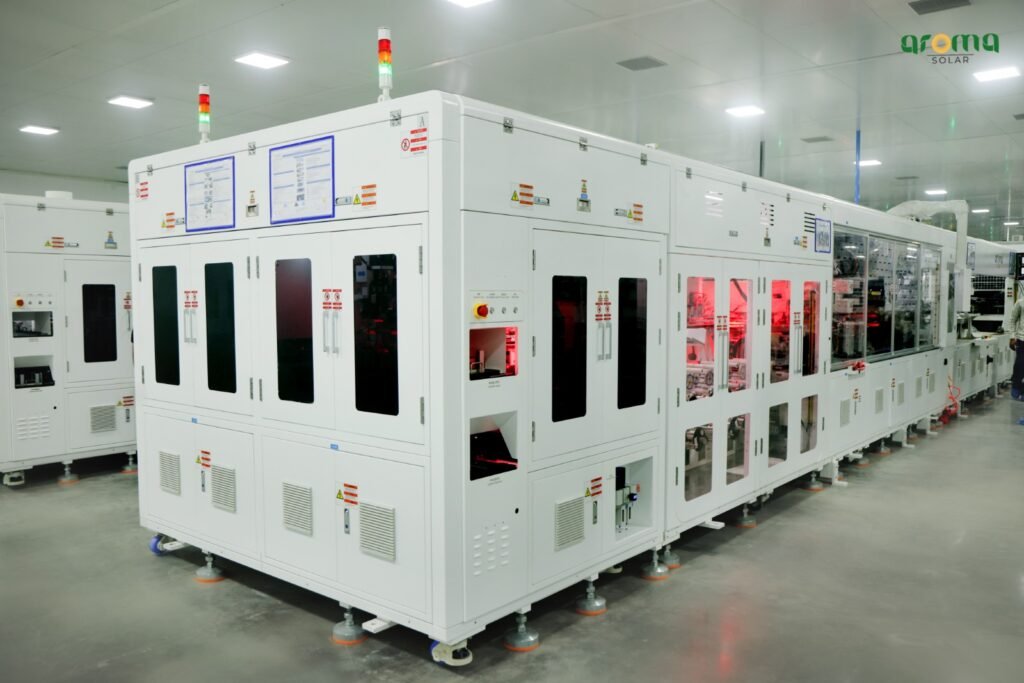
Karnal, Haryana, 6th, April 2026 – Aroma Solar, the renewable energy arm of agricultural exporter Aroma Agrotech Pvt. Ltd., has commenced operations at its 1.2 GW solar module manufacturing facility in Karnal. The plant represents North India’s first fully automated, AI-driven production line built on TOPCon technology.

The facility has begun production of TOPCon modules rated at 620 to 635 W with 23.51% efficiency. In an industry where manufacturing scale has often outpaced quality systems, Aroma Solar has designed its production line around two core priorities: process precision and module consistency.

The facility employs 100% robotic automation combined with AI-based quality verification to standardize cell placement and lamination—two manufacturing stages where defects frequently emerge years after installation. This approach moves past conventional assembly methods, engineering each module for long-term field performance rather than maximizing production volume alone.

Mayank Garg, CEO of Aroma Solar, stated, “India’s solar sector is entering a phase where quality is the core. To deliver that quality, we have installed North India’s first fully automated line from a chinese equipment supplier SC and are sourcing exclusively Tier-1 raw materials. But true manufacturing precision requires more than just advanced machinery. By combining the precision of artificial intelligence with the critical oversight of human expertise, we ensure absolute consistency in every module.”

Designed for the broader Indian solar market, the Tier-1 grade modules offer the bankability and production capacity needed for large-scale clean energy projects nationwide. 

Following this 1.2 GW launch, Aroma Solar has begun planning its next phase of capacity expansion focused on precision manufacturing. To strengthen supply chain control and increase vertical integration, the company is evaluating entry into solar cell and wafer production. This expansion strategy corresponds with India’s national objective of achieving full self-sufficiency across the renewable energy manufacturing ecosystem.

About Aroma Solar: (https://aromasolar.in/) 

Headquartered in Karnal, Haryana, Aroma Solar produces solar modules through AI-integrated automation systems and TOPCon technology. A subsidiary of Aroma Agrotech Pvt. Ltd.—a Government of India-recognized Four-Star Export House—the company has moved into EPC installations and IPP (Independent Power Producer) projects, providing clean energy infrastructure for commercial and utility-scale operations across India.