SuperManager AGI(formerly known as Oqlous AGI), a startup AI tech solution provider for enterprises, is conducting an active acquisition deal with an unidentified Fortune 100 global company; sources close to the matter have told me. The proposed buyout marks the growing demand of the corporate market for specialized independent software solutions within the global enterprise sphere. Sources said the quotation is valued at around ₹50 crore, and the transaction is currently progressing with representatives from both sides actively pushing it for a successful closure.
Founding leadership and rapid corporate evolution
The identity of the prospective acquiring entity could not be promptly determined, although the discussions continue. It is uncertain whether a binding definitive agreement has been signed yet involving the parties. In this context, Entrackr contacted SuperManager AGI and its co-founder, Nirmal Nambiar, directly regarding the status of the deal.
If completed, this strategic acquisition would occur less than 2 years after the company’s initial incorporation, an unusually short period for an enterprise technology buyout. SuperManager AGI is an early-stage startup founded in early 2025 by entrepreneurs Nirmal Nambiar and Aditya Sharma.
The principle of the startup was initially introduced to the market under the name of Oklous AGI and has been undergoing formal corporate rebranding to SuperManager AGI this year. Founding Group Construction has a robust technical and product development history in the enterprise software area. The business venture was founded by Nirmal Nambiar, who is an IIT Dharwad alumnus and is now the co-founder of the enterprise, and had previously served as a product manager at technology firm Microsoft.
Aditya Sharma is the technical heavyweight of the startup, managing all technology development and architectural engineering-related work for the platform. The startup quickly developed its software architecture under their joint leadership to resolve enterprise challenges. The entire founding team is anticipated to formally join the acquiring Fortune 100 company, joining hands in the expansion of the platform across markets worldwide.
Ecosystem partnership and proprietary technology stack
SuperManager AGI revolves around the creation of a sophisticated enterprise agentic AI system, allowing for the seamless deployment of autonomous AI agents in commercial enterprises. In large-scale organizations, these autonomous agents have been designed to perform complex workflows, focused on Project Management and Execution.
The main function of the software is to help automate the mundane management-related tasks and even optimize the execution workflows using the complex machine decision-making capabilities. The startup’s technological platform consists of two main proprietary innovations: the Beehive Agentic Architecture and the Agentic Data Architecture, often referred to as the ADA.
These proprietary architectures have received formal peer-reviewed publication for their academic and technical merits to the underlying framework. The proposed acquisition would include the entire SuperManager AGI technology on the target company’s side, giving the acquirer a tailored set of stand-alone enterprise solutions.
Although it was a short time in operations, SuperManager AGI has already carved out a respectable niche within the enterprise technology market. Disclosures from the company indicate that its platform currently supports more than 100 organizations, with several of them being Fortune 100 entities.
This initial commercial traction in enterprise-class has been instrumental in supporting the merits of its autonomous agent architecture. The company has also attracted strong support and established strategic partnerships within the wider AI and technology startup ecosystem.
SuperManager AGI is supported by well-known AI search powerhouse Perplexity. The company has also launched highly effective strategic alliances with top brand partners like Z.ai, Eternal, Swiggy, and Sarvam AI. Such business and technical partnerships have helped SuperManager AGI improve its product capabilities and increase its presence in the wider AI sector.
Conclusion
The prospect of the acquisition of SuperManager AGI by a Fortune 100 global entity for an estimated price of ₹50 crore underscores the emerging corporate appetite for specialized agentic AI solutions. The startup has shown significant progress in the span of less than 2 years, from its inception as Oqlous AGI to being proposed for a multi-million dollar acquisition. If the transaction is completed, the proprietary Beehive Agentic Architecture and Agentic Data Architecture, combined with the departure of its leadership, would represent a major departure from the early-stage enterprise AI market.
India’s flagship BGMI esports tournament returns from August 10 to September 6 with 24 teams and a month of high-stakes BGMI esports action
New Delhi, 03 August, 2026: NODWIN Gaming, a global leader in youth entertainment, today announced the return of the BGMI Masters Series (BGMS) for its fifth season. BGMS Season 5 will take place from August 10 to September 6, 2026, bringing together 24 teams for four weeks of competitive BGMI action.
Since its launch, BGMS has grown into one of the defining competitive platforms for BGMI esports in India. The fifth season introduces a refreshed format that rewards consistency from the very beginning of the tournament, with every match contributing to a team’s journey towards the championship.
The competition begins with League Week 1 from August 10 to 13, followed by Bounty Weekend from August 14 to 16. League Week 2 will take place from August 17 to 20, before teams compete in Super Weekend 1 from August 21 to 23. The final League Week will run from August 24 to 27, culminating in Super Weekend 2 from August 28 to 30.
The competition will culminate with the Playoffs from August 31 to September 2, before the top teams battle for the BGMS Season 5 championship at the Grand Finals from September 4 to 6.
Akshat Rathee, Co-Founder and Managing Director, NODWIN Gaming, said: “Five seasons ago, BGMS began with a simple ambition, to give Indian esports a stage that matched the passion and competitive talent within the community. Since then, we have seen the ecosystem evolve tremendously. Players are building longer careers, teams are becoming stronger institutions and fans are engaging with competitive gaming at a much deeper level. Season 5 is another step forward in that journey, and we’re looking forward to bringing fans another month of top-tier competition featuring the country’s best teams and players.”
The return of BGMS comes at a time when India’s gaming market is moving towards deeper community participation and long-term player experiences. According to Naavik’s India State of Play 2026 report, India’s mobile gaming market crossed $1 billion in combined revenue in 2025 and is projected to reach approximately $1.5 billion in 2026. Shooter games account for 43% of the country’s in-app purchase revenue, with Battle Royale titles continuing to drive significant engagement and spending.
Now in its fifth season, BGMS continues to bring some of India’s best professional players and emerging talent together on one of the country’s biggest competitive gaming stages. Through its evolving competitive formats and growing broadcast footprint, the tournament continues to strengthen the connection between players, teams and millions of gaming fans across the country.
Further details on participating teams, broadcast timings, prize pool and the complete tournament format will be announced soon.
One MobiKwik Systems Limited has just highlighted a major financial achievement for Q1 of FY27 (ended June 30, 2026). The digital payments and financial services company had realised consolidated net profits of ₹7.62 crore, with sustained operational leverage and rigid cost discipline. The operational performance showed a strong financial turnaround compared to Q1 FY26 when the consolidated net loss was recorded at ₹41.9 crore.
Operational efficiency and reallocated IPO proceeds
In addition to profitability, One MobiKwik Systems has also made a strategic shift in business capital allocation. The company’s board of directors approved reallocation of the proceeds of its Initial Public Offering (IPO). The capital rationalization is designed to deliver efficient cash deployment, build core digital payment system capabilities, and drive fast-track growth of high-margin business verticals on both the consumer and merchant side.
In the quarter ending in July 2027, consolidated net profit of ₹7.62 crore marks a year-on-year increase of ₹49.52 crore. The bottom-line reversal arrives from sequential gains made across the company’s primary revenue stream, including consumer payment solutions, payment gateway services, and digital financial product distribution.
Optimization of direct costs and operating leverage are key drivers of this earnings recovery. Fixed technology costs, administrative costs, and expenses were stretched thin across more transaction revenue as volume expanded in merchant payment solutions and consumer digital wallets. The improved operating efficiency contributed to wider operating margins, enabling the company to maintain profitability after two quarters of positive operating results in the second half of FY26.
One MobiKwik Systems has recently shared its financial statements for the first quarter of FY27, alongside expressing a distinct shift in its investment strategy concerning the raised capital from its public listing. The board gave formal approval for a reallocation of unallocated proceeds of IPOs to match capital investment with changing market opportunities in the fintech sector.
The realigned capital strategy is focused on investment in artificial intelligence, advanced data analytics, and scalable server infrastructure as transaction volume grows. The capital will be redirected to the key areas for strengthening core technology systems, developing risk management models around the distribution of financial products, and increasing user numbers in growth market areas.
Growth trajectory and strategic objectives
MobiKwik Systems saw steady growth for one of its main operating units during the quarter. The company’s payment aggregation vertical also experienced steady gains in total payment volume (TPV) driven by growing merchant partnerships and growing credit penetration through Unified Payments Interface (UPI) in the company.
The financial services segment, which includes digital credit distribution, insurance and wealth management solutions, remained strong on the cross-selling front. The platform was able to reduce customer acquisition costs while increasing revenue streams through high-margin sales due to its existing customer base. The multi-product strategy improved overall unit economics and contributed to the quarterly profit figure of ₹7.62 crore.
One MobiKwik Systems continues to manage profitable growth with an expanding ecosystem. The second-partner distribution of IPO proceeds gives the business the means to pursue product innovation without damaging existing cash flow.
The firm intends to expand its offline as well as online merchant offerings and continues to evolve its digital wallet and payment gateway capabilities. One MobiKwik Systems will continue to consolidate its market stance in India’s digital finance space during the balance of FY27 through focused capital deployment, enhanced technical solutions, and clear focus on direct spending.
Conclusion
The financial outcome in Q1 FY27 represents a significant milestone for One MobiKwik Systems, transitioning from a net loss of ₹41.9 crore in Q1 FY26 to net profit of ₹7.62 crore. The company’s balance sheet and operating mix have been optimized for long-term value creation in conjunction with the strategic U-turn reallocation of its IPO proceeds.
With technological enhancements, prudent cost controls, and focused market expansion, MobiKwik is well placed to keep its digital payments and financial services momentum going.
RoadGrid has raised financial assistance of ₹13 crore from the Technology Development Board under the Department of Science and Technology. The financial support is provided towards a gross project cost estimated at ₹27.5 crore for setting up a dedicated manufacturing and assembly plant for the company’s patented Universal EV Charger. The strategic support reflects the increasing institutional drive to build their own manufacturing potential in the constantly developing electric mobility landscape in the country.
Multi-vehicle support capabilities and operational control
The investment will allow RoadGrid to build a high-tech campus dedicated to commercializing its proprietary EV charging infrastructure. The next manufacturing facility will have a capacity of 2,000 chargers per year and will enter commercial production officially in March 2027.
The manufacturing effort marks a critical advance in RoadGrid’s ability to move into indigenous manufacturing, directly addressing the growing market need for reliable charging hardware in both enterprise and consumer markets. RoadGrid, established in 2020, concentrates on designing end-to-end EV charging equipment, smart software platforms, and power management solutions.
The centrepiece of the startup’s portfolio is its patented Universal EV Charger, which is engineered specifically for interoperability. It works with electric 2-wheelers, 3-wheelers, electric passenger vehicles, and electric commercial vehicles with a single, common charging infrastructure. The multi-vehicle capability addresses a key challenge in the charging network where different vehicle types typically require different hardware configurations.
The new facility will be responsible for the entire production and assembly of several key components, providing end-to-end operational control and localized manufacturing. The plant will be used to manufacture power electronics, thermal management solutions, communication modules, control hardware and metering systems, the brand says. The whole project has been built using locally manufactured components to minimize the dependence on imported assemblies, while generating more than 100 new technical and operational jobs in the country.
Financial assistance and enterprise partnerships
RoadGrid had built a solid operational ground in the domestic charging market before getting back into the hands of the Technology Development Board. The startup currently employs more than 40 people and has deployed more than 100 EV chargers across the country and maintains over 200 active charging stations. The experience and capabilities gained by these early expansions have helped the company identify the performance metrics needed for its design of the high-throughput manufacturing routes for its new facility.
On the commercial side, RoadGrid is directly connected to 6 main enterprise clients. The company has also signed strategic collaborations with key market players in the automotive manufacturing and energy distribution segments such as VinFast, HPCL, and IOCL. Such enterprise partnerships will prove crucial in scaling up the deployment of RoadGrid’s charging hardware in public charging hubs, fleet charging stations, and petrol pump networks across India.
The financial support from the Technology Development Board has followed prior institutional support received by the firm at the beginning of the year. RoadGrid had previously received funding of ₹12 crore in the pre-Series A round led by Venture Catalys.
That private funding was then used for continued product development, initial manufacturing facilities, and deployment of public charging infrastructure in target cities. The establishment of the dedicated facility is set to transform the company’s financial profile.
RoadGrid anticipates that the new manufacturing facility will bring about ₹100 crore of annual revenue at an initial production level of 1,000 chargers. The company expects to start commercializing in March 2027, aiming to generate sustainable financial returns and contribute to the larger infrastructure goal of the EV transition.
Conclusion
RoadGrid’s ₹13 crore support from the Technology Development Board underscores the importance of government-backed institutions in driving green technology manufacturing. RoadGrid, with the investment of ₹27.5 crore, is developing a strong gas station manufacturing program for its patented Universal EV Charging system, which will rely on partnerships with major fronts like VinFast, HPCL, and IOCL.
With its emphasis on establishing localized supply chains, job creation, and multi-vehicle charging architecture, the firm is well positioned to contribute to the adoption of EVs in India, as it will reach the production timeline in March 2027.
The United Kingdom has produced some of the world’s most influential businessmen who have built successful companies across industries such as technology, retail, chemicals, telecommunications, and manufacturing. These entrepreneurs have created globally recognized brands, generated billions in revenue, and contributed significantly to the UK’s economy. From self-made innovators to experienced corporate leaders, their achievements continue to inspire future entrepreneurs and business professionals.
Top 10 Businessmen in UK – Quick Comparison
Rank
Businessman
Company
Industry
Estimated Net Worth (2026)
1
Sir James Dyson
Dyson Ltd.
Technology & Manufacturing
$20+ Billion
2
Sir Jim Ratcliffe
INEOS
Chemicals & Energy
$18+ Billion
3
Sir Richard Branson
Virgin Group
Conglomerate
$3+ Billion
4
Mike Ashley
Frasers Group
Retail
$5+ Billion
5
Lakshmi Mittal
ArcelorMittal
Steel
$17+ Billion
6
Sir Philip Green
Arcadia Group (Former)
Retail
$900+ Million
7
Peter Jones
Peter Jones Enterprise Academy
Investment
$500+ Million
8
John Caudwell
Phones4U
Telecommunications
$3+ Billion
9
Alan Sugar
Amstrad
Electronics
$1.5+ Billion
10
Simon Wolfson
Next plc
Fashion Retail
$200+ Million
Sir James Dyson
Founded in 1991 by Sir James Dyson, Dyson Ltd. is headquartered in Malmesbury, England. The company develops innovative home appliances and consumer technology products. It is best known for its bagless vacuum cleaners and has expanded into air purifiers, hair care products, and robotics. Dyson operates in over 80 countries and invests heavily in research and engineering.
Details
Information
Founder
Sir James Dyson
Founded
1991
Headquarters
Malmesbury, Wiltshire, England
Industry
Consumer Technology
Best Known For
Bagless Vacuum Cleaners, Air Purifiers, Hair Care Products, and Hand Dryers
Sir James Dyson is one of Britain’s most successful inventors and entrepreneurs. After spending years perfecting cyclone technology, he launched Dyson and transformed the home appliance industry. Today, the company produces premium vacuum cleaners, air purifiers, hand dryers, fans, and beauty products that are sold worldwide.
Dyson is recognized for combining engineering excellence with innovative design and continues to invest billions in robotics, battery technology, and artificial intelligence. Beyond business, James Dyson actively supports engineering education and innovation through scholarships and research initiatives.
Sir Jim Ratcliffe
Founded in 1998 by Sir Jim Ratcliffe, INEOS is headquartered in London, England. The company operates in chemicals, energy, and manufacturing and is one of the world’s largest privately owned chemical businesses. INEOS generates tens of billions of dollars in annual revenue while expanding into clean energy, automotive manufacturing, and sports investments.
Details
Information
Founder
Sir Jim Ratcliffe
Founded
1998
Headquarters
London, England
Industry
Chemicals and Energy
Best Known For
INEOS Group
Sir Jim Ratcliffe built INEOS through strategic acquisitions and strong operational management. What began with a single chemical business has grown into a multinational company with operations across Europe, Asia, and North America. Under his leadership, INEOS has diversified into hydrogen energy, automotive manufacturing through INEOS Automotive, and professional sports. Ratcliffe is known for making bold investment decisions and building one of Britain’s largest privately owned companies. His business success has made him one of the UK’s richest entrepreneurs.
Sir Richard Branson
Founded in 1970 by Sir Richard Branson, the Virgin Group is headquartered in London, England. The company operates across industries including aviation, telecommunications, finance, hospitality, and space tourism. Virgin is best known for building globally recognized consumer brands and operates businesses in more than 35 countries.
Details
Information
Founder
Sir Richard Branson
Founded
1970
Headquarters
London, England
Industry
Conglomerate
Best Known For
Virgin Group
Sir Richard Branson started his entrepreneurial journey with a student magazine before launching Virgin Records. Over the decades, he expanded the Virgin brand into airlines, mobile services, banking, hotels, healthcare, and commercial space travel. Branson is admired for his innovative leadership style and willingness to enter highly competitive industries. Through Virgin Galactic, he has also helped advance commercial space tourism. His achievements, leadership philosophy, and philanthropic work have made him one of the world’s most recognizable entrepreneurs.
Mike Ashley
Founded in 1982 by Mike Ashley, Sports Direct, now operating under Frasers Group, is headquartered in Shirebrook, England. The retail group specializes in sportswear, fashion, and lifestyle brands. It is best known for acquiring well-known British retailers and building one of the UK’s largest retail businesses.
Details
Information
Founder
Mike Ashley
Founded
1982
Headquarters
Shirebrook, England
Industry
Retail
Best Known For
Sports Direct and Frasers Group
Mike Ashley opened his first sports shop with a small investment before expanding it into Sports Direct. Through Frasers Group, he acquired several major retailers, including House of Fraser, Flannels, Evans Cycles, and Game. His strategy of acquiring struggling businesses and restructuring them has made Frasers Group a leading retail company in the UK. Ashley is known for his practical business approach and long-term investment strategy, making him one of Britain’s most influential retail entrepreneurs.
Lakshmi Mittal
Although born in India, Lakshmi Mittalhas long been based in London, England and leads ArcelorMittal, the world’s largest steel manufacturing company. The company is best known for
supplying steel to industries including construction, automotive, and infrastructure. ArcelorMittal operates in more than 60 countries and remains one of the global leaders in steel production.
Details
Information
Founder
Lakshmi Mittal (Mittal Steel)
Headquarters
London, England
Industry
Steel Manufacturing
Best Known For
ArcelorMittal
Lakshmi Mittal transformed the global steel industry through strategic acquisitions and mergers, eventually creating ArcelorMittal. Under his leadership, the company expanded across Europe, Asia, Africa, and the Americas while becoming one of the largest steel producers in the world. Mittal has played a major role in improving production efficiency and supporting infrastructure development globally. Along with his business achievements, he is also known for philanthropy and supporting education, healthcare, and community development projects. His global influence makes him one of the UK’s most respected business leaders.
Sir Philip Green
AlthoughSir Philip Greendid not found Arcadia Group, he acquired the business in 2002 and transformed it into one of Britain’s largest fashion retail companies. Headquartered in London, England, Arcadia owned famous high-street brands including Topshop, Topman, Dorothy Perkins, Burton, and Miss Selfridge. At its peak, the group employed thousands of people and operated hundreds of stores across the UK.
Details
Information
Business Leader
Sir Philip Green
Acquired Arcadia
2002
Headquarters
London, England
Industry
Fashion Retail
Best Known For
Arcadia Group and Topshop
Sir Philip Green became one of the UK’s best-known retail businessmen after acquiring Arcadia Group. Under his leadership, brands such as Topshop gained international popularity and expanded into major global markets. His aggressive retail strategy helped Arcadia dominate Britain’s high street for many years. Although the company later entered administration due to changing consumer trends and financial difficulties, Green remains a significant figure in British retail history. His career demonstrates both the opportunities and challenges of operating in the fast-changing fashion industry.
Peter Jones
Peter Jones is a British entrepreneur and investor who founded the Peter Jones Enterprise Academy in 2009. Based in London, England, the academy helps young people develop entrepreneurial skills and launch successful businesses. Jones is best known for building businesses in telecommunications and technology and for appearing as an investor on BBC’s Dragon’s Den.
Details
Information
Founder
Peter Jones
Founded
2009 (Enterprise Academy)
Headquarters
London, England
Industry
Investment and Entrepreneurship
Best Known For
Dragon’s Den
Peter Jones built successful businesses in telecommunications, media, and technology before becoming one of Britain’s best-known investors. His appearances on Dragon’s Den introduced him to millions of viewers while allowing him to invest in promising startups. Through the Peter Jones Enterprise Academy, he has helped thousands of young entrepreneurs gain practical business education. Jones also supports charitable initiatives and regularly mentors aspiring business owners, making him one of the UK’s most respected entrepreneurs.
John Caudwell
Founded in 1987 by John Caudwell, Phones4U was headquartered in Staffordshire, England and became one of Britain’s leading mobile phone retailers. The company was best known for making mobile phones more accessible to consumers before being sold in a deal worth approximately £1.5 billion. Caudwell has since expanded into property investment and philanthropy.
Details
Information
Founder
John Caudwell
Founded
1987
Headquarters
Staffordshire, England
Industry
Telecommunications
Best Known For
Phones4U
John Caudwell built Phones4U into one of the UK’s largest mobile phone retailers during the rapid growth of the telecommunications industry. After selling the company, he invested in luxury real estate and other business ventures while becoming one of Britain’s leading philanthropists. Through the Caudwell Foundation, he has donated millions to healthcare, children’s charities, and medical research. His entrepreneurial success and commitment to charitable causes have earned him widespread recognition in the UK business community.
Alan Sugar
Founded in 1968 by Lord Alan Sugar, Amstrad is headquartered in London, England. The company became one of Europe’s leading consumer electronics manufacturers, producing affordable computers, satellite equipment, and electronic devices. Alan Sugar is also widely recognized as the long-time star of BBC’s The Apprentice.
Details
Information
Founder
Alan Sugar
Founded
1968
Headquarters
London, England
Industry
Electronics
Best Known For
Amstrad
Lord Alan Sugar started his entrepreneurial journey by selling electronic goods from a van before establishing Amstrad. The company became one of Britain’s biggest technology brands during the 1980s and 1990s. Following the success of Amstrad, Sugar expanded into property investment through Amsprop Investments and continued investing in businesses. His role on The Apprentice has inspired countless entrepreneurs and strengthened his reputation as one of Britain’s most successful businessmen. He is admired for his practical business advice and long-term investment approach.
Simon Wolfson
Simon Wolfsonhas served as the Chief Executive Officer of Next plc since 2001. Headquartered in Leicester, England, Next is one of the UK’s largest fashion retailers, offering clothing, footwear, and home products. The company is best known for its successful online retail strategy and consistently strong financial performance in the competitive fashion industry.
Details
Information
Position
Chief Executive Officer (CEO)
Company
Next plc
Headquarters
Leicester, England
Industry
Fashion Retail
Best Known For
Digital Retail Growth
Simon Wolfson has successfully led Next through the rapid growth of online shopping and changing consumer preferences. Under his leadership, the company invested heavily in e-commerce, logistics, and digital innovation while maintaining consistent profitability. His strategic decision-making helped Next outperform many traditional retailers despite economic challenges. Wolfson is widely respected for his disciplined management style and focus on long-term growth. His leadership has made Next one of the UK’s strongest-performing retail businesses.
Conclusion
The United Kingdom is home to some of the world’s most influential businessmen, whose companies have transformed industries ranging from technology and manufacturing to retail and telecommunications. Entrepreneurs like Sir James Dyson, Sir Jim Ratcliffe, Richard Branson, and Alan Sugar have built globally recognized businesses through innovation, strategic leadership, and long term vision.
Their success has created millions of jobs, contributed significantly to the British economy, and inspired future generations of entrepreneurs. As the UK’s business landscape continues to evolve, these leaders remain powerful examples of how determination, creativity, and smart decision-making can build lasting global enterprises.
Frequently Asked Questions (FAQs)
Who is the richest businessman in the UK?
Sir James Dyson and Sir Jim Ratcliffe are among the richest businessmen in the UK.
Who founded the Virgin Group?
Sir Richard Branson founded the Virgin Group in 1970.
What is INEOS known for?
INEOS is one of the world’s largest privately owned chemicals and manufacturing companies.
Which businessman invented the bagless vacuum cleaner?
Sir James Dyson developed the cyclone-based bagless vacuum cleaner.
Who founded Amstrad?
Lord Alan Sugar founded Amstrad in 1968.
Who owns Frasers Group?
Frasers Group was founded by Mike Ashley, who built it into one of Britain’s largest retail businesses.
Why is Peter Jones famous?
Peter Jones is known for his investments, entrepreneurship, and appearances on BBC’s Dragon’s Den.
Is Lakshmi Mittal based in the UK?
Yes. Lakshmi Mittal is based in London and is one of the UK’s most influential business leaders.
What company did John Caudwell found?
John Caudwell founded Phones4U, one of Britain’s leading mobile phone retailers.
Who is the CEO of Next plc?
Simon Wolfson has served as the CEO of Next plc since 2001.
Few business stories anywhere in the world have swung as dramatically, or as publicly, as Gautam Adani‘s. In a matter of weeks in early 2023, a single short-seller report wiped over $100 billion off his fortune and knocked him out of the world’s top 20 richest people.
Not long after, he was back at the top of Asia’s rich list, with his companies posting share-price surges of up to 7% in a single trading day. Understanding Adani’s net worth today means understanding that volatility isn’t a footnote to his story — it’s the story.
This article walks through Gautam Adani’s estimated net worth, biography, family background, and the business decisions that built (and repeatedly tested) the Adani Group empire — with verified data, structured comparisons, and answers to the questions readers ask most.
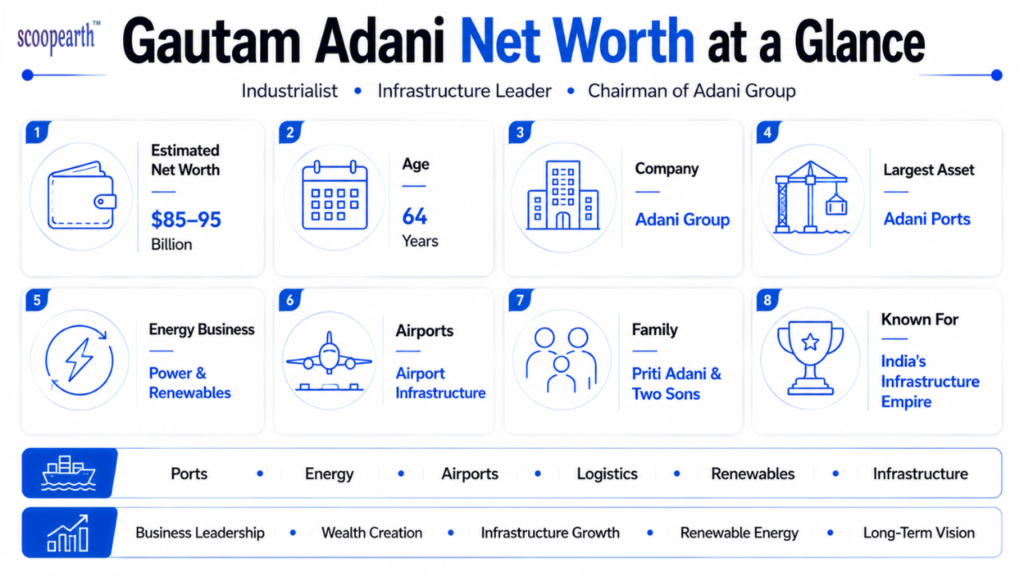
Quick Profile Overview
Detail
Information
Full Name
Gautam Shantilal Adani
Date of Birth
June 24, 1962
Place of Birth
Ahmedabad, Gujarat, India
Education
Dropped out of the second year of B.Com at Gujarat University
Occupation
Founder & Chairman, Adani Group
Known For
Founding India’s largest ports-to-energy business conglomerate, including Mundra Port, and entering the renewable energy and airports sectors
Spouse
Priti Adani (married 1986), a dentist and chairperson of the Adani Foundation
Children
Karan Adani and Jeet Adani
Net worth (Estimated)
Approximately $85 – 95 billion according to Forbes and Bloomberg as of now
Global Rank
Typically top 15 – 25 richest individuals in the world and Asia’s richest person several times over.
Who is Gautam Adani?
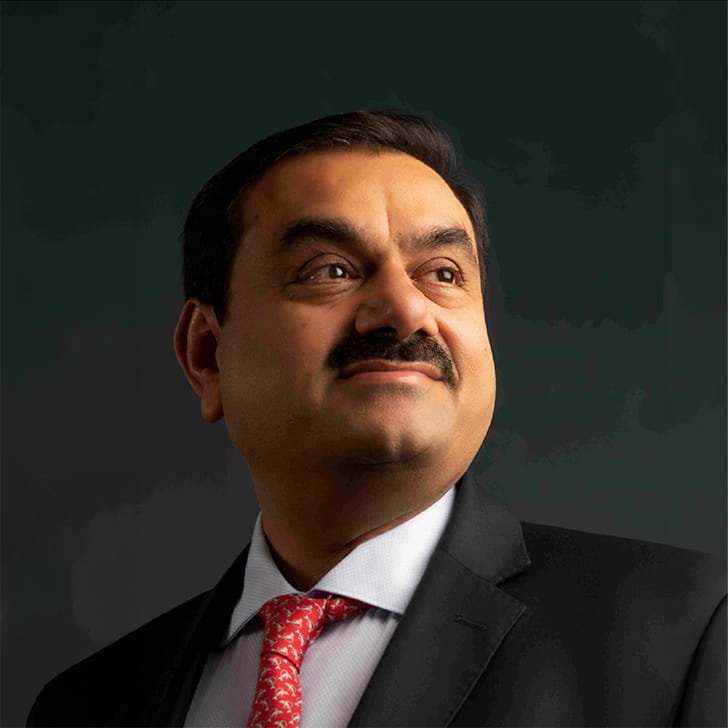
Image Courtesy: Adani Group / Official Website
Gautam Adani is an Indian billionaire businessman who is the founder and chairman of the Adani Group conglomerate of companies. The businesses’ sphere of activity includes ports and logistics, power, renewable energy, airports, cement, and media.
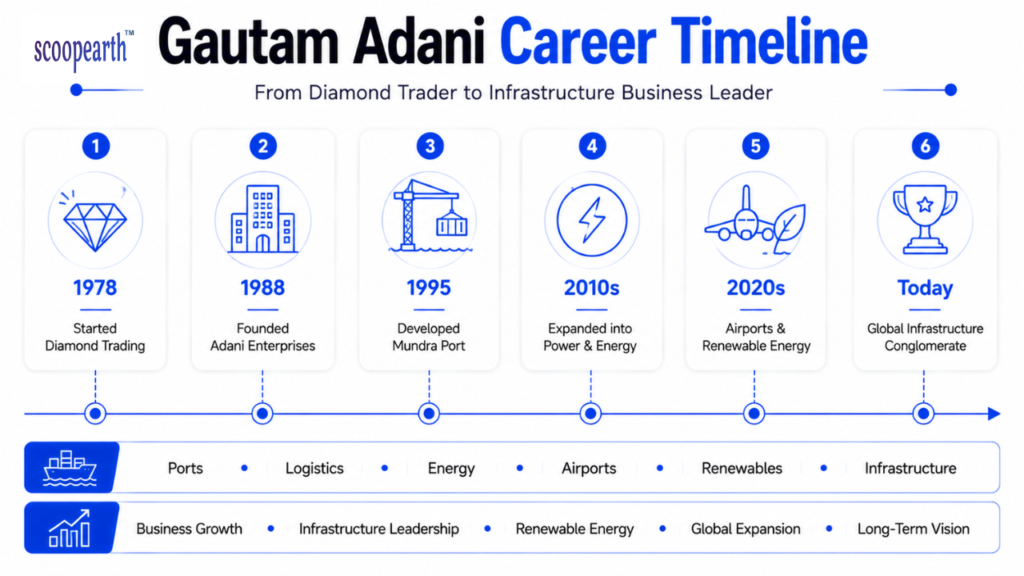
Adani was born in Ahmedabad, Gujarat, in 1962. He completed high school and was sent back from his second year at the B.Com course at Gujarat University; he moved to Mumbai at the age of 16 and worked in the diamond business before returning to Ahmedabad to complete his studies.
There he began to work in his brother’s plastic factory. In 1988, Adani opened the company that would develop into Adani Enterprises and became a billionaire several years later.
Gautam Adani Net Worth
Gautam Adani’s net worth is challenging to estimate due to several factors. First and foremost, almost all of his wealth is tied to the holdings in several publicly traded companies owned by the Adani Group.
Therefore, his net worth estimates are highly dependent on the ever-changing value of these securities. According to the latest Forbes Real-Time Billionaires data, Gautam Adani’s net worth is approximately $89 billion, making him one of the richest men in Asia.
The volatile nature of the Adani Group’s stock prices makes Gautam Adani’s net worth one of the most compelling statistics to follow. In particular, to put the changes in context, below are some selected net worth estimates for various dates in recent years:
Period
Estimated Net Worth
What Happened
Peak (2022)
Approx. $156.3 billion
Briefly the world’s second-richest person, overtaking figures like Bill Gates
Before controversy hit (early 2023)
Approx. $120 billion
Still ranked world’s third-richest
After short-seller report (2023)
Approx. $48 billion
Collapse following allegations of stock manipulation and accounting fraud; Adani dropped to 25th on global rich lists
Recovery phase (2023–2024)
Roughly $60–85 billion range
Gradual recovery as Adani Group stocks stabilized
Recent tracking
Approx. $85–95 billion
Renewed rally across Adani Group companies; regained “Asia’s richest” title
Why did his net worth change?
Gautam Adani’s net worth experienced a significant decline in January 2023 after a report by the US-based short-seller Hindenburg Research, which accused the Adani Group of orchestrating a stock-rigging scam and using billions of dollars in revenues to fund Modi’s political campaigns.
The Adani Group strongly denied this report, and an SEBI investigation found no evidence of fraud, but it had a significant impact on the stock prices of the companies owned by the business magnate.
In addition to the SEBI probe, the US authorities accused Gautam Adani and his nephew Sagar Adani of bribing officials, and a criminal case was brought against them. This case was dropped by the US prosecutors, but both Adani and his nephew had to pay substantial fines in a civil lawsuit, settling the dispute without either side admitting guilt or liability.
Moreover, Adani Enterprises was accused of violating Iran sanctions and reached an agreement to settle these allegations as well. Adani’s net worth started to recover as these investigations lost momentum.
What Drives His Net Worth
Adani Enterprises — The group’s flagship company and incubator for new businesses, spanning mining, airports, and green hydrogen.
Adani Ports & Special Economic Zone (APSEZ) — India’s largest private port operator, run by his elder son Karan Adani, with a market value regularly among the highest in the group.
Adani Power — One of India’s largest private thermal power producers.
Adani Green Energy — The group’s renewable energy arm, positioned to benefit from India’s long-term clean energy transition and among the more volatile stocks in the portfolio.
Adani Energy Solutions — Focused on power transmission and distribution infrastructure.
Combined group market value — Across the group’s major listed entities, combined market capitalization has recently been estimated in the range of $190 billion or more, underscoring the sheer scale of the businesses underpinning Adani’s personal wealth.
Group debt — It’s worth noting that the Adani Group also carries substantial net debt, reported at roughly $29 billion in past disclosures — a detail sometimes cited by market watchers as a reason headline net worth figures may overstate genuinely realizable wealth, since most of it is held in shares rather than cash.
Early Life and Education
Gautam was born on June 24, 1962, in Ahmedabad, Gujarat, to Shantilal Adani, a minor textile merchant, and Shantaben, a housewife. He was one of the eight children in the family, and his elder brother Mansukhbhai Adani played a considerable role in his life.
He studied at Sheth Chimanlal Nagindas Vidyalaya School, Ahmedabad, Gujarat, and Gujarat University, where he was preparing to receive a commerce degree. However, he left the university in the second year and went to Mumbai (then Bombay) at the age of 16 to work in the diamond business.
There he earned his first million rupees by the early twenties and returned to Ahmedabad to start working at his brother’s plastic factory.
Career Path: Building the Adani Group
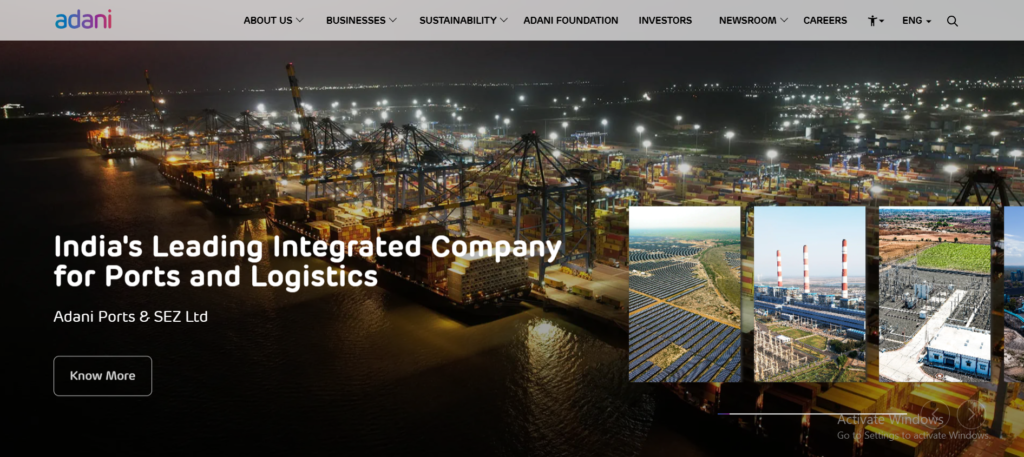
Image Courtesy: Adani Group / Official Website
From Diamonds to Commodities (1978-1988)
Adani began his career in the diamond business in Mumbai in 1978. Within a few years, he had amassed a considerable amount of wealth and returned to Gujarat in the early 80s to help his brother with his plastic manufacturing business.
In his work, he became familiar with commodities trading and import-export operations, especially with polyvinyl chloride, which became the basis for his further work.
Founding Adani Enterprises (1988)
Image Courtesy: Adani Enterprises Ltd / Official Website
In 1988, he founded his company, Adani Enterprises Ltd., in which he traded in agricultural commodities and, in the mid-90s, began to develop the power sector. The economic liberalization policy of 1991, which opened the doors of the Russian market, allowed him to develop his trading company as a major player in the economy during the 90s.
Mundra Port: Expansion and the Turnover of the Infrastructure Group
The business concept of Mundra Port in Gujarat, which has since become India’s largest port, turned the Adani Group into an infrastructure and energy holding company. Over twenty years, the group has expanded its portfolio to include a significant number of infrastructure projects and power plants, thereby consolidating its position as one of India’s most influential energy companies.
Diversification of the Holding: Airports, Power Plants, Cement, and Renewables
In recent years, the Adani Group has been expanding rapidly, investing heavily in the development of thermal and renewable power plants, airports, and cement production (Ambuja Cements and ACC). Via Adani Renewables, the company has created one of India’s largest solar energy producers.
Expansion into the renewable energy sector, combined with the development of the power sector and the acquisition of assets in the air transportation sector, has contributed to the growth of the company’s total asset value to hundreds of billions of dollars.
However, the decrease in the value of any of the components significantly affects the fall in the value of the holding and, consequently, the wealth of its founder.
Controversies and Changes in Ownership Structure
The most influential event for the further development of the company and the personal wealth of Gautam Adani was the short-selling report published by Hindenburg Research in January 2023.
It detailed alleged fraud and stock manipulation attempts through billion-dollar transactions at various Adani Group firms. Shortly after the report, Adani Group’s shares dropped by more than 100 billion dollars in value. Additionally, the wealth of Gautam Adani himself was halved, making him lose his place in the top twenty richest people in the world.
Adani Group strongly denied all allegations, and India’s market regulator, SEBI, concluded that the claims were “not established.” On the other hand, the founder and his son Sagar Adani were accused of bribing US officials, which could have hampered the development of the company’s business in the United States.
However, the criminal case was dropped, and the civil case was settled with a significant fine. As a result, the shares of the company increased in value, and Gautam Adani returned to the position of the richest person in Asia.
Family Life
Gautam married dentist Priti Vora in 1986. Priti Adani is a chairperson of the Adani Foundation, which takes care of education, health, and rural livelihood projects in several states, as well as the Adani Vidya Mandir chain of schools, which gives admissions to children from poor families.
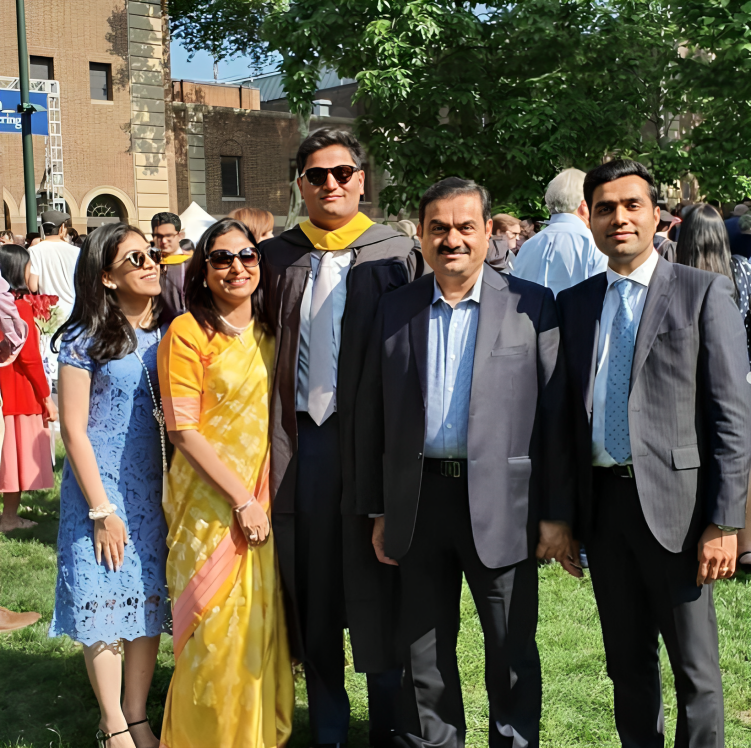
Image Courtesy: @gautam.adani / Instagram(Gautam Adani with his wife, sons, and daughters-in-law)
The couple has two sons. Karan Adani was born in 1987 (December 7th) and graduated from Purdue University, studying Economics there. After that, he returned to India and joined the family business, becoming the Managing Director of Adani Ports & Special Economic Zone.
He is in charge of the ports and logistics business, which operates in several countries. He married Paridhi Shroff in 2013, the daughter of famous corporate lawyer Cyril Shroff. His younger brother Jeet also graduated from the University of Pennsylvania, studying at the School of Engineering and Applied Science.
He began working for the company at a young age and is now the Director of Adani Airports Holdings. He married Diva Jaimin Shah in Ahmedabad in a large wedding.
FAQs
What is Gautam Adani’s net worth?
According to Forbes and Bloomberg’s real-time billionaires’ data, Gautam Adani’s net worth is around $89 billion. Still, since most of Adani Group’s companies are publicly traded, his net worth significantly varies depending on the time of the assessment. Thus, it is essential to check the real-time billionaire tracker for the updated data.
Why did Gautam Adani’s net worth fluctuate?
The short-seller report accusing Adani Group of fraud and stock price manipulation that led the markets to crash and, consequently, Gautam Adani’s net worth to fluctuate was published right before his net worth reached a peak of $156 billion before collapsing to roughly $48 billion. Nevertheless, Adani Group refuted the allegations, and India’s market regulator highlighted that claims made by Hindenburg Research were “not established.”
How old is Gautam Adani?
Gautam Adani was born on June 24, 1962, in Ahmedabad, Gujarat. As such, one can calculate his age from this piece of information.
What is Gautam Adani’s educational qualification?
Gautam Adani studied at Gujarat University to graduate with a B.Com degree, but he dropped out of the college in the second year to concentrate on his career in the diamond business in Mumbai.
Who is Gautam Adani’s wife?
Gautam Adani is married to Priti Adani, who is a dentist by profession. She is the chairperson of the Adani Foundation that takes care of all the charitable activities run by the Adani Group.
How many children does Gautam Adani have?
Gautam Adani has two sons, Karan Adani and Jeet Adani.
How did Gautam Adani make his money?
Gautam Adani started his business career in 1988 when he opened Adani Enterprises as a commodities trading company. Since then, he has been developing the holdings into a substantial conglomerate that involves the trading of coal, uranium, and other minerals. Additionally, the business group has a significant presence in the fields of ports, power, renewables, airports, and cement, with Mundra Port being its largest asset.
What are the allegations against Gautam Adani?
US-based short-seller Hindenburg Research accused the Adani Group of facilitating stock price manipulation and accounting fraud in its listed entities. Although Adani Group responded to the allegations and denied them, India’s market regulator confirmed that the accusations made by Hindenburg Research “were not established.”
Is Gautam Adani involved in any legal cases in the US?
Gautam Adani and his nephew Sagar Adani were accused of bribing US officials, but then the case was dismissed. Besides, the US Securities and Exchange Commission (SEC) filed a civil securities fraud lawsuit against Adani Group and his family, and then a settlement was reached when Adani Group paid a fine without either party admitting wrongdoing or liability.
What companies does Adani Group own?
The companies owned by Adani Group include Adani Enterprises (commodities trading and new ventures), Adani Ports & SEZ (logistics), Adani Power (thermal power generation), Adani Green Energy (renewable energy), and Adani Energy Solutions (transmission). In addition to airports and airports, the business group has Ambuja Cements and ACC in the cement production and trading field.
Conclusion
Gautam Adani is a living epitome of the adage that money is a flexible commodity in the current volatile financial ecosystem. From being a small-time diamond dealer in Mumbai, he has risen to become the head of the conglomerate business empire.
However, his journey to the top of India’s business hierarchy has been eventful, to say the least. In addition, his current net worth has been significantly influenced by a recent controversy over a $48 billion short report on his business empire.
Nevertheless, despite the allegations, the sheer scope of the Adani empire has become so large that even a minor correction might affect the net worth of various Indian conglomerates. With that said, given the group’s current push towards renewable energy, Gautam Adani’s net worth will change in both the short and long term.
The Indian passenger vehicle market showed robust sales performance in July 2026, with several leading automotive manufacturers, including Hyundai Motor India Limited, delivering high growth figures in domestic as well as export markets. Hyundai Motor India Limited claimed its highest-ever monthly sales, according to operational announcements made by the respective companies.
High scores from the traditional internal combustion engines and electric vehicles underscore healthy demand, market growth, and continuing consumer interest as the auto industry starts its first month of the new quarter.
Hyundai Motor India achievement and market expansion
In July 2026, Hyundai Motor India Limited achieved its highest monthly sales ever mark alongside the performance of Tata Motors. The automaker reported a combined sales volume of 75,360 in the month, representing a 25.4% increase over all sales in July 2025. The total volume was 54,210 units of domestic market sales, thus making an increase of 23.3% compared to the previous year.
Hyundai Motor India Limited exported 21,150 units of vehicles in the month of July, 2026, making a phenomenal growth rate of 31.4% compared to the export sales made in the same period of July, 2025. The company claimed that the sales figure of 21,150 units of its sales in July 2026 was its best-ever month sales in exports in more than 100 months. The milestone reflects solid demand from overseas buyers and continued cross-border demand for local auto sales.
Based on the performance, the Managing Director and Chief Executive Officer, Tarun Garg, stated that the company opened the new quarter well. The sales performance has reinforced both the Hyundai brand’s consumer confidence as well as the company’s consistent operational strategy of Make-in-India, Made-for-the-World, he pointed out.
On individual vehicle products, Hyundai Motor India Limited’s sales of popular range models in July 2026 were encouraging. The consolidated July 2026 sales data shows strong sales growth for conventional internal combustion and electric vehicles. The electric vehicle market is witnessing continued adoption and market penetration amongst car buyers.
The firm’s overall sales and high export volumes demonstrate the competitiveness and continued demand for Indian-made passenger vehicles. Strong starting volume numbers and orders from domestic buyers and overseas exports are two key drivers for sector growth as auto manufacturers enter the new quarter.
Conclusion
Passenger vehicle sales in July 2026 reveal strong consumer demand and dynamics in the market for some of the key players in the industry. Hyundai Motor India Limited achieved the highest monthly sales volume of 75,360, with a 23.3% YoY growth in its sales volume of 54,210 units, and its export figures were also the highest in over 100 months at 21,150 units.
The Indian passenger vehicle market starts the second quarter of the fiscal year on a firm footing as strong home demand and growing export corridors support the performance of model-level milestones like 18,088 from 18 CRETA and 6,738 units of i20.
Michelle Keegan is one of the most successful actresses on British television. She has built an impressive career through popular TV dramas, brand endorsements, and business ventures. From becoming a household name in Coronation Street to starring in hit series like Our Girl, Brassic, and Fool Me Once, Michelle has consistently remained one of the UK’s highest-paid television personalities.
Image Courtesy: Instagram /@michkeegan
Apart from acting, Michelle earns through D2C fashion collaborations, endorsements, and social media partnerships. Her growing wealth has allowed her to enjoy a luxurious lifestyle with stunning properties, designer fashion, and luxury holidays.
In this article, we explore Michelle Keegan’s net worth, salary, acting career, husband, income sources, assets, and lifestyle.
Michelle Keegan Net Worth
Details
Information
Full Name
Michelle Elizabeth Keegan
Net Worth (2026)
Estimated $8 Million (Approx. £6 Million)
Annual Income
Around $1 Million
Profession
Actress, Model, Entrepreneur
Birth Date
June 3, 1987
Birthplace
Stockport, Greater Manchester, England
Nationality
British
Husband
Mark Wright
Famous For
Coronation Street, Our Girl, Brassic, Fool Me Once
Michelle Keegan has accumulated an estimated net worth of $8 million through acting, endorsement deals, modelling assignments, and commercial partnerships. Her consistent presence on British television has helped her maintain a stable and growing income over the years.
Michelle Keegan Early Life
Michelle Elizabeth Keegan was born on 3 June 1987 in Stockport, Greater Manchester, England. She comes from a close-knit family and grew up alongside her brother.
Before entering television, Michelle worked as a check-in agent at Manchester Airport. She also attended acting classes to improve her performance skills.
Her determination eventually paid off when she landed one of British television’s most recognized soap opera roles.
Michelle Keegan Acting Career
Image Courtesy: Instagram /@michkeegan
Michelle Keegan’s breakthrough arrived in 2008 when she was cast as Tina McIntyre in ITV’s long running soap Coronation Street.
Her performance quickly made her one of the show’s biggest stars.
She remained with the series until 2014, winning several awards and earning nationwide recognition.
Leaving such a successful soap opera was considered a bold move, but it proved to be the right decision.
She later appeared in several successful television productions, including:
• Our Girl
• Brassic
• Ordinary Lies
• Tina and Bobby
• Ten Pound Poms
• Fool Me Once
Her performances have shown her versatility by moving from soap operas to military dramas, comedy series, and thriller productions.
Today, Michelle is considered among Britain’s most successful television actresses.
Major Television Shows
TV Show
Year
Coronation Street
2008–2014
Ordinary Lies
2015–2016
Tina and Bobby
2017
Our Girl
2016–2020
Brassic
2019–Present
Fool Me Once
2024
Ten Pound Poms
2023–Present
Each project has significantly contributed to her popularity and earnings.
Michelle Keegan Salary
Michelle Keegan has earned increasingly higher salaries as her career has progressed.
During her time on Coronation Street, reports suggested she earned around £60,000–£90,000 annually, with additional income from public appearances and sponsorships.
After leaving the soap, her salary increased significantly thanks to starring roles in premium television dramas.
For projects like Our Girl, Brassic, and Netflix’s Fool Me Once, industry experts estimate she earned several hundred thousand pounds per season.
She also receives substantial payments through advertising campaigns and fashion collaborations, making her one of Britain’s highest-paid television actresses.
Brand Endorsements
Michelle Keegan has worked with numerous leading brands throughout her career. Some of her biggest collaborations include:
• Very
• Lipsy London
• Garnier
• Sky
• Beauty Works
• JD Williams
These partnerships reportedly generate hundreds of thousands of pounds annually.
Fashion collaborations have been particularly successful, with many collections selling out shortly after launch.
Business Ventures
Apart from acting, Michelle has expanded her income through business ventures. She has launched successful fashion collections and regularly collaborates with clothing retailers.
Her commercial appeal has helped establish her as a trusted celebrity ambassador for lifestyle and beauty brands.
These ventures provide long-term income beyond television acting.
Michelle Keegan Husband
Michelle Keegan is married to British television personality Mark Wright.
The couple first met in 2012 and became one of Britain’s most admired celebrity couples.
They got engaged in 2013 before marrying in 2015 in a lavish ceremony attended by family and close friends.
Image Courtesy: Instagram /@wrighty
Mark Wright is well known for appearing in The Only Way Is Essex, presenting television programmes, and working in radio.
Together, they frequently appear in magazine features and remain one of the Business in UK’s most recognizable celebrity couples.
Michelle Keegan Luxury Home
Michelle Keegan and Mark Wright own one of Britain’s most talked-about celebrity homes.
The couple built a custom-designed luxury mansion in Essex after purchasing land and constructing their dream house.
The property includes:
• Large swimming pool
• Home cinema
• Modern gym
• Walk-in wardrobes
• Luxury kitchen
• Landscaped gardens
• Designer interiors
• Spacious entertainment areas
The mansion has become popular on social media, where the couple occasionally shares renovation updates and interior designs.
Its estimated value is several million pounds.
Michelle Keegan Luxury Cars
Image Courtesy: Instagram /@michkeegan
Michelle enjoys premium automobiles that match her successful lifestyle.
Some cars linked to her and Mark Wright include:
Car Estimated Price
Range Rover Sport £90,000+
Porsche Cayenne £85,000+
Mercedes-Benz G-Class £150,000+
Their garage reflects a preference for luxury SUVs with modern technology and premium comfort.
Michelle Keegan Lifestyle
Michelle Keegan enjoys a luxurious yet balanced lifestyle.
She frequently travels to destinations including:
• Dubai
• Maldives
• Italy
• Spain
• Greece
She is also known for her elegant fashion sense, regularly wearing designer labels while attending award ceremonies and public events.
Fitness plays an important role in her daily routine. Michelle often shares workout sessions, healthy recipes, and wellness updates with her followers.
Despite her celebrity status, she maintains a relatively private personal life.
Awards and Achievements
Michelle has received numerous awards throughout her acting career.
Some notable recognitions include:
• British Soap Awards
• TV Choice Awards
• Inside Soap Awards
• National Television Awards nominations
Her performances have consistently been praised by critics and audiences alike.
Social Media Influence
Michelle Keegan has developed a massive online following.
She regularly shares:
• Fashion content
• Fitness updates
• Travel experiences
• Brand collaborations
• Home renovation projects
• Behind-the-scenes moments
Her strong engagement makes her one of Britain’s most valuable celebrity influencers for premium brands.
Michelle Keegan Income Sources
Michelle Keegan earns money through multiple revenue streams.
Her primary income sources include:
• Television acting
• Streaming productions
• Brand endorsements
• Fashion collaborations
• Sponsored social media posts
• Public appearances
• Commercial advertising campaigns
• Business ventures
Diversifying her income has helped her steadily increase her overall wealth.
Future Projects
Michelle continues to remain one of the busiest actresses in British television.
With new drama series, potential streaming projects, and additional fashion collaborations, her net worth is expected to continue growing over the coming years.
Her ability to successfully transition between television genres has ensured long-term relevance within the entertainment industry.
Interesting Facts About Michelle Keegan
• She worked at Manchester Airport before becoming an actress.
• Her breakthrough role was Tina McIntyre in Coronation Street.
• She has repeatedly been featured among Britain’s most admired television personalities. • She enjoys travelling and interior design.
• Michelle and Mark Wright documented the construction of their dream home through social media.
• She has collaborated with several leading fashion and beauty brands.
• She is known for maintaining a disciplined fitness routine.
• She has become one of the UK’s most influential celebrity fashion ambassadors.
Conclusion
Michelle Keegan has transformed herself from a soap opera newcomer into one of Britain’s most successful actresses. Her career choices, strong television performances, and smart endorsement deals have helped her build an estimated $8 million fortune.
Whether starring in hit television dramas, launching fashion collaborations, or inspiring millions through social media, Michelle continues to expand her influence across entertainment and business. With new acting opportunities and commercial ventures ahead, her financial success is expected to grow even further in the coming years.
Frequently Asked Questions (FAQs)
What is Michelle Keegan’s net worth?
Michelle Keegan’s estimated net worth in 2026 is around $8 million (approximately £6 million).
Who is Michelle Keegan’s husband?
Michelle Keegan is married to British television personality Mark Wright.
What made Michelle Keegan famous?
She became famous for playing Tina McIntyre in Coronation Street before starring in Our Girl, Brassic, and Fool Me Once.
How does Michelle Keegan earn her income?
She earns through acting, brand endorsements, fashion collaborations, sponsorships, and business ventures.
Where does Michelle Keegan live?
Michelle Keegan and Mark Wright live in a custom-built luxury mansion in Essex, England.
Does Michelle Keegan own luxury cars?
Yes. She and her husband have owned luxury vehicles including Range Rovers, Porsche SUVs, and Mercedes-Benz models.
What are Michelle Keegan’s most popular TV shows?
Her best-known shows include Coronation Street, Our Girl, Brassic, Ten Pound Poms, Ordinary Lies, and Fool Me Once.
Is Michelle Keegan active on social media?
Yes. Michelle has millions of followers and regularly shares fashion, fitness, travel, home renovation, and lifestyle content.
Most billion-dollar-plus consumer brands were initially conceived on the basis of market research results or focus group analyses. Mamaearth was created by a father who was deeply concerned about the health of his newborn son.
Varun Alagh, an ex-corporate brand manager at Coca-Cola, could not find any toxin-free skincare products for his child in India. He decided to develop a cream himself with his wife Ghazal Alagh.
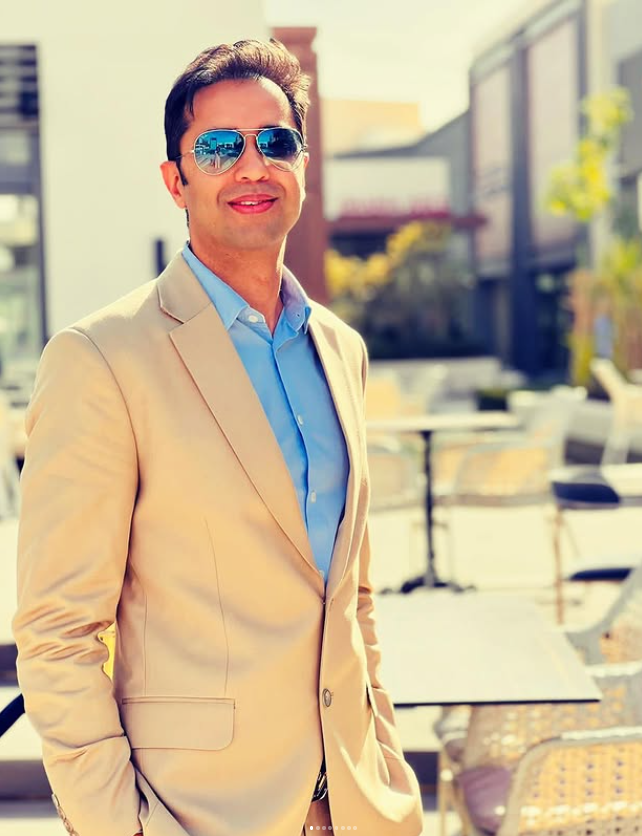
Image Courtesy: Instagram /@varunalagh
The couple eventually founded Honasa Consumer Ltd – a holding company which administers Mamaearth, The Derma Co. brand and several other direct-to-consumer companies. The company has become one of India’s most anticipated startups to go public.
This article covers Varun Alagh’s net worth, career journey, biography, and family life — with verified data, structured comparisons, and answers to the questions readers most often ask about the man behind Mamaearth.
Quick Profile Overview
Detail
Information
Full Name
Varun Alagh
Birth Year
1984
Birthplace
Gurgaon (Gurugram), Haryana, India
Education
B.E. in Electrical Engineering, Delhi College of Engineering (2001–2005); PGDBM in Finance & Marketing, XLRI Jamshedpur (2005–2007)
Occupation
Co-founder & CEO, Honasa Consumer Ltd.
Known For
Co-founding Mamaearth; building Honasa Consumer into a listed FMCG house of brands
Previous Employers
Hindustan Unilever, Diageo, Coca-Cola
Wife
Ghazal Alagh, Co-founder & Chief Mama of Mamaearth, Shark Tank India judge
Children
Two sons — Agastya and Ayyan
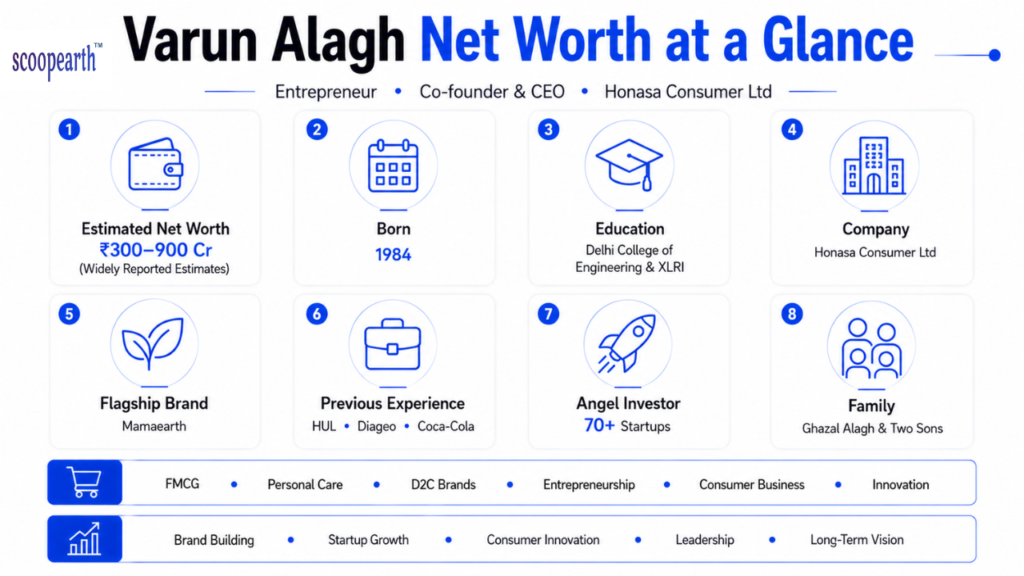
Estimated Net Worth
Widely disputed across sources; estimates range from roughly ₹300 crore to ₹900 crore
Who is Varun Alagh?
Varun Alagh is an Indian businessman and the co-founder and CEO of Honasa Consumer Ltd, a publicly listed company that owns Mamaearth, one of India’s most popular personal care brands. He was born in Gurgaon, Haryana, in 1984.
He studied electrical engineering at the Delhi College of Engineering and earned a degree in business management from XLRI Jamshedpur.
He worked in brand management for about a decade before co-founding Mamaearth with his wife, Ghazal Alagh, in 2016. Today, he is not only the co-founder but also an angel investor in more than 70 startups.
Varun Alagh Net Worth
The net worth of Varun Alagh has not been officially stated, and it has been stated differently in various sources. It has been stated to be worth anything between ₹300–500 Cr for the couple and ₹700–900 Cr for Varun Alagh individually.
The difference in these figures can be explained by the fact that the net worth of Varun Alagh is directly linked to the promoter’s shareholding in the publicly listed Honasa Consumer Ltd.
Therefore, it keeps changing with Honasa Consumer’s stock price on the stock exchange. It has also been stated that Varun Alagh’s shareholding keeps changing, which is the primary reason the net worth is reported differently across sources.
Net Worth Estimates: A Reality Check
Source Type
Estimated Figure
Description
Combined couple net worth estimates
₹300–500 Cr
Reflects Varun and Ghazal Alagh’s joint holdings and brand value
Individual net worth estimates (higher end)
₹700–900 Cr
Reflects Varun’s personal shareholding at recent market prices
Reported shareholding value
Approx. ₹3,150–4,600 Cr
Reflects the value of Varun’s approx. 32–34% stake in Honasa Consumer at various points
The main reason why the net worth of Varun Alagh is difficult to estimate is that it is directly linked to the stock price of Honasa Consumer Ltd. on the stock exchange. On any given day, it can increase or decrease depending on market forces.
It has also been stated that Varun Alagh’s shareholding keeps changing, which is the primary reason the net worth is reported differently across sources. It is, therefore, not possible to state with precision what the net worth of Varun Alagh is at any given time.
What Contributes to the Net Worth of Varun Alagh?
Honasa Consumer shareholding: The majority of his net worth comes from his substantial stake in Honasa Consumer, a publicly listed company that owns Mamaearth, The Derma Co, Aqualogica, Ayuga, and other personal care brands.
CEO compensation: He earns a salary as the co-founder and CEO of Honasa Consumer, which adds to his net worth, albeit to a lesser extent than his shareholding in the company.
Angel investment portfolio: Varun Alagh is an angel investor and has invested in more than 70 startups, which has also contributed to his net worth.
Brand value appreciation: As the founder of one of India’s most popular personal care brands, the increase in the value of Honasa Consumer and its brands has also added to his net worth.
Early Life and Education of Varun Alagh
Varun Alagh was born in 1984 in Gurgaon (Gurugram), Haryana. Information about his family is limited, although it has been stated that his father was in the printing business, and his mother worked in the public sector.
He studied at Delhi College of Engineering and graduated with a degree in Electrical Engineering in 2005. He later enrolled at XLRI Jamshedpur for a Post Graduate Diploma in Business Management and graduated in 2007. During his time at XLRI, he worked at various organizations, including Colgate-Palmolive, Havells, and Nokia, in marketing and brand management roles.
Career: From Hindustan Unilever to Founder of Mamaearth
Early Corporate Brand Management Experience
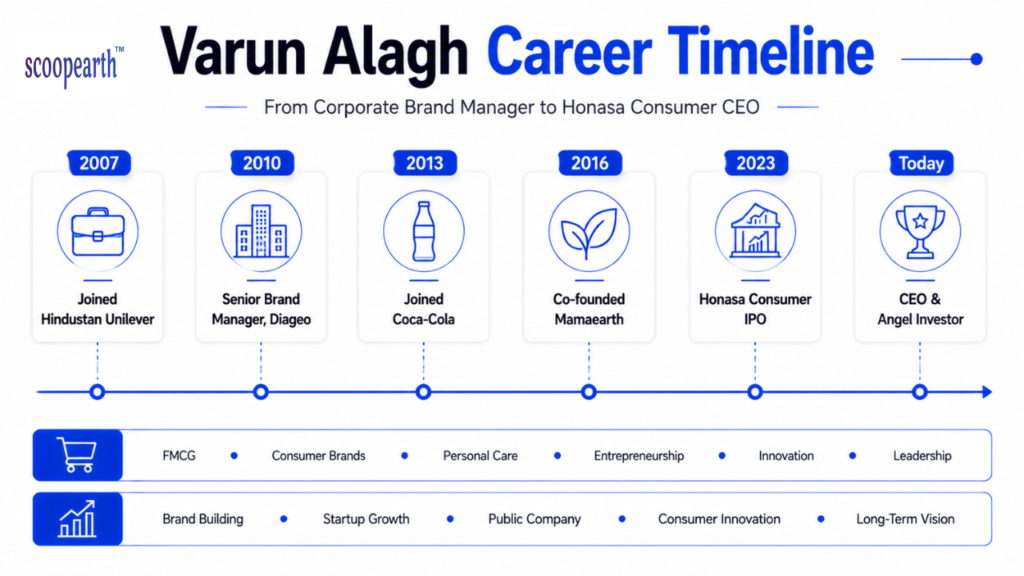
Varun Alagh began his career in 2007 as a Business Leadership Trainee at Hindustan Unilever, one of India’s largest consumer goods companies. He spent the next few years in various marketing and leadership roles before moving to Diageo PLC as a Senior Brand Manager for Smirnoff.
He later joined The Coca-Cola Company in 2013, where he spent four years as a Senior Brand Manager before moving on to other ventures. This experience in some of the world’s largest consumer goods companies helped him develop the skills that he would later use to found Mamaearth.
Founding of Mamaearth in 2016
Image Courtesy: Mamaearth / Official Website
The idea for Mamaearth came about when his wife, Ghazal, had eczema as an infant, and they struggled to find suitable skincare products in India. They started by asking their friends and family who traveled abroad to bring them back skincare products that did not have harmful chemicals.
This led Varun to start making his own products at home, which led to the founding of Mamaearth in November 2016. It has since grown to be one of India’s most popular personal care brands, with products ranging from baby care to skincare, haircare, and personal care.
Founding of Honasa Consumer Ltd and Scaling of Brands
Image Courtesy: Honasa Consumer Ltd, / Official Website
Honasa Consumer Ltd, the parent company of Mamaearth, was founded by Varun and Ghazal Alagh. It started as a small business selling personal care products but grew to be a multi-brand company with a presence in skincare, haircare, and baby care.
As the CEO of Honasa Consumer Ltd, Varun has been instrumental in scaling the company from a small startup to a publicly listed company with a market value of over $1 billion.
Listed on the Stock Exchange in 2023
In November 2023, Honasa Consumer Ltd was listed on the stock exchange, which meant that the net worth of Varun and Ghazal Alagh would keep changing based on the stock price. Like most publicly listed companies, the stock price of Honasa Consumer has been on a rollercoaster since its launch, and it has, at times, been difficult for Varun and Ghazal Alagh to predict the next move.
Family Life
Varun Alagh is married to Ghazal Alagh, the co-founder of Mamaearth, and they have two sons. Ghazal has been recognized as one of India’s leading entrepreneurs and has appeared on Shark Tank India as a judge.
Image Courtesy: Instagram /@varunalagh
She helps manage the operations of Mamaearth while also balancing her role as a mother to their two sons. The couple has spoken about how they met each other and how they started Mamaearth, which has been a challenging but rewarding journey for them both.
Frequently Asked Questions
What is the net worth of Varun Alagh?
The net worth of Varun Alagh has not been officially stated, but it has been stated to be worth anything between ₹300–500 Cr for the couple and ₹700–900 Cr for Varun Alagh individually.
What is Varun Alagh’s role at Mamaearth?
Varun Alagh is the co-founder and CEO of Honasa Consumer Ltd, the parent company of Mamaearth.
What was Varun Alagh’s previous work experience?
He has worked in brand management for Hindustan Unilever, Diageo, and The Coca-Cola Company.
Why was Mamaearth founded?
It was founded after his wife, Ghazal, had eczema as an infant, and they struggled to find suitable skincare products in India.
What is the educational background of Varun Alagh?
Varun Alagh studied at Delhi College of Engineering and graduated with a degree in Electrical Engineering. He later studied at XLRI Jamshedpur and graduated with a Post Graduate Diploma in Business Management.
Who is Varun Alagh’s wife?
His wife is Ghazal Alagh, the co-founder of Mamaearth and a judge on Shark Tank India.
Is Honasa Consumer Ltd a publicly listed company?
Yes, it is a publicly listed company on the stock exchange.
What are the other brands owned by Honasa Consumer Ltd?
It owns Mamaearth, The Derma Co, Aqualogica, Ayuga, and other personal care brands.
Does Varun Alagh invest in other startups?
Yes, he is an angel investor and has invested in more than 70 startups.
Why are the net worth estimates of Varun Alagh different?
The net worth estimates are different because it is directly linked to the stock price of Honasa Consumer Ltd on the stock exchange, and it keeps changing with market forces.
Conclusion
Varun Alagh is one of India’s most successful entrepreneurs, having founded Honasa Consumer Ltd, the parent company of Mamaearth, a personal care brand.
He has had a fascinating journey, from working at some of the world’s largest consumer goods companies to launching his own personal care brand, which has since become one of India’s most popular direct-to-consumer brands.
With a net worth that keeps changing with the stock price of Honasa Consumer Ltd, Varun Alagh is one of the most interesting entrepreneurs to watch in the Indian business world.
The Government of India in July 2026 generated additional revenue of ₹2.11 lakh crore from the Gross Goods and Services Tax imposed by the government, which increased by 15.4% from last year.
This impressive financial performance is due mainly to the large increase in the amount of GST collected from imports and steady growth in domestic revenues. This acceleration is compared to net revenue of ₹1.83 lakh crore during the same period in July 2025.
Strong surge and refund breakdown
The distribution of the gross collections reveals some different patterns of growth across domestic and international trade. Revenue from the gross domestic GST increased by 10.1% to ₹1.45 lakh crore during July 2026 from ₹1.31 lakh crore in July last year.
Income from foreign products exhibited significantly stronger momentum. Import surcharge revenues in particular increased by a climbing 28.8%, from ₹51,626 crore in July 2025 to ₹66,511 crore in July 2026.
The net GST collections tracked a similar upward trend once tax refunds disbursed during the period are excluded. Net GST revenues increased to ₹1.81 lakh crore in July 2026 by 15.8% as compared to ₹1.57 lakh crore in the year before.
On a net revenue per item basis, net domestic revenue growth rate was 10.5% and increased to ₹1.27 lakh crore. Through customs-related GST, total net revenues noted a significant surge of 30.3% to reach a figure of ₹54223 crore.
Growth also occurred at the overall level of the refund mechanism during the month under report. The government refunded ₹29,968 crore on aggregate in July 2026, an increase of 13.1% from the total disbursement of ₹26,495 crore in July 2025.
Domestic refund payouts increased by 7.3% to reach ₹17,680 crore. The export-related refunds through the ICEGATE portal have grown by 22.7% in the current month, reaching ₹12,288 crore.
Financial performance and geographic trends
The growth measures of the current financial year have indicated an unbroken positive performance so far. The gross collections of GST through April-July 2026 have been reported at ₹8.43 lakh crore after a 10.1% rise from the gross collection of ₹7.66 lakh crore that was recorded through the same four-month period last year.
The net GST revenue of April-July 2026 witnessed a 9.2% increase to stand at ₹7.21 lakh crore. It was observed at ₹6.61 lakh crore during the corresponding period of the previous financial year. Regional-level revenues have witnessed strong performance in various leading industrial states along with geographical disparity.
Maharashtra has reported the highest revenue collection among all states with a total of ₹32,210 crore in July 2026, growing by 13% year on year. Gujarat’s revenue collection has seen an increase of 19% to reach ₹12,923 crore. Karnataka’s collections are up by 12% to reach ₹13,854 crore.
Telangana’s revenue collection has seen an increase of 19% to ₹5,819 crore. The collections of Uttar Pradesh have seen an increase of 15% to ₹9,651 crore. Revenue collection statistics reveal contraction in revenue generation in many states.
The GST revenue of Tamil Nadu decreased by 1% and that of Andhra Pradesh by 5%. Madhya Pradesh posted a revenue contraction of 10%. Tax collection declines were sharper in northern and hill areas, with Himachal Pradesh posting a 22% decline, Uttarakhand a 18% fall and Sikkim having a steep 59% contraction in tax collection.
Conclusion
The gross GST collection for July 2026 shows a strong performance in fiscal results, with the main contributor being the sharp 28.8% increase in import-related tax revenues, while domestic tax gains built on single-digit growth.
The figures showed a mixed picture across states, with the major manufacturing and civil commercial hubs, Maharashtra, Gujarat, and Karnataka, observing double-digit increases while other areas saw rates of decline across hill regions. The Goods and Services Tax Department pointed out that the value of the published figures is provisional and may undergo minor adjustments on final reconciliation.
Maruti Suzuki India declared its statement of profit and loss for the first quarter of financial year 2026-27, which recorded a record for sales but has shown poor performance on the bottom line. India’s largest passenger car maker declared a standalone net profit of ₹3,352.10 crore, depicting a decrease of 10.8% YoY for such segment profits in the first quarter of the ongoing financial year.
Profit margin after tax fell 6.6% sequentially from the previous quarter. Profit before tax showed a 11.5% YoY decline and a 10.2% sequential decline to ₹4,341.30 crore in the current quarter.
Operational efficiency and cost pressure analysis
Net sales increased by 36% in the first quarter of the ongoing fiscal year 2023, reaching ₹49,959.10 crore for the automaker. There was a slight decline of 0.2% quarter-on-quarter in net sales. This disconnect between robust revenue growth and narrowly margined profit warns of the higher margin pressures the automaker has faced during the 3-month operating period.
The operating EBITDA dropped by 6.7% from last year’s figure and saw a significant quarterly drop of 30.0% to reach ₹4,311.10 crore. The operating EBITDA margin saw a substantial decline and fell to 8.6% in Q1 FY27 compared to 12.6% in Q1 FY26. The operating EBIT also decreased by 17.4% year-on-year and 42.6% quarterly to ₹2,531.10 crore.
Cost of raw materials became the foremost cause of margin erosion by analyzing the company’s cost structure. The increase in the quarter has been driven by a rise in material costs to 80.5% from 74.5% in the same quarter last year, reported in net sales.
The rise was 600 basis points relative to net sales and was driven by unfavorable commodity price trends in a region already strained by conflict in West Asia. Management reported that material costs increased from the early part of the quarter but accelerated in the latter section, where geopolitical conflict broke out in West Asia, causing a negative effect on net earnings despite strong volume results.
The company has also recorded operational efficiencies that accounted for some relief on the input cost front. Employee cost as a percentage of net sales fell to 4.9% from 5.6% recorded a year ago. Other expenses declined to 11.0% of net sales from 12.7% in Q1 FY26. Maruti Suzuki India said positive operating leverage arising due to an increase in production volumes and sustained cost-cutting efforts cushioned the impact of a sharp rise in commodity prices and bad foreign exchange rate movements.
Stock performance and expansion initiatives
In spite of the pressure on financial margins, Maruti Suzuki India posted a robust commercial performance in domestic and export markets, setting a fresh record in terms of sales during the quarter. Total deliveries of vehicles reached 682,724 units, increasing 29.3% year-over-year in the quarter ending 30 June 2026. Segmental growth was spread across product lines.
Domestic small car sales rose by 34.1% year-on-year, and sports utility vehicle sales enjoyed robust growth of 44.6% year-on-year. The overseas shipment performance was also strong, with export volume rising by 28.6% in Q1 FY27. Maruti Suzuki India’s market share stood at 41.2%, up 2.3 percentage points from the previous year, as a result of these sales.
The company said the volume success was due to the enhancement of production capacity after its 2nd manufacturing plant was commissioned at Kharkhoda. This extra plant capacity contributed to the increased manufacturing output, allowing the company to meet the higher demand in the market for its various product offerings.
Retail demand overwhelmed supply speedily following the high levels of vehicle dispatches from manufacturing facilities, resulting in dealer network inventory levels of around 13 days at the end of the quarter. In addition to car production, the Maruti Suzuki India board approved strategic investments focused on clean energy projects.
The board approved the investment of ₹561 crore to implement 4 compressed biogas projects in the 1st phase. Based on the experience and operation of the first 4 projects, Management stated that there will be consideration for further expansion of compressed biogas manufacturing infrastructure.
On the capital markets side, Maruti Suzuki India’s share prices saw sideways movement ahead of the official earnings release. This share gained 0.37% and closed at ₹14,240 on 31 July 2026, Friday. Maruti Suzuki India is the largest automobile manufacturer in India and produces a comprehensive range of hatchbacks, sedans, utility vehicles, and sports utility vehicles not only for Indian customers but also for export markets abroad.
Conclusion
Maruti Suzuki India’s Q1 FY27 sales data showed a clear contrast between record growth in volume and earnings concerns. Net sales grew 36.4% to ₹49,959.10 crore and total vehicle sales jumped to a record high of 682,724, but standalone PAT slipped 10.8% to ₹3,352.10 crore due to an increase in material costs caused by the West Asia conflict.
The automaker is continuing to focus on operational efficiencies and scale to beat external commodity cost headwinds, with new manufacturing capacity at Kharkhoda, market share gains, low dealer inventories, and new investments in compressed biogas.
In July 2026, India’s Unified Payments Interface (UPI) achieved a new operational milestone with the highest volume of transactions on the platform in a month in its history. According to official data submitted by the National Payments Corporation of India, the platform enabled 23.66 billion transactions during the month. The aggregate monetary value of these transactions was worth ₹29.88 lakh crore. The performance marks a milestone in the way electronic payment technologies are being adopted and scaled nationwide.
Performance and growth trajectory
The number of transactions processed in July 2026 broke the previous record of 23.20 billion transactions, set earlier in May in the same year. As far as the number of transactions is concerned, it created a new benchmark; the total value of the transactions, i.e., ₹29.88 lakh crore, was lower than the all-time high figure of ₹29.90 lakh crore set in May.
The daily average number of transactions using UPI was 763 million during July. On average during this period, the transaction value was recorded at ₹96,383 crore per day. Performance analysis when compared with the previous month shows consistent gains across key parameters.
The July transactions are up 4.1% from June, reaching 22.72 billion. There was a 3.3% increase in total transaction value in July compared to the previous month of June, which was ₹28.92 lakh crore.
When the numbers are examined on a year-on-year basis, the growth is quite remarkable. The transaction value increased by 19%, while the total transaction value increased by 22%. The current scaling of the platform is witnessed in the numbers of UPI achieving a new baseline for transaction activity for the first time in the whole of May this year, crossing the milestone of 23 billion monthly transactions.
Ecosystem landscape and global expansion
These payment metrics are powered by several prominent digital payment platforms in the Indian market. The Walmart-backed platform PhonePe claimed the number one spot in the UPI ecosystem with 10.48 billion transactions for the month of June, according to the data available. Google Pay and Paytm held the second and third ranks in the top five market experience platforms.
The middle sector of payment applications experienced an interesting development in June. WhatsApp successfully outpaced CRED in terms of total transactions. WhatsApp handled 150.48 million transactions, while CRED processed 141.78 million transactions. The National Payments Corporation of India has not yet released the transaction details by app in July.
Alongside its own development, UPI has been steadily establishing itself in foreign markets and expanding its cross-border functionality. The Maldives recently launched a real-time payment system corridor in association with India. The launch is the latest step in a series of foreign lands that have taken integration with India’s payment architecture.
With the inclusion of the Maldives, UPI merchant payments are now available in 10 international markets worldwide. These countries include Bhutan, Singapore, United Arab Emirates, France, Mauritius, Sri Lanka, Nepal, Qatar, Cambodia, and the Maldives. Greece is also connected to the network for other payment needs, such as person-to-person payments. Remittance linkages with Singapore and Nepal are well established with efficient cross-border fund transfers.
Conclusion
This July 2026 performance highlights the leading position of UPI as the leading digital payment platform in India. The network has witnessed impressive growth across monthly and year-on-year periods, with 23.66 billion transactions worth ₹29.88 lakh crore processed in a single month.
With a vibrant domestic application ecosystem and a growing global network reaching 10 international markets, UPI remains a strong enabler of digital financial transactions.