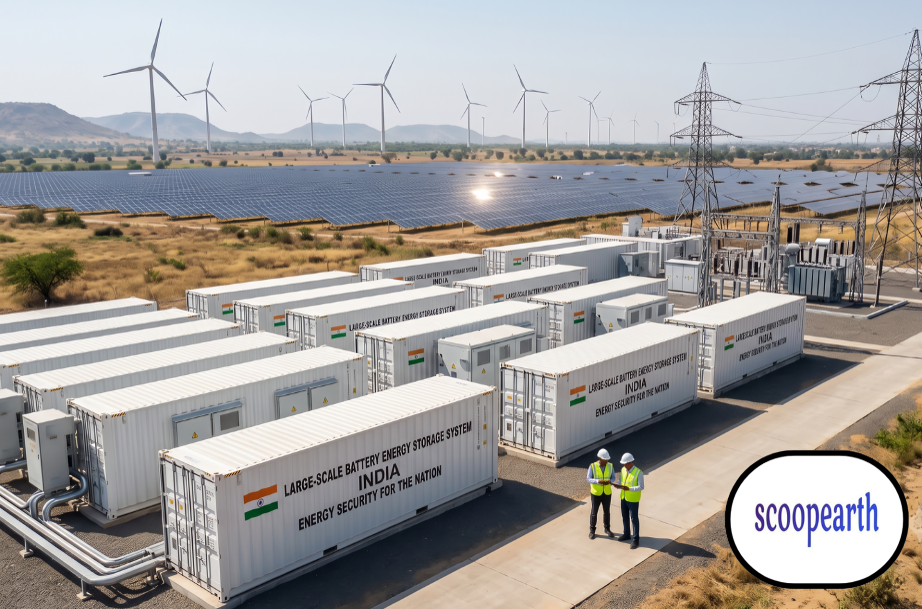
New Delhi, 9th October, 2026: As the Central Electricity Authority projects an energy storage requirement of around 411 GWh by 2031-32, the NetZero Energy Transition Association (NETRA) urges the government to embrace a technology-agnostic, multi-chemistry battery strategy that addresses both immediate and long-term energy security challenges. To achieve this, NETRA has submitted recommendations to the government stating that India should reserve a defined share of grid-scale battery deployments and public procurement for domestically manufactured cells and alternative chemistries. Sustained investment in research, development, and manufacturing support for sodium-ion, flow, zinc-based, and iron-based battery technologies, alongside lithium-ion, is essential. Developing domestic supply chains for key materials and components, and fostering industry-academia collaboration for intellectual property and skilled workforce development, are also vital steps to future-proof India’s energy transition.
To further address these priorities, NETRA is organizing ‘Beyond Lithium Summit 2026’, “Building India’s Multi-Chemistry Storage Future” on 24th October 2026, New Delhi. This is a first of kind platform in India to build and strengthen a beyond lithium-ion technologies ecosystem. This technology-to-application summit will map out commercially viable, India-fit non-lithium storage technologies (sodium-ion, flow batteries – vanadium redox, iron and zinc-based batteries, Aluminium Air technologies, pumped hydro and other mechanical storage), aligned with research, innovation, manufacturing, pilots, recycling, and long-duration storage (LDES) policy. Over 100+ companies from across ecosystems are expected to join this program in New Delhi.
Debi Prasad Dash, Executive Director, NETRA, said, “Sodium-ion batteries offer a promising near-term alternative for stationary storage, with advantages in material accessibility, safety, temperature tolerance, and potential cost competitiveness. Their development can leverage India’s access to sodium, iron, manganese, and other domestically available materials, thereby supporting indigenous supply chains and reducing reliance on imported critical minerals. India needs a Sodium Ion Mission to drive the technology development and manufacturing scale-up.”
Globally, sodium-ion cell manufacturing capacity recently surpassed 10 GWh, with projections reaching 400 GWh by 2030. Companies like CATL, BYD, Hina Energy, Hithium, and CBAK Energy are at the forefront, while Indian industry is quickly ramping up to participate in this growth.
“Sodium-ion battery technology is emerging as a strategically important option for India’s future energy-storage needs. At ARCI, indigenous cathode materials, including NVP, NFPP and layered oxides, along with anode materials, are being developed and have been successfully demonstrated at the smaller capacity. Building on this progress, efforts are now advancing towards the fabrication and validation of 100 Ah and 314 Ah-class prismatic sodium-ion cells, with the aim of enabling industrial deployment for BESS applications.” Said Dr. R Vijay, Director, International Advanced Research Centre for Powder Metallurgy & New Materials (ARCI).
Flow batteries, particularly vanadium redox flow systems, are well suited to long-duration storage applications, where they can support renewable-energy firming, peak-load management, and grid flexibility.
“Vanadium Redox Flow Batteries have the potential to play a pivotal role in advancing India’s long-duration energy storage ambitions. With their exceptional safety, durability, and long asset life, vanadium flow batteries can become a cornerstone of India’s transition towards a secure, sustainable, and self-reliant energy future.” Said by Jacob Seet, Chief Commercial Officer, VFT.
Overdependence on lithium-ion batteries, NETRA warns, exposes India to price volatility, supply chain disruptions, and import reliance. In the last year alone, lithium battery prices in India fluctuated by more than 25%, driven by raw material constraints, exchange rate shifts, and the cost of imported battery cells.
A diversified battery ecosystem can mitigate these vulnerabilities and enable storage solutions tailored to India’s diverse grid, industrial, and mobility needs.
About NETRA
The NetZero Energy Transition Association (NETRA) is a global, not-for-profit, membership-driven industry association dedicated to advancing research, innovation, and deployment of clean energy and sustainable mobility in India. By fostering collaboration among industry, academia, policymakers, and global partners, NETRA works to accelerate technology development, indigenous manufacturing, and sustainable energy transition solutions for a resilient and secure energy future.