Online learning in the United States is no longer about watching recorded college classes. Students use tools to get ready for tests, study languages, practice math, get better at coding and look into topics that are not covered in school. People who work also use tools to gain new abilities without leaving their jobs for a long time.
This has led to an online learning market with many different kinds of platforms. Some are for students in schools, others are for learning languages, some are for training in jobs, others are for skills or getting ready for tests. A few use fun activities to make learning more interesting.
This list of the 10 online learning platforms in the United States includes services that are well known and connected to American students and the larger online education industry. The ranking takes into account things like how many people use the platform, the variety of things you can learn, the presence in the United States, how many subjects are covered, how big the platform is and how useful it is for students or workers. It is not a list of the platforms for all people. A student who is getting ready for math class might need something different, from a worker who is learning a new coding skill.
1. Khan Academy
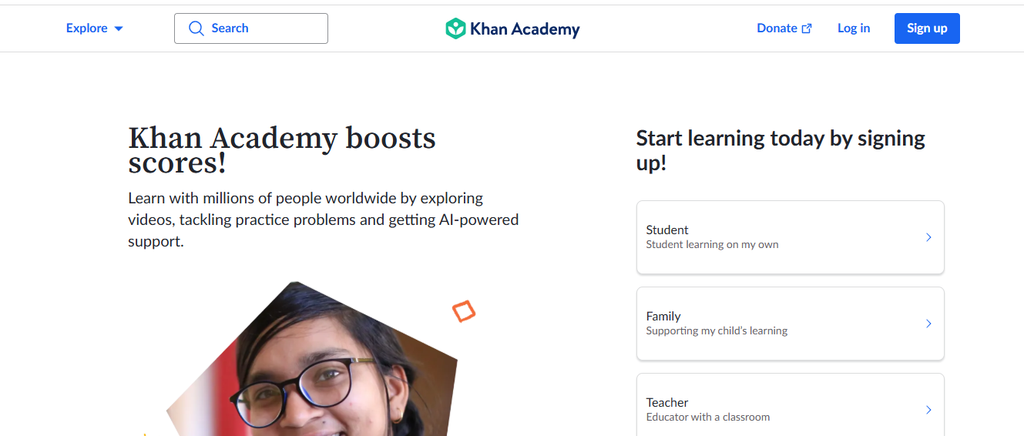
Khan Academy is one of the well-known names in free online education. The nonprofit was started by Sal Khan. Grew around the idea that every student should have the chance to learn at their own speed.
| Founded: 2008 |
| Headquarters: Mountain View, California |
| Main Focus: School education, academic practice and test preparation |
| Learning Format: Self-paced lessons, exercises and AI-supported learning |
| Key Services: Mathematics, science, reading, computing, test preparation and Khanmigo |
Its lessons cover school subjects like mathematics, science, economics, reading and computing. Students can practice what they learn with exercises designed to help them improve in areas. The platform has also added AI- learning through a tool called Khanmigo.
In the 2024–25 school year Khan Academy reported 189.6 million registered users and 104.9 million people using the platform each year. It was available in more than 190 countries and offered content in over 55 languages during that time.
The wide range of subjects and the fact that all resources are free make Khan Academy especially useful for students in school and college who want help with their studies.
2. Duolingo
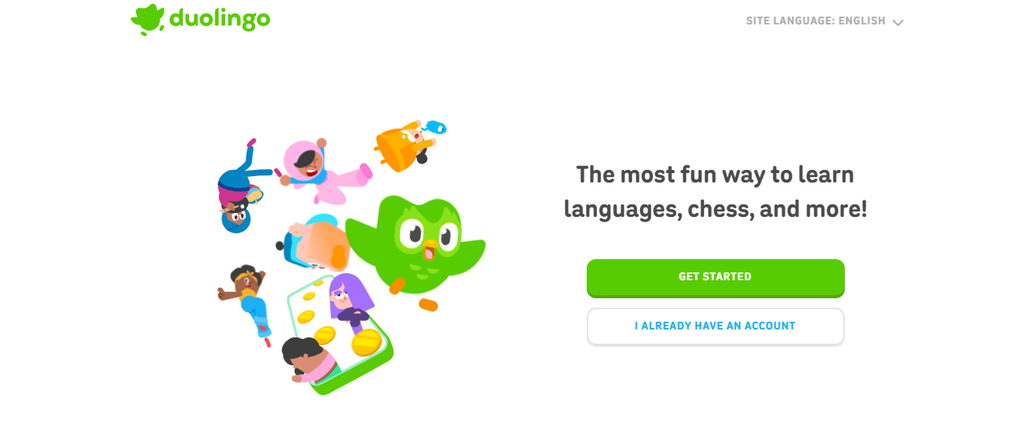
Duolingo has taken a path in digital education by turning language practice into a fun experience. Its lessons are short. Include points, streaks and rewards to keep users coming back.
| Founded: 2011 |
| Headquarters: Pittsburgh, Pennsylvania |
| Main Focus: Language learning and interactive education |
| Learning Format: Gamified mobile and web-based lessons |
| Key Services: Language learning, Duolingo English Test, maths, music and chess |
The main focus remains language learning. The company has expanded into maths, music and chess. By the end of 2025 Duolingo had 133.1 million active users, 52.7 million daily active users and 12.2 million people paying for a subscription.
It also runs the Duolingo English Test, which many students use when they need to prove their skills for college or work.
The mix of lessons and mobile access makes Duolingo stand out. It is very different from platforms that rely on videos or classroom-style teaching.
3. Quizlet
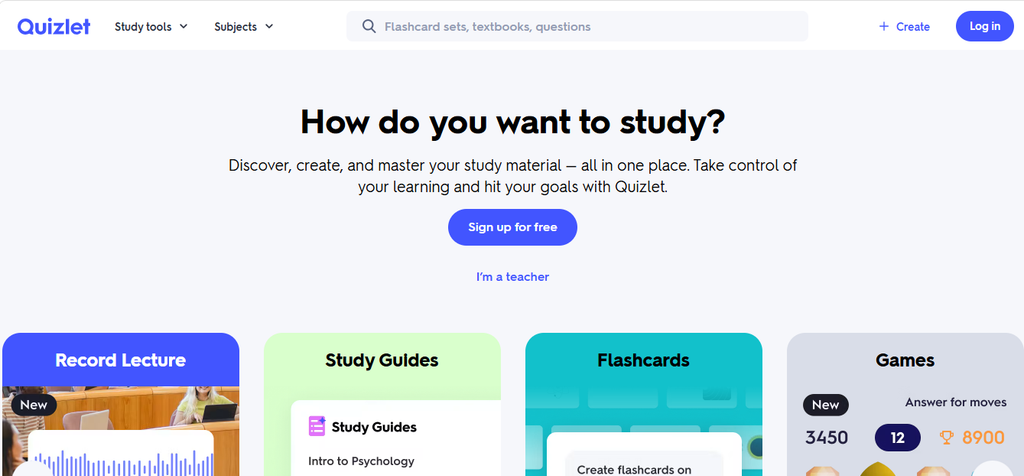
Quizlet started with an idea. Founder Andrew Sutherland made a tool to help himself study for a French vocabulary test in 2005. That small project grew into a study platform.
| Founded: 2005 |
| Headquarters: San Francisco, California |
| Main Focus: Study and revision |
| Learning Format: Flashcards, quizzes, practice activities and AI-supported tools |
| Key Services: Digital flashcards, practice tests, study modes and AI-powered study tools |
Students can make their flashcards or use study sets made by others. The platform covers subjects, from school classes and languages to medical and professional exams.
Quizlet says it has 60 million learners and 900 million study sets used in 130 countries. According to its data about two out of three high school students in the U.S. Use Quizlet.
Then replacing regular classes, Quizlet is often used alongside school, college or self-study. New AI tools let users turn notes, documents and other materials into study resources.
4. Chegg
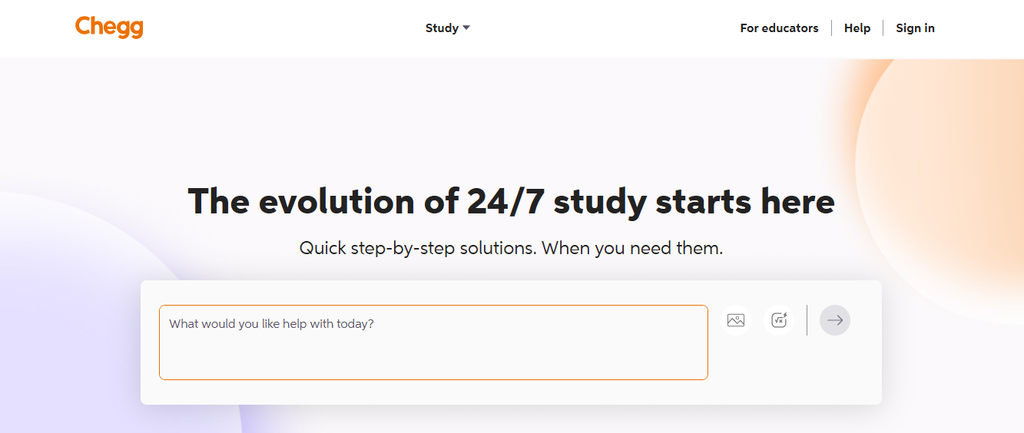
Chegg has long been known as a go-to platform for students needing help with homework, textbooks and tough subjects. Over time the company has shifted toward skills and career-focused learning.
| Founded: 2005 |
| Headquarters: Santa Clara, California |
| Main Focus: Academic support and professional skills |
| Learning Format: Digital study resources, online support and skills courses |
| Key Services: Chegg Study, Chegg Skills and learning support |
For the year 2025 Chegg reported $376.9 million in revenue.. This number does not show the size of one single service. The business is now focused on two areas: Chegg Skilling and its original Academic Services.
Chegg Skilling includes programs that help people build job-related skills. The company is also growing its language-learning offerings.
For students Chegg offers something from Duolingo or Skillshare. Its main strength has always been help. Its new direction focuses more on skills that people can use after school.
5. Skillshare
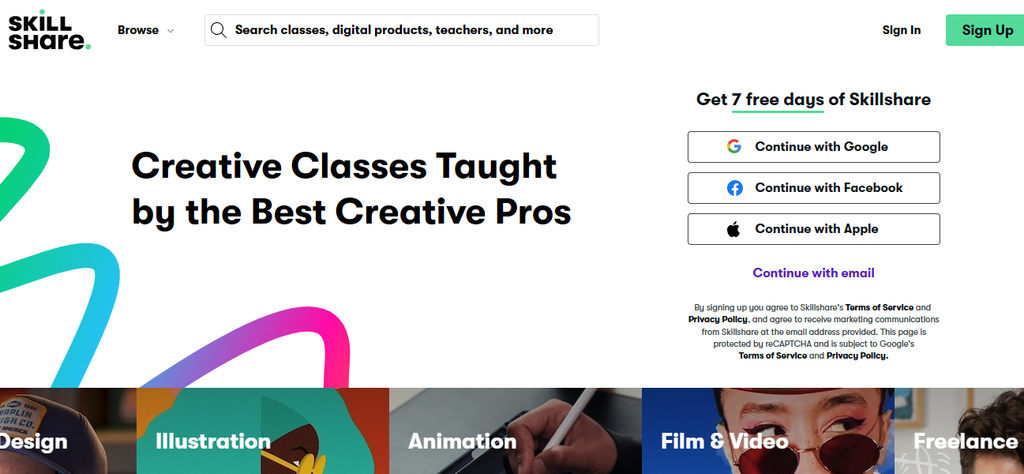
Skillshare brings a focus to online learning. Of concentrating on school subjects or exams it offers classes built around real-world skills.
| Founded: 2010 |
| Headquarters: New York City, New York |
| Main Focus: Creative and practical skills |
| Learning Format: Online video classes, projects and self-paced learning |
| Key Services: Design, illustration, photography, video, freelancing and creative skills |
Its courses cover topics like design, illustration, photography, video editing and freelancing. Learners can pick classes based on their interests or current skill level.
The format works well for people who want to learn outside a classroom. For example, someone interested in design can learn about tools and projects without needing to join a program.
Skillshare is privately held so current revenue and profit numbers are not shared publicly. Its position in the learning market comes from its focus on creative education.
6. IXL Learning
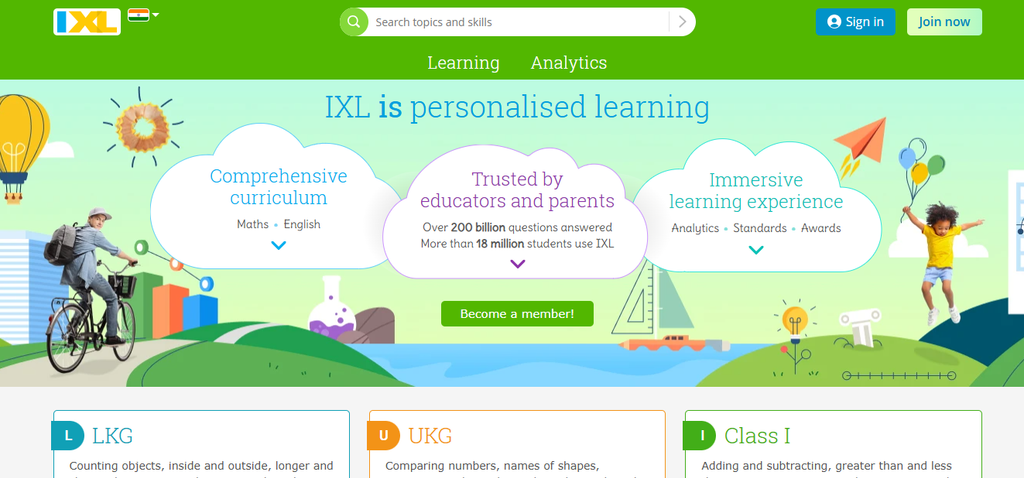
IXL Learning has built its education business around personalised practice. Its platform gives students questions and activities while using their performance to guide learning.
| Founded: 1998 |
| Headquarters: San Mateo, California |
| Main Focus: K-12 education and personalised practice |
| Learning Format: Interactive practice, personalised learning and educational software |
| Key Services: Mathematics, language arts, science, social studies, tutoring and educational software |
The company began in 1998 when founder Paul Mishkin developed a web-based education product. Its business later expanded into a group of education services and products.
IXL is particularly connected with school-level learning. Its subject areas include mathematics, language arts, science and social studies making it different from platforms that mainly serve university students or working professionals.
The company is privately held so detailed current financial information is not publicly disclosed. Its running presence in K-12 digital education is one of the main reasons it belongs in this comparison.
7. Outschool
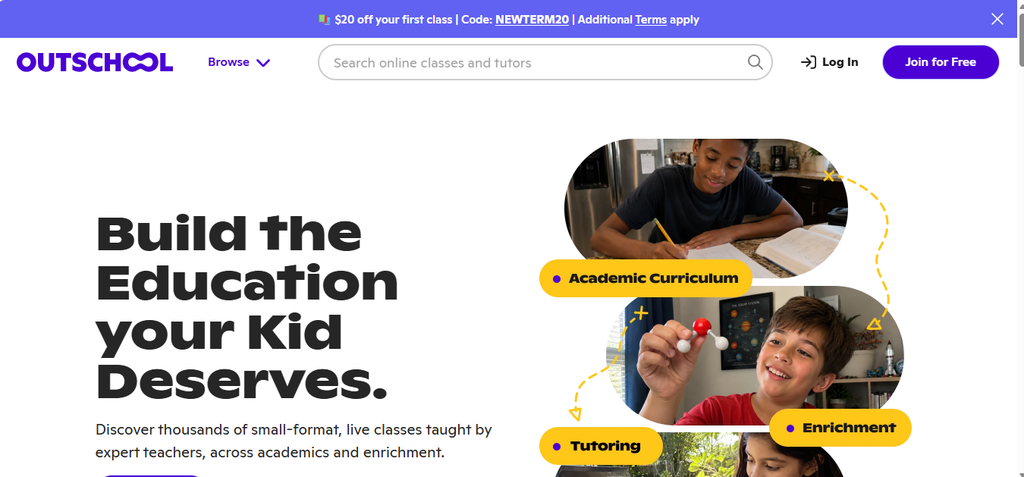
Outschool works differently from a standard online education website. It operates as a marketplace where independent teachers can offer self-paced classes to children and teenagers.
| Founded: 2015 |
| Headquarters: San Francisco, California |
| Main Focus: Online classes for children and teenagers |
| Learning Format: Live online classes and self-paced courses |
| Key Services: Academic subjects, coding, art, music, cooking, writing and enrichment classes |
The subjects are not limited to school lessons. Families can find classes in mathematics, science and writing but also coding, art, music, cooking, games and other interest-based areas.
Outschool says its platform offers more than 100,000 live online classes and serves more than 900,000 learners in 174 countries.
This marketplace model gives families choice over the type of class they want. A learner can take a course for extra support or choose a class based on a personal interest that may not be available at school.
8. Rosetta Stone
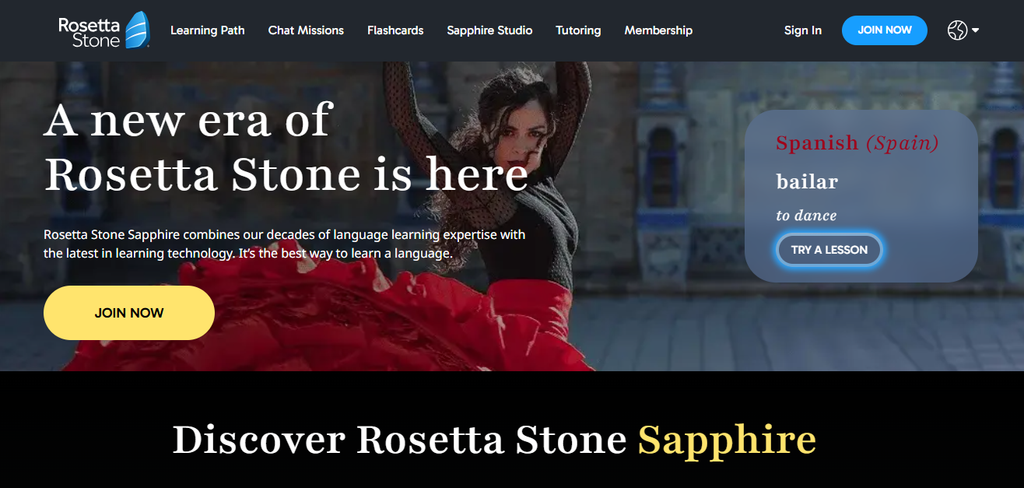
Rosetta Stone is one of the names in digital language education. The company was founded in 1992 by Allen Stoltzfus, who wanted to develop a way of learning languages.
| Founded: 1992 |
| Headquarters: Arlington, Virginia, at its former independent-company stage |
| Main Focus: Language learning |
| Learning Format: Interactive digital language lessons |
| Key Services: Language learning for individuals, schools and businesses |
Its approach uses images, audio and contextual learning rather than depending mainly on direct translation. The company says its products have been used by more than 50 million people and more than 43,000 businesses, organisations and educational institutions.
There is also an ownership detail. Rosetta Stone became part of IXL Learning after IXL acquired the language-learning business in 2021.
Because of this ownership structure Rosetta Stone does not publish standalone revenue or profit figures. The brand continues to operate as a language-learning service within the IXL portfolio.
9. Simplilearn
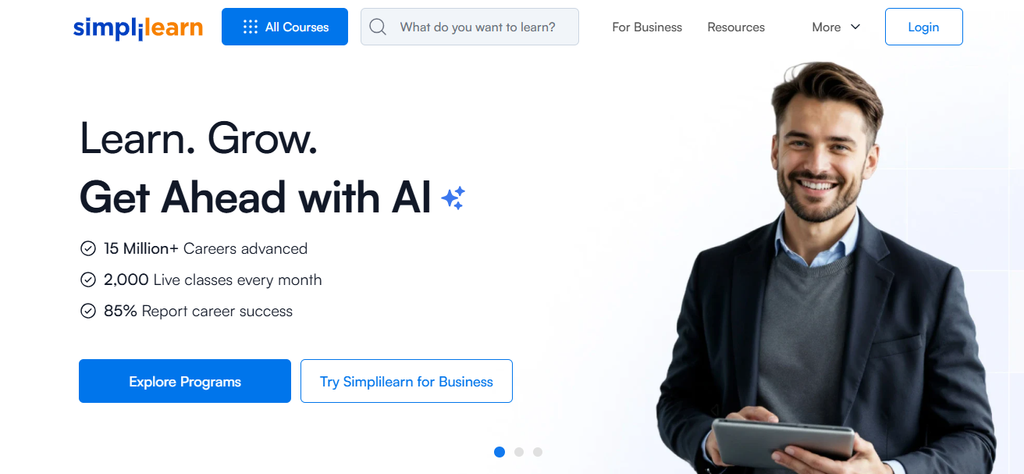
Simplilearn has a different target audience from platforms such as Khan Academy and Outschool. Its programmes are mainly designed for working professionals and learners who want to build career-related skills.
| Founded: 2010 |
| Headquarters: Bengaluru, India, with U.S. operations in Plano, Texas |
| Main Focus: Professional and digital skills |
| Learning Format: Live online classes, self-paced courses and professional programmes |
| Key Services: Digital skills training, professional certificates, bootcamps and online programmes |
Courses and programmes cover areas such as data, artificial intelligence, cloud computing, cybersecurity, project management and digital marketing. The company also works with universities, businesses and industry organisations on its learning programmes.
Simplilearn was founded in India. Has established operations in the United States, including an office in Plano, Texas. This gives it a connection to the U.S. Education market while maintaining its international reach.
The company is privately held, so revenue and net income figures are not publicly disclosed.
10. Brilliant
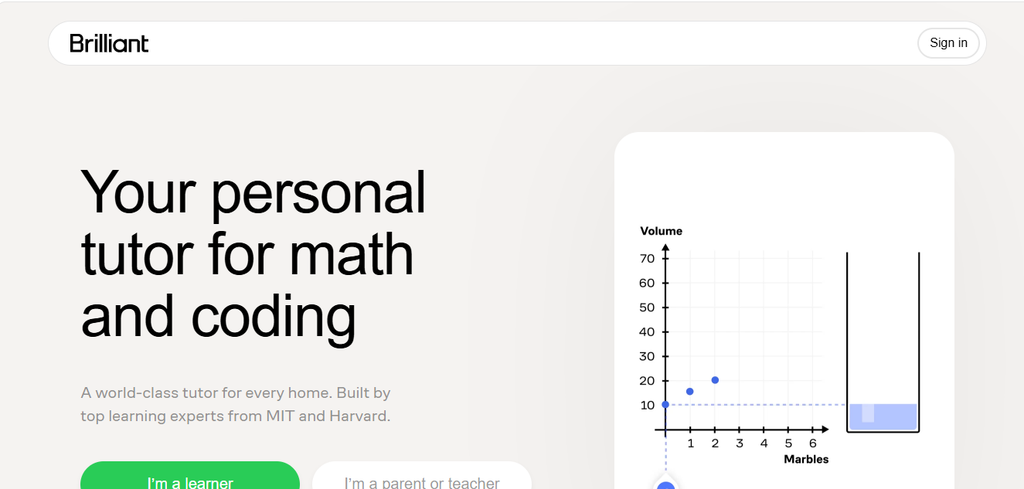
Brilliant takes an interactive approach to digital education. By relying mainly on long video lectures the platform asks learners to solve problems and work through concepts step by step.
| Founded: 2012 |
| Headquarters: San Francisco, California |
| Main Focus: Mathematics, science and technical learning |
| Learning Format: Interactive lessons, exercises and problem solving |
| Key Services: Mathematics, science, data and computer science learning |
Its main subjects include mathematics, data and computer science along with technical areas. The company describes its teaching approach, around learning through active problem solving.
Brilliant was founded in 2012. Is headquartered in San Francisco. As a company it does not publicly report detailed current revenue or net income figures.
Its narrower subject focus is part of what makes the platform different. Then trying to cover every school or professional subject Brilliant concentrates on areas where interactive exercises can be used to build reasoning and problem-solving skills.
Top 10 Online Learning Platforms in USA: Comparison
| Rank | Online Learning Platform | Founded | Main Focus | Learning Format | Key Services |
| 1 | Khan Academy | 2008 | School education and academic practice | Self-paced lessons and exercises | Mathematics, science, reading, computing, test preparation, Khanmigo |
| 2 | Duolingo | 2011 | Language learning and interactive education | Gamified online lessons | Languages, English testing, maths, music, chess |
| 3 | Quizlet | 2005 | Study and revision | Flashcards, quizzes and practice | Flashcards, practice tests, study modes, AI study tools |
| 4 | Chegg | 2005 | Academic support and professional skills | Digital study resources and courses | Chegg Study, Chegg Skills, learning support |
| 5 | Skillshare | 2010 | Creative and practical skills | Video classes and self-paced learning | Design, illustration, photography, video, freelancing |
| 6 | IXL Learning | 1998 | K-12 education | Interactive and personalised practice | Mathematics, language arts, science, social studies, tutoring |
| 7 | Outschool | 2015 | Children’s education and enrichment | Live classes and self-paced courses | Academic subjects, coding, art, music, cooking |
| 8 | Rosetta Stone | 1992 | Language learning | Interactive digital lessons | Language learning for individuals, schools and businesses |
| 9 | Simplilearn | 2010 | Professional and digital skills | Live classes and self-paced programmes | Certificates, bootcamps, AI, cloud, cybersecurity, digital marketing |
| 10 | Brilliant | 2012 | Mathematics and technical learning | Interactive lessons and problem solving | Mathematics, science, data, computer science |
Note: The ranking is a comparison that looks at platform reach, U.S. Relevance, subject coverage, longevity, learner use and the various roles that these services play in online education. The ranking should not be taken as a quality ranking.
Which Online Learning Platform Should You Choose?
Choosing the online learning platform depends on what you want to learn. A school student who needs mathematics practice may want an online learning platform than a professional who wants to learn cybersecurity or digital marketing.
Khan Academy and IXL Learning strongly focus on school education. Outschool gives children and teenagers live classes in both subjects and interest‑based subjects. Language learners can choose between Duolingo and Rosetta Stone. Quizlet can be useful for revision and memorisation.
Creative learners may find Skillshare more relevant. Simplilearn focuses more on career‑related skills. Brilliant has a focus on mathematics, science and technical learning.
Before choosing a learning platform check the course format, price, subject coverage, level, teacher support and whether certificates are available if you need one.
Conclusion
The online learning market in the USA includes many platforms built for very different purposes. Some concentrate on school education. Others focus on languages, creative skills, revision, children’s enrichment or professional training.
There is not one platform that fits every learner. The useful approach is to first decide what you want to learn and then compare the available subjects, teaching format, cost and level of support. That can make the search much easier.
FAQs
1. What are the top online learning platforms in the USA?
The top online learning platforms in the USA include Khan Academy, Duolingo, Quizlet, Chegg, Skillshare, IXL Learning, Outschool, Rosetta Stone, Simplilearn, and Brilliant. These platforms cover various subjects, including school education, language learning, creative skills, academic revision, and professional training.
2. Which online learning platform is free?
Khan Academy offers its educational content completely free of charge. Duolingo also provides free access to its core language-learning features, although it offers paid subscription plans. The amount of free content and the features available vary across platforms.
3. Which platform is useful for learning languages?
Duolingo and Rosetta Stone are popular platforms for learning languages online. Duolingo uses short lessons, interactive exercises, and game-like features to make learning engaging. Rosetta Stone focuses on immersive language learning to help learners develop their reading, writing, listening, and speaking skills.
4. Which online learning platform is useful for school students?
Khan Academy and IXL Learning are popular platforms for school students. They offer educational resources covering mathematics and other academic subjects. Outschool is another option for children and teenagers who want to explore academic subjects, creative activities, and specialised classes outside their regular school curriculum.
5. Is Quizlet a learning platform?
Yes, Quizlet is an online learning and study platform that helps students prepare for exams and remember information. It offers flashcards, practice questions, and interactive study modes. Its AI-powered tools also help learners turn study materials into useful revision resources.
6. What is Skillshare mainly used for?
Skillshare is mainly used for learning creative and practical skills through online classes. Its courses cover illustration, graphic design, photography, video editing, freelancing, and other creative subjects. Unlike platforms that primarily focus on school education, Skillshare helps learners develop practical skills and explore personal interests.
7. Is Outschool for academic subjects?
Yes, Outschool offers academic subjects as well as creative and recreational classes. Its courses include mathematics, writing, science, coding, art, music, cooking, and games. The platform provides live online classes and self-paced learning options for children and teenagers.
8. Which platform focuses on skills?
Simplilearn focuses on professional and digital skills that help learners develop their careers. Its programmes cover artificial intelligence, cloud computing, cybersecurity, project management, and digital marketing. Chegg has also expanded its Chegg Skilling business to provide career-focused learning opportunities.
9. Is Brilliant different from video-based learning platforms?
Yes, Brilliant is different from traditional video-based learning platforms because it emphasises interactive learning and problem-solving. Instead of relying mainly on long video lessons, learners work through questions, puzzles, and exercises as they study. Its main subjects include mathematics, science, data science, and computer science.
10. Are all these learning platforms based in the USA?
No, not all these online learning platforms are based in the USA. The list includes platforms that serve the American online learning market, regardless of their country of origin. For example, Simplilearn was founded in India and has operations in the USA. Rosetta Stone, meanwhile, is now part of IXL Learning.