Mining in the US looks very different depending on which state you are standing in. Arizona has enormous copper pits. Minnesota and Michigan still dig iron ore for steel mills. Gold remains a major business in Nevada, while a patch of desert in California has become important because of rare earths. Florida even belongs in the conversation because of the phosphate mined there for fertilizer.
The companies are just as mixed. Some have been around for more than a century. Others became much more important only recently because the minerals they produce now show up in conversations about batteries, electronics, power grids and domestic manufacturing.
So the top mining companies in USA are not simply ten companies doing the same job at different sizes. They mine different materials, use different methods and often sell to completely different industries.
Top 10 Mining Companies in USA
| Rank | Company | Main Mining Business |
| 1 | Freeport-McMoRan | Copper and molybdenum |
| 2 | Newmont | Gold |
| 3 | Cleveland-Cliffs | Iron ore |
| 4 | Core Natural Resources | Coal |
| 5 | The Mosaic Company | Phosphate and potash |
| 6 | Albemarle | Lithium |
| 7 | MP Materials | Rare earths |
| 8 | Coeur Mining | Gold and silver |
| 9 | Hecla Mining | Silver, gold, lead and zinc |
| 10 | Warrior Met Coal | Steelmaking coal |
1. Freeport-McMoRan
Freeport-McMoRan is one of the biggest names in US copper mining, with seven open-pit copper mines spread mainly across Arizona and New Mexico. It also runs the Henderson and Climax molybdenum mines in Colorado.
Morenci, Arizona, is the standout operation. The mine produced close to 700 million pounds of copper in 2025, while Freeport’s US mines together supplied around 60% of the copper mined in the country that year. The company also operates one of the two active copper smelters still running in the United States.
Freeport handles more than the mining itself. After the ore comes out of the ground, the company also carries out leaching, smelting and refining, which means a large part of the copper production process stays within its own operations.
Copper has always been important for construction and electrical work, but demand is now coming from more places. Power grids, data centres and electrical equipment all need large amounts of copper, which has kept mines such as Morenci firmly in focus.
2. Newmont
Newmont has built its name around gold, although its mines also produce silver and copper. In 2025, the company produced 5.9 million attributable ounces of gold, along with 28 million ounces of silver and 135,000 tonnes of copper.
Not all of that production comes from the United States. Newmont operates in several countries, but Nevada remains the centre of its US mining business. The company owns 38.5% of Nevada Gold Mines, one of the largest gold-mining operations in the country.
At the end of 2025, Newmont’s share of Nevada Gold Mines held about 17.4 million ounces of gold reserves. Across its full international business, the company reported 118.2 million attributable ounces of gold reserves.
Newmont may operate on a global scale, but its connection with American mining is still strong. The company is based in Denver, and its long-running Nevada business keeps it closely tied to one of the most important gold-producing regions in the US.
3. Cleveland-Cliffs
Cleveland-Cliffs is better known today as a steel company, although iron ore is where much of its story started. The company owns or co-owns five production-stage iron ore mines in Minnesota and Michigan.
At the end of 2025, Tilden, Northshore and United were operating fully. Minorca and part of the Hibbing operation were idled. Cliffs listed about 20.1 million long tons of annual iron ore pellet capacity based on its ownership share.
Cliffs has an advantage that looks a little different from a traditional mining company: it can use much of that iron ore inside its own steel business. Ore leaves the mine, becomes pellets and eventually feeds steelmaking operations further down the chain.
The company dates back to 1847, long before its modern steel business took shape. Mining was not something added later. It was there from the beginning.
4. Core Natural Resources
Core Natural Resources did not even exist under that name before 2025. The company came together in January of that year when CONSOL Energy and Arch Resources completed their merger.
The two companies brought very different coal businesses with them. Arch had built a strong position in metallurgical coal used by steelmakers, while CONSOL had a long history in thermal and industrial coal. Put together, Core now sells into steel, power generation and industrial markets.
The mines are spread across very different parts of the country. Appalachian underground mines look nothing like a huge Powder River Basin surface operation, even though both are producing coal.
Core reported about $4.16 billion in revenue for 2025, its first year operating under the new name.
Coal does not have the same position in US electricity that it once had, but Core is a good reminder that the mining side is still large, particularly when steelmaking coal and exports are included.
5. The Mosaic Company
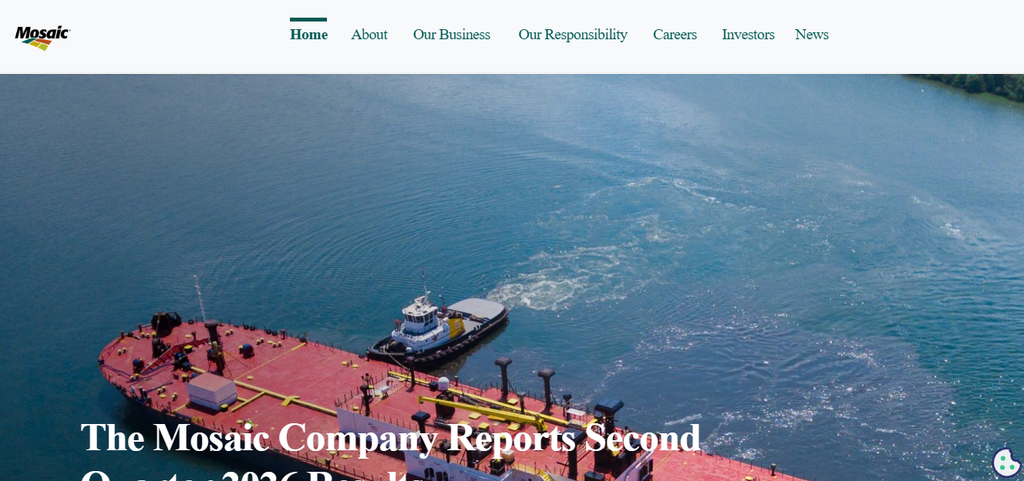
The Mosaic Company mines for agriculture rather than jewellery, steel or electronics. Its Florida operations dig phosphate rock that eventually becomes fertilizer used on farms.
The company says its Florida phosphate business employs about 3,000 people across five counties. Mines, processing plants and supporting operations are concentrated in the central part of the state.
Phosphate rarely gets the attention that gold or lithium does, yet farming depends heavily on it. Crops remove nutrients from soil, and phosphate fertilizers put part of that nutrition back.
Mosaic also produces potash, although most of that mining takes place in Canada. Its Florida mines are the reason it belongs on a US mining list.
The fertilizer market can move sharply from one season to another. Mosaic saw weaker North American phosphate demand late in 2025, with fourth-quarter phosphate sales of roughly 1.3 million tonnes.
6. Albemarle

Albemarle has a Nevada operation that looks quite different from the huge pits people normally associate with mining.
At Silver Peak, the company pumps lithium-bearing brine from underground and uses evaporation ponds to concentrate it. Albemarle has produced lithium there for more than 50 years.
Silver Peak currently holds an unusual distinction: Albemarle calls it the only active lithium resource in the United States, and the company says less than 2% of global lithium production currently comes from the US.
Only around 60 people work at the site, so it is not a giant operation by employment. Its importance comes from what it produces.
Lithium is used in batteries, but Silver Peak material also goes into industrial products and specialised applications. Albemarle has another lithium resource around Kings Mountain, North Carolina, although Silver Peak is the producing operation today.
7. MP Materials
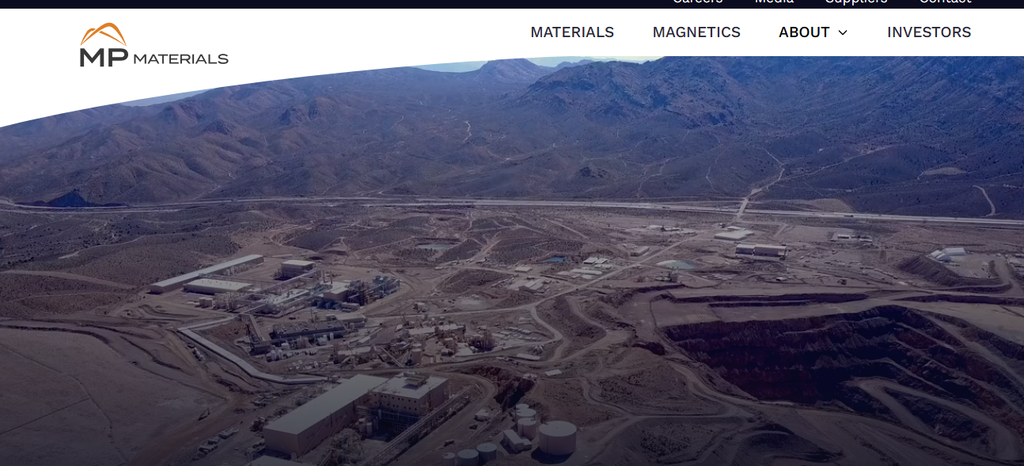
MP Materials runs Mountain Pass in California, the rare earth mine that has become much more familiar outside mining circles over the past few years.
The company produced a record 50,692 metric tonnes of rare earth oxide in concentrate in 2025, up 12% from 2024. It also produced 2,599 tonnes of NdPr oxide, more than double the previous year.
Those names may not mean much to someone outside the industry. The end products are easier to recognise. Rare earth magnets go into motors, electronics and other equipment where a small, powerful permanent magnet is needed.
MP has also been trying to do more of the processing and magnet work inside the United States instead of stopping at the mining stage. It produced its first NdFeB magnets on commercial equipment and announced another magnet facility for Northlake, Texas.
The mine itself has been around for decades. What changed is the amount of attention people now give to where rare earth materials are mined and processed.
8. Coeur Mining
Coeur Mining mines mostly gold and silver, and three of its long-running operations are in the United States: Rochester in Nevada, Kensington in Alaska and Wharf in South Dakota.
Coeur produced 419,046 ounces of gold and 17.9 million ounces of silver in 2025. Revenue for the year reached about $2.1 billion, almost twice the previous year’s figure. Higher production helped, and so did stronger gold and silver prices.
The company became much larger in March 2026 when it completed its acquisition of New Gold. That deal added the Rainy River gold-silver mine and New Afton gold-copper mine in Canada, taking Coeur to seven wholly owned producing operations.
Rochester remains an important piece of the US side. It is a large Nevada silver-gold operation, while Kensington and Wharf lean much more toward gold.
Coeur now sits in an interesting middle ground: much bigger than a small single-mine precious-metals company, but still nowhere near Newmont’s global gold scale.
9. Hecla Mining
Hecla Mining has been mining since 1891, and silver is still the metal most closely tied to its name.
Hecla produced a little over 17 million ounces of silver in 2025, along with about 150,500 ounces of gold, 56,130 tons of lead and 68,558 tons of zinc. The company describes itself as the largest primary silver producer in the United States and Canada.
Its main US mines are Greens Creek in Alaska and Lucky Friday in Idaho. Both are underground mines, so the work is very different from moving millions of tonnes through an open copper pit.
Lucky Friday had a particularly strong year in 2025, while Greens Creek continued producing silver alongside gold, lead and zinc.
Hecla also points out that silver, lead, zinc and copper now appear on the US government’s critical minerals list. For a company that has been around since the nineteenth century, some very old mines have suddenly found themselves tied to a much newer conversation about mineral supply.
10. Warrior Met Coal
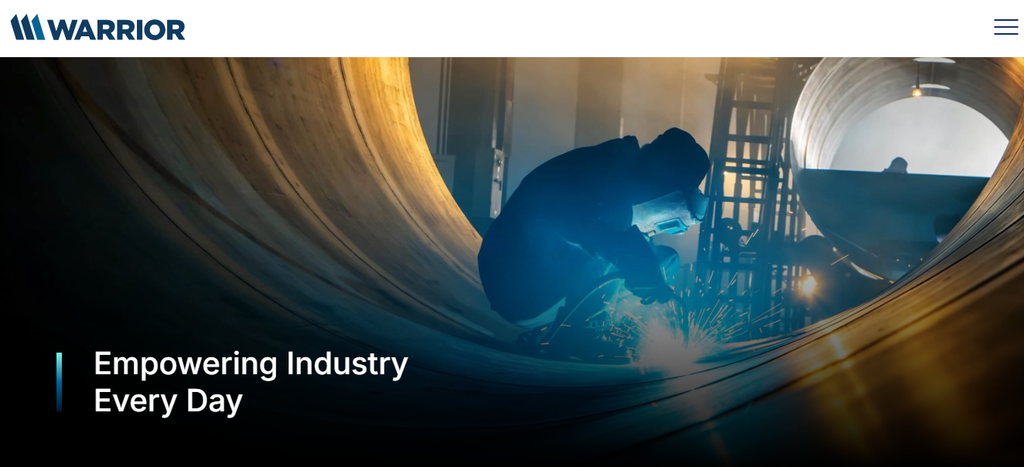
Warrior Met Coal mines coal in Alabama, but very little of its business has to do with the coal burned in a typical power station.
Warrior produces metallurgical coal, also called steelmaking or coking coal. Steel mills use it in blast furnaces, and much of Warrior’s production goes to customers outside the United States.
The company produced a record 10.2 million short tons in 2025, helped by the start of production at its new Blue Creek mine.
Blue Creek took years and just over $1 billion of development spending to build. By the second quarter of 2026, Warrior was producing 3.3 million short tons in a single quarter, and Blue Creek was responsible for much of the increase.
That new mine has changed the size of Warrior fairly quickly. The company now expects 12.5 million to 13.5 million short tons of production for full-year 2026.
Which Company Mines the Most Copper in the USA?
Freeport-McMoRan is well ahead of the rest of the domestic copper field.
Its US mines supplied about 60% of American mined copper in 2025, according to the company. Morenci in Arizona contributed almost 700 million pounds by itself.
Arizona accounts for much of Freeport’s copper production, although it also mines in New Mexico and produces molybdenum in Colorado.
Copper has always been important to construction and electrical wiring. The newer demand comes from things such as grid expansion, data infrastructure and equipment that uses far more electricity than older systems did.
Where Does Most US Gold Mining Happen?
Nevada still dominates the American gold business.
Newmont owns 38.5% of Nevada Gold Mines, the large operation it shares with Barrick. Coeur also has Rochester in the state, although Rochester produces both silver and gold.
Gold mining also continues in Alaska and South Dakota through companies such as Coeur and Hecla.
The US gold business is concentrated in places where the geology is good and the infrastructure already exists. Building a mine is expensive enough; roads, power, processing plants and experienced workers make established mining regions much easier to develop.
Who Mines Lithium in the United States?
For current commercial production, Albemarle’s Silver Peak operation in Nevada is the name to know.
The site has been producing lithium from brine since the 1960s and remains the only active US lithium resource according to Albemarle.
Several other lithium projects are being planned or developed around the country, so Silver Peak may not hold that position forever.
For now, though, one relatively small Nevada operation carries a surprisingly large share of America’s domestic lithium story.
Frequently Asked Questions
What is the biggest mining company in the USA?
Freeport-McMoRan runs one of the largest domestic mining businesses, particularly in copper. Its US mines produced about 60% of the copper mined in the country during 2025. Newmont is much larger in global gold mining, although a large share of its production comes from outside the United States.
Which company mines the most copper in the United States?
Freeport-McMoRan. Its seven US open-pit copper mines accounted for roughly 60% of domestic mine production in 2025. Morenci in Arizona produced nearly 700 million pounds by itself.
Who is the biggest US gold miner?
Newmont ranks among the world’s largest gold companies and produced about 5.9 million attributable ounces in 2025. Its main US exposure comes through its 38.5% stake in Nevada Gold Mines.
Does the United States have a lithium mine?
Yes. Albemarle operates Silver Peak in Nevada, which currently remains the country’s only producing lithium mine or resource.
Where are rare earths mined in the United States?
MP Materials mines rare earths at Mountain Pass in California. The operation produced 50,692 metric tonnes of rare earth oxide in concentrate during 2025.
Which company mines the most silver in the USA?
Hecla Mining describes itself as the largest primary silver producer in the US and Canada. The company produced about 17 million ounces of silver in 2025.
Does Cleveland-Cliffs still mine iron ore?
Yes. Cleveland-Cliffs owns or co-owns five iron ore mines in Minnesota and Michigan. Its share of rated pellet capacity stood at about 20.1 million long tons a year at the end of 2025.
What does Mosaic mine in the United States?
Mosaic mines phosphate rock in Florida and processes it into fertilizer products. Its Florida phosphate business employs around 3,000 people across five counties.
Is Warrior Met Coal used for electricity?
Warrior mainly produces metallurgical coal for steelmaking rather than ordinary thermal coal for power stations. The company produced a record 10.2 million short tons in 2025.