Meet Sayli Kamble: Biography, Career, Age, Husband & Personal Life

Sayli Kamble

Introduction

Sayli Kamble is an Indian singer who became a familiar face across the country after her impressive journey on Indian Idol Season 12. Known for her melodious voice, classical music training and simple personality, Sayli became one of the most loved contestants of the season. Although she did not win the show, she finished as the second runner-up, securing the third position among the finalists. Her journey on Indian Idol helped her move from being a talented singer known mainly in Maharashtra to a performer recognised by audiences across India.

What makes Sayli’s story interesting is that singing was not simply a career choice that appeared overnight. She had been connected with music since childhood and had participated in singing programmes and competitions long before Indian Idol. At the same time, she also focused on education and completed a master’s degree in Statistics from Mumbai University, giving her life an unusual combination of music and academics.

Today, Sayli is not only known as an Indian Idol finalist. She has also worked on music projects, appeared as a captain on Superstar Singer 2, married her longtime partner Dhawal Patil in 2022 and entered motherhood in 2025. Her journey shows how a reality-show opportunity can become an important step in a much longer career.

Sayli Kamble Age and Biography

Image Source: Pixabay

Sayli Kishor Kamble was born on 6 November 1997 in Mumbai, Maharashtra. As of October 2026, she is 28 years old. She comes from a Marathi family in Mumbai and developed an interest in music at a very young age.

She received training in classical music while growing up and gradually started taking part in singing competitions and television programmes. Her early exposure to music helped her develop confidence before she appeared on national television.

One interesting part of Sayli’s biography is her educational background. While she was building her identity as a singer, she also continued her studies. She completed a Master of Science in Statistics from Mumbai University. This combination of a technical academic background and a professional career in music makes her journey different from that of many television singers.

Sayli Kamble’s Family Background

Sayli has often spoken about the importance of her family in her journey. Her father, Kishore Kamble, worked as an ambulance driver, while her mother, Surekha Kamble, is a homemaker, according to biographical profiles and reports about her early life.

Her father’s support became particularly noticeable during her Indian Idol journey. Reports from the time highlighted how he encouraged Sayli to continue pursuing music despite the challenges faced by the family. His work as an ambulance driver also received attention during the COVID-19 period.

For Sayli, family has remained an important part of her story. Her rise on television was not presented as a sudden success but as the result of years of learning, practice and encouragement from the people around her.

Sayli Kamble’s Early Singing Journey

Image Source: Pixabay

Sayli did not begin her professional journey with Indian Idol. She had already appeared on several music-related programmes before reaching the national stage.

One of her early television appearances was on Mummy Ke Superstars in 2009. She also participated in programmes such as Gaurav Maharashtracha and other singing competitions. These opportunities gave her experience in performing before an audience and helped her understand the demands of television.

Her background in classical singing also helped her develop a strong foundation. Before becoming a television celebrity, she spent years learning music rather than depending only on natural talent.

She also worked on commercial jingles in different languages. Various biographical reports mention her association with jingles for brands including Big Bazaar, Idea, Mahindra Supro and Oreo. These early experiences were important because they allowed Sayli to perform in different formats. They also prepared her for the pressure of a large-scale singing competition like Indian Idol.

Sayli Kamble in Indian Idol Season 12

Image Source: Pixabay

The biggest turning point in Sayli Kamble’s career came with Indian Idol Season 12. The season began in late 2020 and concluded in August 2021. Sayli impressed the judges and viewers with her voice and eventually became one of the most prominent contestants of the season. The season included several popular singers, including Pawandeep Rajan, Arunita Kanjilal, Nihal Tauro, Shanmukhapriya and Mohd Danish.

Sayli eventually finished as the second runner-up, which means she secured the third position in the competition. Pawandeep Rajan won the season, while Arunita Kanjilal finished as the first runner-up.

Although Sayli did not take home the winner’s trophy, the show gave her something equally valuable for her career: nationwide recognition.

Before Indian Idol, she was mainly known among audiences familiar with her regional work and previous television appearances. After the show, she had a much larger fan base and more opportunities in the Indian music industry.

Sayli herself has described her Indian Idol experience as an important learning period. She explained that she was initially nervous before performances but became more confident during the competition.

Sayli Kamble’s Singing Career After Indian Idol

Indian Idol did not mark the end of Sayli’s singing journey. Instead, it opened the door to new opportunities. Soon after the show, she recorded a song for the Marathi film Kolhapur Diaries. The project was significant because it gave her an opportunity to move into playback singing. The film was directed by Joe Rajan, with music by Avadhoot Gupte.

This was an important step for Sayli because playback singing had been one of the natural career paths for a reality-show singer with classical training.

Her work also expanded beyond simply performing as a contestant. In 2022, she appeared on Superstar Singer Season 2, but this time she was not competing. She took on the role of a captain, helping and guiding young singers on the show.

The change from contestant to mentor showed another side of her career. It suggested that her experience on reality television had given her enough confidence and knowledge to guide younger performers.

Sayli Kamble and Her Husband Dhawal Patil

Image Source: Pixabay

Sayli Kamble is married to Dhawal Patil.

The couple knew each other for several years before getting married. Sayli and Dhawal made their relationship public before their engagement, and their relationship attracted considerable attention from Indian Idol fans. Reports from 2021 stated that they had known each other for around three years at that time.

Dhawal proposed to Sayli before their engagement, and Sayli shared her happiness with fans on social media. The couple became engaged in December 2021.

They eventually got married on 24 April 2022 in a traditional Maharashtrian wedding in Kalyan near Mumbai. Several of Sayli’s Indian Idol friends, including Nihal Tauro and Nachiket Lele, were present at the wedding celebrations.

At the time, Sayli was already making plans to continue working in music. Her marriage therefore did not mean that she stepped away from her career.

Sayli Kamble’s Relationship With Indian Idol Co-Contestants

During Indian Idol 12, Sayli developed close friendships with several contestants.

Her friendship with Nihal Tauro attracted particular attention from viewers. Some fans speculated about a romantic relationship between the two because of their close bond and frequent performances together. However, both Sayli and Nihal clarified that they were simply close friends. Nihal even described their relationship as similar to that of siblings.

Sayli later made her relationship with Dhawal public, clearing up much of the speculation surrounding her personal life.

Her friendships with other contestants also continued to receive attention, particularly during important occasions such as her engagement and wedding.

Sayli Kamble’s Personality and Approach to Success

One reason Sayli connected with viewers was her relatively simple and grounded personality.

Her journey did not follow the story of someone who suddenly discovered singing after entering a reality show. She had already spent years learning music, participating in competitions and working on smaller projects.

Indian Idol simply gave her a much larger platform.

She has also spoken about how important discipline and punctuality are in her professional life. For a singer, talent alone is not enough. Regular practice, preparation and the ability to perform under pressure are equally important.

Her journey also shows that academic education and creative interests can exist together. While she pursued an M.Sc. in Statistics, she continued to develop her singing career. This makes her story relatable to students and young people who may have more than one interest or career goal.

What Makes Sayli Kamble’s Journey Special?

Sayli Kamble’s story is not only about finishing third on a singing reality show.

Her journey began much earlier, with childhood music training and participation in smaller competitions. She continued her education and completed a master’s degree in Statistics. She then appeared on different music programmes before reaching Indian Idol.

Indian Idol gave her national recognition, but she continued working after the show. She explored playback singing, appeared as a captain on Superstar Singer and continued building her identity as a professional singer.

Her personal journey has also changed considerably over the years. She became engaged in 2021, married Dhawal Patil in 2022 and welcomed her first child in December 2025.

The story is therefore about more than fame. It is about continuing to work while managing changes in personal life and staying connected to the profession that she has loved since childhood.

Conclusion

Sayli Kamble has built her career step by step. From learning classical music as a child to participating in television singing competitions, from completing an M.Sc. in Statistics to becoming the second runner-up of Indian Idol 12, her journey has included both education and music.

Indian Idol was undoubtedly the biggest turning point in her career. The show introduced her to a nationwide audience and helped her receive opportunities in playback singing and television. Her appearance as a captain on Superstar Singer 2 also showed that she could take on responsibilities beyond being a contestant.

Her personal life has also entered new phases. She married Dhawal Patil in April 2022, and the couple welcomed their first child, a baby boy, in December 2025.

As of 2026, Sayli Kamble remains known for her singing talent, classical music background and journey from a Mumbai-based young singer to a recognised television performer. Her story is a reminder that success does not always happen overnight. Sometimes, years of learning and smaller opportunities prepare a person for the one platform that changes everything.

Frequently Asked Questions :

Who is Sayli Kamble?

Sayli Kamble is an Indian singer who became popular after appearing on Indian Idol Season 12.

How old is Sayli Kamble?

Sayli Kamble is 28 years old as of October 2026.

When was Sayli Kamble born?

Sayli Kamble was born on 6 November 1997 in Mumbai, Maharashtra.

Where is Sayli Kamble from?

Sayli Kamble is from Mumbai, Maharashtra, India.

What is Sayli Kamble’s educational qualification?

Sayli Kamble holds a master’s degree in Statistics from Mumbai University.

What is Sayli Kamble known for?

She is best known for being the second runner-up of Indian Idol Season 12.

Did Sayli Kamble win Indian Idol 12?

No, Sayli Kamble finished as the second runner-up in Indian Idol Season 12.

Who is Sayli Kamble’s husband?

Sayli Kamble’s husband is Dhawal Patil.

When did Sayli Kamble get married?

Sayli Kamble married Dhawal Patil on 24 April 2022.

When did Sayli Kamble get engaged?

Sayli Kamble got engaged to Dhawal Patil in December 2021.

Does Sayli Kamble have a child?

Yes, Sayli Kamble and Dhawal Patil welcomed a baby boy in December 2025.

Was Sayli Kamble a captain on Superstar Singer?

Yes, Sayli Kamble appeared as a captain on Superstar Singer Season 2.

Did Sayli Kamble work as a playback singer?

Yes, Sayli Kamble has worked as a playback singer, including for the Marathi film Kolhapur Diaries.

Is Sayli Kamble classically trained?

Yes, Sayli Kamble received classical music training from a young age.

What is Sayli Kamble’s net worth?

Sayli Kamble’s exact net worth has not been officially disclosed through reliable public sources.

Tech News FeedWorldTech: Latest Technology Updates, Trends & Innovations

FeedWorldTech Latest Technology News Trends and Innovations

Technology does not give anyone any breaks. New devices are coming out everyday, software is being updated, artificial intelligence continues to advance, and businesses are looking to maximize their use of digital means. For those hoping to keep up with all of this information, technology news has become an essential part of daily life.

This is where Tech News FeedWorldTech comes into play.

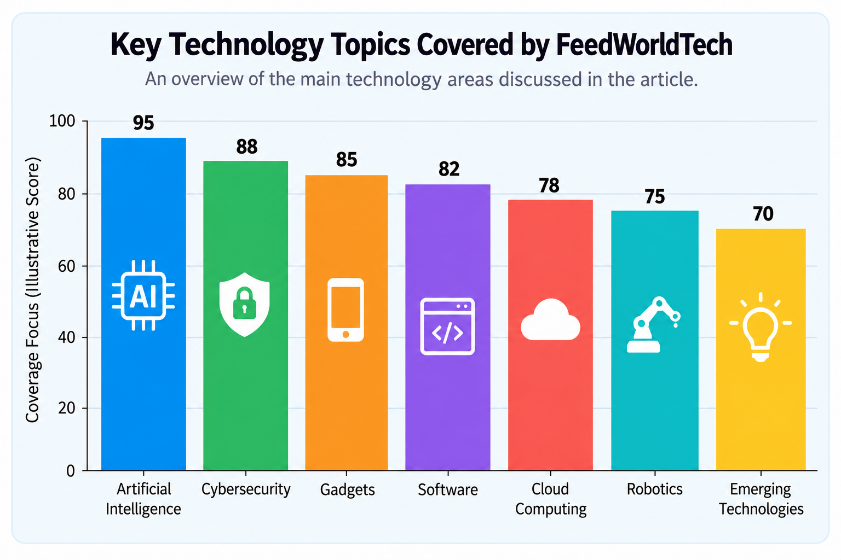
FeedWorldTech is a technology-oriented content medium covering developments in fields such as artificial intelligence, cybersecurity, gadgets, software, cloud computing, robotics, and other emerging technologies. Its articles aim to make fast-paced progressions in technology accessible to readers.

Technology news is not limited to “what” has taken place, but what significance or impact it may have on students, workers, professionals, businesses and even regular consumers.

What is Tech News FeedWorldTech?

Tech News FeedWorldTech refers to technology-focused news and information covering the latest developments, trends, products, innovations, and changes taking place in the digital world.

The information related to FeedWorldTech covers a wide variety of technology subjects, ranging from artificial intelligence, software, gadgets, cybersecurity, cloud computing, robotics, and other emerging technologies.The premise is simple; technology changes rapidly and readers need a more accessible source on the latest changes.

For example, a new artificial intelligence tool may be launched. This tool may have dozens of new technical features that it possesses. Technology articles can break down what the tool can actually do and who can use it.

The same goes for a new gadget, software update, cybersecurity development, cloud computing news, and others.

A good technology coverage should not leave readers with “what features does it have”, but “what can I do with it”.

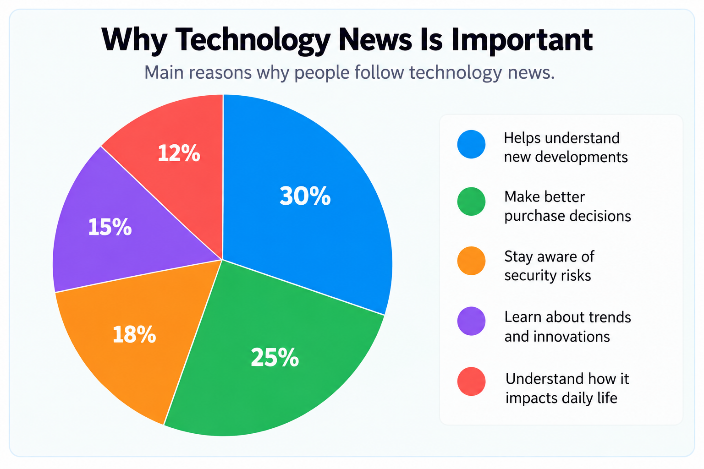
Why Is Technology News Important?

A few years ago, technology news was something that only computer enthusiasts, tech-savvy professionals, and IT-specialized individuals were interested in.

This is no longer the case. Technology has seeped into education, career paths, banking and finance, entertainment, communication, health care, transportation, and nearly all aspects of modern life.

As such, a change in technology can affect people beyond just the “tech world”.

For example, a new security update may impact millions of smartphone users. A new artificial intelligence tool may change the daily tasks of employees. A change in cloud computing may change the day-to-day operations of businesses.

Technology news can help people understand these changes before they have a significant impact on their lives.

It can also help consumers make better purchases. Before making an expensive purchase such as a new laptop or smartphone, it is prudent to check what “new” products are actually new and what changes are significant.

Artificial Intelligence Is Changing Technology

It is hard to have a conversation with modern technology without mentioning artificial intelligence.

AI has progressed from being a concept discussed in research labs to being a part of search engines, productivity applications, smartphones, customer service tools, design software, coding applications, and a growing number of other products.

Technology coverage related to AI can include new AI models, AI-powered applications, automation tools, machine learning developments, and practical business applications.

Perhaps one of the most interesting developments is the use of AI for day-to-day work.

A person may use an AI tool to summarize a document. A developer may use an AI coding assistant to generate suggestions. A marketing team may use an AI tool to analyze information or generate drafts.

However, AI should not be seen as a magic bullet that can replace humans.

The accuracy of an AI tool depends on how it is used, as well as how it is reviewed. Human judgment is still vital, and crucial when it comes to accuracy, security, privacy, and other important matters.

This is why good technology news should talk about both the potential and limitations of AI.

Gadgets and Consumer Technology

Smartphones, laptops, smartwatches, tablets, wireless earbuds, smart home devices, connected products, and other gadgets, have become a part of every day life.

New gadgets are coming out every day, often with faster processors, better cameras, larger displays, longer battery life, and other features.

However, features do not always tell the whole story.

A new smartphone may have a better camera but it does not necessarily mean that a person with a relatively new smartphone has to upgrade. Technology news can help users look at the practical side of a product.

What has actually changed? Is it a significant improvement? Who should buy it? Is it a worthy purchase? What distinguishes it from similar products? Will it last for years?

These questions are more important to some readers than the technical aspects of a new gadget and a comparison of its processor speed or camera resolution. After all, no one wants to waste money on something that is barely an upgrade from what they already have.

Software and Digital Applications

Software is another area that is constantly changing.

Applications are getting new features, operating systems are changing, and developers are pushing out fixes for bugs and security issues.

Some changes are relatively minor and hardly noticeable. Other changes can completely transform an application. Technology news can help readers understand what is actually important.

For example, if an application includes a new privacy feature, it may be more important to users looking to protect their information. If an operating system has a major change, it may be more important for businesses looking to ensure compatibility.

This is especially true for businesses relying on software applications for their daily operations.

A minor change in an application can have major repercussions for business processes, data management, operations, and other important considerations.

Cybersecurity and Online Safety

Cybersecurity has become one of the most important aspects of technology.

With many people storing personal and professional information online, security is more important than ever.

Cybersecurity news can include data breaches, malware, phishing scams, security vulnerabilities, privacy developments, password protection, and software security updates.

While the average user does not need to be an expert on cybersecurity, they should still be aware of the basics.

People should be wary of suspicious links, unauthorized downloads, phishing scams, repeated passwords, and unexpected requests for sensitive information.

Technology news can also help people understand why a security update is important.

A security fix may not seem as exciting as a new feature, but it can be far more important.

Cloud Computing and the Digital Workplace

Cloud computing has revolutionized the way people and businesses store, access, and manage information.

As opposed to relying on physical servers, businesses can utilize cloud-based services for storage, software, communication, and data processing.

This has been especially useful for businesses with a distributed workforce.

The cloud can allow people to access information anywhere and collaborate in real-time. It can also allow businesses to scale their digital infrastructure based on their needs.

However, cloud computing also introduces new considerations when it comes to security, privacy, costs, and data management.

Technology news can help businesses understand these considerations before they decide if a certain cloud service is right for them.

Robotics and Automation

The field of robotics is seeing a major boom.
Robots are being developed for manufacturing, logistics, healthcare, agriculture, warehousing, research, and a growing number of other applications.

Automation is also being integrated into more software applications. Businesses are looking to utilize automation to streamline repetitive processes, organize information, communicate with customers, and carry out administrative functions.

The ultimate goal of automation is not to eliminate humans, but rather to reduce monotonous tasks and let humans focus on more creative, communicative, and innovative endeavors.

At the same time, automation is also changing the types of skills that are in demand.

People with digital literacy and who can work with emerging technologies are in higher demand as businesses continue their digital transformation.

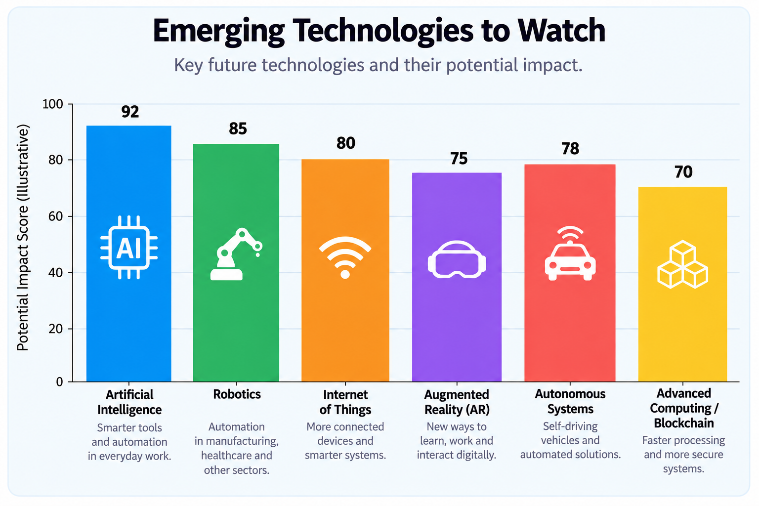
Emerging Technologies to Watch

Technology does not stop at the current developments. There are several potential emerging technologies that have the potential to change the world.

These can range from robotics, artificial intelligence, Internet of Things devices, autonomous systems, advanced computing, augmented reality, and other developing technologies. Some of these ideas may be revolutionary, while others may take years to become a reality.

This is why technology news should take a balanced approach.

A new technology may seem revolutionary at first, but its actual impact can only be determined with time and its practical application.

Following developments over time can help readers see which emerging technologies have practical applications and will actually become a part of their lives.

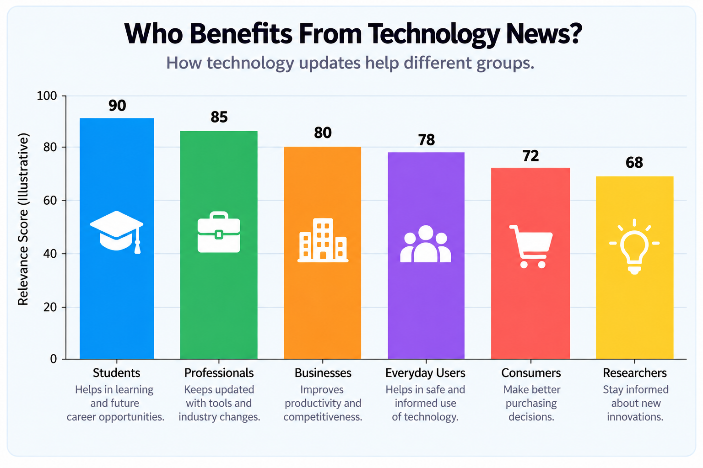
How Technology News Helps Students

Students can benefit greatly from technology news.

Education is becoming more digital and students are relying on online classes, digital libraries, cloud storage, productivity applications, AI tools, and other pieces of technology to further their education.

Keeping up with technology can also help students prepare for the future.

A business student may want to understand artificial intelligence and automation. A computer science student needs to keep up with software and programming developments. A design student may want to understand emerging creative AI tools. Even those students not directly studying technology can benefit from understanding what digital tools are changing the workplace.

Technology knowledge is becoming a general professional skill rather than something only specialized for IT professionals.

How Professionals Can Benefit

Professionals can use technology news to keep up with developments that may be relevant to their fields.

Marketing professionals may want to follow AI-powered marketing tools and analytics platforms. HR professionals may be interested in recruitment software and automation. Finance professionals may follow digital payment systems and financial technology developments.

The goal is not for professionals to learn every single new technology tool, but to understand what can be useful for them and what is not worth their time and resources.

Why Businesses Should Follow Technology Trends

For businesses, technology can directly impact their operations and productivity.

A business that fails to keep up with major developments in technology may find itself getting left behind by competitors. At the same time, a business that blindly adopts every new technology it sees may also waste resources.

Businesses should ask themselves practical questions before adopting new technologies.

Does the technology help me solve a problem? Does it save me time or money? Is it secure? Can my employees actually use it? Will it work with my existing systems? Does the value actually justify the cost? These are all important considerations before businesses invest in new technologies.

How to Read Technology News More Effectively

There is an overwhelming amount of information related to technology.

While this is good, it can also be hard to know what is important.

One approach is to focus on topics that are actually relevant to you.

A smartphone user may want to focus on mobile technology developments and cybersecurity. Businesses may want to follow developments relating to artificial intelligence, cloud computing, automation, and digital payments. It is also important not to fall for clickbaity headlines.

Technology headlines are notorious for often using words such as “revolutionary”, “game-changing”, or “the future”. Readers should look at the actual details of an article rather than the headline. For important decisions, it is also a good idea to compare multiple sources and official announcements.

The Future of Technology News

Technology news itself is also changing. As mentioned, readers want more information, but in a more easily accessible way. This presents a dilemma for technology publishers; how do they balance brevity and depth?

Artificial intelligence can help summarize content, identify developments, and organize news. However, human writers will still be needed to provide context, fact-checking, testing, and explaining why a certain development is important. In the future, technology news will likely become more personalized as readers get news based on their interests. Someone interested in artificial intelligence will see more articles relating to it, while someone else can follow developments in smartphones, cybersecurity, gaming, or business technology. The key is that information should be accessible and easy to understand.

Is Tech News FeedWorldTech Useful for Everyday Readers?

Technology news is no longer only for technology professionals. Students, employees, business owners, consumers, and even regular internet users all interact with technology on a daily basis.

FeedWorldTech’s content covers developments in artificial intelligence, gadgets, software, cybersecurity, cloud computing, robotics, and other emerging technologies. This can be useful for readers hoping to understand technology developments without having to spend hours reading through technical articles.

However, it is important to compare important details with official sources, especially when it comes to cybersecurity, expensive products, financial decisions, and significant software changes.

Conclusion

Technology is continuing to progress at an astonishing rate and keeping up with all developments can be overwhelming.

From artificial intelligence and cloud computing to smartphones, cybersecurity, robotics, and automation, modern technology is continuing to shape the world in unprecedented ways.

Tech News FeedWorldTech can be seen as a technology-focused approach to informing readers on these developments. Its articles cover a variety of important topics in technology and aim to make complex information more accessible to readers.

The importance of technology news, however, does not just lie in “what” has happened, but “why” it has happened.

A new gadget may not be worth buying, a software update may be incredibly important, an AI tool may save hours of work but still require human review, and a cybersecurity warning may seem mundane but can actually prevent major issues.

With education, technology, businesses, communication, health care, and nearly all other important aspects of human life becoming increasingly digital, it has also become increasingly important to stay informed about major developments in the technology space.

Frequently Asked Questions

What is Tech News FeedWorldTech?

Tech News FeedWorldTech refers to technology-focused news and information covering developments such as artificial intelligence, gadgets, software, cybersecurity, cloud computing, robotics, and emerging technologies.

What topics does FeedWorldTech cover?

FeedWorldTech-related technology coverage includes AI, cybersecurity, gadgets, software development, cloud computing, robotics, mobile technology, and emerging innovations.

Is Tech News FeedWorldTech useful for beginners?

Yes. Technology news can be useful for beginners when complex developments are explained using simple language and practical examples.

Why should people follow technology news?

Following technology news helps people understand new products, software updates, cybersecurity developments, AI tools, and trends that may affect their personal or professional lives.

Does FeedWorldTech cover artificial intelligence?

Yes. Artificial intelligence is one of the major technology areas covered in FeedWorldTech’s published material.

Can students benefit from technology news?

Yes. Students can learn about emerging technologies, digital tools, AI, cybersecurity, and developments that may influence future careers.

Why is cybersecurity news important?

Cybersecurity news can help users understand threats such as phishing, malware, security vulnerabilities, and data breaches and learn why software and security practices matter.

Does technology news help businesses?

Yes. Businesses can use technology news to identify useful developments in AI, automation, cloud computing, software, cybersecurity, and other areas that may affect productivity.

Should I believe every technology headline I read?

No. Headlines can sometimes exaggerate a development. Important claims should be checked against reliable sources and official announcements.

What is the future of technology news?

Technology news is likely to become faster, more personalized, and increasingly supported by AI. Human analysis will remain important for providing context, checking information, and explaining the real-world impact of new developments.

Top 10 ERP Software in USA

Top 10 ERP Software in USA

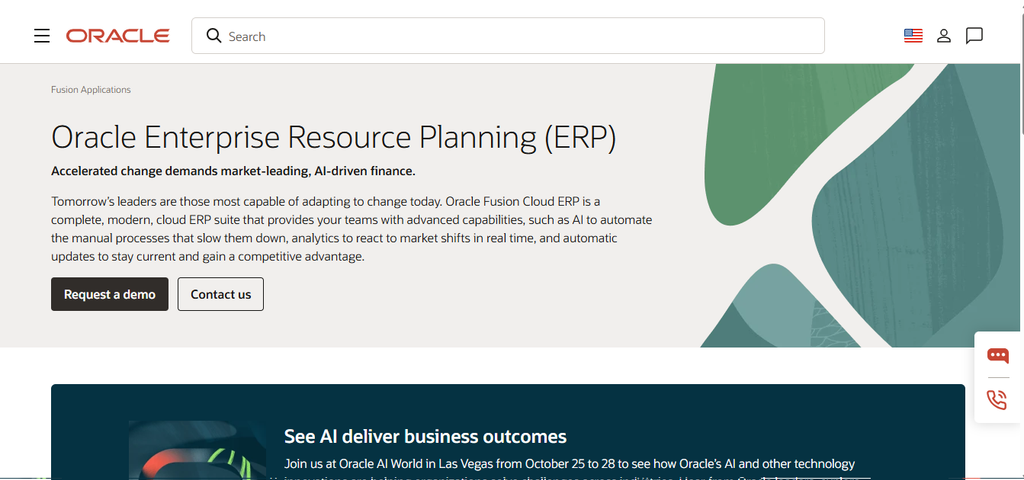
ERP, short for enterprise resource planning, helps businesses manage their finances, inventory, human resources, and operations all in one connected system. A small group of software companies makes most of the ERP tools used by American businesses today.

Some of these companies started right here in American garages and college towns. Others came from Germany and the United Kingdom before growing into tools used by businesses across the United States.

In this article, we’ll discuss the top 10 ERP software companies used in the United States, based on their history, ownership, and the kind of businesses they are known for serving.

Quick Comparison

RankCompanyFoundedOwner / FoundersUS HeadquartersCore Focus
1SAP1972Founded by Dietmar Hopp & four co-founders; publicly listed, led by CEO Christian KleinNewtown Square, PennsylvaniaEnterprise-Wide ERP
2Oracle ERP Cloud1977Founded by Larry Ellison; publicly listed, led by Co-CEOs Clay Magouyrk & Mike SiciliaAustin, TexasCloud ERP & Database Systems
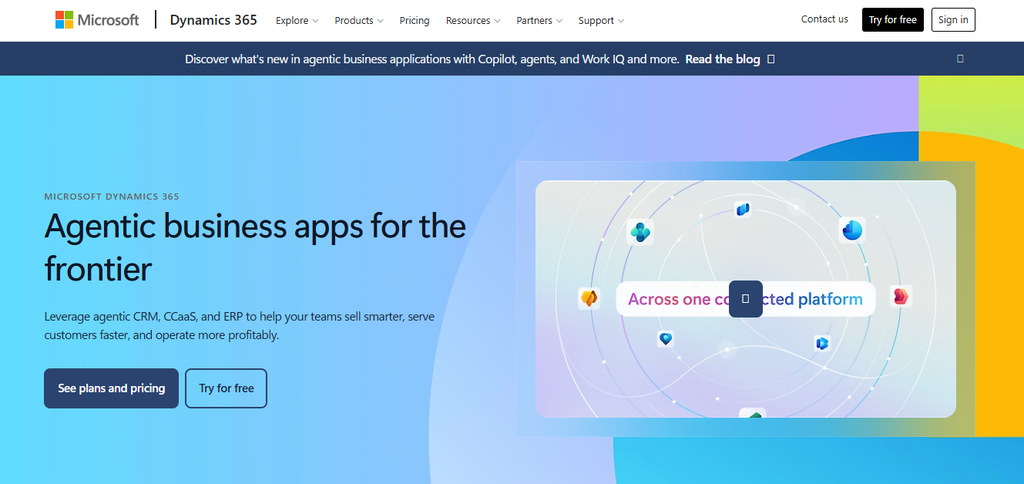
3Microsoft Dynamics 3651975 (Microsoft)Founded by Bill Gates & Paul Allen; publicly listed, led by CEO Satya NadellaRedmond, WashingtonMid-Market & Enterprise ERP
4Workday2005Founded by Dave Duffield & Aneel Bhusri; publicly listed, led by CEO Aneel BhusriPleasanton, CaliforniaFinance & HR Cloud ERP
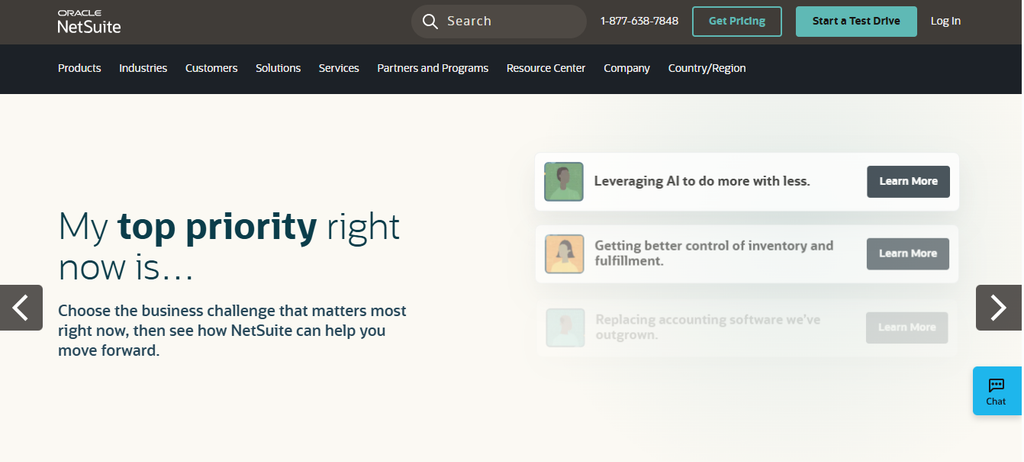
5Oracle NetSuite1998Founded by Evan Goldberg; part of OracleAustin, TexasMid-Market Cloud ERP
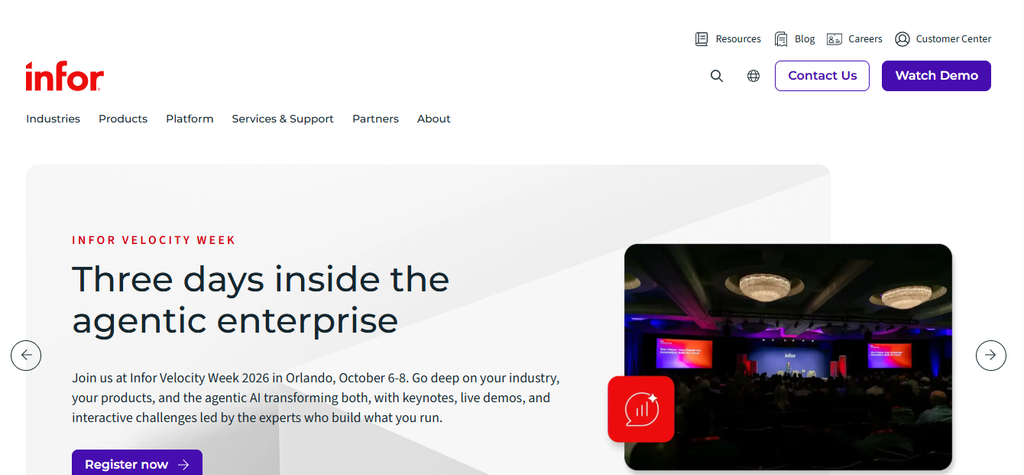
6Infor2002Formed through mergers; owned by Koch Industries, led by CEO Kevin SamuelsonNew York, New YorkIndustry-Specific ERP
7Epicor1972Roots to Dataworks & other firms; privately held, led by CEO Steve MurphyAustin, TexasManufacturing & Distribution ERP
8Sage Intacct1999Founded by Odysseas Tsatalos & David Thomas; part of Sage Group, led by CEO Steve HareSan Jose, CaliforniaCloud Financial Management
9Acumatica2008Founded by Serguei Beloussov & co-founders; privately held, led by CEO John CaseBellevue, WashingtonCloud ERP for Growing Businesses
10Deltek1983Founded by Donald deLaski; owned by Roper TechnologiesHerndon, VirginiaProject-Based ERP

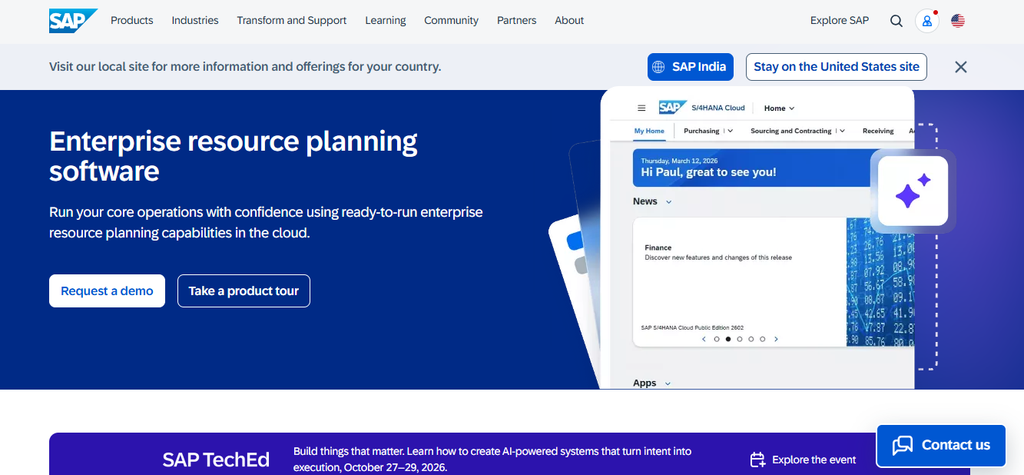
1. SAP – The World’s Leading Enterprise Software Company

  • Founded: 1972 
  • Owner: Founded by Dietmar Hopp & four co-founders; publicly listed, led by CEO Christian Klein 
  • Headquarters (US): Newtown Square, Pennsylvania

SAP was started in 1972 by five former IBM engineers in Germany, including Dietmar Hopp and Hasso Plattner, after their earlier project at IBM was shelved. The five decided to build their own software company focused on helping large businesses manage their entire operations in real time. That early vision grew into one of the biggest enterprise software companies in the world.

SAP’s ERP systems are used by many of the largest companies in the United States to manage finance, supply chains, and manufacturing together. Christian Klein joined SAP as a student in 1999 and worked his way up through the company over two decades. He became sole CEO in 2020 and continues leading SAP’s global operations today.

What SAP does: Helps large businesses manage finance, supply chains, and operations in one connected system.

Services: Enterprise resource planning, supply chain management, financial software, and business analytics.

2. Oracle ERP Cloud – A Database Giant’s Enterprise Software Suite

  • Founded: 1977 
  • Owner: Founded by Larry Ellison; publicly listed, led by Co-CEOs Clay Magouyrk & Mike Sicilia 
  • Headquarters: Austin, Texas

Oracle was started in 1977 by Larry Ellison and two partners, originally focused on building database software for businesses and governments. That early database work became the foundation for a much larger software company over the following decades. Oracle eventually expanded into full enterprise resource planning systems used to manage entire companies.

The company grew its ERP business partly through acquisitions, including rival PeopleSoft in 2005. Oracle’s cloud ERP system now competes directly with SAP for large enterprise customers across the country. Clay Magouyrk and Mike Sicilia became Oracle’s co-CEOs in 2025, continuing the push toward AI-powered cloud applications.

What Oracle ERP Cloud does: Provides large businesses with cloud-based financial and operational management tools.

Services: Financial management, supply chain planning, human resources software, and procurement tools.

3. Microsoft Dynamics 365 – A Software Giant’s Business Management Platform

  • Founded: 1975 (Microsoft) 
  • Owner: Founded by Bill Gates & Paul Allen; publicly listed, led by CEO Satya Nadella 
  • Headquarters: Redmond, Washington

Microsoft was started in 1975 by childhood friends Bill Gates and Paul Allen, who wanted to write software for the earliest personal computers. The company became famous for Windows, used on most computers worldwide. Microsoft later entered the ERP market by acquiring smaller companies like Great Plains and Navision in the early 2000s, eventually combining them into Dynamics 365.

The platform now blends ERP and CRM features in one cloud-based system, appealing to businesses already using Microsoft Office and Teams. This familiar connection to everyday Microsoft tools has helped Dynamics 365 grow steadily among mid-sized American businesses. Satya Nadella has led Microsoft as CEO since 2014, pushing the company toward artificial intelligence across its business software.

What Microsoft Dynamics 365 does: Combines ERP and business management tools with familiar Microsoft software.

Services: Financial management, supply chain tools, human resources software, and AI-powered business insights.

4. Workday – A Cloud ERP Pioneer Born From a Lake Tahoe Breakfast

  • Founded: 2005 
  • Owner: Founded by Dave Duffield & Aneel Bhusri; publicly listed, led by CEO Aneel Bhusri 
  • Headquarters: Pleasanton, California

Workday was started in 2005 when Dave Duffield and Aneel Bhusri, both former executives at PeopleSoft, met for breakfast near Lake Tahoe after Oracle bought their old company. They decided to build something different: ERP software delivered entirely through the cloud, rather than installed on company computers. This cloud-first approach was still fairly unusual for enterprise software at the time.

Workday focused heavily on combining financial management with human resources software in one connected system. The company grew into one of the largest cloud ERP providers, especially popular among large employers managing complex payroll and benefits. After some recent leadership changes, Aneel Bhusri returned to serve as Workday’s CEO.

What Workday does: Combines financial management and human resources software in one cloud system.

Services: Financial management, human capital management, payroll processing, and workforce planning.

5. Oracle NetSuite – A Cloud ERP Pioneer for Growing Businesses

  • Founded: 1998 
  • Owner: Founded by Evan Goldberg; part of Oracle 
  • Headquarters: Austin, Texas

NetSuite was started in 1998 by Evan Goldberg, a former Oracle employee, with early financial backing from Oracle founder Larry Ellison himself. Goldberg’s idea was to combine financial management, inventory tracking, and online store tools into one system delivered entirely over the internet. This all-in-one approach made NetSuite especially popular with growing mid-sized businesses that could not afford massive enterprise systems.

The company went public in 2007 and continued growing as an early cloud computing pioneer. In 2016, Oracle bought NetSuite entirely for $9.3 billion, bringing it fully under Oracle’s larger software portfolio. NetSuite continues to operate as its own business unit within Oracle, still focused mainly on small and mid-sized companies.

What Oracle NetSuite does: Provides growing businesses with combined financial and operational management tools.

Services: Financial management, inventory tracking, order management, and e-commerce integration.

6. Infor – An Industry-Focused ERP Built Through Many Mergers

  • Founded: 2002 
  • Owner: Formed through mergers; owned by Koch Industries, led by CEO Kevin Samuelson 
  • Headquarters: New York, New York

Infor was formed in 2002 through a series of mergers between smaller software companies, originally under the name Agilisys. The business grew quickly by buying up other ERP and business software companies, adding dozens of products over the following years. This acquisition-heavy strategy helped Infor build deep expertise across many different industries.

The company became especially known for building ERP systems tailored to specific industries like manufacturing, healthcare, and food service, rather than one-size-fits-all software. Koch Industries, one of the largest private companies in America, bought Infor and has continued investing in its growth. Kevin Samuelson currently leads the company as CEO.

What Infor does: Provides industry-specific ERP software tailored to manufacturing, healthcare, and other sectors.

Services: Industry-specific ERP systems, supply chain management, and cloud-based business applications.

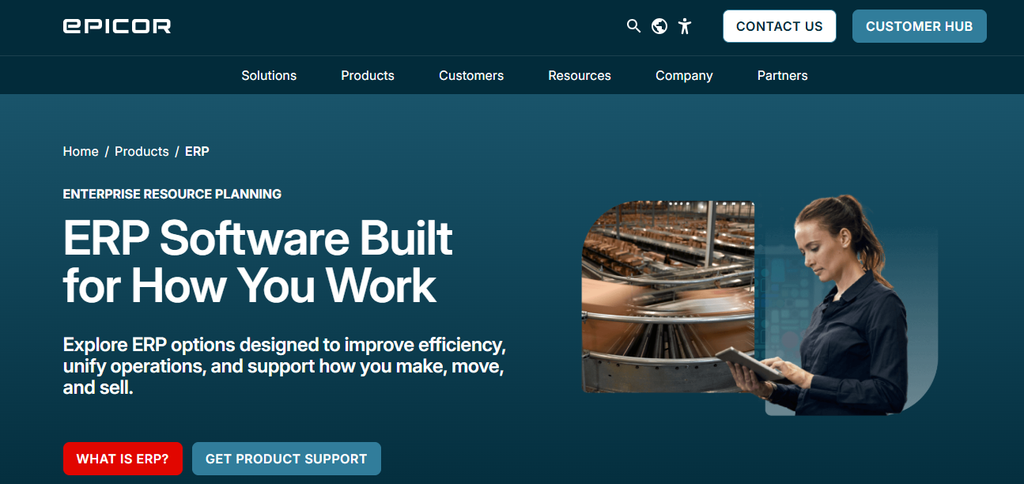
7. Epicor – A Manufacturing-Focused ERP With Deep Texas Roots

  • Founded: 1972 
  • Owner: Roots to Dataworks & other firms; privately held, led by CEO Steve Murphy 
  • Headquarters: Austin, Texas

Epicor traces its roots back to several smaller software companies founded in the 1970s and 1980s, which eventually merged together under the Epicor name. The combined business built a strong reputation specifically in manufacturing and distribution software, an area many larger ERP providers treated as secondary. This focus helped Epicor stand out among smaller and mid-sized manufacturers.

The company has changed ownership several times over the decades, passing through different private equity firms along the way. Steve Murphy, a former OpenText executive, became Epicor’s CEO in 2017 and continues leading the company today. Epicor remains especially popular among manufacturers who need software built specifically for their industry.

What Epicor does: Provides ERP software tailored specifically to manufacturers and distributors.

Services: Manufacturing execution systems, distribution management, supply chain planning, and financial software.

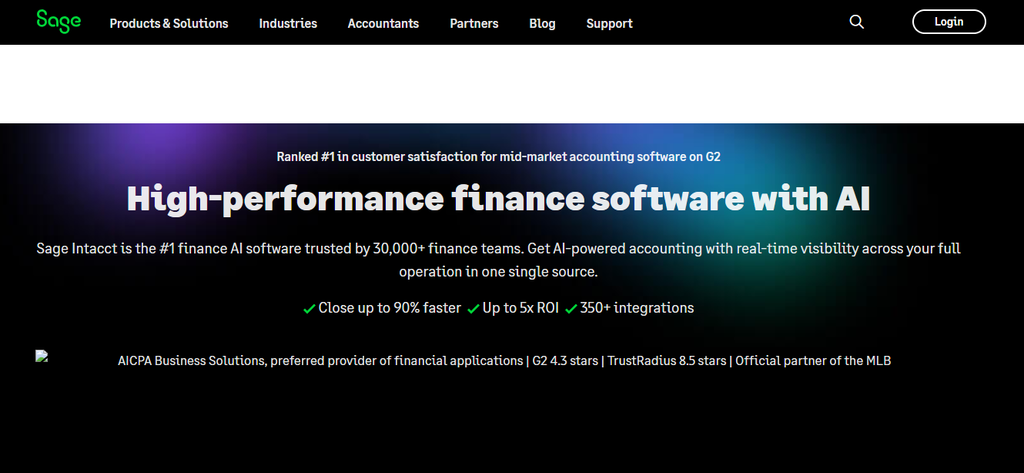
8. Sage Intacct – A Silicon Valley Accounting Tool Now Owned by a British Giant

  • Founded: 1999 
  • Owner: Founded by Odysseas Tsatalos & David Thomas; part of Sage Group, led by CEO Steve Hare 
  • Headquarters: San Jose, California

Intacct was started in 1999 in San Jose, California, by Odysseas Tsatalos and David Thomas, who saw a gap in the market between simple accounting software and massive enterprise systems. They wanted to build cloud-based financial software specifically for mid-sized companies that had outgrown basic bookkeeping tools. This focused approach helped Intacct grow steadily within its specific niche.

In 2017, British software company Sage Group bought Intacct for $850 million, rebranding it as Sage Intacct. The product remains focused mainly on financial management rather than broader manufacturing or supply chain features. Steve Hare, who leads the wider Sage Group as CEO, oversees Sage Intacct’s continued growth in the US market.

What Sage Intacct does: Provides cloud-based financial management software for growing mid-sized companies.

Services: General ledger accounting, accounts payable and receivable, financial reporting, and cash management.

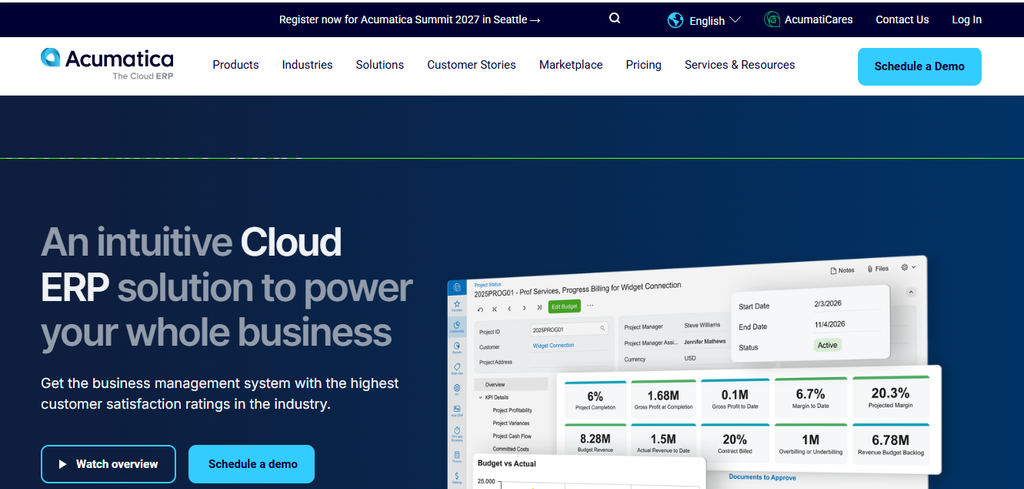
9. Acumatica – A Cloud ERP Built by Former Microsoft Executives

  • Founded: 2008 
  • Owner: Founded by Serguei Beloussov & co-founders; privately held, led by CEO John Case 
  • Headquarters: Bellevue, Washington

Acumatica introduced its ERP product in 2008, built with a strong focus on flexible, cloud-based technology from the very beginning. The company later brought in former Microsoft executives to help lead its growth, starting with Jon Roskill becoming CEO in 2014. This Microsoft connection shaped much of Acumatica’s approach to building adaptable, customer-friendly software.

The company grew steadily by focusing on small and mid-sized businesses that needed flexible pricing based on usage rather than the number of individual users. John Case, another former Microsoft executive, became Acumatica’s CEO in 2022. Acumatica remains privately held and continues focusing on cloud ERP for growing companies.

What Acumatica does: Provides flexible, cloud-based ERP software for small and mid-sized businesses.

Services: Financial management, distribution management, project accounting, and manufacturing tools.

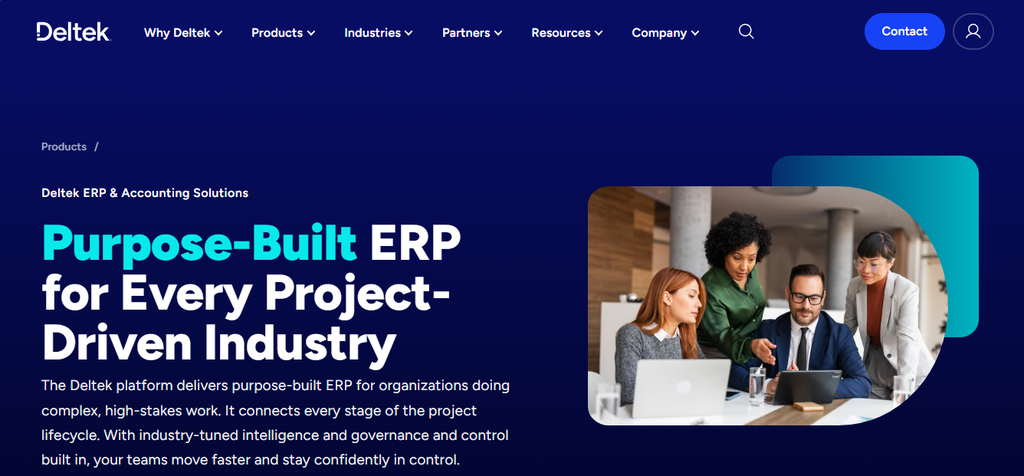
10. Deltek – A Project-Focused ERP for Government Contractors and Consultants

  • Founded: 1983 
  • Owner: Founded by Donald deLaski; owned by Roper Technologies 
  • Headquarters: Herndon, Virginia

Deltek was started in 1983 by Donald deLaski, building software specifically designed to help businesses track time and costs on individual projects. This project-based approach set Deltek apart from typical ERP systems built mainly around manufacturing or retail operations. The company found strong early demand among government contractors and professional services firms needing detailed project tracking.

Deltek’s software became especially important for architecture, engineering, and consulting firms that bill clients based on hours and project milestones. The company has changed ownership several times over the decades, now belonging to industrial technology company Roper Technologies. Deltek remains focused specifically on project-based businesses rather than general manufacturing or retail ERP.

What Deltek does: Provides project-based ERP software for government contractors and professional services firms.

Services: Project accounting, time and expense tracking, resource planning, and government contract compliance tools.

Frequently Asked Questions (FAQs)

1. Which is the most widely used ERP software in the USA?

SAP is considered one of the world’s leading ERP software companies and is used by many large businesses in the United States. Its ERP solutions help organizations manage finance, supply chains, operations, and other core business processes.

2. Which ERP companies are both owned by Oracle?

Oracle ERP Cloud and Oracle NetSuite are both owned by Oracle, although they serve different types and sizes of businesses. Oracle ERP Cloud is generally positioned for larger and more complex organizations, while NetSuite is widely used by growing and mid-sized businesses.

3. Which ERP company focuses specifically on human resources and finance together?

Workday focuses on combining financial management with human resources software in a cloud-based system. Its platform helps organizations manage areas such as accounting, workforce management, payroll, planning, and human capital operations.

4. Which ERP company is now owned by Koch Industries?

Infor is owned by Koch Industries, one of the largest privately held companies in the United States. Infor provides enterprise software designed for industries such as manufacturing, healthcare, distribution, and other specialized business sectors.

5. Which ERP company focuses mainly on manufacturing and distribution?

Epicor focuses heavily on manufacturing and distribution businesses, offering software designed around the operational needs of those industries. Its solutions can help businesses manage areas such as production, inventory, supply chains, finance, and customer operations.

6. Which ERP company was bought by a British software giant?

Sage Intacct was acquired by the UK-based Sage Group in 2017 for approximately $850 million. Sage Intacct provides cloud-based financial management software and is widely used by businesses and organizations that need accounting and financial management capabilities.

7. Are ERP software companies in the USA regulated?

Yes, ERP companies must comply with applicable data privacy, cybersecurity, and other regulations depending on their operations and the markets they serve. Their business customers may also require specific security and compliance standards when using ERP systems to manage sensitive information.

8. Which ERP company focuses specifically on project-based businesses?

Deltek focuses on project-based ERP and business software, particularly for government contractors, professional services firms, and other project-oriented organizations. Its solutions can help businesses manage projects, accounting, resources, contracts, and compliance.

9. Which ERP company was built by former Microsoft executives?

Acumatica has been associated with several former Microsoft executives, including CEO John Case. The company provides cloud ERP software designed to help small and mid-sized businesses manage financials, distribution, manufacturing, projects, and other business operations.

10. Why do these ten companies matter to everyday businesses?

These companies provide software that businesses of different sizes use to manage finances, inventory, employees, projects, supply chains, and other operations through connected systems. ERP platforms can help organizations centralize information and improve business processes.

Conclusion

America’s ERP Software Industry is a confluence of Silicon Valley start-ups, Wall Street databases, and European software giants. Oracle, Microsoft, Workday, Infor, Epicor, Acumatica, and Deltek are US-based companies that have either participated in the development of enterprise resource planning software or have significantly contributed to its growth. 

SAP and Sage Intacct’s parent company are also part of the story, having developed ERP systems from the perspective of German and British enterprise software legends. The companies above provide the US-based enterprise resource planning software that modern multinational corporations use to optimize their operations. 

This technology helps companies run their finances, supply chains, and other critical functions on a daily basis, and it will continue to serve that purpose as artificial intelligence changes the field.

Jann Mardenborough Net Worth: Racing Earnings, Career, Gran Turismo & Lifestyle

Jann Mardenborough racing career and Gran Turismo journey

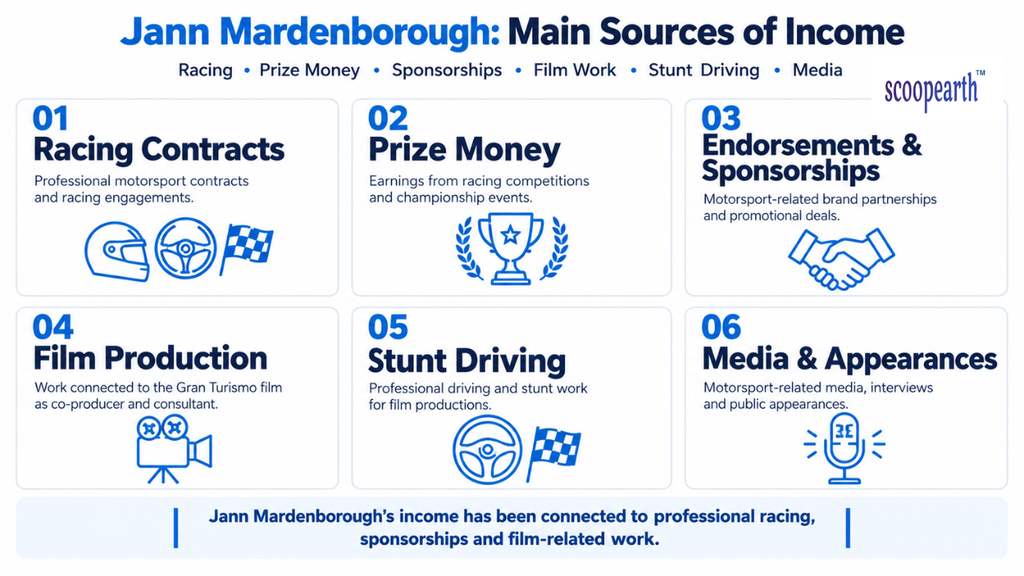
Jann Mardenborough‘s story sounds like something a movie studio would make up, except it actually happened, and then a movie studio made it into a film anyway. He spent his childhood playing Gran Turismo on PlayStation, won a gaming competition against more than 90,000 other players in 2011, and turned that win into a real professional racing contract with Nissan. By 2023, his life story became the basis for the film “Gran Turismo,” with Jann himself working as a co-producer, stunt driver, and consultant on the project.

So how much has that whole journey earned him? This is genuinely one of the more consistent net worth stories out there: nearly every source lands on $10 million, with his wealth having grown steadily from around $5 million in 2023, before the film’s release, to its current level.

Jann Mardenborough Image Courtesy: Instagram /@jannthaman

In this article, we’ll discuss Jann Mardenborough’s net worth, Racing Earnings, Career, Gran Turismo & Lifestyle

Quick Profile Overview

DetailInformation
Full NameJann Alexander Mardenborough
Date of BirthSeptember 9, 1991
Age35 years old
BirthplaceDarlington, County Durham, England
FamilyFather Steve Mardenborough, mother Lesley-Anne Mardenborough, one sibling
OccupationProfessional racing driver
Career StartWon the Nissan GT Academy competition in 2011, beating over 90,000 entrants
Racing BackgroundFormula Renault, British Formula 3 Championship, Formula Renault 3.5 Series, GT Racing, endurance racing including the 24 Hours of Le Mans
Film ConnectionReal-life inspiration for the 2023 film “Gran Turismo”; worked as co-producer, stunt driver, and consultant; portrayed on screen by Archie Madekwe
Most-Cited Net Worth$10 million, per Celebrity Net Worth and most other sources
Broader Reported Range$5 million to $12 million

Who Is Jann Mardenborough?

Jann Mardenborough is a British professional racing driver born on September 9, 1991, in Darlington, County Durham, England. He started playing racing video games at age eight, when a friend introduced him to the original Gran Turismo on PlayStation, and he went on to play the series obsessively through later consoles, eventually using a force-feedback steering wheel and pedal setup to sharpen his virtual driving skills.

Jann Mardenborough Image Courtesy: Instagram /@jannthaman

That obsession paid off in a way few gamers ever experience. In 2011, at 19 years old, he entered the Nissan GT Academy, a joint competition between Nissan and the makers of Gran Turismo designed to find potential real-world racers through online events. He won, beating out more than 90,000 other entrants despite having no prior professional racing experience, and the victory earned him an actual racing contract with Nissan. From there, he built a genuine professional career across several racing series, including Formula Renault, British Formula 3, GT racing, and endurance events like the 24 Hours of Le Mans.

Jann Mardenborough’s Net Worth

Here’s some good news for this kind of article: Jann Mardenborough’s net worth is reported more consistently than almost any other public figure covered here. The overwhelming majority of sources, including Celebrity Net Worth, land on $10 million, with his wealth having grown steadily over the past few years rather than swinging wildly between estimates.

Comparing the Estimates

SourceEstimated Net WorthNotes
Celebrity Net Worth$10 millionThe most consistently cited figure across multiple sources
YEN.com.gh$10 million (2025)Also cites racing contracts, endorsements, and media ventures as income sources
WorldsAwareness$10 million (2026)Breaks this down as $5–7 million from racing contracts, $1–2 million from endorsements, 500,000–1 million from the Gran Turismo film, and 500,000–1 million from prize money
Dooper Magazine$8 million to $12 million (2025)A slightly wider range around the same $10 million center point
Briefly.co.za$10 million (2025)Also notes “there are no specific details of Jann Mardenborough’s salary” publicly available
ScreenRant$5 million (2023)An earlier estimate, from before the Gran Turismo film’s release and the wider attention it brought

The pattern here is genuinely reassuring: rather than wildly disagreeing, these sources show a believable growth story, from around $5 million before the 2023 film, to $10 million in the years since, as the movie brought him wider recognition, new endorsement opportunities, and continued racing contracts. That said, it’s worth remembering that no source has access to his actual salary or contract details, so even this consistent $10 million figure is still an informed estimate rather than a confirmed number.

Racing Earnings

Racing remains the foundation of Jann Mardenborough’s income, built up over more than a decade of professional competition.

  • Racing contracts: Estimated to make up the largest share of his wealth, at roughly $5 million to $7 million, reflecting his sustained career across multiple racing series since his 2011 GT Academy win.
  • Prize money: Competition winnings across his various racing series are estimated to contribute an additional $500,000 to $1 million.
  • Endorsements and sponsorships: His long-standing relationship with Nissan, along with other racing-related sponsorships, is estimated to add $1 million to $2 million to his overall wealth.
  • Endurance racing: His participation in high-profile endurance events, including the 24 Hours of Le Mans and the GTWC Europe Endurance Cup, has helped sustain his professional racing income and reputation over the years.

Career

Mardenborough’s career path is about as unconventional as it gets in professional motorsport, a sport that typically rewards drivers who’ve been karting since early childhood with well-funded family backing. He instead built his foundation entirely through gaming, spending years mastering racing lines and braking points in Gran Turismo rather than on a physical track.

Jann Mardenborough Image Courtesy: Instagram /@jannthaman

His 2011 GT Academy win changed everything, giving him a professional contract with Nissan at 19 years old despite his lack of traditional racing experience. From there, he methodically built a real career across Formula Renault, the British Formula 3 Championship, Formula Renault 3.5 Series, and GT racing, eventually moving into endurance racing, including competing at the 24 Hours of Le Mans and in the GTWC Europe Endurance Cup. Each new contract and competitive result added both income and credibility, gradually cementing his reputation as a genuine professional driver rather than a novelty “gamer turned racer” story.

Gran Turismo

The 2023 film “Gran Turismo” is loosely based on Mardenborough’s own career, dramatizing his journey from a dedicated video game player to a professional racing driver. Rather than simply licensing his life story, Mardenborough took an active role in production, serving as a co-producer, stunt driver, and consultant to help ensure the racing scenes and his personal journey felt authentic. Actor Archie Madekwe played Mardenborough.

The film significantly expanded his public profile well beyond the racing world, introducing his story to a much broader, mainstream audience. Several sources credit this crossover moment as a meaningful contributor to his net worth growth in the years since, both through direct film-related income and the increased endorsement and sponsorship opportunities that came with his higher public profile.

Lifestyle

Jann Mardenborough Image Courtesy: Instagram /@jannthaman

Jann Mardenborough is widely described as keeping his personal life largely private, with his public focus remaining centered almost entirely on his racing career rather than lifestyle content or public appearances outside of motorsport and his Gran Turismo film involvement. 

Several sources describe him as taking a financially disciplined approach to his career earnings, helping preserve and grow his wealth for the years beyond his active racing career. Beyond his racing and film work, there isn’t a lot of separately confirmed information about his personal spending or property, so it’s best not to assume more than what’s actually documented.

Frequently Asked Questions (FAQs)

What is Jann Mardenborough’s net worth? 

Most sources, including Celebrity Net Worth, estimate it at $10 million, with a broader range of $5 million to $12 million across all sources. This is one of the more consistently reported figures in this kind of article.

How old is Jann Mardenborough? 

He was born on September 9, 1991, in Darlington, County Durham, England, making him 35 years old.

How did Jann Mardenborough become a professional racing driver? 

He won the Nissan GT Academy competition in 2011, beating over 90,000 other entrants in an online gaming competition, which earned him a professional racing contract with Nissan despite having no prior real-world racing experience.

Is Jann Mardenborough really the person the Gran Turismo movie is based on? 

Yes, the 2023 film “Gran Turismo” is loosely based on his real career, and he served as a co-producer, stunt driver, and consultant on the production. Actor Archie Madekwe played him on screen.

What racing series has Jann Mardenborough competed in? 

His career spans Formula Renault, the British Formula 3 Championship, Formula Renault 3.5 Series, GT racing, and endurance events including the 24 Hours of Le Mans and the GTWC Europe Endurance Cup.

Is Jann Mardenborough still with Nissan? 

His relationship with Nissan has been described as a long-standing partnership and one of the strongest pillars of his career earnings, though specific current contract details aren’t publicly available.

How much did Jann Mardenborough earn from the Gran Turismo movie? 

Estimates place his earnings from the film, including his work as a co-producer, stunt driver, and consultant, at roughly $500,000 to $1 million.

What age did Jann Mardenborough start racing video games? 

He began playing racing video games at age eight, after a friend introduced him to the original Gran Turismo on PlayStation.

How much does Jann Mardenborough earn from racing contracts? 

This is estimated to be the largest share of his wealth, at roughly $5 million to $7 million, built up over more than a decade of professional racing.

Why is Jann Mardenborough’s net worth reported so consistently compared to other public figures? 

Most sources appear to be working from a similar set of publicly known facts, his GT Academy win, his racing career timeline, and the Gran Turismo film, leading to a more unified estimate than is typical for public figures whose finances are harder to track.

Conclusion

Jann Mardenborough is arguably among the most unlikely drivers to make a successful professional racing career, coming from a family of modest means and having started his racing experience in a video game. He transitioned from playing Gran Turismo to driving actual cars for Nissan and then to Hollywood movie stars. 

The question that arises here is about his net worth, which was estimated at $10 million, cited across nearly every source, and a believable growth story from around $5 million shortly before the release of his biographical film in 2023.

This is one of those rare cases where Mardenborough’s income has not been fluctuating considerably, and the figure mentioned above reflects an average earning rate. It is noteworthy that the driver has managed to keep several income streams flowing for him in parallel, including racing, sponsorships, and earnings from his film.

Jordan Peele: Biography, Acting Career, Directing, Monkeypaw Productions & More

Jordan Peele

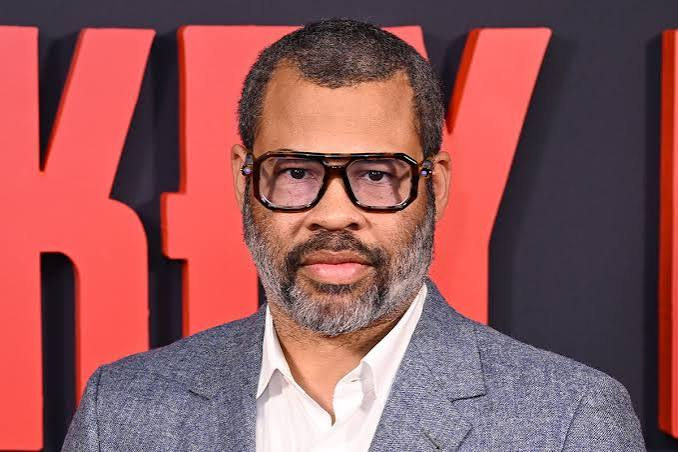
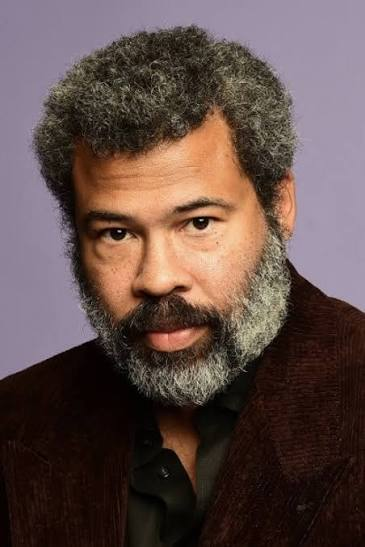
Jordan Peele spent years making people laugh before he became one of Hollywood’s most recognizable names in horror. His work with Keegan-Michael Key on Key & Peele made him widely known as a comedian, but his career took a very different turn when he wrote and directed Get Out.

Released in 2017, Get Out became far more than a successful horror film. Peele used the story to explore race, identity, and the uncomfortable situations that can sit beneath everyday interactions. The film earned him four Oscar nominations, including Best Picture and Best Director, while Peele won Best Original Screenplay at the 2018 Academy Awards. He became the first African American to win the Oscar in that category.

Since then, Peele has largely moved away from performing in front of the camera and concentrated on writing, directing, and producing. Through his production company, Monkeypaw Productions, he has backed films and television projects that often mix horror, science fiction, comedy, and social commentary.

Jordan Peele Quick Profile

DetailInformation
Full NameJordan Haworth Peele
Date of BirthFebruary 21, 1979
Age47 years old
BirthplaceNew York City, USA
ProfessionActor, Comedian, Writer, Director, Producer
EducationSarah Lawrence College
Best Known ForKey & Peele, Get Out, Us, Nope
SpouseChelsea Peretti
ChildrenOne son, Beaumont Gino Peele
Production CompanyMonkeypaw Productions
Directorial DebutGet Out (2017)
Academy AwardBest Original Screenplay for Get Out

Who Is Jordan Peele?

Image Source: Pixabay

Jordan Peele is an American actor, comedian, writer, director, and producer whose career has moved from sketch comedy to feature filmmaking.

He first gained a larger television audience as a cast member on MADtv. A few years later, he teamed up with Keegan-Michael Key for Key & Peele, a Comedy Central sketch series that gave both comedians a much bigger platform. The show became known for its sharp observations about race, culture, politics, relationships, and everyday life.

Peele eventually began putting more of his attention into filmmaking. His first feature as a director, Get Out, showed just how different his ambitions were from traditional sketch comedy. The film combined horror and satire with a story about race in America, and its success changed the direction of his career.

Jordan Peele’s Early Life and Education

Jordan Peele was born on February 21, 1979, in New York City. He attended the Calhoun School in Manhattan before enrolling at Sarah Lawrence College.

Peele did not finish college. After spending about two years at Sarah Lawrence, he left school to pursue comedy, joining the improvisational comedy scene instead.

That decision eventually led him toward television and sketch comedy. The skills he developed during those years — particularly character work, timing, writing, and improvisation — later became an important part of his filmmaking style.

How Jordan Peele Started His Comedy Career

Before Key & Peele, Peele spent several years performing comedy and developing characters.

He joined the cast of MADtv in 2003 and remained with the Fox sketch comedy series until 2008. The show gave him the opportunity to play a wide range of characters and experiment with different styles of comedy.

Peele’s time on MADtv also brought him into contact with Keegan-Michael Key, who would eventually become his most important comedy partner.

The two had different backgrounds and personalities as performers, but their chemistry worked. That partnership eventually produced the show that made both of them stars.

Key & Peele Changed Jordan Peele’s Career

In 2012, Comedy Central premiered Key & Peele, with Peele and Key serving as its creators and stars.

The show ran for five seasons and became known for sketches that could move quickly between absurd comedy and sharper social observations. Some sketches became particularly popular online, helping the series reach audiences well beyond traditional television viewers.

Peele’s performances often relied on exaggerated characters, voices, and physical comedy, but there was usually another idea underneath the joke. Race and identity appeared frequently in the show’s material, although the series covered everything from relationships and pop culture to politics and everyday awkwardness.

By the time Key & Peele ended in 2015, Peele had already started thinking seriously about what he wanted to do next.

Jordan Peele Before Get Out

Peele did not completely leave acting behind when Key & Peele ended.

He appeared in the first season of Fargo and co-wrote and starred in the 2016 action comedy Keanu with Keegan-Michael Key. He also continued taking smaller acting and voice roles.

But filmmaking increasingly became his priority.

Peele had already written the idea that would eventually become Get Out, and he decided that he needed to direct the film himself. The project gave him the opportunity to move from performing sketches to controlling an entire story from the screenplay through production and direction.

Get Out Was Jordan Peele’s Big Break as a Director

Image Source: Pixabay

Get Out arrived in 2017 and immediately established Peele as a filmmaker worth watching.

The film follows Chris Washington, played by Daniel Kaluuya, as he visits the family of his white girlfriend, Rose. What initially looks like an uncomfortable weekend gradually turns into something much darker.

Peele used the conventions of horror to tell a story about racism and the way seemingly ordinary interactions can hide something more disturbing. The film’s humor made the tension even more uncomfortable because the audience was never quite sure when a situation was supposed to feel funny and when it was supposed to feel dangerous.

The film received four Oscar nominations at the 90th Academy Awards: Best Picture, Best Director, Best Actor for Daniel Kaluuya, and Best Original Screenplay. Peele won the screenplay award.

That win made him the first African American to receive the Academy Award for Best Original Screenplay.

Jordan Peele and Us

Peele followed Get Out with Us in 2019.

The film centers on Adelaide Wilson, played by Lupita Nyong’o, and her family, who encounter mysterious doubles of themselves during a vacation. Instead of building its story around the same social themes as Get Out, Peele used the idea of the doppelgänger to explore identity, class, privilege, fear, and the parts of ourselves that we would rather ignore.

Peele wrote, directed, and produced the film. Like Get Out, Us mixed horror with comedy and social commentary, but it had a much more surreal quality.

The success of the film also confirmed that Get Out was not a one-time achievement. Peele had developed a recognizable approach to genre filmmaking, even though the stories themselves were very different.

Nope Took Jordan Peele in a Different Direction

In 2022, Peele released Nope, his third feature as a director.

The film follows siblings OJ and Emerald Haywood, played by Daniel Kaluuya and Keke Palmer, who run a horse ranch used for film productions. After strange events begin taking place in the sky above their property, they attempt to understand what they are seeing and find a way to capture it on camera.

Nope gave Peele another opportunity to work with science fiction and horror while also exploring Hollywood, spectacle, exploitation, and the human desire to turn frightening events into entertainment.

It was also noticeably different from Get Out and Us. Rather than building the entire story around a familiar social situation, Peele created a much larger mystery and gave the film a more expansive visual style.

Jordan Peele’s Directing Style

Peele’s films do not fit neatly into one genre.

Get Out is a horror film with elements of satire and social thriller. Us moves into psychological horror and mystery. Nope combines horror and science fiction with a story about filmmaking and spectacle.

The common thread is the way Peele uses genre to talk about something else.

A frightening situation often carries another idea underneath it. His films can deal with race, identity, class, exploitation, fame, or the way people consume entertainment. The horror gives him a way to make those subjects feel immediate rather than turning the films into straightforward social dramas.

That approach has become one of the defining characteristics of his work as a filmmaker.

Jordan Peele’s Other Writing and Producing Work

Image Source: Pixabay

Peele has also worked extensively as a producer and writer outside his own films.

He served as a producer on Spike Lee’s BlacKkKlansman, which received a Best Picture nomination at the 2019 Academy Awards. Peele was one of the film’s producers alongside Lee and others.

He also co-wrote and produced Candyman, the 2021 supernatural horror film directed by Nia DaCosta. The film continued the story of the Candyman franchise while bringing a new perspective to the material.

Peele also worked on Wendell & Wild, the 2022 stop-motion animated film directed by Henry Selick. His work across these projects shows that his involvement in filmmaking is not limited to stories he personally directs.

Monkeypaw Productions

Peele founded Monkeypaw Productions as his film and television production company.

The company’s name has become closely associated with the kind of stories Peele likes to support: unusual genre projects that can entertain an audience while giving filmmakers room to explore larger ideas.

Monkeypaw describes its work as focusing on thought-provoking projects across film, television, and digital platforms. The company also says it seeks out distinctive perspectives and traditionally underrepresented voices while working across genres including horror, science fiction, and social satire.

That approach can be seen throughout the company’s production history.

What Has Monkeypaw Productions Produced?

Monkeypaw’s projects include Peele’s own films as well as productions created by other filmmakers.

Some of its notable projects include:

ProjectYearRole / Connection
Get Out2017Produced by Monkeypaw
BlacKkKlansman2018Produced by Peele and others
The Twilight Zone2019–2020Executive produced by Peele
Us2019Peele’s film
Lovecraft Country2020Executive producer
Candyman2021Co-written and produced by Peele
Wendell & Wild2022Co-written and produced by Peele
Nope2022Written, directed, and produced by Peele
Hunters2020–2023Produced through Monkeypaw
Out There Screaming2023Horror anthology edited by Peele

Monkeypaw’s own production catalogue also includes Weird City, Lorena, The Last O.G., Honk for Jesus. Save Your Soul., and the podcast Quiet Part Loud.

Jordan Peele and The Twilight Zone

Image Source: Pixabay

One of Monkeypaw’s most recognizable television projects was the revival of The Twilight Zone.

Peele served as host and narrator of the CBS All Access series, while also serving as an executive producer. The show premiered in 2019 and returned for a second season in 2020.

The project made sense for Peele because The Twilight Zone had already established a tradition of using speculative stories to examine real-world issues. His version brought that idea into a modern setting while retaining the anthology format.

Jordan Peele and Lovecraft Country

Monkeypaw also served as an executive producer on HBO’s Lovecraft Country.

The series combined horror, fantasy, and historical drama, following Black characters through a version of 1950s America where supernatural threats existed alongside the racism of the period.

The project fit comfortably within the type of genre storytelling that Monkeypaw had been developing: familiar horror and fantasy ideas used to tell stories about history, race, identity, and power.

Out There Screaming

Peele expanded his interest in Black horror beyond film and television with Out There Screaming: An Anthology of New Black Horror.

Peele edited the 2023 anthology, which brought together horror stories from a group of Black writers. The book gave emerging and established writers a platform to explore different forms of horror from their own perspectives.

It also reflected something that has become increasingly important to Peele’s work through Monkeypaw: creating opportunities for voices that have traditionally had less space within mainstream genre entertainment.

Jordan Peele’s Personal Life

Image Source: Pixabay

Jordan Peele married comedian and actress Chelsea Peretti in 2016.

Peretti is known for her work on Brooklyn Nine-Nine, where she played Gina Linetti, as well as her stand-up and writing career. Peele and Peretti have one son, Beaumont Gino Peele.

The couple generally keeps their family life away from the constant attention that surrounds their professional careers. Peele has also largely kept his private life separate from the public discussion around his films.

Jordan Peele’s Career Milestones

YearCareer Milestone
1979Born in New York City
2003Joined the cast of MADtv
2008Left MADtv
2012Key & Peele premiered on Comedy Central
2015Key & Peele ended after five seasons
2016Co-wrote and starred in Keanu
2017Made his feature directorial debut with Get Out
2018Won the Oscar for Best Original Screenplay
2018Produced BlacKkKlansman
2019Released Us and hosted The Twilight Zone
2020Executive produced Lovecraft Country
2021Co-wrote and produced Candyman
2022Released Nope and Wendell & Wild
2023Edited Out There Screaming

What Is Jordan Peele Doing Now?

Image Source: Pixabay

Jordan Peele has kept a relatively low public profile since Nope, but Monkeypaw Productions continues to develop and release projects.

The company’s current catalogue includes film and television projects such as HIM, High Horse, Scare Tactics, and other projects in development. Monkeypaw’s official site also lists an untitled Jordan Peele project among its upcoming productions.

Peele has not tried to produce a new film every year. Instead, his work has followed a slower pace, with considerable time between his feature films. That has allowed him to develop stories carefully while continuing to work with other filmmakers through Monkeypaw.

Why Jordan Peele’s Career Stands Out

Peele’s career took an unusual route.

He started with sketch comedy, became a television star through Key & Peele, and then moved into horror filmmaking. Instead of treating comedy and horror as completely separate worlds, he carried some of the same instincts from one into the other.

His films can be funny and disturbing within the same scene. More importantly, they often give the audience something to think about after the immediate shock has passed.

Get Out made that approach impossible to ignore. The film turned a relatively simple premise into a conversation about race and social behavior, while its success gave Peele the freedom to keep making unusual films on his own terms.

Through Monkeypaw, he has also been able to support other writers and directors working with similarly unconventional ideas.

Conclusion

Jordan Peele’s career did not follow the usual path from comedian to Hollywood director.

He first built his reputation through sketch comedy on MADtv and Key & Peele. Then, with Get Out, he moved behind the camera and showed that he could use horror as a way to tell stories about race, identity, and American culture.

The success of Get Out led to Us and Nope, while his work through Monkeypaw Productions expanded his influence into television, animation, books, and films directed by other filmmakers.

His Oscar win for Get Out remains one of the biggest milestones of his career. But the larger story is what he did afterwards. Rather than simply repeating the formula that made him successful, Peele continued experimenting with different kinds of stories and used Monkeypaw to give other creators room to do the same.

FAQs About Jordan Peele

How old is Jordan Peele?

Jordan Peele was born on February 21, 1979, making him 47 years old in 2026.

What is Jordan Peele best known for?

He is best known for creating and starring in Key & Peele and for writing and directing the films Get Out, Us, and Nope.

Did Jordan Peele win an Oscar?

Yes. Peele won the Academy Award for Best Original Screenplay for Get Out at the 2018 Oscars. He became the first African American to win the award in that category.

What was Jordan Peele’s first movie as a director?

Get Out, released in 2017, was Jordan Peele’s feature-film directorial debut.

What is Monkeypaw Productions?

Monkeypaw Productions is Jordan Peele’s production company. It develops and produces film, television, and other projects, with a focus on distinctive genre storytelling and underrepresented perspectives.

What movies has Jordan Peele directed?

Peele has directed three feature films: Get Out (2017), Us (2019), and Nope (2022).

Is Jordan Peele still acting?

Peele has largely shifted his attention from acting to writing, directing, and producing. He still makes occasional appearances or contributes his voice to projects, but filmmaking and production now take up much of his professional work.

Top 10 Productivity Apps in USA

Top 10 Productivity Apps in USA

People in the USA use productivity apps for many different kinds of work. Some are mainly for keeping track of tasks. Others are used for calendars, meetings, team communication, writing or recording working hours.

The apps on this list do not all work in the same way. Notion combines notes, databases, tasks and project work. ClickUp takes a similar approach to managing work in one place. Todoist is more focused on everyday tasks, while Google Calendar is mainly used for schedules and meetings. Zapier is different again, as it connects other apps and takes care of repetitive steps.

This list covers 10 popular productivity apps and looks at what each one is mainly used for. It is not arranged according to user numbers or revenue. There is no single figure that can be compared across all 10 apps, and each one is built around a different type of work.

Quick Look at the Top Productivity Apps in the USA

RankAppMain Work
1NotionNotes, tasks and project work
2TodoistTask and to-do management
3Google CalendarScheduling and calendars
4SlackTeam communication
5CalendlyMeeting scheduling
6GrammarlyWriting and editing
7ClickUpProject and work management
8Toggl TrackTime tracking
9ZapierWorkflow automation
10AsanaProject and task management

1. Notion

Headquarters: San Francisco, California
Main Business: Notes, databases, tasks and project management

Notion is more than a notes app. People use it to write documents, keep information, make databases, manage tasks and plan projects.

One of the main things about Notion is that users can decide how they want to set up their pages. A project might have a task list, a database and documents in the same workspace. Teams can also keep company information and shared documents there.

Notion has also added AI features. These can be used with documents and information inside the workspace, as well as for writing and other tasks.

For someone who only wants to take notes, Notion can be used that way. A team can also use it for much more, depending on how it sets up the workspace.

Unique Offerings

● Notes and document management
● Custom databases
● Task and project tracking
● Shared team workspaces
● Built-in AI features

Official website: Notion

2. Todoist

Founded: 2007
Main Business: Task and to-do management

Todoist is focused mainly on tasks and to-do lists. Users can create projects, add tasks and divide larger tasks into smaller steps.

Tasks can include due dates, priorities, labels and recurring schedules. This gives users a simple way to keep track of regular work as well as one-time tasks.

Todoist can be used for personal tasks or work. A person can keep track of appointments and daily activities, while teams can use shared projects to divide responsibilities.

The app also supports natural-language task entry. Users can enter a task along with scheduling details without having to set every option separately.

Unique Offerings

● To-do lists and task management
● Projects and subtasks
● Recurring tasks
● Priorities and labels
● Shared projects

Official website: Todoist

3. Google Calendar

Main Business: Scheduling and time management

Google Calendar is used for appointments, meetings and other events. Users can keep different activities in one calendar or create separate calendars for different parts of their schedule.

Users can create events, invite other people and share calendars. This is useful for both personal schedules and work meetings.

Google Calendar also works with other Google services. Gmail and Google Meet can be used alongside the calendar, which makes it easier to manage emails, meetings and scheduled events in one place.

People can also set reminders and recurring events. That means regular meetings, appointments and other activities do not have to be added again every time.

Unique Offerings

● Calendar and event management
● Shared calendars
● Meeting invitations
● Recurring events
● Integration with Google services

Official website: Google Calendar

4. Slack

Headquarters: San Francisco, California
Main Business: Team communication and collaboration

Slack is mainly a communication tool for workplaces. Teams create channels for projects, departments or specific topics and keep conversations there.

Instead of sending every update through email, employees can post messages in the relevant channel. People can also send direct messages, share files and start huddles for quick conversations.

Slack has expanded beyond messaging over the years. It includes canvases, lists and workflow tools, while integrations connect it with other services used by a business.

The company has also added automation features. Teams can use workflows for routine tasks without writing code.

That means Slack can sit at the centre of a team’s daily communication while also connecting with the other tools the team uses.

Unique Offerings

● Team and project channels
● Direct messaging
● Huddles and file sharing
● App integrations
● Workflow automation

Official website: Slack

5. Calendly

Main Business: Meeting and appointment scheduling

Calendly was built around a common problem: arranging a meeting can take several emails.

The service lets users create a booking page with their available times. Someone who needs a meeting can choose a suitable slot without asking for availability first.

Calendly connects with calendars and checks availability before confirming a booking. Users can also set meeting lengths, buffers and limits on how many meetings people can book.

This makes the service useful for sales teams, consultants, recruiters and other professionals who regularly meet people outside their organisation.

Unlike a general calendar, Calendly concentrates on the booking process itself.

Unique Offerings

● Personal scheduling pages
● Calendar availability checks
● Different meeting lengths
● Buffer time between meetings
● Booking limits

Official website: Calendly

6. Grammarly

Main Business: Writing and editing

Grammarly started as a writing checker. It looks for problems with grammar, spelling and punctuation and suggests corrections.

The service has since added tools for clarity, tone and rewriting. Users can get suggestions while writing emails, documents and other types of content.

Grammarly also offers AI writing features. Users can ask it to rewrite text, change the tone or help with a piece of writing rather than only correcting individual mistakes.

The software works across websites and applications, so users do not always need to copy their writing into a separate editor.

For people who write a lot of emails, reports or business documents, that can save time during the editing stage.

Unique Offerings

● Grammar and spelling checks
● Writing and clarity suggestions
● Tone detection
● AI rewriting
● Support across different applications

Official website: Grammarly

7. ClickUp

Main Business: Project and work management

ClickUp is designed for teams that want to manage several types of work in one place. It includes tasks, projects, documents, goals and workflow tools.

Teams can assign tasks, set deadlines and create different statuses for their work. They can also choose different views depending on how they want to see a project.

ClickUp includes Docs for writing and storing project information. Its automation features can handle some repeated actions, while goals help teams connect day-to-day tasks with larger targets.

The platform has a large number of features, so it can take more time to set up than a simple task manager.

For teams that already use several separate work tools, however, bringing some of those functions together can make the system easier to manage.

Unique Offerings

● Task and project management
● Custom project views
● Goals and progress tracking
● Docs and shared information
● Workflow automation

Official website: ClickUp

8. Toggl Track

Main Business: Time tracking

Toggl Track focuses on one thing that many productivity apps do not cover in as much detail: how people spend their working hours.

Users can start a timer when they begin a task or enter their time manually. They can assign that time to different projects and clients.

The app also supports billable hours, timesheets and reports. Businesses can use those reports to see how much time projects require, while individuals can use them to understand where their working day goes.

Toggl Track also includes a Pomodoro timer and focus features for people who want to work in shorter, concentrated sessions.

This makes it useful for freelancers, agencies, consultants and teams that need to record time for client work.

Unique Offerings

● Time tracking
● Manual time entries
● Billable-hour tracking
● Timesheets and reports
● Pomodoro and focus tools

Official website: Toggl Track

9. Zapier

Main Business: Workflow automation

Zapier works differently from most of the apps on this list. It connects other applications and lets them pass information between each other automatically.

For example, a new form submission can create a task in another application. A new lead can also trigger an email or add a record to a database.

These automated workflows are called Zaps. Users choose a trigger and then set the actions that should happen after it.

Zapier supports thousands of applications and has expanded into AI-based automation as well. Users can build workflows without writing traditional code.

That can remove small manual jobs that take only a few minutes each but add up over a working week.

Unique Offerings

● App-to-app automation
● Thousands of connected applications
● No-code workflow creation
● AI automation features
● Automated data transfer between services

Official website: Zapier

10. Asana

Main Business: Project and task management

Asana helps teams organise work around projects and tasks. A project can contain a series of tasks, with each task assigned to a person and given a deadline.

Teams can view the same project in different ways. List, board, calendar, timeline and Gantt views give people different ways to follow the work.

Asana also supports task dependencies, custom fields, goals and reporting. These features become more useful when a project has several people working on different parts at the same time.

The platform has also added AI and automation features. Teams can use these tools to handle parts of their workflow and get more information from their project data.

Asana is therefore more focused on managing organised team projects than on simple personal to-do lists.

Unique Offerings

● Project and task management
● Timeline and Gantt views
● Kanban-style boards
● Task dependencies
● Goals, reporting and automation

Official website: Asana

Why Productivity Apps Are Important in the USA

People Use Different Apps for Different Jobs

The 10 apps on this list do not all solve the same problem.

Todoist is mainly for tasks. Google Calendar handles schedules. Calendly focuses on bookings, while Toggl Track records time. Slack deals with communication, and Grammarly focuses on writing.

That difference matters when choosing an app. A person who only wants to organise daily tasks may not need a large project-management platform.

Work Apps Are Starting to Overlap

Some productivity apps now cover several jobs at once.

Notion combines notes, databases and project work. ClickUp brings tasks, documents and goals together. Asana combines project management with reporting, goals and automation.

This gives businesses fewer separate systems to maintain. It also means that users need to spend some time deciding which features they actually need.

Automation Is Becoming More Common

Automation now appears in many productivity platforms.

Zapier has built its entire service around connecting applications and automating repeated work. Slack, Notion, ClickUp and Asana also provide their own automation features.

The idea is fairly simple. If a person keeps doing the same step after the same event, software can often handle that step instead.

That can be useful for routine work such as creating tasks, sending notifications or moving information between applications.

AI Has Become Part of Productivity Software

AI is now built into several of the major productivity apps.

Notion uses AI within its workspace. Grammarly uses it for writing and rewriting. ClickUp and Asana have added AI features for work management, while Google has brought Gemini into parts of its Workspace products.

The role of AI differs from one app to another. Some use it to write or edit text. Others use it to find information, summarise work or handle routine tasks.

Conclusion

The top productivity apps in the USA cover different parts of everyday work.

Notion brings notes, databases and project work together. Todoist focuses on tasks, while Google Calendar handles schedules and appointments. Slack is built around team communication, and Calendly makes meeting bookings easier.

Grammarly helps with writing. ClickUp and Asana manage larger projects and team workloads. Toggl Track focuses on working hours, while Zapier connects different applications and automates repeated steps.

The best choice depends on the problem a person or team needs to solve. Someone who wants a simple task list may prefer Todoist. A project team may need Asana or ClickUp. A business with too many manual processes may get more value from Zapier.

There is no need to choose an app simply because it has the most features. The better option is usually the one that fits the way the work is already being done.

Frequently Asked Questions

Which is the best productivity app in the USA?

There is no single best productivity app for everyone. Todoist works well for task management, while Notion, ClickUp and Asana cover broader types of work.

What is the best productivity app for personal use?

Todoist is a good choice for straightforward personal task management. Notion can be a better fit for someone who wants notes, databases and tasks together.

Which productivity app is best for teams?

Slack is useful for team communication. Asana and ClickUp are better suited to organising projects, tasks and responsibilities. Notion can also work well when a team needs shared documents and information.

Which app is best for scheduling meetings?

Google Calendar works well for general scheduling. Calendly is more focused on letting other people book meetings based on available times.

Which productivity app is best for tracking time?

Toggl Track is built specifically for time tracking. It can record working hours, billable time and time spent on different projects.

Which productivity apps have AI features?

Notion, Grammarly, ClickUp, Asana and Google Workspace products now include AI features. The actual tools available depend on the platform and, in some cases, the subscription plan.

Can one productivity app replace several other tools?

Sometimes. Notion, ClickUp and Asana combine several work functions. Zapier takes a different approach by connecting separate applications instead of replacing them.

What should I check before choosing a productivity app?

Start with the actual problem. Check whether you need task management, scheduling, communication, time tracking, project management or automation. Then look at integrations, ease of use and pricing. More features do not necessarily make an app a better fit.

ReFit Global secured $1 million in a seed funding round from a UAE-based family office

ReFit Global Secures $1 Million in Seed Funding from UAE-Based Family Office

ReFit Global has raised $1 million in a seed funding round from a UAE-based family office. This additional infusion of funding will help the company drive its multi-sided development strategy in India, which gained popularity on Shark Tank India Season 3. The funds raised will be utilized to broaden its retail presence, boosting its in-house refurbishment operations, upgrading its technology backbone, and building an integrated omnichannel platform to link consumers and businesses together, said ReFit Global in an official press release.

Primary objective and key market partnerships

ReFit Global, established by Saket Saurav and Avneet Singh in 2018, runs multiple business verticals in device refurbishment, wholesale distribution, retail sales, and associated consumer channels. 

The company’s mission is to create a one-stop market for refurbished electronics, combining technology to deliver refurbishing solutions and services, an extensive distribution network, and an omnichannel retail strategy. 

The company, headquartered in Delhi, has developed a large distribution network comprising above 75 distributors, over 2000 wholesalers, and over 50,000 retail outlets available across India. This large network offers immediate access to major metros as well for tier 1, tier 2, and tier 3 cities around the country for ReFit Global.

ReFit Global’s vast B2B distribution network has also been very active in expanding its direct physical retail presence with 12 ReFit Xpress stores. Its activities are not limited to top online retailers, offline outlets, and key brand partnerships. 

The startup has established sourcing and sales partnerships with top e-commerce brands Flipkart and Amazon, among others, and also has a number of offline and strategic channels. The company plans to further scale both its B2B and D2C initiatives across the entire refurbished electronics value chain to reach a broader customer demographic.

Emerging market opportunities and technology integration

Technically, ReFit Global is currently boasting an impressive 92% refurbishment yield with its advanced repair capabilities all the way up to L4, which involves a sophisticated level of chip-level repairs. 

The company relies heavily on technology-enabled processes that cover systematic device diagnostics, automated quality checks, precise device grading, post-quality-control procedures, and streamlined inventory management. 

ReFit Global explained that these technological features are specifically selected to deliver consistent device quality, increased operational transparency, and a high degree of reliability for all its restored electronics products.

The ReFit Global case study reveals high market potential and a high industry growth rate for further formalization of the market. Smartphone volume growth in India was steady at 13% year-on-year within the refurbished segment, and the organised segment is about 20% of the total smartphone market, with ample opportunities for structured platforms. 

Organised recommerce companies such as Startups Cashify, ControlZ, GREST, and Budli are scaling recommerce channels through direct-to-consumer sales, trade-in, extended warranties, and certified devices. 

The sector has also witnessed significant capital and strategic moves, including Vingo’s ₹10 crore fundraise in IndiaQuotient’s seed round this year and Flipkart’s acquisition of electronics re-commerce firm Yaantra to bolster its internal refurbishment operations.

Conclusion

The $1 million seed round is a major achievement for ReFit Global as it continues to scale in the Indian market’s expanding refurbished electronics category. The company’s leadership team, advanced technical repair capabilities at the L4 factory, 92% yield efficiency, and a vast network that touches more than 50,000 retail points make it an ideal platform for expansion. With the organised re-commerce market moving to its next stage, ReFit Global’s emphasis on technology-driven processing and omnichannel retail via ReFit Xpress outlets will enable it to deliver reliable refurbished devices to customers in both regional and metropolitan markets.

Genefied Strengthens Leadership Bench, Promotes Krishna Khandelwal to Chief Sales Officer

Genefied Promotes Krishna Khandelwal to Chief Sales Officer

Krishna brings close to a decade of enterprise sales experience across SaaS, data and digital platforms

National, 6th October, 2026: Genefied, an enterprise SaaS company working in supply chain traceability, anti-counterfeiting and loyalty technology, has promoted Krishna Khandelwal, who has been associated with the company since the beginning, to Chief Sales Officer. He moves up from Vice President, Sales, and will now own revenue strategy and enterprise expansion across the company’s product suite.

The association began some years earlier, and not in a hiring context. Founder and CEO Ayush Jhawar first met Krishna at a coffee shop, in a conversation unrelated to any role at the company. What stood out, by Ayush’s account, was that Krishna approached business conversations through the problem rather than the product. When Genefied was building its team, Krishna was the first person Ayush reached out to. He has grown with the company since, taking on larger responsibilities over the years before stepping into the role of Vice President, Sales.

“I met Krishna at a coffee shop, long before either of us was talking about a job,” said Ayush Jhawar, Founder & CEO, Genefied. “It was an ordinary conversation, but what stayed with me was that he was already thinking in terms of solutions rather than products. He came in to build business development and has grown into every role we have given him since. He has never sold this business as a set of features. He sits with a brand, works out where their supply chain actually breaks, and builds the case from there. He has been operating at this level for a while now, and the title is catching up to the work. He has grown with our products, and he understands what we stand for. That grounding is what we want, leading the sales function into new markets and new categories.”

That approach has since been tested across Genefied’s enterprise business. The company’s loyalty and traceability platforms are currently used by over 110 brands across FMCG, cosmetics, wires and cables, plywood, apparel and hosiery, auto and ancillaries, and chemicals and fertilisers.

Under the expanded mandate, Krishna will steer go-to-market execution across SupplyBeam, GenuineMark, Rewardify and DWAM, with a focus on multi-product adoption within existing accounts and entry into new categories.

He steps into the role with close to eight years in enterprise technology sales across data, SaaS and digital platforms. At Genefied, he has led the downstream supply chain conversation with CXOs and senior decision-makers, a category of deal that typically involves long cycles, multiple internal stakeholders and a business case that has to survive procurement scrutiny.

About Genefied

Genefied is an enterprise SaaS provider specialising in channel loyalty and supply chain traceability, alongside anti-counterfeiting and digital warranty management. Its platform helps brands build and retain their distributor, retailer and consumer networks through Rewardify, while giving them real-time visibility of product movement from plant to warehouse to the last mile through SupplyBeam.

GenuineMark secures product authenticity against counterfeiting, and DWAM turns warranty activation into a first-party data channel. Built on AWS cloud infrastructure and backed by a team of over 100 members, Genefied works with more than 110 brands across FMCG, cosmetics, wires and cables, plywood, apparel and hosiery, auto and ancillaries, and chemicals and fertilisers, helping them close the gap between manufacturers, channel partners and end consumers. Explore Genefied’s products, case studies and industry solutions at www.genefied.ai 

Top 10 Real Estate Companies in USA

Top 10 Real Estate Companies in USA

Buying a home, renting an apartment or investing in property is not just about finding the right location. The real estate company behind the property plays a role in what kind of homes are available, what services are offered and how the building is handled. In the United States real estate companies work in areas like home building, commercial property services, shopping centers, rental housing and industrial buildings.

Some companies build thousands of homes each year. Others manage office buildings, warehouses and retail spaces. There are also firms that help businesses buy, sell, lease and maintain properties. These companies operate in different ways so looking only at their revenue does not tell the full story.

This guide highlights the 10 real estate companies in the USA. It includes a mix of known firms from across the industry. The ranking is based on business size, market reach, the range of services they offer and how important they are to the real estate market. This is not a ranking and the list does not mean every company is the right fit for every buyer or investor.

The financial numbers come from the recent full-year reports mostly for fiscal year 2025. Revenue and net income are for the company not for one property or brand.

1. CBRE Group

CBRE Group is one of the companies in the commercial real estate services sector. Unlike a homebuilder that earns money by selling houses, CBRE works with businesses, landlords, investors and institutions that need support in managing or using estate.

Founded: 1906
Headquarters: Dallas, Texas, USA
Latest Revenue: $40.6 billion (FY2025)
Latest Net Income: $1.2 billion (FY2025)
Main Products/Services: Commercial property sales and leasing, facilities management, property management, project management and real estate investment services.

The company offers services across parts of property ownership. A business looking to lease office space might use CBRE for advice. A property owner might need help with building operations, maintenance or investment decisions. CBRE also provides property valuations. Supports real estate transactions.

The company’s large size is clear from its FY2025 results. Revenue reached $40.6 billion with growth in facilities management and project management areas.. This revenue includes many different types of services and costs. It does not reflect the value of property that CBRE owns.

CBRE is ranked first in this list because of its size and wide influence in the commercial real estate market. It is especially important for businesses and institutional property owners. It is less relevant to individuals looking for a house.

2. D.R. Horton

D.R. Horton is a name in the new home market. The company builds homes for a wide range of buyers. These include first-time homebuyers, families needing space and older adults who want low-maintenance living.

Founded: 1978
Headquarters: Arlington, Texas, USA
Latest Revenue: $34.3 billion (FY2025)
Latest Net Income: $3.6 billion (FY2025)
Main Products/Services: New homes, residential communities, home financing and related housing services.

The business operates in the U.S. Markets. It does not focus on luxury homes. Instead D.R. Horton builds homes at price points and in a variety of community types. Its mortgage and related services are also part of the home-buying process.

D.R. Horton reported $34.3 billion in revenue and $3.6 billion in net income for fiscal 2025. These numbers reflect the range of the company’s activities, not just the price of homes it completed.

The company was ranked the U.S. Homebuilder by volume in its investor information. It also topped Pro Builder’s 2026 ranking of homebuilders by 2025 housing revenue with about $32.32 billion in revenue. This makes it a strong choice for a list focused on the residential property market.

3. Lennar Corporation

Lennar has a history in American homebuilding. The company began in Miami in 1954 as F&R Builders. It changed its name to Lennar in 1971. Over time it grew beyond building single-family homes into areas tied to residential development.

Founded: 1954
Headquarters: Miami, Florida, USA
Latest Revenue: $34.2 billion (FY2025)
Latest Net Income: $2.1 billion (FY2025)
Main Products/Services: Homebuilding, residential communities, land development, multifamily housing, mortgage financing and asset management.

The company builds homes for first-time buyers families moving to homes and older adults looking for active-adult living. It also works in communities, land development and financial services linked to housing.

Lennar reported $34.2 billion in revenue and $2.1 billion in net earnings for fiscal 2025. It delivered 82,583 homes during the year according to its report. The company ranked second in Pro Builder’s 2026 list of homebuilders by 2025 housing revenue.

Its size and range of activities make Lennar relevant to more than people comparing new homes. Its work in land development and multifamily housing connects it to the broader property market.

4. JLL (Jones Lang LaSalle)

JLL has one of the histories of any company on this list. Its origins date back to 18th-century London. Today it operates globally from its headquarters in Chicago.

Founded: 1783
Headquarters: Chicago, Illinois, USA
Latest Revenue: Check the company’s latest FY2025 annual report for the reported figure.
Latest Net Income: Check the company’s latest FY2025 annual report for the reported figure.
Main Products/Services: Commercial property leasing, investment sales, property and facilities management, project management and real estate investment advice.

The company works in commercial real estate. Its clients include businesses seeking office space, property owners managing buildings and investors evaluating opportunities. JLL also helps organizations plan workplaces, manage facilities and handle property transactions.

This makes its role different from that of a builder. JLL does not sell built homes to individuals. Instead it offers advice and services around buildings and property investments.

JLL belongs in this list because of its standing presence in the U.S. Commercial property sector and its wide range of services. Companies with offices, warehouses or other commercial buildings may need help with leasing, maintenance, workplace planning and investment decisions.

Financial note: Revenue and net income should be taken directly from JLLs annual filing. These figures are not estimates based on market value or transaction volume. They are not interchangeable.

5. PulteGroup

PulteGroup is another homebuilder in the U.S. Residential market. It develops communities. Builds homes for buyers at different life stages. These include first-time buyers, families needing space and older adults choosing properties designed for active living.

Founded: 1783
Headquarters: Chicago, Illinois, USA
Latest Revenue: Check the company’s latest FY2025 annual report for the reported figure.
Latest Net Income: Check the company’s latest FY2025 annual report for the reported figure.
Main Products/Services: Commercial property leasing, investment sales, property and facilities management, project management and real estate investment advice.

A key feature of the company is its focus on buyer groups. It uses brands and communities tailored to specific needs. The needs of a first-time buyer can be very different from those of a household moving into a home or choosing a property for older adults.

PulteGroup ranked third in Pro Builder’s 2026 list of U.S. Homebuilders by 2025 housing revenue. It reported about $16.74 billion in revenue. This number reflects one category of revenue. It should not be treated as the company’s consolidated revenue.

The company is included because of its size in home construction and its presence across the market. For people comparing property developers it offers an example of a business focused on building and selling homes. It is not focused on managing properties.

6. NVR Inc.

NVR is a US homebuilder that operates through known residential brands, including Ryan Homes, NVHomes and Heartland Homes. Its work includes building houses. Arranging mortgage services for eligible buyers.

Founded: 1980
Headquarters: Reston, Virginia, USA
Latest Revenue: $10.3 billion (FY2025)
Latest Net Income: $1.34 billion (FY2025)
Main Products/Services: Residential homebuilding and mortgage banking.

The company’s business model has a difference from some builders that buy large amounts of land well before construction. NVR has historically made use of land purchase agreements and options which can reduce the amount of capital tied up in land. The approach does not remove the risks of the housing market. It shapes how the company manages development.

For the year ended December 31 2025 NVR reported revenue of approximately $10.32 billion and net income of about $1.34 billion. It settled 21,915 homes during the year. Its annual report also recorded revenue and earnings in 2024.

NVRs position in the list reflects its established homebuilding operations and its mortgage banking business. It is a comparison for readers looking at how large residential developers organise their operations.

7. Prologis

Not every real estate company builds homes. Operates office towers. Prologis focuses on logistics estate, including warehouses and industrial facilities used by businesses to store and move goods.

Founded: 1983
Headquarters: San Francisco, California, USA
Latest Revenue: $8.79 billion (FY2025)
Latest Net Income: $3.57 billion in consolidated net earnings (FY2025)
Main Products/Services: Logistics facilities, industrial real estate, warehouses, property leasing, development and related infrastructure solutions.

These properties are often located near transport routes, cities and distribution centres. Retailers, manufacturers and delivery businesses need locations to keep goods moving from suppliers to customers. Prologis owns, manages and develops facilities in this part of the property market.

The company reported revenue of approximately $8.79 billion in 2025 compared with about $8.20 billion in 2024. Consolidated net earnings were $3.57 billion. These are company- figures and the profit figure can be affected by accounting items beyond rental income alone.

Prologis is included because warehouses and industrial sites are a part of real estate. Its business shows how property companies can support supply chains without selling homes or operating as estate agents.

8. Simon Property Group

Simon Property Group focuses on real estate. Its portfolio includes shopping centres and outlet properties where retailers lease space to sell clothing, electronics, food and other products. 

Founded: 1993
Headquarters: Indianapolis, Indiana, USA
Latest Revenue: $6.36 billion (FY2025)
Latest Net Income: $5.36 billion in consolidated net income (FY2025)
Main Products/Services: Shopping malls, premium outlets, retail property leasing, property management and related real estate activities.

The company earns much of its revenue through leasing and managing property. Its financial performance is therefore linked to factors such as income, tenant demand, property expenses and the performance of its real estate holdings.

For 2025 Simon reported revenue of approximately $6.36 billion and consolidated net income of about $5.36 billion. The net income figure was higher than in 2024, when consolidated net income was $2.73 billion. Such changes can reflect property transactions and accounting gains so a year’s net income should not be treated as a simple measure of recurring rental profit.

Simon earns a place on this list because shopping centres remain a part of the US property market. Its business differs from that of a homebuilder. It is relevant to retailers, commercial tenants and property investors.

9. Realty Income

Realty Income is a real estate investment trust called a REIT. Of focusing on building houses for sale it owns income-producing commercial properties and leases them to businesses.

Founded: 1969
Headquarters: San Diego, California, USA
Latest Revenue: See FY2025 Form 10-K for the company’s reported revenue.
Latest Net Income: See FY2025 Form 10-K for the reported net income.
Main Products/Services: Commercial property ownership, long-term leasing and real estate investment.

Many of its leases are structured so tenants pay rent over periods with lease terms and responsibilities set out in agreements. The actual arrangement depends on the property and contract. This model gives Realty Income a role from companies that mainly earn money by selling completed homes.

REITs are often considered by investors who want exposure to property income through traded shares. However owning shares in a REIT is not the same as owning a building and share prices can rise or fall.

Realty Income is included because its property ownership and leasing model represents a part of the commercial real estate industry. Readers comparing real estate companies should distinguish between a developer that sells property and a REIT that owns buildings to earn income.

Financial note: Use the revenue and net income figures reported in Realty Incomes FY2025 Form 10-K. Do not substitute funds from operations (FFO) for net income as FFO is a separate measure commonly used to assess REIT performance.

10. Equity Residential

Equity Residential focuses on apartment properties rather than individual home sales. The company. Operates rental communities making it relevant to people who want to understand the business side of apartment living in the United States.

Founded: 1969
Headquarters: Chicago, Illinois, USA
Latest Revenue: $3.09 billion (FY2025)
Latest Net Income: $1.15 billion (FY2025)
Main Products/Services: Apartment ownership, rental housing and property management.

Its revenue comes from rental income. This means its results depend on factors such as occupancy, rent levels, operating costs, property taxes and maintenance expenses. These pressures differ from those faced by homebuilders, whose results are directly linked to home sales and construction activity.

Equity Residential reported income of approximately $3.09 billion for 2025. Its annual report recorded income of around $1.15 billion. These figures describe the company’s reported performance, not the value of its entire property portfolio.

It rounds out the list by representing the rental housing sector. For readers interested in property ownership as a business Equity Residential offers a perspective, from builders, commercial brokers and retail property owners.

Top 10 Real Estate Companies in USA: Comparison 

RankCompanyFoundedLatest RevenueMain Products/Services
1CBRE Group1906$40.6 billion (FY2025)Commercial real estate services and facilities management
2D.R. Horton1978$34.3 billion (FY2025)Homebuilding and housing services
3Lennar Corporation1954$34.2 billion (FY2025)Homebuilding, land development and financial services
4JLL1783See FY2025 annual reportCommercial real estate services
5PulteGroup1950$16.7 billion in 2025 homebuilding revenueHomebuilding and residential communities
6NVR, Inc.1980$10.3 billion (FY2025)Homebuilding and mortgage banking
7Prologis1983$8.79 billion (FY2025)Logistics and industrial real estate
8Simon Property Group1993$6.36 billion (FY2025)Shopping centres and retail property
9Realty Income1969See FY2025 Form 10-KCommercial property ownership and leasing
10Equity Residential1969$3.09 billion (FY2025)Apartment ownership and rental housing

What Should You Check Before Choosing a Real Estate Company?

The right company depends on what you need. If you’re buying a built house look at the builders available communities, home designs, construction timelines, warranties and local customer service. A company with a national presence may not have the right property in your preferred area.

For property services, compare the firm’s experience with the type of building you need help with. Office leasing, warehouse management and retail property operations require knowledge.

Investors should look beyond revenue. Net income, debt, cash flow, property occupancy and the type of assets owned can all help explain a company’s position. REITs also publish measures such as funds from operations, which can be useful when read alongside financial statements.

Finally check the local team, property and contract terms. A company’s national reputation does not replace checks on an individual home, lease or investment.

Conclusion

The US real estate market includes more than homebuilders. Commercial property advisers, warehouse owners, shopping-centre operators and apartment landlords all serve parts of the industry. The companies in this list show how varied the sector can be, from constructing homes to managing buildings that businesses use every day

The suitable company depends on whether you’re buying, renting, leasing commercial space or researching property investments. Compare the services and financial information carefully and check the details of the individual property or agreement before making a decision.

Frequently Asked Questions

1. What are the top real estate companies in the USA?

There is no single ranking that covers every type of real estate business. Companies such as CBRE, D.R. Horton, Lennar, JLL, and Prologis are notable in different parts of the market. Some focus on homebuilding, while others provide commercial property services or own income-producing buildings.

2. Which is the largest homebuilder in the USA?

D.R. Horton was ranked first in Pro Builder’s 2026 list of U.S. homebuilders by 2025 housing revenue. The publication reported approximately $32.32 billion in revenue for the company. Rankings can differ depending on whether they measure revenue, home closings, or another business indicator.

3. What does CBRE Group do?

CBRE provides real estate services to businesses, landlords, and investors. Its work includes property sales and leasing, facilities management, project management, and property management. It differs from a homebuilder because a large part of its business involves services connected with commercial property.

4. Are real estate companies and real estate investment trusts the same?

Not exactly. A real estate company may build homes, manage properties, or provide brokerage services. A REIT, or real estate investment trust, owns or finances income-producing real estate and follows specific tax rules. Some REITs trade on stock exchanges, allowing investors to buy shares without purchasing a property themselves.

5. Which companies build homes in the USA?

D.R. Horton, Lennar, PulteGroup, and NVR are examples of established U.S. homebuilders. They develop communities and sell newly built homes, although their available locations, designs, and price ranges differ. Buyers should check the community, construction details, and purchase agreement before choosing a property.

6. What does Prologis specialize in?

Prologis focuses on logistics and industrial real estate, including warehouses and facilities used for storing and moving goods. Its properties serve businesses that need space near transport routes, distribution networks, and customers. It represents a part of real estate that is less visible to homebuyers but important to commercial supply chains.

7. How do real estate companies make money?

Their income depends on their business model. Homebuilders earn revenue from selling homes, commercial property firms may earn fees from management services, and property owners can earn rental income. Some companies also generate income through development, financing, and property transactions.

8. Does higher revenue mean a real estate company is better?

No. Revenue shows the amount a company reports from its business activities, but it does not explain everything about performance. Profit, debt, cash flow, property quality, and the company’s particular services also matter. A homebuilder and a rental property owner cannot always be compared fairly using revenue alone.

9. What should buyers check before choosing a homebuilder?

Buyers should check the builder’s experience, available homes, construction specifications, warranty coverage, and reputation for addressing problems. They should read the purchase agreement carefully and understand what is included in the quoted price. It is also sensible to arrange inspections where appropriate rather than relying only on the builder’s marketing materials.

10. Are these rankings official?

No. This article uses a selection of companies to cover several important areas of the U.S. real estate market. It is not a ranking of all property companies. Lists based on revenue from commercial real estate services, property ownership, or residential sales volume may produce different results.

Honasa Consumer projects over 30% net sales value growth in Q2 FY27

Honasa Consumer Projects Over 30% Net Sales Value Growth in Q2 FY27

Honasa Consumer is the parent company of the well-known beauty and personal grooming brand Mamaearth. Honasa Consumer is expecting a healthy year-over-year growth rate in the early-thirties percent range in the second quarter of FY27. Performance highlights that the personal care and beauty company is continuing with its upbeat business momentum it had in the last quarter. In the official corporate communications made in a quarterly update to the stock exchanges, Honasa Consumer stated that it expected this upward trend to be broad-based across its core focus categories and product portfolio.

Sales performance and emerging brands

Its parent brand, Mamaearth, is also the largest revenue contributor and is expected to record high teens YOY net sales value growth for the quarter that ended in September 2026. The company’s expansion is fuelled by increased consumer brand affinity and a strategic omnichannel physical retail expansion agenda, which are supported by the corporate disclosure. 

The Derma Co., Aqualogica, BBlunt, Dr. Sheth’s, Staze, Lumineve and Reginald Men, all younger awareness brands of Honasa Consumer, are projected to register net sales value growth in the mid-forties percentage range year-on-year for the same period, reflecting quick product adoption levels in consumers.

Offline retail channels were instrumental in contributing to this top-line growth, as Honasa Consumer saw growth along this channel in Q2 FY27. Growth is expected to be robust from both general trade and modern trade retail networks. 

This sales channel performance is attributable to the company’s continuing efforts to strengthen the relationship with direct clients in general trade and to operate more efficiently in-store, said the company. Sales from Honasa Consumer’s digital e-commerce channels remained positive all the way through the quarter, creating consistent support across physical and digital consumer touchpoints.

Profitability guidance and stock market reaction

In terms of financial efficiency and profitability, Honasa Consumer expects to maintain an early double-digit operating margin profile in Q2 FY27. The financial forecast demonstrates a significant margin improvement on a year-on-year basis in the reported quarter. 

However, management explained in its regulatory filing that these numbers in the quarterly update are provisional and subject to limited examination by the company’s statutory auditors. Fully completed and audited financial reports for Q2 FY27 will be formally reviewed and approved by the board of directors and will be officially published.

The performance in Q1 FY27 was strong, with operating revenue rising by 27% year-on-year to ₹756 crore and a net profit margin exceeding double the previous year’s figure, at ₹90 crore. 

The company’s growth expectations for the second quarter of FY27 were met with a positive reaction from capital markets. Shares of Honasa Consumer jumped around 5% to ₹465 after the stock exchange filing was made. This price movement brought the total valuation of the beauty company to approximately ₹15,175 crore.

Conclusion

The results of their projections by Honasa Consumer for Q2 FY27 are indicative of steady business expansion and the implementation of their channel strategy for beauty and personal care products. The company is continuing to grow its businesses effectively, with high-teens growth in its flagship Mamaearth brand and growth in its younger brands, as well as growing distribution across general trade.  Honasa Consumer is expected to achieve net sales value growth in the early thirties and favorable early double-digit operating margins, which shows the business’s balanced growth and profitability. This positive market reaction reflects investor confidence in the company’s execution capabilities and forward-looking strategy.

CurvetAI secured ₹6 crore in a pre-seed funding round led by Merak Ventures

CurvetAI Secures ₹6 Crore in Pre-Seed Funding Led by Merak Ventures

CurvetAI is an artificial intelligence startup based in Pune. CurvetAI has raised ₹6 crore in a fresh pre-seed funding round. Merak Ventures led the investment. The round witnessed additional participation from prominent angel investors. The new funds raised will be used strategically to support the next stage of the company’s development. CurvetAI’s use of these funds is expected to focus on growing its engineering team, scaling its technical infrastructure, and building highly sophisticated agent-based capabilities to handle complex digital workflows worldwide.

Strategic evolution and market penetration

CurvetAI was founded in December 2025 by Vivek Dubey and Utkarsh Gupta. CurvetAI runs an all-in-one AI workspace where several artificial intelligence models can be brought together on one single platform. This allows users to access various text, image, audio, and video models all at once using this unified platform.

The platform will allow people and organizations to run comparisons between the outputs of different models and bring together varied functionalities into the same workflow without having to move to different tools.

CurvetAI has gained significant momentum since its inception and now has more than 1 lakh monthly active users, spanning international markets. The startup has built the largest user base in India and the US, two of its largest territories. 

It has now become a healthy platform with a growing user base and has already been generating revenue. The integrated AI workspace is designed to appeal to a wide range of audiences, including entrepreneurial individuals, corporate teams, and educational institutions interested in optimizing their AI processes.

CurvetAI is a product of a strategic evolution based on user behavior and market demands. The startup began as a search engine for users to explore a range of AI tools and curated prompts. 

The founders noticed that users were facing some friction in their work, as they had to leave the discovery platform each time they needed to use the tool they discovered. The founders, seeing this issue, decided to move towards a business model of the AI platform executing workflows.

Experienced leadership and strategic partnerships

CurvetAI’s co-founders have a notable corporate and technical background. Before launching the startup, Vivek Dubey worked at major technology companies such as Infosys, Microsoft, and Google and has extensive experience in the industry. 

Former Samsung associate Utkarsh Gupta acts as the company’s engineering director and technical infrastructure architect. The expertise of the company in enterprise software and technology architecture has been instrumental in developing a scalable workspace platform that can cater to complicated AI workflows.

In order to keep improving the functionality of its platform, CurvetAI engages in collaboration with AI model creators around the world. The firm has already built strategic relationships with established industry luminaries like GnaniAI, Rumik AI, and Alibaba. 

CurvetAI’s workspace platform is integrated with leading text, speech, visual, and multimodal models by directly collaborating with their creators, ensuring seamless adoption and fluid integration.

Conclusion

With this pre-seed investment of ₹6 crore by Merak Ventures, CurvetAI has reinforced its presence in the dynamic artificial intelligence market. The startup is effective in solving a key fragmentation problem for AI adopters and moving from the discovery directory to a one-stop workspace experience, with more than 1 lakh users active daily across India and the US. With established leadership from major tech companies such as Google, Microsoft, Infosys, Samsung, and partnerships with notable AI suppliers like GnaniAI, Rumik AI, and Alibaba, CurvetAI is poised to support more intricate AI workflows and bolster the domain of agent-based solutions for its customers around the world.

Mariah the Scientist Net Worth: Music Earnings, Career, Tours & Lifestyle

Mariah the Scientist Net Worth

Mariah the Scientist is a singer and songwriter who is known for her emotional R&B music. She writes lyrics that focus on love, heartbreak and relationships. She was born Mariah Amani Buckles in Atlanta, Georgia. She first got attention because of music that she shared online before she started making major-label releases. Her albums, performances and growing fan base have made her a familiar name among R&B listeners.

Her career started to take shape after she left university to focus on music. Since that time she has released albums such as Master, Ry Ry World, To Be Eaten Alive and Hearts Sold Separately. Songs like “Spread Thin ” “From a Woman” and “Burning Blue” have helped her reach people. Her 2025 album Hearts Sold Separately reached No. 11 On the Billboard 200 giving her another career milestone.

As more people discover her music there is also interest in Mariah the Scientist’s worth, income and lifestyle. However her personal finances are not made public. Any numbers about her net worth should be considered as estimates. Her income might come from music streaming, songwriting, album sales, concert tours and other professional deals. The exact amount she gets from each source is unknown.

This article looks at her estimated wealth, her career growth, her music earnings, her tours and her known achievements, without treating unconfirmed financial information as facts.

Overview Table

CategoryDetails
Full NameMariah Amani Buckles
Professional NameMariah the Scientist
Date of BirthOctober 27, 1997
Age28 years (as of October 2026)
BirthplaceAtlanta, Georgia, USA
NationalityAmerican
ProfessionSinger and songwriter
Music GenreR&B, alternative R&B
Debut AlbumMaster (2019)
Latest Studio AlbumHearts Sold Separately (2025)
Estimated Net WorthReported estimates include $2 million; not independently confirmed
Main Income SourcesMusic releases, songwriting and live performances

Note: Her birth details and career history can be found in music reference sources. Her official website lists her album releases. The net worth number is an online estimate. It is not a confirmed statement.
Net Worth

Image Source: Pixabay

Mariah the Scientist’s worth has been estimated at around $2 million by Celebrity Net Worth. This figure is an estimate published by an entertainment website, not an amount confirmed by the singer or her representatives. There is no available financial statement that establishes her complete wealth.

It’s also important to understand what net worth means. It refers to the value of a person’s assets after debts and other financial liabilities are taken into account. It isn’t the same as career earnings, yearly salary or money earned from a successful song.

For a recording artist calculating net worth from information is difficult. Music income can be divided among record labels, publishers, songwriters, producers and other rights holders. The amount an artist receives depends on contracts, ownership rights, expenses and the terms of each deal.

Mariah’s releases and concert tours provide evidence of her professional work but they don’t reveal how much money she has kept. Her property holdings, savings, investments, debts and other private financial details haven’t been reliably disclosed.

For this reason the $2 million estimate is best treated as an online figure. It gives readers a reference point. It shouldn’t be presented as her verified fortune.

Mariah the Scientists Career: From College to R&B

Mariah’s path into music wasn’t entirely straightforward. After finishing school early she moved to New York to study biology at St. Johns University. She initially considered a career in medicine. Her interest in songwriting grew while she was at college. Eventually she decided to leave her studies and focus on music.

Her early music reached listeners through SoundCloud. In January 2018 she released the EP To Die For, which introduced her vocal style to an online audience. The songs helped her gain attention. Opened the door to opportunities within the music industry.

A turning point came when she signed with RCA Records in 2019 working alongside One Umbrella Records. Her first studio album, Master, arrived that August. The project included songs such as “Beetlejuice” and “Reminders,” giving listeners a picture of her sound.

She followed it with Ry Ry World in 2021. The album included “Always. Forever ” featuring Lil Baby and “2 You.” In 2022 she released Buckles Laboratories Presents: The Intermission, a project that included “Spread Thin.” The song became one of her known releases and helped introduce her music to more R&B listeners.

Her career entered another phase after she signed with Epic Records. The 2023 album “To Be Eaten Alive” included “From a Woman”. Collaborations with artists such as 21 Savage, Vory and Young Thug. It also became her album to enter the Billboard 200 reaching No. 41 According to AllMusics career biography.

In August 2025 she released Hearts Sold Separately. The album entered the Billboard 200 at No. 11 In its week on the chart. Its release marked another step forward for a career that began with shared music.

How Does Mariah the Scientist Make Money?

Image Source: Pixabay

Mariah’s exact career earnings aren’t publicly available. Still several parts of her work can generate income.

1. Music Streaming and Sales

Streaming is one source of income for recording artists. When listeners play songs on platforms, royalties may be generated and distributed according to the platform’s payment system and the rights attached to each recording.

Mariah has released albums and individual singles giving her catalogue multiple ways to reach listeners. However public streaming figures alone cannot establish her earnings. Payments. The money may be shared with labels, publishers and other rights holders.


2. Album and Single Releases

Albums such as Master, Ry Ry World To Be Eaten Alive and Hearts Sold Separately form a part of her recorded work. Her singles, including “Spread Thin ” “From a Woman” and “Burning Blue ” also bring listeners to her music.

Sales and digital consumption can contribute to an artist’s income. No reliable public breakdown shows how much Mariah has earned from each release. Her contract terms and the share of revenue she receives haven’t been disclosed.


3. Songwriting Royalties

Mariah is a singer-songwriter so songwriting is another part of her career. Songwriters may receive publishing royalties when their compositions are used in recordings, performances, broadcasts or other licensed settings.

In May 2026 Universal Music Publishing Group announced a worldwide music publishing agreement with her. The announcement recognised her work as both an artist and songwriter. It didn’t disclose the financial terms of the agreement.

The deal is a documented development although it doesn’t reveal her total publishing income or personal wealth.

4. Concerts and Tours

Live performances can provide income through concert fees, ticket revenue arrangements and other tour-related payments. The exact amount an artist receives depends on the agreement with promoters, venues and other parties as well as the costs involved in putting on a show.

Mariah completed her To Be Eaten tour in 2024, a run of more than 40 cities. She then announced the 36-city Hearts Sold Separately Tour for 2026 with dates across Europe and North America. Live Nation listed the tour as supporting her 2025 album.

These tours show that live music is an established part of her work. However ticket sales or the number of tour dates don’t tell us her take-home earnings.

Mariah the Scientists Salary and Annual Income

Mariah the Scientist’s salary isn’t publicly known. As a recording artist she doesn’t necessarily receive one fixed salary in the way a regular employee might.

Her income can change from year to year depending on releases, streaming activity, songwriting royalties, touring schedules and contract terms. A year, with an album release and an extensive tour may involve income and expenses from a year focused mainly on recording.

Websites sometimes publish estimated earnings based on online activity or music performance. These calculations shouldn’t be confused with audited income figures especially when the method and underlying data aren’t fully explained.

There is no public source confirming her annual salary, monthly income or total career earnings. Any exact figure presented without supporting evidence would be speculation.

Brand Deals, Business Ventures and Investments

Mariah the Scientist has a documented career in music with public records showing her music releases and professional agreements. However there is reliable information about her personal business investments, property holdings or companies she may own separately.

Her publishing deal with Universal Music Publishing Group is confirmed.. The actual financial value of that agreement has not been made public. It would not be accurate to estimate a figure without official details.

There is also not verified information to list specific endorsement payments or investment returns as part of her overall wealth. Artists often collaborate with brands. Make private investments but such activities should not be attributed to her without clear proof.

For now her music and live performances remain the documented parts of her professional life.

Assets and Lifestyle

Image Source: Pixabay

There is no public breakdown of Mariah the Scientist’s personal assets. Information about the value of her home, property portfolio, cars, savings or investments has not been confirmed through financial disclosures.

Her music videos, fashion choices and public appearances can give a sense of her style.. They do not confirm the value of her possessions or how much she spends. The same applies to photos shared in the media.

Without details it would not be correct to assume she owns certain luxury cars, expensive homes or other high-value items.

Her career includes studio projects, tours and industry agreements.. The personal financial outcomes of that work remain private. Readers should not mix her professional activity with assumptions about her private lifestyle.

Achievements and Career Highlights

Mariah the Scientist’s career includes clear milestones that show her growing presence in the R&B genre.

Studio album: She released Master in 2019 after gaining attention through her early online music.

Breakthrough song: “Spread Thin ” from the 2022 project Buckles Laboratories Presents: The Intermission became one of her well-known songs. AllMusic identifies it as a -platinum ballad.

First Billboard 200 entry: Her 2023 album To Be Eaten Alive marked her appearance on the Billboard 200.

2025 album chart performance: Hearts Sold Separately debuted at No. 11 On the Billboard 200 for the week of September 6 2025.

Recording Academy recognition: Mariah was invited to join the Recording Academy’s 2025 member class. Membership is a milestone, not a Grammy Award win.

2026 American Music Awards nominations: Universal Music Publishing Group reported three nominations for her including Breakthrough R&B Artist, Favorite R&B Song for “Burning Blue,”. Favorite R&B Album, for Hearts Sold Separately. Nominations should not be confused with winning the awards.

These milestones help paint a picture of her career than any unverified net worth figure. They show her journey from releasing music to achieving album chart success, touring and receiving industry recognition.

Frequently Asked Questions

1. What is Mariah the Scientist’s net worth?

Celebrity Net Worth estimates that Mariah the Scientist has a net worth of about $2 million. However, this figure has not been confirmed by Mariah or her team. Her private assets, debts, contracts, and earnings are not publicly available. The estimate should therefore be viewed as a rough figure rather than a definite amount.

2. What is Mariah the Scientist’s real name?

The real name of Mariah the Scientist is Mariah Amani Buckles. She uses the name Mariah the Scientist professionally. She was born in Atlanta, Georgia, and studied biology at St. John’s University before leaving college to focus on music. The name Mariah the Scientist has remained part of her identity throughout her music career.

3. How did Mariah the Scientist become famous?

She started gaining attention after releasing music online, including her 2018 EP To Die For. Her first full-length album, Master, was released in 2019. Songs such as “Spread Thin” and “From a Woman,” along with her album releases, helped her gain a wider audience in the R&B music scene.

4. What are Mariah the Scientist’s sources of income?

Her recorded music and live performances are among her primary potential sources of income. Streaming, music sales, publishing royalties, and touring can generate revenue for artists. However, the details of her contracts and personal financial records are not publicly available, so it is not clear how much she earns from each source.

5. How much does Mariah the Scientist earn per year?

There is no publicly confirmed figure for Mariah the Scientist’s annual earnings. Her income can vary depending on album releases, streaming activity, songwriting royalties, and concert schedules. Online estimates may attempt to calculate her income, but they may not reflect her actual earnings, expenses, or revenue-sharing arrangements.

6. What is Mariah the Scientist’s latest studio album?

Mariah the Scientist’s latest studio album is Hearts Sold Separately. It reached number 11 on the Billboard 200 for the week of September 6, 2025. The album followed To Be Eaten Alive, which was released in 2023.

7. Has Mariah the Scientist toured?

Yes. She completed the To Be Eaten Alive Tour in 2024, which covered more than 40 cities. The Hearts Sold Separately Tour was announced for 2026, with 36 cities planned across Europe and North America. The financial details of either tour have not been publicly disclosed.

8. Does Mariah the Scientist own any businesses?

There is no widely available public information showing that Mariah the Scientist owns a separate business or revealing the value of any private investments she may have. Her music publishing deal with Universal Music Publishing Group is known, but it is a professional agreement and does not indicate ownership of the publishing company.

Conclusion

Mariah the Scientist has built her career through songwriting, album releases and live performances. From her SoundCloud music to the success of Hearts Sold Separately on the charts her career has grown steadily.
The net worth of Mariah the Scientist is estimated to be around $2 million, by one source. This number has not been officially confirmed. Her real wealth, salary and personal assets are not known to the public. For now the music she releases, the tours she does and the recognition she gets in the industry give the view of her professional life.